MENU
Close





The horse girl used to live in a very specific cultural stable: part tween cliché, part internet joke, part polished little fantasy of inherited wealth. Awkward, horse-bitten, deliciously posh. Which, honestly, made her irresistible bait for fashion.
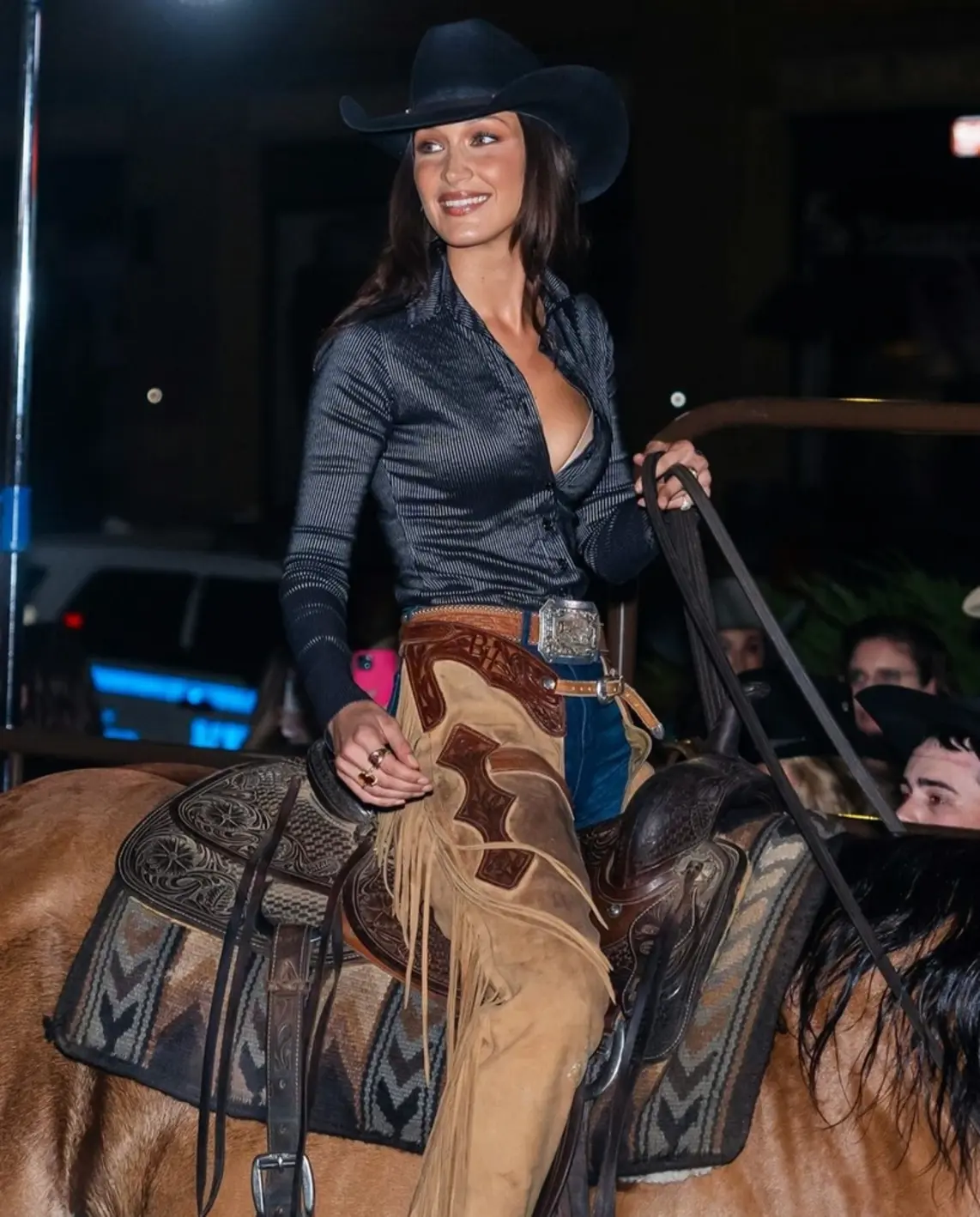
The horse girl used to live in a very specific cultural stable: part tween cliché, part internet joke, part polished little fantasy of inherited wealth. Awkward, horse-bitten, deliciously posh. Which, honestly, made her irresistible bait for fashion.
March 24, 2026
Advertisement

Advertisement



Because when has fashion ever resisted a figure steeped in discipline, fantasy, money, and just enough delusion to feel glamorous?
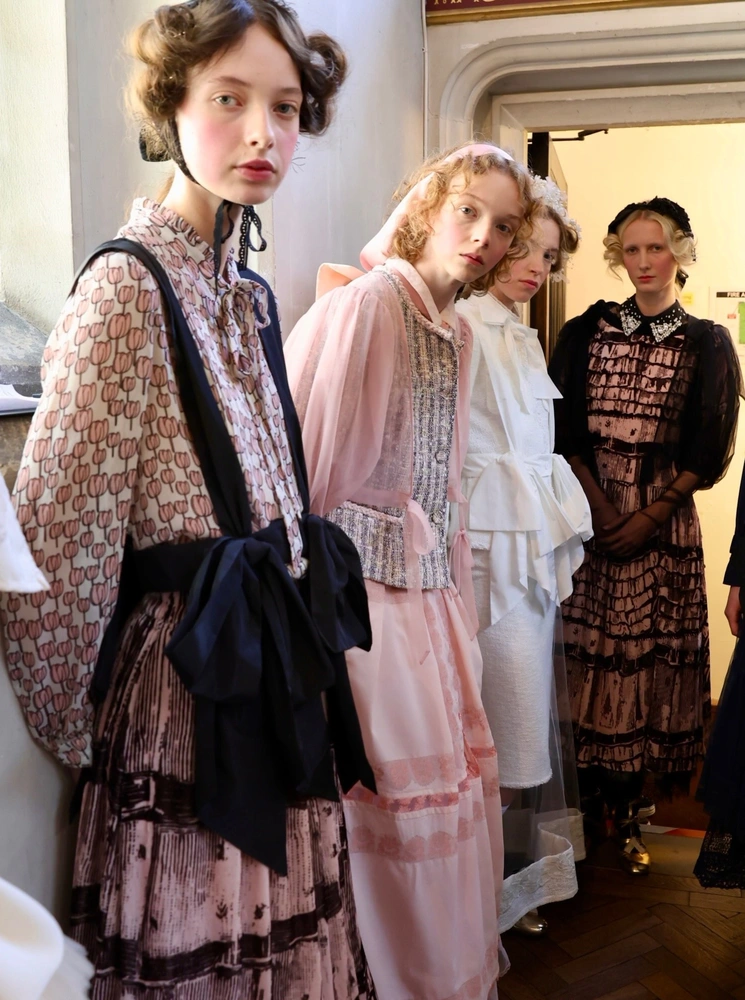
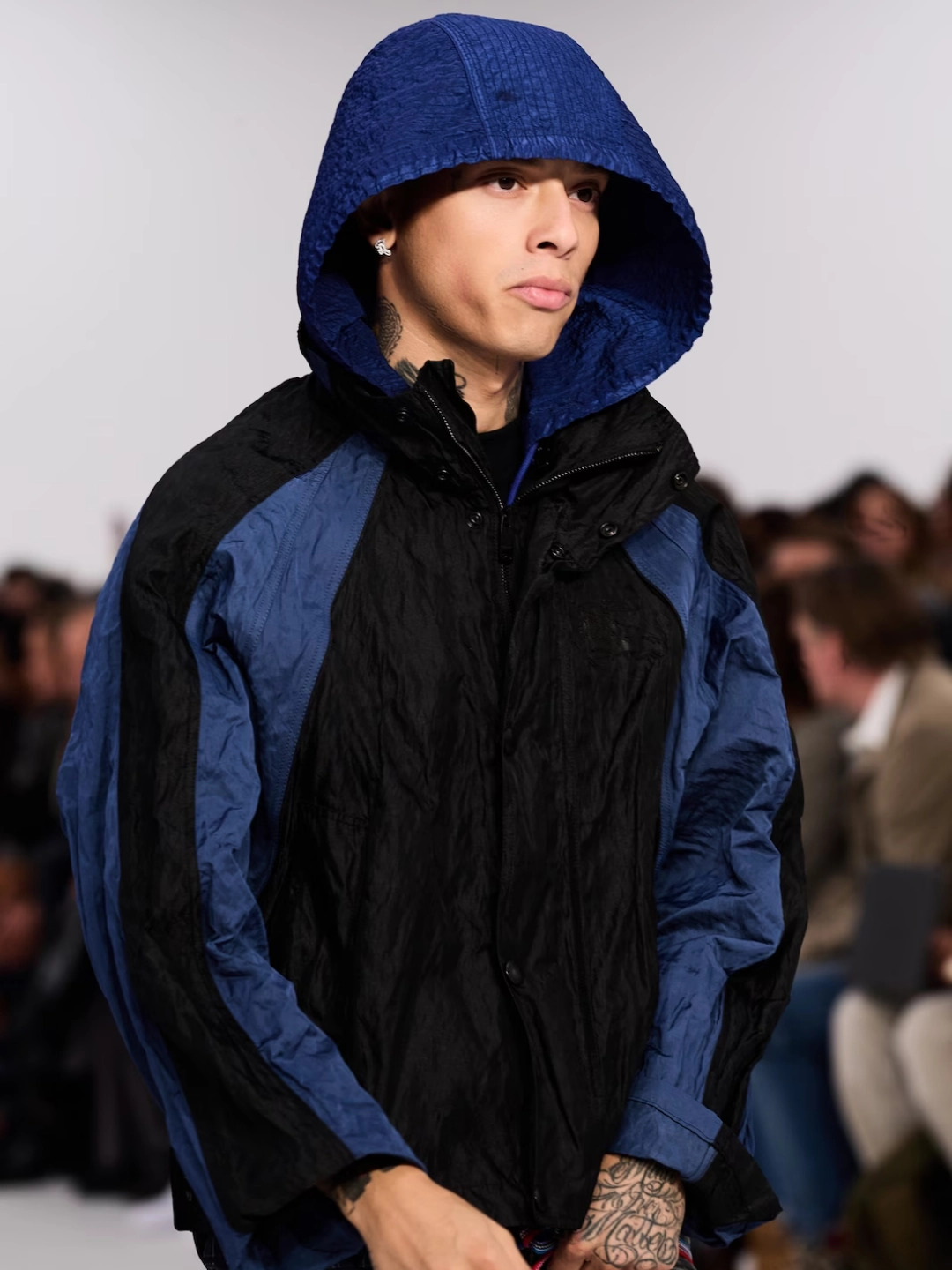
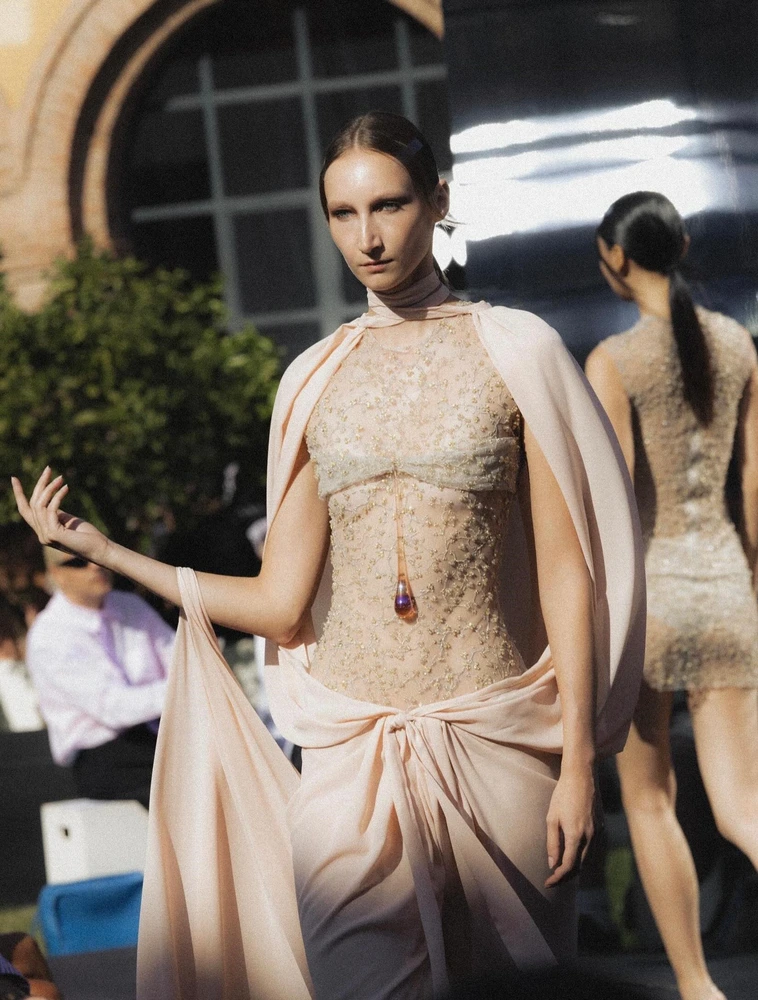
By now, the horse girl had fully trotted out of niche territory and into the center of the style conversation. Across the fashion capitals, equestrian codes slipped into the mainstream with a kind of polished swagger, carrying the scent of hay, hierarchy, and old-country seduction. Daniel Lee at Burberry leaned into aristocratic rural dressing with barn-chic coats and heritage silhouettes that felt bred for a muddy estate driveway and a very expensive crisis. In London, Bora Aksu mixed Empress Sisi nostalgia with a nervous Schiele-like sensitivity, turning the horse girl into something fragile, feverish, and faintly haunted. Then Paris delivered its own absurd delight: Post Malone, during his fashion week debut for Austin Poet, sent a live horse down the runway. Camp? Certainly. Effective? More than many houses would care to admit.
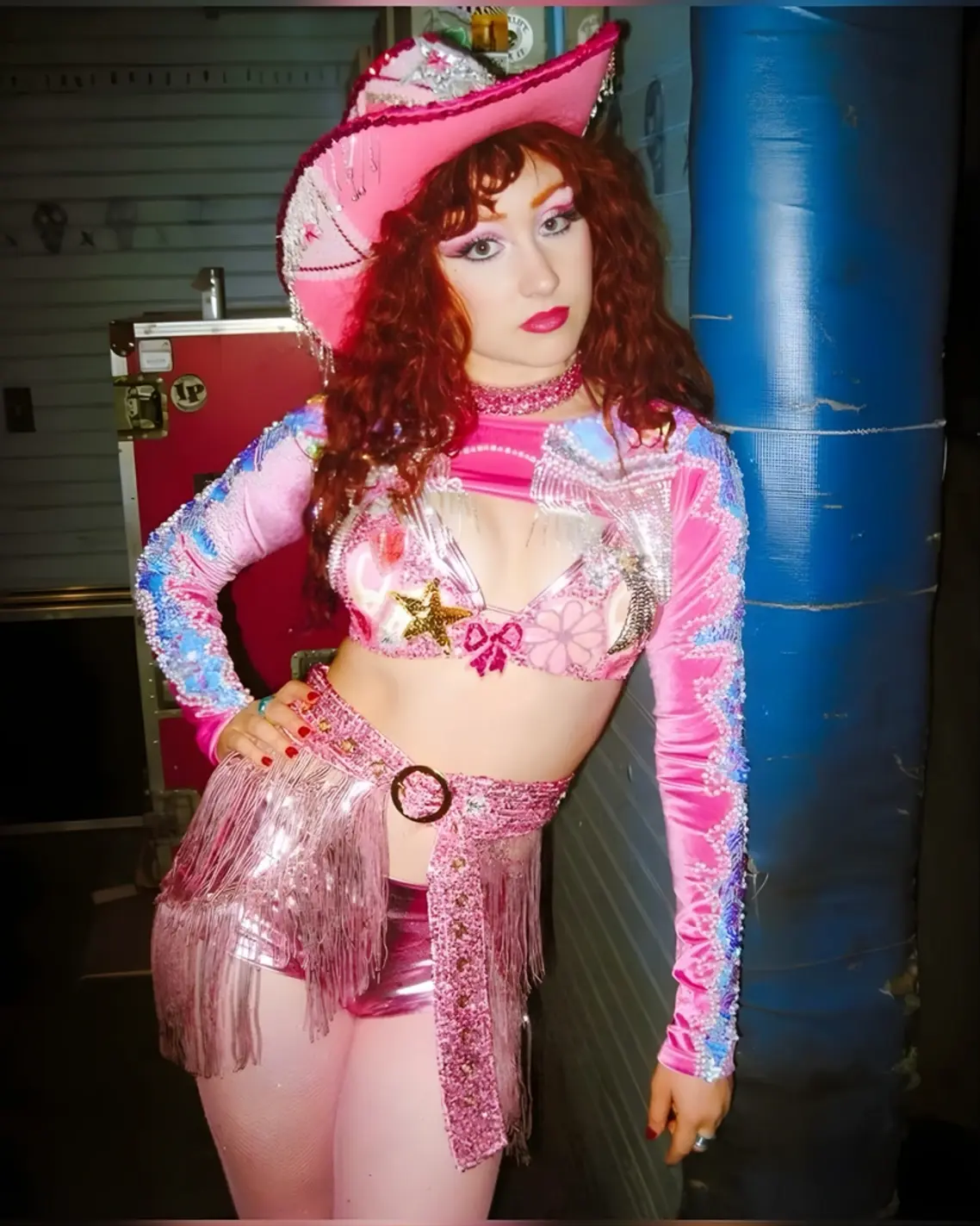
And why did all this feel suddenly so timely? Because the Western revival had already flung open the stable doors. Americana, cowboy style aesthetic, frontier romance, all of it came roaring back with fresh lipstick and a hotter soundtrack. Beyoncé’s Cowboy Carter era pushed the fantasy into overdrive. Chappell Roan’s country-flavored turn added another layer of theatrical allure. Even prints obeyed the mood. Cow spots started to edge past leopard, quietly but pointedly, including at places like Bottega Veneta Resort 2024. So the question lingers: was fashion embracing the horse girl, or had culture already prepared the ground and fashion simply arrived in riding boots to collect the credit?
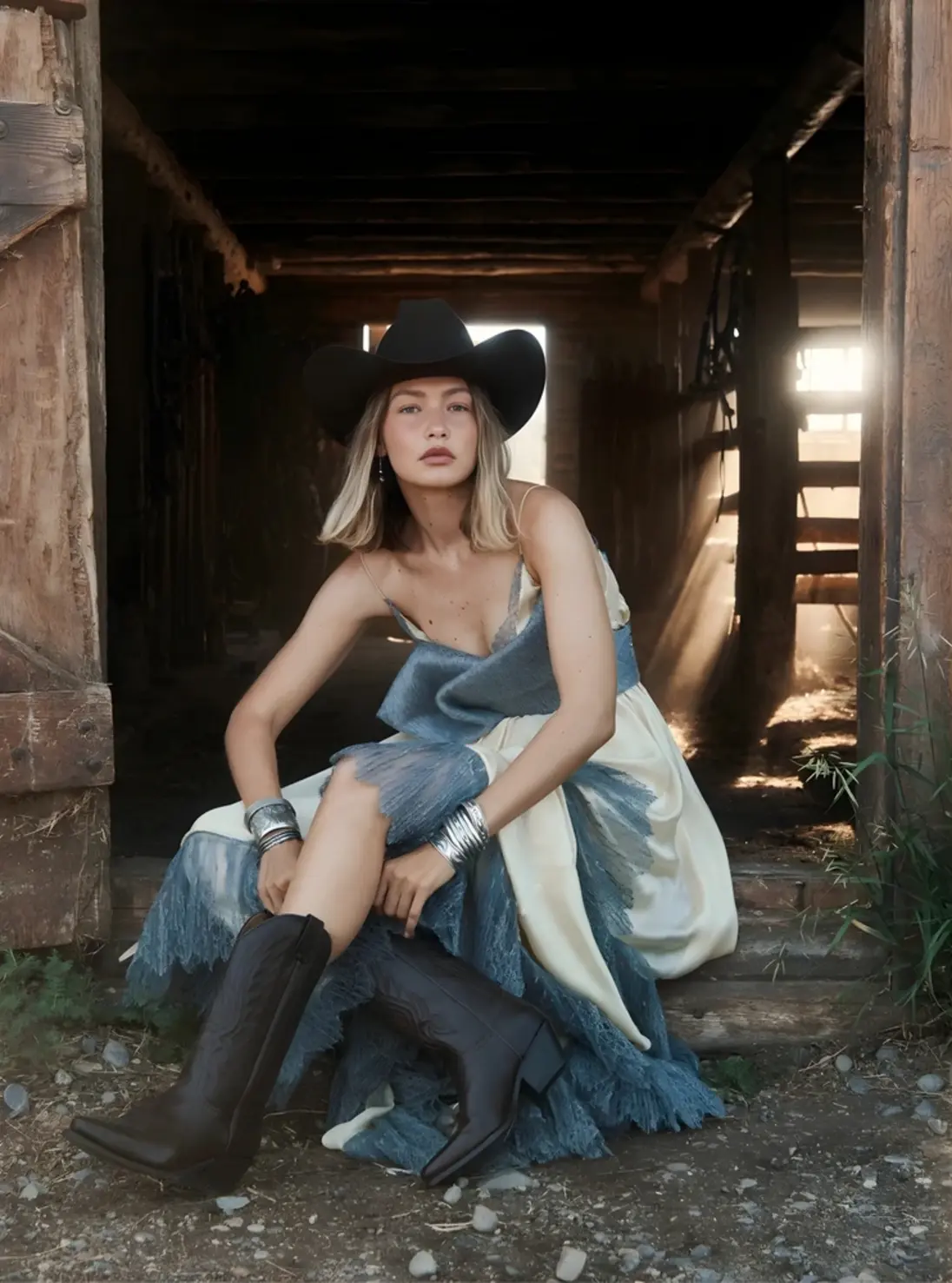
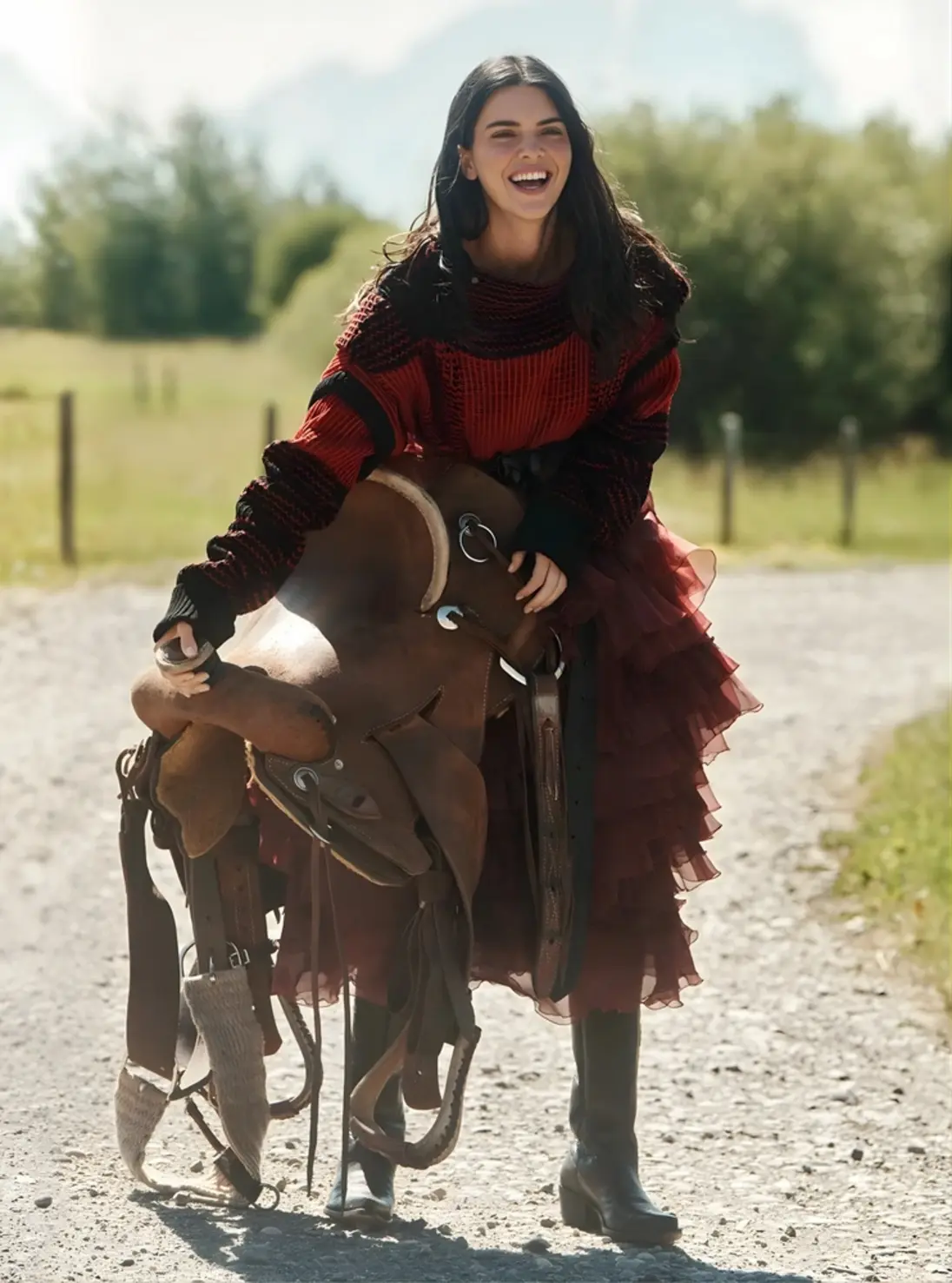
By September 2025, even Vogue had joined the gallop. Its cover story, Horsing Around With Kendall and Gigi, staged Kendall Jenner and Gigi Hadid as full-blown equestrian icons against the dramatic landscape of Wyoming’s Grand Tetons, draped in flowing McQueen gowns and riding at speed through one of the most cinematic backdrops fashion could possibly borrow. The styling sold the horse girl as timeless, self-possessed, romantic, and impossible to extinguish. Kendall mused that she must have been a cowgirl in a past life. Of course she said that. The horse girl fantasy thrives on destiny. It loves a blood memory, a beautiful myth, a story that sounds inherited rather than curated. Yet who gets to claim this romance so easily, and who has to earn every inch of it in mud, muscle, and routine?
Because while fashion and media were busy turning the horse girl into a polished icon, actual riders watched the spectacle with equal parts amusement, pride, and side-eye. Equestrian culture gets flattened with almost comic efficiency. Outsiders see the polished boots, the glossy saddles, the dramatic competition clips, and suddenly assume they understand the whole world. They see surface. Riders live structure. Behind every elegant image sits hours of training, endless care, constant vigilance, and a relationship built on attention so detailed it borders on devotion. Comfort, health, trust, rhythm, temperament, mood, performance, recovery, the list goes on. Riding has always been partnership dressed up as poise. Fashion, of course, prefers the poise.
Social media only sharpened the transformation. Platforms turned identity into performance and performance into a legitimacy test. Every image carried a tiny question underneath it: do you belong here, or are you playing dress-up in someone else’s ritual? Flash too much wealth and the audience rolls its eyes. Perform authenticity well enough and suddenly aspiration starts wearing the mask of effort. That is exactly where equestrian style became so adaptable online. Early mornings, scuffed boots, braids, stable chores, repetitive routines of care, all of it translated beautifully into coded affluence. Wealth appeared, yet it appeared sideways: through time, access, habits, land, knowledge, labor. What looked humble often carried the highest price tag of all.
Pop culture, naturally, polished the image even further. Beautiful horses. Tailored jackets. Sunlit arenas. Long legs in riding boots. A little dust for atmosphere. A lot of visual seduction. Yet the deeper responsibilities of the sport rarely receive equal attention. Training, welfare, regulation, discipline, ethical standards, all the invisible architecture that holds the world together, that material tends to disappear once the camera starts flirting with the fantasy. And when something goes wrong, scrutiny lands everywhere at once, sweeping through the whole community with the elegance of a stampede. So whose version of the horse girl gets circulated most widely: the one who performs style, or the one who performs care?
That tension only intensified as equestrian style spilled out of stables and estates and into the retail mainstream. ASOS reported a huge year-on-year surge in riding-boot searches and launched a Stable Girl edit, neatly translating function into trend. Stella McCartney folded tack-inspired details into handbags. Street style wrapped itself in countryside-coded boots and quilted layers. Irina Shayk stepped out in riding silhouettes. Bella Hadid took things further by entering real cutting-horse competitions, dragging the conversation away from pure aesthetic play and toward lived practice. Suddenly the horse girl sat in two places at once: fantasy object and working identity, runway symbol and actual routine.
Bella Hadid, in particular, makes the whole thing more slippery in the most interesting way. She and Gigi grew up riding, so the story carries roots. Bella’s relationship with cowboy Adan Banuelos only deepened her immersion in rodeo culture, and now the pair compete together as well. She rides, trains, participates, shows up. That lived reality gives her an authority fashion alone could never manufacture. Yet celebrity still performs its own magic trick. On Bella, the boots look sharper, the denim lands with more intention, the dust itself feels editorial. Labor turns aspirational the second a supermodel steps into it. Same saddle, different aura. Same effort, entirely different cultural reading. Fashion loves that trick. It thrives on making work look like mood.
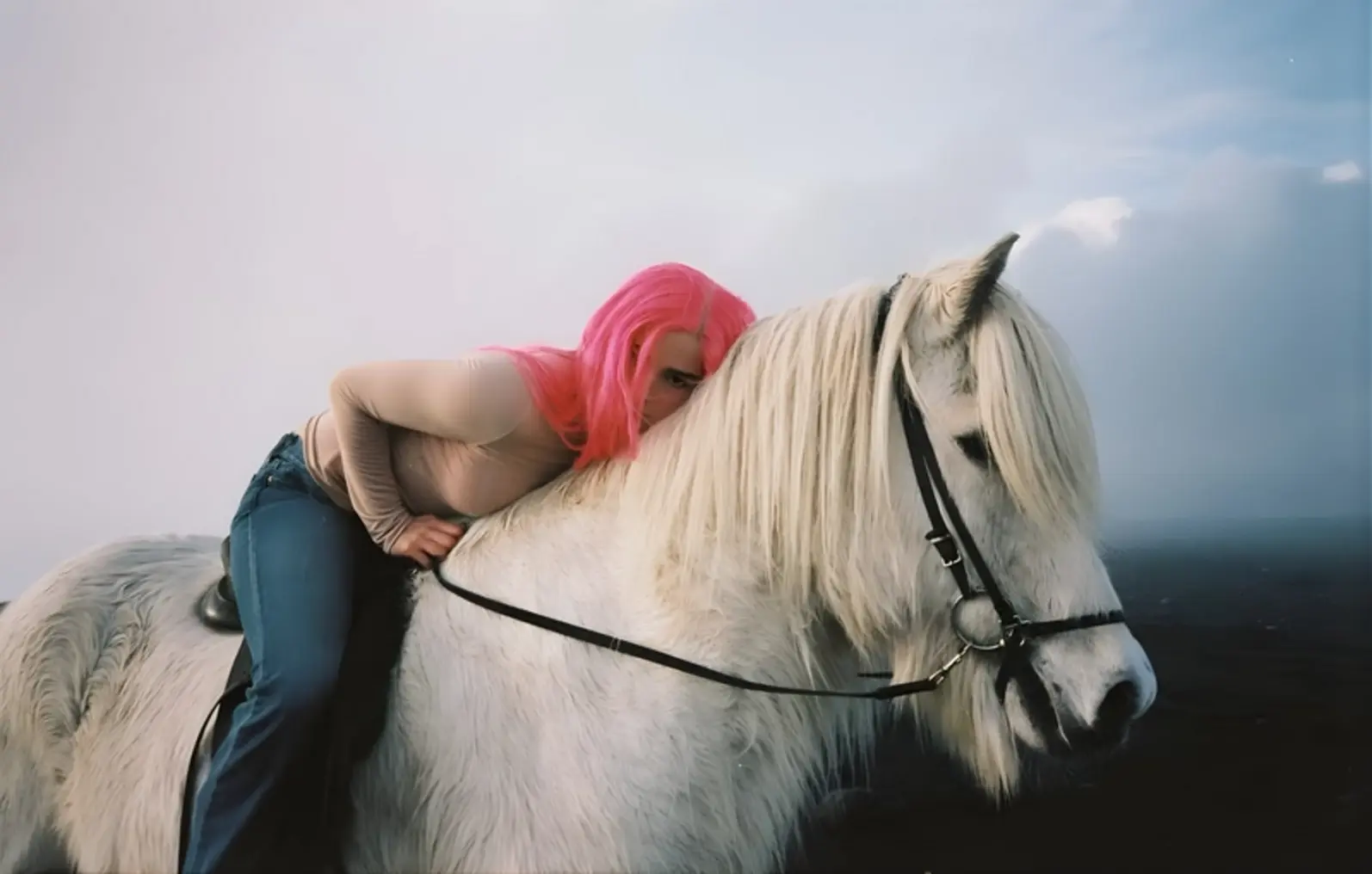
Elsewhere, pop culture pushed the horse girl into something far stranger and more mythic. In the Headphones On video, Addison Rae rides an Icelandic horse across black sand and lava fields, pink hair blazing against white mane, building a fantasy so stylized it barely pretends to belong to the real world. Riding becomes symbol, atmosphere, dream logic. The horse functions less as sport and more as portal. Freedom, control, glamour, surrender, spectacle, all of it gets folded into the image. Is she a rider? Is she a character? Does pop culture even care, as long as the fantasy gallops beautifully across the screen?
Then there is HorsegiirL, the Berlin-based DJ who tells her audience I’m a horse and builds an entire absurdist universe around that premise, complete with happy-hardcore tracks and a horse mask that turns equestrian culture into something bizarre, hilarious, and weirdly moving. Here the horse girl evolves into internet folklore. Satire and sincerity share the same stall. Passion survives irony. Irony sweetens passion. The result feels ridiculous and eerily accurate at once. Because perhaps that is exactly why the horse girl returned so powerfully: she offers a perfect emblem for a culture addicted to performance yet hungry for belief.
That is where Raymond Williams becomes unexpectedly useful. His idea of a structure of feeling helps explain why this figure came back with such force. The horse girl lives in that slippery zone where collective mood arrives before language fully catches up. She is meme and myth, aspiration and parody, ritual and spectacle all at once. She satisfies the craving for old symbols while leaving enough room for contemporary self-awareness. She carries sincerity in one hand and irony in the other, and somehow both still look fabulous in leather gloves.
Of course, once an aesthetic enters the mainstream, authenticity starts to blur. For some people, this shift opens up a visual language that once belonged almost exclusively to class privilege, land ownership, and inherited access. For others, it strips practical codes of their function and turns them into glossy surface. Both readings carry truth. Yet that tension may be exactly what makes the horse girl so potent right now. She circulates as luxury fantasy, social satire, lifestyle branding, and genuine subcultural identity all at once. And in a cultural moment obsessed with irony yet secretly aching for devotion, who could possibly resist a figure built from discipline, drama, status, longing, and a little bit of hay-scented theatre?
Advertisement