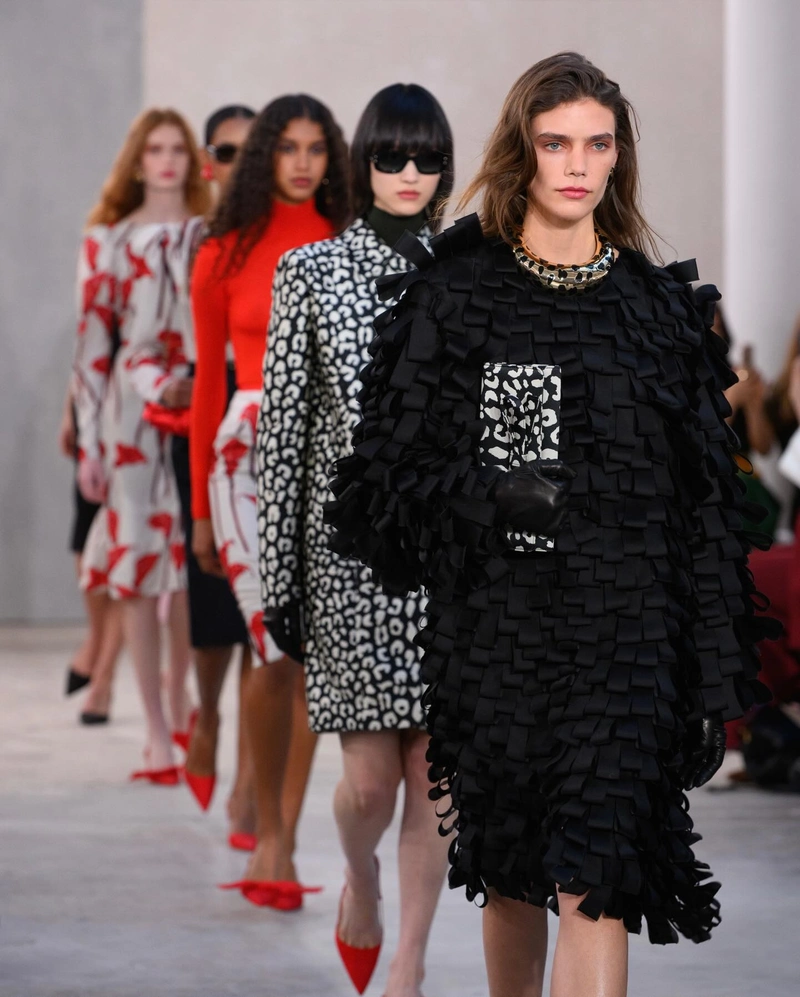
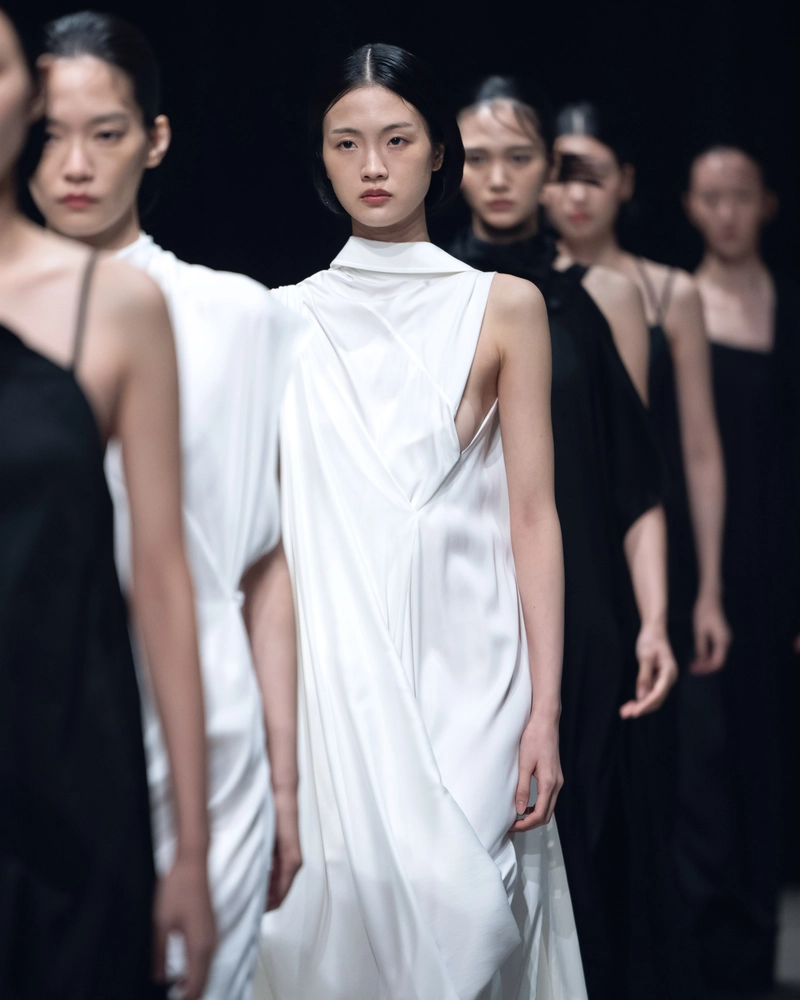
Can grids and blocks be emotional? Piet Mondrian will provide the answer.
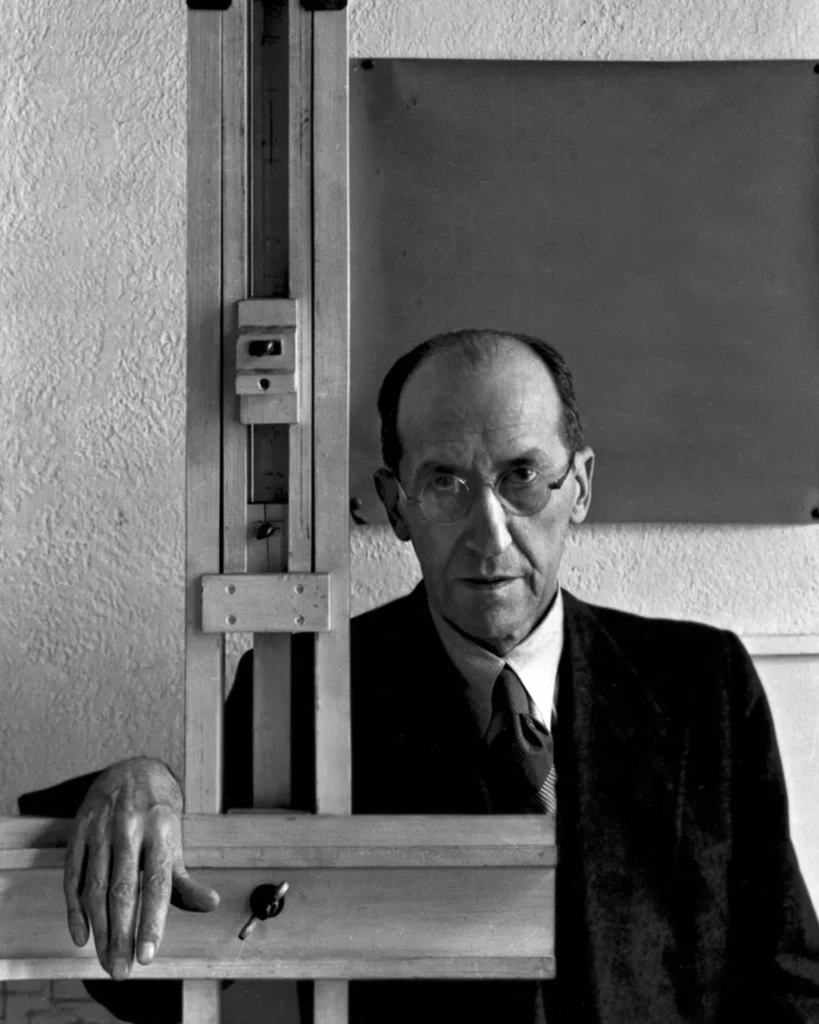
Can grids and blocks be emotional? Piet Mondrian will provide the answer.
June 4, 2026


At first glance, Piet Mondrian looks easy to understand. His paintings have been absorbed so completely into the visual language of modern life that they now appear everywhere. The popularity of nPiet Mondrian's , furniture, architecture, branding, museum gift shops, phone cases, coffee mugs. The tragedy of fame is that it can turn a revolution into décor.
Mondrian deserves a harsher, stranger reading. Because what he attempted was a whole purge. Perspective, atmosphere, sentiment, nature, depth, flesh, shadow, curve, accident, one by one, he stripped them away. His mature language of Neoplasticism relied on strict horizontals and verticals, primary colours, black, white and grey, yet this restraint came from an almost mystical hunger for universal order.
That is what makes Mondrian so unsettling. His paintings look calm because they have survived a war against excess.
Mondrian did not begin as the priest of the right angle. He began with trees, fields, churches, windmills and the Dutch landscape. Before the famous grids, there was soil. There were branches. There was the soft, restless disorder of nature.
His transition into abstraction is often traced through his repeated studies of trees, especially the apple tree. Between 1908 and 1912, the tree became less a botanical subject than a machine for revelation. Branches fractured. Curves hardened. Trunks and limbs dissolved into horizontal and vertical tensions. The organic body slowly gave up its skeleton.
This matters because Mondrian did not invent the grid out of nothing. He extracted it from nature, like someone pulling a secret code from a living thing. The tree did not vanish. It was reduced to its underlying pressure.
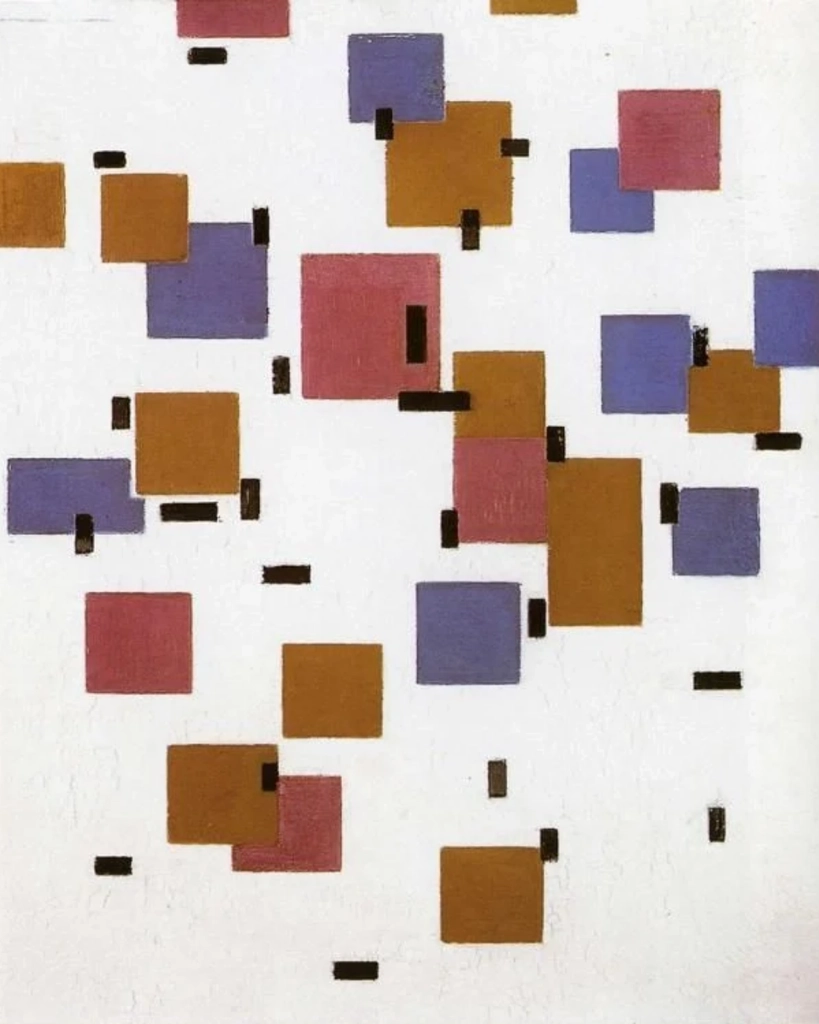
That reduction became his method. A pier, a church façade, a landscape, a rhythm of streets: everything could be purified until only balance remained. Mondrian’s abstraction was not escape from reality. It was reality after the noise had been surgically removed.
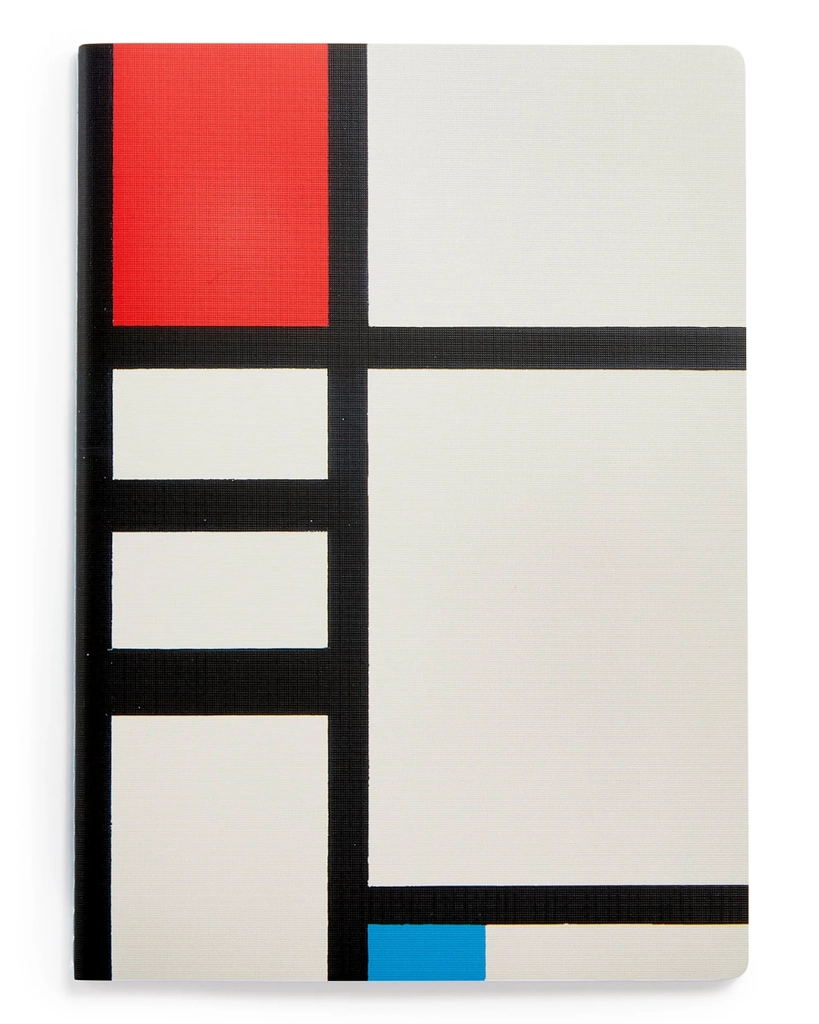
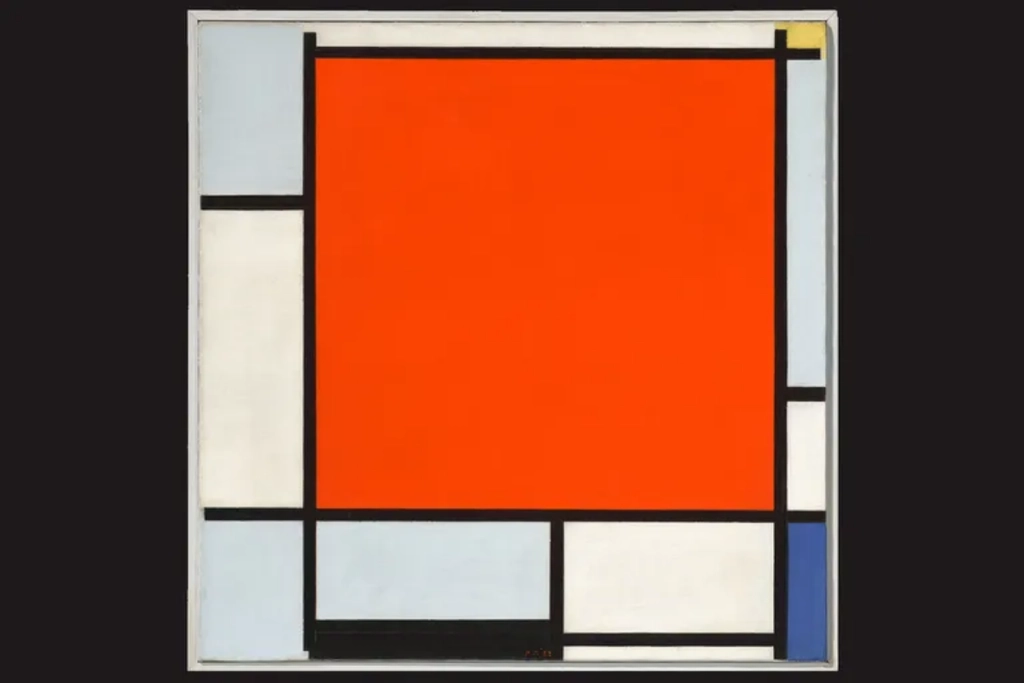
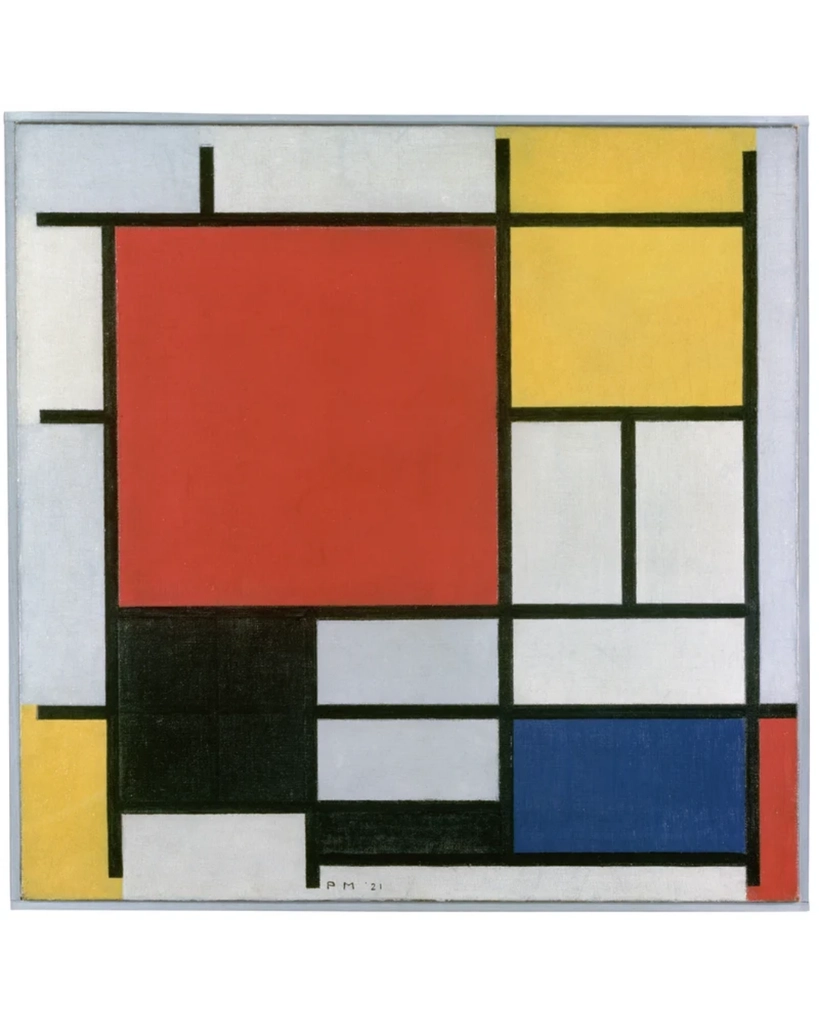
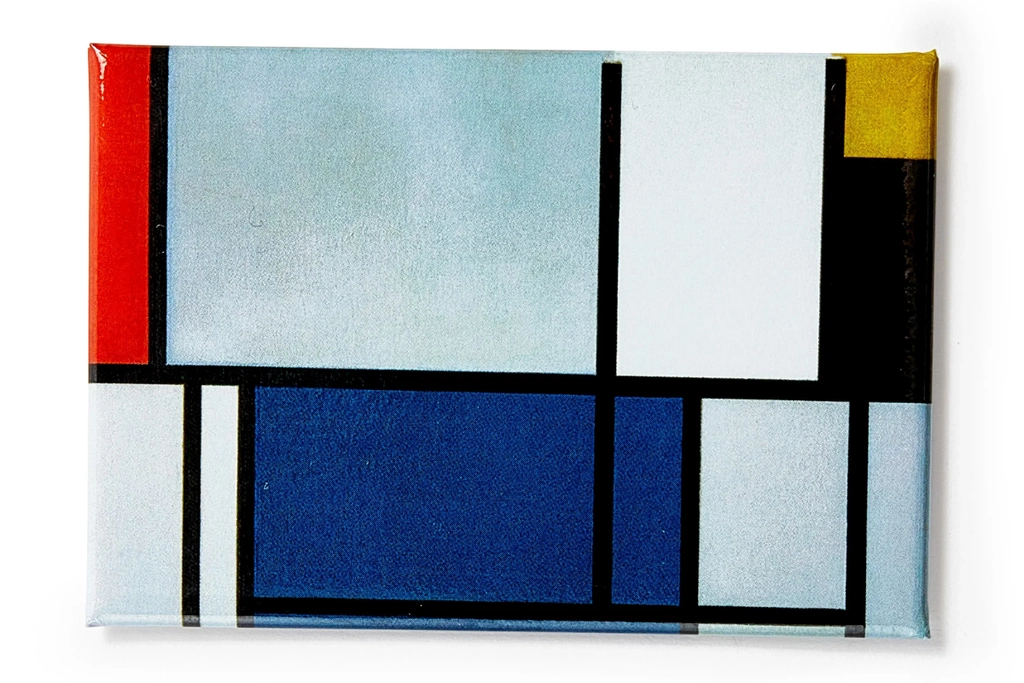
Mondrian called his mature style Neoplasticism, closely associated with De Stijl, the Dutch movement he helped define. Its grammar was severe. No curved lines. No diagonals. No blended colours. No atmospheric softness. No emotional brushwork. Only verticals and horizontals. Only red, yellow, blue, black, white and grey. Only asymmetry held in unbearable balance.
The rules sound mechanical, but Mondrian’s paintings were never purely mechanical. He did not simply calculate his compositions with cold formula. He balanced them by eye, with extraordinary sensitivity. A small red square could answer a large field of white. A narrow yellow bar could shift the entire emotional weight of the canvas. One black line, slightly thicker than another, could change the whole painting’s pulse.
This is where his genius hides. Mondrian’s work is often described as rigid, yet it is secretly full of movement. The eye travels across the canvas, stops, returns, falls into a white field, hits a block of colour, meets a black line and turns back again. The painting does not depict motion. It manufactures it.
His grid is not a cage. It is choreography.
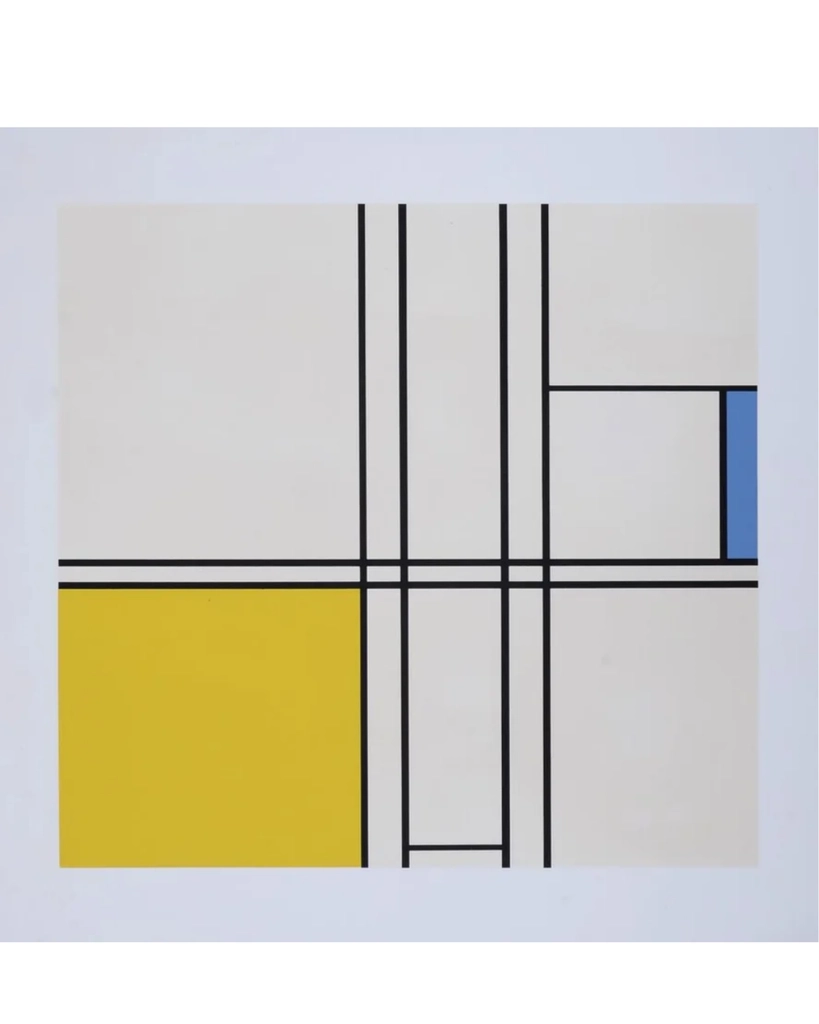

The clean surface of Mondrian’s work can mislead viewers into thinking he was a rationalist, a designer before design, an engineer of modern taste. In reality, his abstraction was rooted in spiritual belief. Like Hilma af Klint and Wassily Kandinsky, Mondrian was connected to Theosophy, a movement that imagined a divine order beneath the chaotic surface of material life.
For Mondrian, painting became a kind of spiritual x-ray. The world of appearances was messy, unstable and deceptive. Beneath it lay harmony. His task was to remove everything temporary until that harmony could appear.
This is why the paintings feel both austere and obsessive. They are not casual exercises in minimalism. They are acts of faith. Mondrian believed that the vertical and horizontal could express opposing cosmic principles: dynamic and resting, spiritual and material, masculine and feminine. Their intersection produced equilibrium.
Modern viewers may not share the belief system, but the force remains legible. The paintings still carry the energy of someone trying to force the universe into clarity.
Mondrian’s commitment to his rules was not playful. It was absolute enough to destroy friendships. His break with Theo van Doesburg, co-founder of De Stijl, came after Van Doesburg began experimenting with diagonal lines in the 1920s. For another artist, a diagonal might be a compositional option. For Mondrian, it was almost a philosophical crime.
The diagonal disrupted the purity of horizontal and vertical harmony. It introduced dynamism in a way Mondrian could not accept. The result was a rupture, and Mondrian eventually left the movement.
There is something almost absurd in ending a friendship over a line direction, but that absurdity reveals the seriousness of the project. Mondrian was not decorating with geometry. He was defending a worldview. A diagonal was not a slanted mark. It was a collapse of order.
That extremity is part of his greatness and his danger. Mondrian shows how abstraction can become belief, and how belief can become discipline so intense it starts to look like possession.
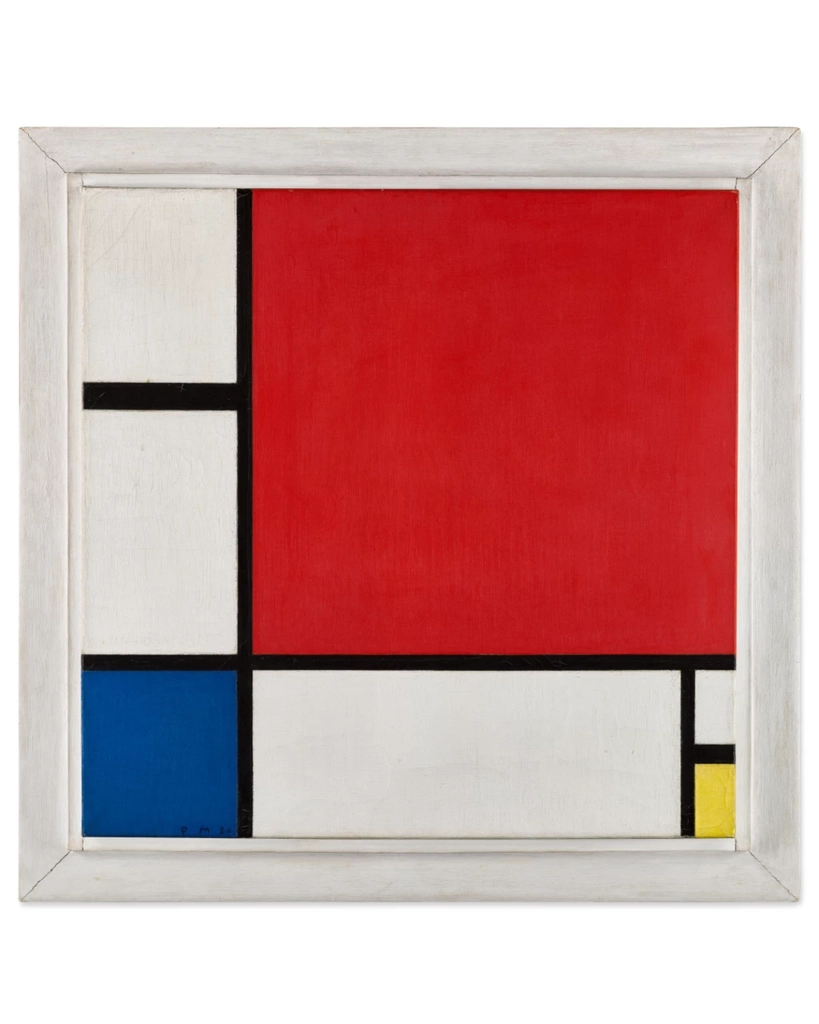
As Mondrian moved deeper into his artificial universe, nature itself became increasingly intolerable to him. The famous anecdotes sound almost comic: He avoided views of trees, disliked green, and reportedly altered or camouflaged plants when they entered his pristine studio. Yet beneath the comedy is a revealing anxiety.
Green was nature’s colour, the colour of mixture, growth, unpredictability and organic excess. Mondrian’s mature palette rejected such instability. His world demanded primary clarity. Red, yellow and blue were elemental. Green was compromise.
This rejection of nature has often been framed as coldness, but it might be better understood as fear of disorder. Mondrian knew nature too well. He had painted it, studied it and extracted from it the structure he needed. Once the grid appeared, the old world became dangerous again. Leaves, curves and shadows threatened to bring back everything he had spent his life removing.
The white studio became an extension of the canvas: Purified, controlled, almost monastic. A room where the outside world had to behave.
Then New York happened.
In 1940, Mondrian arrived in the United States after years of European instability and the violence of war. The move changed the emotional temperature of his work. Manhattan offered him a new kind of grid: not the silent metaphysical structure of earlier paintings, but a city grid flashing with traffic lights, jazz rhythms, storefronts, sidewalks and speed.
In Broadway Boogie-Woogie, painted between 1942 and 1943, the heavy black lines disappear. The grid is no longer a strict black skeleton. It becomes a vibrating network of yellow bands punctuated by small blocks of red, blue and white. The painting feels like streets seen from above, music translated into geometry, a city pulsing without ever becoming literal.
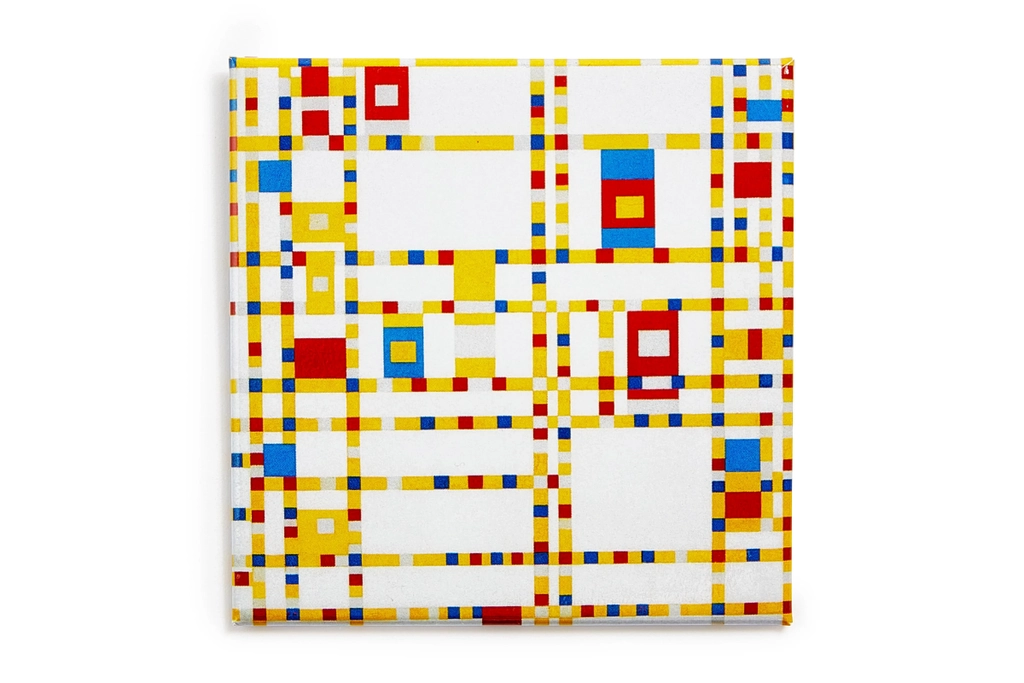
This is Mondrian’s final miracle. After decades of reduction, the grid begins to dance.
The painting does not abandon discipline. It electrifies it. The old equilibrium remains, but now it flickers. Jazz enters the structure. Broadway enters the temple. The mystic of order becomes, almost impossibly, a painter of syncopation.
Today, Mondrian occupies an unusual place in culture. He is both a museum titan and a design shorthand. His visual language is instantly recognizable, which makes it vulnerable to flattening. The grid becomes “Mondrian-inspired.” The colours become styling. The radical severity becomes pattern.
Yet the market remembers the stakes. His mature Neoplastic paintings remain rare and fiercely contested. In 2022, Composition No. II from 1930 sold at Sotheby’s New York for $51 million, setting a public auction record for the artist; in 2025, another Mondrian grid work sold at Christie’s for $47.6 million, underscoring the continued pressure around major examples from this period.
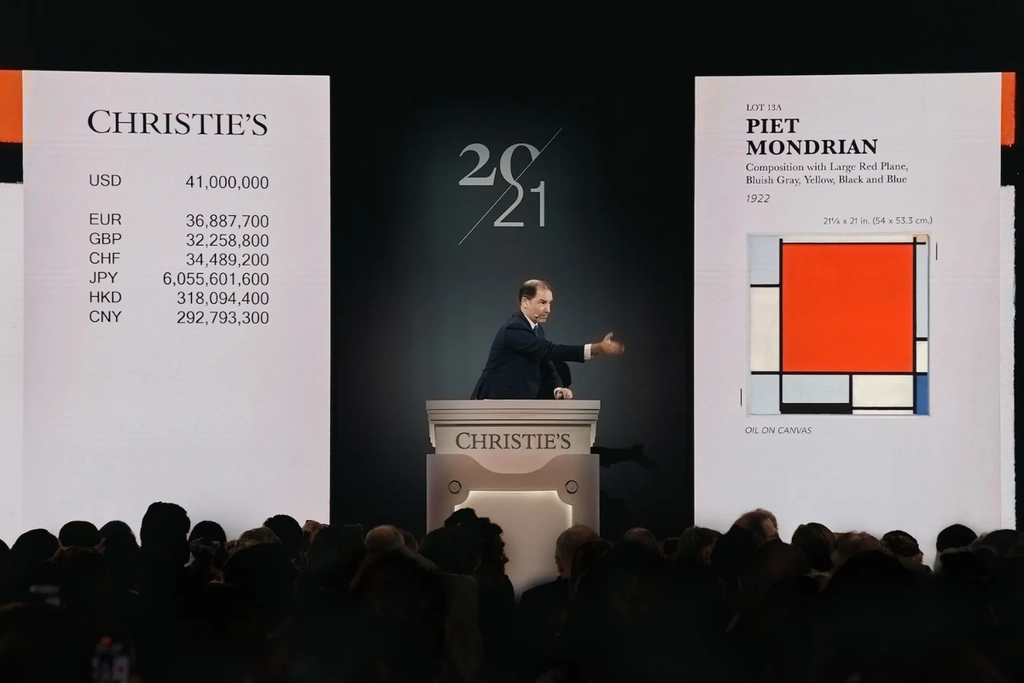
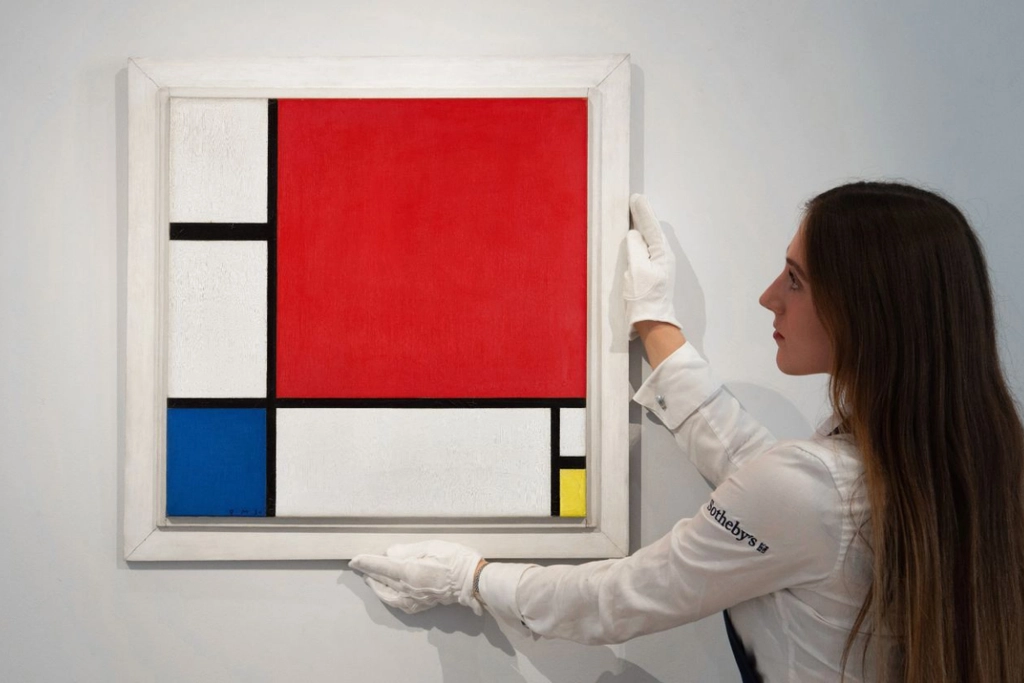
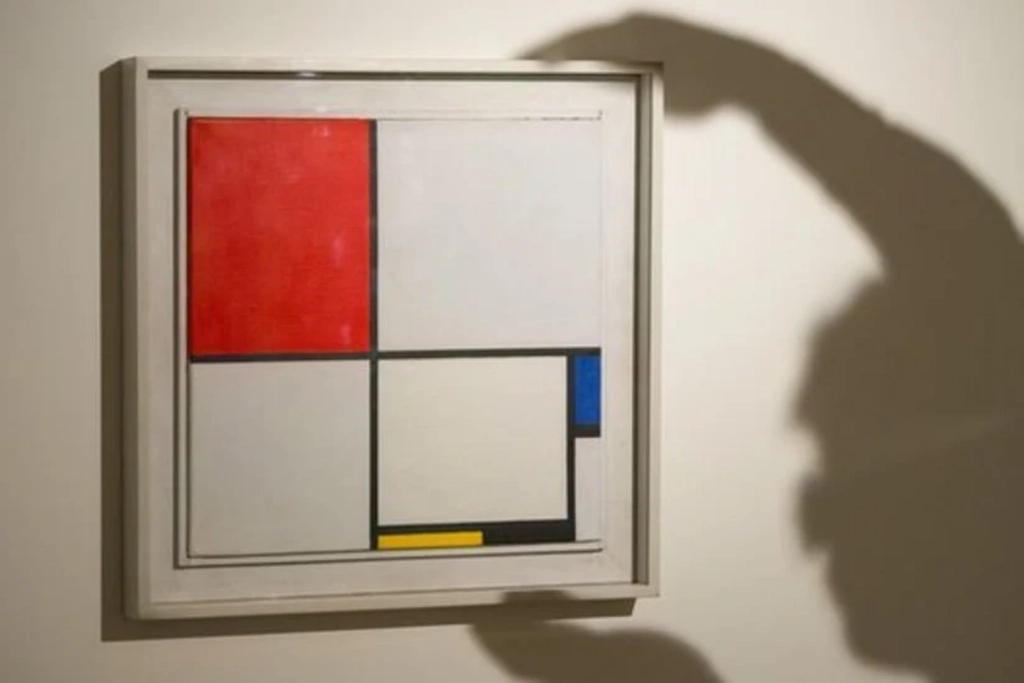
The prices matter less as spectacle than as proof of scarcity. A late Mondrian grid is not simply a painting entering the market. It is a piece of modern visual DNA being traded. Graphic design, architecture, fashion and minimalism all owe something to his reduction. Yves Saint Laurent’s famous 1965 Mondrian dresses turned the grid into wearable modernity, but the source was far more severe than style.
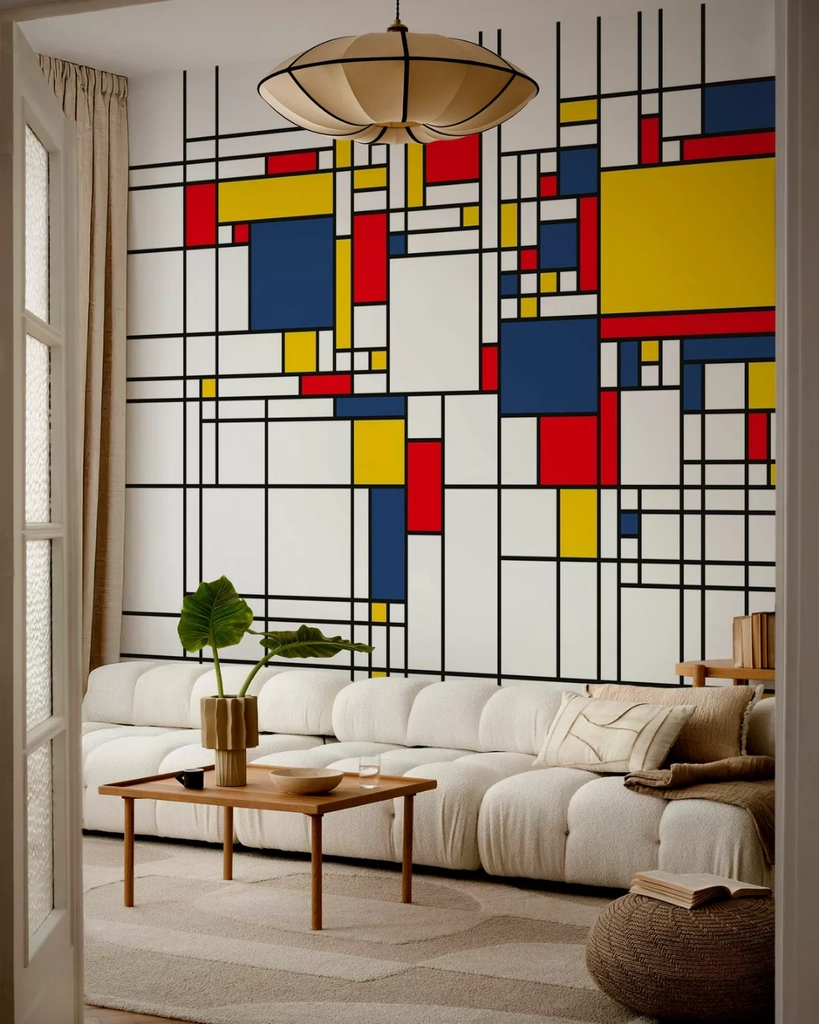
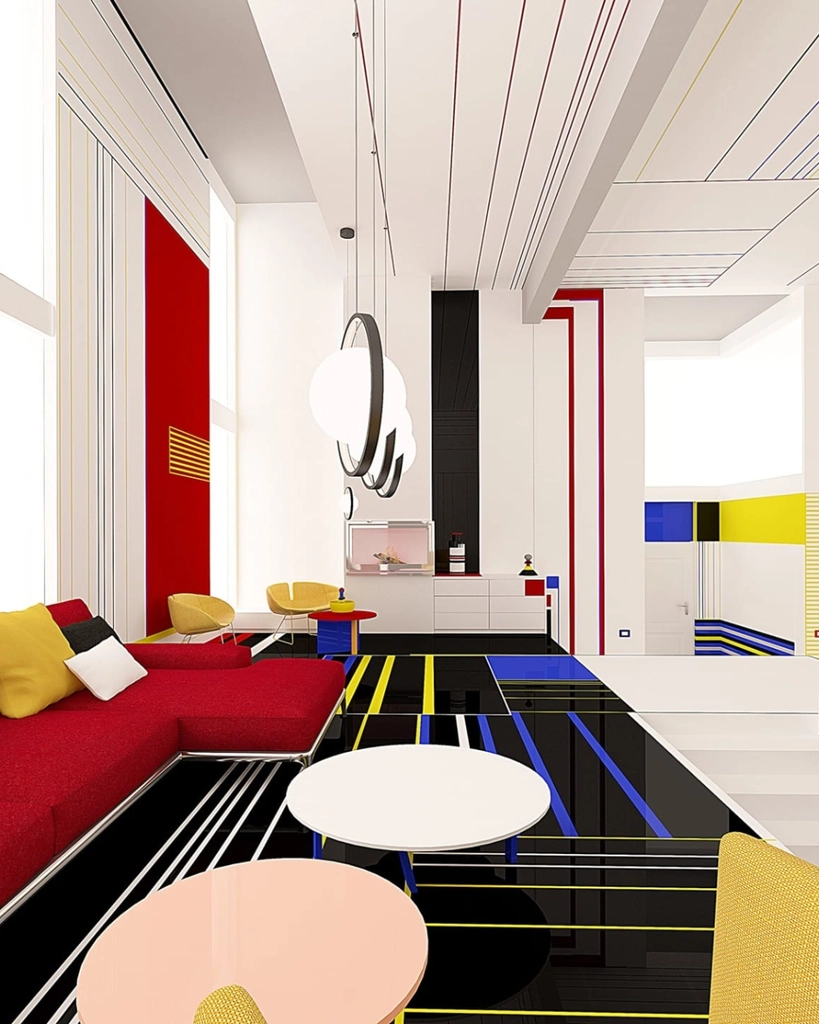
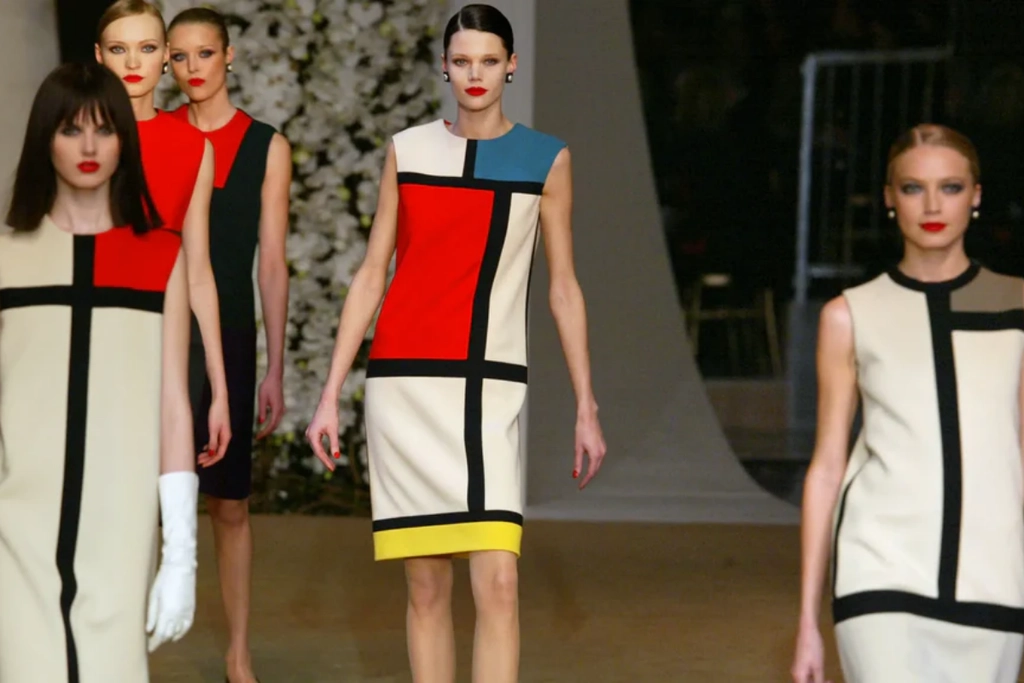
Piet Mondrian made the modern image harder, cleaner and more absolute. Everyone else made it usable.
The great misunderstanding of Piet Mondrian is that his work is cold. It is disciplined, yes. It is purified, almost violently so. But coldness suggests absence of feeling, and Mondrian’s paintings are full of suppressed intensity.
The feeling is not romantic. It does not spill over. It is compressed into proportion, edge, interval and silence. A red square becomes a heartbeat locked inside architecture. A white field becomes charged emptiness. A black line becomes a border with moral force.
Mondrian’s genius was to make reduction feel infinite. He removed the world and somehow left its structure glowing behind. He took the tree, the street, the church, the city, the rhythm, the cosmos, and forced them into a grid that still refuses to sit still.
That is why his work survives its own popularity. Beneath the posters, dresses and design references, the paintings remain severe little machines for seeing. They remind us that abstraction was never only about freedom. Sometimes it was about control. Sometimes it was about taking the chaos of the world and reducing it until it revealed the terrifying elegance underneath.