MENU
Close





Before Jingdezhen wakes completely, clay has already begun moving through the city. It sits drying beside studio windows, gathers beneath potters’ fingernails and waits inside kilns whose forms have shaped the local landscape for generations. The slow-moving pace of the city offers a grounding, regenerative travel experience.
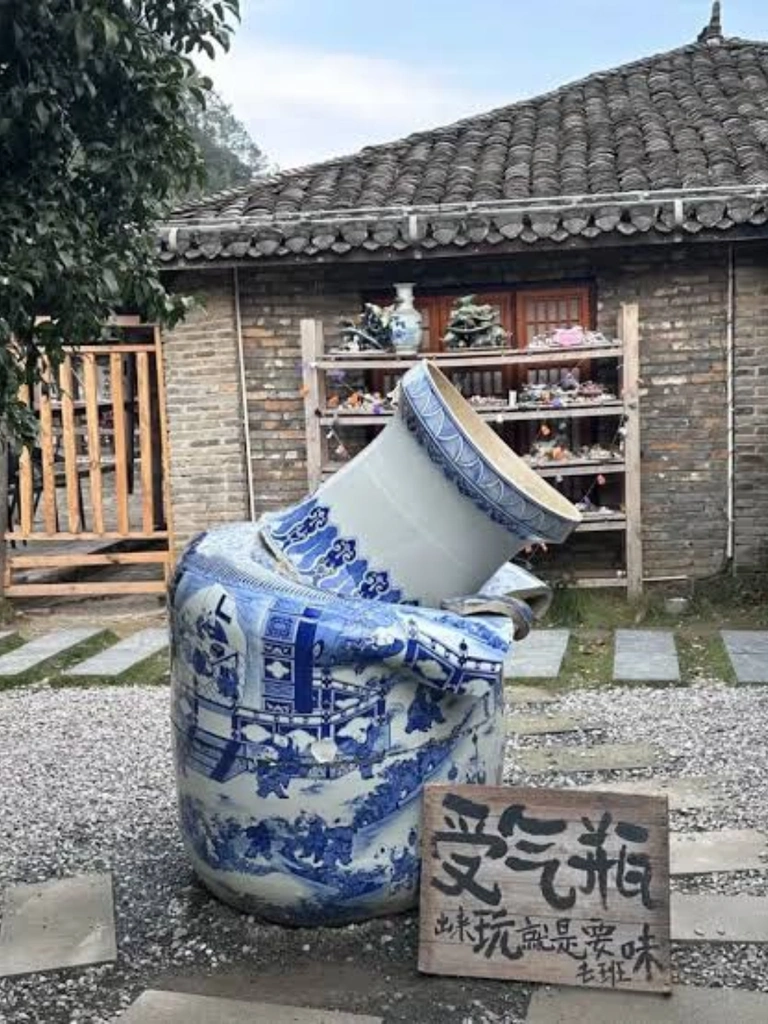
Before Jingdezhen wakes completely, clay has already begun moving through the city. It sits drying beside studio windows, gathers beneath potters’ fingernails and waits inside kilns whose forms have shaped the local landscape for generations. The slow-moving pace of the city offers a grounding, regenerative travel experience.
August 17, 2026


There are destinations where luxury is organized around consumption, and others where it begins with access to knowledge. Jingdezhen increasingly belongs to the second category.
The Jiangxi city has produced ceramics for more than 1,700 years and remains internationally known as China's "Porcelain Capital." Porcelain made here historically travelled overland and by sea, carrying Chinese craftsmanship into global trade and cultural exchange. Today, Jingdezhen is also part of UNESCO's Creative Cities Network, with ceramic culture continuing to shape both its economy and creative identity.
For travelers interested in regenerative travel, that continuity is important. The destination asks visitors to engage with a living craft ecosystem rather than encounter heritage solely after it has been placed behind glass. Kiln sites coexist with young studios. Former industrial buildings have found new cultural lives. Ceramic artists, students, collectors and craftspeople continue to make objects within a city whose history is inseparable from the material beneath it.
Luxury here can mean sitting across from a potter while discussing glaze chemistry. It can mean commissioning a tea set whose clay, firing and brushwork have been selected specifically for its future owner. It can also mean spending an afternoon examining imperial fragments before drinking tea from contemporary porcelain later that evening.
The souvenir becomes secondary. Knowledge becomes the thing one takes home.
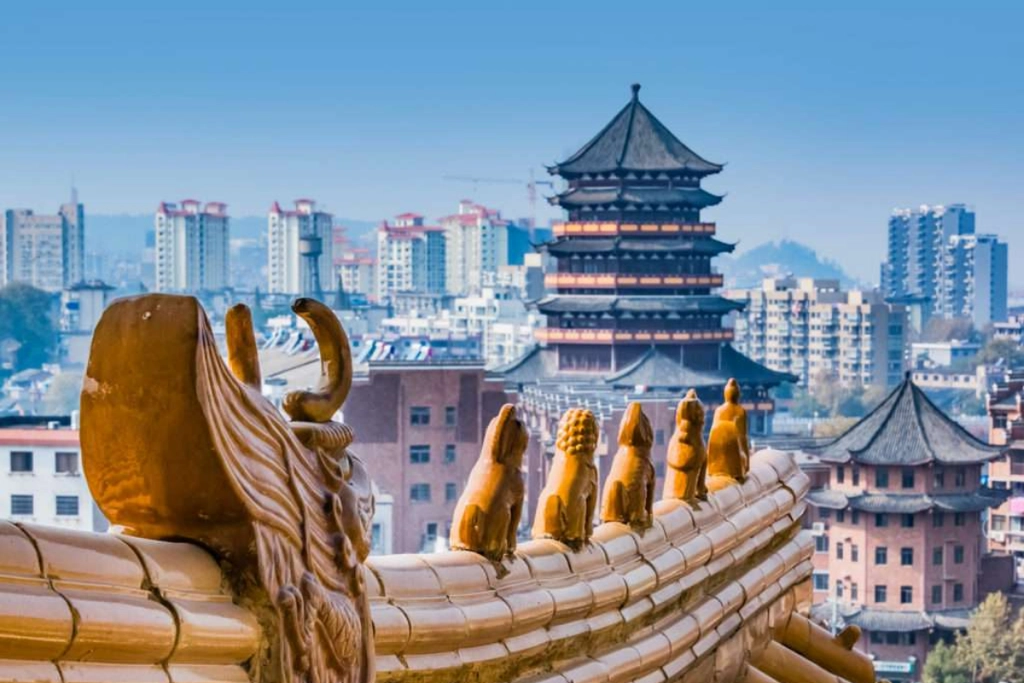
A kiln forces everyone around it to respect time.
Clay must be prepared. A thrown vessel needs to dry. Glaze responds to chemistry and temperature. Firing cannot simply be accelerated because a traveler has another appointment at four.
That relationship with time gives Jingdezhen unusual relevance to regenerative travel, particularly for travelers seeking cultural depth alongside environmental and community awareness. Regenerative thinking in tourism asks a destination to remain culturally alive after visitors leave. In Jingdezhen, one of the most meaningful ways to participate is to direct attention and spending toward the people who continue its ceramic traditions.
The city itself has consciously used ceramic heritage as part of a transition toward cultural and creative industries. UNESCO's monitoring materials describe projects linking ceramic culture with tourism, creative incubation, customized experiences and the development of Taoxichuan, Taoyangli and Sanbao as cultural destinations.
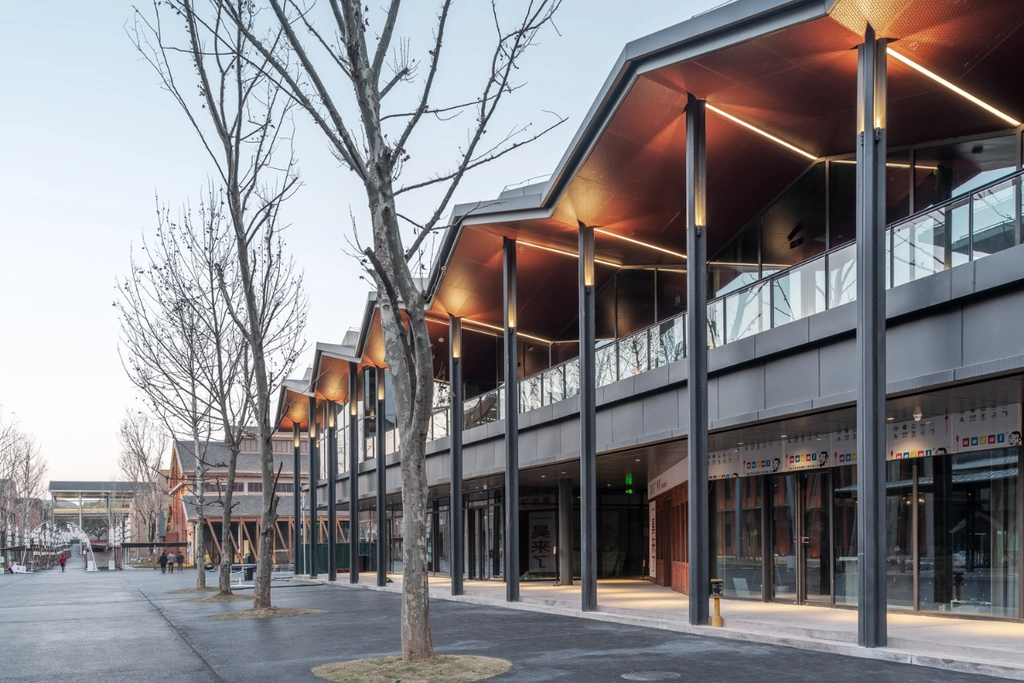
Taoxichuan is perhaps the clearest symbol of that transformation. The district grew from the site of a former state-owned ceramic factory into a cultural and creative quarter populated by galleries, markets, studios and hospitality. The Chinese government has specifically identified its predecessor as a state-owned ceramics factory, illustrating how industrial heritage has been given another economic life.
The attraction lies partly in this continuity of labor. Jingdezhen has changed without severing its central relationship with making.
Red brick becomes unusually beautiful when evening light begins sliding across a curve.
Studio Zhu-Pei's Jingdezhen Imperial Kiln Museum takes the architecture of historic ceramic kilns and translates it into a series of monumental vaulted structures. The museum sits within Jingdezhen's historic area near imperial kiln ruins, embedding contemporary architecture directly within the archaeology of porcelain production.
Its material strategy deepens the relationship. Recycled bricks from old kilns are mixed with new brickwork, continuing a local tradition in which obsolete kiln materials were historically reused in construction.
This is architecture particularly suited to slow observation.
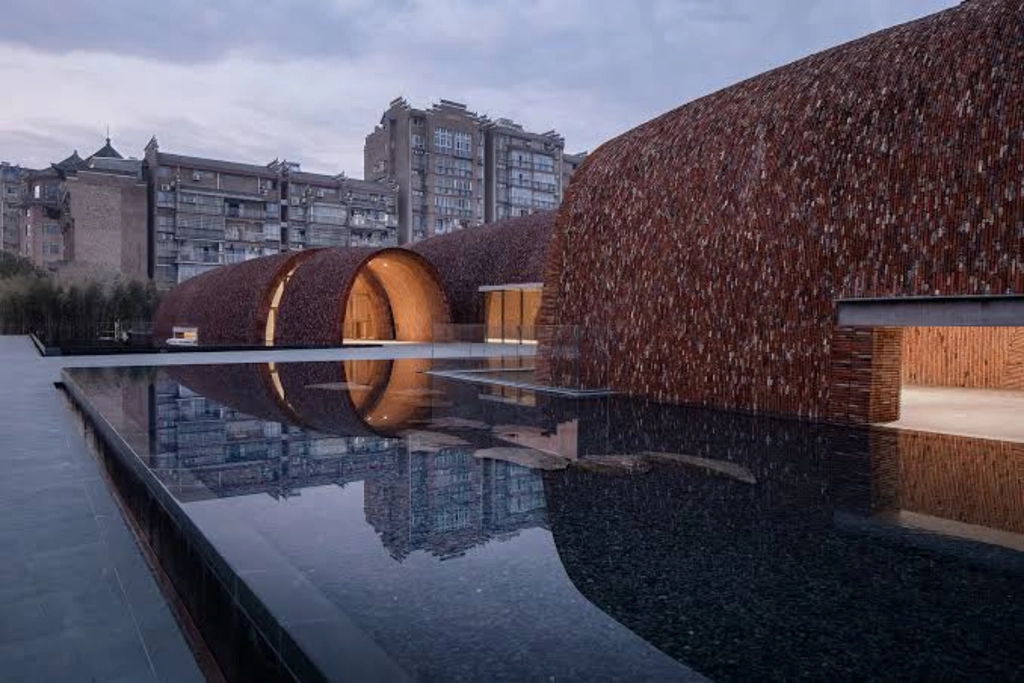
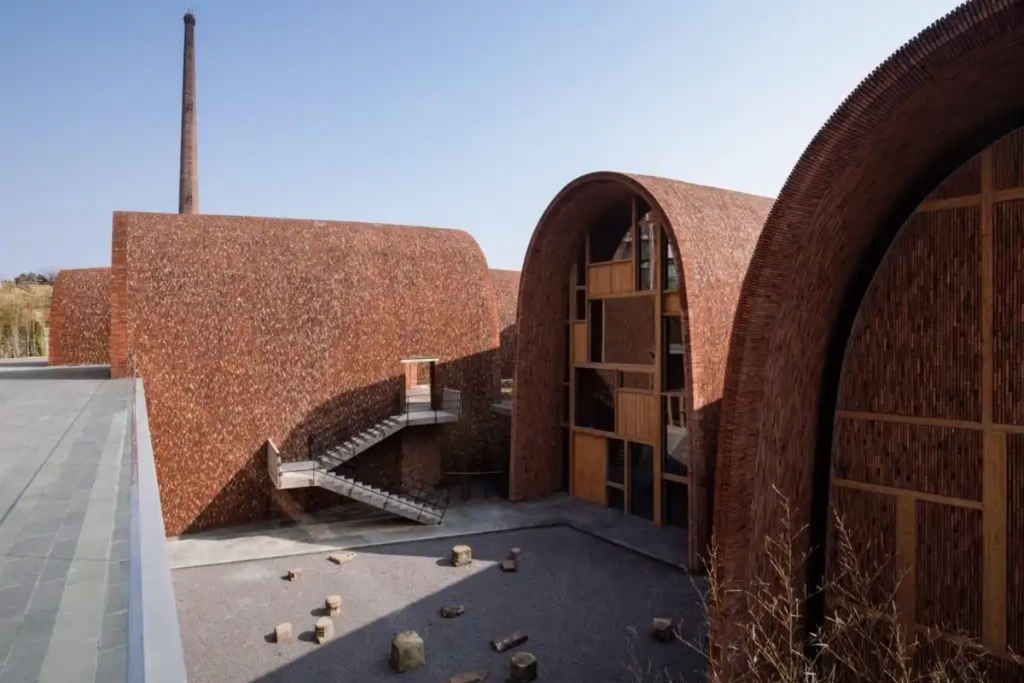
Walk through quickly and the vaults are dramatic. Remain longer and their subtler relationships emerge. Light enters from openings inspired by traditional kiln structures. Brick changes tone with the hour. Ancient remains appear beside contemporary circulation paths.
For a regenerative travel itinerary, the museum works best as more than an architectural photo stop. Its real value lies in establishing the physical logic of the city before entering private studios later in the journey.
Clay requires fire. Fire requires kilns. Kilns demanded bricks. Old kiln bricks became buildings. The architecture tells the same material story as the porcelain.
A design hotel becomes more convincing when its materials actually belong to the place outside its doors.
Taoxichuan Hotel, part of The Unbound Collection by Hyatt, sits within the Taoxichuan cultural and creative quarter. Designed by David Chipperfield Architects, the property occupies three interconnected buildings and contains 196 rooms and suites. Hyatt describes ceramic tiles, terracotta and cobalt accents throughout the interiors, consciously connecting the hotel to Jingdezhen's material history.
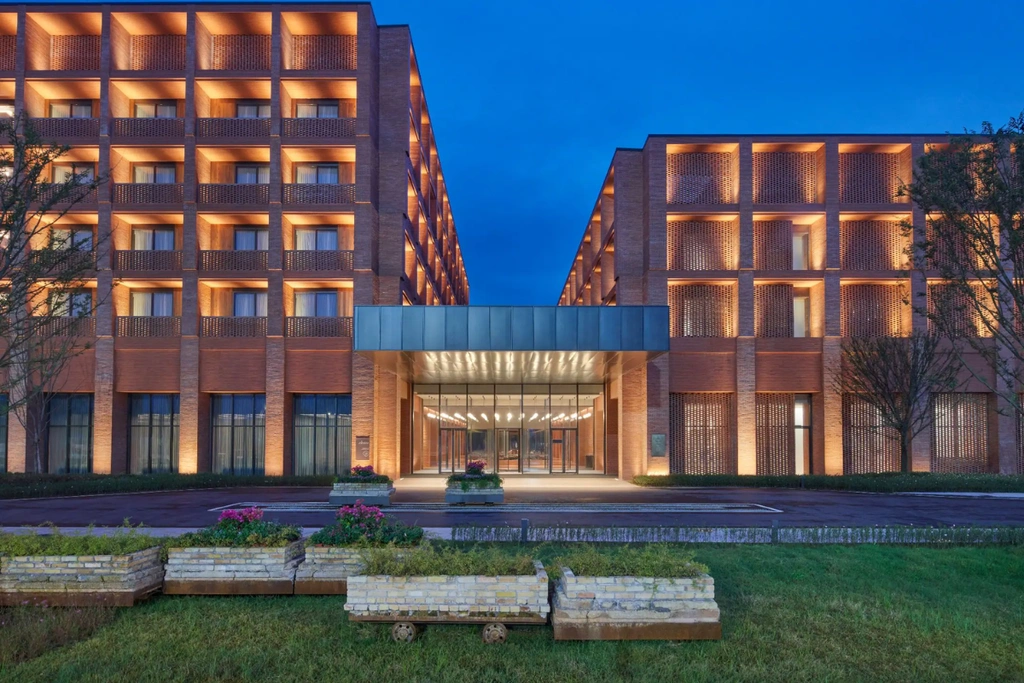
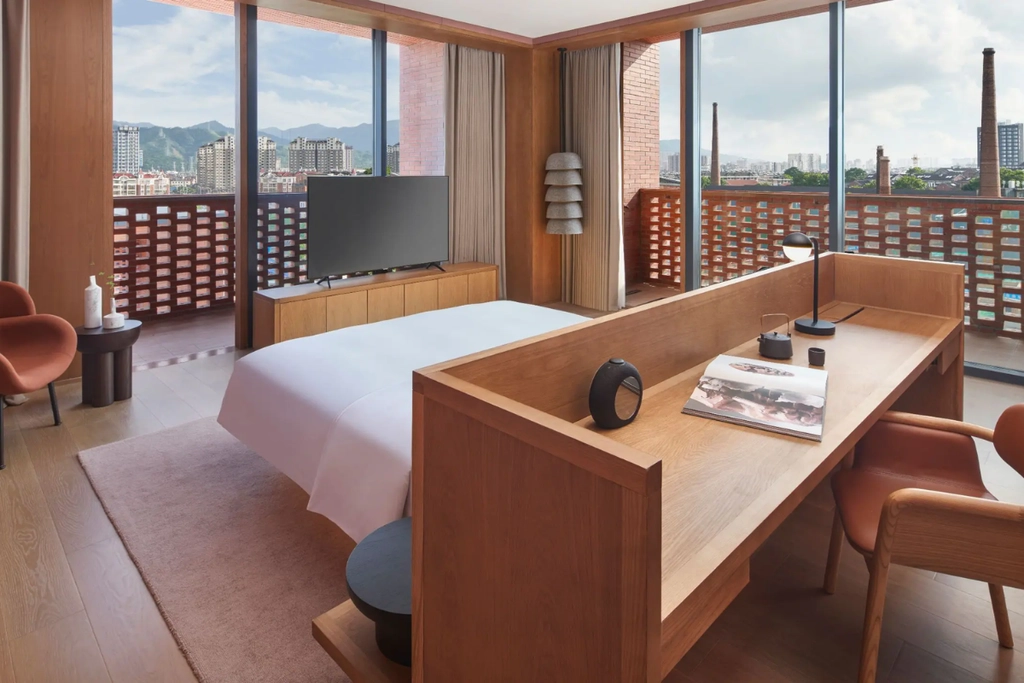
Its location makes it a useful urban base for travelers prioritizing museums, markets and contemporary ceramic culture. Hyatt also offers ceramic-making experiences and Song Dynasty tea-art activities using locally designed tea sets, providing an accessible introduction for guests before more specialized studio encounters.
Yet Jingdezhen becomes quieter once the journey moves toward Sanbao.
Sanbao International Ceramic Art Village has operated as an international ceramic residency environment since the late 1990s, bringing studios, workshops and visiting artists into a greener valley setting beyond the dense urban core.
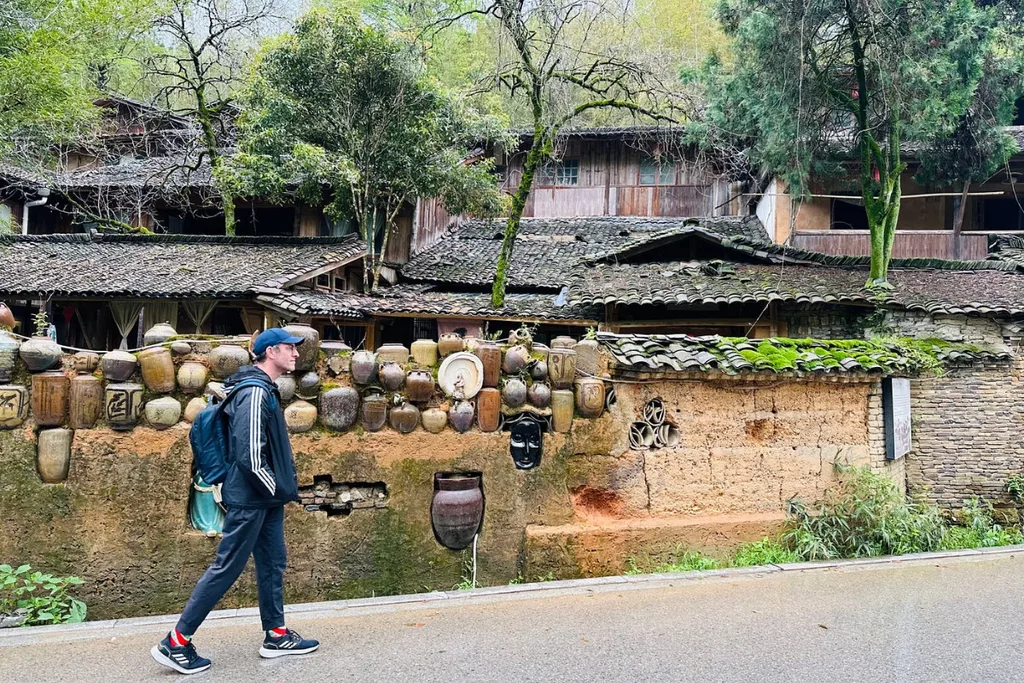
Small design-oriented accommodation has developed around this creative geography. Xingsam Dongliyuan, for example, sits within the Sanbao Cultural and Creative Center, making it possible to stay close to the area's studio culture rather than commute into it for a few hours.
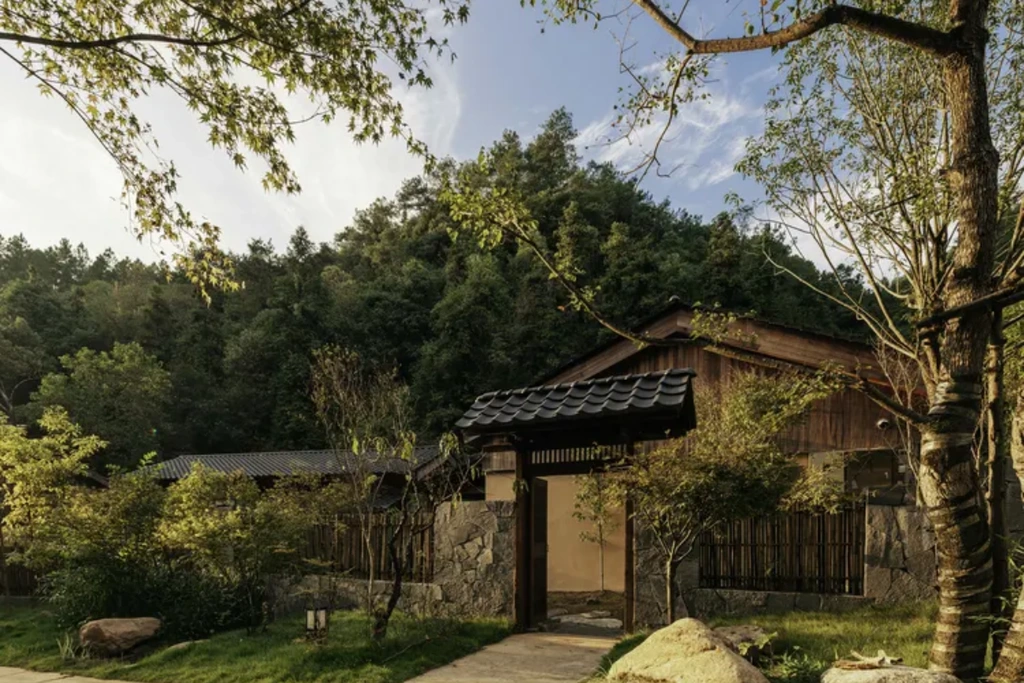
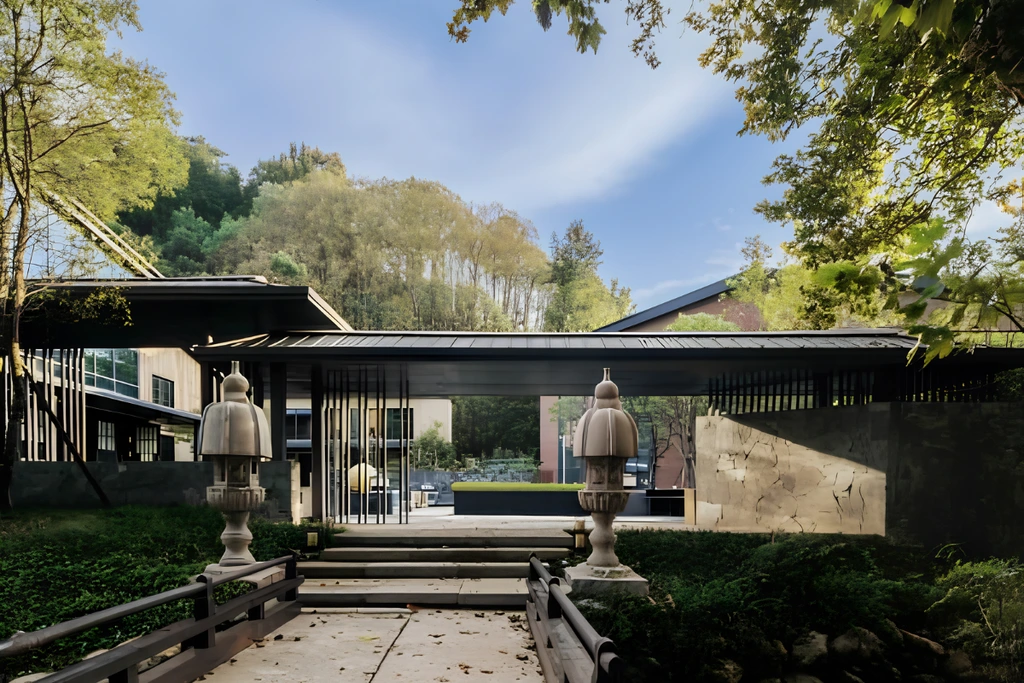
For travelers with more time, this is where Jingdezhen starts becoming less about sightseeing and more about inhabiting a rhythm.
Tea tastes different when the person pouring it has also made the cup.
Sanbao's value lies in proximity between landscape and practice. Ceramic studios, residencies, galleries and creative businesses sit within the valley, while international artists have long travelled here to work within Jingdezhen's material ecosystem.
For art collectors and design travelers, privately arranged studio appointments can become the journey's deepest encounters. The purpose is less about gaining an impressive behind-the-scenes photograph and more about learning how individual makers think.
Ask about clay bodies. Look at test tiles stacked beside finished works. Study what the artist rejects. Discuss why one glaze requires a particular firing atmosphere or why another vessel intentionally carries small distortions.
This is where luxury begins to resemble connoisseurship.
A bespoke commission can extend that encounter beyond the trip. A tea service, vessel or architectural ceramic piece acquires another meaning when its future owner understands where its material came from and how it passed through the studio.
Regenerative travel gains substance here because cultural participation creates economic value for living practitioners. The craft remains something people can build careers around, teach to others and continue developing.
Perfect porcelain tells only half the story.
Jingdezhen China Ceramics Museum holds more than 30,000 ceramic pieces across historical periods, according to Hyatt's local cultural guide. Historic blue-and-white porcelain, monochromatic glazes and later ceramic developments allow visitors to understand how dramatically Jingdezhen's visual language changed over centuries.
For collectors, however, ceramic fragments can be equally educational.
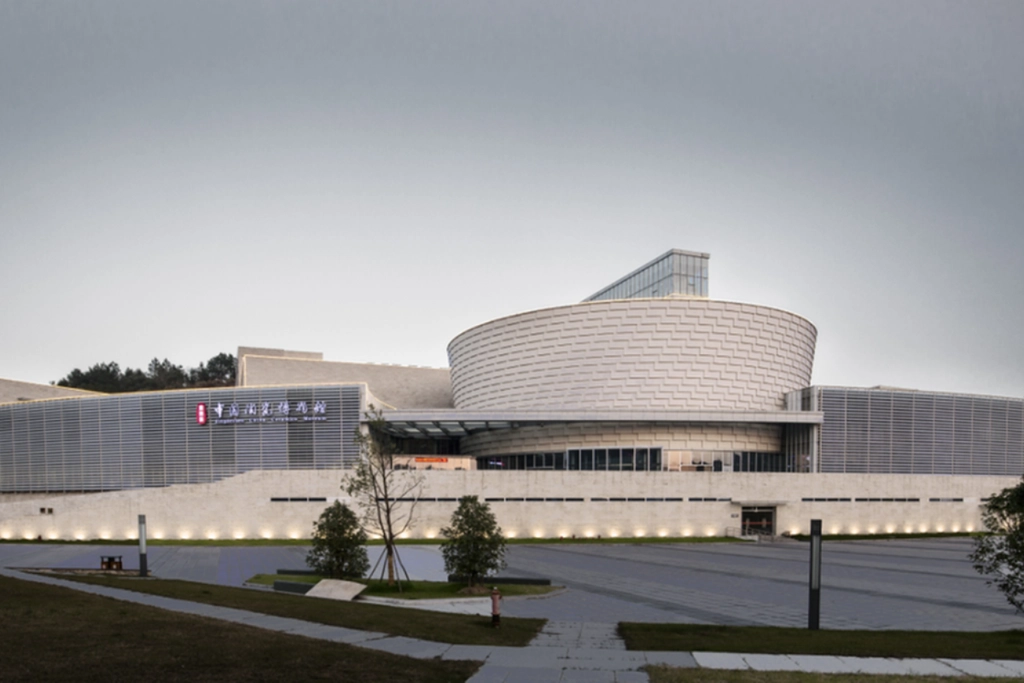
Kiln archaeology reveals experiments that failed, pieces distorted by heat and glaze results that never reached the imperial table. Such evidence makes porcelain easier to understand as technology rather than pure decoration.
Blue-and-white wares become more impressive once cobalt, firing and translucency enter the conversation. A monochrome vessel starts asking questions about chemistry. The apparent simplicity of a white porcelain body reveals extraordinary control.
A serious collector can leave Jingdezhen with fewer objects and a considerably sharper eye.
That outcome may be one of the more valuable forms of contemporary luxury.
Porcelain makes unusual sense once something warm is poured into it.
Tea culture allows ceramic objects to perform rather than simply be admired. Weight affects how a cup sits in the hand. The thickness of the rim changes how liquid reaches the mouth. Glaze influences tactility. A tiny foot ring alters balance when the vessel is placed on a table.
Jingdezhen's hospitality industry has begun weaving these relationships into visitor experiences. Taoxichuan Hotel, for example, specifically offers Song Dynasty tea-art experiences using local ceramic ware.
A more intimate journey can take the ritual into artist studios or private tea spaces, where contemporary ceramics become part of the tasting itself.
Allow time for meals as well.
Serving regional Jiangxi dishes on studio-made ceramics places craft directly inside daily life. Plates stop functioning as backgrounds. A rough glaze interacts with food differently from glossy porcelain. Hand-thrown bowls introduce tiny asymmetries beneath the fingers.
This is regenerative travel at its most approachable. Heritage survives because people continue using it.
A remarkable thing happens after several days in Jingdezhen. Porcelain becomes difficult to see as an anonymous material.
A cup begins suggesting clay preparation, throwing, trimming, glazing and heat. A blue line implies cobalt and brushwork. A slight irregularity may reveal the hand responsible for it. Even a broken shard starts carrying information.
That shift in perception is what makes Jingdezhen particularly compelling within regenerative travel. The city can provide beautiful hotels, extraordinary architecture and collectible objects. Its deeper luxury lives in the ability to connect these pleasures to the system of knowledge that produced them. A traveler can support a studio, learn why a craft survives, understand why a historical object matters and commission something intended to remain in use for decades. Then, months later, a tea cup sits on a table thousands of kilometers away. The journey has ended. The relationship with Jingdezhen has not.