MENU
Close





Jean Paul Gaultier Hermès bags turned the house’s most aristocratic codes into something slyer, softer, and far more mobile. Between 2003 and 2008, Jean Paul Gaultier gave Hermès a handbag era full of wit, technique, and delicious irreverence.
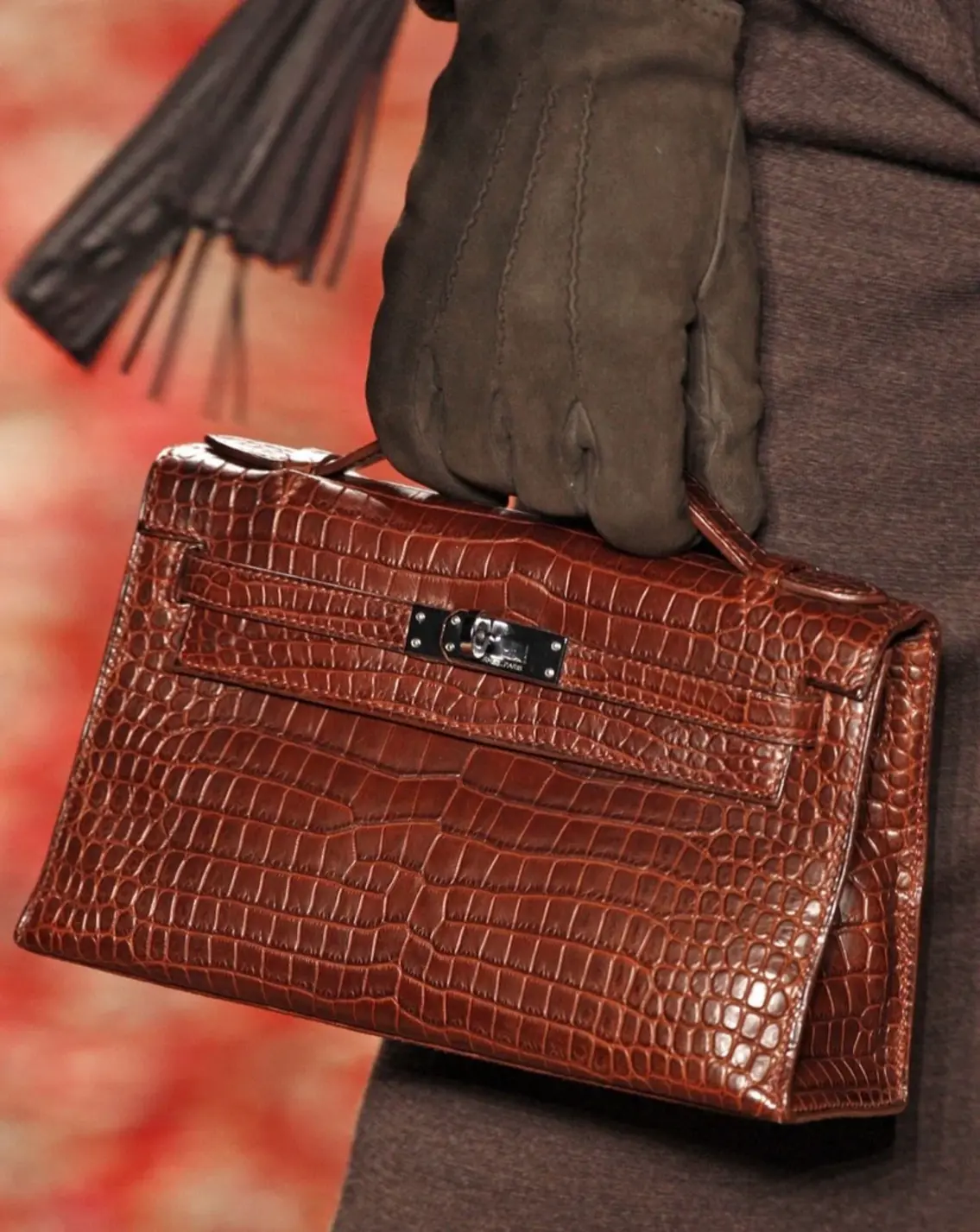
Jean Paul Gaultier Hermès bags turned the house’s most aristocratic codes into something slyer, softer, and far more mobile. Between 2003 and 2008, Jean Paul Gaultier gave Hermès a handbag era full of wit, technique, and delicious irreverence.
March 27, 2026
Advertisement
Advertisement


When Jean Paul Gaultier arrived at Hermès in 2003, the fashion world braced for a collision. On one side, the 19th-century harness-making heritage of the Dumas family; on the other, the man who put Madonna in a conical bra. What followed was not a clash, but a seductive seven-year dialogue that reimagined what leather could do.
Jean Paul Gaultier did not just change the shapes; he played with the very soul of the savoir faire. Our first act unveils the intoxicating lineup of iconic bags birthed during the Jean Paul Gaultier era at Hermès, tracing his subversive touch from 2003 through 2008.
The debut was an equestrian fever dream. Jean Paul Gaultier’s first major move was to take the Birkin, a bag usually carried in the crook of the arm like a trophy, and make it a creature of movement.
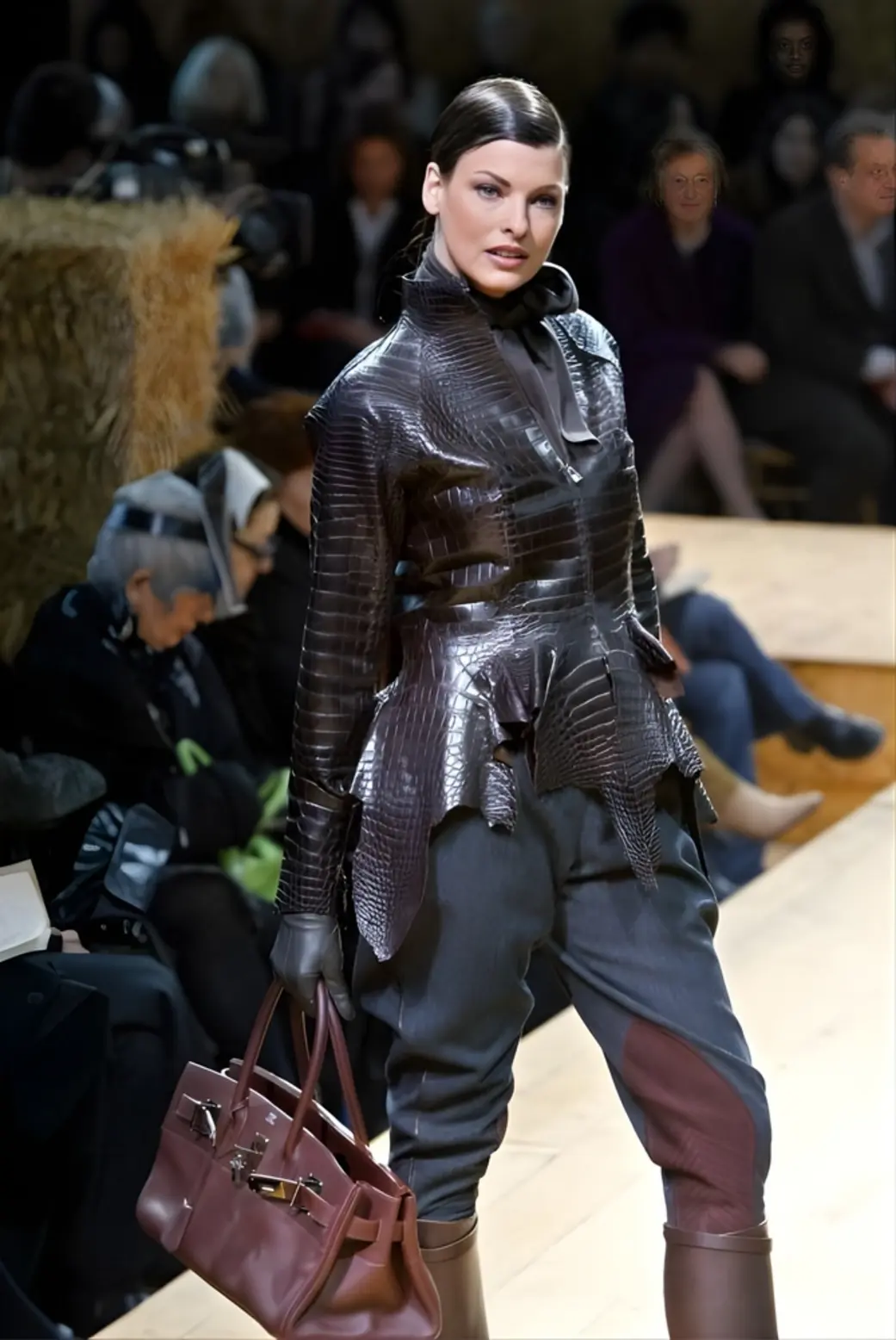
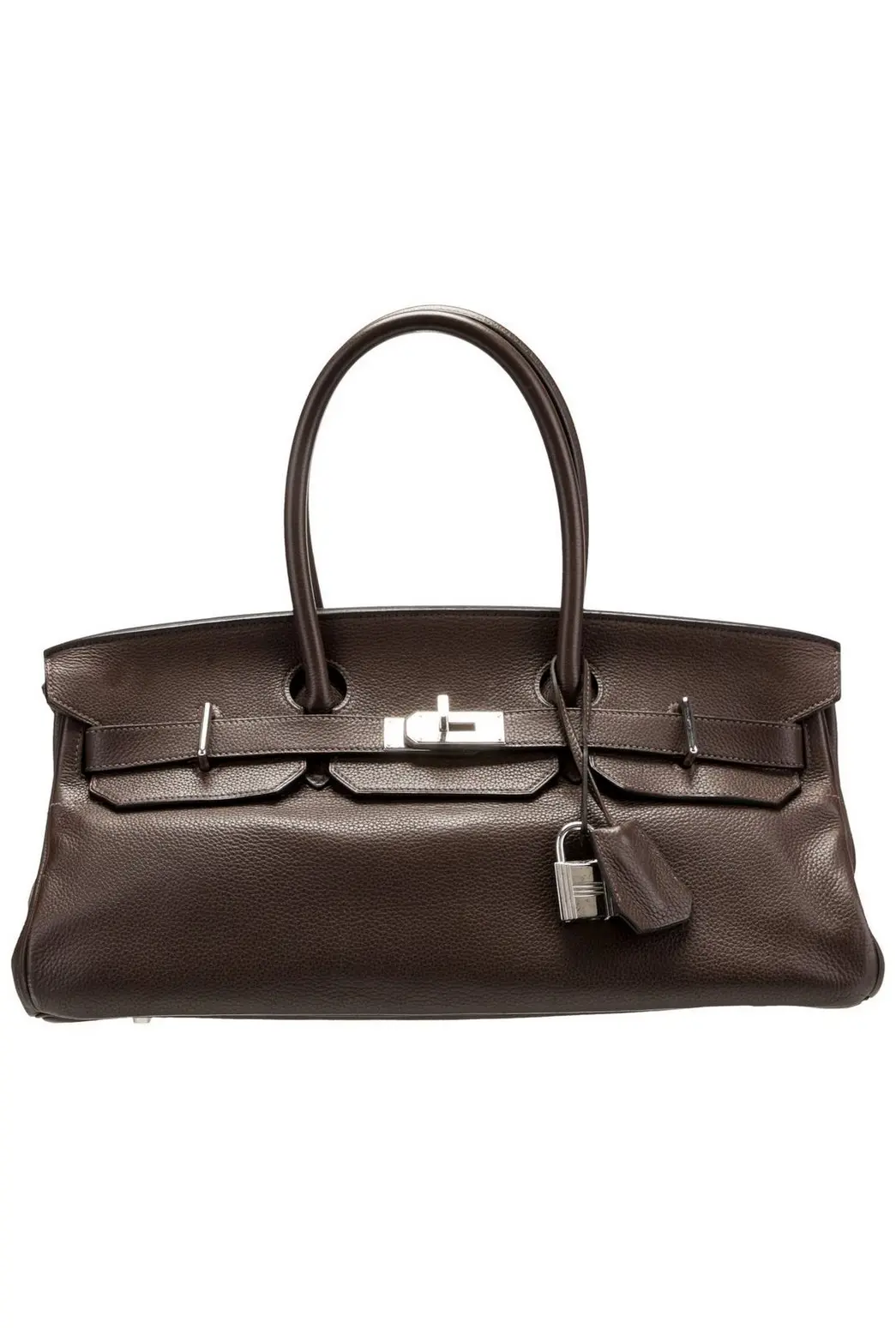
The Shoulder Birkin or Jean Paul Gaultier Birkin: Jean Paul Gaultier lengthened the handles and compressed the body. It was not just a big Birkin; it was a structural feat. By shifting the proportions, he changed the center of gravity, allowing the bag to sit snugly against the ribs. In Clemence or Togo leather, the slouch became a design element, suggesting a woman who was too busy and too chic to worry about perfect structure.
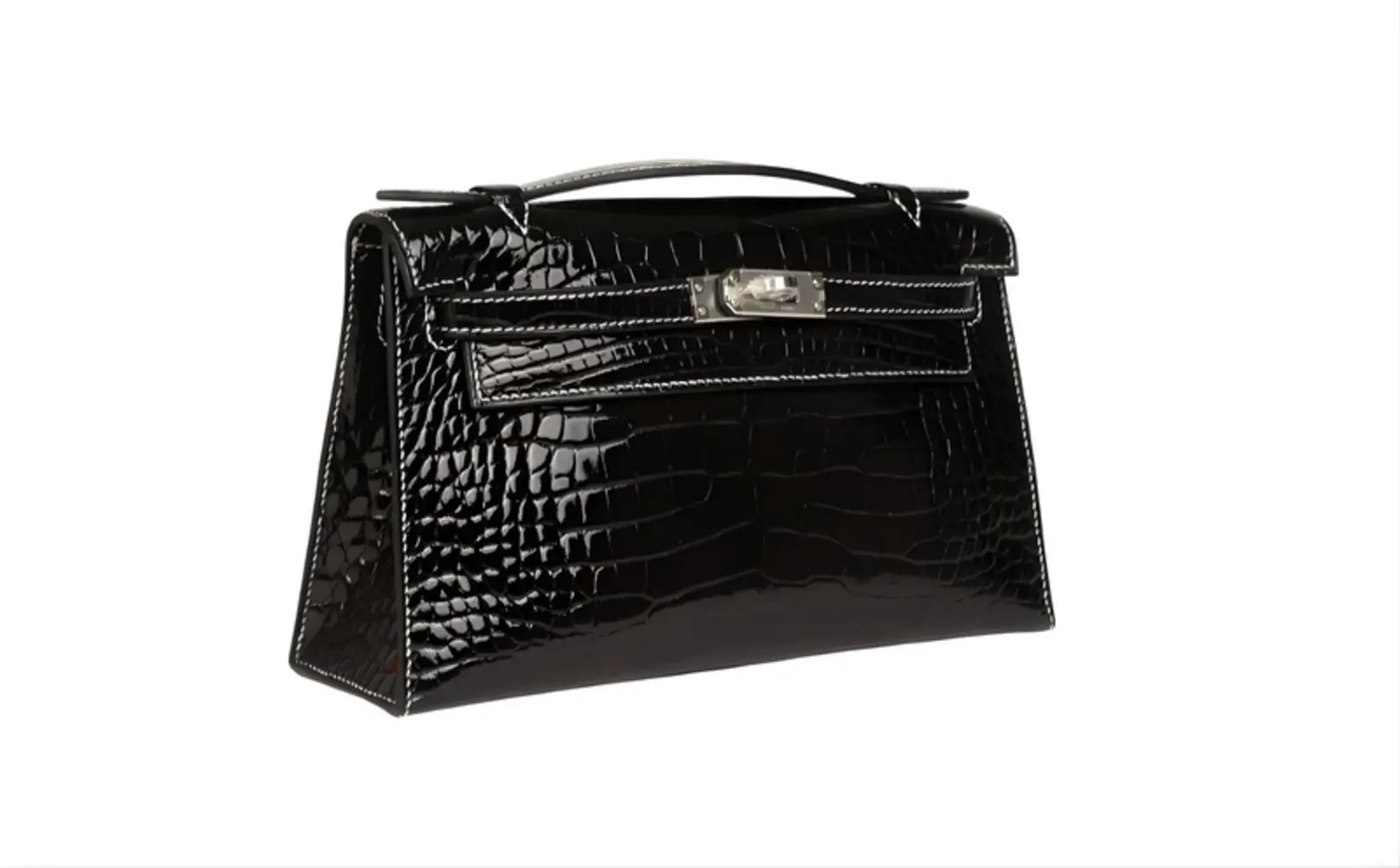
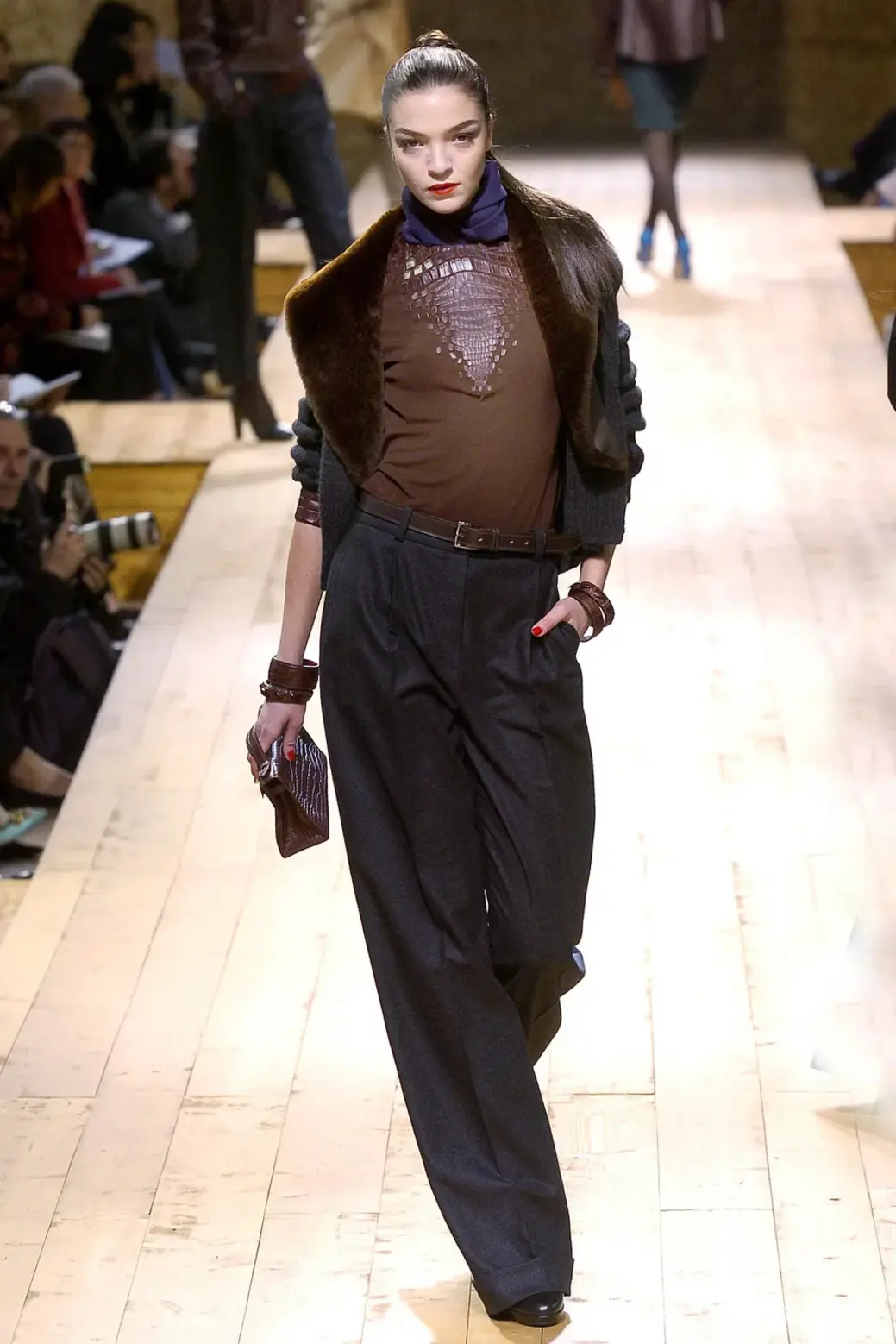
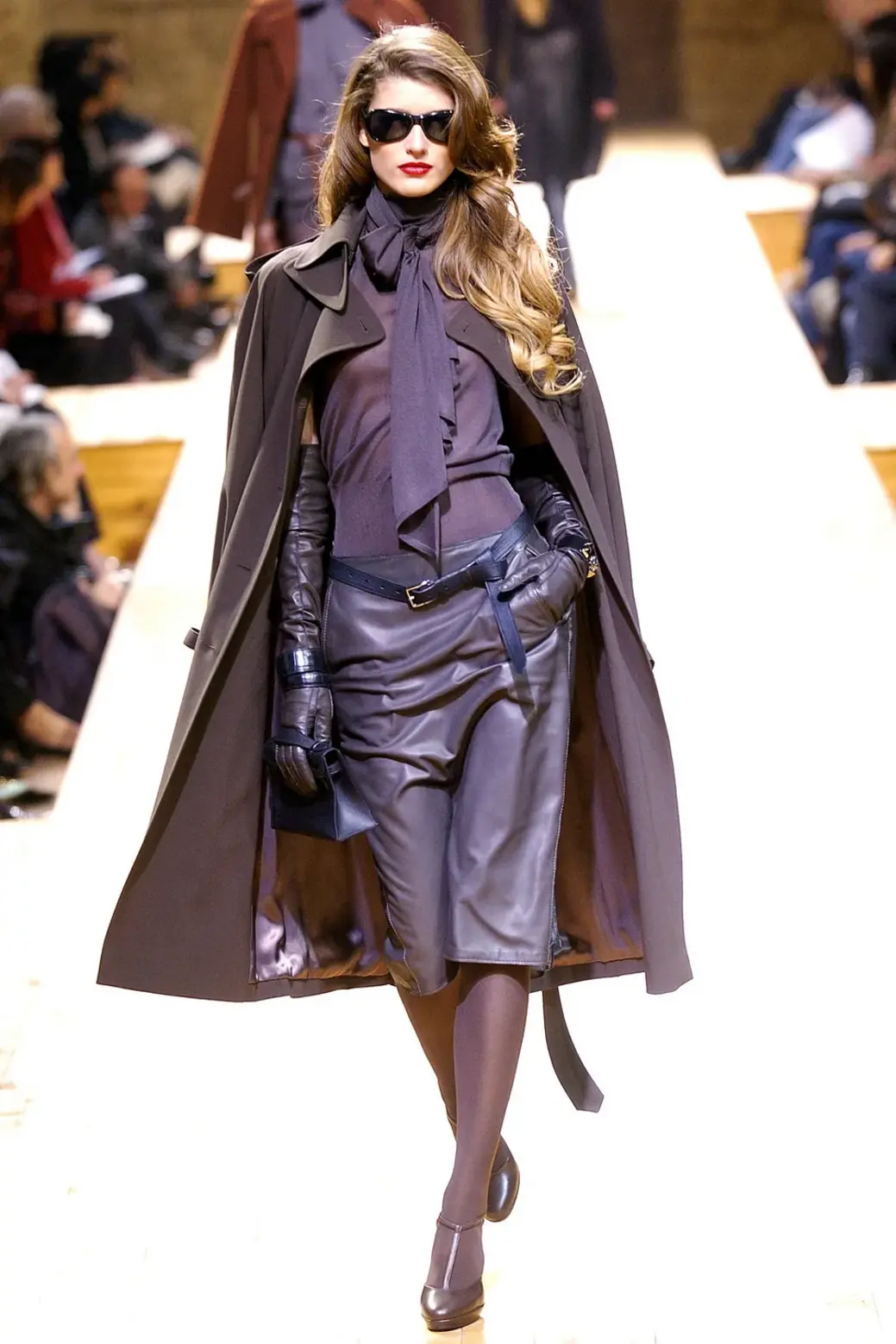
The Kelly Pochette: This was a stroke of genius hidden in plain sight. Originally a runway accessory, the Pochette stripped the Kelly of its handle and strap, leaving only the trapeze essence. It required a different kind of internal reinforcement, stiff enough to hold its shape as a clutch but soft enough to tuck under an arm. Today, it is a Grail piece because it captures the Kelly’s formality in a rebellious, handheld format.
Jean Paul Gaultier loved to experiment with hard versus soft.
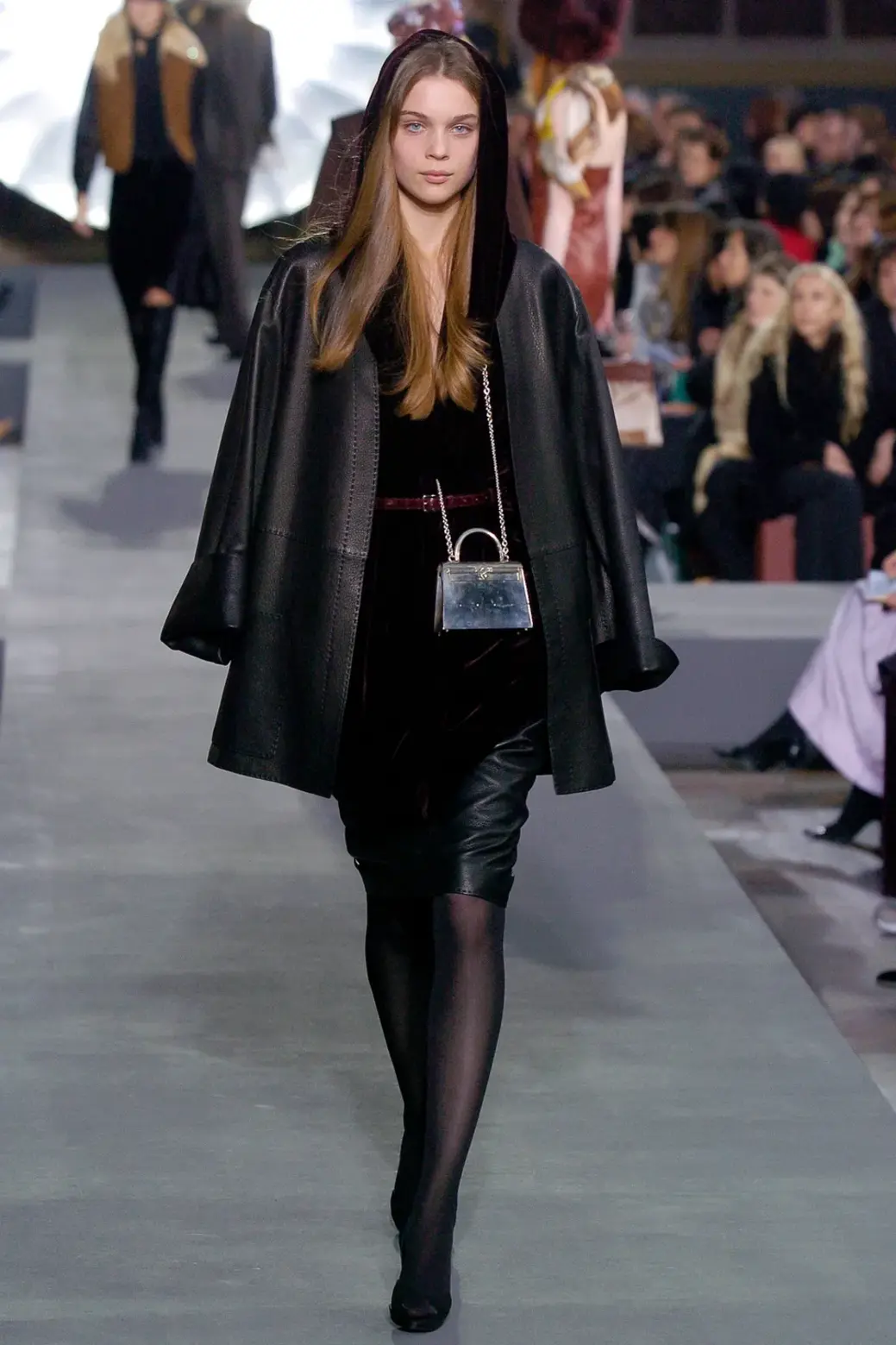
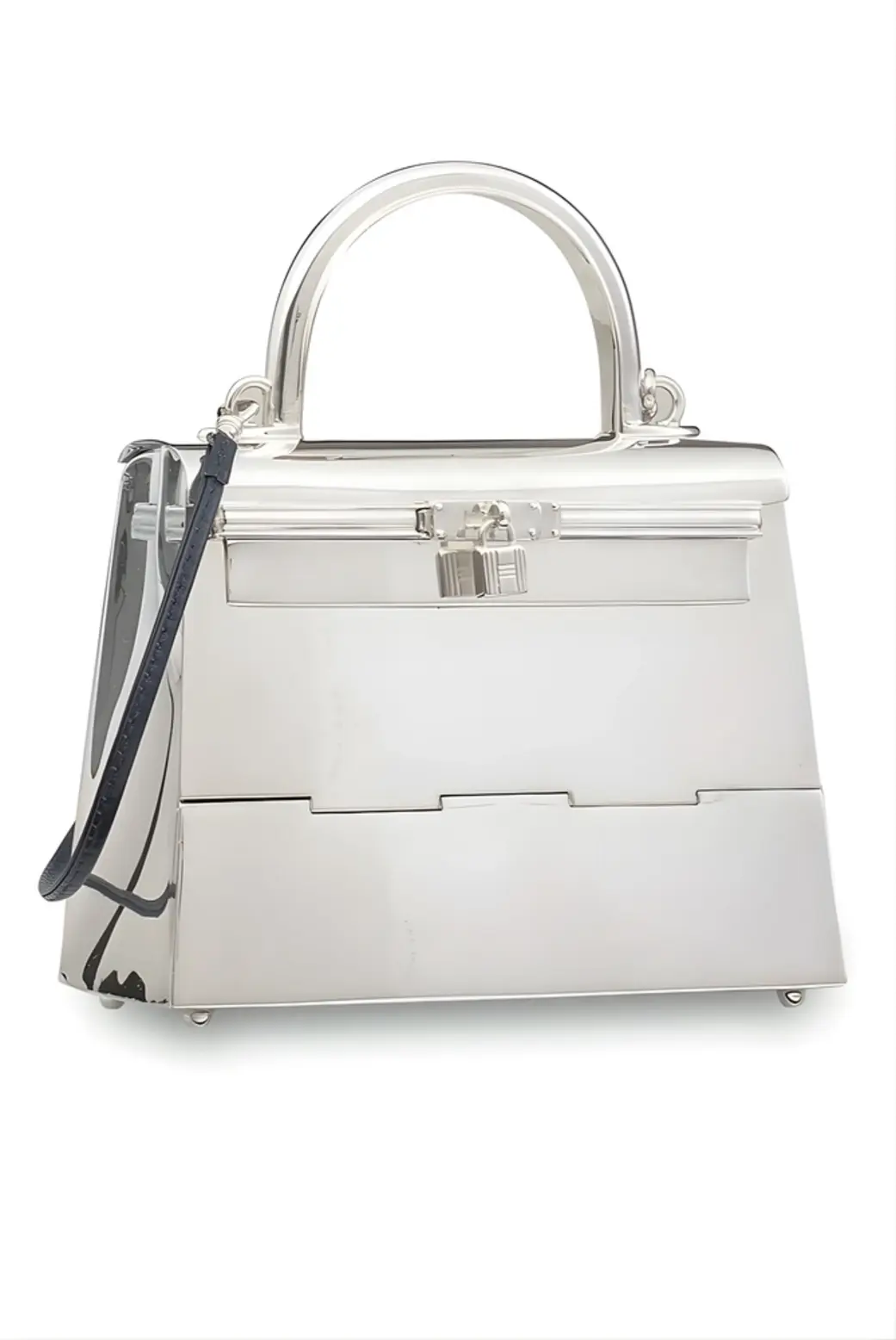
The Sterling Silver Mini Kelly 15cm: This is less a bag and more a piece of high jewelry. Crafted entirely of sterling silver, it was a technical nightmare for the workshop. Silver does not behave like leather; it does not give. Artisans had to mimic the look of the sangles and the touret in metal with microscopic precision. It is the ultimate Naughty piece, a bag that holds nothing but a lipstick and a heavy dose of irony.
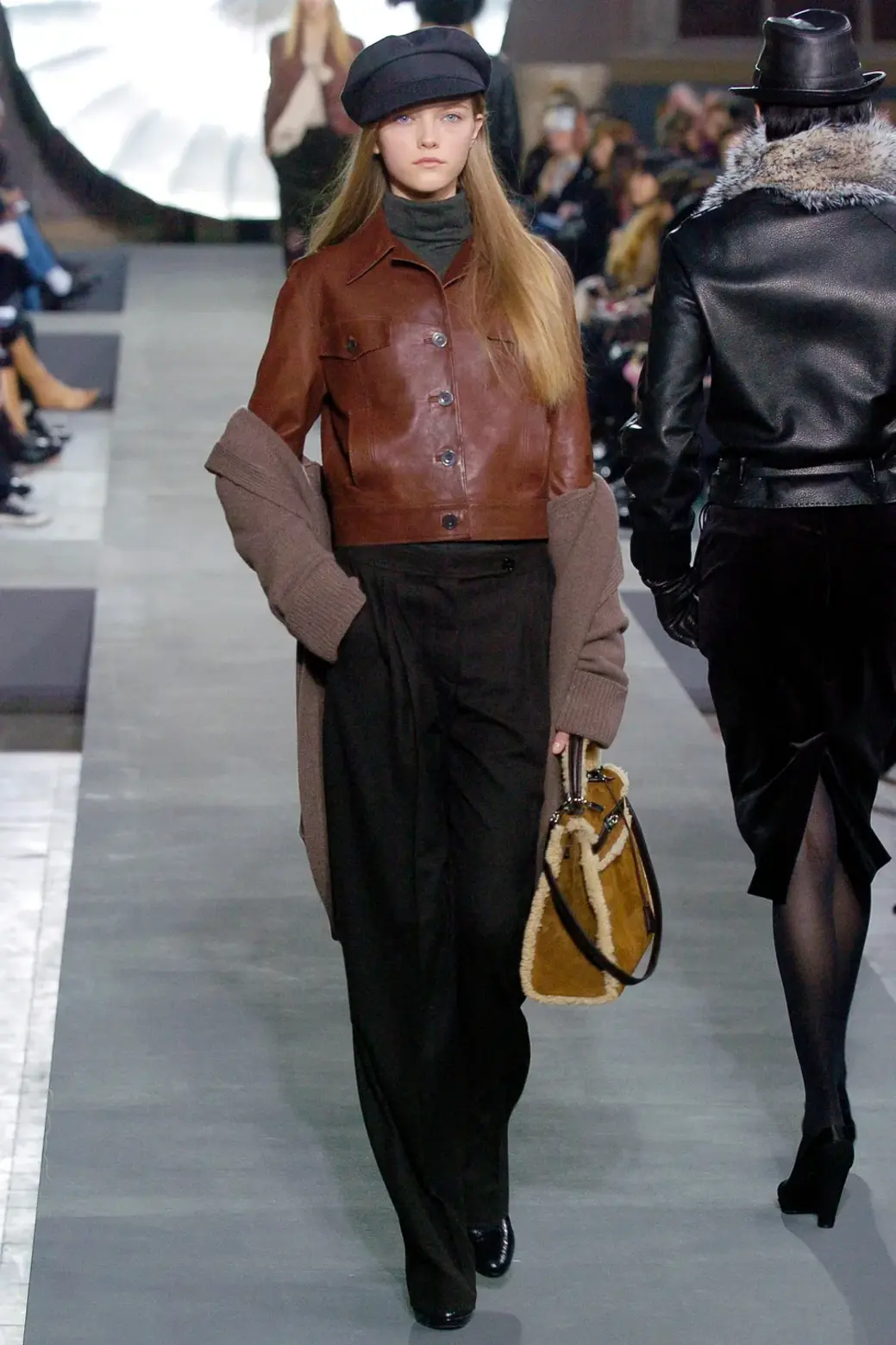
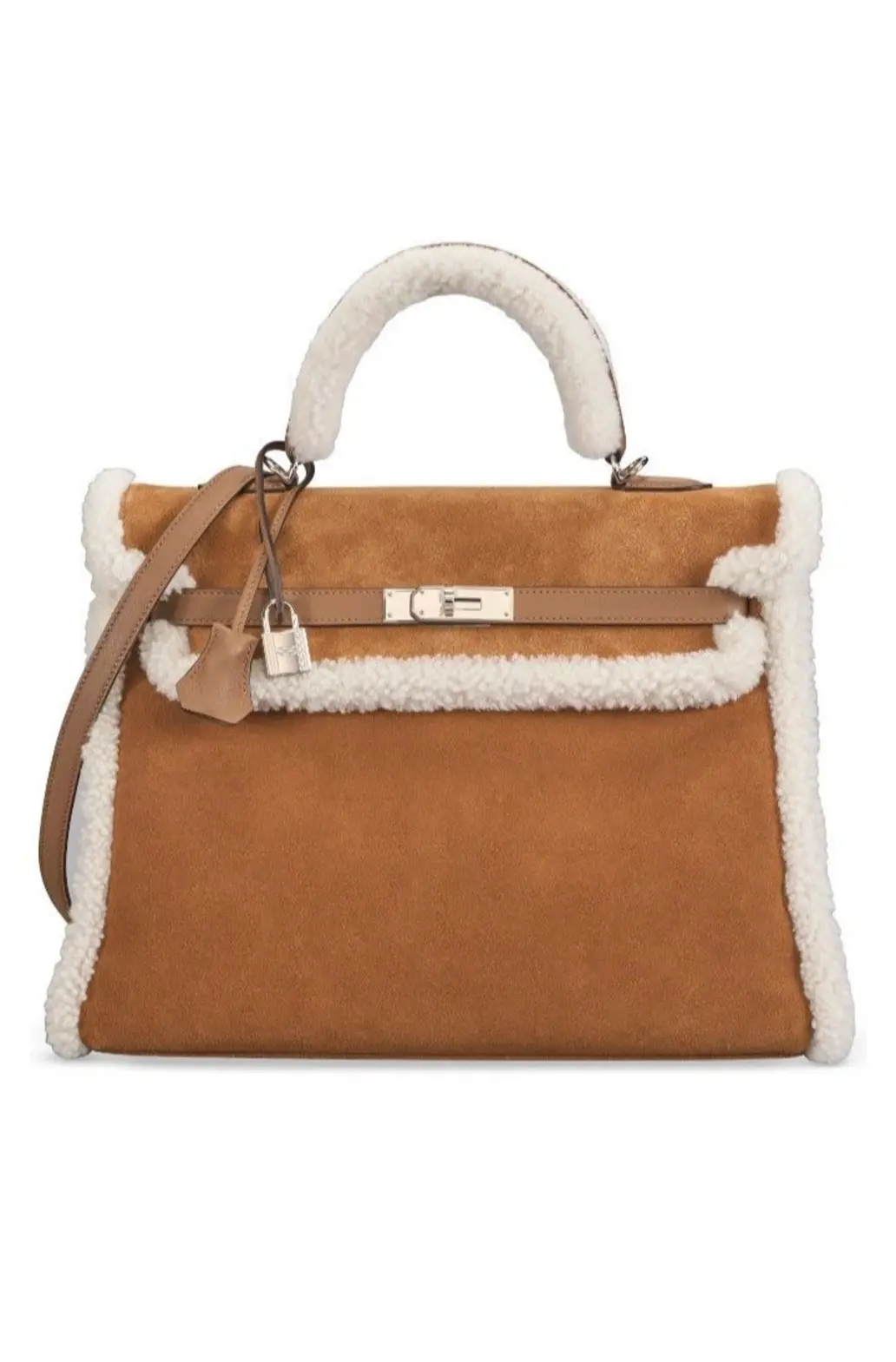
The Teddy Kelly 35: For winter, he flipped the script. The Mouton Shearling Teddy Kelly used Retourne construction, sewn inside out and flipped, to emphasize the fluff. It was a bold, tactile subversion, turning the world’s most serious bag into something you wanted to hug.
This season was about the Nomad. Gaultier was obsessed with how a woman travels.
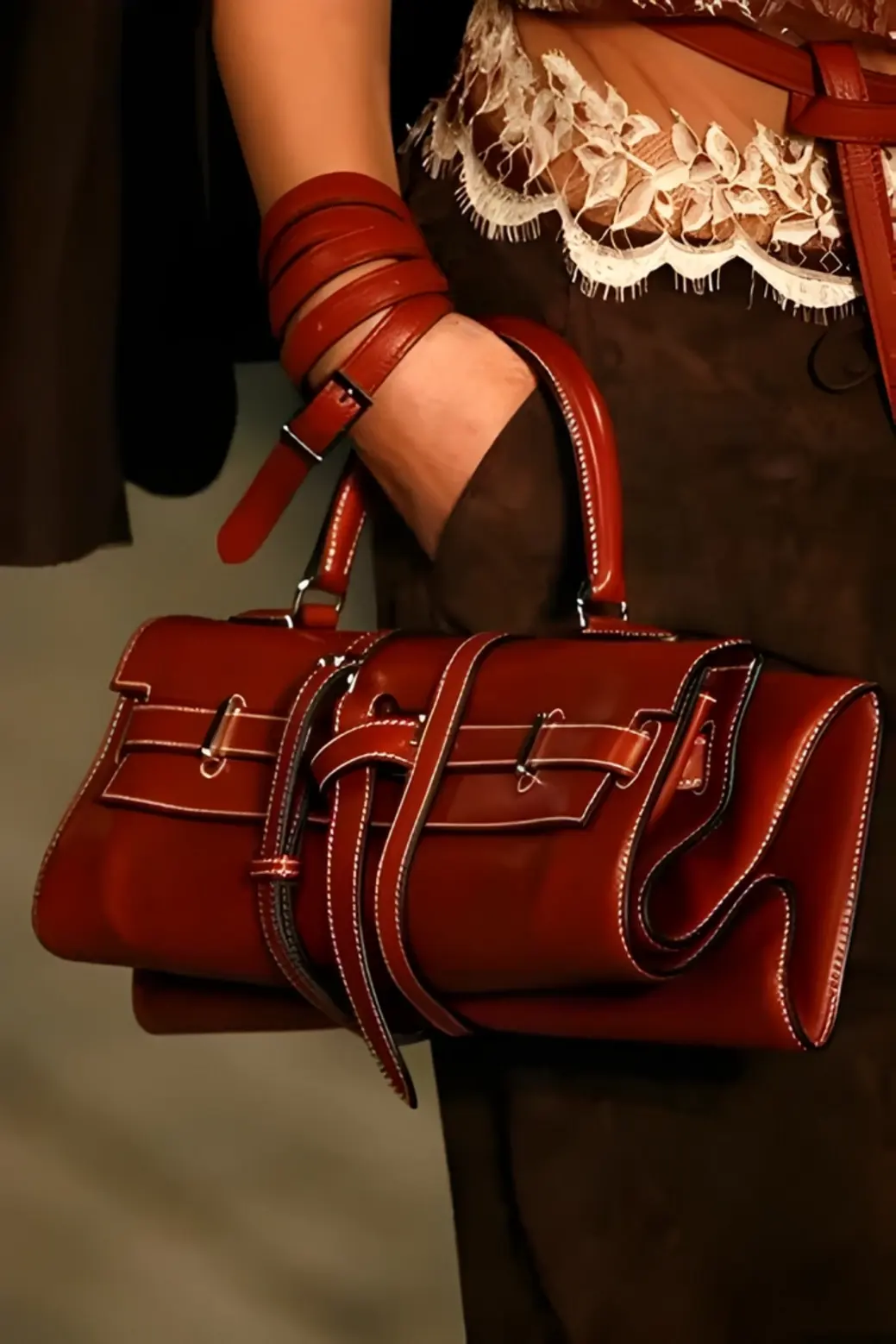
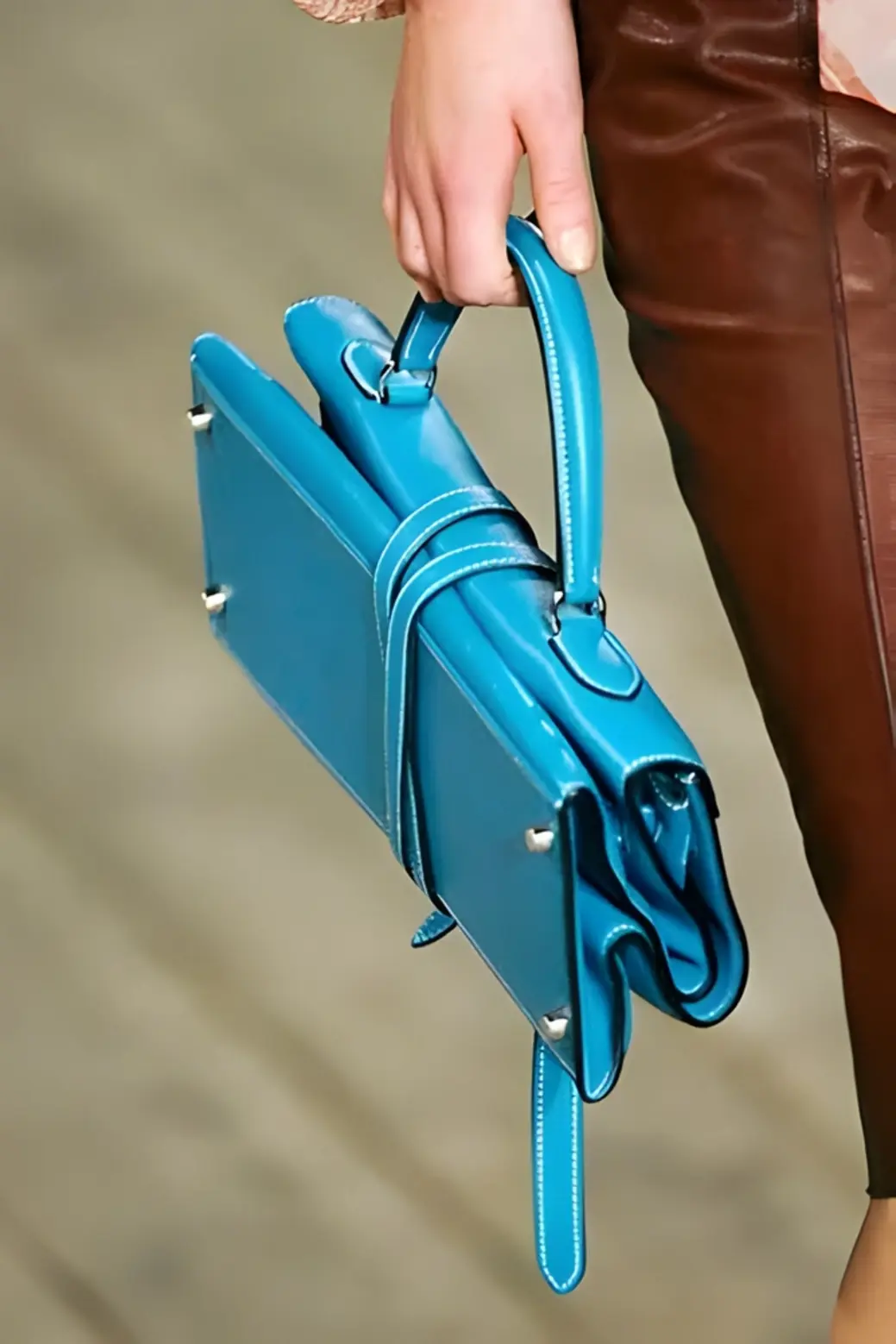
The Kelly Flat: A technical marvel. Most Kellys are built to be rigid in the Sellier style. The Flat was designed to be completely collapsible. It swapped the metal turnlock for a leather strap and buckle system, allowing the owner to fold it flat into a suitcase. It was a nod to the origins of Hermès as a maker of travel trunks, but with the Jean Paul Gaultier lazy-chic aesthetic.
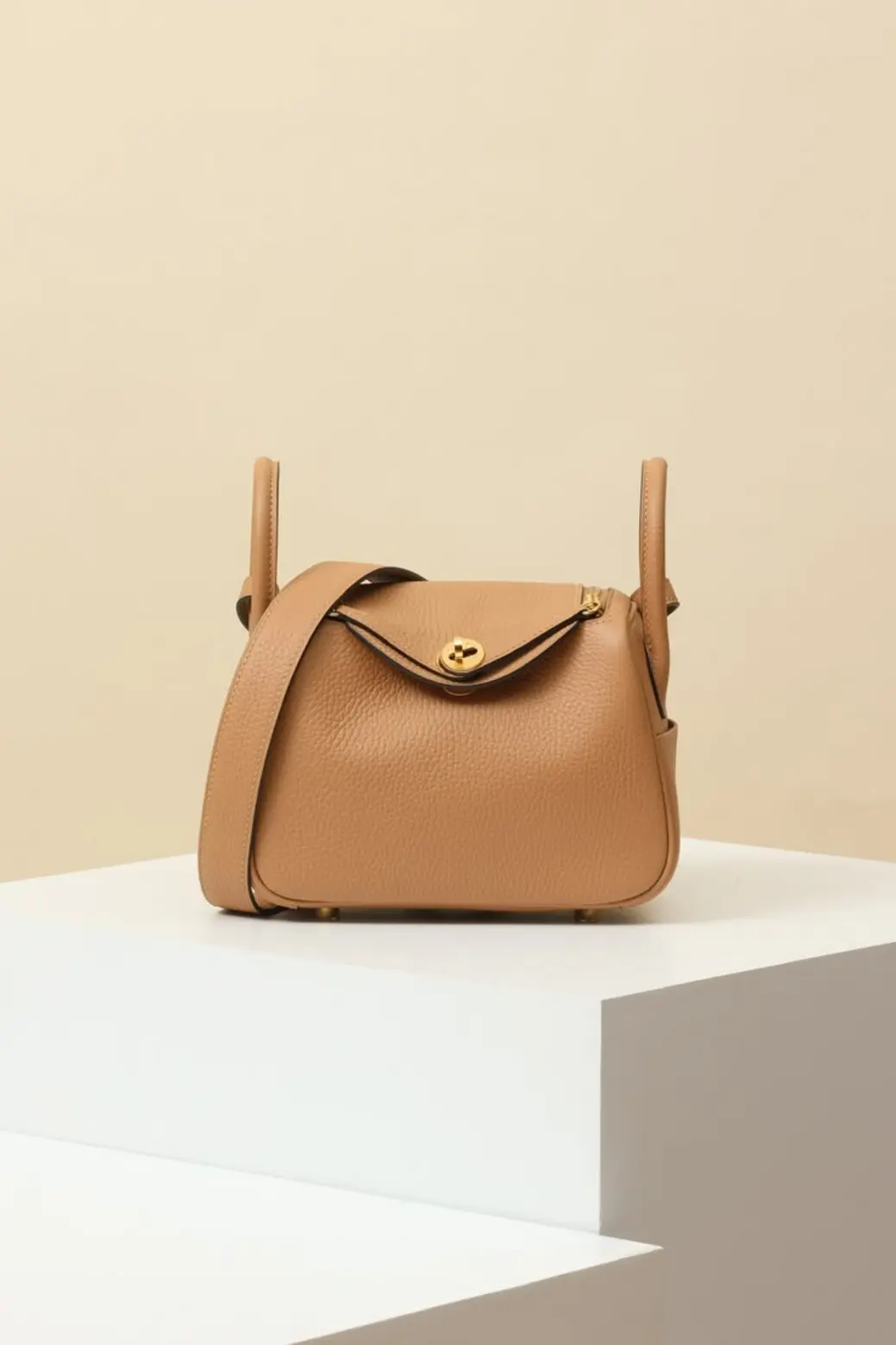
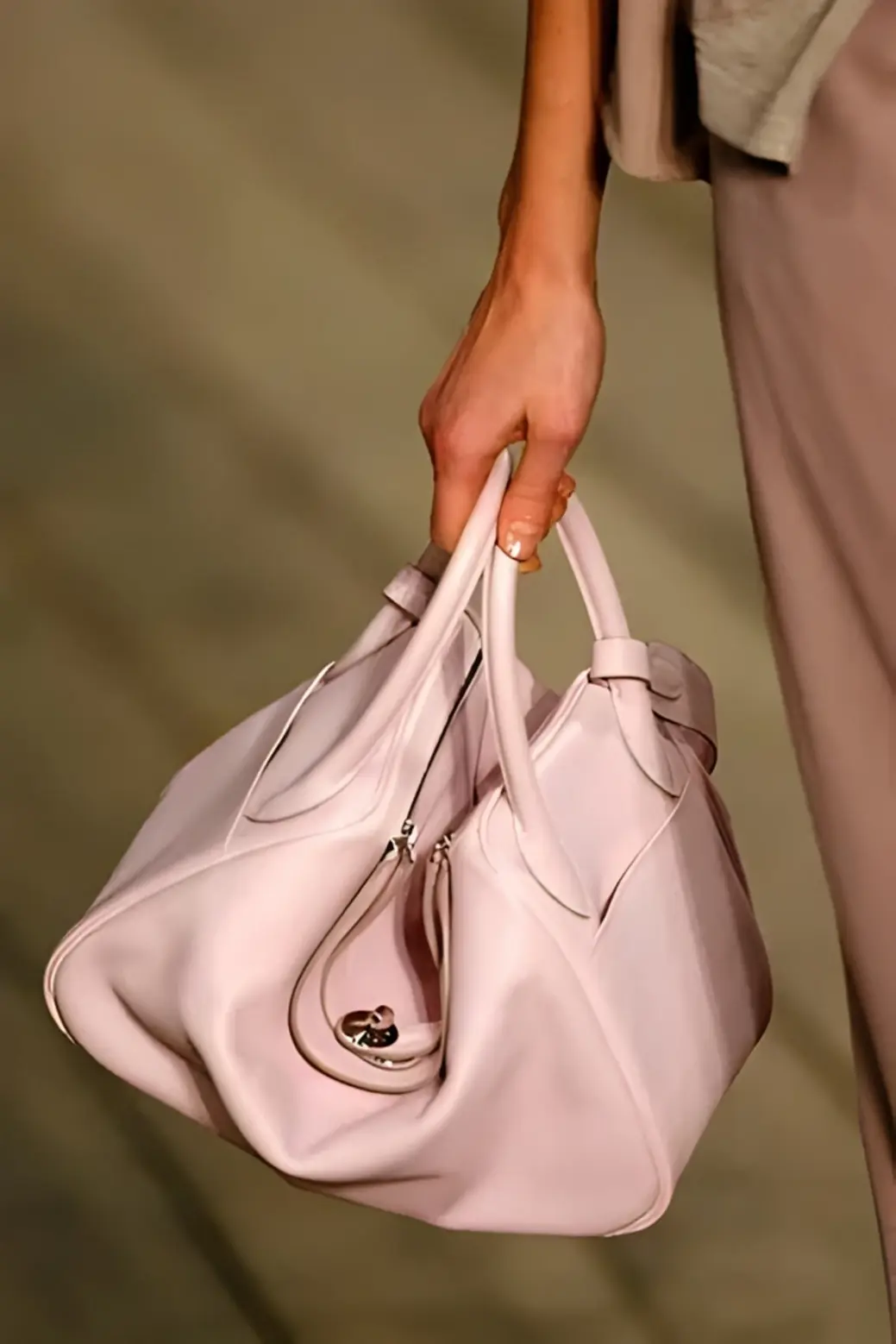
The Lindy: Named after the Lindy Hop dance, this was Jean Paul Gaultier’s most enduring silhouette. He moved the handles to the sides, perpendicular to the body, which allowed the bag to fold inward when carried, creating a U shape. It required a complex assembly of two separate gussets joined by a central bridge, a departure from the single block construction of the Birkin.
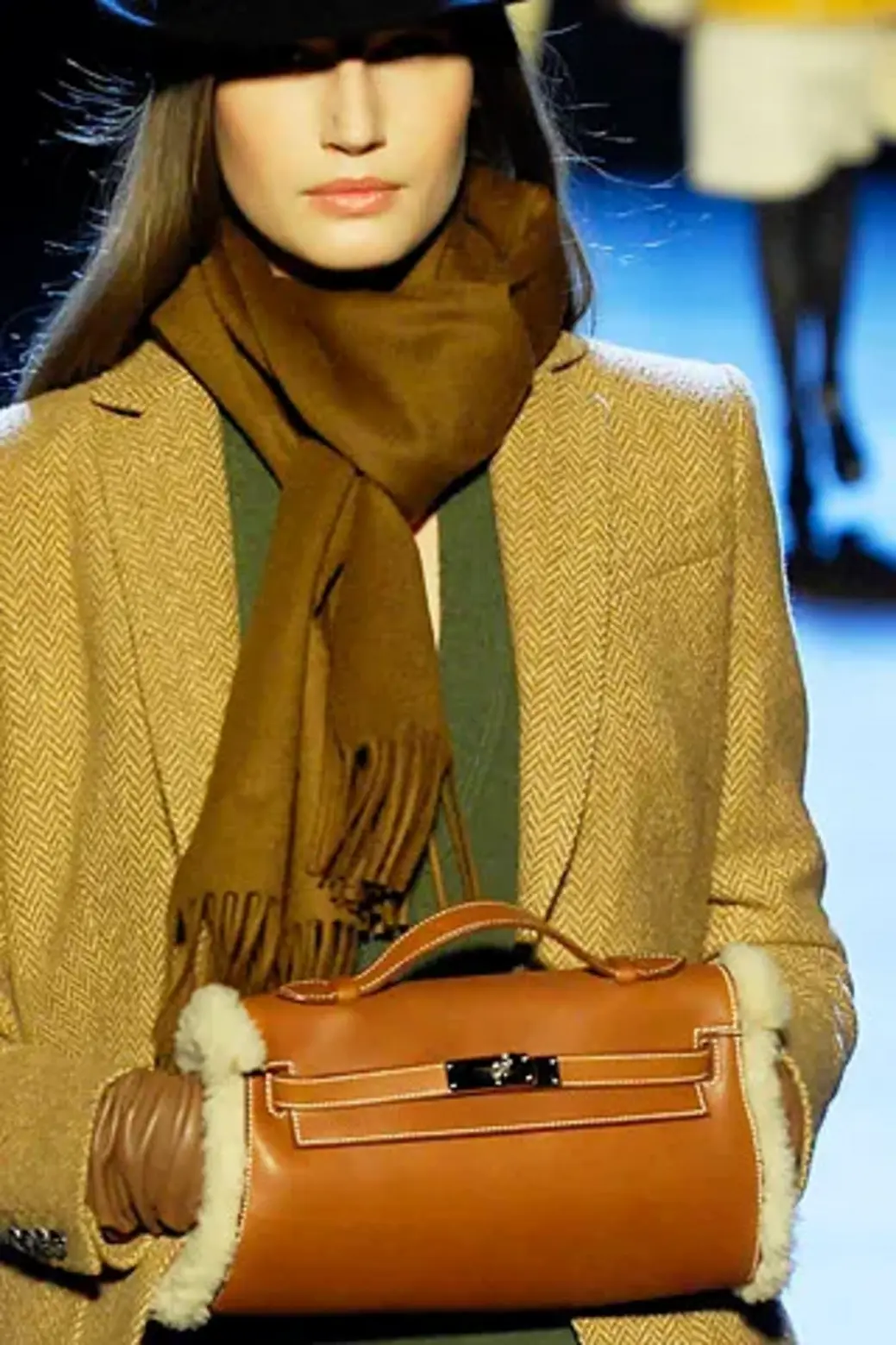
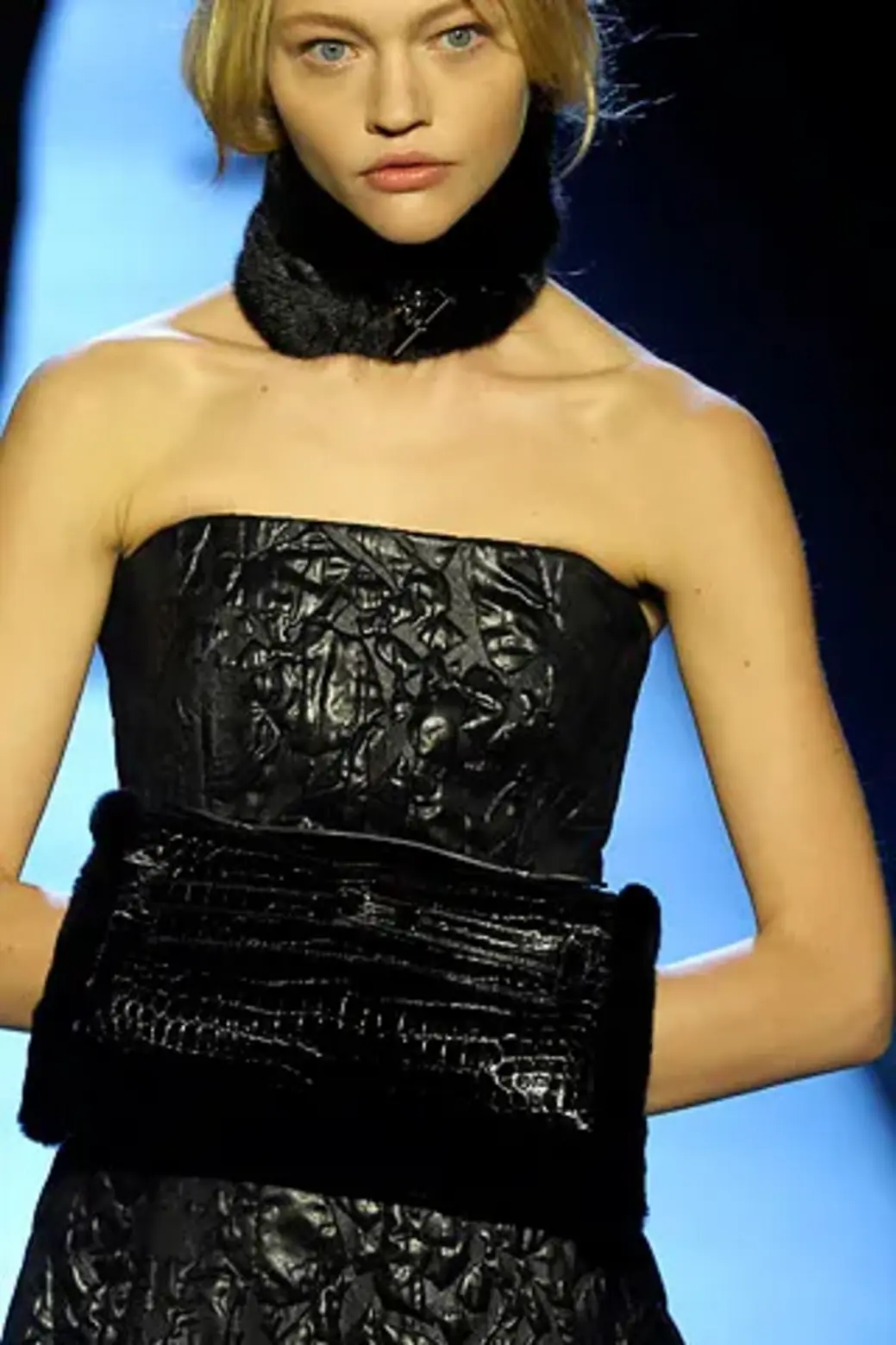
Perhaps the most Jean Paul Gaultier moment of all. He combined a handbag with a hand warmer. The Kelly Muff featured the iconic Kelly front, flap, straps, and lock, but the body was a tube of Mink fur or Exotic Croc. It was experimental, dramatic, and purely for the extravaganza of the runway. It remains one of the rarest archival pieces because it represents a moment where fashion was purely about the sensation of luxury.
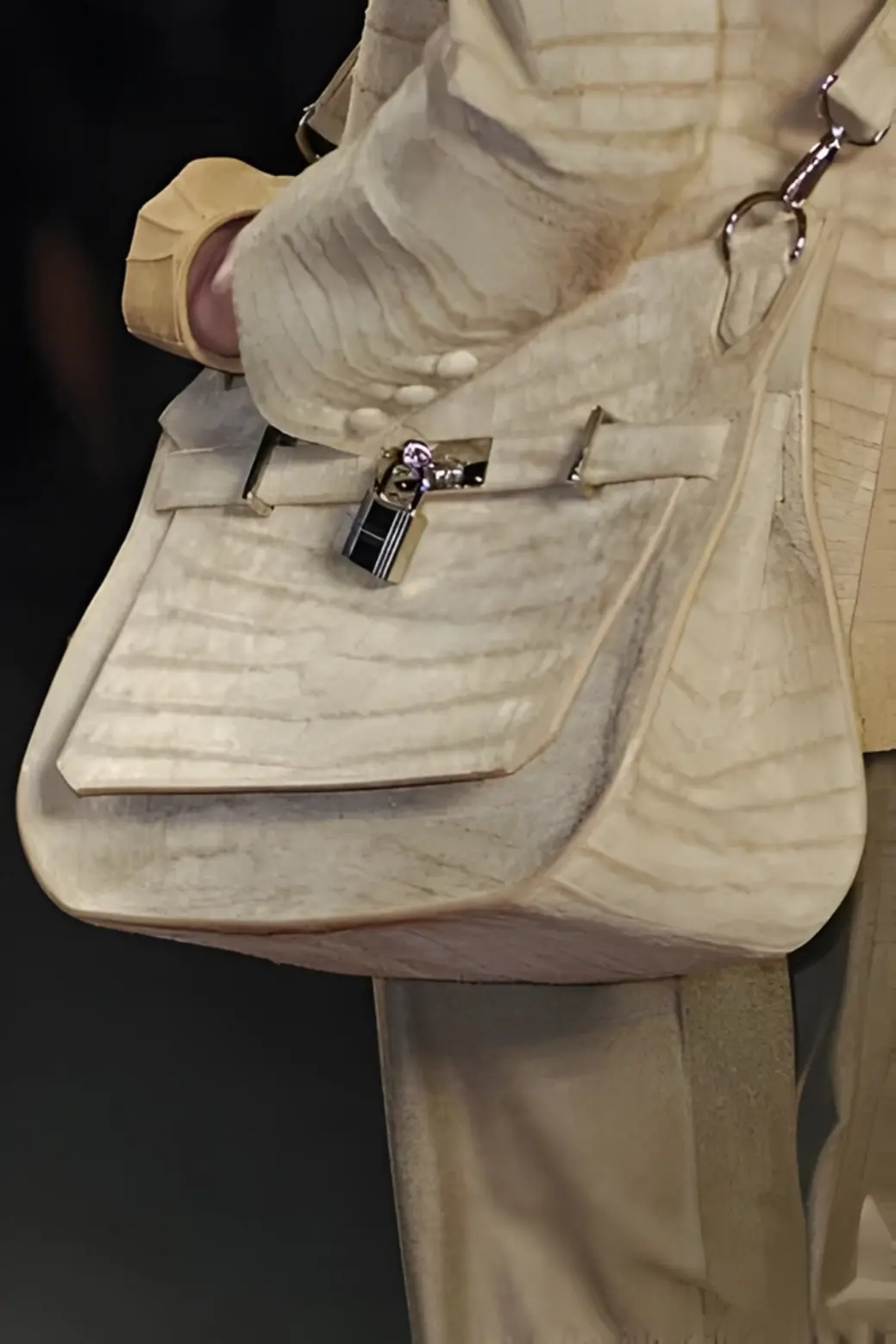
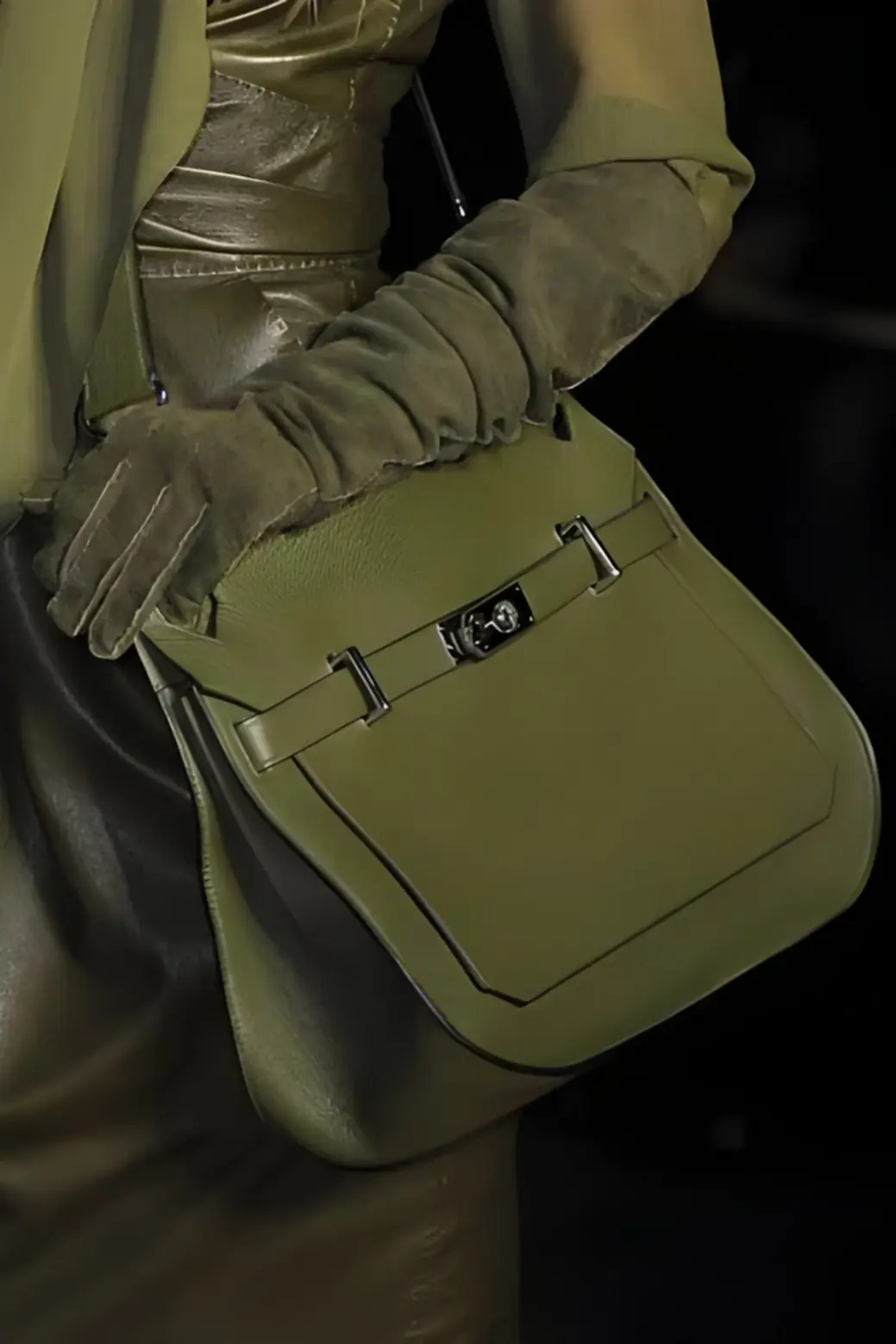
Jean Paul Gaultier’s final gift to the everyday woman was the Jypsière. He took the Birkin’s hardware, the pontet, the plaques, and the clochette, and mounted them on a rounded, hunting-style messenger bag.
Look at the way the strap attaches; it wraps around the back like a harness. It was Jean Paul Gaultier’s way of bringing the Birkin back to the stables while making it street-ready. It was the first Birkin that did not feel like a Birkin, proving his mastery over the codes of the house.
Each one of these bags carried a sharp understanding of construction, proportion, and movement. Jean Paul Gaultier gave Hermès bags that could slouch, fold, swing, cuddle, and seduce, and that is exactly why Jean Paul Gaultier Hermès bags remain some of the most coveted, playful, and technically fascinating chapters in the house’s history. Jean Paul Gaultier Hermès Bags Part 2 follows the story into 2009 and 2010, where even more Jean Paul Gaultier Hermès bags pushed the house’s codes into sharper, stranger, and irresistibly collectible territory.
Advertisement