MENU
Close





An auction evoking one of Britain's most iconic advertising campaigns of the 1980s took place on August 1 at Batemans Auctioneers & Valuers in Stamford, Lincolnshire. A 22-karat gold egg named “Cuckoo Cuckoo” was the star of the dramatic auction, ultimately selling for £123,500 (approximately $166,600) - nearly six times its initial estimated price.
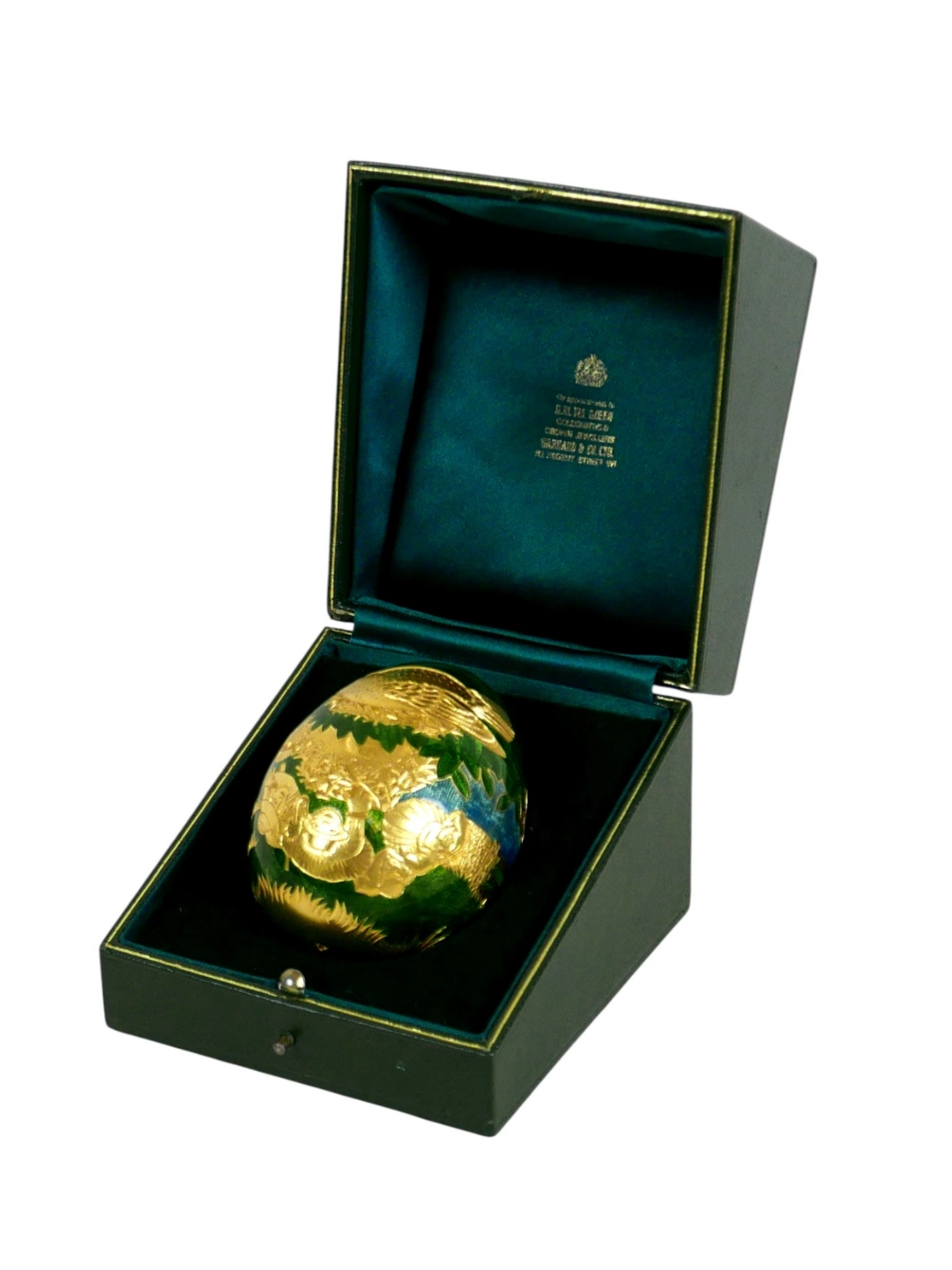
An auction evoking one of Britain's most iconic advertising campaigns of the 1980s took place on August 1 at Batemans Auctioneers & Valuers in Stamford, Lincolnshire. A 22-karat gold egg named “Cuckoo Cuckoo” was the star of the dramatic auction, ultimately selling for £123,500 (approximately $166,600) - nearly six times its initial estimated price.
August 21, 2026


"Cuckoo Cuckoo" was one of the golden eggs created through a partnership between Cadbury and royal goldsmiths Garrard & Co. for a promotional campaign for the Cadbury Creme Egg, which featured a nationwide treasure hunt. 12 Perspex caskets hide at secret locations throughout the U.K., inside each one is a clue to one of the 22k gold eggs. To locate these boxes, treasure hunters had to decipher the challenging riddles and the illustrations in the Conundrum book. “Cadbury’s created one of the most memorable advertising campaigns of the 1980s, capturing the imagination of millions with a nationwide treasure hunt that combined storytelling, mystery and the excitement of discovery,” said Greg Bateman, managing director and senior valuer at Batemans Auctioneers & Valuers.
“Cuckoo Cuckoo” was the eleventh story in the Conundrum book, written in the West Country dialect and it based on the Cuckoos of Crewkerne folktale. Adorned with a translucent green and blue enamel finish, the egg featured a detailed demonstration of a cuckoo nesting in a tree. Another image depicted on the egg showed seven men and women standing among the trees below, watching and pointing up toward the bird. Besides, seven sheaves of wheat are engraved on the far side.
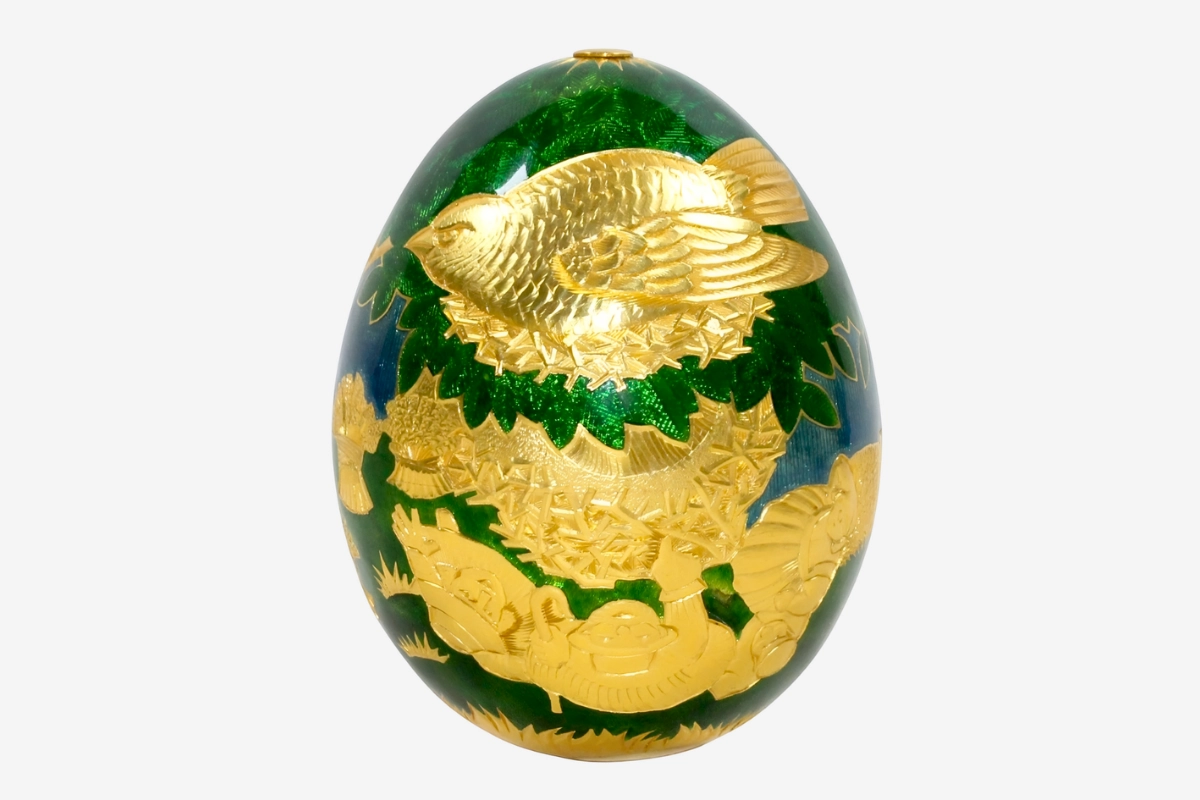
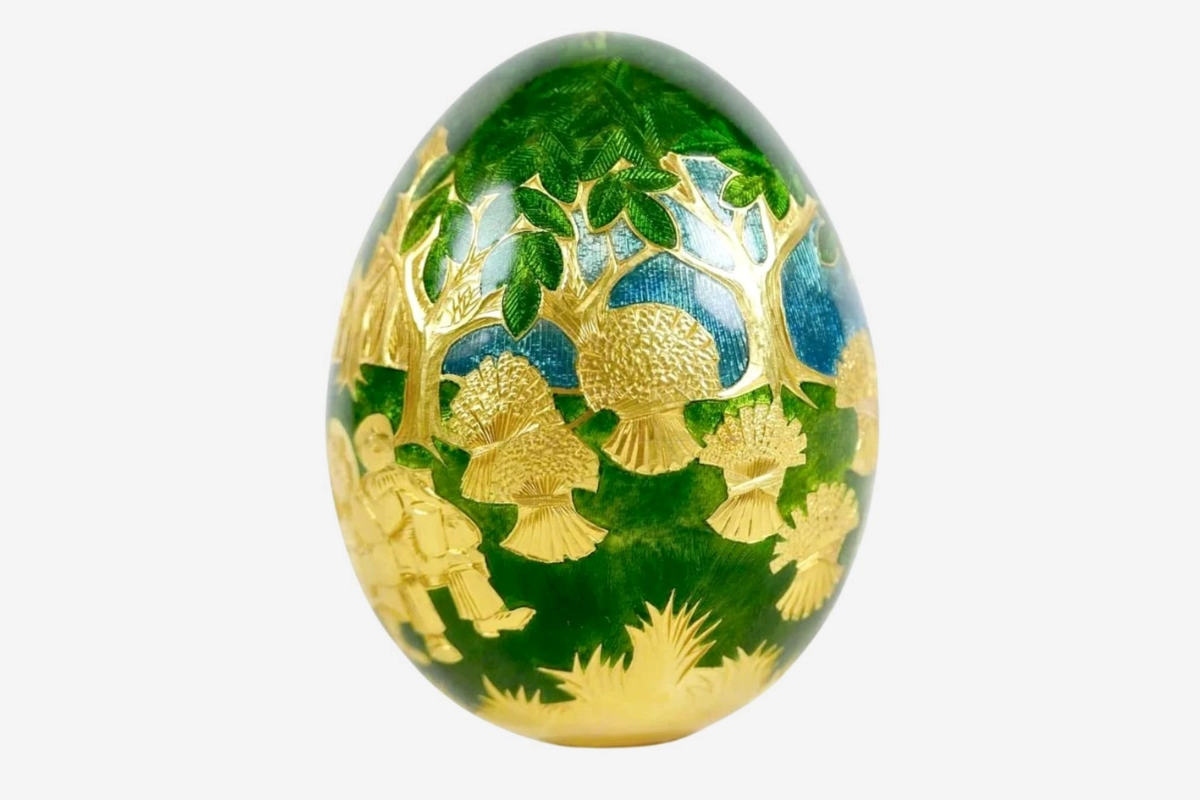
In 1983, a “treasure hunter” named Clive Pinder took part in the campaign and found “Cuckoo Cuckoo” in Cricket St Thomas, Somerset. The egg was later sold at auction for £6,500, before reappearing at Batemans auction this August. Promoted as “one of Britain's rarest surviving advertising prizes” and linked to an innovative campaign from the last century, this egg sold for a surprisingly high price, setting a world auction record for a bejeweled egg of its type.
The intense auction for “Cuckoo Cuckoo” demonstrated how materials, craftsmanship and - above all - memories can influence the price of a product. Even though the campaign ended, the joy of owning this “treasure” can remain undiminished for decades.