MENU
Close





In Brazilian Brutalism raw concrete has become two different languages. One severe and civic in São Paulo, the other open, luminous, and landscape-bound in Rio de Janeiro.
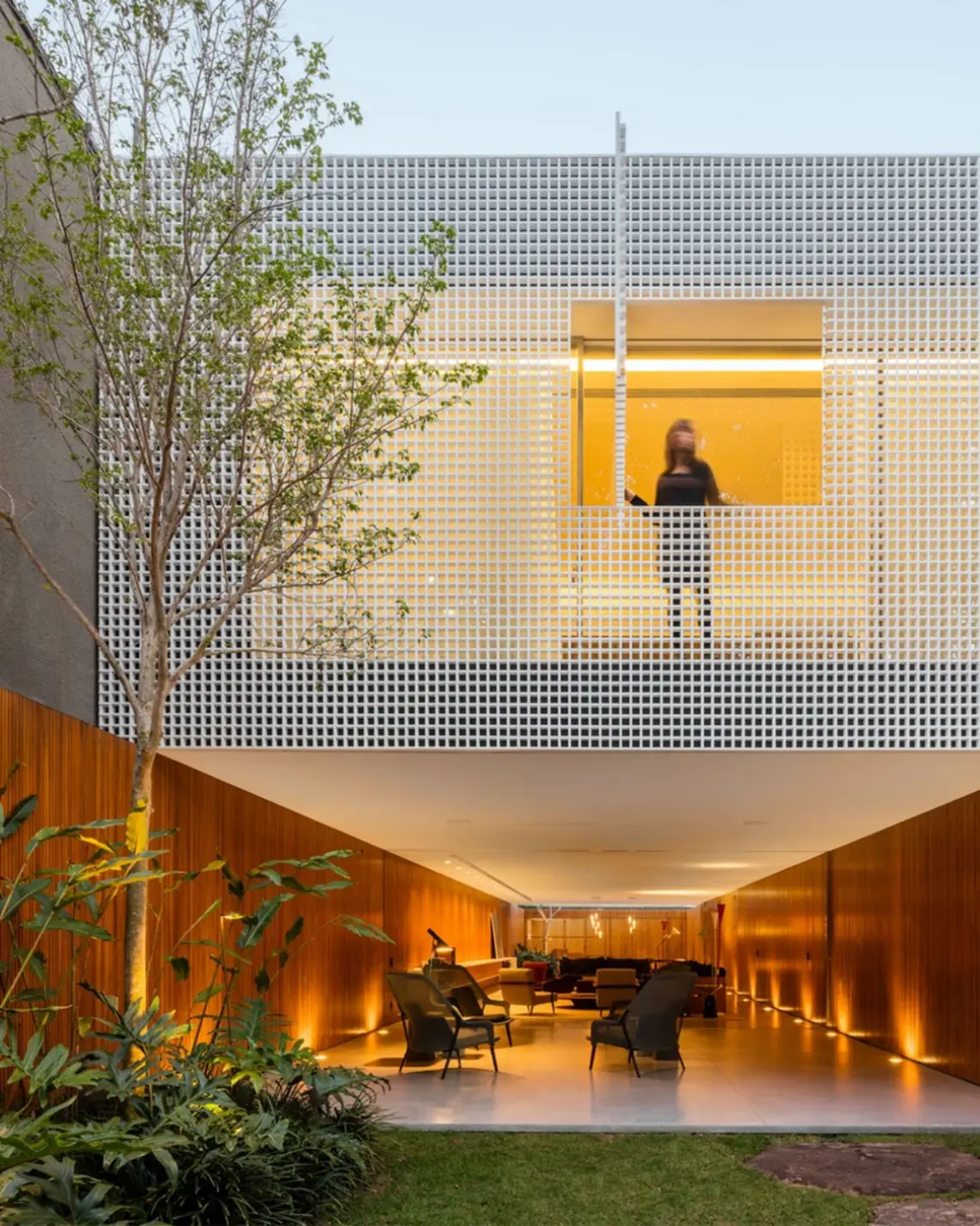
In Brazilian Brutalism raw concrete has become two different languages. One severe and civic in São Paulo, the other open, luminous, and landscape-bound in Rio de Janeiro.
April 17, 2026


Brazilian architecture is frequently reduced to lyrical white curves, yet its soul is divided between two distinct concrete languages.
To understand the split, one has to begin with the cities themselves. Rio de Janeiro made modernism sensuous. The Carioca School, associated with figures such as Lúcio Costa, Oscar Niemeyer, Affonso Eduardo Reidy, and the Roberto brothers, translated European modernism into something unmistakably Brazilian: Brise-soleil, pilotis, gardens, long views, and a confidence that architecture should breathe with the landscape. São Paulo, by contrast, was industrial, inland, dense, and driven by labor, infrastructure, and political unrest. Its architecture grew more severe because the city demanded another answer.
In São Paulo, concrete lost much of Rio’s easy lyricism and took on a heavier civic mission. Vilanova Artigas argued for architecture as a social and ideological instrument, and his example shaped a generation that treated structure as an ethical statement rather than a decorative flourish. One school framed the horizon, the other built a social stage.
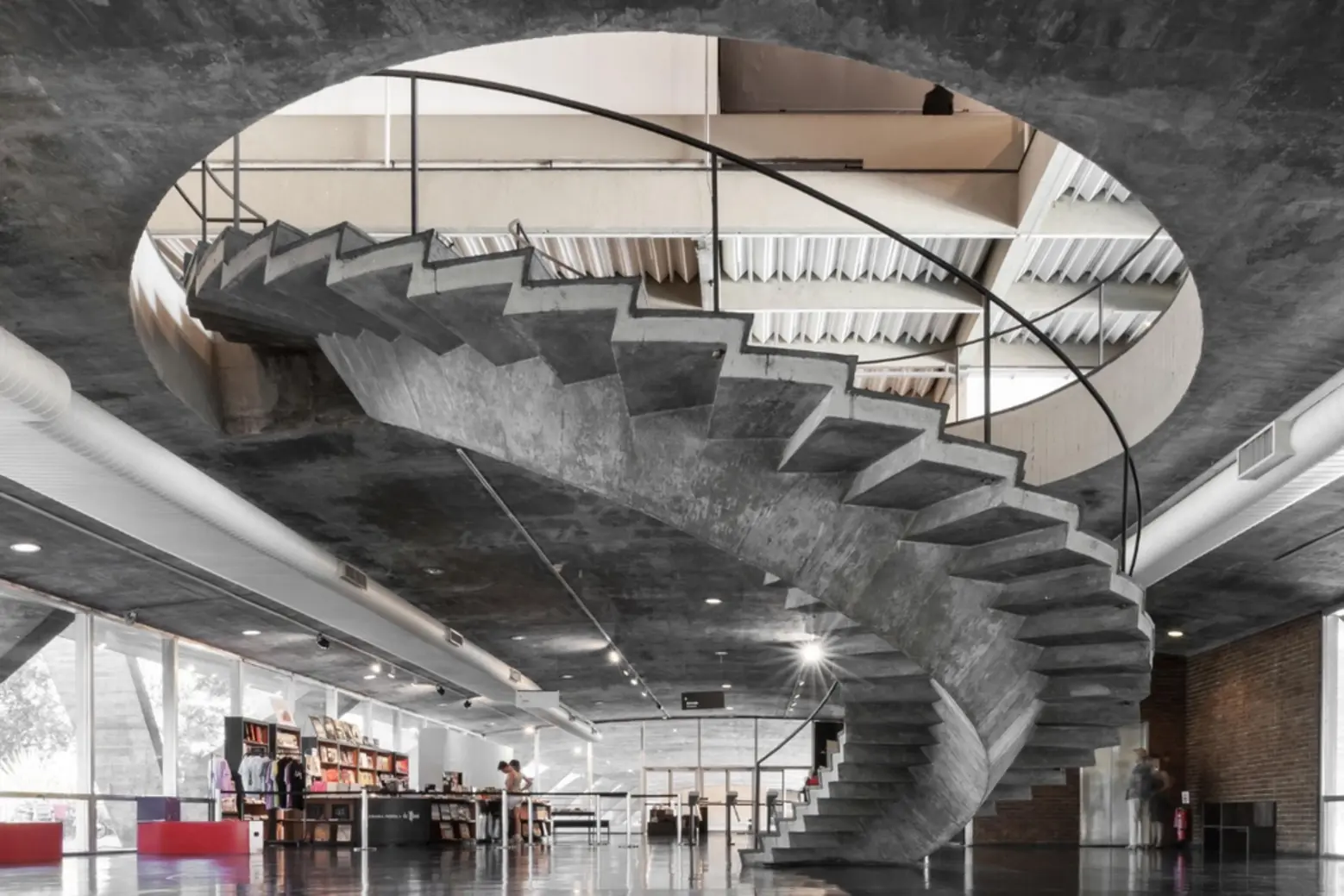
Paulista Brutalism is often described through mass, but its true subject is public life. Artigas and his followers used reinforced concrete to create vast, uninterrupted interiors where circulation itself became democratic theater. Their buildings favor ramps over ceremonial staircases, long spans over compartmentalization, and raw finishes over polished bourgeois comfort. Concrete is left exposed not simply for economy or style, but to make construction legible. You see how the building stands. You feel gravity working. You understand that form arises from structure rather than applied beauty.
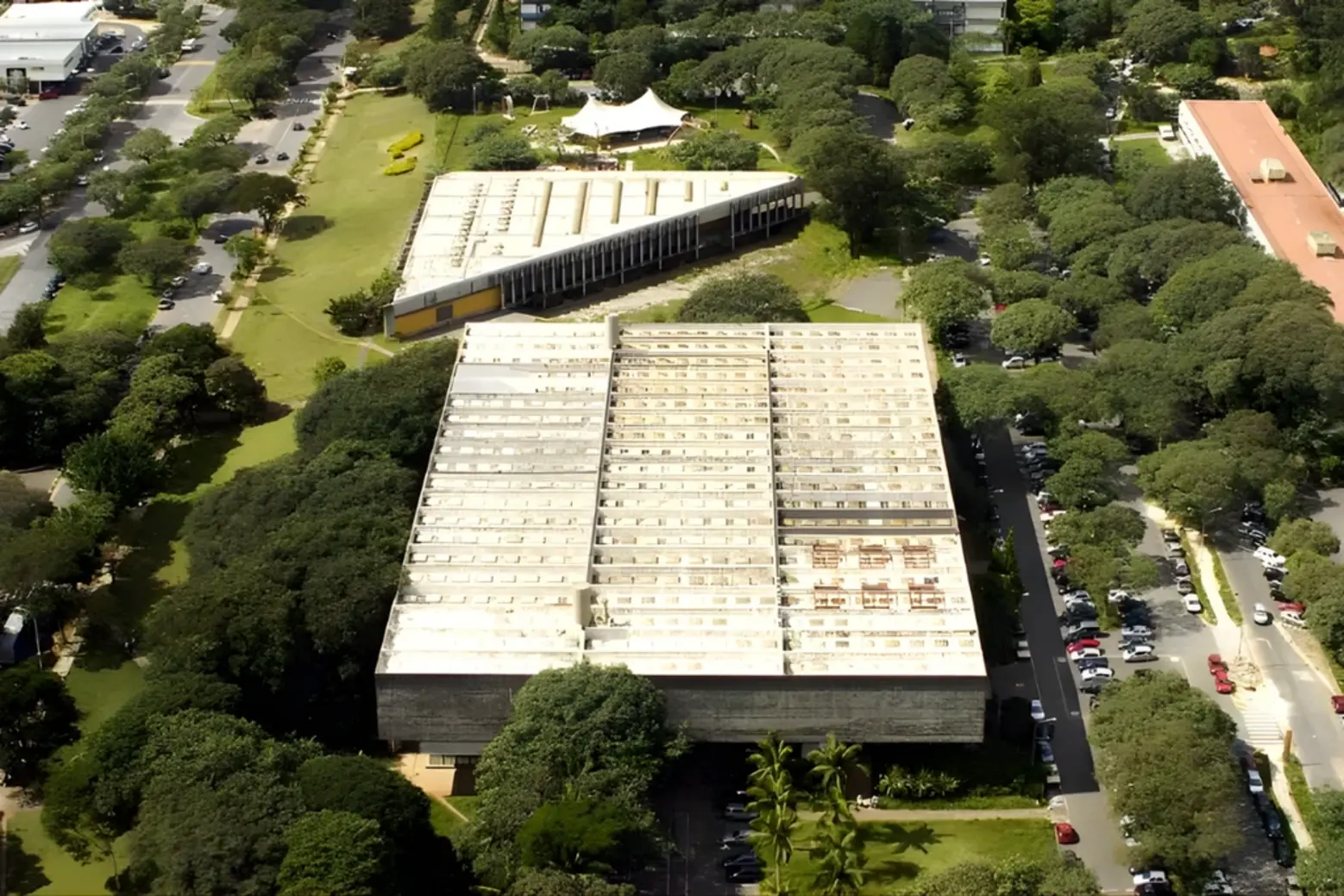
The Faculty of Architecture and Urbanism at the University of São Paulo, FAU-USP, remains one of the clearest manifestos of this ethos. Conceived by Artigas and Carlos Cascaldi in the 1960s, the building is organized around a large central void with six levels linked by ramps, designed to create spatial continuity and encourage coexistence. The building avoids doors and small, sealed spaces in favor of openness, integration, and continuous routes. That design decision was spatial, pedagogical, and political all at once.
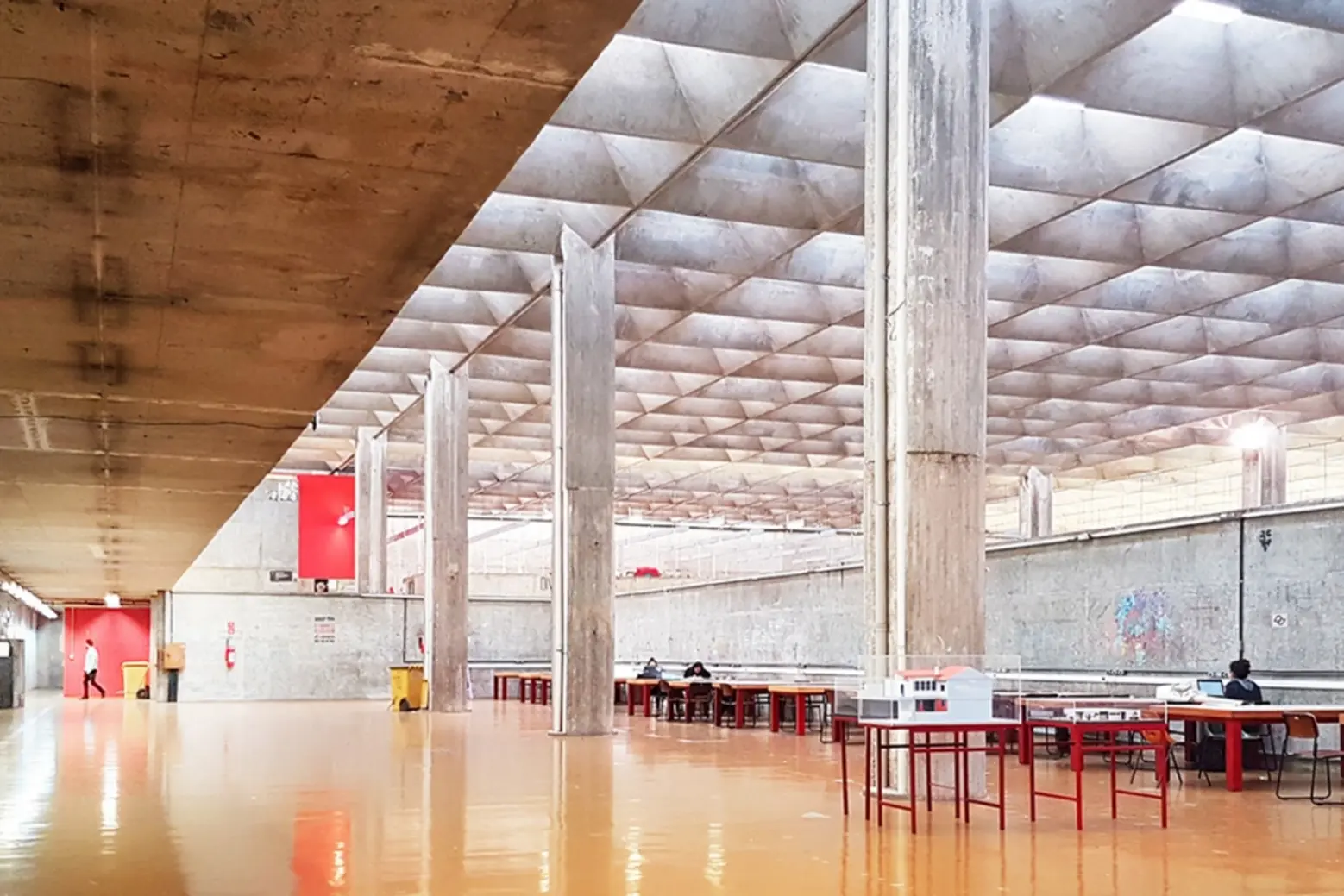
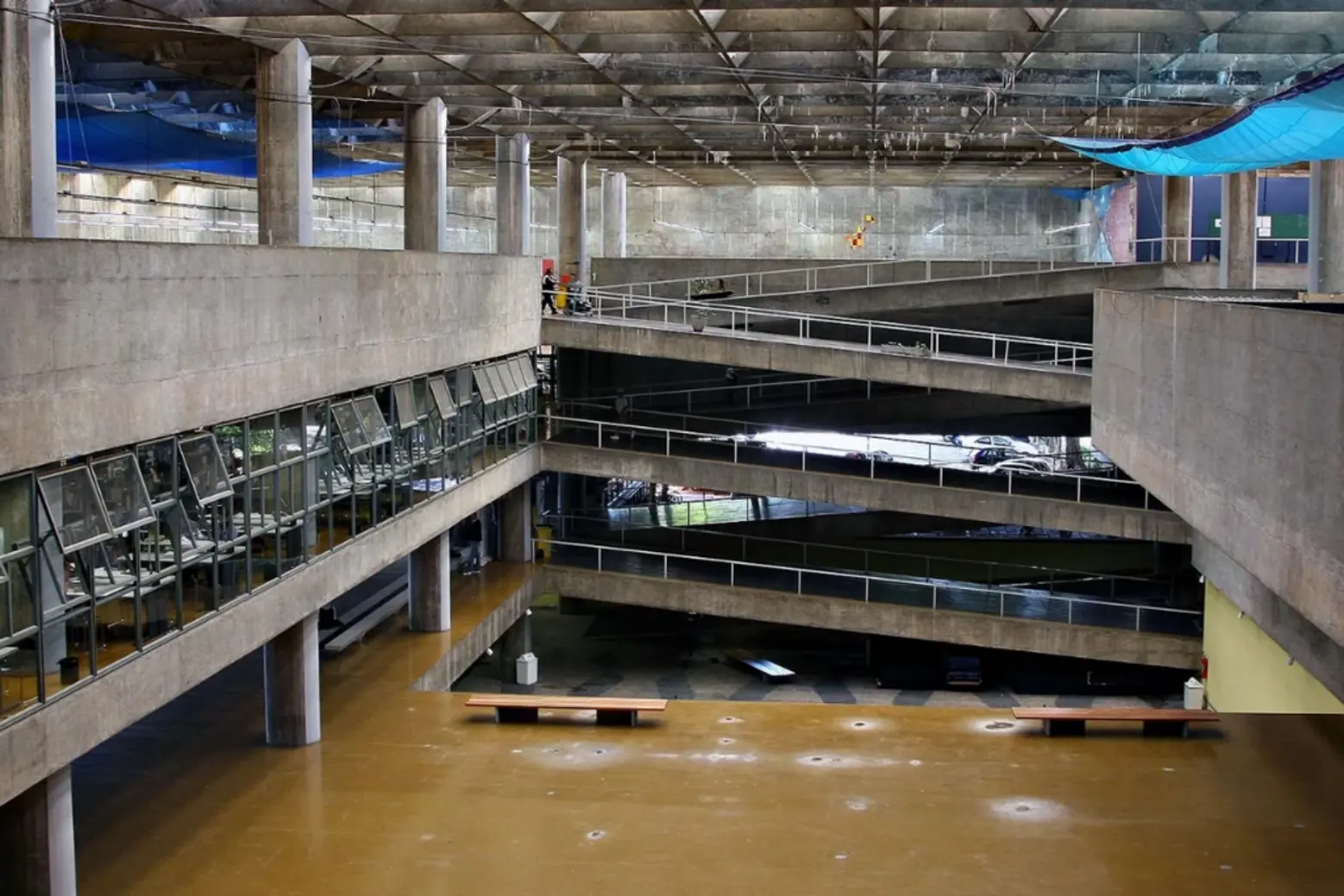
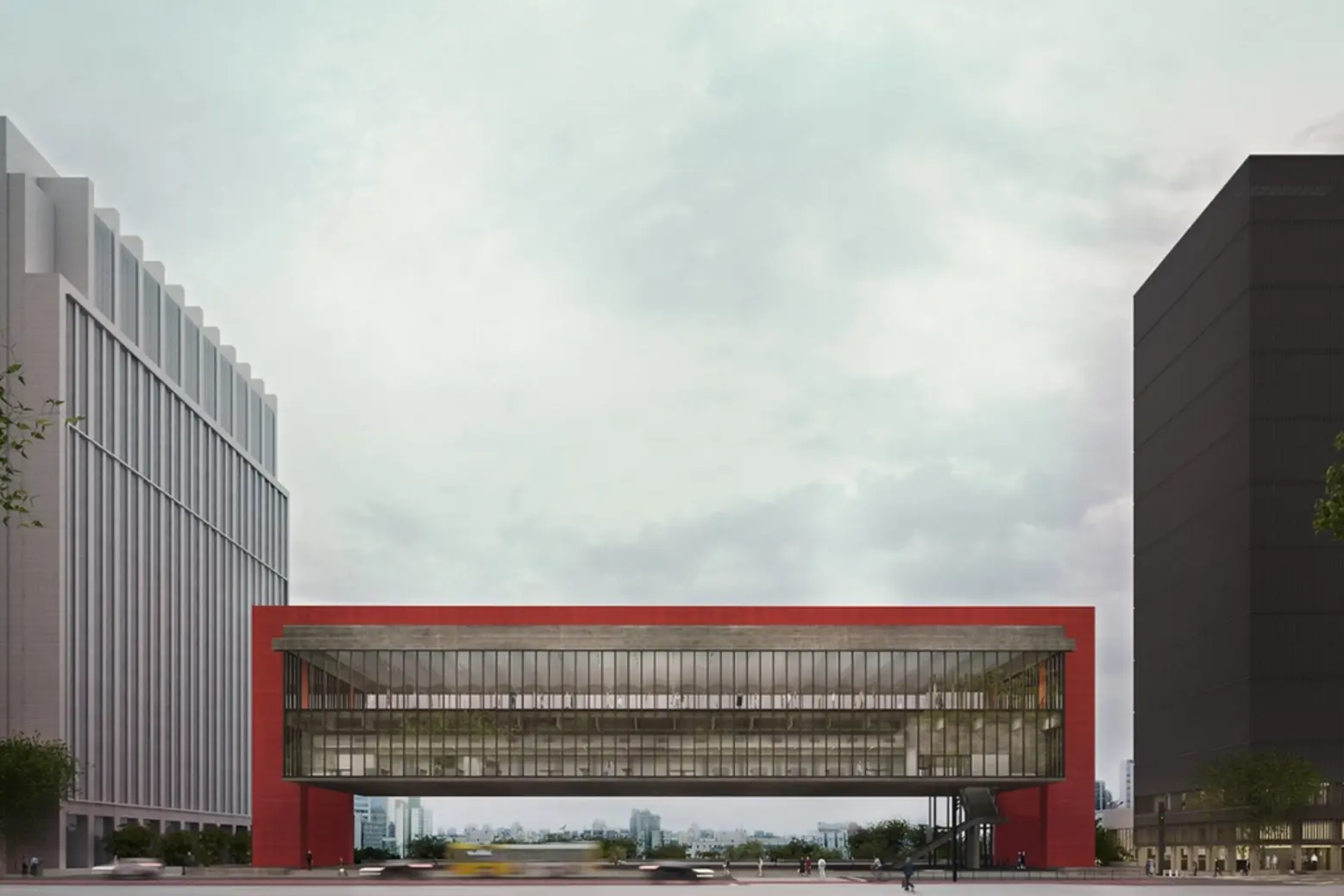
Lina Bo Bardi’s MASP intensifies the Paulista spirit through a more urban gesture. Its famous 74-meter free span was designed to preserve the site’s view and create a public civic square beneath the suspended museum volume. MASP itself describes that void as a meeting place for cultural events, while the museum’s curatorial texts emphasize Bo Bardi’s intention to create an interface between museum and city. This is crucial. Paulista Brutalism was never only about heaviness. It was about lifting mass in order to return space to the public. The concrete is monumental, yet the social idea beneath it is radically generous.
Rio’s relationship to concrete followed another path. Even when its architecture became monumental, it usually retained a sense of air, light, and external orientation. The Carioca School had already established a modern vocabulary attuned to climate and landscape, but later works pushed reinforced concrete into more emphatic, sculptural territory without surrendering that openness. The result is not the same as Paulista Brutalism. It is less didactic, less inwardly civic, and more interested in framing nature, dissolving enclosure, and making heavy material appear poised or floating.
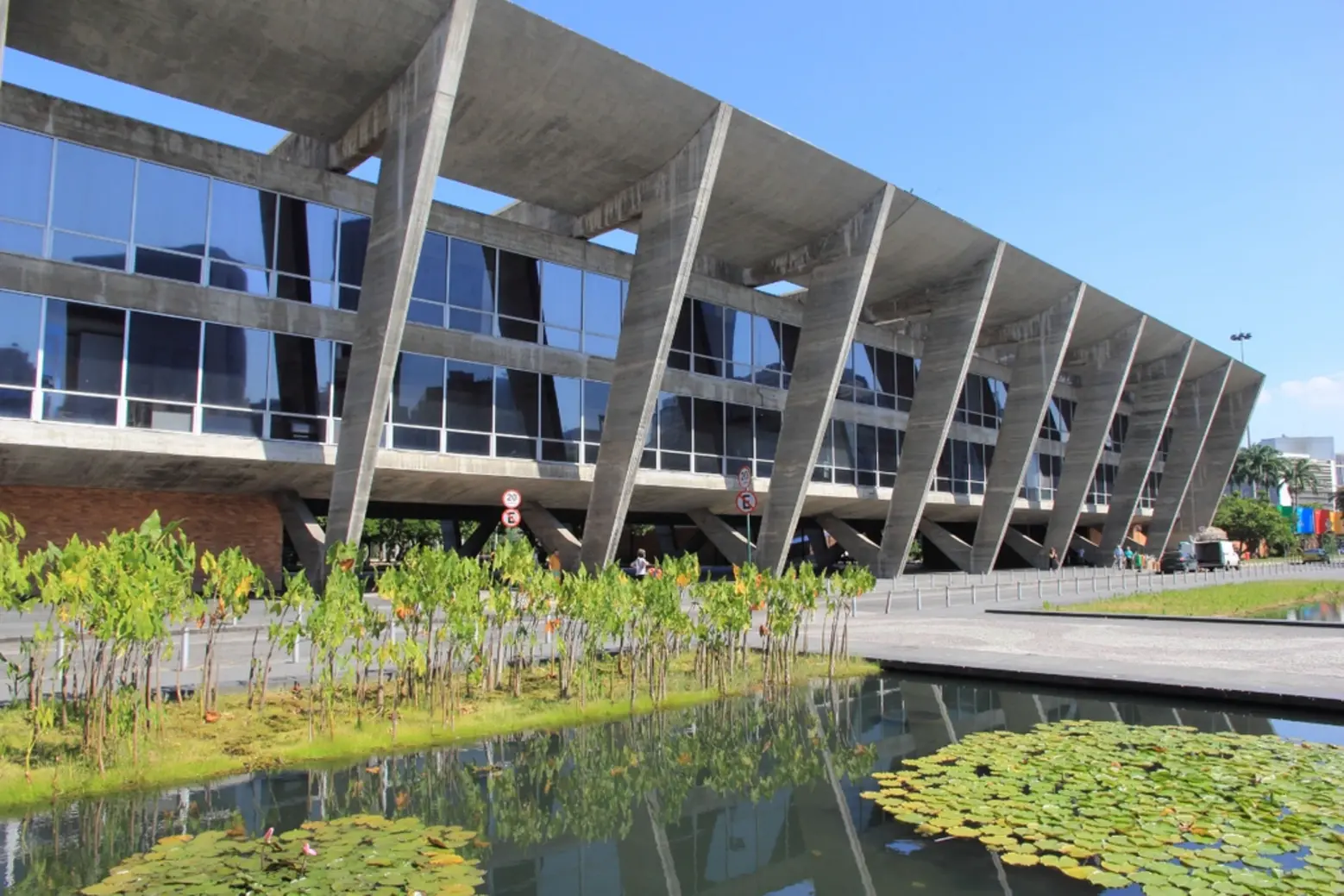
Affonso Eduardo Reidy’s Museu de Arte Moderna do Rio de Janeiro is the decisive example. MAM Rio’s own historical materials state that the purpose-built building was conceived by Reidy and realized between 1954 and 1967 at Flamengo Park. The museum’s structural image is unforgettable, with its rhythmic sequence of external concrete supports carrying the gallery volume, leaving the interior remarkably open and visually porous. Rather than burying the building in mass, Reidy turns structure into cadence. The façade becomes both skeleton and viewfinder, allowing the museum to sit within Burle Marx’s landscape and the broader sweep of bay, park, and sky. Here concrete does not press downward with Paulista gravity. It pulses, repeats, and holds space like a frame around light.
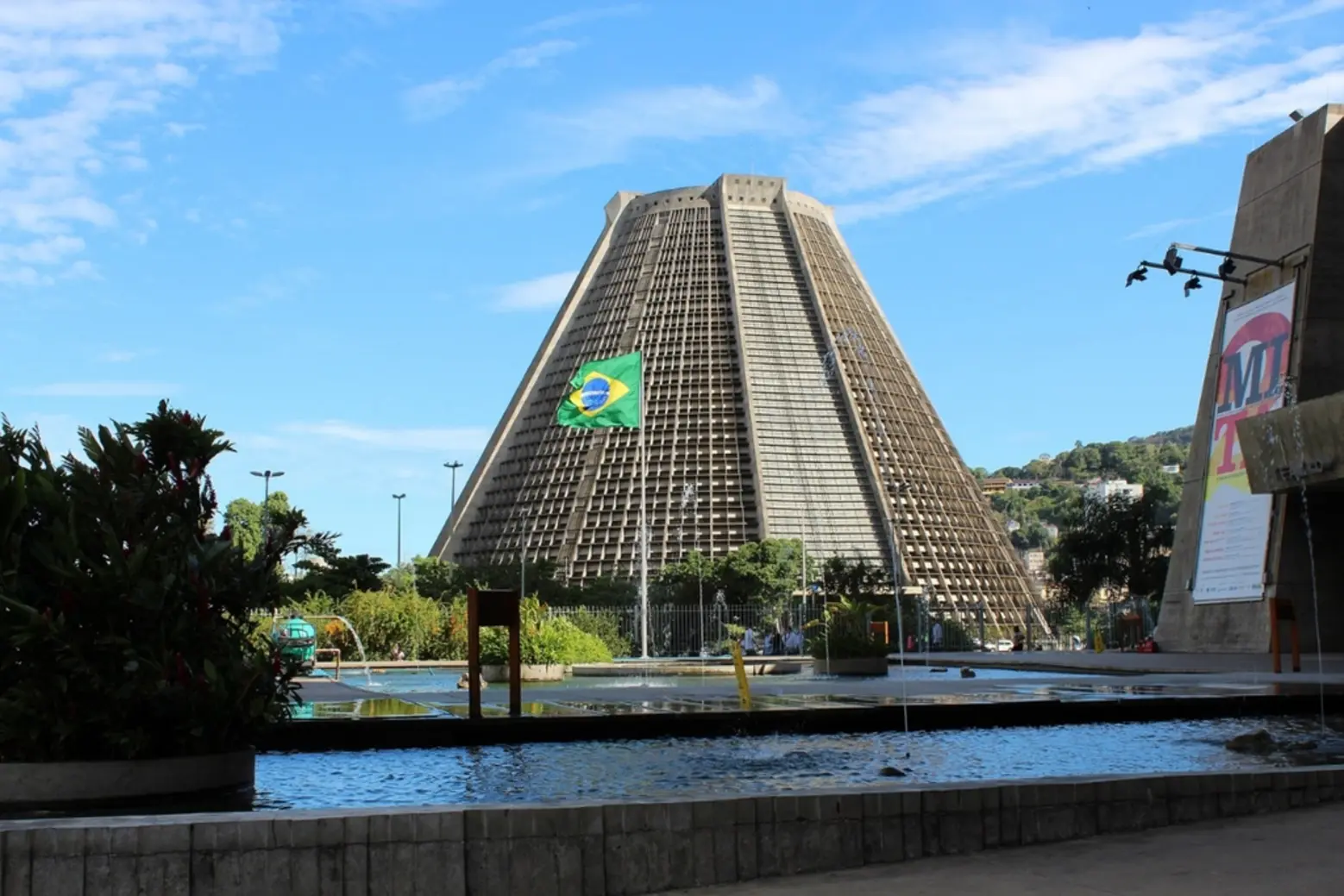
The Metropolitan Cathedral of Rio de Janeiro extends this taste for monumentality into the sacred realm. Designed by Edgar de Oliveira da Fonseca and built between 1964 and 1979, the cathedral is a massive reinforced-concrete cone inspired by pre-Columbian pyramid forms, with soaring stained-glass panels that rise dramatically through the interior. It is not usually classified as a textbook work of the early Carioca School, yet it reveals Rio’s parallel fascination with concrete as spectacle, symbol, and urban landmark. Where Paulista architecture often teaches through section and circulation, the cathedral overwhelms through scale, verticality, and ritual light. It proves that raw concrete in Rio could still be expressive, mystical, and intensely theatrical.
While the mid-century work of João Vilanova Artigas and Paulo Mendes da Rocha established the heroic phase of the Paulista School, the lineage itself did not vanish with the end of Brazil’s great civic megastructures. If anything, it became more subtle. Contemporary Brazilian architecture moves away from the monumental schools, museums, and gymnasiums to the boutique hotel, and the compact cultural building. The public manifesto became a domestic atmosphere.
That evolution is why it makes sense to speak of a contemporary Paulista continuation, even if “neo-brutalism” is more a critical shorthand than a fixed movement with a single manifesto. The architects working in this register still inherit the brutalist faith in exposed structure, yet they deploy it with far greater material precision. Rough board-formed concrete remains part of the genealogy, but many newer works pair smooth or carefully finished concrete with freijó wood, stone, large panes of glass, and finely detailed metal screens. In several Studio MK27 projects, this mix is explicit: Concrete, wood, and white aluminum are combined to produce what the architects themselves describe as a form of tropical minimalism shaped by Brazilian modernism.
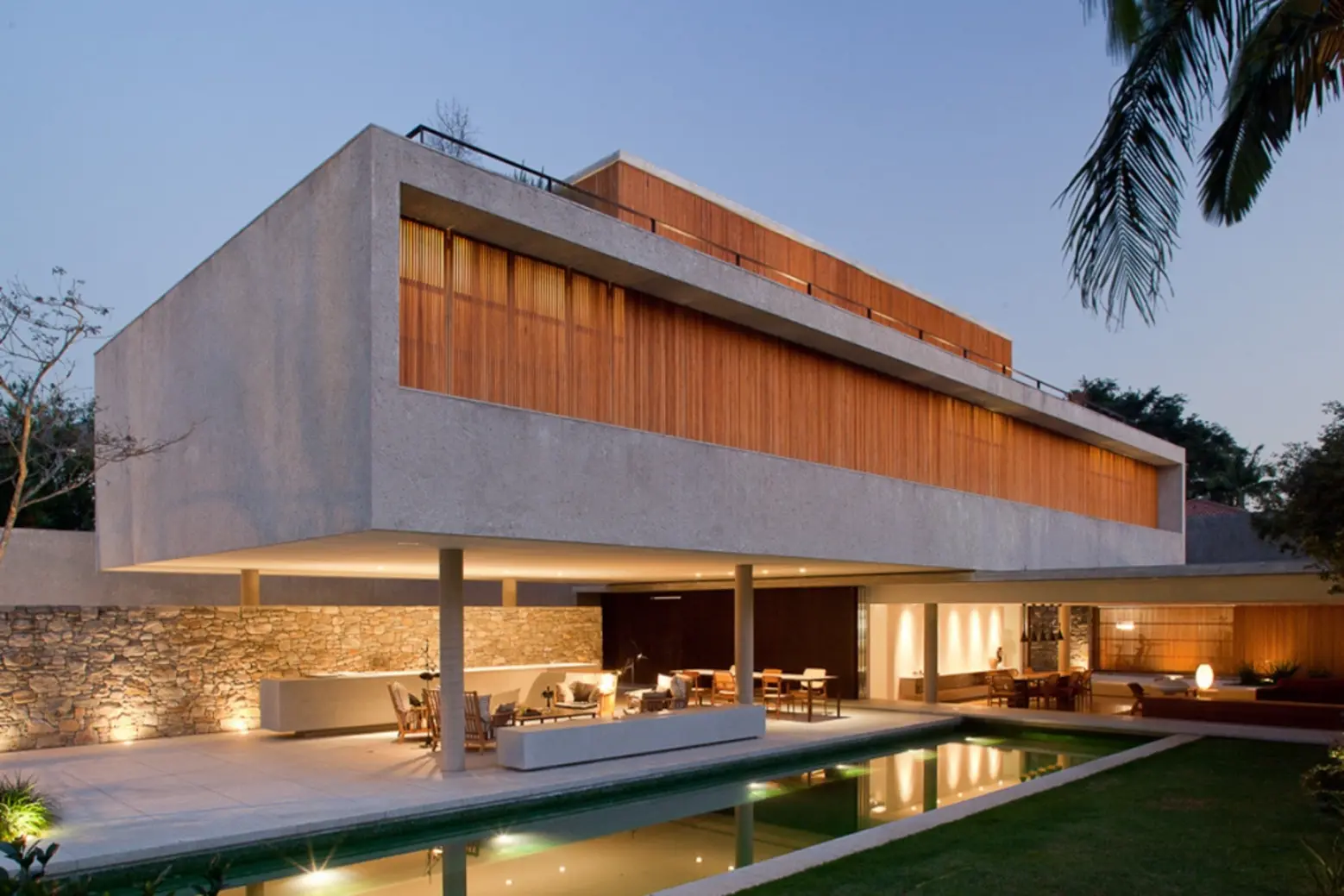
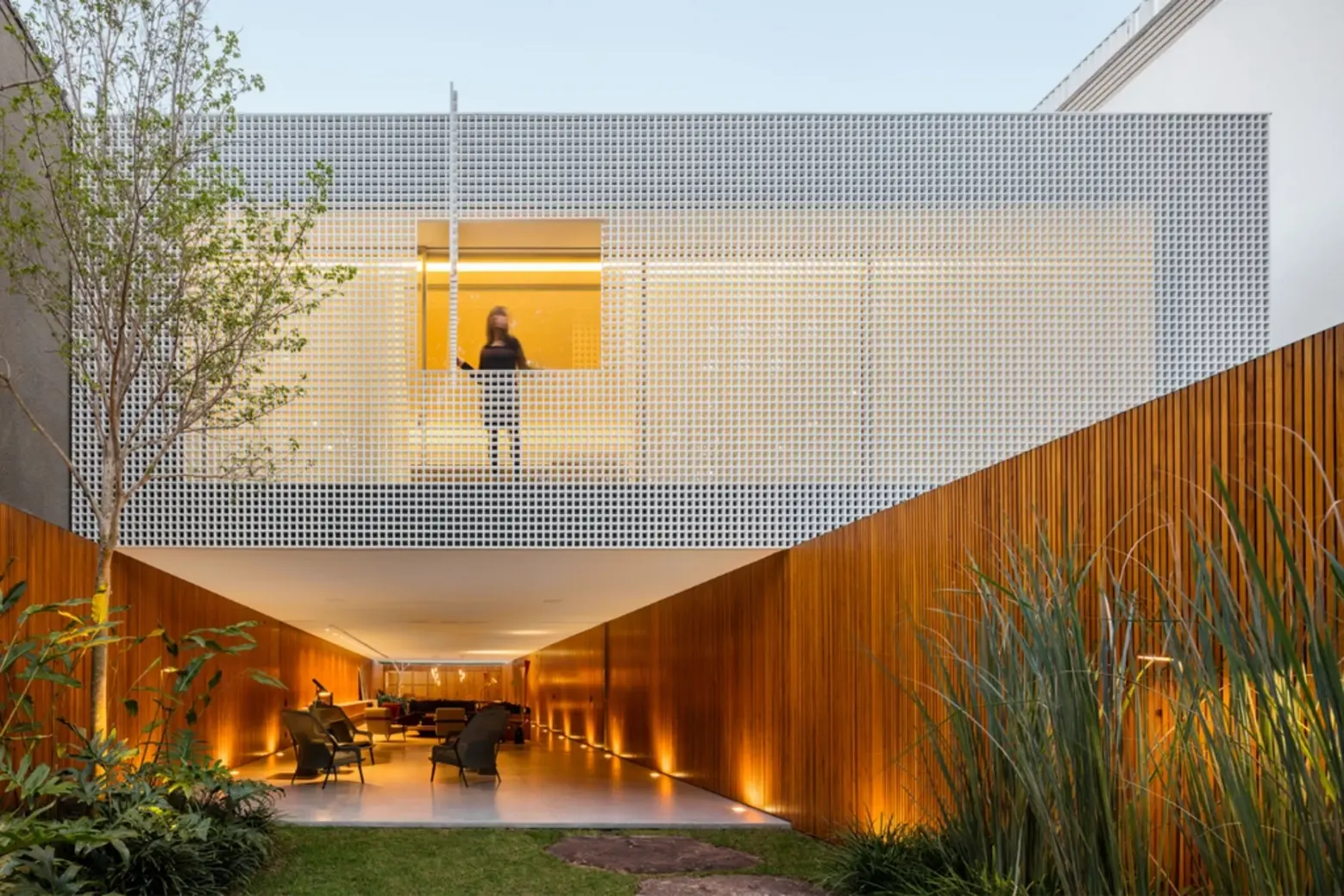
Marcio Kogan is among the clearest exponents of this turn. His houses preserve the long horizontal emphasis and structural calm of the Paulista lineage, but redirect them toward luxury residential architecture. House 6, completed in São Paulo in 2010, was organized around a covered open-air living space meant to structure “all the social life of the house,” effectively reinventing the Brazilian veranda beneath a volume of flat slabs carried by pilotis.
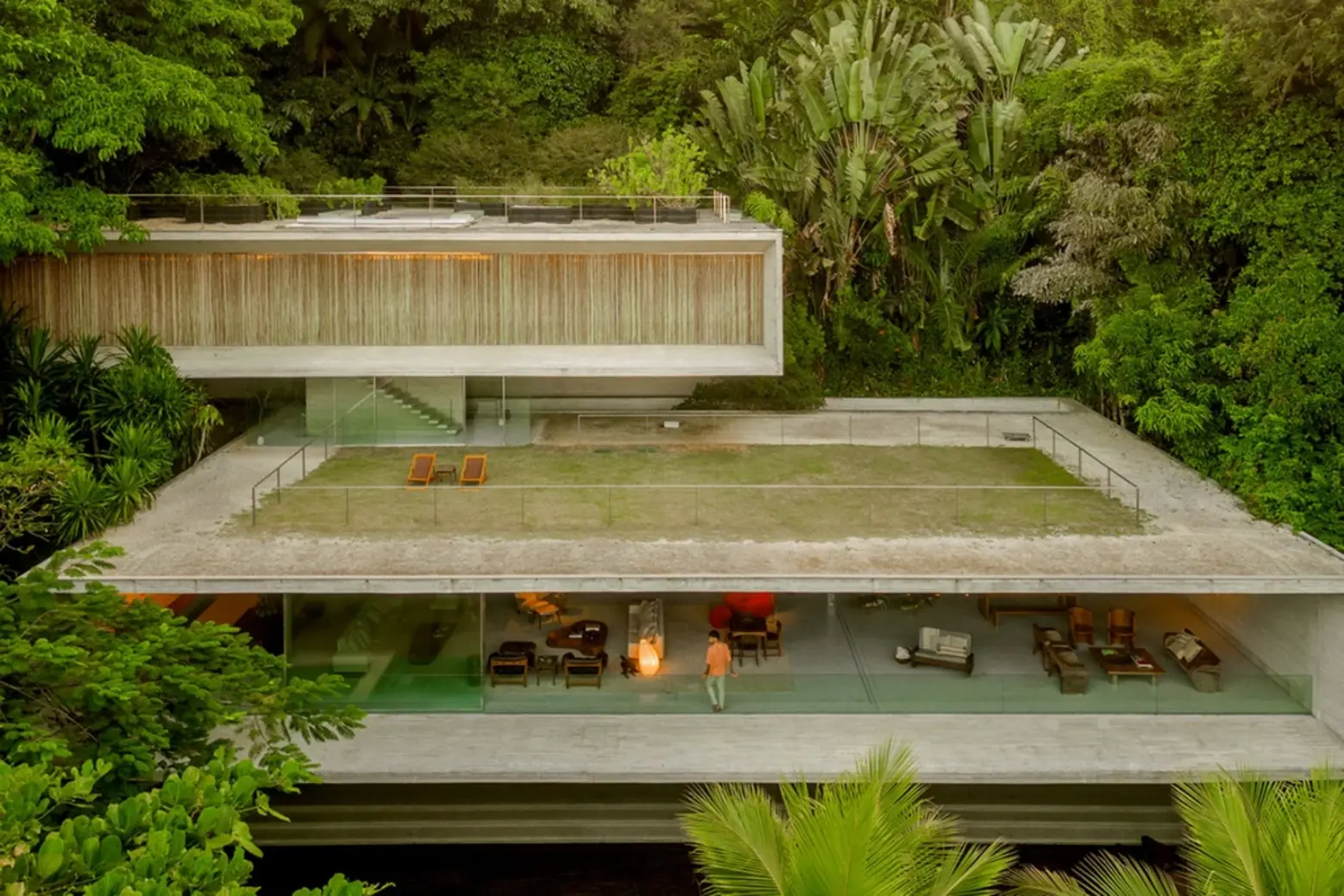
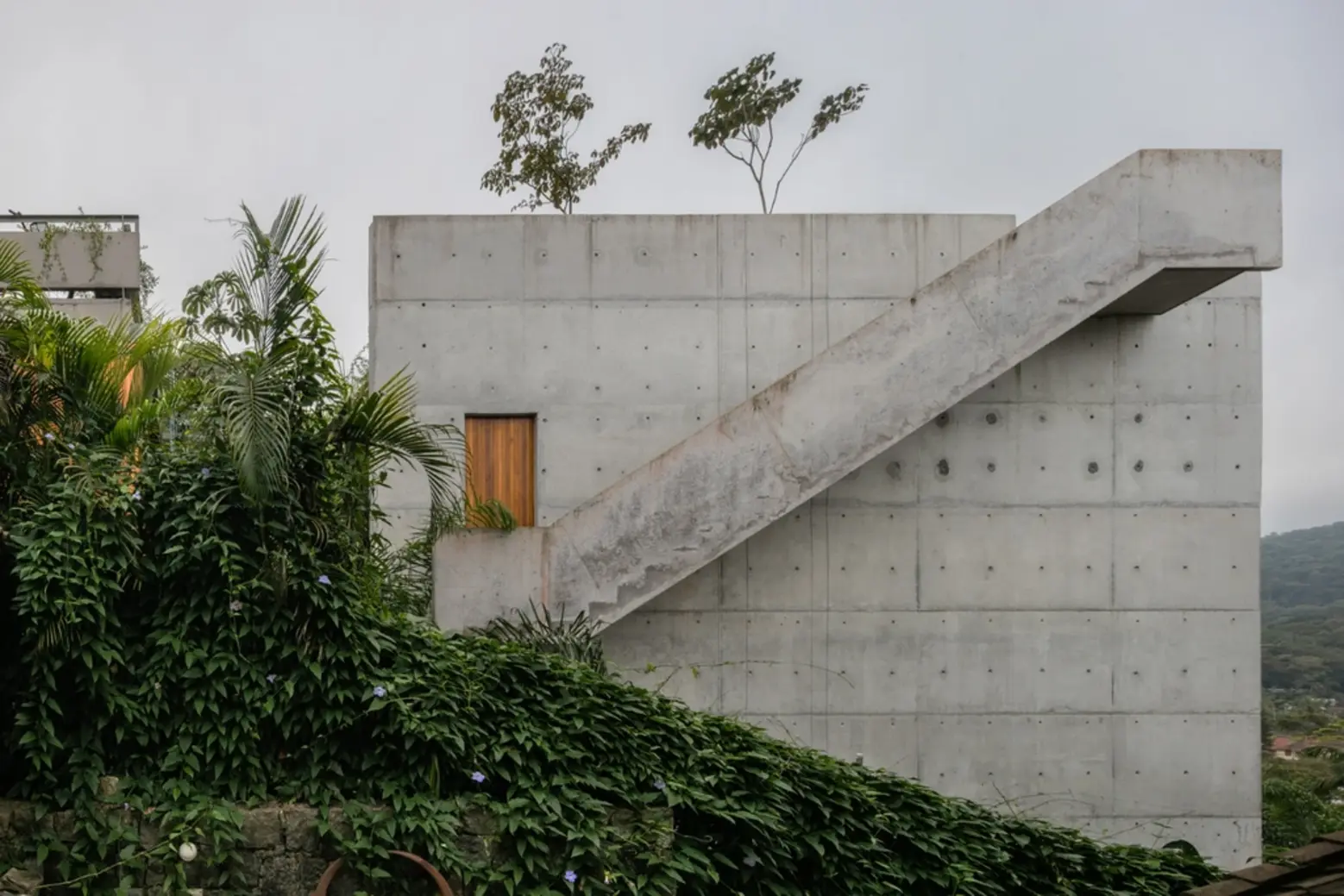
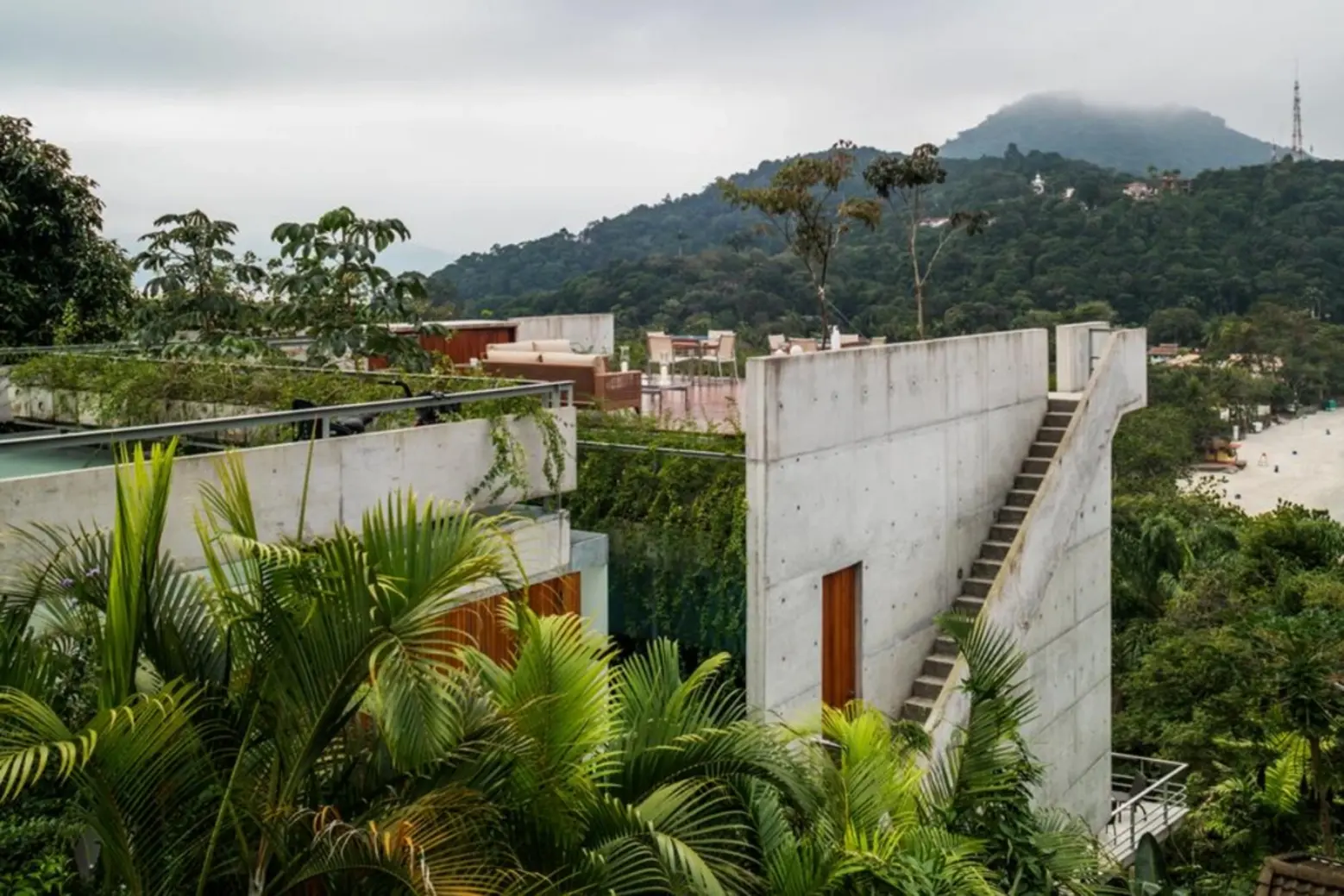
The House in Ubatuba by SPBR Arquitetos, built on a steep protected site above Tenório Beach, is supported by only three reinforced-concrete columns, with steel beams used to hang the slabs and reduce impact on the terrain. This is Mendes da Rocha’s obsession with gravity carried into a tropical, environmentally attentive domestic setting.
Brazilian Brutalism becomes truly legible once São Paulo and Rio are read together rather than collapsed into a single national myth. The Paulista School gave concrete an ethical density, turning structure into a framework for democracy, education, and urban collectivity. Rio’s modern tradition, and its later concrete monuments, gave the same material another destiny: Openness, landscape, suspension, and sculptural drama. Between Artigas’s ramps, Bo Bardi’s civic void, Reidy’s rhythmic frames, and Rio’s cathedral of sacred mass, Brazilian architecture reveals itself as a field of productive oppositions. That is why distinction matters. It shows that concrete in Brazil was never mute. It could think, gather, hover, and sing.