MENU
Close





Yoshitomo Nara is hard to miss. Grumpy children with big heads, glaring eyes and a perpetual pout on their lips are strangely kawaii and unsettling
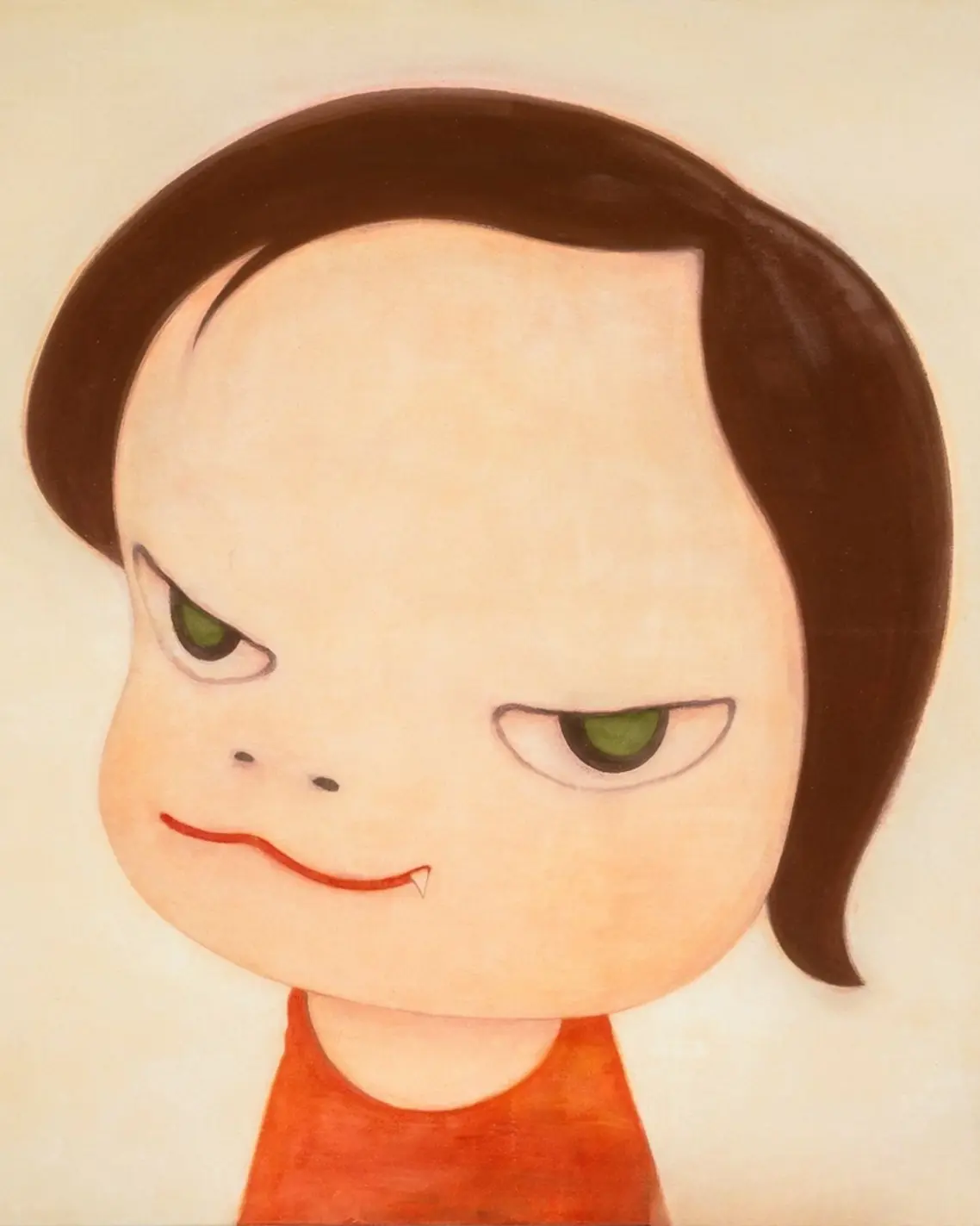
Yoshitomo Nara is hard to miss. Grumpy children with big heads, glaring eyes and a perpetual pout on their lips are strangely kawaii and unsettling
April 12, 2026


To mistake a Yoshitomo Nara for anything else is nearly impossible — unless you’ve spent the last thirty years in a sensory deprivation tank. His visual language is so instantly recognizable that his signature "grumpy toddlers" have practically become a global currency of cool. Yet, to call him merely a purveyor of cute-but-grumpy kids is like calling the Pacific Ocean "a bit damp." Born in 1959 in Aomori and seasoned by a twelve-year stint in Germany, Nara built a world that critics reflexively file under the "Pop" or "Superflat" cabinets of Japanese art history.
Nara, however, is quick to ground those flighty comparisons. He famously insists his work has "nothing in common with the Superflat artists," a polite way of saying his paintings have actual bone density under the skin. While he shares the big-eyed DNA of Margaret Keane — the mid-century queen of the "Big Eyed Waifs", the two are operating on entirely different emotional frequencies. Where Keane’s subjects often feel like victims of a tragic melodrama, trapped in a cycle of perpetual, dewy-eyed sorrow, Nara’s children are the protagonists of a punk-rock anthem.
“I don’t paint when I’m happy, I only paint when I’m angry, lonely, or sad, and I can talk to myself.”
Few lines explain his art more clearly. Nara has described himself as a “typical latchkey kid,” growing up in rural Japan with parents who worked late and two much older brothers, which left him alone for long stretches with his pets, his imagination, and the private intensity of his own thoughts.
In the autobiographical Sleepless Night (Sitting) (1997), Nara explores the state of being hyper-awake within one’s own thoughts. The oversized head serves as a visual metaphor for the "heaviness" of a child's internal monologue, capturing the restless energy of a mind that refuses to quiet down.
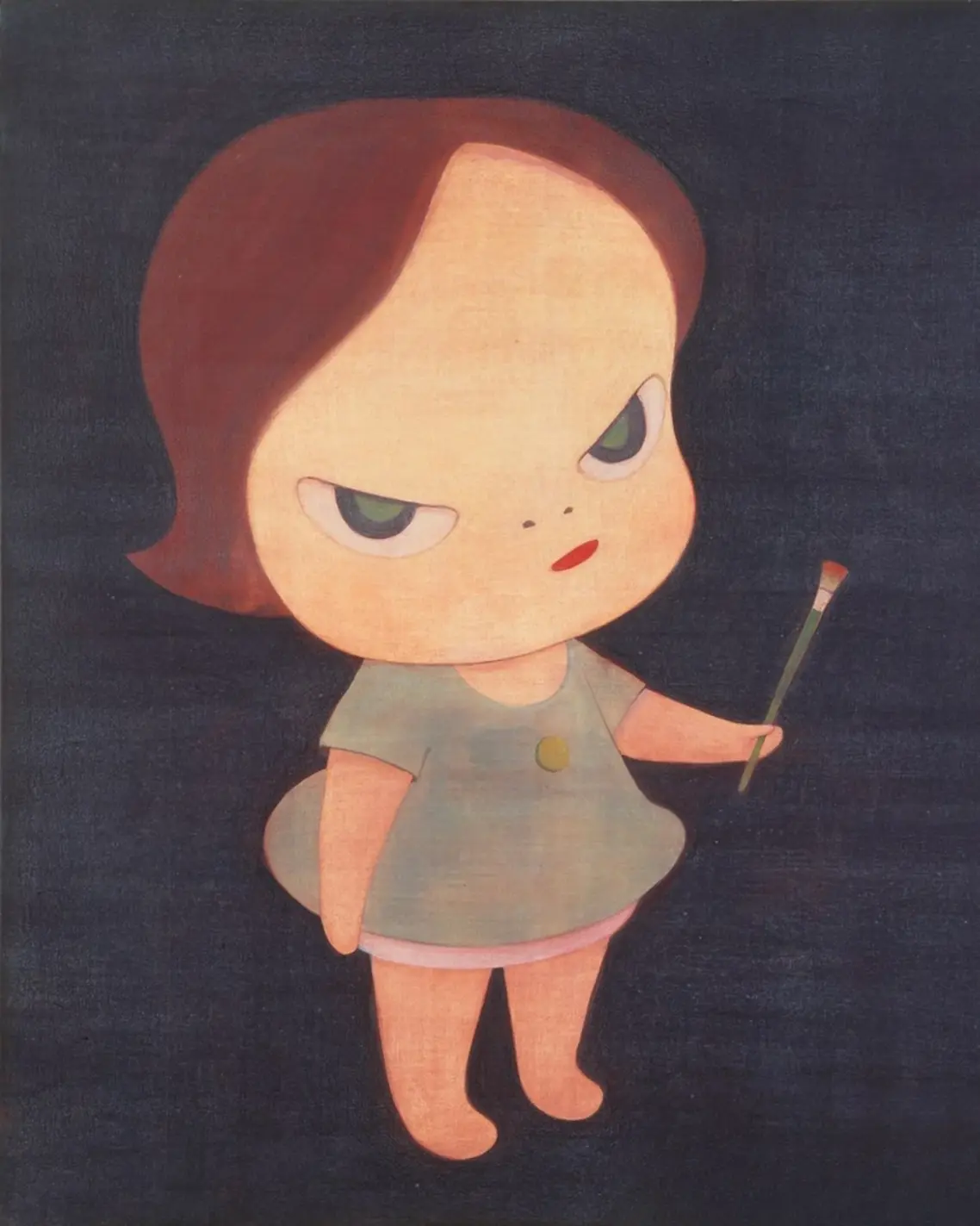
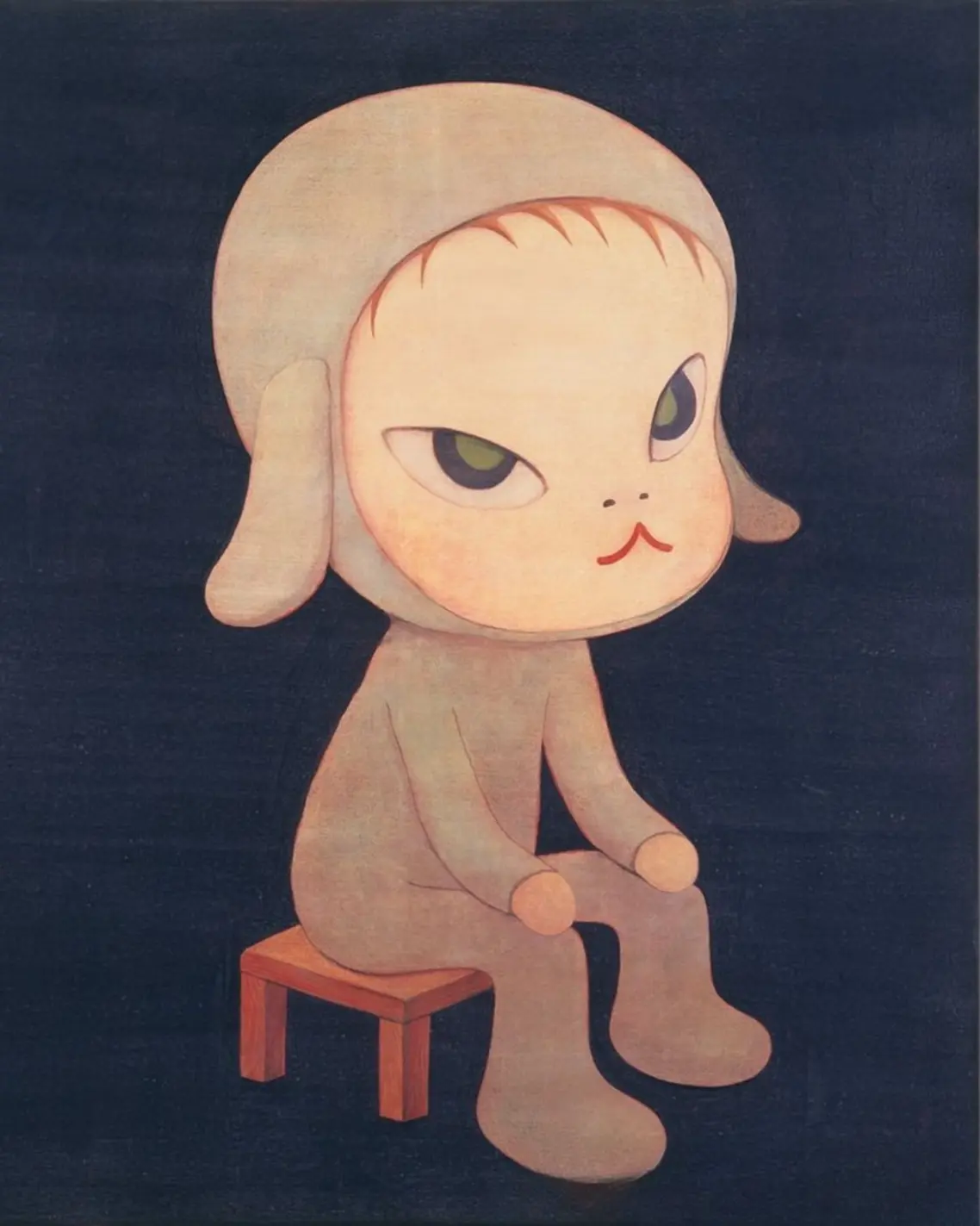
You can feel that childhood in the faces he paints. The children with their oversized heads and wide, watchful eyes carry the look of someone small in scale yet immense in interior life. Their sideways glances, their slightly upturned eyes, suggest a quiet resistance, the kind of defiance that never needs to raise its voice to hold its ground. Nara's subjects are undoubtedly cute with their chubby cheeks and watchful eyes, yet their expressions read rebellion and refusal to become harmless, hence the term "kowa kawaii". Often translated as “scary cute, Yoshitomo Nara's subjects seem to face the adult world with suspicion, fatigue, and stubborn self-possession.
"Childhood solitude nurtured my ability to listen to the voice inside of me.”
Yoshitomo Nara's rebellion was fueled by punk music, before taking form as bigheaded children.
Growing up in rural Aomori, far from museums and formal art-world machinery, he found his earliest education in album covers. At nine, he built his own radio and tuned into Far East Network broadcasts, catching fragments of American music he could not yet understand in language but could already feel in atmosphere. The lyrics stayed partly out of reach, so he invented his own stories from cover art, letting images and sound fuse into a private cinema of feeling.
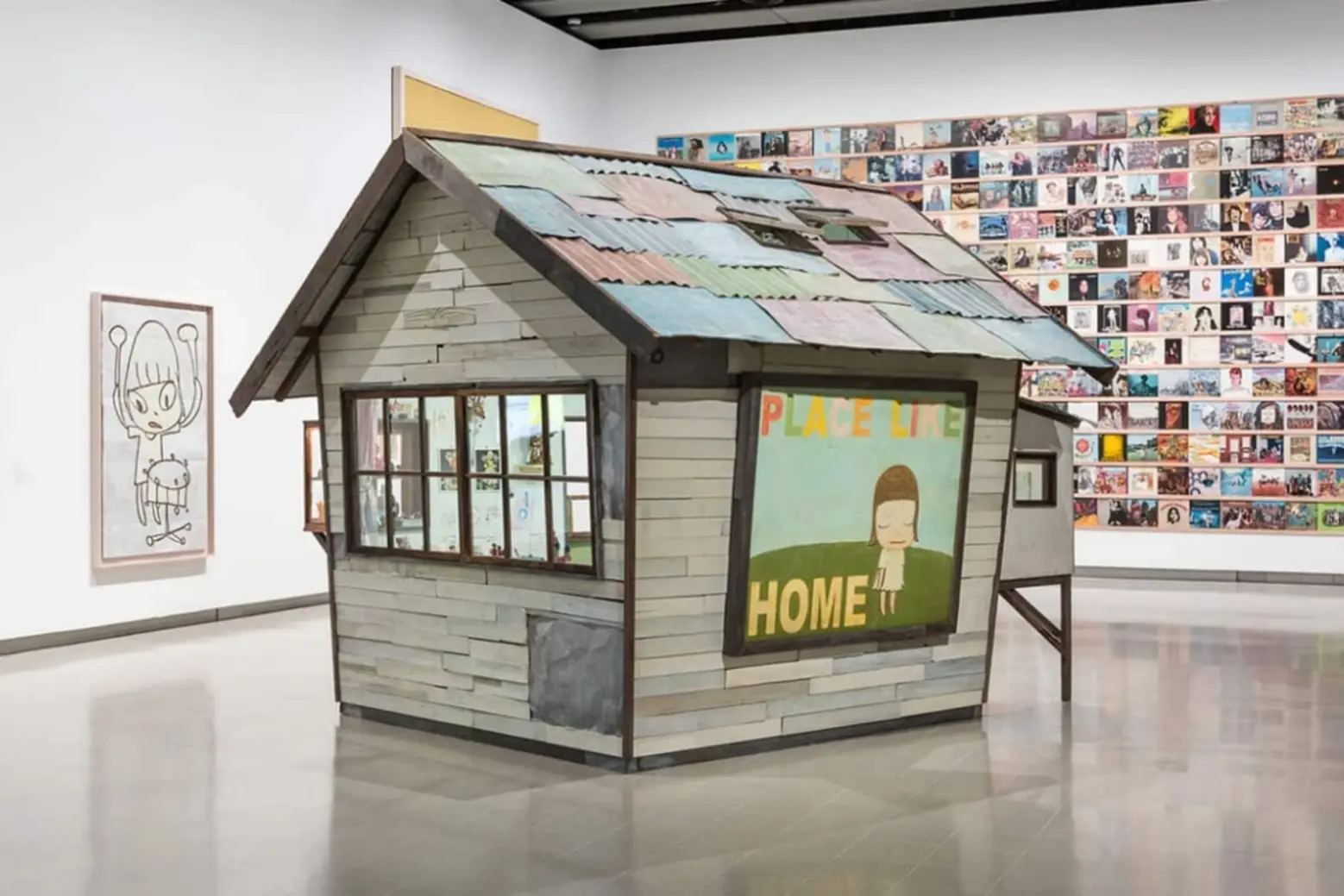
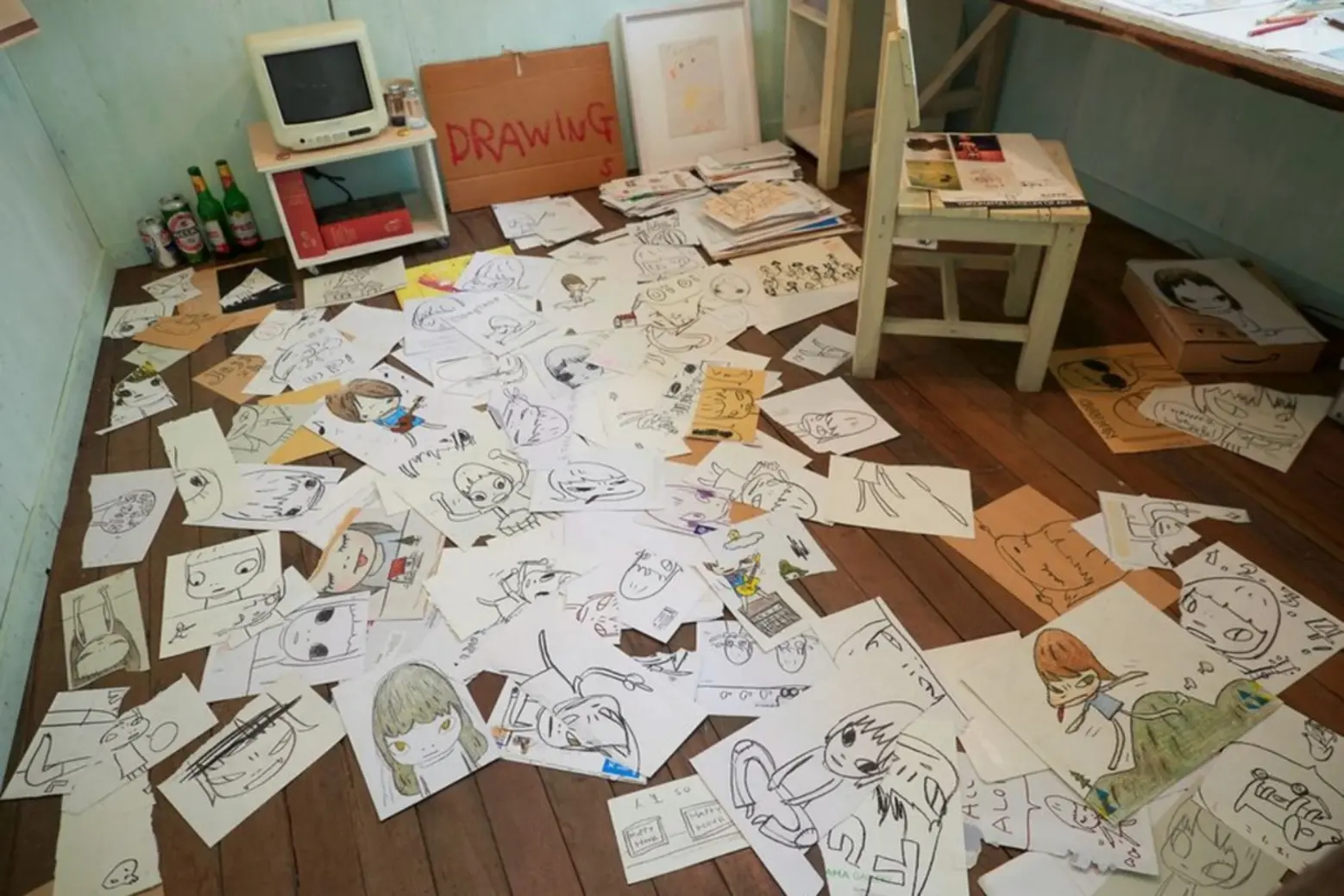
That punk resonates in his paintings. At the Hayward Gallery’s 2025 retrospective, My Drawing Room 2008, Bedroom Included came with a 42-track, 130-minute playlist selected by Nara himself, with songs recorded between 1964 and 1974. He is famously obsessive about records. The Hayward retrospective even included a wall of more than 300 LPs from his personal collection, ranging from 1960s folk and the raw voltage of punk, from Bob Dylan and Donovan to The Ramones and The Star Club.
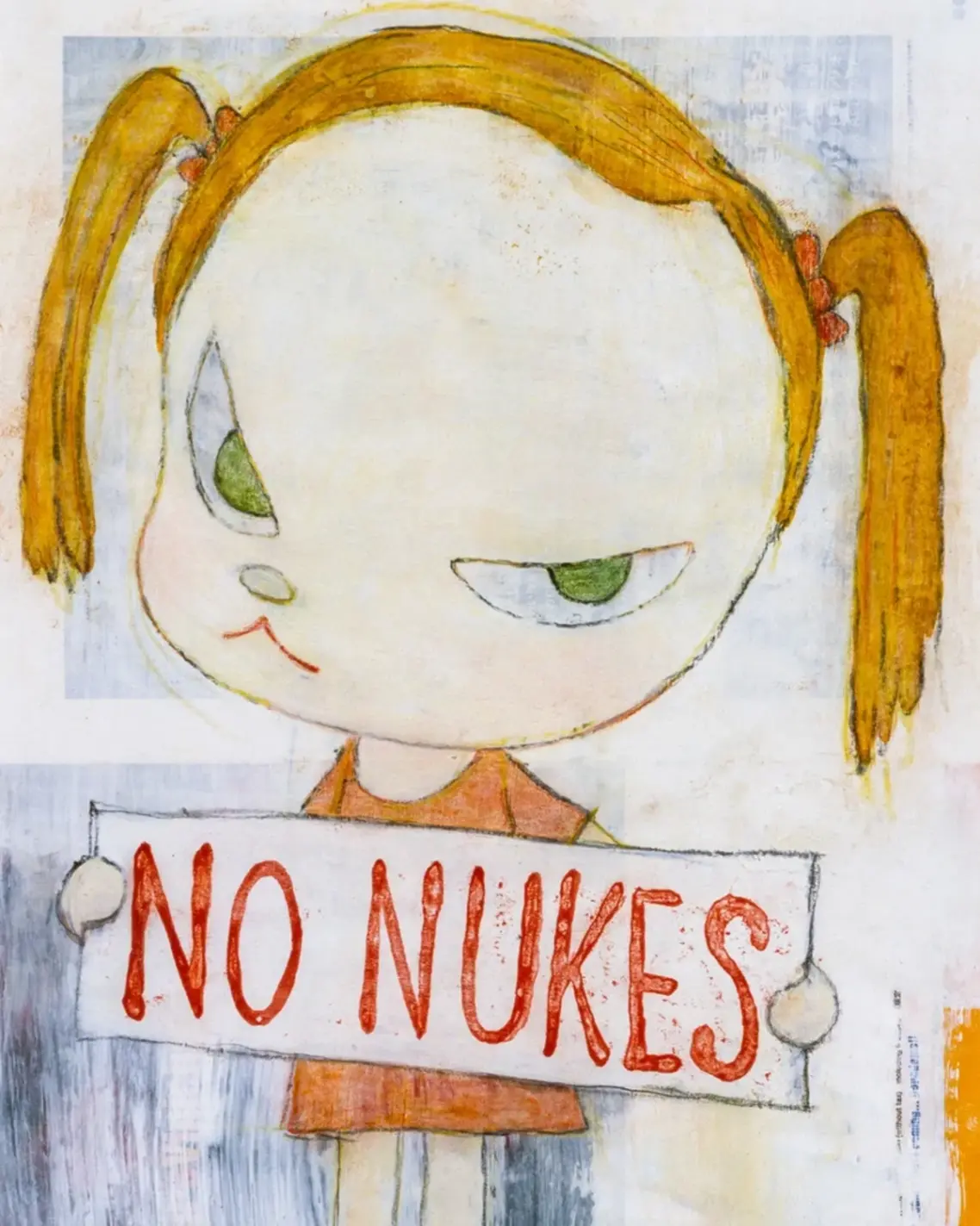
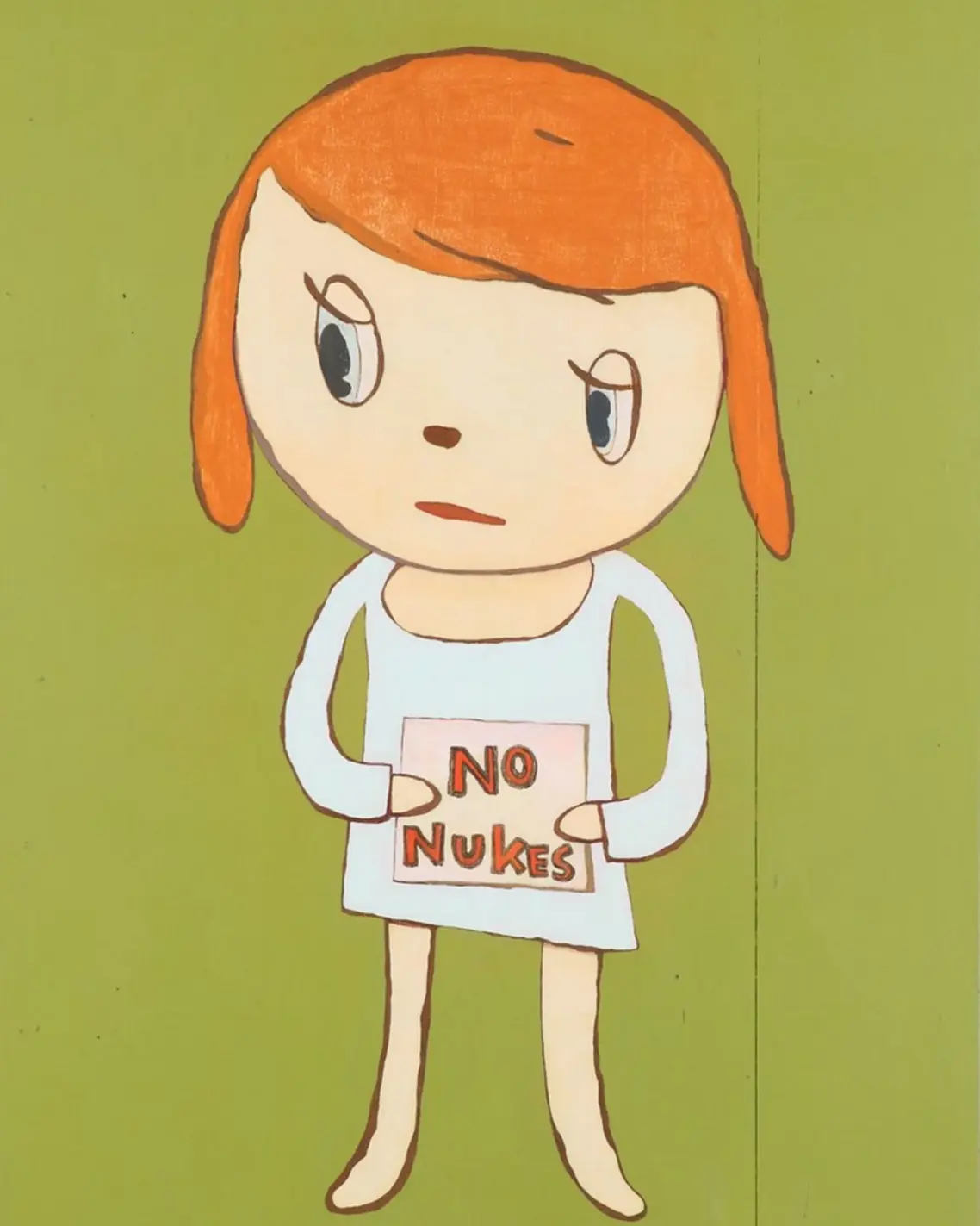
For Yoshitomo Nara, punk becomes ethics. Nara has described himself as anti-establishment and anti-authoritarian since his teens. His art reflects that, Yoshitomo's works center around individual psyche, yet it also carries a political and social pulse. After the Great East Japan Earthquake in 2011, his NO NUKES image moved through anti-nuclear demonstrations in Japan with his approval, while Miss Spring became one of the movement’s defining images in 2012. In his own notes, he writes of wanting to shout against “the injustice in the world.”
Even his mischief has that punk charge. In 2009, on the night before a major solo exhibition opened at Marianne Boesky Gallery in New York, Yoshitomo Nara was arrested for drawing graffiti on the walls of the Union Square subway station. He spent the night in a police cell and was released in time for his own polished downtown opening, a collision of underground impulse and art-world ceremony so perfectly absurd it could have been scripted. Later, he joked that it was a “classic New York experience.” Another set of his drunken doodles still survives under plexiglass at Niagara, the East Village dive bar, preserved like relics of a small, glorious refusal to behave too neatly.
After the earthquake, Yoshitomo Nara feels like the calm after the storm. His practice shifted slightly from the human psyche to the earthly form.
Clay, bronze, and photography have allowed him to bring the same emotional world into fuller contact with matter, giving solitude and memory an actual body. Since his residency in Shigaraki in 2007, ceramics have become central to that evolution. His roughly hewn heads preserve the evidence of the hand, with every imperfection holding onto touch, pressure, and hesitation. In a 2024 note, Nara explained that after more than a decade of making ceramics, he had come to prefer the older, more austere authority of bisque clay over the accidental seduction of glaze, a choice that reveals his deepening attraction to restraint and material truth.
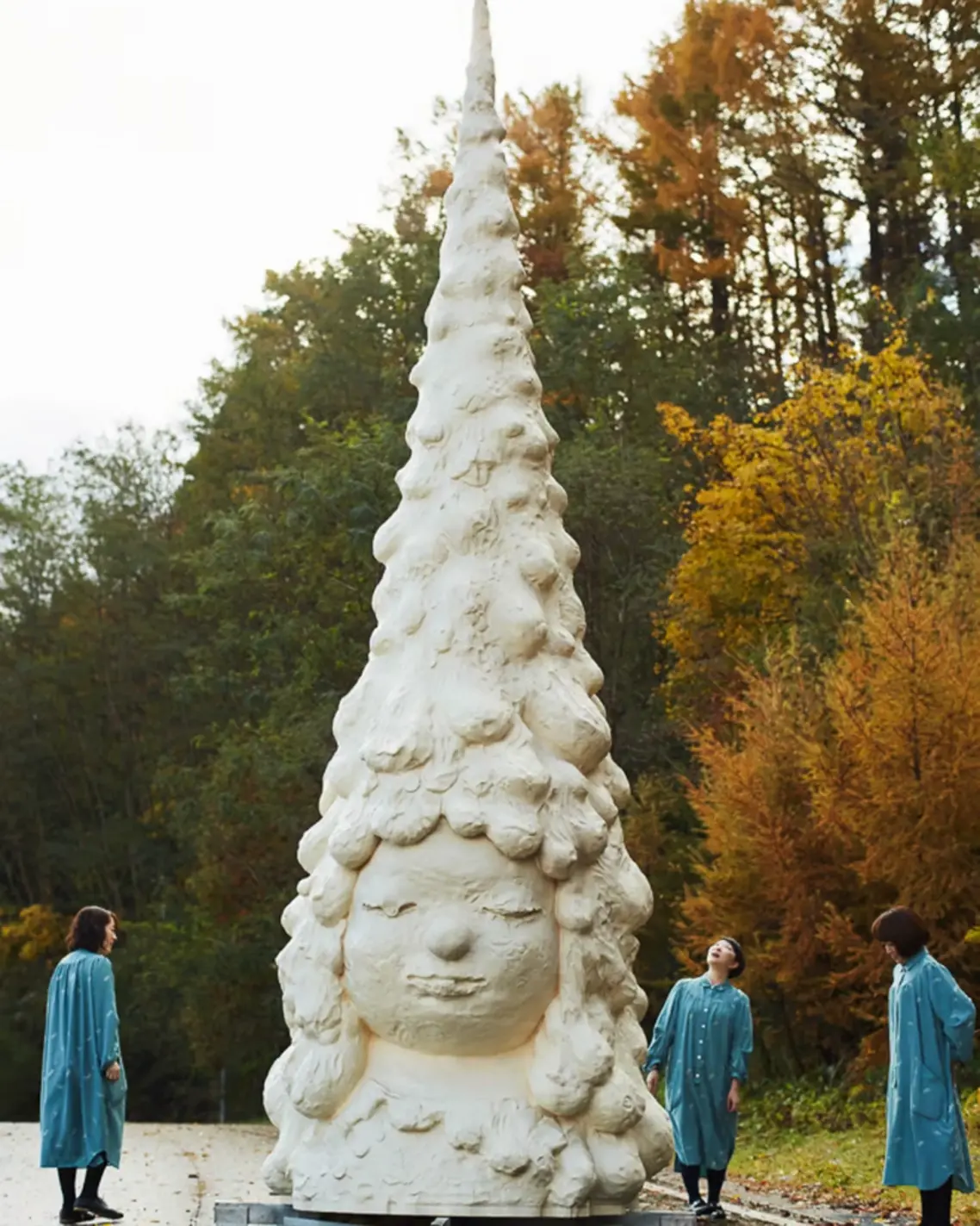
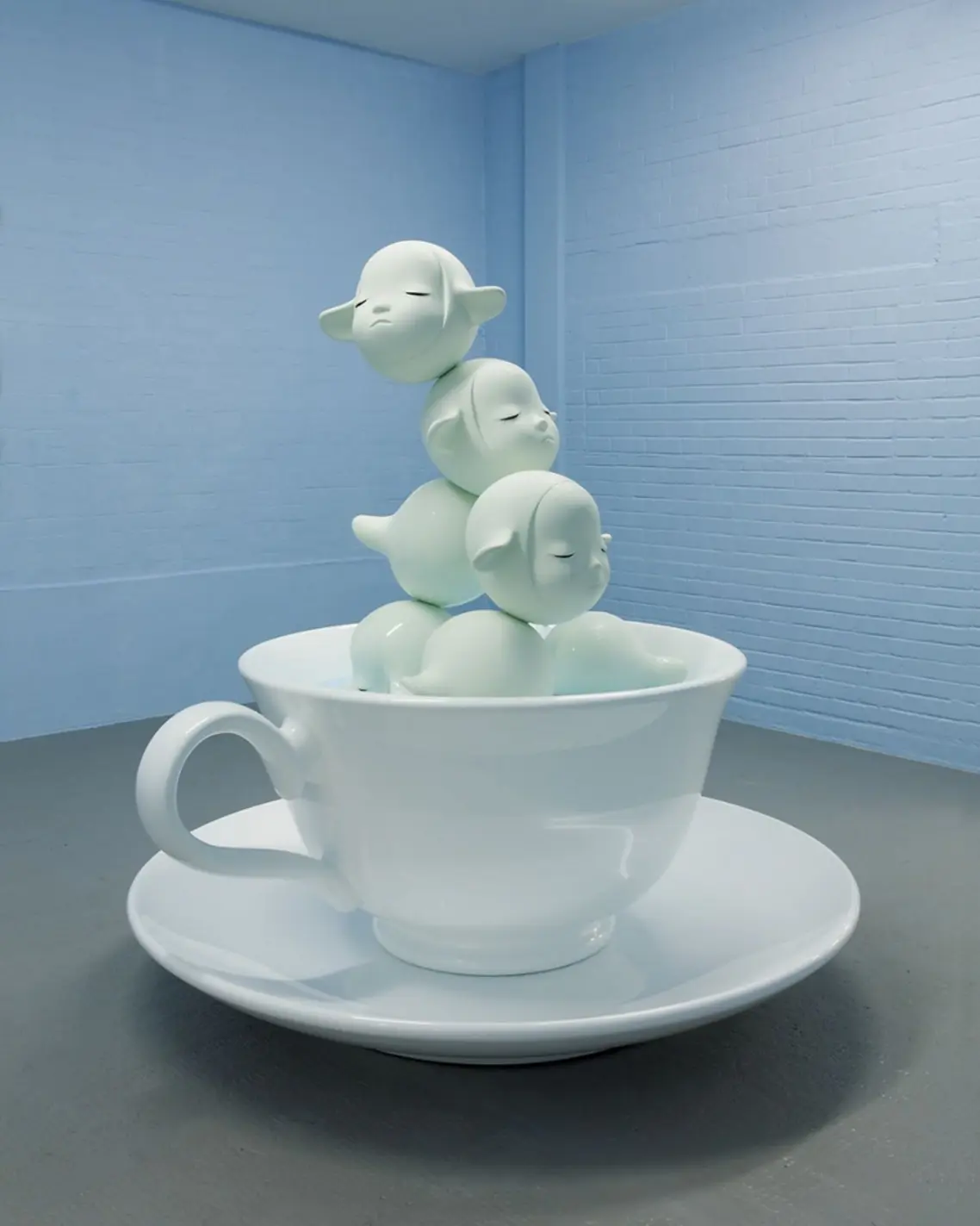
Bronze has extended that language into public space. Miss Tannen, the hand-molded bronze sculpture stands tall at 20 feet with her eyes closed, her hair grows upward in a conical shape, resembling a fir tree (Tannenbaum). The Fountain of Life , a motorized sculptural masterpiece featuring seven oversized, coffee-cup-shaped heads stacked within a large teacup. As real water flows from their closed eyes like constant, silent tears, the work signals a shift from individual anger toward a "collective sorrow" rooted in empathy and vulnerability. By placing these weeping figures in a teacup — a symbol of domestic safety, Nara creates a haunting contrast between comfort and grief.
This shift towards permanence, acting as a "spiritual antenna" for a world in mourning. Photography offers another kind of slowness, functioning as a record of passing atmospheres that nourish his paintings. Materially, this evolution has been just as important as the emotional one.
One of the most revealing facts about Nara has little to do with auction houses. According to the Aomori Museum of Art, his first full-scale Japanese solo exhibition in 2001 toured five venues, and the Hirosaki presentation in his birthplace was run by 4,600 volunteers. The museum calls that scale of local participation a milestone in exhibition history. The same institution now holds over 170 of his works. These numbers matter because they show that Nara’s importance exceeds star-artist celebrity. He generates belonging. His work invites viewers into a shared emotional literacy, and institutions have responded by building long-term ecosystems around it.
Arguably Nara’s most iconic painting, Knife Behind Back (2000) was sold for HK$196 million, about US$24.9 million, in 2019 after a ten-minute battle among six bidders, setting a record for the artist at the time. In March 2026, Nothing about it sold for KRW 17.7 billion, about US$11.6 million including fees, setting a new record for any artwork auctioned in South Korea.
Yoshitomo Nara remains influential because he gives contemporary art something it often struggles to hold onto: Emotional clarity without simplification. His figures carry loneliness, defiance, tenderness, fatigue, and resolve in the same face. His materials have grown slower, heavier, and more tactile. His politics have stayed quietly firm. His institutions have grown around him. His market has soared. Through all of that, the core achievement stays constant. Nara makes interior life visible, and he does it with such precision that a single child’s stare can feel like a whole philosophy of how to live in the world.