MENU
Close





If you worship speed, come to the Mercedes-Benz Museum, a shrine for beautiful cars!

If you worship speed, come to the Mercedes-Benz Museum, a shrine for beautiful cars!
May 7, 2026


The Mercedes-Benz Museum in Stuttgart is one of the rare corporate museums that escapes the feeling of a showroom. It does display cars, of course, more than 160 vehicles across nine levels, surrounded by more than 1,500 exhibits. Yet its deeper achievement lies in how completely it turns the history of a brand into spatial experience.
The central idea of the Mercedes-Benz Museum is the double helix. Mercedes-Benz describes the interior as being modeled on the DNA spiral, linking the building to the brand’s idea of originality, invention and continuous mobility. The metaphor is direct but effective. If DNA contains genetic code, the museum contains the code of automotive culture, from the invention of the automobile to the future of transport.

UNStudio’s architecture begins with a trefoil geometry, a cloverleaf form that responds to Stuttgart’s car-driven context, including nearby road systems, test tracks and industrial landscapes. The form organizes the building’s entire logic. Two interlocking ramps spiral downward around a central atrium, producing routes that repeatedly separate, cross and reconnect. UNStudio explains that one trajectory presents the collection of cars and trucks, while the other explores the Mythos rooms dedicated to Mercedes-Benz history and milestones.
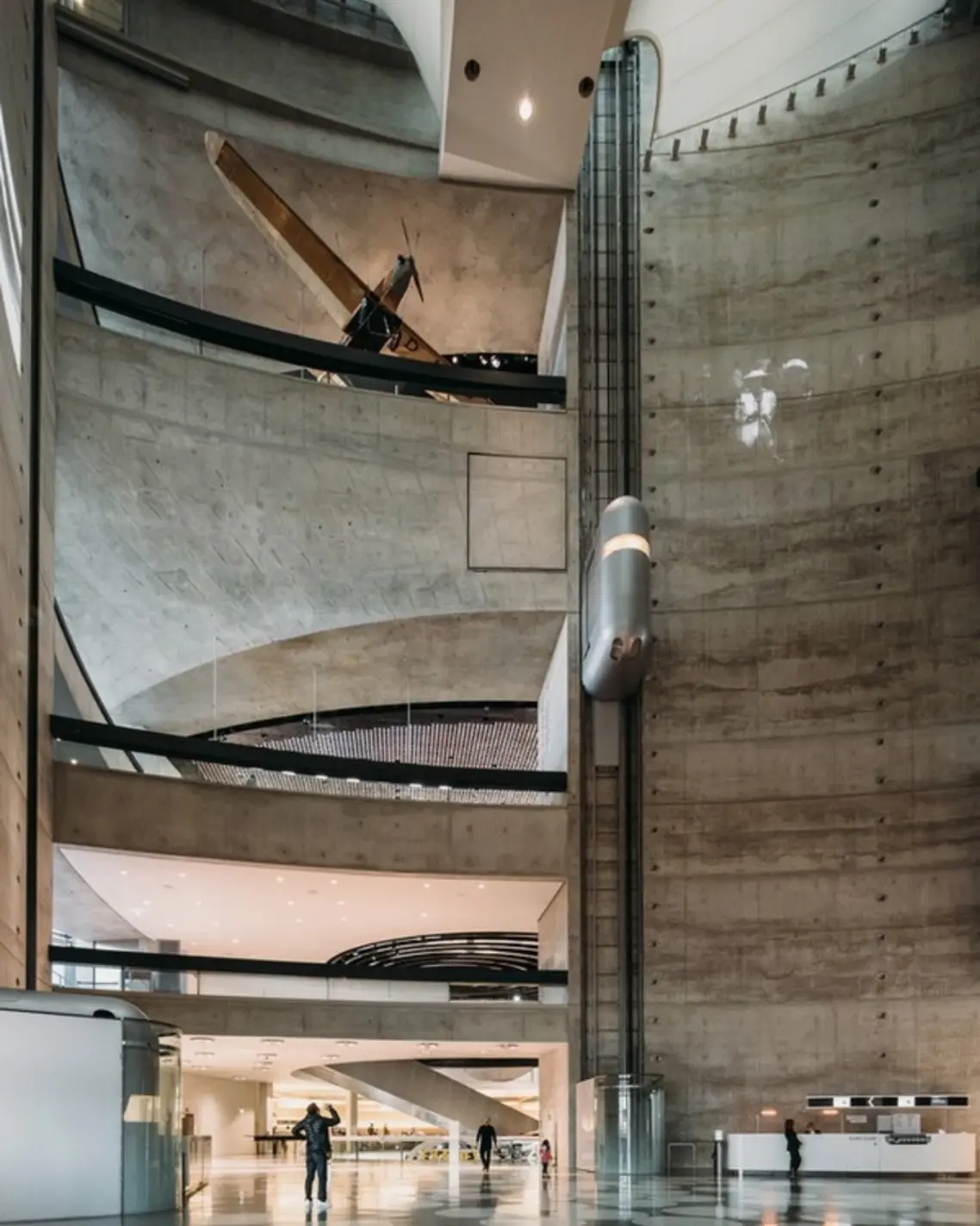

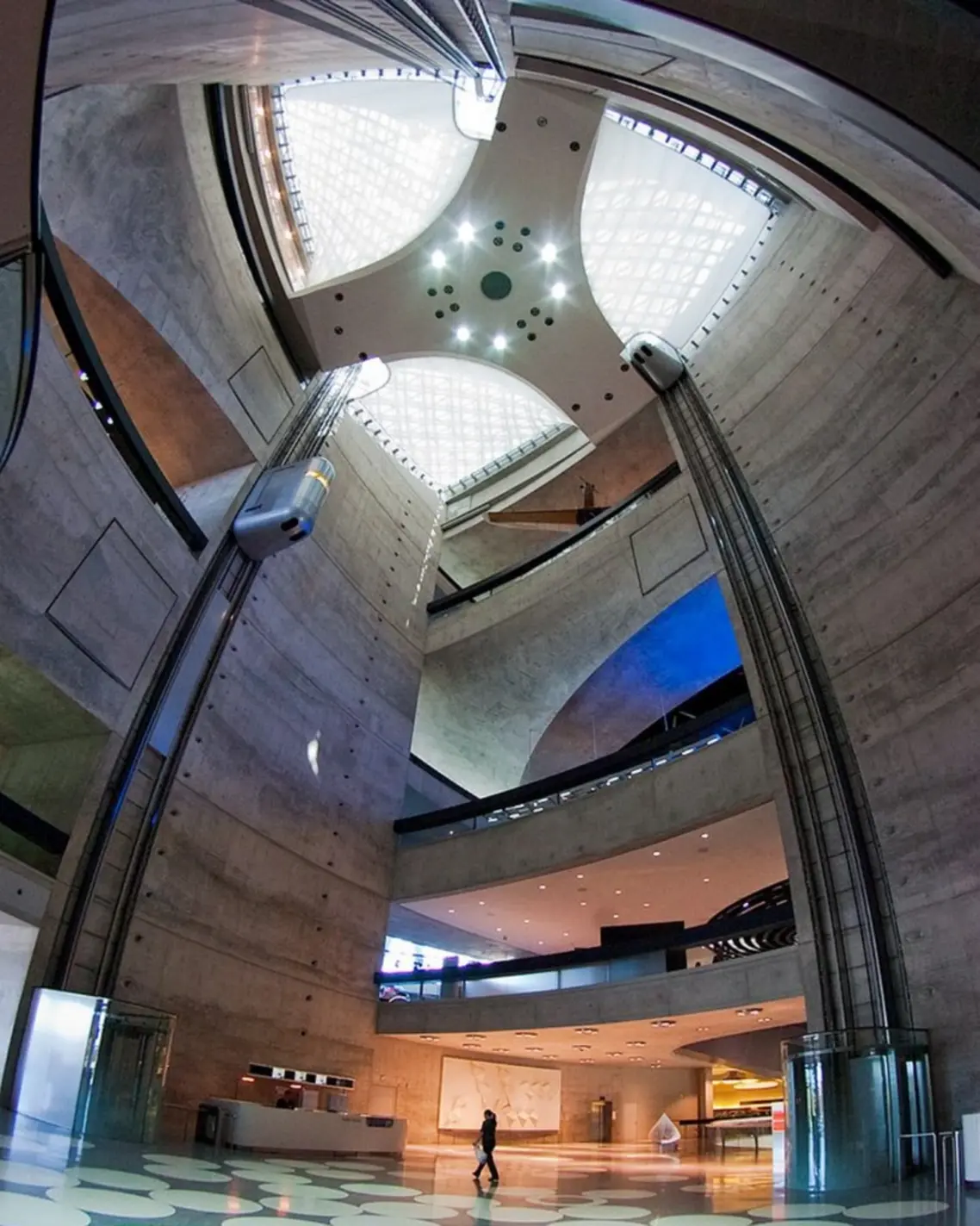
This makes the building feel like a road rather than a corridor. Its curves evoke the sensation of driving, while the ramps create a controlled descent through time. The genius of the design lies in its flexibility. Visitors can follow one route continuously, switch between routes at crossing points, or create their own sequence through the story.
The museum experience begins at the top. Visitors take lifts upward before descending through the exhibition, a top-down logic that gives the journey the structure of a time machine. Mercedes-Benz notes that visitors are transported by lift to the top floor, where two routes curve back down through the collection.

The first route is formed by seven “Legend” rooms, arranged chronologically. These rooms tell the story of the brand in relation to wider world history: The invention of the automobile, the early years of mobility, the birth of the Mercedes name, racing culture, post-war reconstruction, modern engineering and future technology. This is the museum’s historical spine, where the brand appears inside the larger drama of industrial modernity.


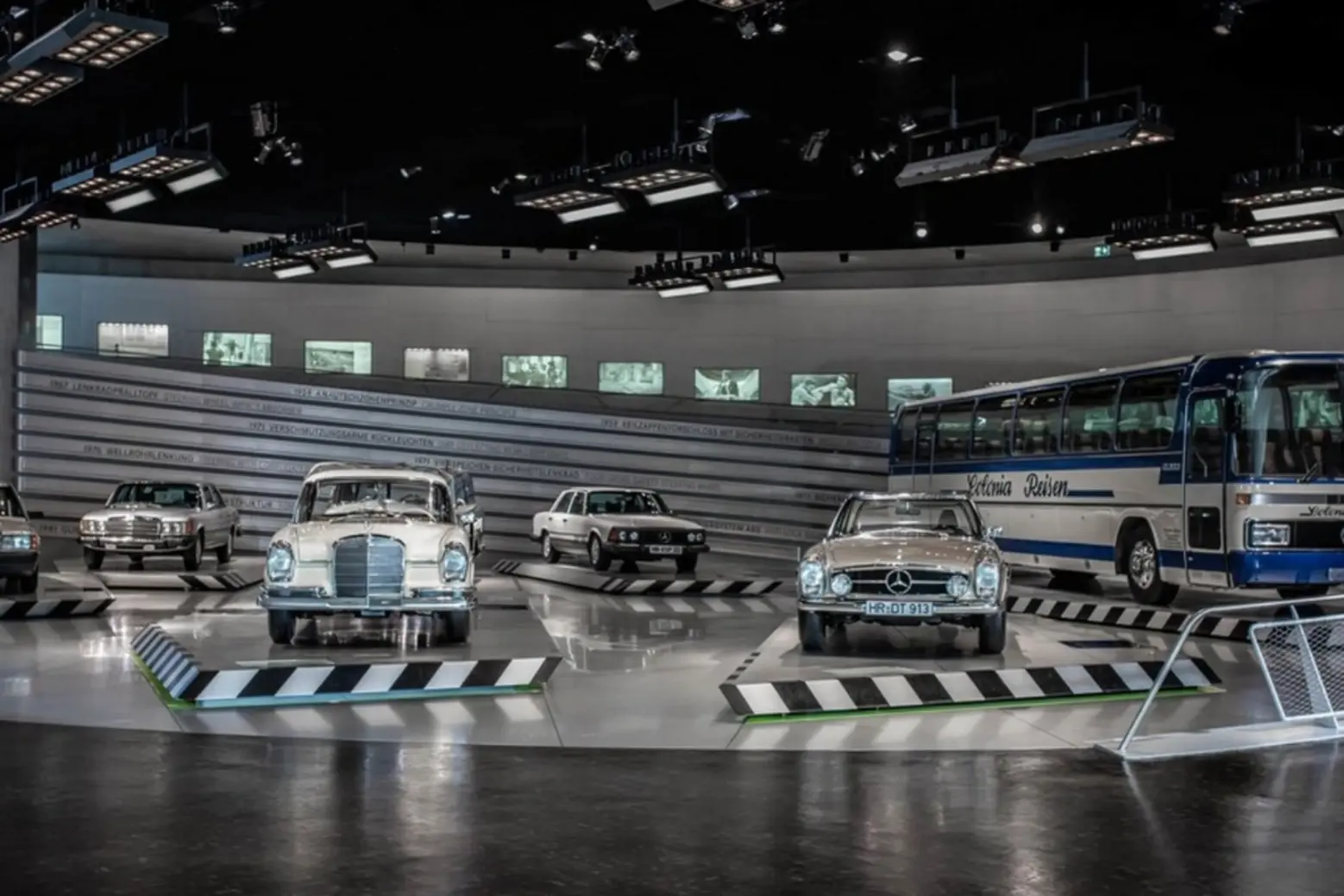
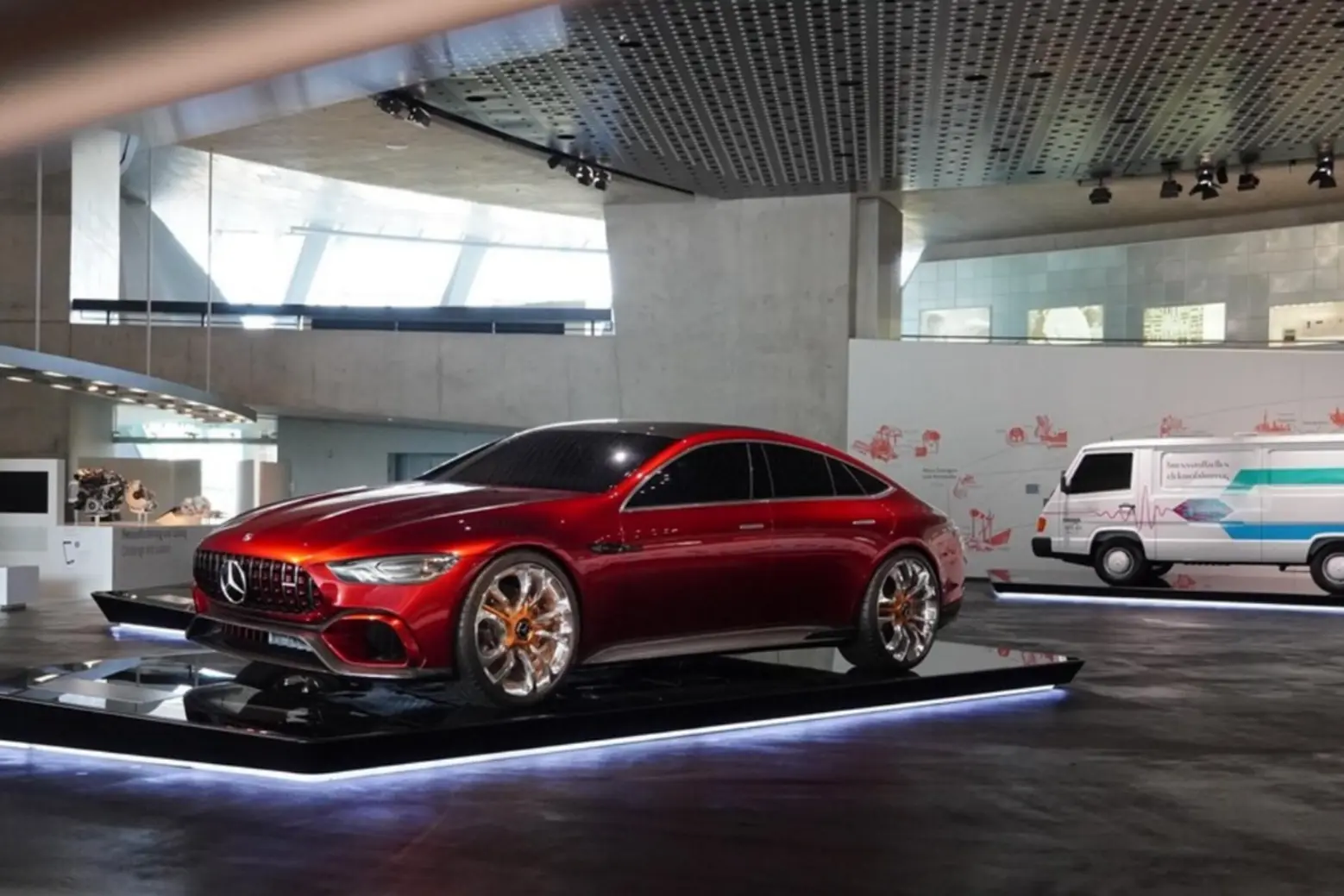
The second route is built around five “Collection” rooms, organized by theme instead of strict chronology. This is where the museum shows the breadth of Mercedes-Benz as a cultural and technological system. Passenger cars, commercial vehicles, racing machines, emergency vehicles and celebrity-linked models sit within a broader interpretation of mobility. The visitor begins to understand that Mercedes-Benz is not only a luxury-car maker, but a company shaped by taxis, trucks, ambulances, buses, motorsport, state vehicles and everyday movement.
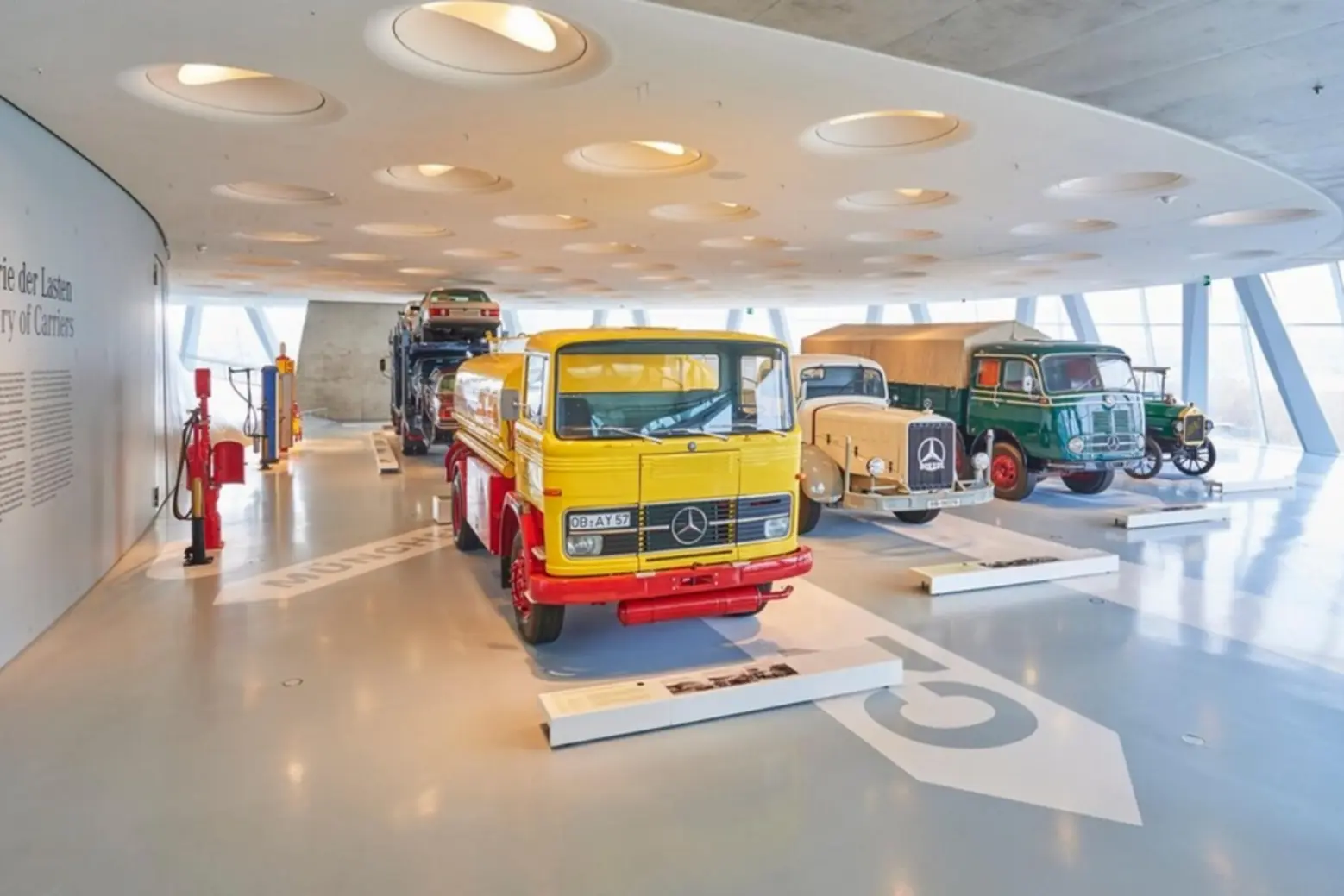
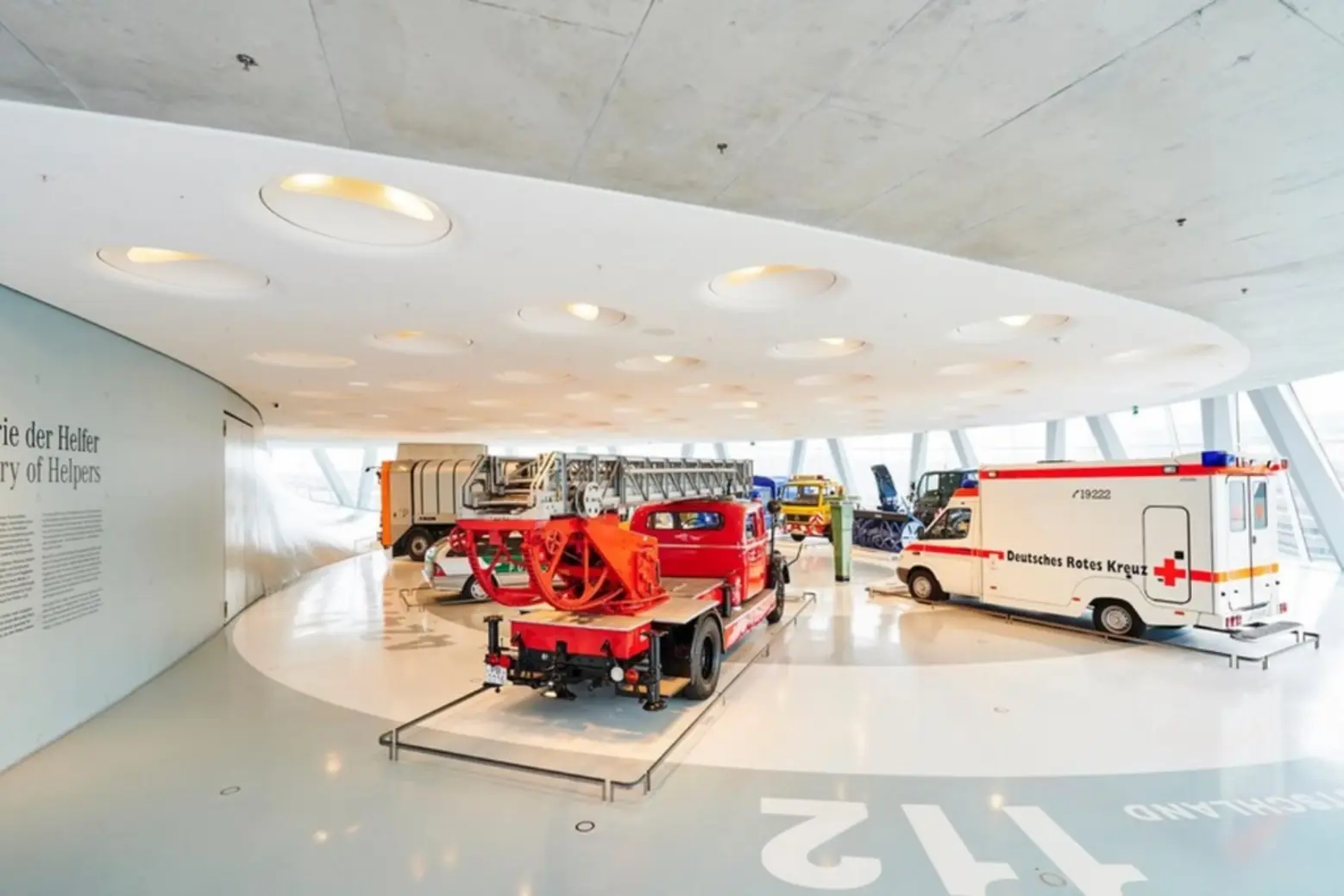
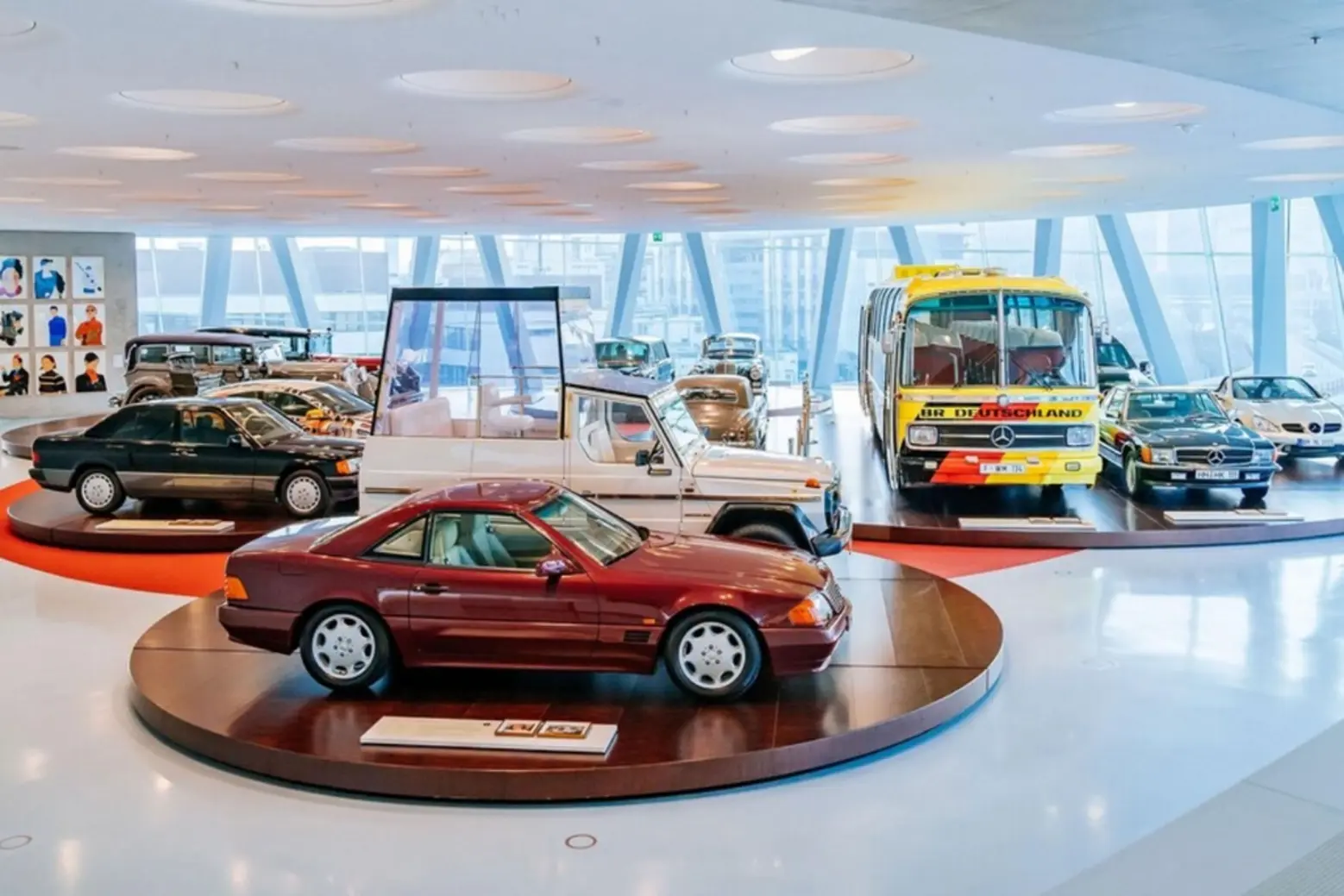
The most effective curatorial decision is the ability to move between both tracks. At crossing points, a visitor can leave the chronological story and enter a thematic gallery, or move back into the historical timeline. This turns the museum into a conversation between myth and function. The “Legend” rooms create emotional continuity. The “Collection” rooms reveal range. Together, they prevent the brand story from becoming pure nostalgia.
The journey ends at “Silver Arrows – Races and Records,” a banked corner where Mercedes-Benz’s racing heritage becomes theatrical. Mercedes-Benz identifies this as the point where both tours end, making motorsport the museum’s final burst of speed, danger and legend.
The Mercedes-Benz Museum is as much an engineering achievement as a curatorial one. Its beauty depends on structure, and its structure depends on an almost obsessive control of geometry. Werner Sobek, responsible for structural design and parts of the façade planning, describes the building as a highly complex wide-span reinforced concrete construction that could only be realized through detailed 3D planning. Individual museum levels span up to 30 meters without supports.
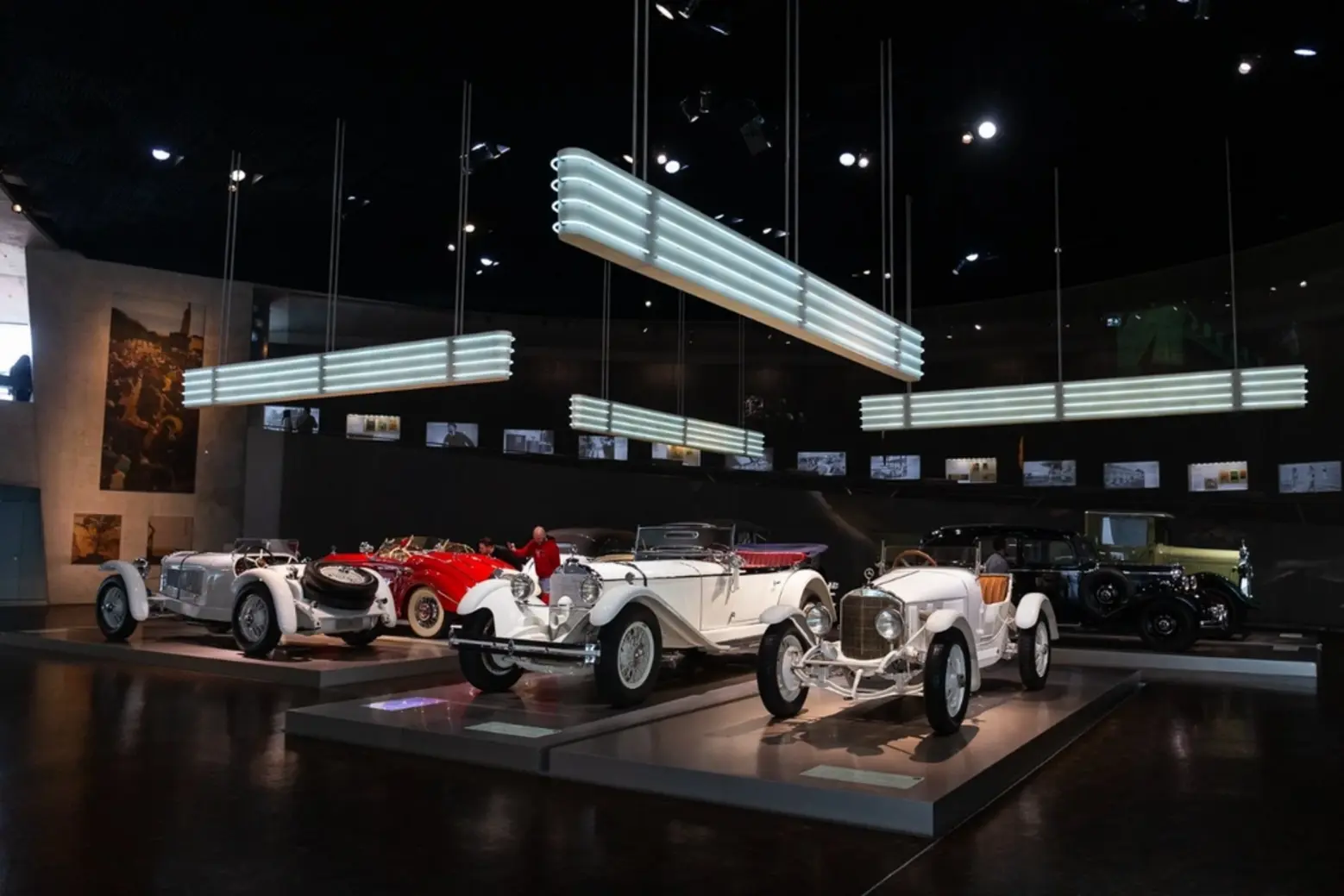
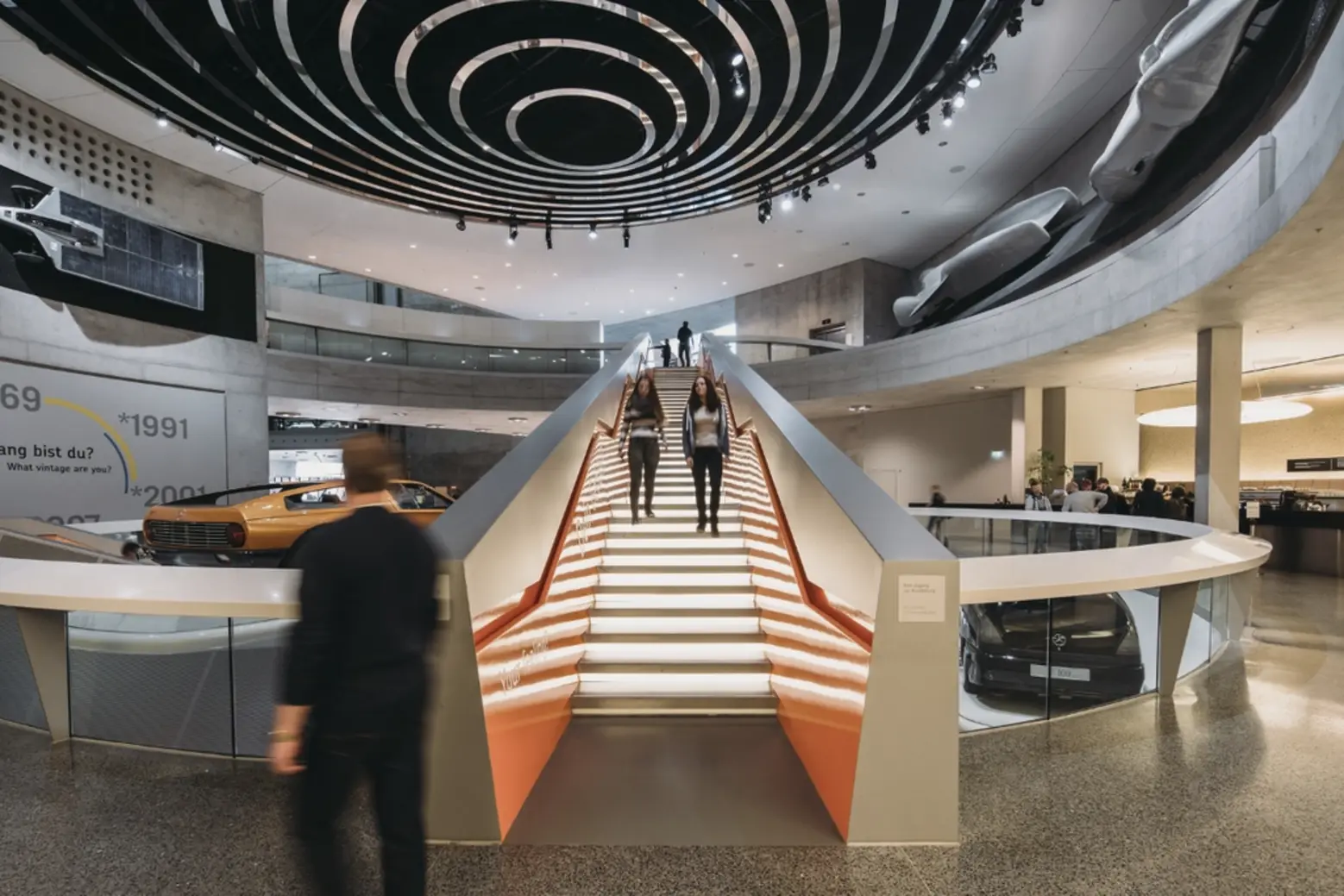
This matters because the museum’s interior requires openness. Cars need space around them. Visitors need long sightlines. The atrium needs to breathe. Columns would have broken the spell, interrupting both the views and the sense of continuous movement. Instead, the building relies on curving concrete forms that twist between walls, floors and ramps. They behave less like conventional supports and more like muscular architectural ligaments.
This is where the building avoids the trap of spectacle architecture. It is monumental, but it serves the exhibits. It is theatrical, but it guides the eye back to the vehicles. Its ramps, voids and curves create drama, yet cars remain emotional anchors. The architecture choreographs attention.
Nearly two decades after opening, the Mercedes-Benz Museum remains powerful because it understands that automotive history is also cultural history. The 1886 Benz Patent-Motorwagen is not only an artifact of engineering; it marks the beginning of a new relationship between human beings, speed, distance and modern life. The 300 SL “Gullwing” is not only a beautiful sports car; it is an icon of post-war desire and technical elegance. The Silver Arrows are not only racing machines; they are sculptures of risk, nationalism, precision and myth.
The Mercedes-Benz Museum treats brand heritage as something more demanding than publicity. Visitors arrive expecting cars and leave having traveled through a machine for thinking: a double helix of concrete, glass, myth and momentum. In Stuttgart, the automobile is displayed not as a frozen object, but as a continuing question about what modern life wants from motion.