MENU
Close





At Place du Colonel Fabien, the headquarters of the French Communist Party turns political history into pure atmosphere, where Oscar Espace Niemeyer’s curves, concrete, and luminous dome still feel radically ahead of their time.
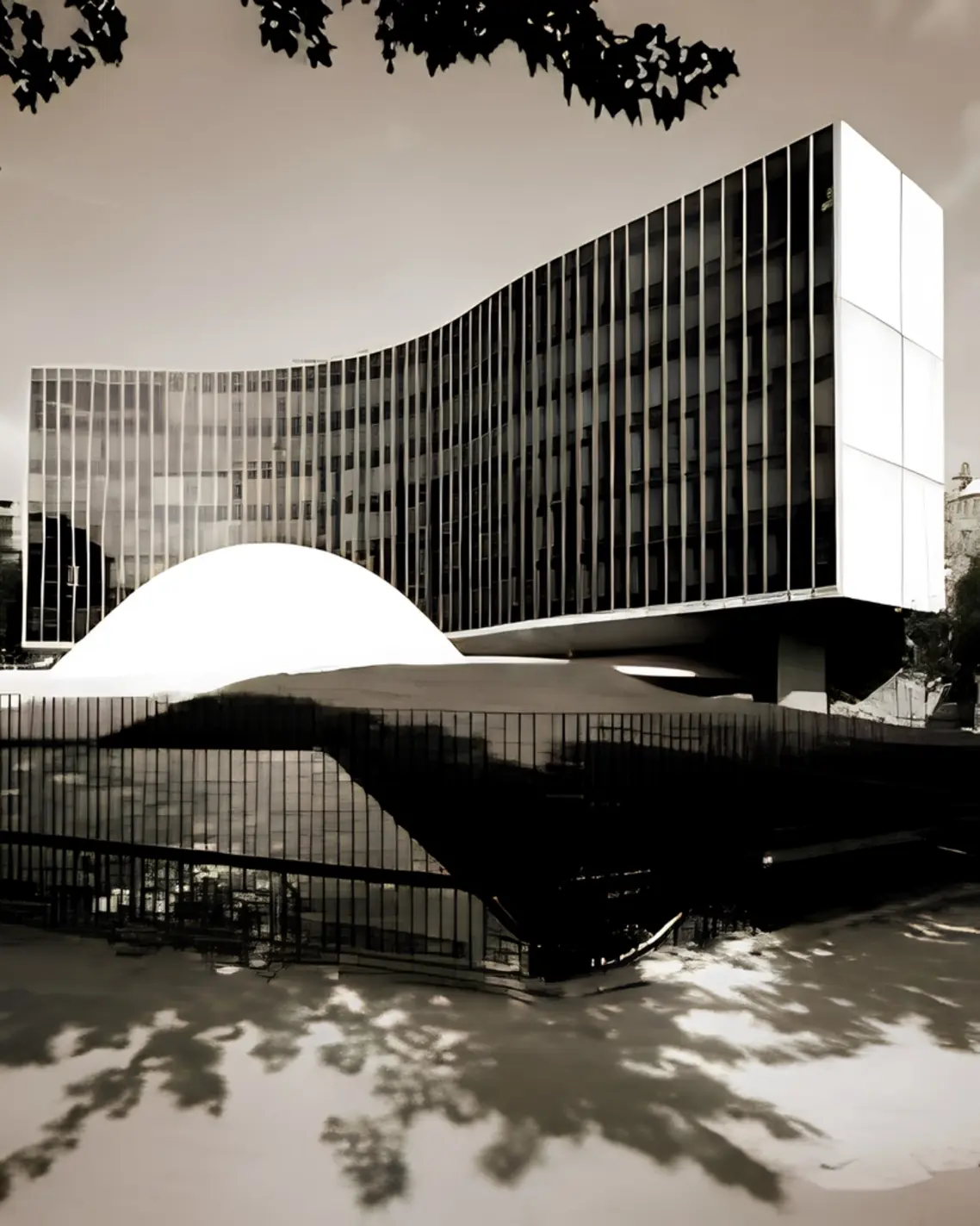
At Place du Colonel Fabien, the headquarters of the French Communist Party turns political history into pure atmosphere, where Oscar Espace Niemeyer’s curves, concrete, and luminous dome still feel radically ahead of their time.
May 5, 2026


In Paris, where grandeur is often associated with limestone façades, wrought-iron balconies, and Haussmannian symmetry, the headquarters of the French Communist Party arrives like a beautiful interruption. Located at 2 Place du Colonel Fabien in the 19th arrondissement and known today as Espace Niemeyer, the complex is one of the city’s most startling works of modern architecture
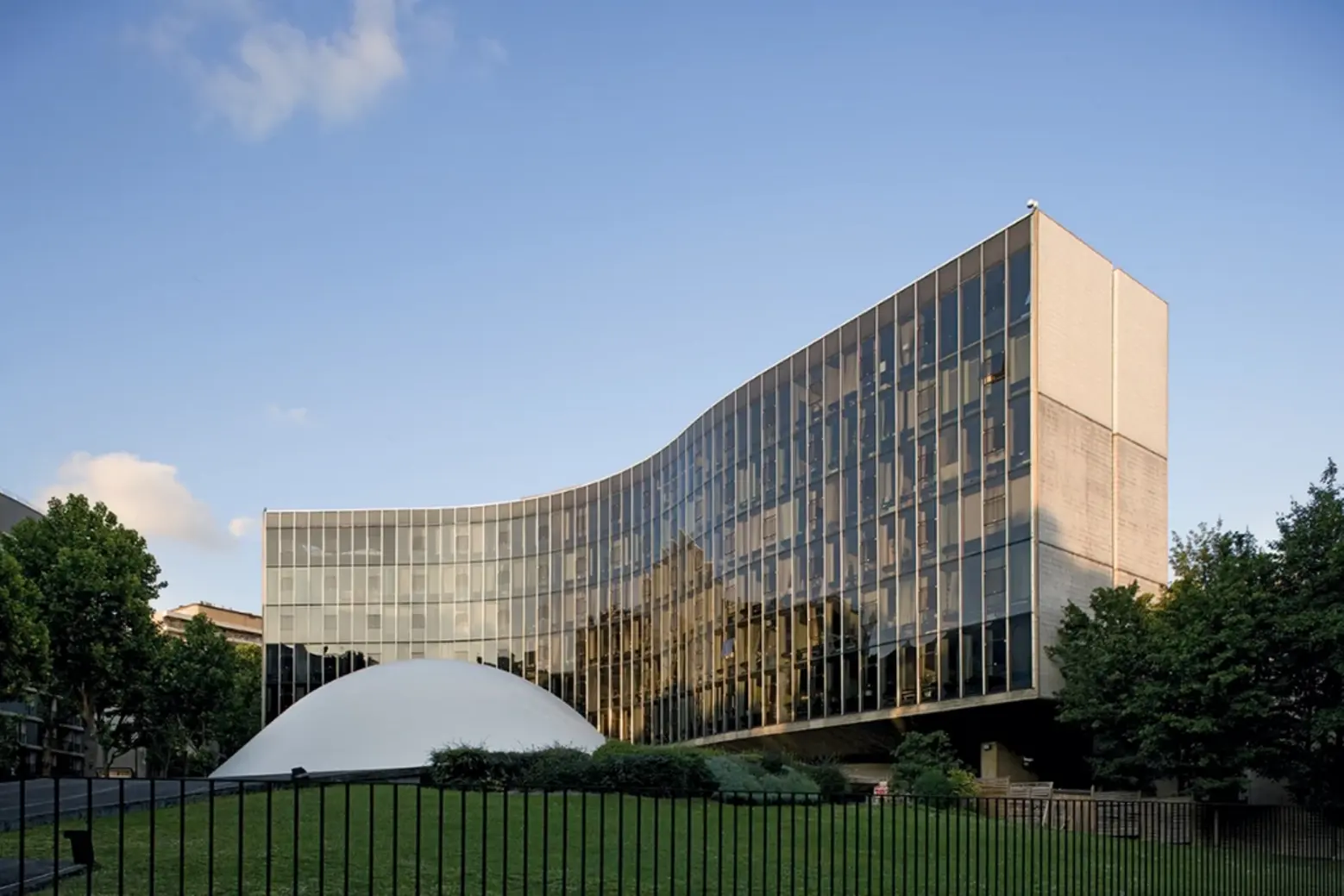
Designed by Oscar Niemeyer and completed in stages from the late 1960s into 1980, it combines a glass-skinned serpentine office block with a white dome that seems to rise from the lawn like a vision from another political future. Listed as a historic monument since 2007, it remains both a working headquarters and one of Paris’s most unexpected architectural experiences.
The story of the building begins with exile, ideology, and the international reach of modernism. After Brazil’s 1964 military coup, Oscar Niemeyer, a lifelong communist, found refuge in France, where he continued to work during a period of political repression in his home country. The French Communist Party commissioned him to design a new headquarters at a moment when it wanted architecture that could look forward rather than back. The result was one of Niemeyer’s first major European projects, a building that translated his Brazilian vocabulary of curves and monumentality into a dense Parisian setting. Instead of imposing a rigid block on the site, he shaped the main office wing into a six-story S-curve that follows the slope of the land and preserves openness across the forecourt.
That office block remains one of the most elegant gestures in postwar Paris. Raised on short concrete piers, it appears to hover above the ground rather than crush it. Its curtain wall, designed with Jean Prouvé, wraps the façade in tinted glass and metal, giving the structure an unusual lightness and making the building feel in constant conversation with the sky. This dialogue between weight and reflection is part of what makes the space so seductive.
When viewed from the rooftop terrace, the arrangement of the dome and the curved office block resembles the hammer and sickle, though Niemeyer always maintained that the shapes were purely a response to the site’s topography.
As Niemeyer wanted his building to be a "Maison du Travailleur" ("House of the Worker"), he avoided traditional decorative flourishes, focusing instead on the "beauty of the curve" and the honesty of the materials.
If the serpentine block gives the headquarters its urban profile, the underground spaces give it its myth. Niemeyer wanted to keep the site open, so he tucked many of the most important communal rooms below grade. Visitors descend into a world of board-marked concrete, sweeping ramps, and sculpted surfaces where the architecture feels at once bunker-like and strangely voluptuous. The effect is not immersive. Rather than treating the subterranean level as a hidden service zone, Niemeyer turned it into the emotional center of the project, a place where politics, gathering, and choreography could happen within an almost cinematic landscape.
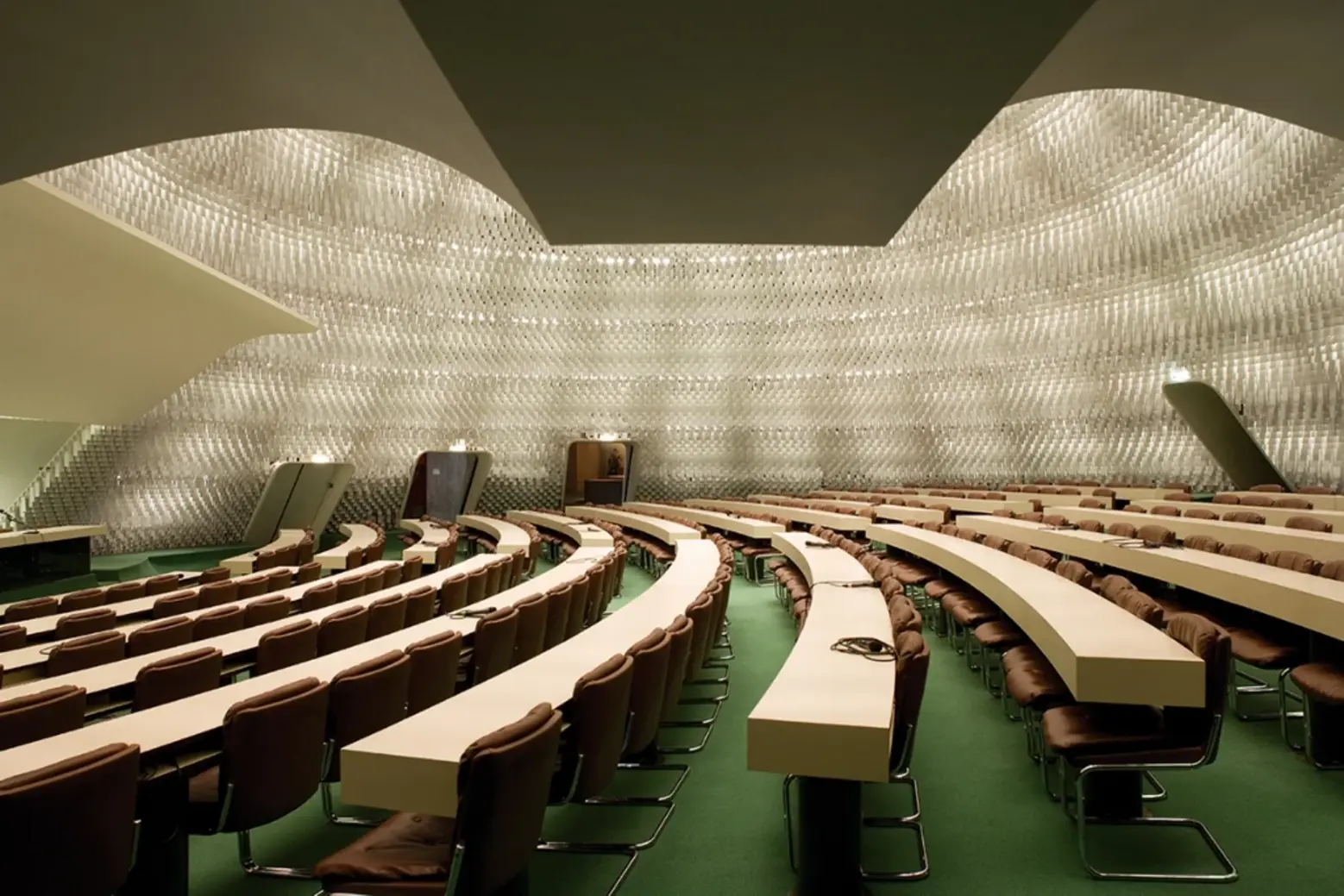
The most famous of these spaces is the Grand Auditorium beneath the white dome. From the lawn outside, the dome reads as a smooth abstract form, but inside it becomes a luminous chamber lined with over 120,000 thousands of anodized aluminum blades that diffuse light across the room and contribute to its acoustics. The green carpet, long associated with the interior, intensifies the surreal atmosphere and has often been read as a subtle nod to Brazil.
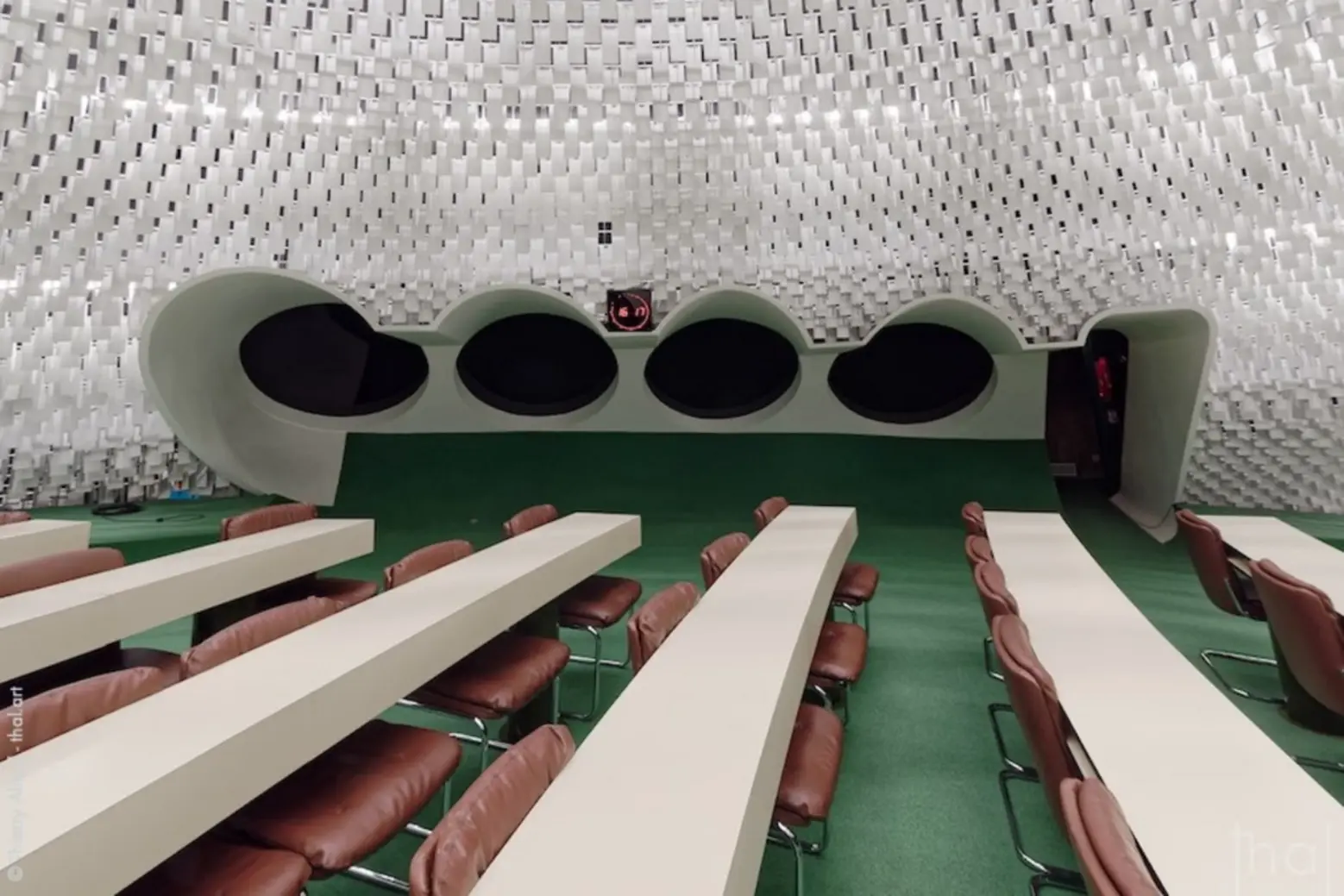
Inside the dome, the traditional hierarchy of the "stage" is discarded. The seating is arranged to foster an egalitarian spirit, turning a standard meeting hall into a total environment of shared experience. It is a space that feels less like a bureaucratic chamber and more like a utopian theater or a vintage vision of a spacecraft.

The experience is rounded out by the Alta lounge chairs, designed by Niemeyer and his daughter, Anna Maria. Their low-slung, ergonomic silhouettes were a deliberate choice, intended to replace stiff, formal posturing with relaxed conversation — a final, functional nod to the party’s communal ideals.
The headquarters was never meant to be neutral. It was conceived during the Cold War, when the French Communist Party remained a serious force in national life and wanted a home that expressed confidence, modernity, and ideological ambition. Construction unfolded in phases. The main building was inaugurated in 1971, while the spectacular dome-covered auditorium was completed later, in 1980, after financial delays. That long timeline matters because it reveals how much symbolic value the project carried. This was not a generic office development. It was a manifesto in architectural form, a declaration that a political party could imagine itself through modern design, public space, and daring formal freedom.
Niemeyer reportedly worked on the project without charging a fee, offering the design as a gesture toward the party that had welcomed him in exile. That biographical detail gives the building unusual emotional depth. The headquarters is political in more than name. It embodies a relationship between architect and patron shaped by belief, solidarity, and displacement. At the same time, the project resists the stiffness people often associate with official buildings. It has none of the punitive solemnity of bureaucratic modernism. Its curves are sensual, its circulation theatrical, and its surfaces continually responsive to light. Even its famous dome, swelling out of the forecourt, softens the rhetoric of power into something more enigmatic and humane.
That duality helps explain the building’s enduring fascination. It is at once a partisan monument and a broadly admired architectural object. Paris Je T’aime now presents it as a major cultural site, emphasizing its historic role, its monumental façades, and its place within the city’s modern heritage. Since 2007, its official status as a monument historique has further confirmed that what began as a highly specific political commission now belongs to the larger story of Parisian architecture. The headquarters has moved from ideological emblem to civic landmark without losing the tension that made it remarkable in the first place.
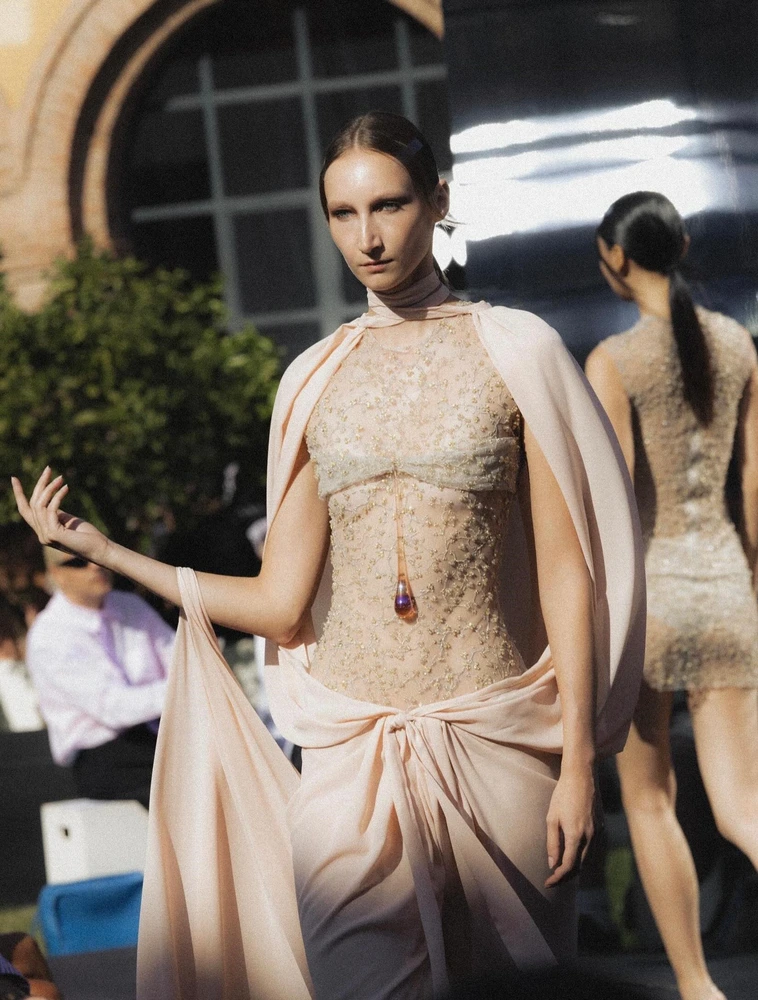
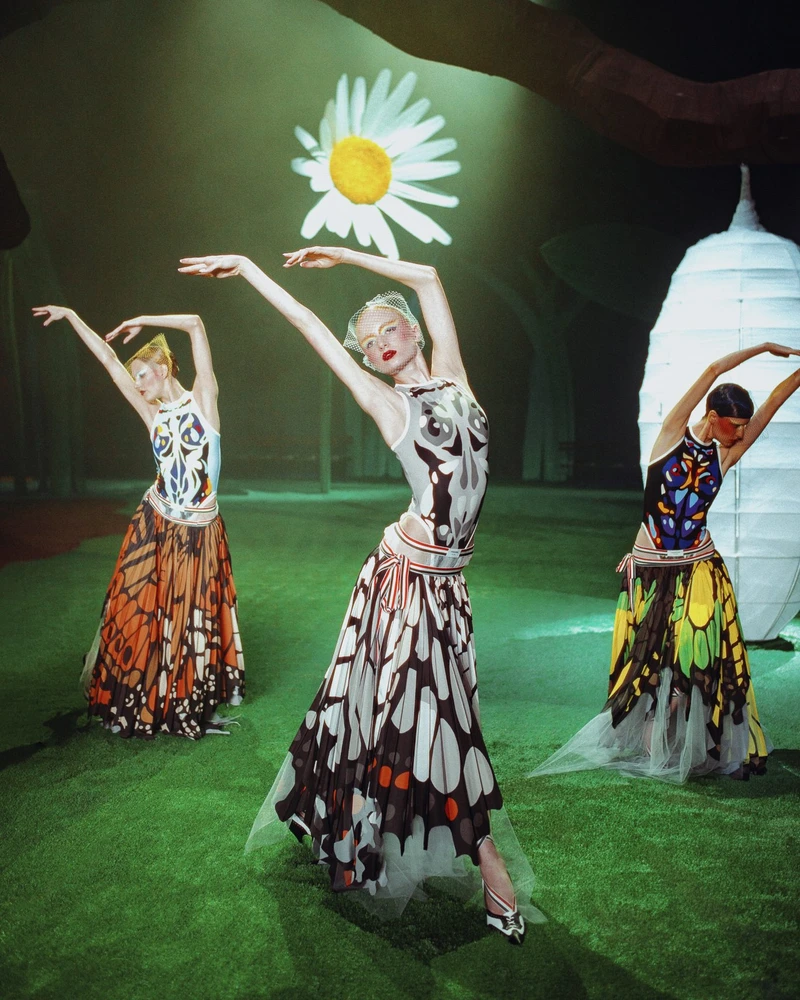
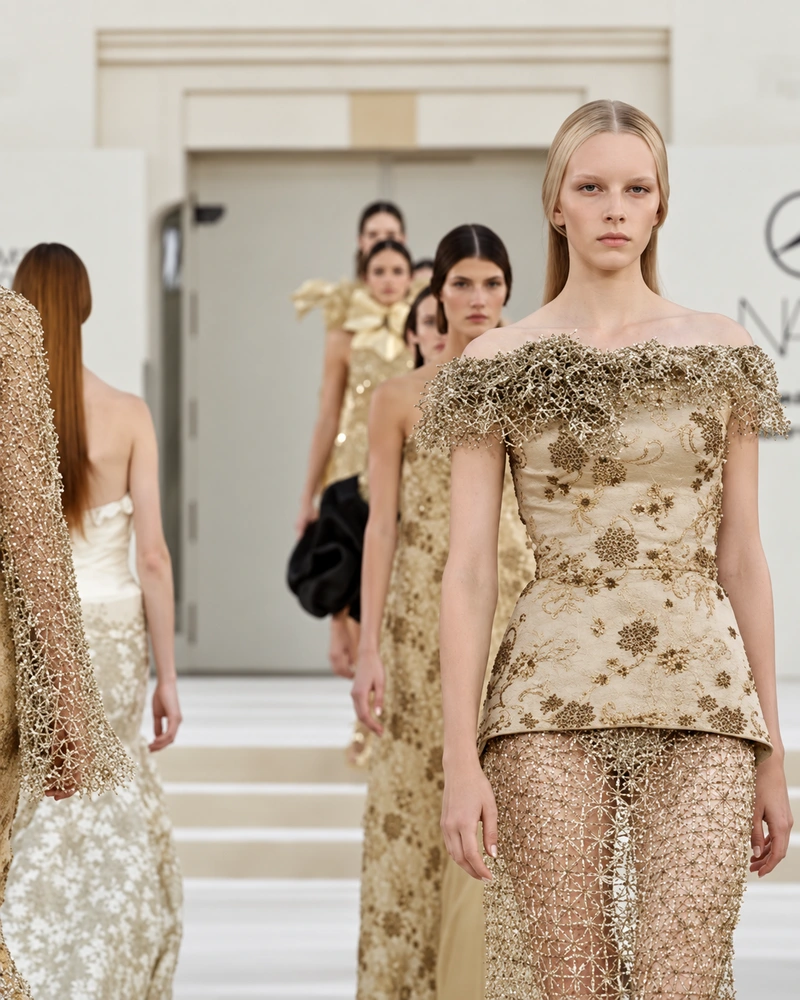
In the twenty-first century, the building acquired a second life. Under the name Espace Niemeyer, it has increasingly functioned as an event venue, hosting exhibitions, conferences, concerts, film shoots, and runway shows. The official site presents the complex as a retro-futurist event space open year-round for private and cultural programming, while Paris’s tourist office notes that it is accessible to the public during exhibitions and on European Heritage Days. That shift from communist headquarters to coveted cultural venue is one of the most fascinating aspects of the building today. Its political origin remains intact, yet its visual identity has proven so compelling that fashion, art, and cinema have all wanted a piece of it.
This afterlife makes perfect sense. Niemeyer’s architecture was always theatrical, and Espace Niemeyer possesses the kind of retro-futurist glamour that contemporary culture finds irresistible. Its dome is instantly legible on camera. Its ramps and curves lend themselves to runway movement. Its reflective façades and green interiors already feel art-directed. Even when used for commercial or cultural events, the building retains a certain ideological ghost, which only makes the effect richer. It is architecture with memory, not a neutral shell waiting to be activated. Every show, exhibition, or shoot staged there inherits a little of its original charge.
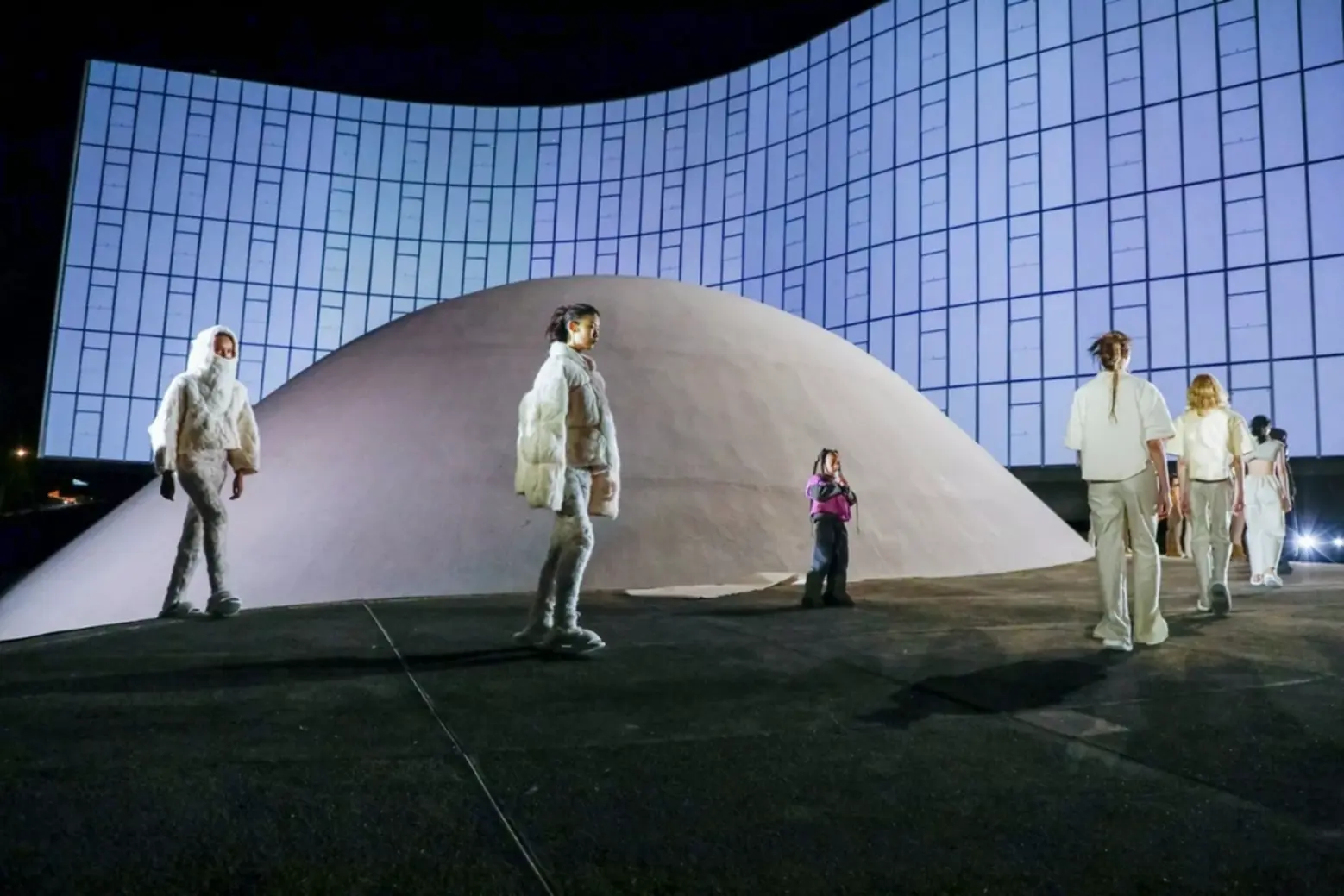
For visitors, however, part of its magic lies in the fact that it still feels slightly elusive. It is not an always-open museum with a predictable queue. Access tends to be tied to public exhibitions, special programming, organized group visits, or the annual Heritage Days, when official listings show the site opening its doors for free exploration, talks, and screenings. That limited accessibility preserves some of the mystery. The building continues to hover between working institutions and dream setting, between political office and design pilgrimage. In Paris, a city with no shortage of monuments, that ambiguity is part of what makes it unforgettable.
The headquarters of the French Communist Party is one of those rare buildings that refuses to settle into a single identity. It is a masterpiece of mid-century modernism, a document of Cold War ambition, an exile project by one of the twentieth century’s great architects, and a contemporary cult space for fashion and culture. Decades after its construction, Espace Niemeyer still looks like tomorrow, which may be the clearest sign of how completely Niemeyer understood the power of form.