MENU
Close





Leonora Carrington has finally returned to the center of 20th-century art history, where she always belonged. In 2026, as Paris presents the first major French exhibition devoted exclusively to her work after Milan’s landmark retrospective, Carrington emerges with renewed force: Painter, writer, mythmaker, occult thinker, and one of modern art’s most original architects of transformation.
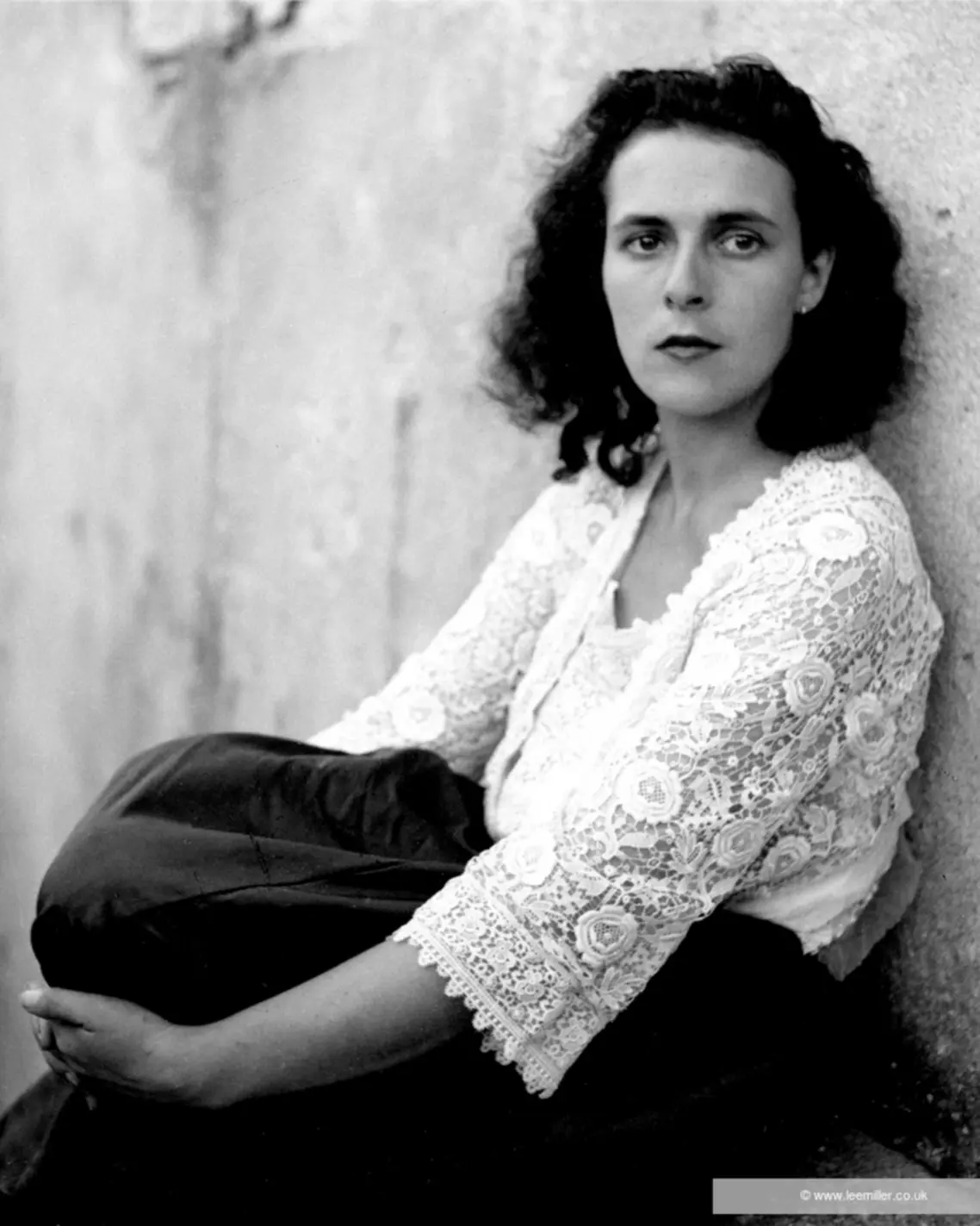
Leonora Carrington has finally returned to the center of 20th-century art history, where she always belonged. In 2026, as Paris presents the first major French exhibition devoted exclusively to her work after Milan’s landmark retrospective, Carrington emerges with renewed force: Painter, writer, mythmaker, occult thinker, and one of modern art’s most original architects of transformation.
March 16, 2026


For decades, Leonora Carrington was too often flattened into a familiar Surrealist side role: Max Ernst’s young companion, the brilliant eccentric at the edge of a male canon, the woman whose legend could be told through romance, crisis, or scandal. The present critical climate has changed that picture decisively. Major museums and recent scholarships now place her at the center of contemporary questions around ecology, metamorphosis, gender, myth, migration, and spiritual knowledge. Fundación MAPFRE’s 2023 exhibition texts argued that Carrington had only recently ceased to be treated as a marginal or derivative figure, while newer exhibitions have framed her as a visionary whose work speaks urgently to the present.
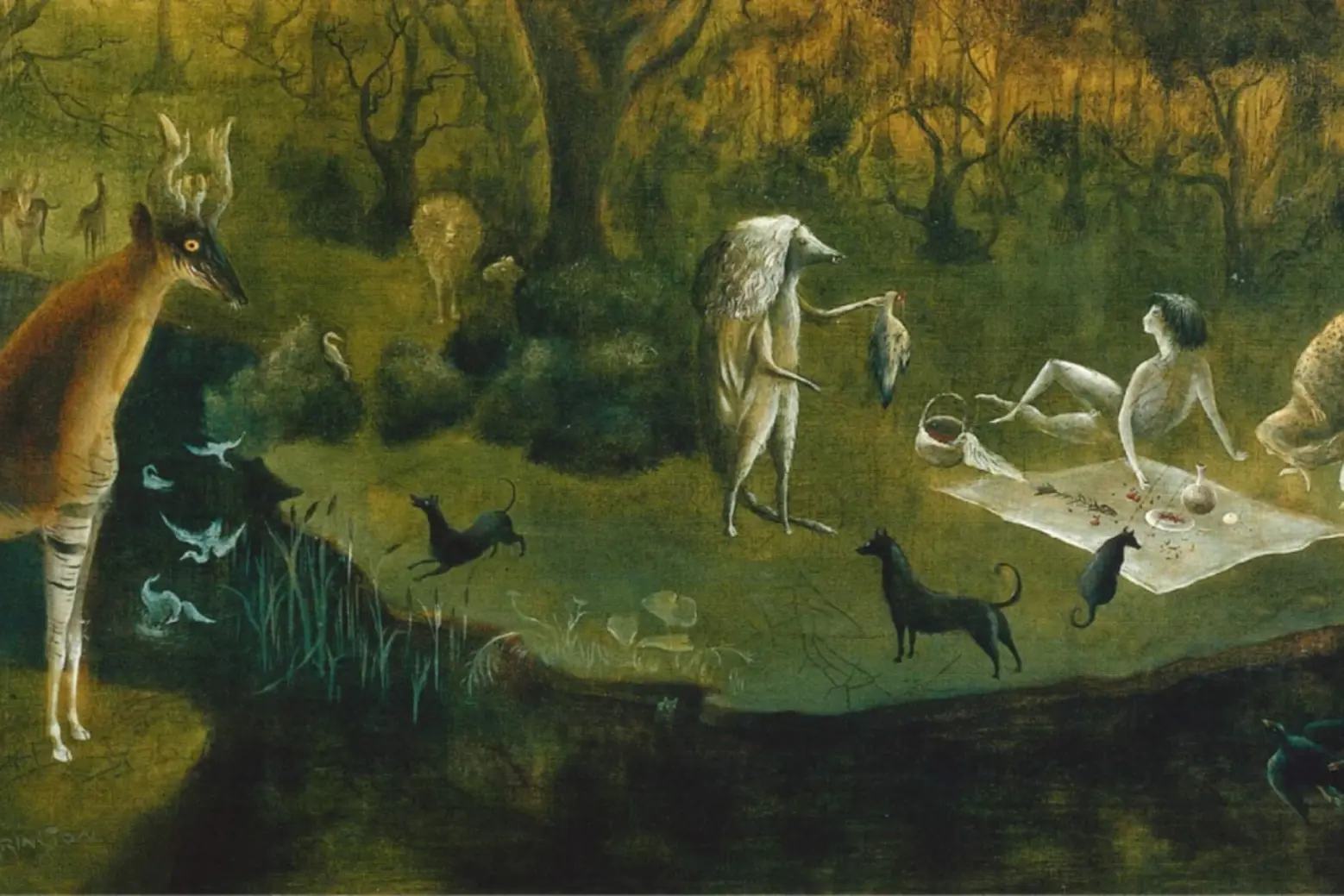
That shift now has a highly visible institutional form. The Musée du Luxembourg exhibition in Paris runs from February 18 to July 19, 2026, gathers 126 works, and is presented as the first major exhibition in France devoted exclusively to Carrington. The museum’s curatorial framing is especially telling: it casts her as a “Vitruvian Woman,” a total artist whose world dissolves boundaries between human and animal, masculine and feminine, symbol and metamorphosis. The show follows the Milan retrospective at Palazzo Reale, which ran from September 20, 2025, to January 11, 2026, brought together more than 60 works, and emphasized feminism, ecology, exile, symbolism, and what it called “The Alchemical Kitchen.”
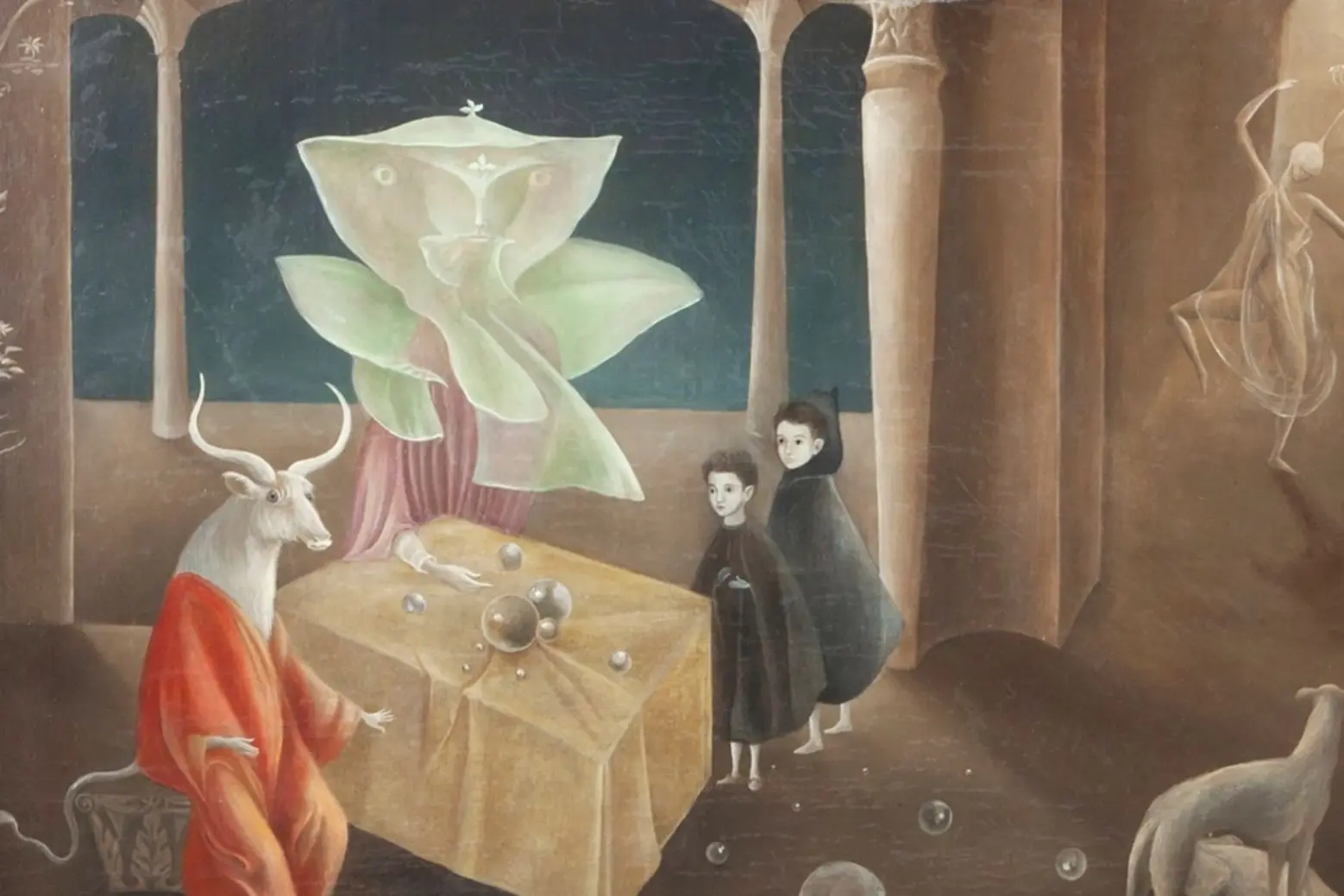
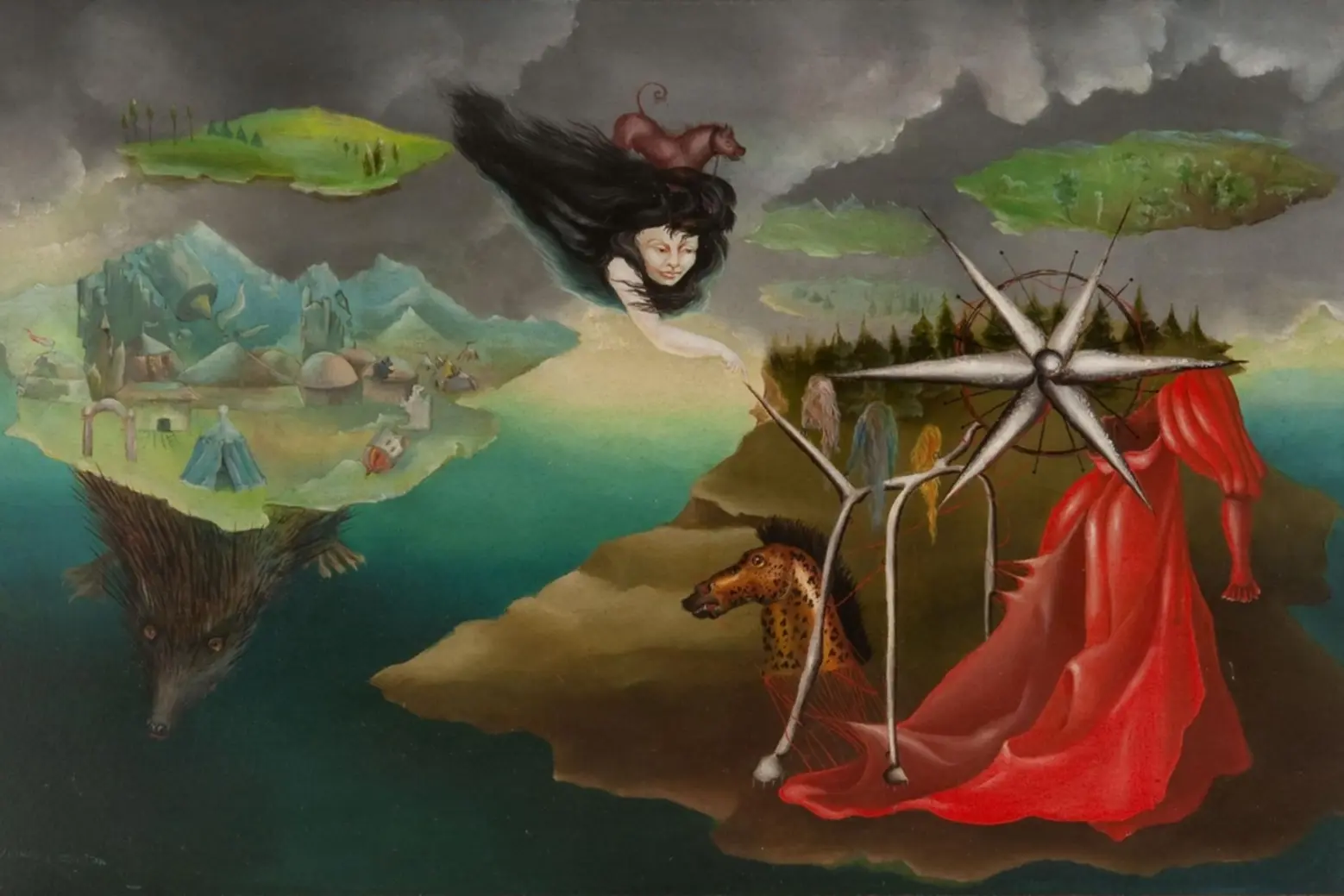
What makes Carrington feel so alive in 2026 is that her art never behaved like illustration. She painted as though matter itself were unstable, as though identity could liquefy, sprout feathers, lay eggs, split into doubles, or pass through ritual into another state of being. Her canvases are filled with transformations, yet they rarely feel chaotic. They feel organized by an inner grammar. This is why Carrington matters far beyond the sentimental category of the “female Surrealist.” She built an entire cosmology: one where kitchen, forest, convent, stable, laboratory, and dream chamber all become parts of the same spiritual topography. Her own museum in Mexico summarizes that field of reference through Celtic mythology, hermeticism, alchemy, Kabbalah, Tibetan Buddhism, and fantasy literature.
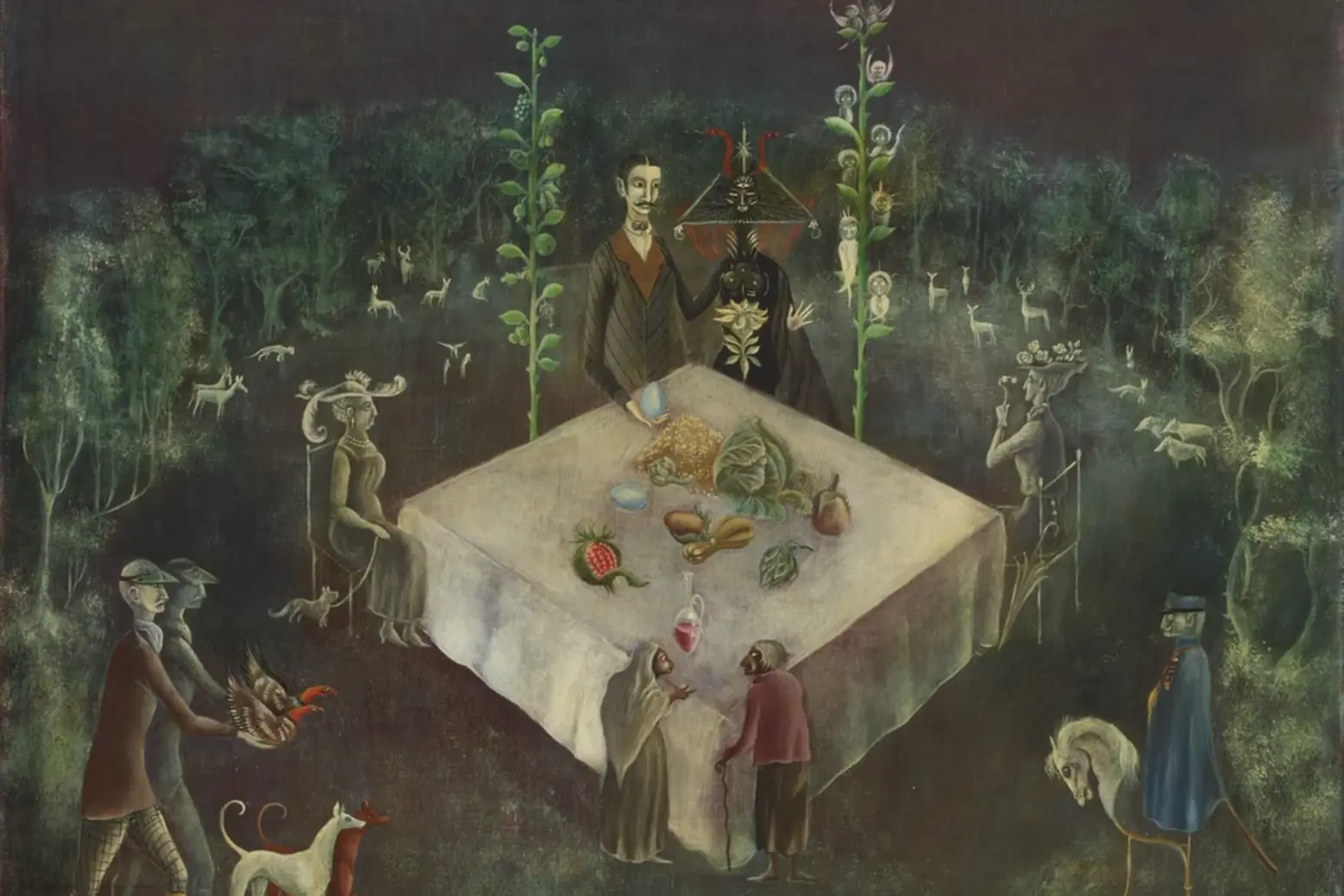
Alchemy sits at the core of that cosmology. In Carrington’s hands, alchemy was far more than occult ornament. It offered a way to think about transformation itself: psychic transformation, bodily transformation, historical transformation, feminine transformation. Milan’s retrospective devoted an entire section to this idea, while critics and curators have repeatedly returned to the kitchen as one of her great symbolic theaters, the place where ordinary ingredients become agents of metamorphosis. In Carrington, cooking, painting, and conjuring belong to the same family of acts. They all transmute raw material into another order of being.
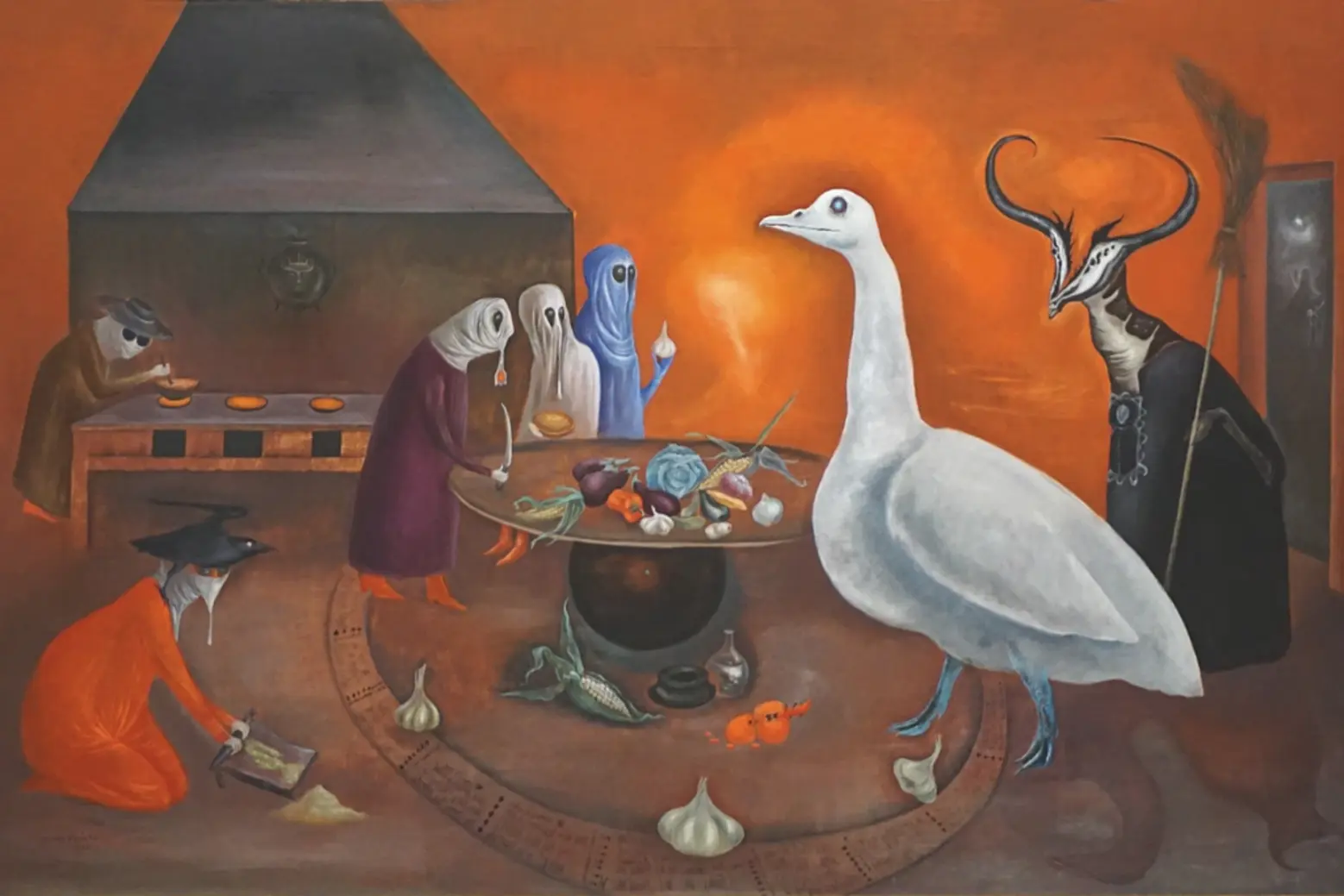
This is one reason Grandmother Moorhead’s Aromatic Kitchen, painted in the mid-1970s, remains such a revealing work. It takes the domestic sphere, long coded as feminine duty, and turns it into a chamber of knowledge, ritual, and strange power. The kitchen in Carrington is never a site of mere service. It becomes a laboratory of herbs, vessels, animals, coded gestures, and female collaboration. The 2025–26 Milan exhibition made this point explicit by identifying the kitchen as a “ritual, creative, and feminine space,” while Museum Barberini included the painting in its broader examination of Surrealism and magic.
Her technique makes that metaphysics convincing. Unlike the loose spontaneity often associated with Surrealist automatism, Carrington’s surfaces are patient, exacting, almost jewel-like. Sotheby’s description of the Paris exhibition points to the “jewel-like precision” she achieved through egg tempera on gessoed panels, a method borrowed from older masters. SFMOMA’s close reading of The Kitchen Garden on the Eyot goes further, noting that egg tempera allowed Carrington to literalize the egg as a means of formation: medium and symbol fused into one. That fusion matters because Carrington’s pictures always balance the bizarre with the meticulously made. Their strangeness gains force from technical discipline.
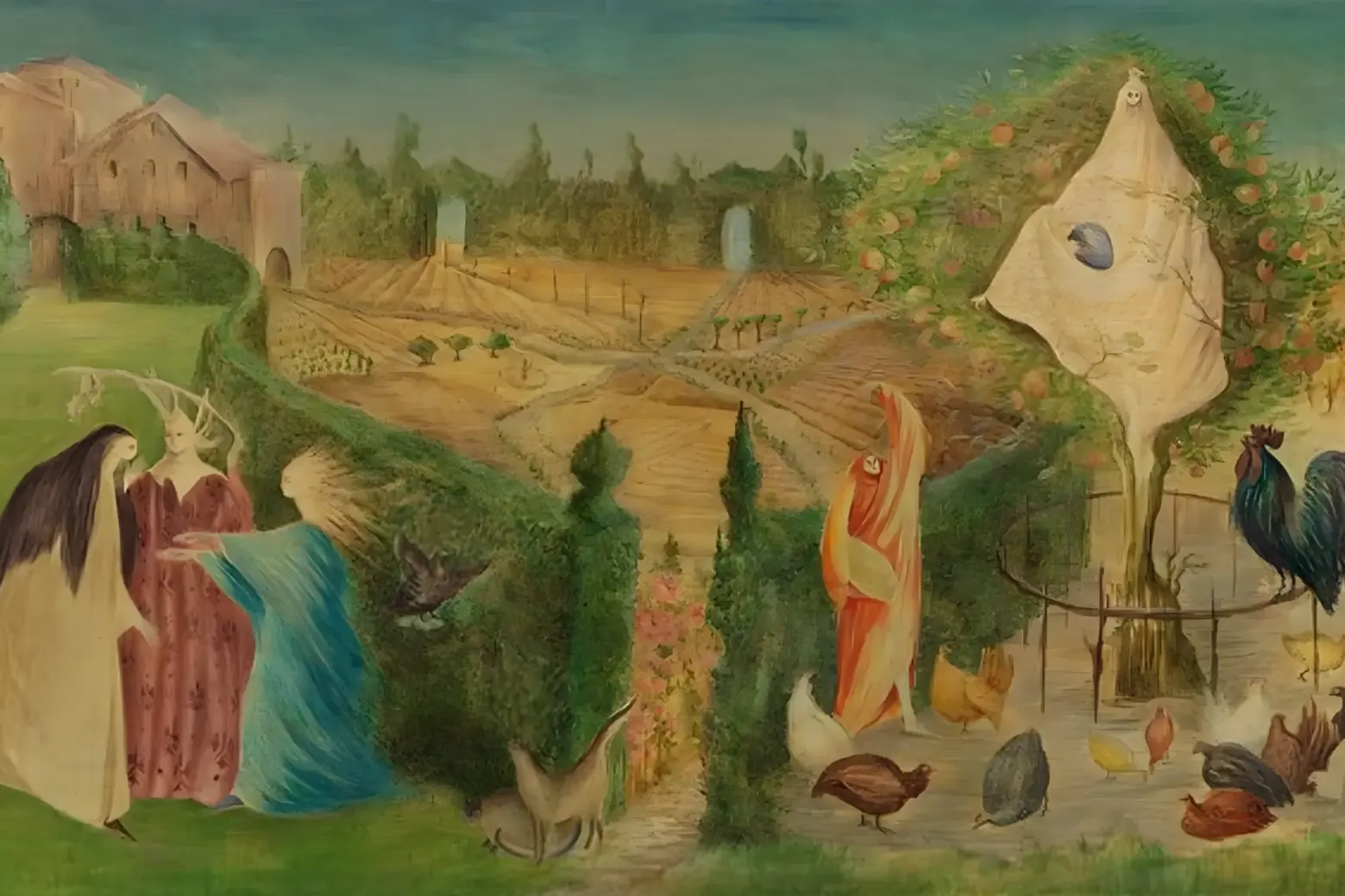
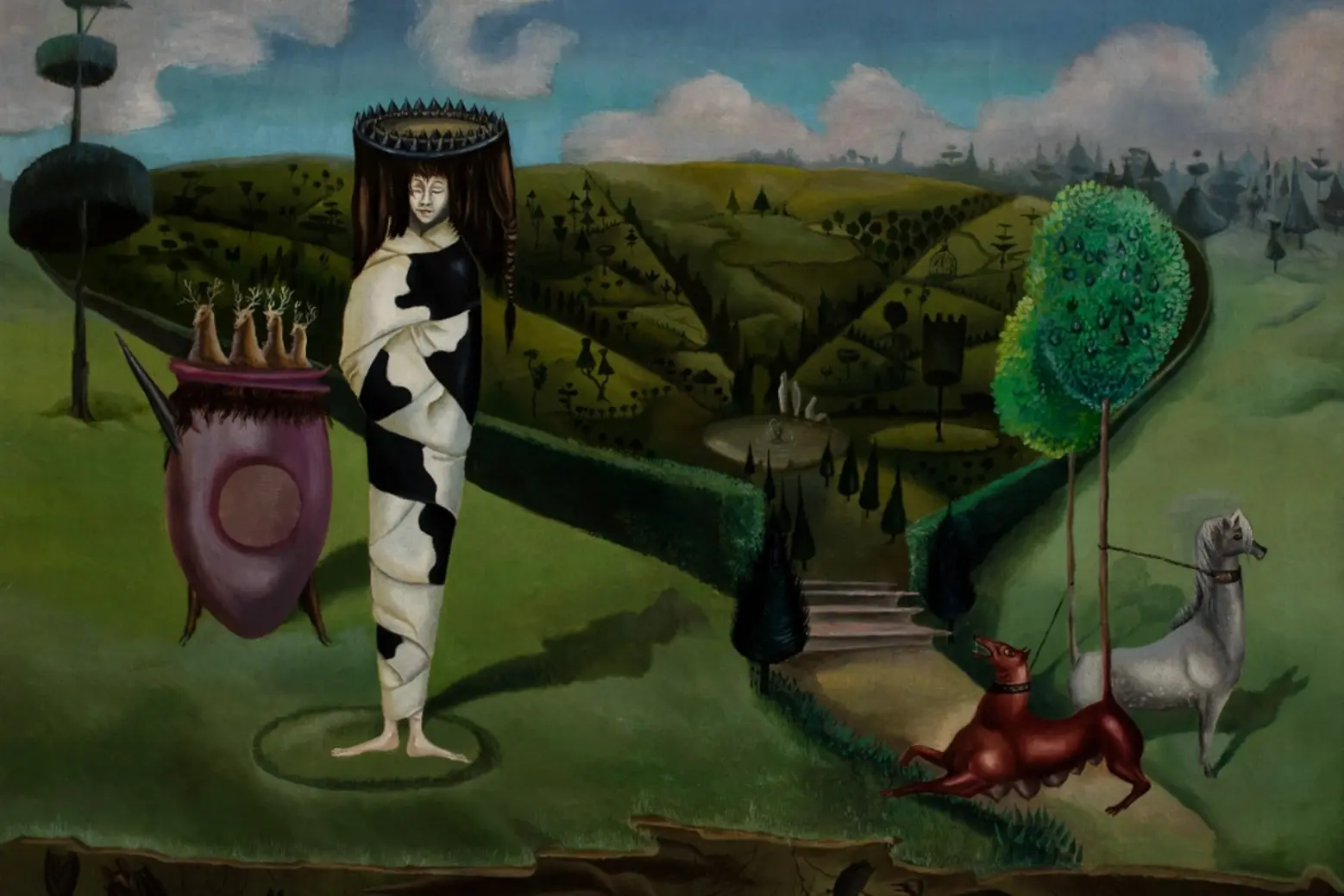
The egg, accordingly, becomes one of her supreme images. In Carrington, it can stand for biological fertility, artistic creation, cosmic containment, and alchemical transformation all at once. SFMOMA describes the egg in The Kitchen Garden on the Eyot as a symbol of both artistic creativity and biological fertility, while the 2023 MAPFRE materials place The Giantess (The Guardian of the Egg) at the center of her personal feminist mythology. In that painting, the monumental female figure does more than hold life; she shelters a world. The work reads like an image of guardianship, initiation, and female scale restored to mythic magnitude.
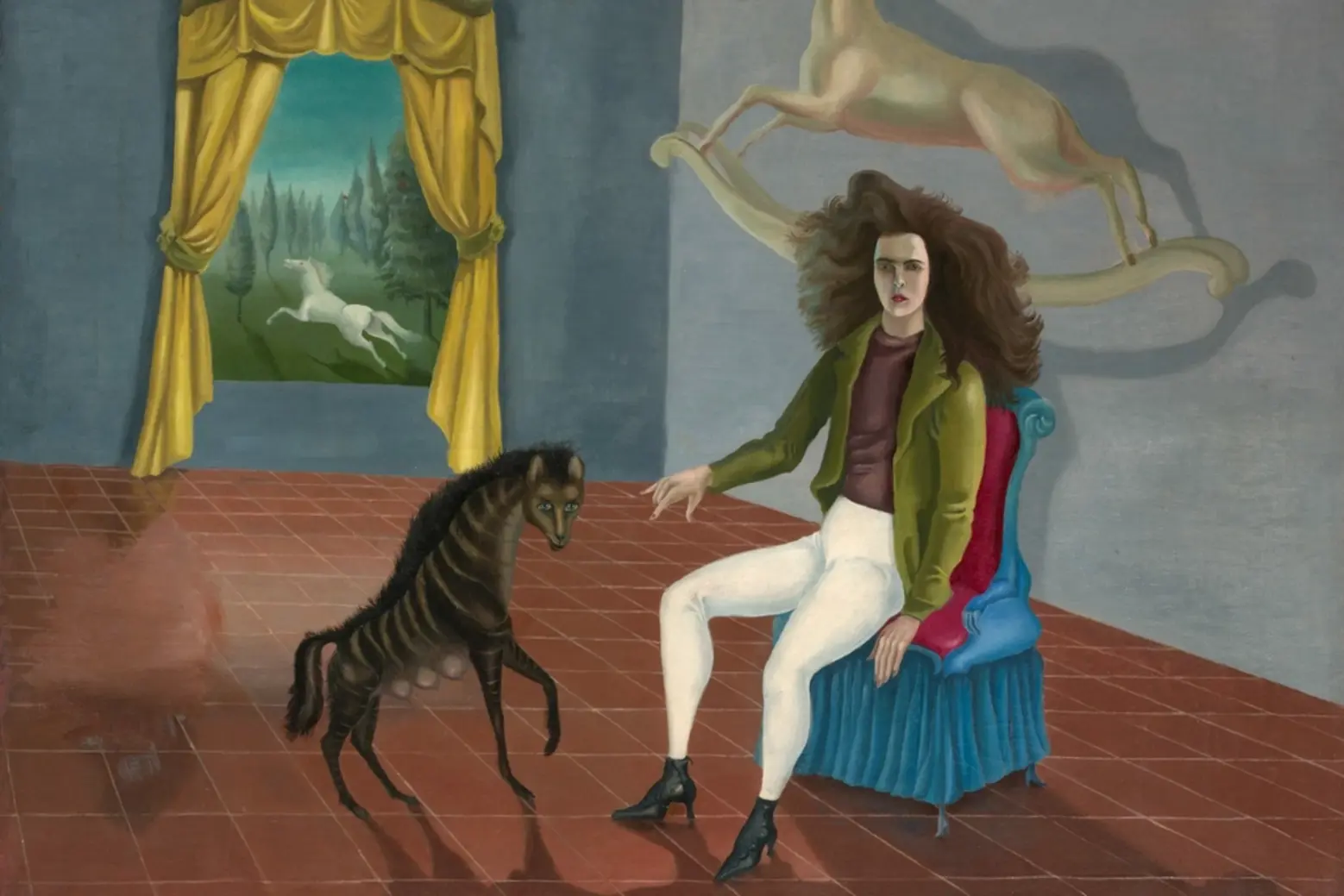
If the egg is one half of Carrington’s symbolic universe, the bestiary is the other. Animals in her work are never decorative accessories. They are avatars, companions, witnesses, and alternative modes of consciousness. Her Self-Portrait (Inn of the Dawn Horse) remains the clearest early manifesto of that belief. The Met describes the painting through its prancing hyena, flying rocking horse, and the young Carrington herself, seated in white jodhpurs with a wild mane of hair. The picture stages identity as affinity rather than likeness: the self disperses into animal signs, childhood memory, rebellion, and future freedom. Later exhibitions would continue to stress her chimeric beings, white horses, hyenas, cauldrons, and hybrid creatures as part of a symbolic language concerned with psychic transformation and the fluid boundary between human and animal worlds.
That fluidity is part of why Carrington feels so contemporary. The Paris exhibition explicitly emphasizes the merging of human and animal, masculine and feminine. Recent academic work has also read her hybrid beings through posthuman and feminist frameworks, showing how her creatures challenge the old humanist ideal of the stable, rational, sovereign subject. Carrington’s hybrids do not merely look unusual. They question the hierarchy that places man above beast, mind above matter, culture above nature, and masculine reason above feminine intuition. Her paintings anticipated a century increasingly suspicious of such binaries.
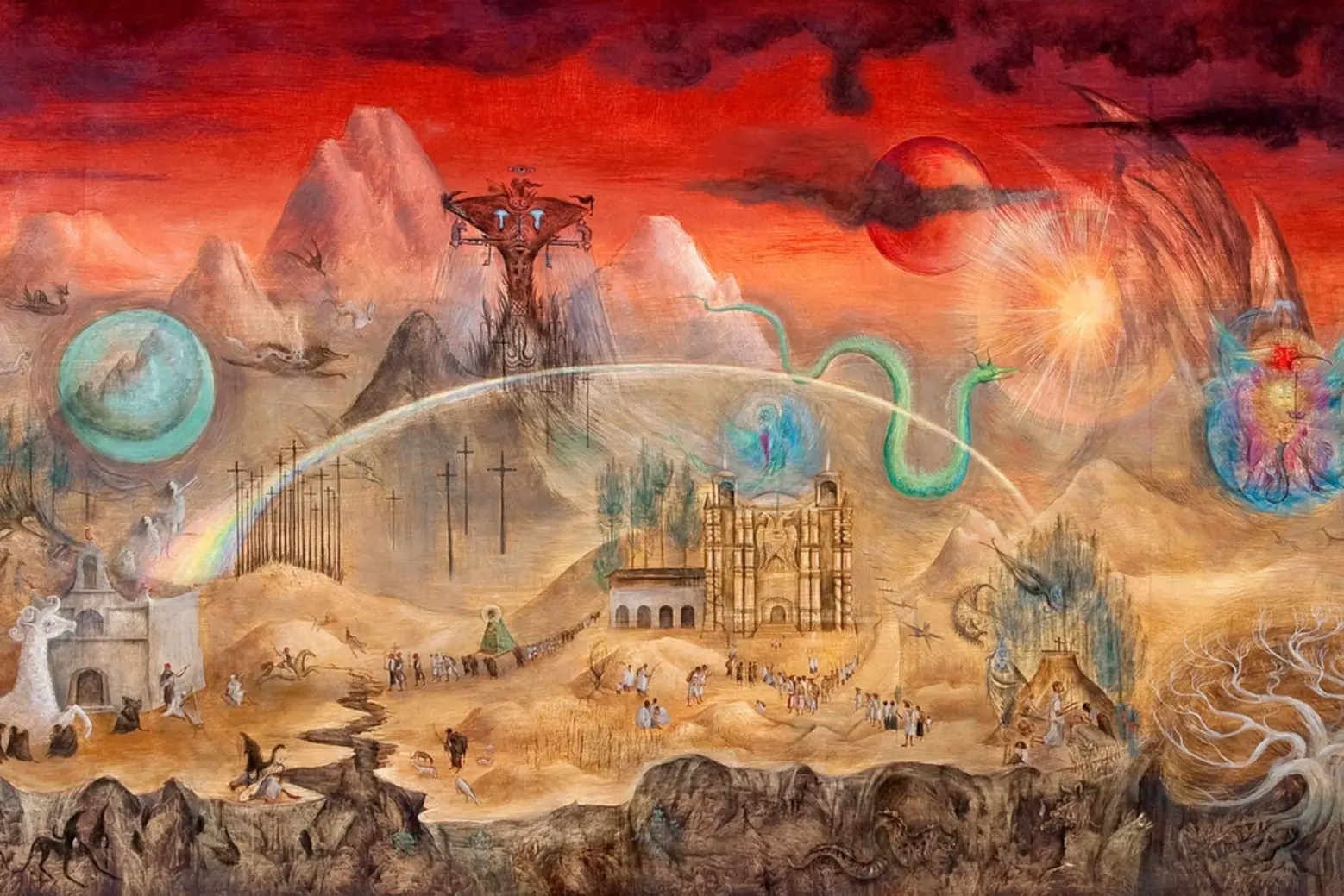
Mexico was the place where this vision ripened into full force. After the trauma of wartime Europe and her confinement in Spain, Carrington rebuilt her life in Mexico City, where exile became rebirth. MAPFRE’s exhibition materials describe the mid-1940s Mexican Surrealism years as the period in which she could focus on new artistic concerns with the support of a close émigré circle that included Remedios Varo, Kati Horna, Emerico Weisz, and others. That community mattered immensely. It gave Carrington room to work beyond the patriarchal scripts of Parisian Surrealism and helped turn friendship into methods.
Among that circle, the Carrington-Varo-Horna relationship has acquired near-mythic status, and with reason. Louisiana Museum of Modern Art notes that Varo’s closest friends and collaborators became Carrington and the Hungarian photographer Kati Horna, and that they were known as “the three witches.” Princeton’s art museum adds that the three women served as sources of inspiration and models for one another, while MoMA preserves Horna’s photograph of Varo wearing a mask made by Carrington. This was more than bohemian anecdote. It was an ecosystem of exchange, where masks, rituals, animals, storytelling, and visual invention passed from one medium to another.
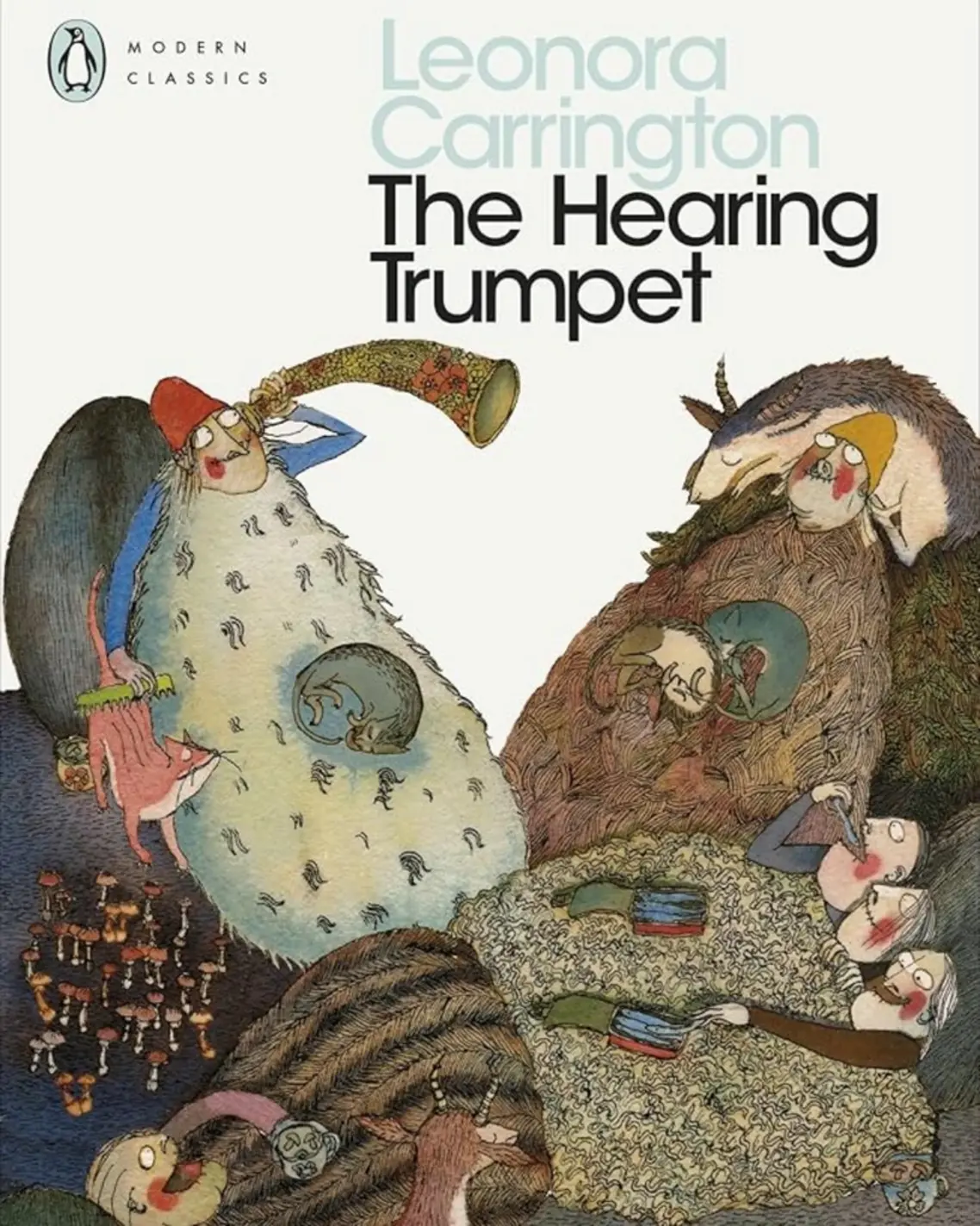
Carrington’s literary work is essential to understanding the scale of her imagination. Down Below remains one of the key texts for grasping how she translated psychic crisis into art, with NYRB describing it as an ordeal narrated with startling precision. Yet her fiction also expands beyond autobiography into visionary satire. The Hearing Trumpet now reads as one of the great unruly novels of the 20th century. It is a text about age, institutions, apocalypse, animals, belief, and female collectivity. Recent scholarship has gone so far as to call it a geriatric ecofeminist utopia in the wake of environmental catastrophe. That line of thought helps explain why Carrington’s writing has become newly important in the present century.
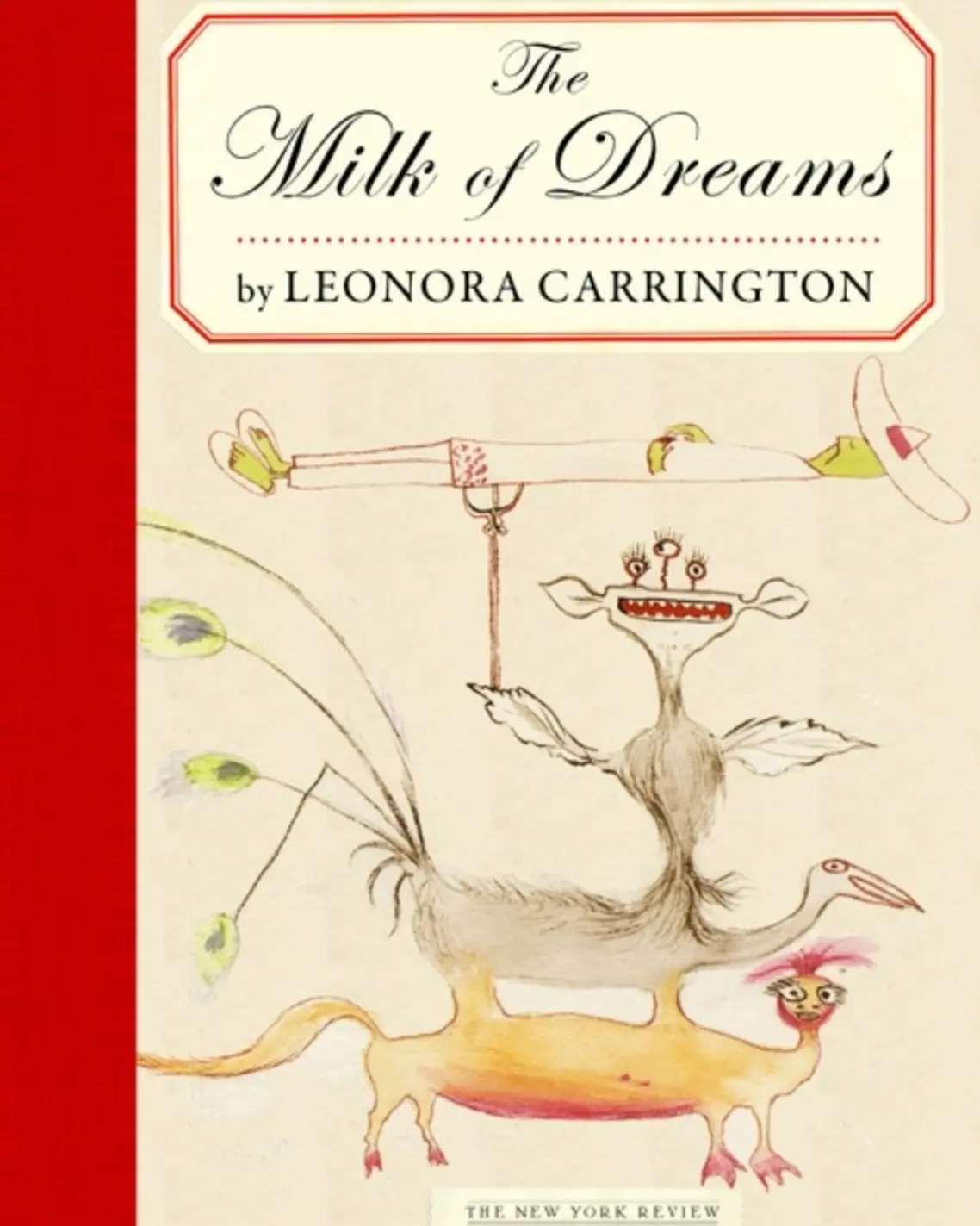
Her posthumous reach makes the reappraisal impossible to ignore. The 2022 Venice Biennale took its title, The Milk of Dreams, from Carrington’s book, with Cecilia Alemani explicitly presenting it as a world where everyone can change, be transformed, and become someone or something else. In retrospect, that curatorial choice now feels diagnostic. Carrington offered a vocabulary for precisely the themes that dominate contemporary art discourse: metamorphosis, more-than-human life, responsibility toward the planet, bodily change, and unstable categories of identity.
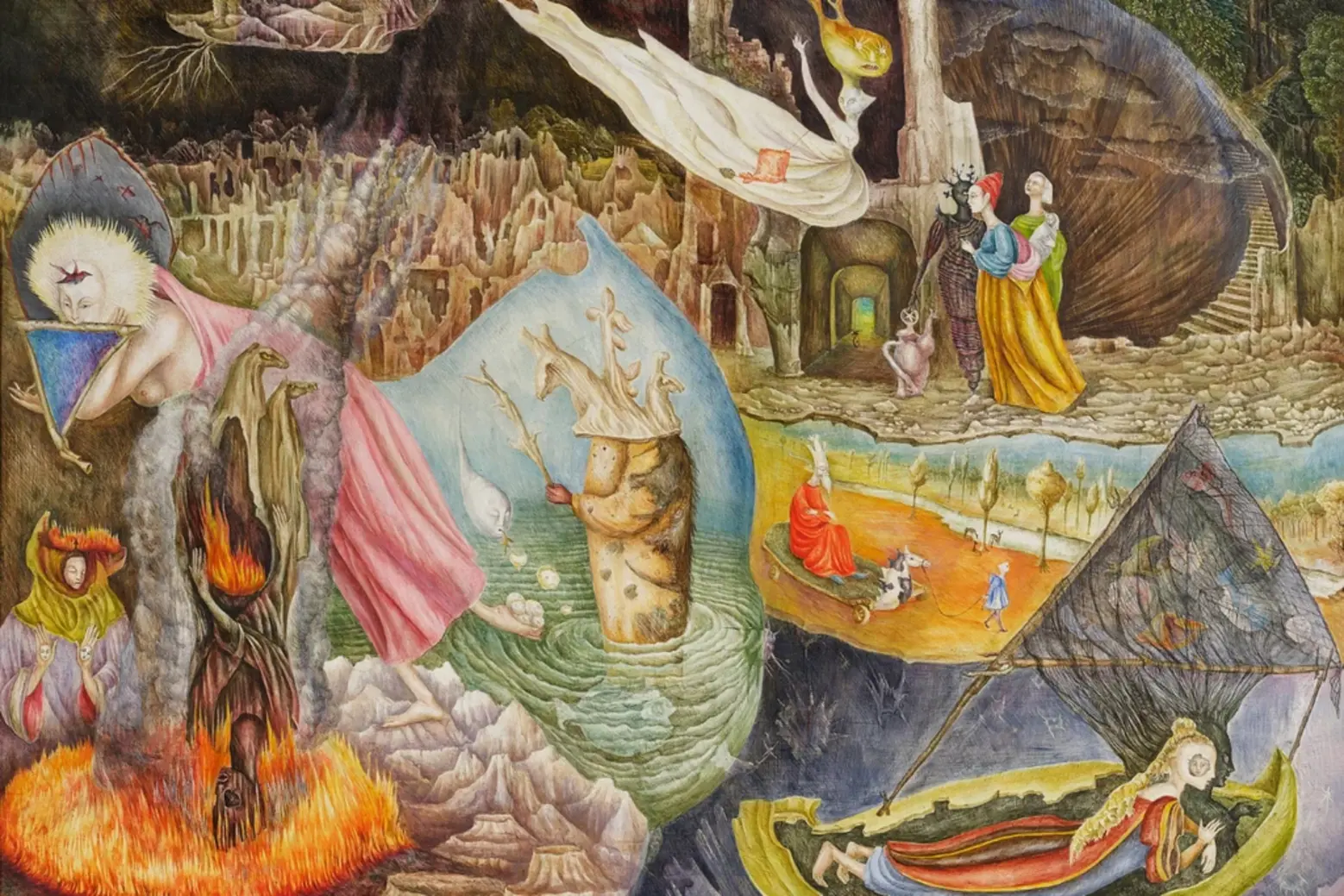
The market, predictably, arrived late but loudly. In May 2024, Les Distractions de Dagobert sold at Sotheby’s for $28.5 million, more than £22.5 million, setting a record for a British-born woman artist at auction. The sale mattered because the painting is also widely treated as one of the definitive masterpieces of Carrington’s Mexican period: a dense, luminous field of vignettes and symbolic episodes that shows how fully she had developed her own syntax of myth, matter, and female intelligence. Auction records never determine historical greatness, yet in Carrington’s case the commercial surge ratified a much larger cultural correction already underway.
So the 2026 “Vitruvian Woman” framing lands with unusual precision. It asks viewers to read Carrington as a whole artist rather than as a sequence of episodes: not the muse, not the madwoman, not the cult eccentric, not the footnote to a male Surrealist romance, but the maker of a complete symbolic system. Painting, writing, ecology, feminism, myth, animals, ritual, and metamorphosis all meet in her work because Leonora Carrington treated knowledge itself as mixed, mobile, and alive. She understood long before much of the art world did that the most radical image of the self might be a creature in transformation, holding an egg, halfway between species, halfway between worlds, and wholly in command of its own magic.