MENU
Close





Mexican Surrealism arrives less like an imported style and more like a climate. After André Breton visited in 1938 and called Mexico the "surrealist country par excellence", exiles and local visionaries built an art of domestic alchemy, myth in daylight, and death understood as continuity.
Mexican Surrealism arrives less like an imported style and more like a climate. After André Breton visited in 1938 and called Mexico the "surrealist country par excellence", exiles and local visionaries built an art of domestic alchemy, myth in daylight, and death understood as continuity.
February 3, 2026


Volcano ringed valleys under colorful skies, cactus deserts humming with heat shimmer, cloud forests threading mist through pines, and cenotes that read like blue ink wells in limestone. Culture deepens the spell through layering and ritual, copal smoke, votive milagros, saints beside older gods, markets bright with papel picado, and Día de los Muertos color turning memory into presence. When André Breton arrived in Mexico, he exclaimed: “Surrealist country par excellence!”
Breton’s 1938 encounter with Mexico framed the country as a place where contradiction feels ordinary: sacred ritual beside street commerce, pre-Columbian symbols beside modern politics, the magical sharing space with the mundane. His phrase traveled fast, and it prepared a cultural stage for what arrived next: an influx of European Surrealists and fellow travelers seeking refuge as Europe fell into war.
Mexico City, especially neighborhoods such as Colonia Roma, became home to artists including Leonora Carrington, Remedios Varo, and photographer Kati Horna. Their circle functioned like a living studio, crossing friendships, collaborations, and shared reading across esoteric texts, folk traditions, and the city’s everyday theater.
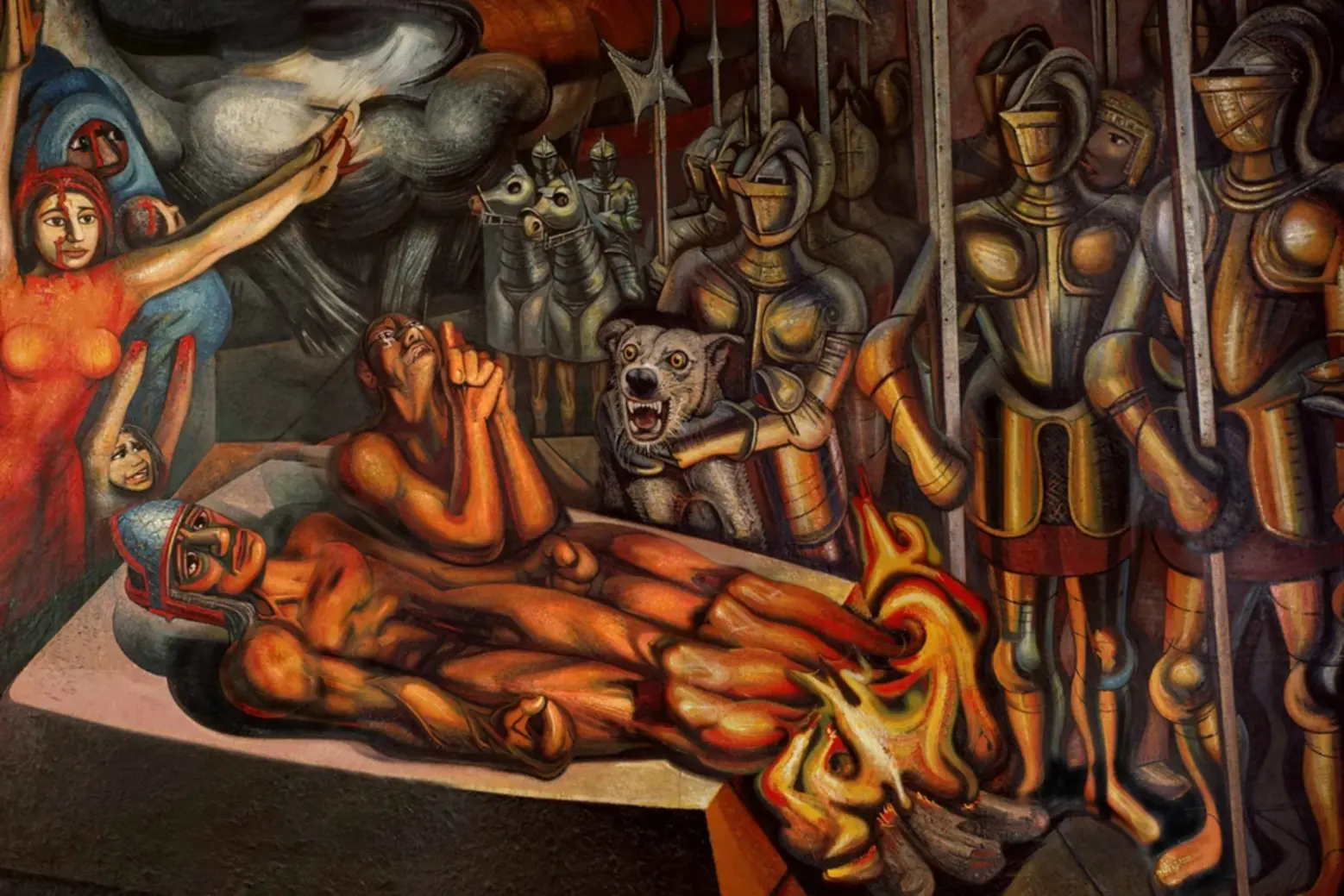
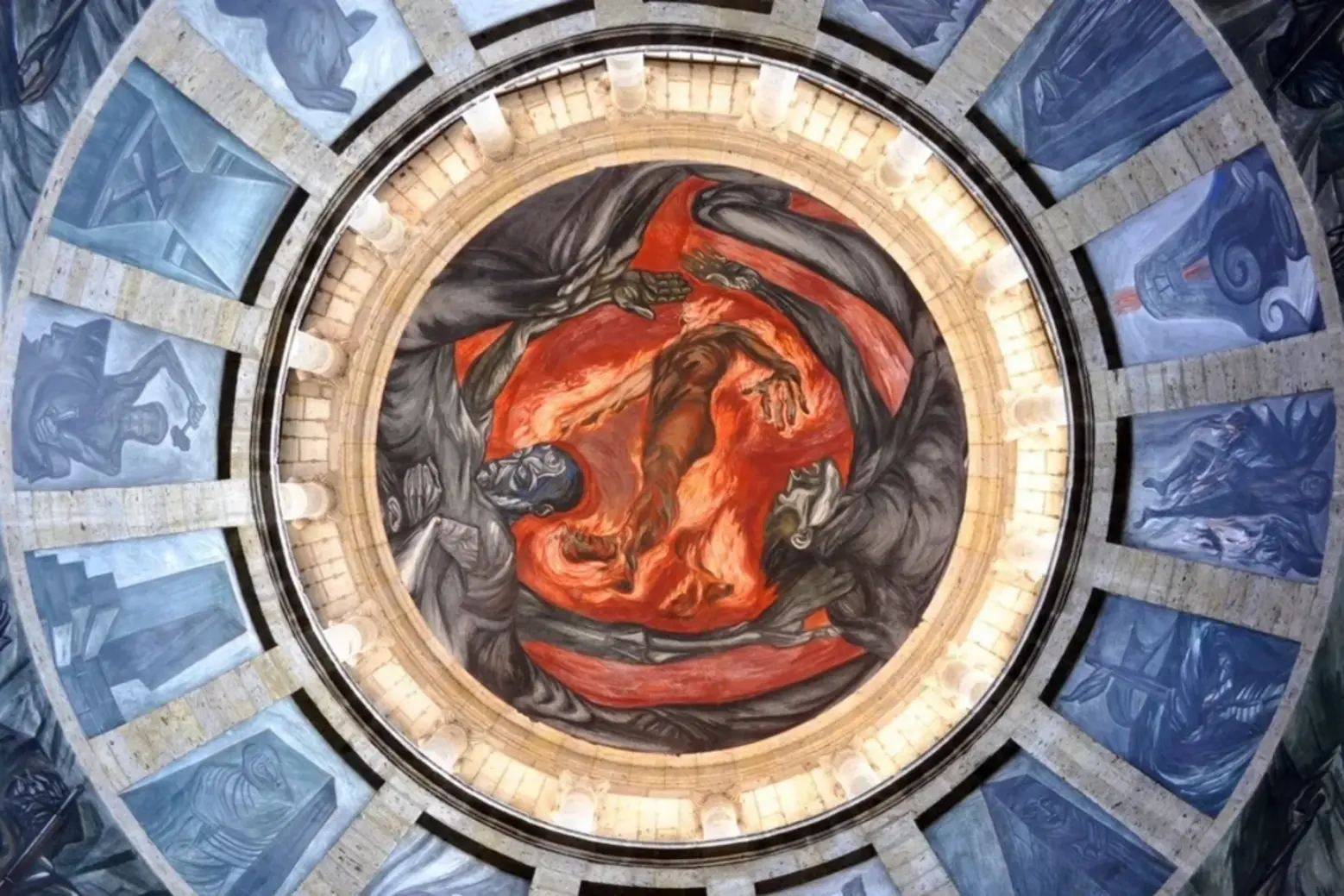
At the same moment, Mexican art spoke loudly through muralism. David Alfaro Siqueiros, and José Clemente Orozco used public walls to narrate revolutionary history and national identity, turning painting into civic address, namely Diego Rivera's historical Pan American Unity mural. Surrealism, by contrast, operated through salons, galleries, and intimate networks, building influence through proximity rather than monuments.
The hinge came in 1940 with the International Exhibition of Surrealism in Mexico City, organized by Wolfgang Paalen and César Moro and staged through the Galería de Arte Mexicano. The exhibition gathered international Surrealist names alongside Mexican artists, and it placed Frida Kahlo’s The Two Fridas inside a Surrealist context that audiences could finally encounter at scale.
European Surrealism often treated the dream as a private theater, mapped through psychoanalysis and the logic of the unconscious. In Mexico, that interior map met a worldview where the outer world already felt animated: Catholic iconography braided with indigenous cosmologies, folk practices where omen and miracles share the same street, and esoteric systems such as alchemy and Kabbalah circulating through art and literature.
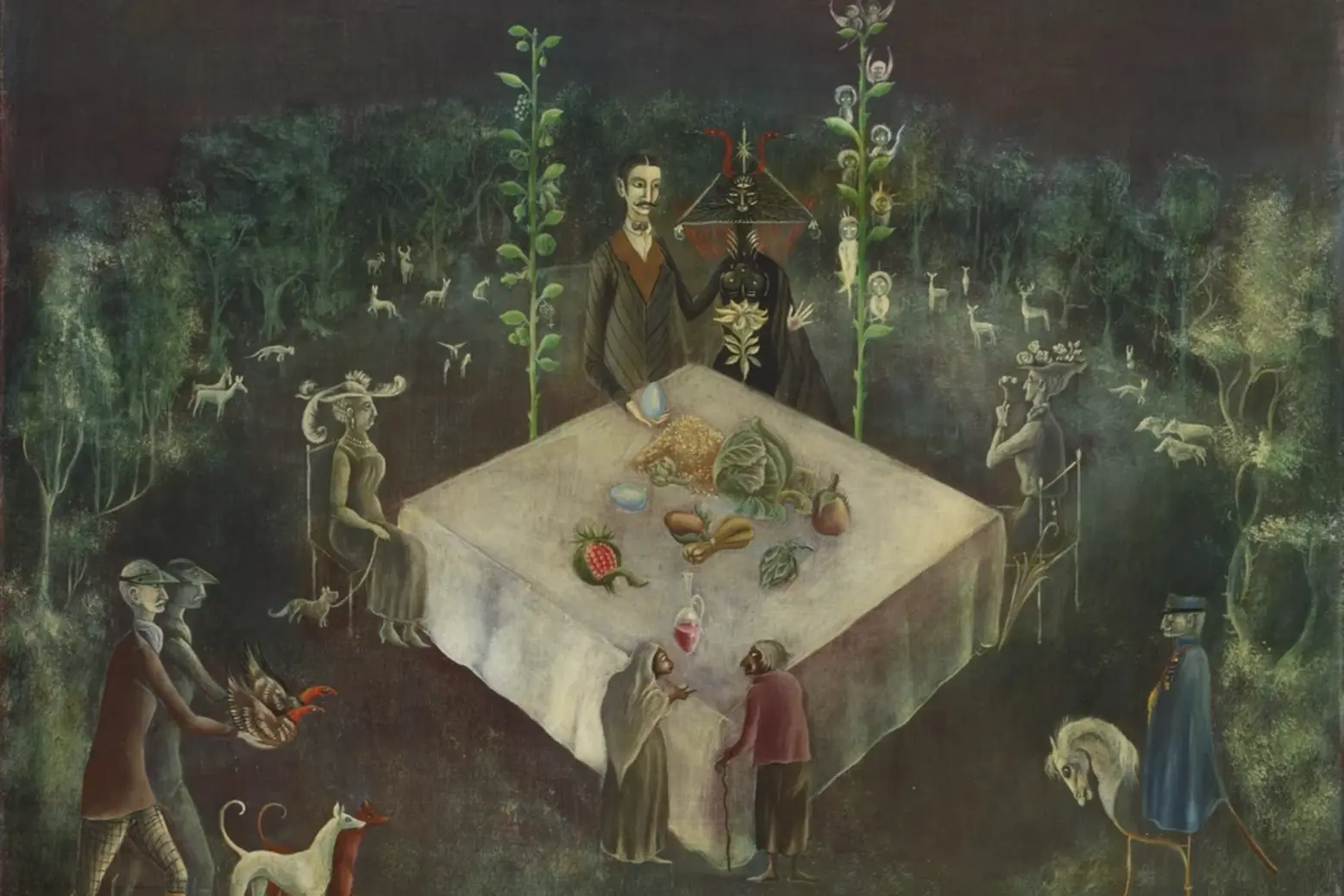
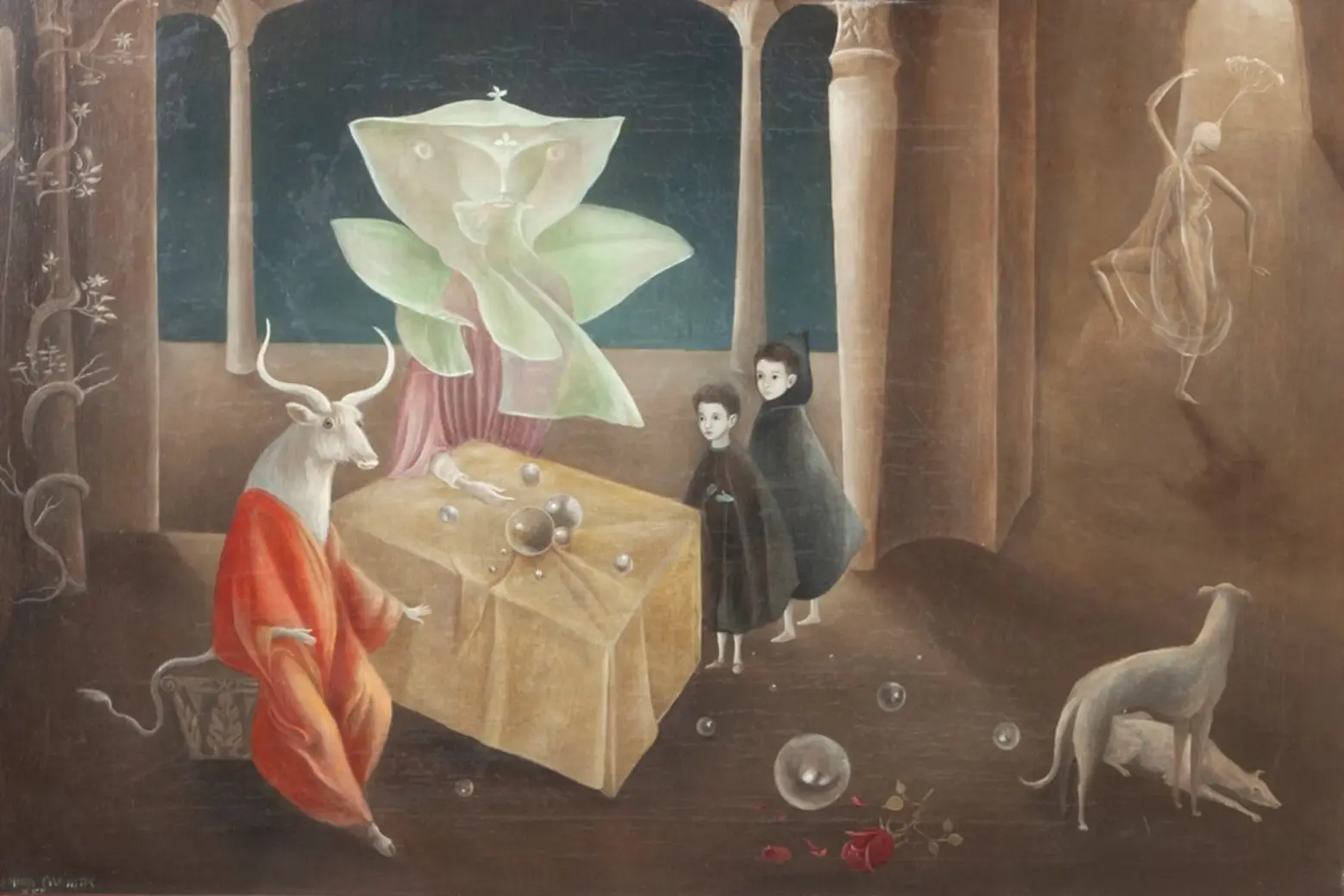
That collision produces Mexican Surrealism’s signature register: Domestic magic. For Remedios Varo and Leonora Carrington, the home becomes a site of transformation, where cooking resembles chemistry and painting resembles brewing. Their canvases are filled with tables, altars, ladders, vessels, and strange instruments, each object acting like a tool for turning matter into meaning.
Creation becomes a kind of craft ritual. Remedios Varo’s imagery, often read through a lens of mystical mechanics, stages the artist as a maker who channels order from the natural world, combining careful technique with spiritual aspiration.
Duality sits at the center. Día de los Muertos offers a framework where death belongs to return and relationship, shaped through offerings, color, and humor. That sensibility aligns with Mesoamerican mythic structures that privilege transformation and cyclical time, so images reconcile life and death inside one continuous circuit.
Frida Frida Kahlo worked beside Surrealism yet guarded her autonomy, treating lived reality as the raw material of image making. Her paintings make symbol behave like anatomy: identity splits into doubles, emotion becomes visible, the body opens into metaphor. The Two Fridas (1939) remains the clearest example, staging selfhood as a drama of inheritance and fracture held in a single frame.
Leonora Carrington carried Celtic folklore and fierce intellectual play into Mexico’s mythic field, then let it cross pollinate with local cosmologies. Her figures feel like initiates and emissaries, gathering around tables, altars, and moons, building a language where beasts, gods, and women share authority. Mexico gave her decades of continuity, and that long horizon turned her work into an expanding system of rites and recipes.
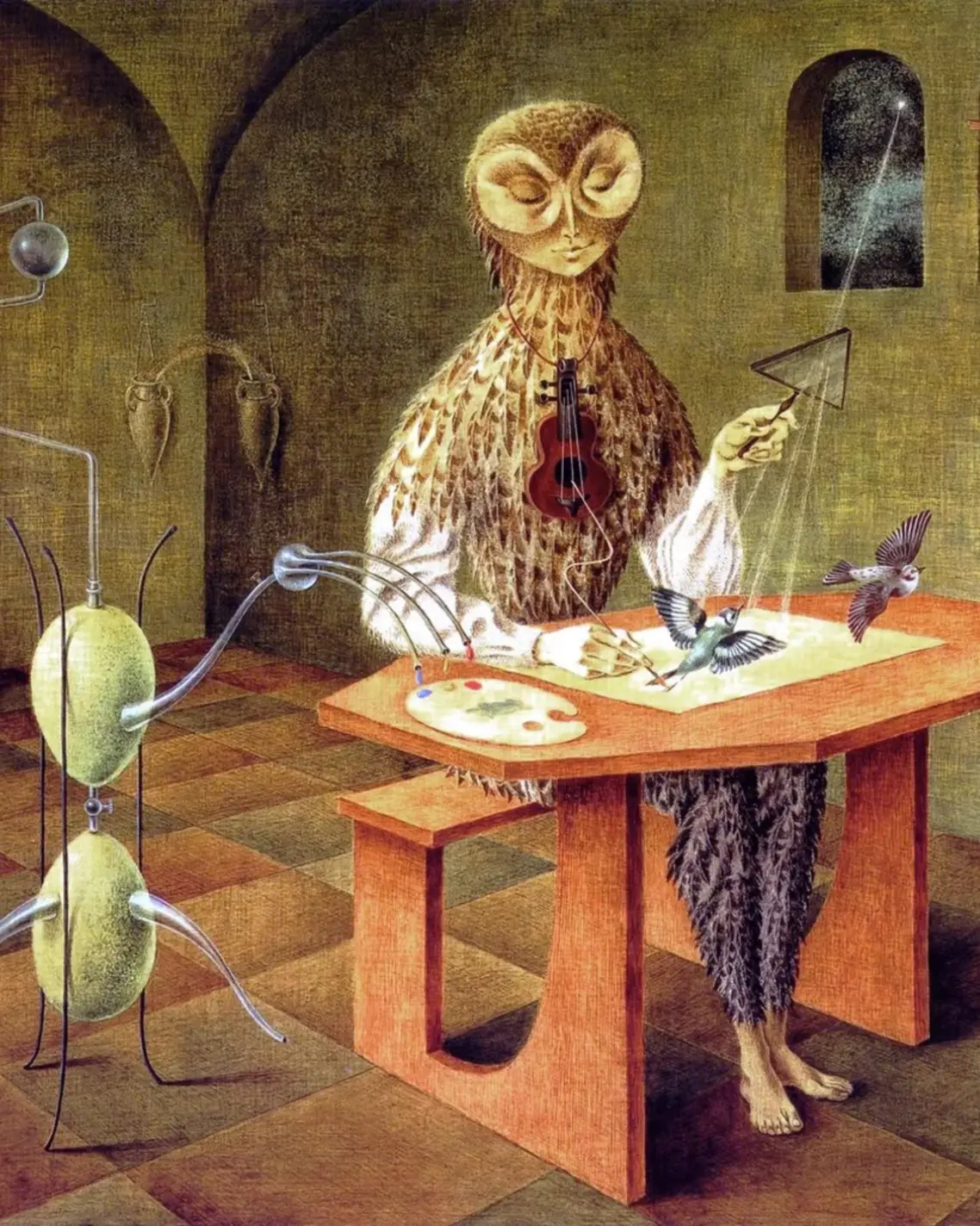
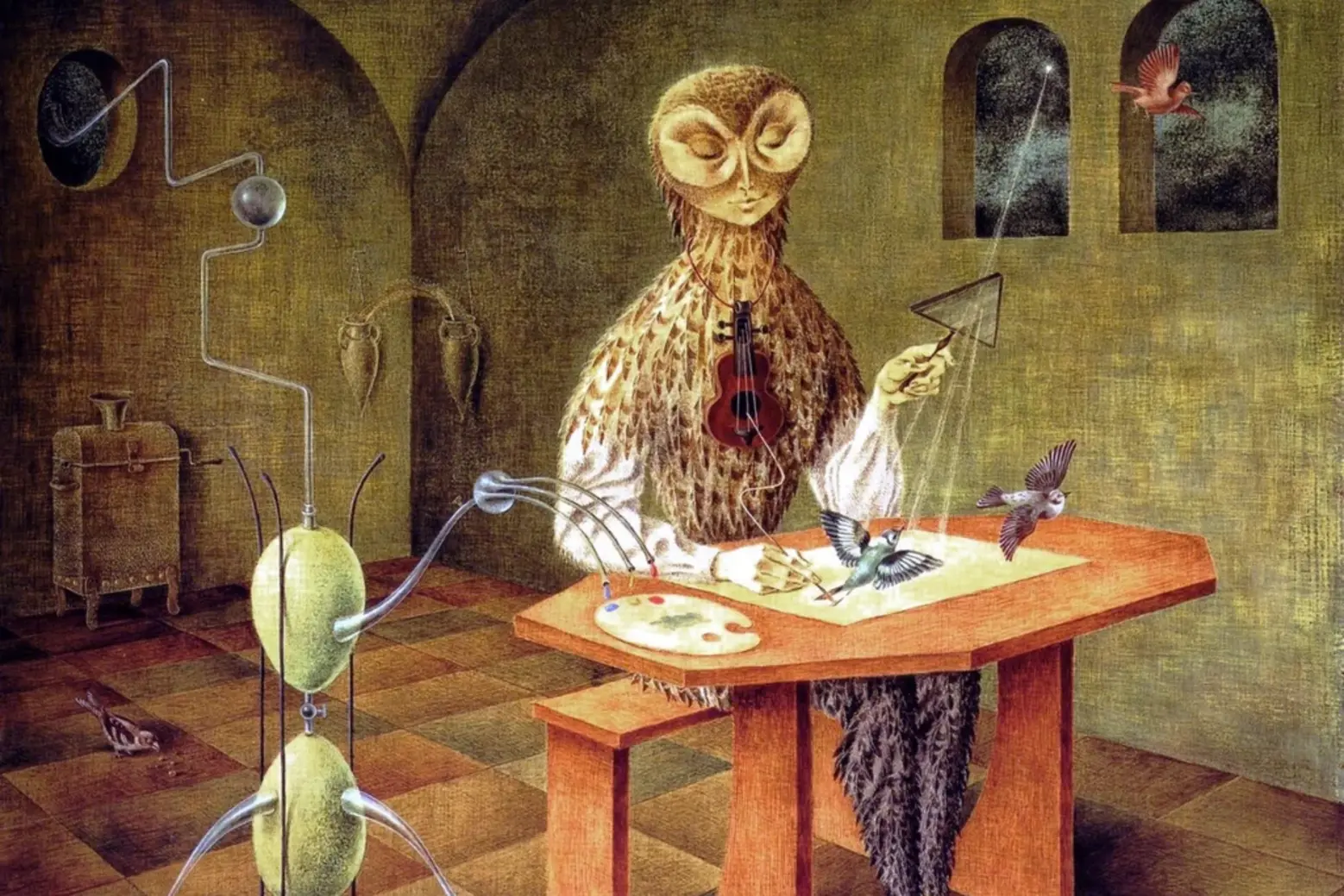
Remedios Varo turned Surrealism into engineering. Her paintings feel assembled with meticulous craft, as if each brushstroke behaves like a calibrated mechanism. Creation of the Birds (1957) distills her method: an artist alchemist draws life into existence through music, pigment, and light, merging science with enchantment inside one quiet room.
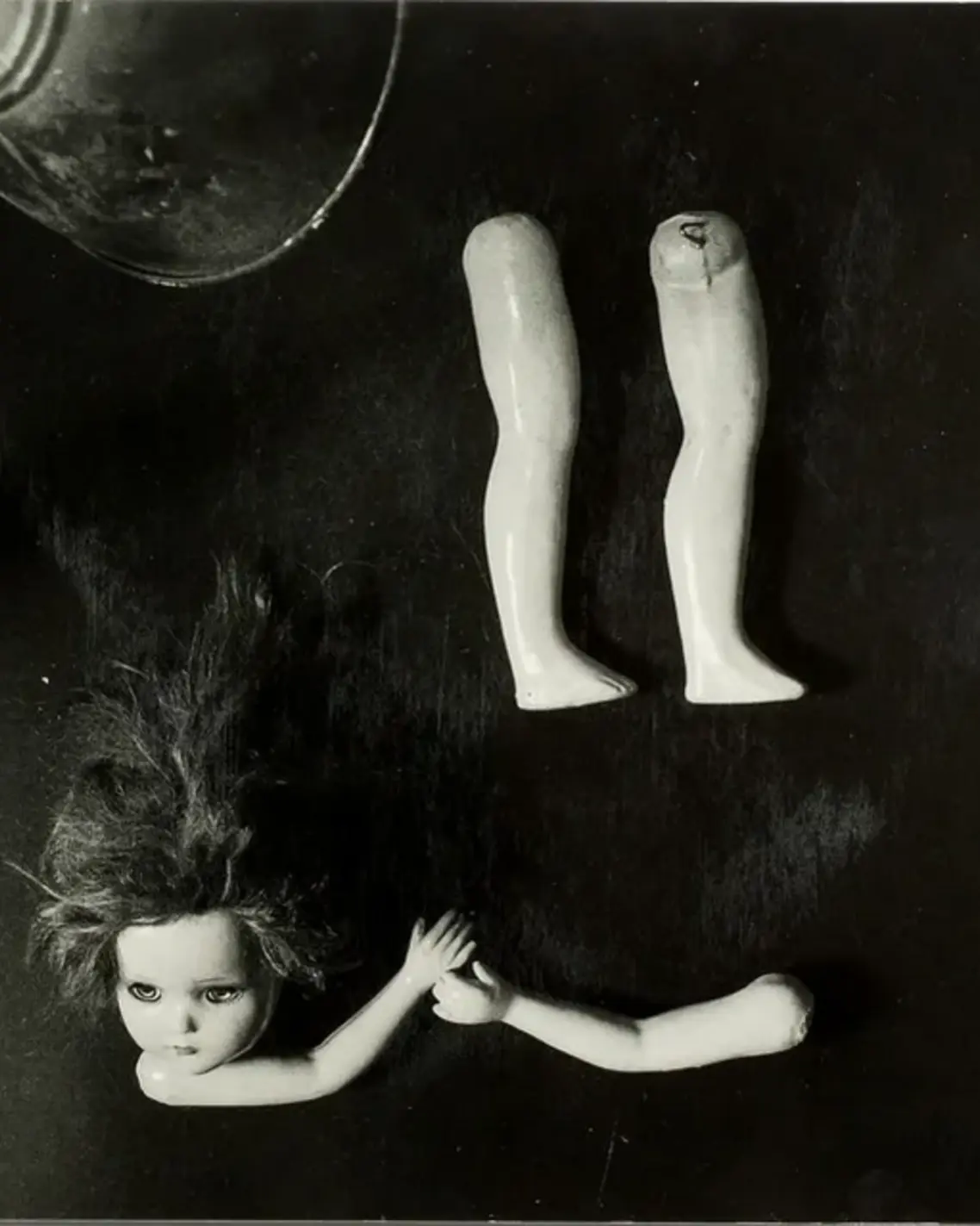
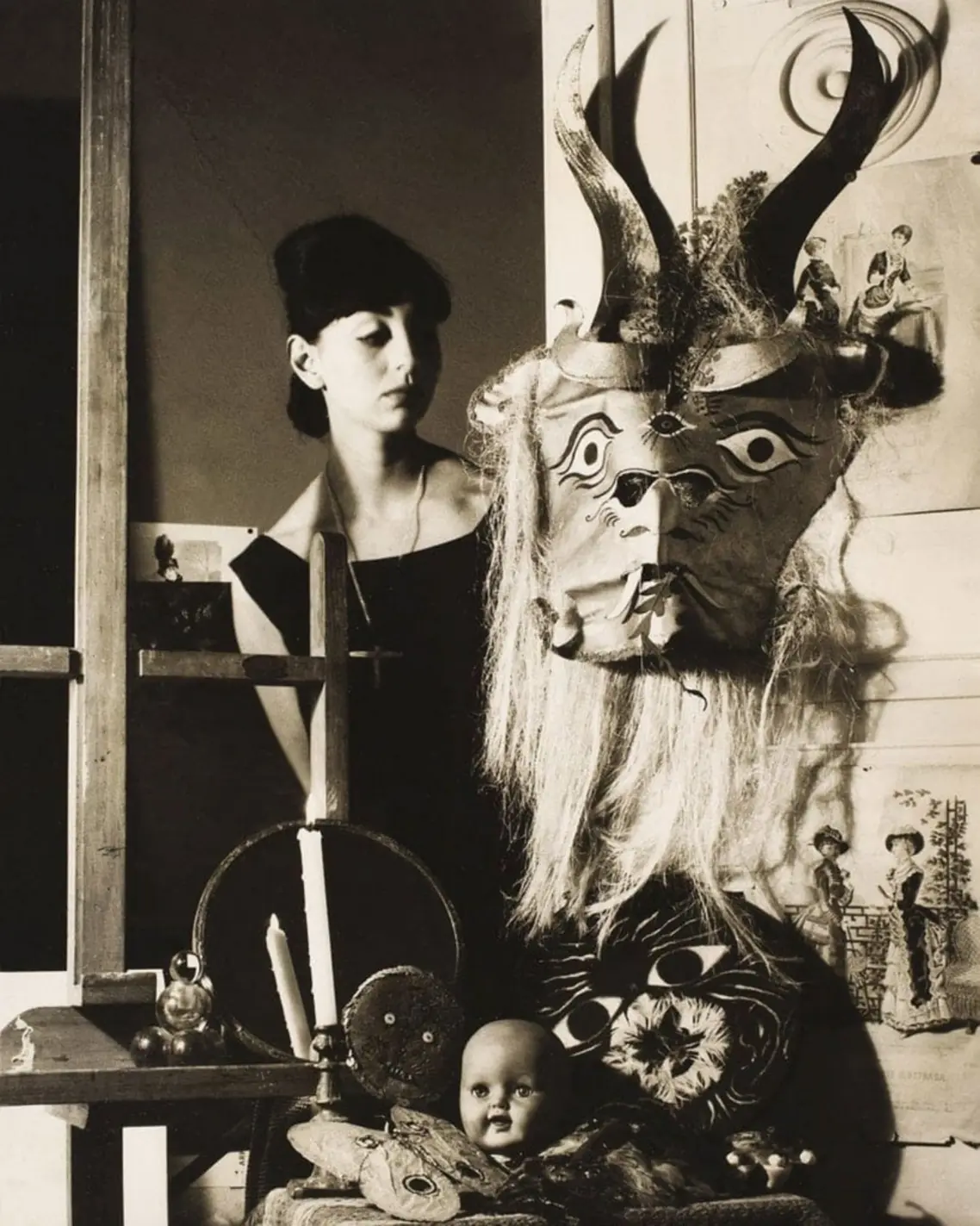
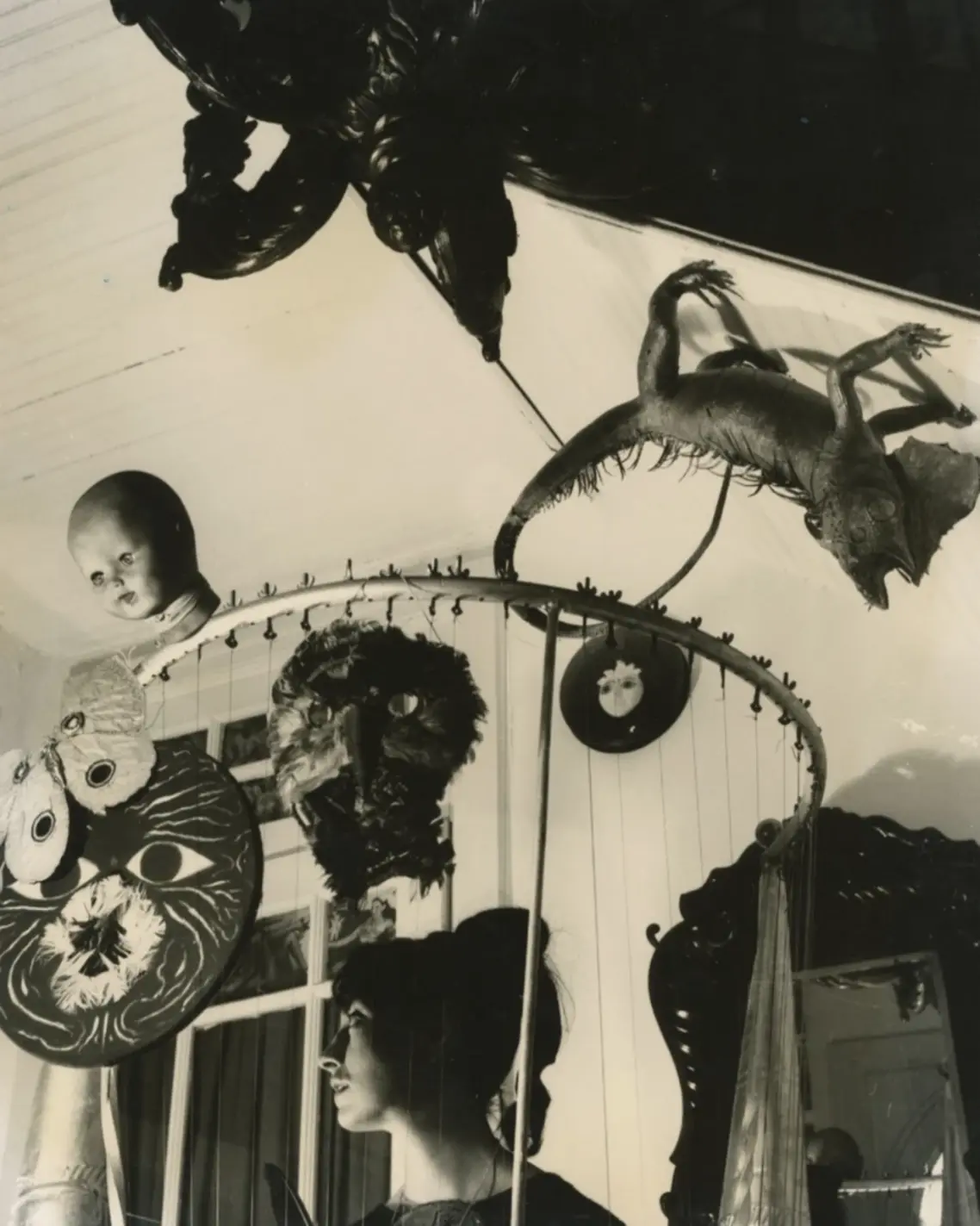
Kati Horna’s camera helped bind this world together. Her photographs of Mexico City’s Surrealist circle treat friendship as archive, capturing studios, gatherings, and everyday rituals that fed the paintings. In a movement obsessed with the unseen, her images preserve the social texture: the spaces where myth was discussed, cooked, argued, and shared.
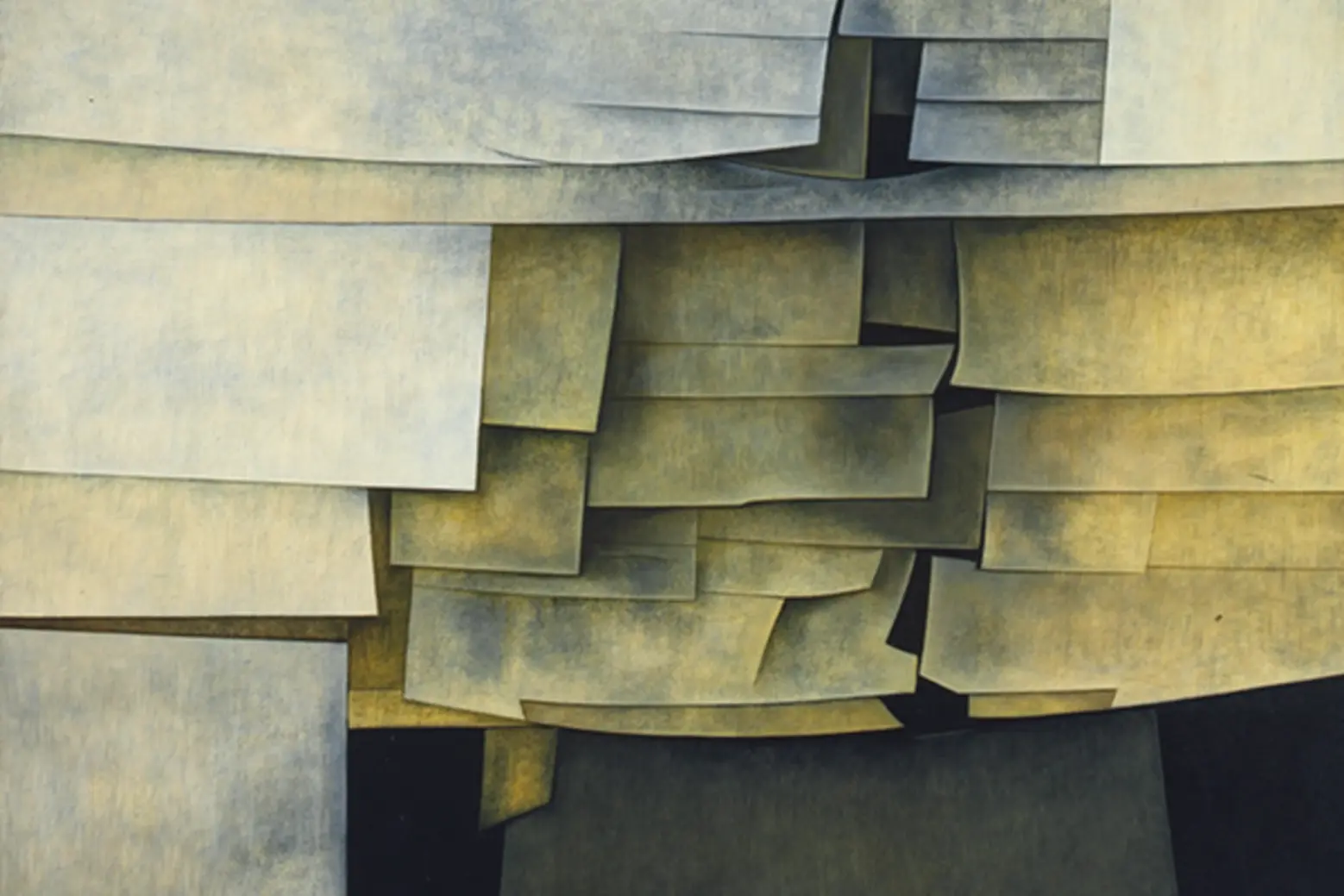
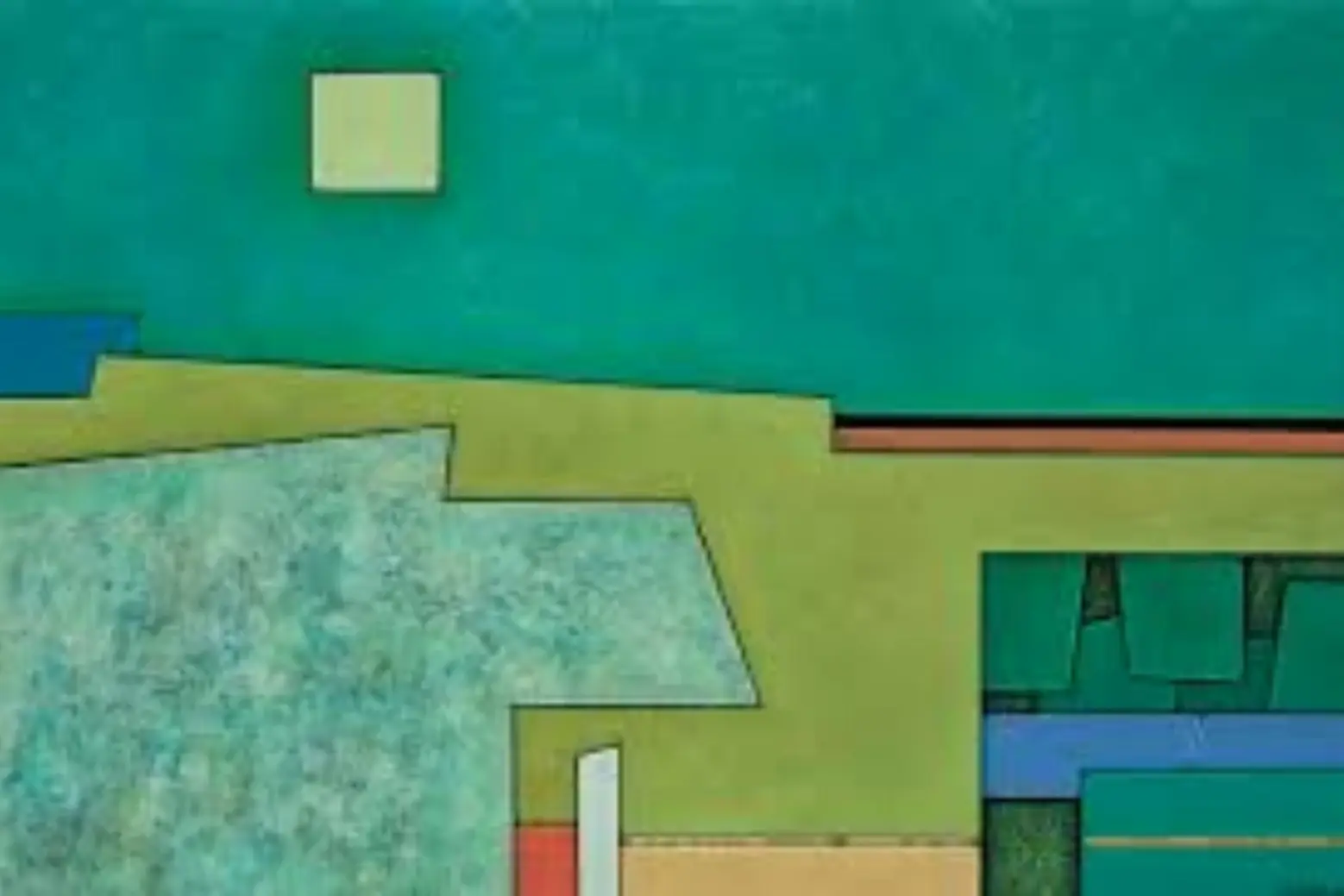
Gunther Gerzso offers a structural route, sometimes described as abstract surrealism. He uses sharp planes and architectural cuts to suggest psychological depth through geometry. His work shows how the Surrealist impulse can live inside form, translating dream into space.
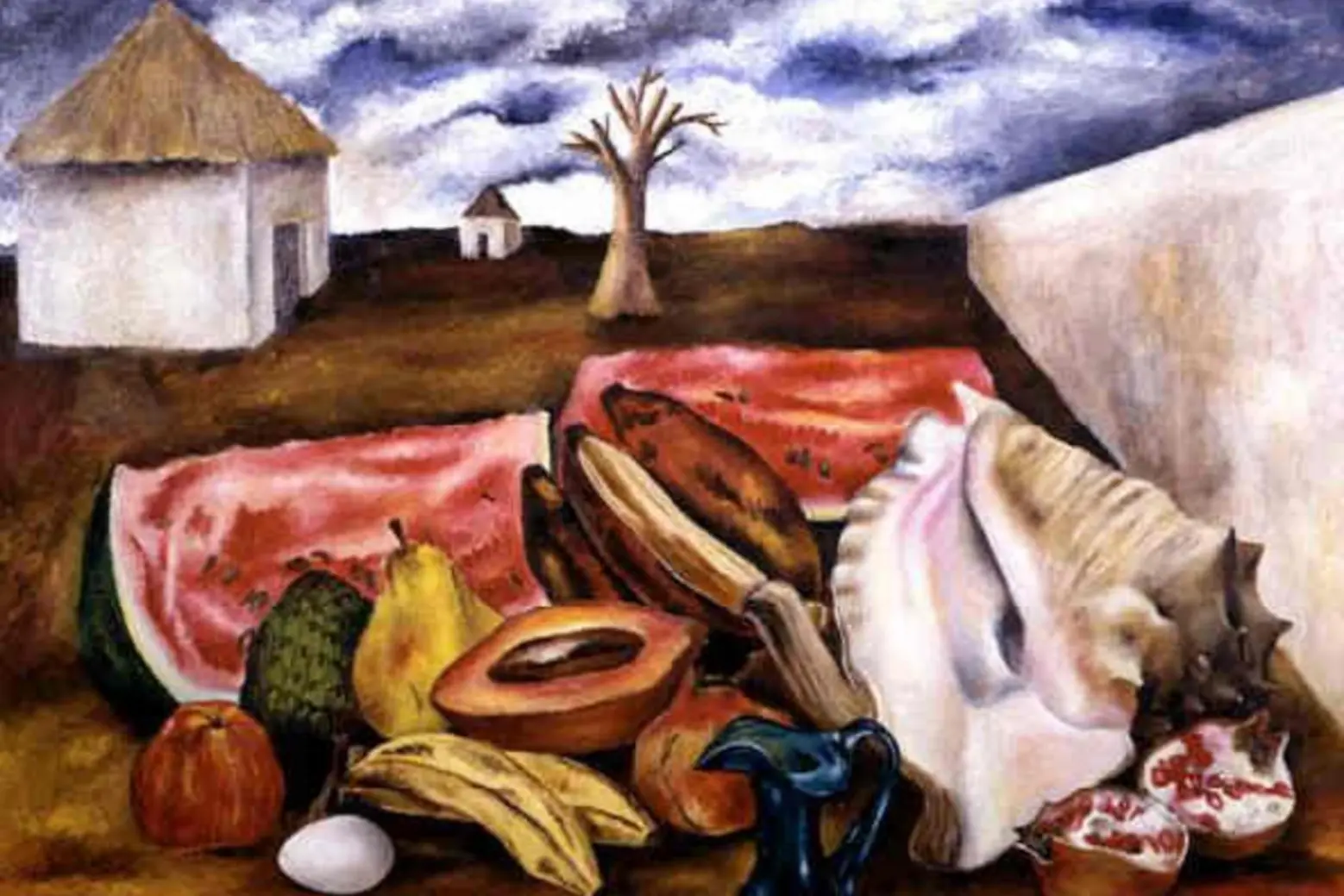
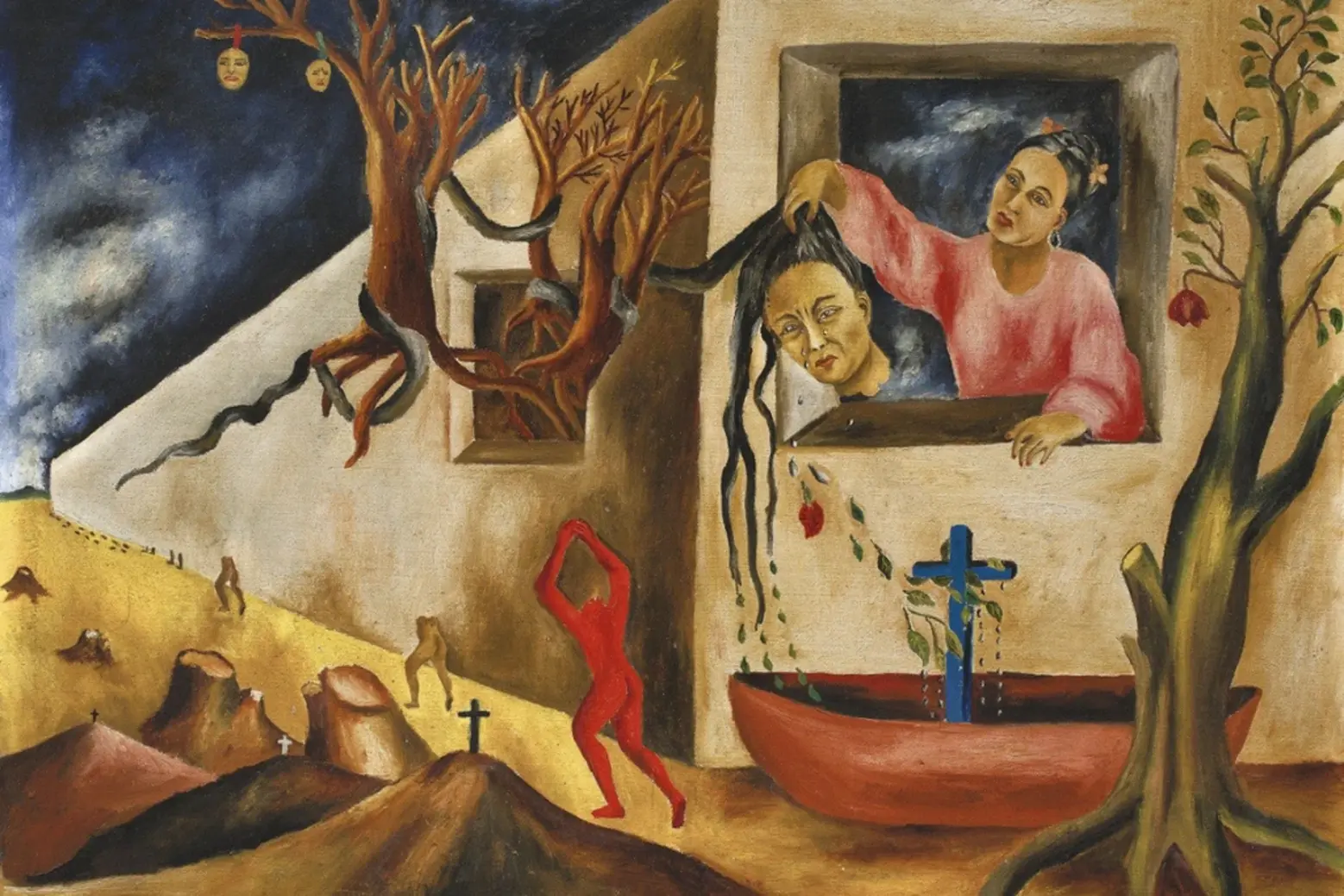
María Izquierdo expanded the uncanny through popular spectacle and ritual. Her imagery draws from circuses, saints, and community ceremonies, shaping strangeness through everyday performance. Her career also marks a visibility milestone, as the first Mexican woman to receive a solo exhibition in the United States, a reminder that the movement’s Mexican chapter carried local protagonists alongside celebrated exiles.
Mexican Surrealism remains inseparable from place. The 1940 exhibition at Galería de Arte Mexicano endures as a foundational reference, positioning Mexico City as a central node in Surrealism’s global network.
For a physical pilgrimage, Las Pozas in Xilitla offers a Surrealist experience at full scale. Created by Edward James in the rainforest, its concrete structures, stairways, and open air rooms collaborate with vines, mist, and waterfall sounds. The site serves as an artistic monument of the nation, and its construction spanned decades from 1949 through 1984.
Museum infrastructure has also caught up. The Museo Leonora Carrington in San Luis Potosí opened in 2018 within the Centro de las Artes complex, a former panopticon style prison later converted into cultural space. The building’s shift from surveillance to imagination feels like a Surrealist metaphor made concrete, a place where Leonora Carrington’s creatures and symbols can occupy rooms designed for containment.
sold for $28.5 million at Sotheby’s, a record that signaled rising collector appetite for the Carrington and Varo lineage.
In November 2025, Frida Kahlo’s
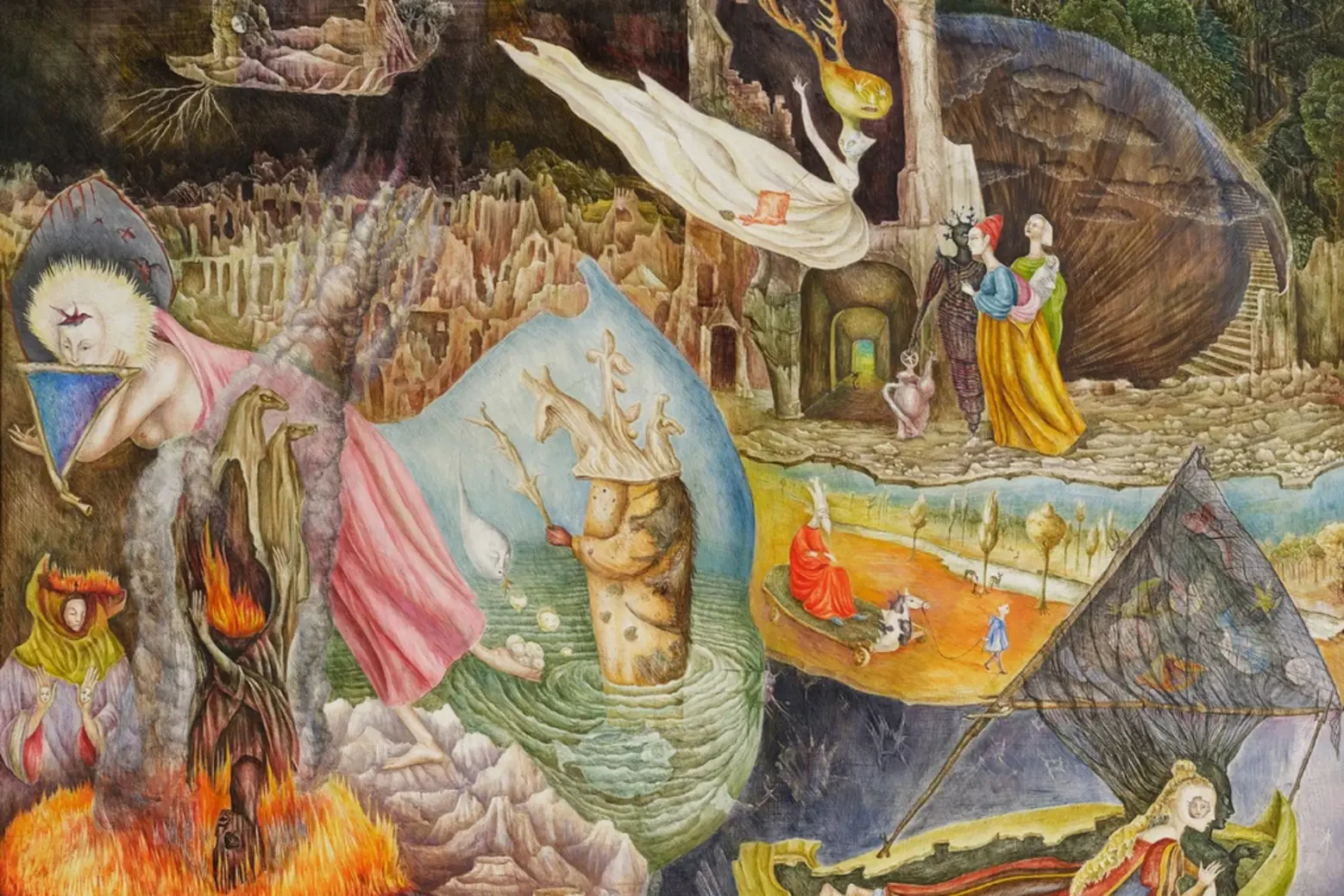
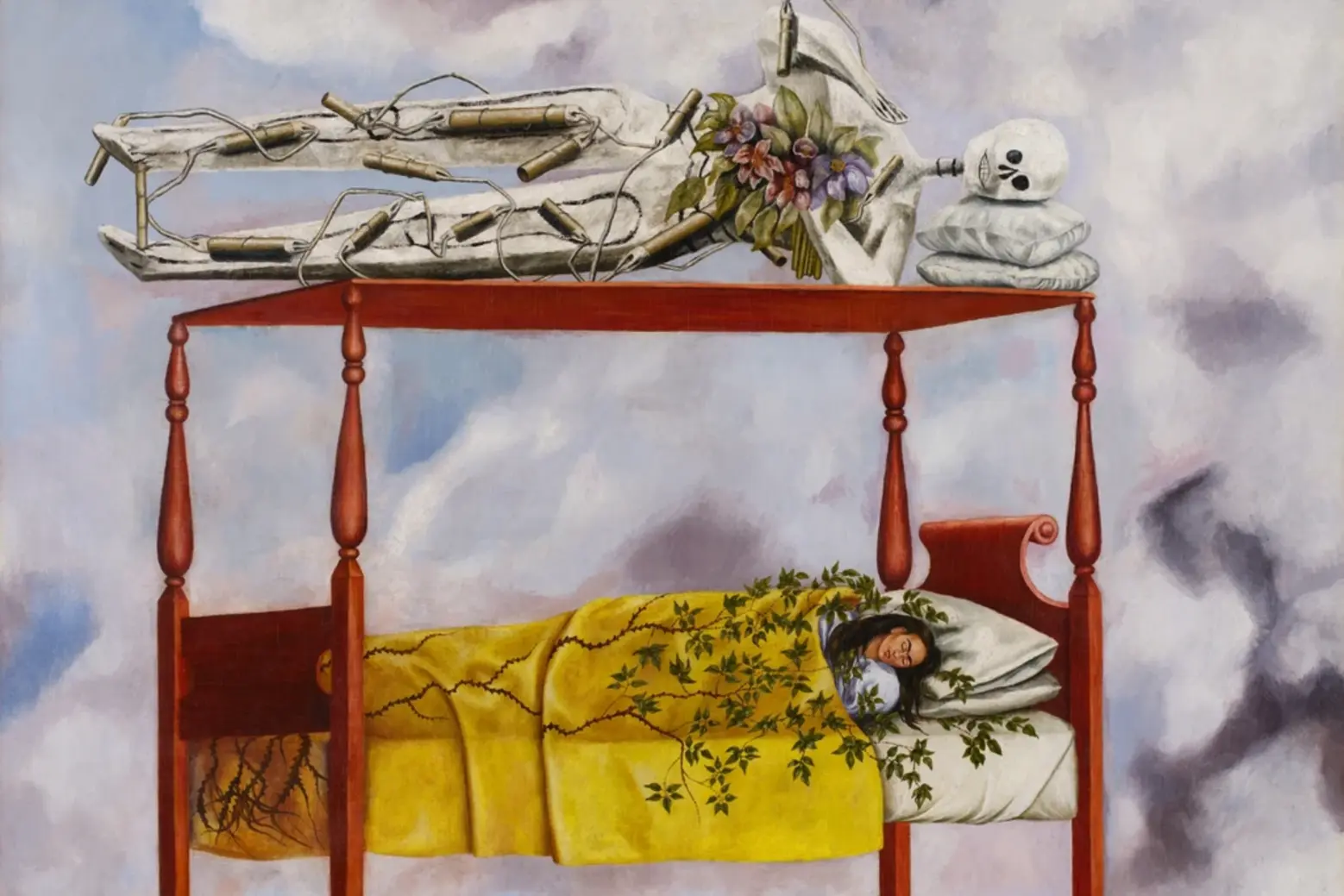
These numbers reflect more than fashion. Mexican Surrealism offers a complete cosmology: myth, domestic labor, science, and ritual fused into one image system. As institutions and collectors follow that richness, the canon shifts toward artists whose Surrealism grew from lived experience and spiritual architecture.
Mexican Surrealism endures because it treats magic as daily practice. Exile brought European artists into Mexico, while Mexico’s traditions supplied the deeper engine: a culture fluent in ritual, duality, and transformation. From Frida Kahlo’s doubled self to Remedios Varo’s invented machines and Leonora Carrington’s mythic councils, Mexican Surrealism keeps offering one promise: Reality can hold more than one layer at once.