MENU
Close





Joan Miró was one of the rare modern artists who made radicalism feel lyrical. He wanted to “assassinate painting,” yet he did so with tenderness as much as violence, stripping away academic convention to build a universe of floating signs, cosmic symbols, and dream logic that still feels fresh, mischievous, and immense.
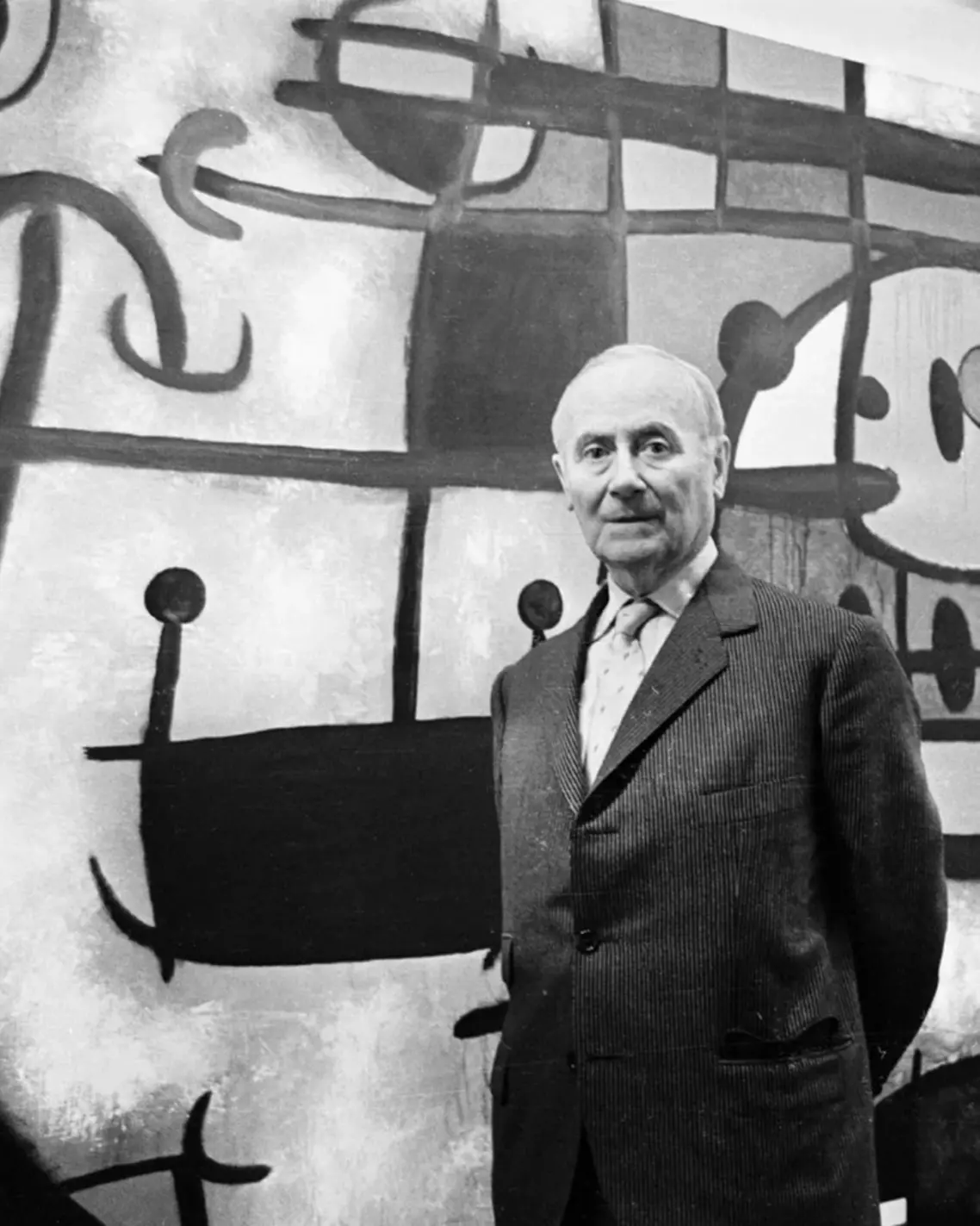
Joan Miró was one of the rare modern artists who made radicalism feel lyrical. He wanted to “assassinate painting,” yet he did so with tenderness as much as violence, stripping away academic convention to build a universe of floating signs, cosmic symbols, and dream logic that still feels fresh, mischievous, and immense.
March 11, 2026


Joan Miró occupies a singular place in 20th-century art because he belonged everywhere and nowhere at once. He moved through Surrealism, abstraction, collage, sculpture, ceramics, printmaking, and muralism, yet resisted being pinned to any single camp. The Metropolitan Museum notes that Miró considered his art free of any “ism,” even though André Breton, the chief spokesman of Surrealism, famously called him “the most Surrealist of us all.”
The art of Joan Miró carries the charge of dream, chance, poetry, and visual instability, yet it also shows the discipline of a master who knew exactly where every line, blot, and tremor belonged. What looks spontaneous in Miró often arrives with the precision of a man who had already rehearsed freedom.
That refusal of labels began early, and it began with a revolt against respectability. Born in Barcelona in 1893 to a family of artisans, Miró was steered toward commerce, bookkeeping, and the whole gray little machinery of bourgeois usefulness. Britannica records that he attended commercial school and worked as a clerk before a breakdown pushed his life off that dutiful track and back toward art. One can hardly ask for a more Miró-esque origin story: Bureaucracy on one side, psychic crisis on the other, and from that crack in the wall emerged a painter who would spend the rest of his life trying to blow up polite visual order from the inside. Even his later declaration about wanting to “assassinate painting” feels less like tantrum than diagnosis. Painting, in its respectable form, had grown far too comfortable. Miró intended to wake it up with a slap and a laugh.
His early work already hinted that description alone would never satisfy him. His late-1910s paintings as alive with Fauvist color and Cubist structure, yet already drifting toward a language more private and more peculiar. Catalonia mattered here, and not as background decoration. The land, the farm, the animals, the trees, the tools, the stars, the peasant signs that later recur across his work all rise from memory and place. In Miró, the local never stays local for long. A farmyard becomes a system of signs. A tree becomes an event. A ladder starts looking like metaphysics with wooden rungs.
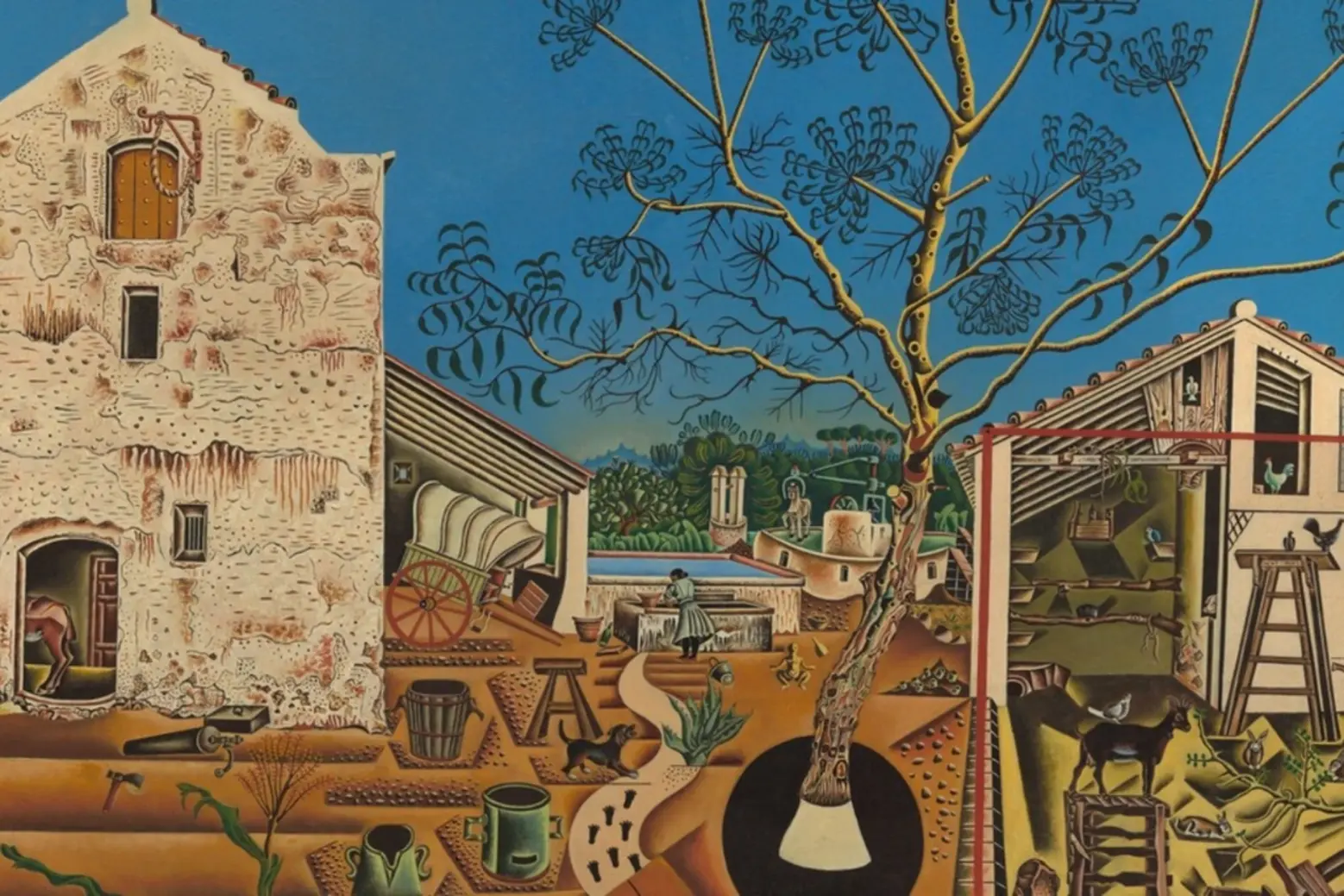
That shift from observed reality into charged visual poetry becomes thrillingly clear in The Farm of 1921–22, one of the hinge points of Joan Miró’s career. The National Gallery of Art describes it as a scene of ordinary rural life that already opens onto something strange and magical, and that tension is the whole secret. The painting still gives you the farmyard, yes, though it also feels as though every object is beginning to whisper in code. Reality remains present, though it has started dressing for a second life. Miró had not yet fully arrived at the floating symbolic universe of his mature work, but one can feel the gears turning. The visible world is being distilled into signs, and signs, in Miró’s hands, always come with a pulse.
Then Paris enters the picture, and with it the Surrealist orbit. In the 1920s, Miró’s art became lighter, stranger, more airborne, as though gravity itself had lost influence over his canvas. He shared the movement’s interest in dreams and automatism, yet he never joined any doctrine like a dutiful little recruit. MoMA’s material on Joan Miró underlines the Surrealist investment in psychic automatism, while the Guggenheim notes his own account of hunger-induced hallucinations shaping the turn in his work around 1925. It is such a marvelous detail because it strips Surrealism of velvet upholstery. Joan Miró’s dream-life arrived through austerity, sharp perception, and an imagination capable of turning scarcity into spectacle. His pictures from this period do not feel padded. They feel lean, alert, and slightly electrified.
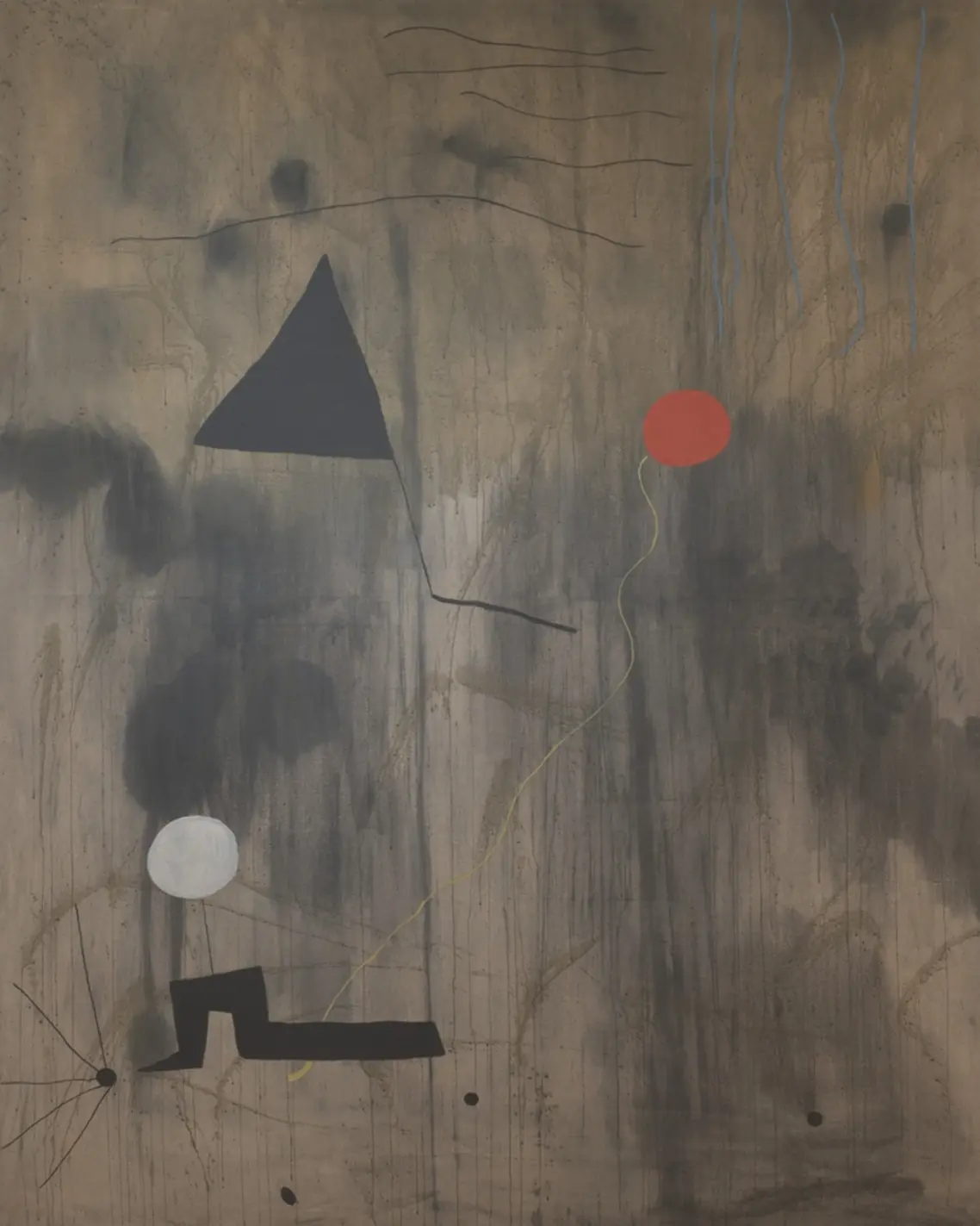
One of the great statements from this phase is The Birth of the World from 1925. The painting can be described as a meeting between chance and careful design, with an atmospheric, almost accidental ground later interrupted by precise forms and wiry lines. That balance explains why the painting still feels prophetic. Joan Miró lets the background breathe like weather, then places his marks with the exactitude of someone inventing punctuation for a brand-new visual language. The result looks like genesis with excellent editing. Painting here becomes part cosmos, part script, part private joke shared between the artist and the universe.
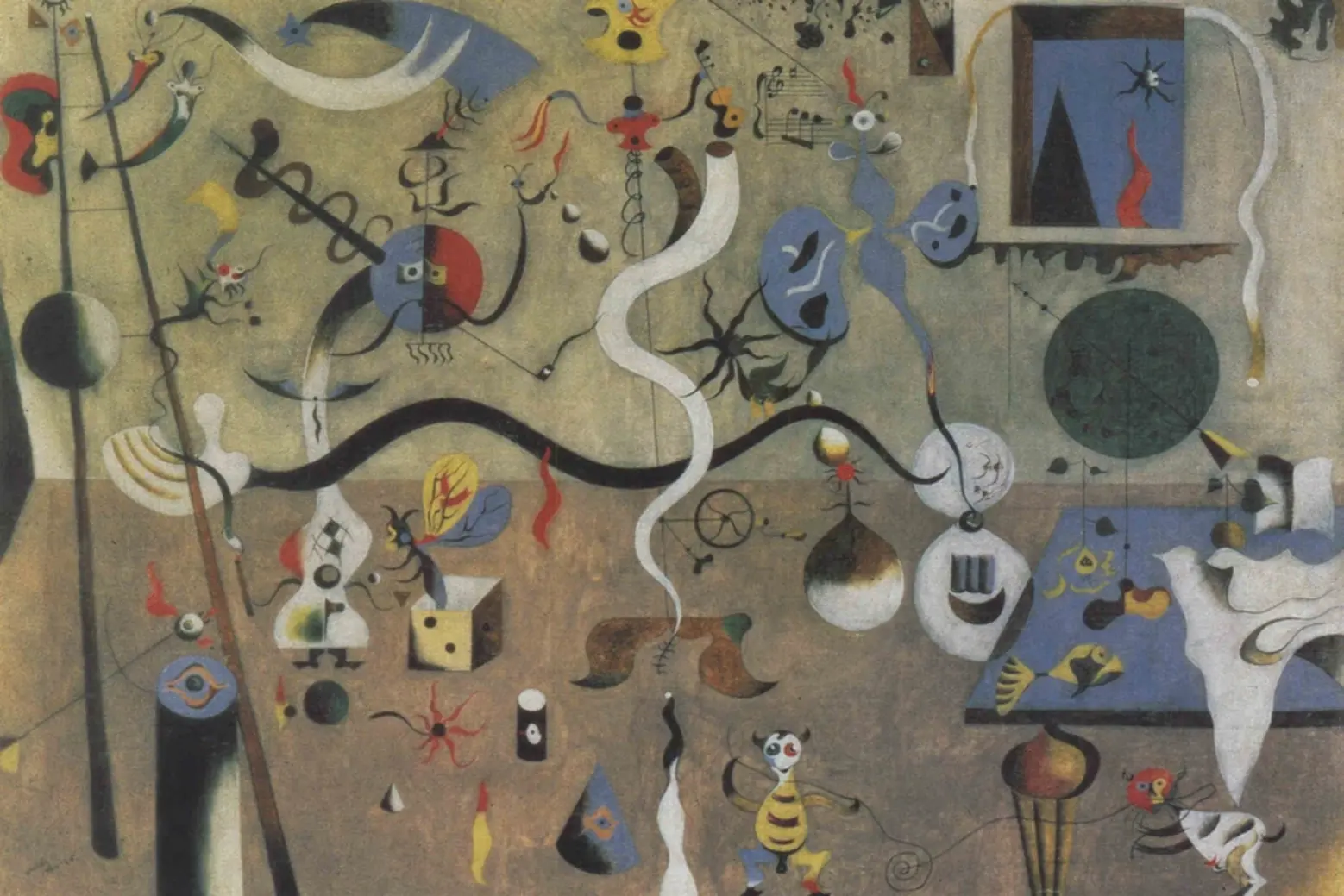
If The Birth of the World feels like the opening sentence of Joan Miró’s mature language, Harlequin’s Carnival feels like the moment that language throws a party and invites every improbable creature in the neighborhood. The canvas swarms with hybrid figures, instruments, lines, masks, flames, comic distortions, and all sorts of animated fragments that appear to dance, twitch, sing, and generally behave like they have been left unsupervised in the best possible way. Yet the miracle is how controlled it all feels. This is choreography disguised as delirium. Miró turns the subconscious into theater, then gives every prop impeccable timing.
Across the decade, his private lexicon grew deeper and more supple. Stars, birds, eyes, moons, women, ladders, crescents, and those wiry black lines keep returning, though never with the dead certainty of a fixed codebook. The Guggenheim notes that their meanings shift with context, while the Fundació Joan Miró describes the bird as a connector and the ladder as a bridge between earth and sky. That is precisely why Miró’s symbols stay alive. He treats them less like labels and more like actors. They enter a picture carrying prior associations, then gather new emotional charges depending on the scene. A ladder in Miró is aspiration, escape, mischief, longing, and metaphysical comedy all at once. It rises with purpose and keeps a little mystery in reserve.
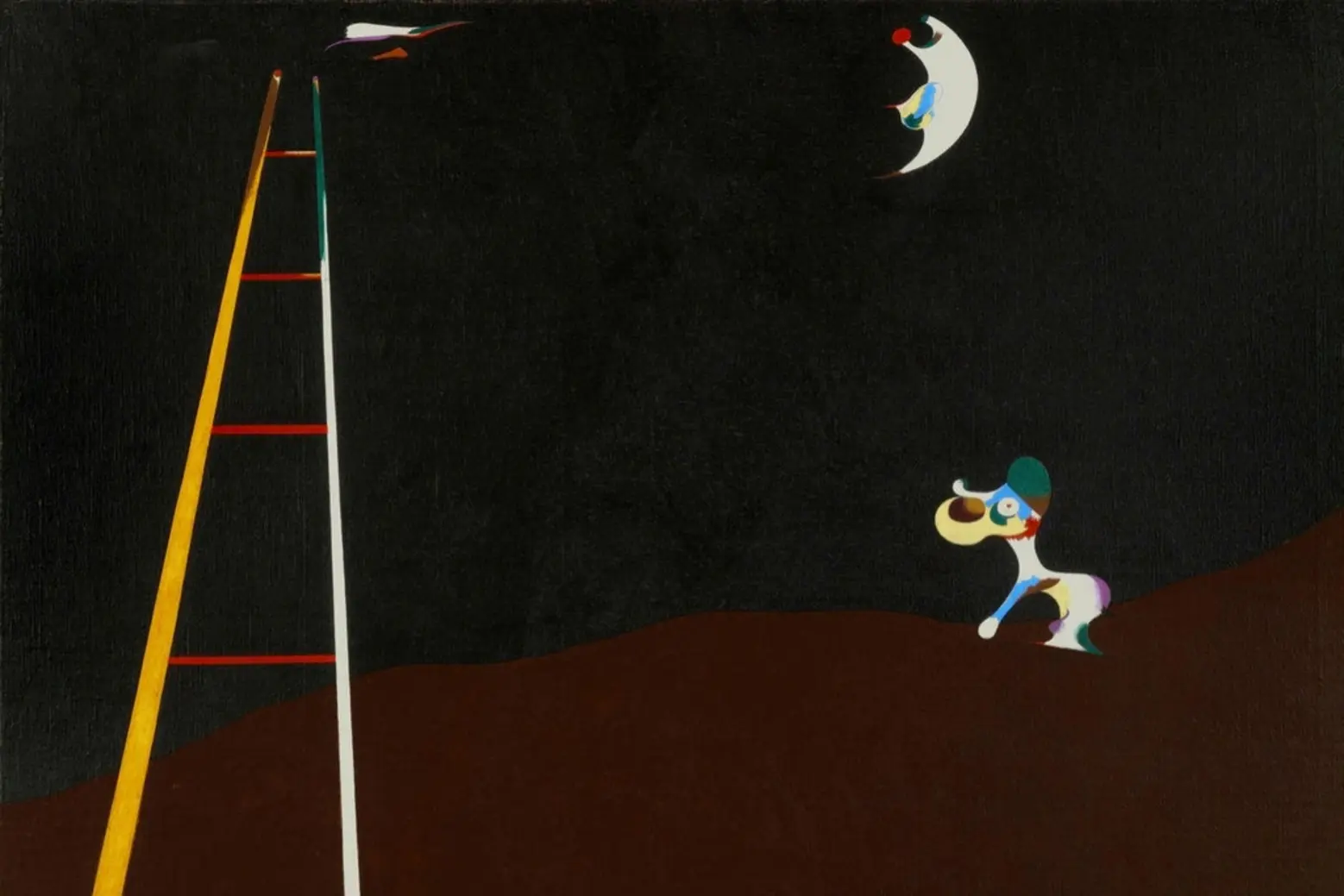
That economy reaches one of its purest and most haunting forms in Dog Barking at the Moon from 1926. The Philadelphia Museum of Art describes it as a sparse vision rooted in the artist’s family farm yet steeped in mystery, and sparse is exactly the point. Miró uses so little and somehow opens so much space. A dog barks upward, a ladder leans toward the sky, and emptiness itself becomes active, expressive, almost mischievous. Few artists have done more with less fuss. He understood that the gap between the earthbound and the cosmic could be rendered with a handful of forms, provided those forms knew how to hum.
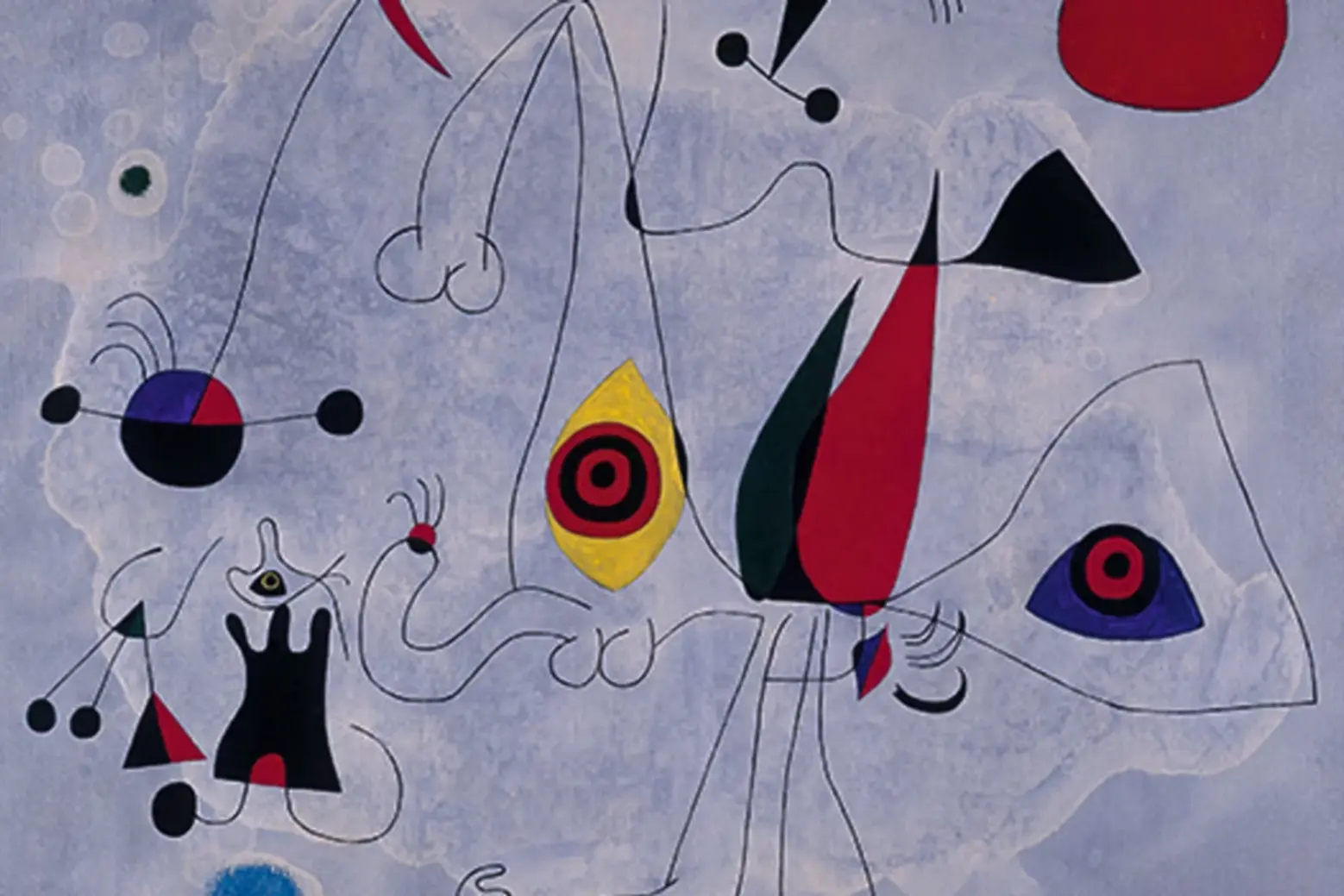
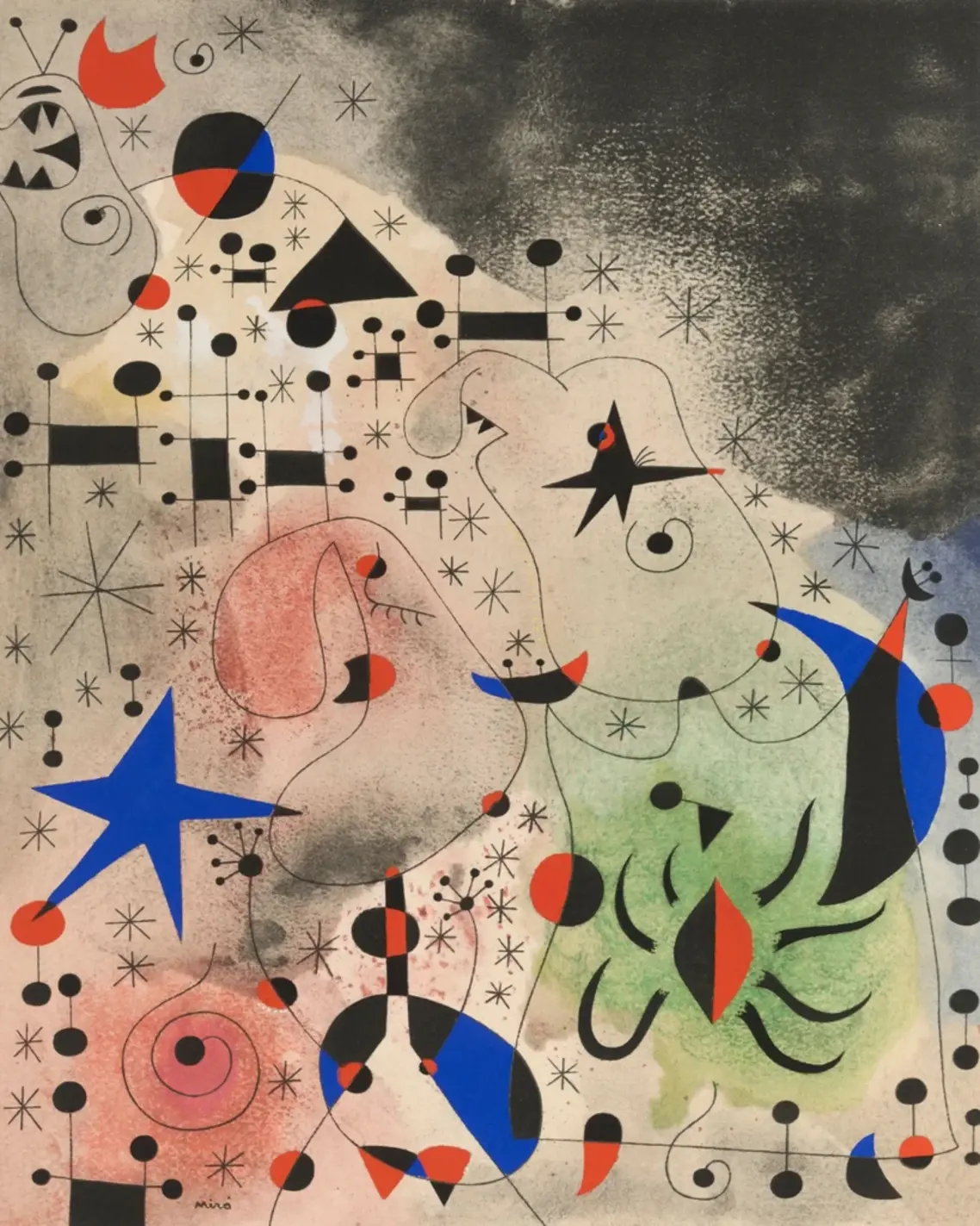
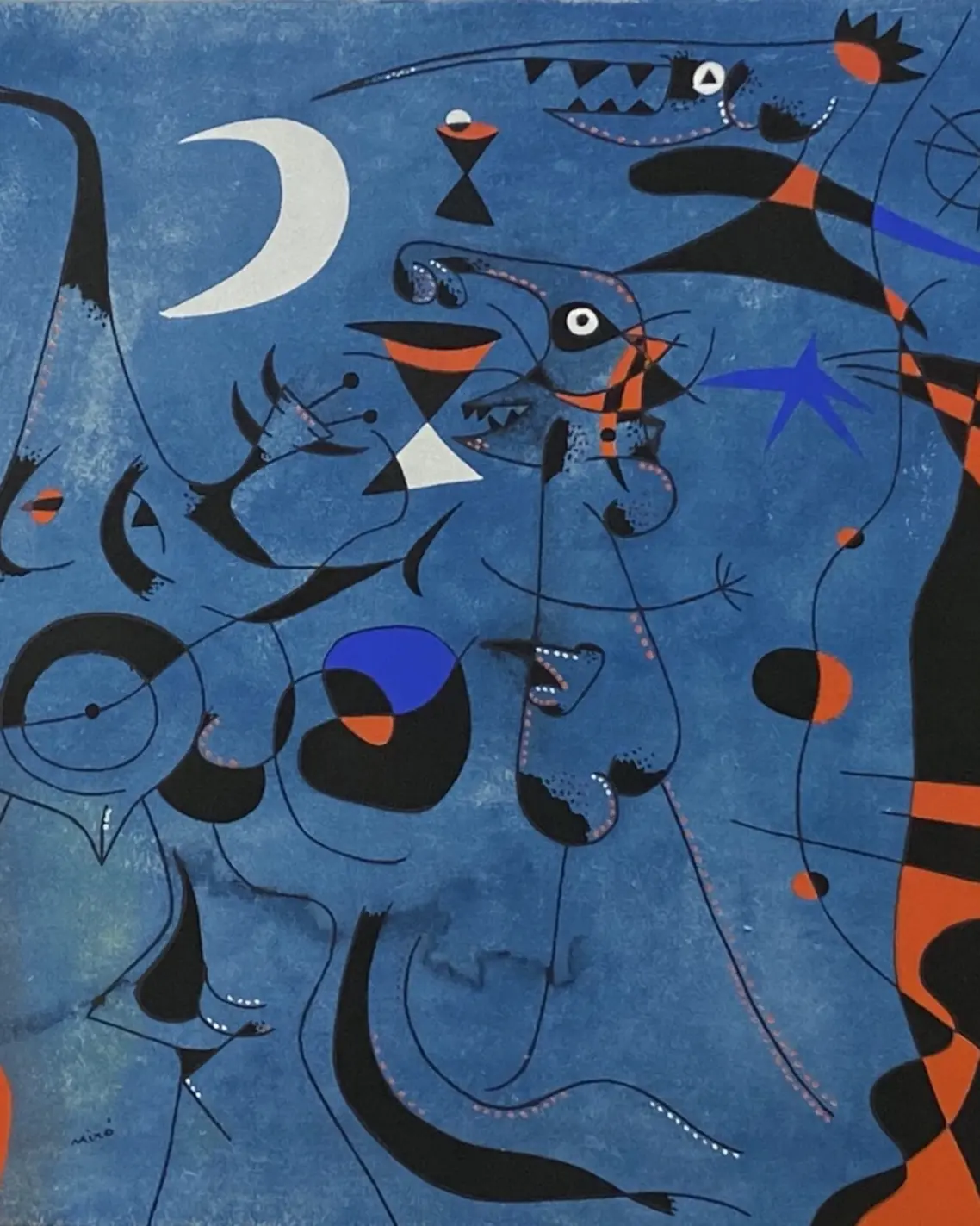
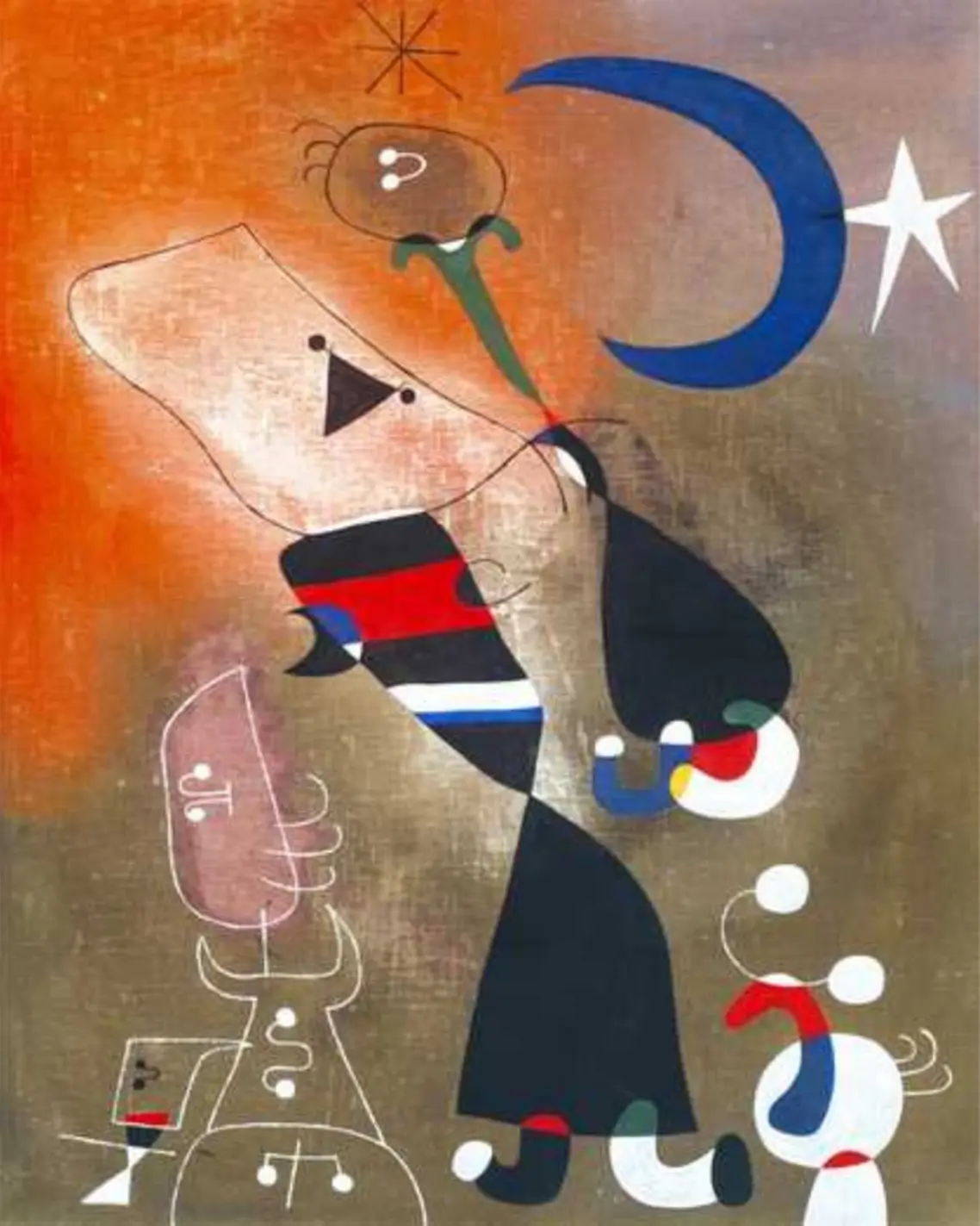
The later 1930s and early 1940s brought political violence, war, and fracture, and Miró’s art absorbed that pressure without losing its poetry. The political dimension of his work responses to the Spanish Civil War, Francoism, and World War II. Out of that darkness came the Constellations, the 23 gouaches made between 1940 and 1941 as Miró moved through instability and displacement. These works feel fragile at first glance, almost jewel-like, though fragility here carries steel in its spine. Their dense webs of stars, birds, eyes, and trembling lines offer a form of spiritual resistance, a way of keeping rhythm, wonder, and inner life intact while history behaved like a brute.
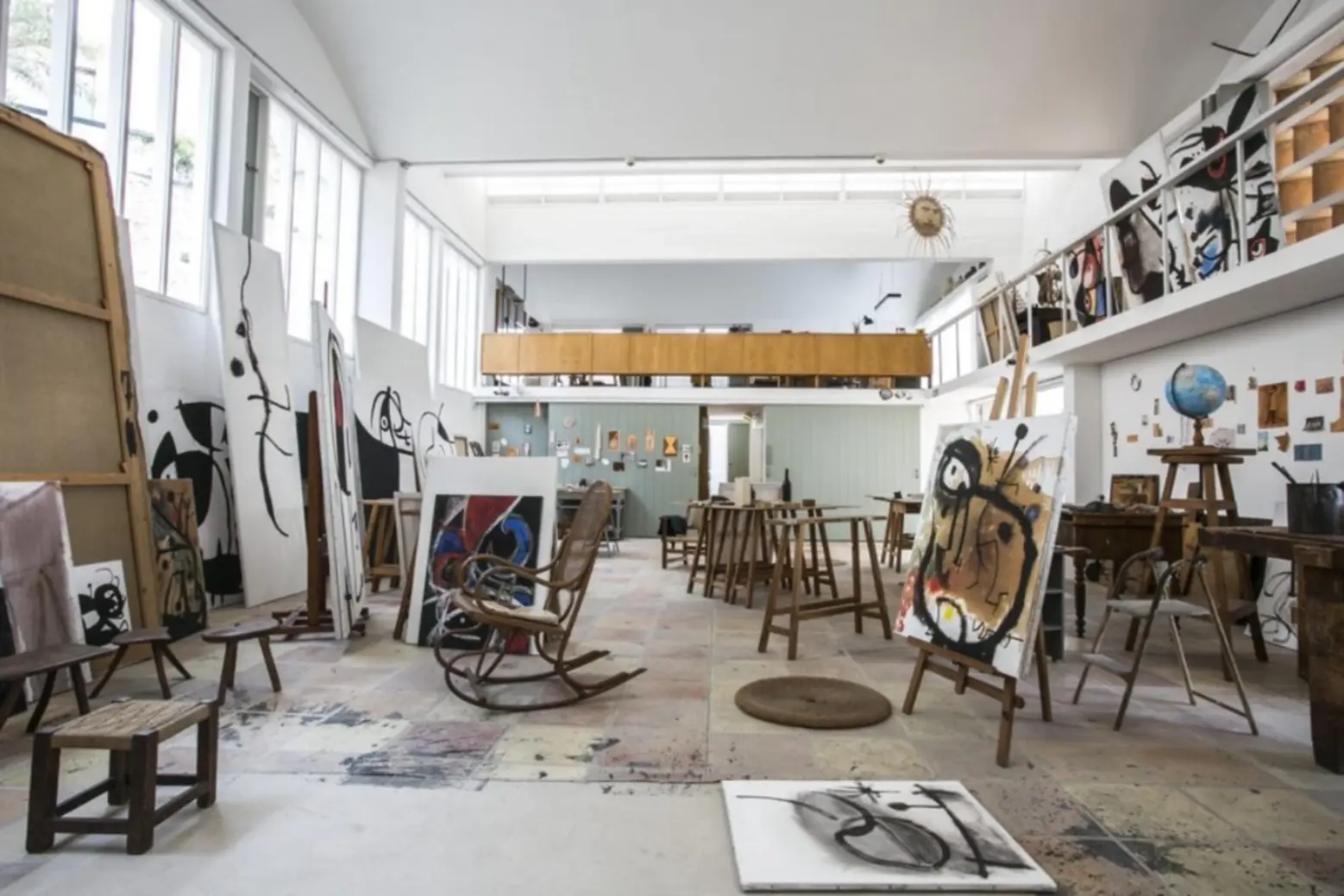
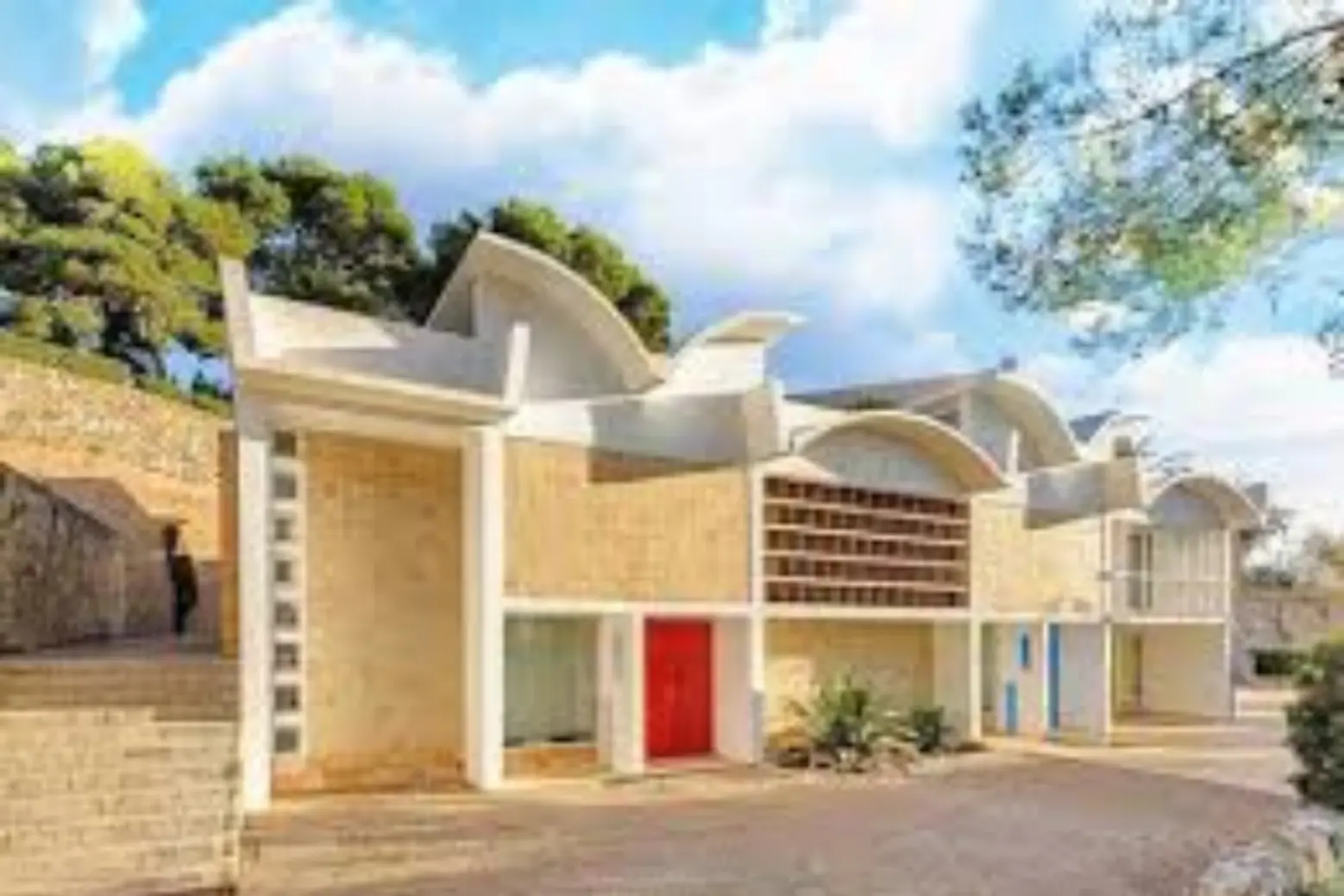
After settling in Mallorca in 1956, Miró entered another phase of expansion. The dream language stayed with him, though it began stepping off the canvas and into the world with new material force. The foundation in Mallorca notes how carefully his Sert Studio was designed around climate, storage, scale, and working conditions, and one feels in that studio a late-career luxury he had fully earned. Sculpture, ceramics, and monumental public art allowed Miró’s symbols to gain mass, texture, and civic presence.
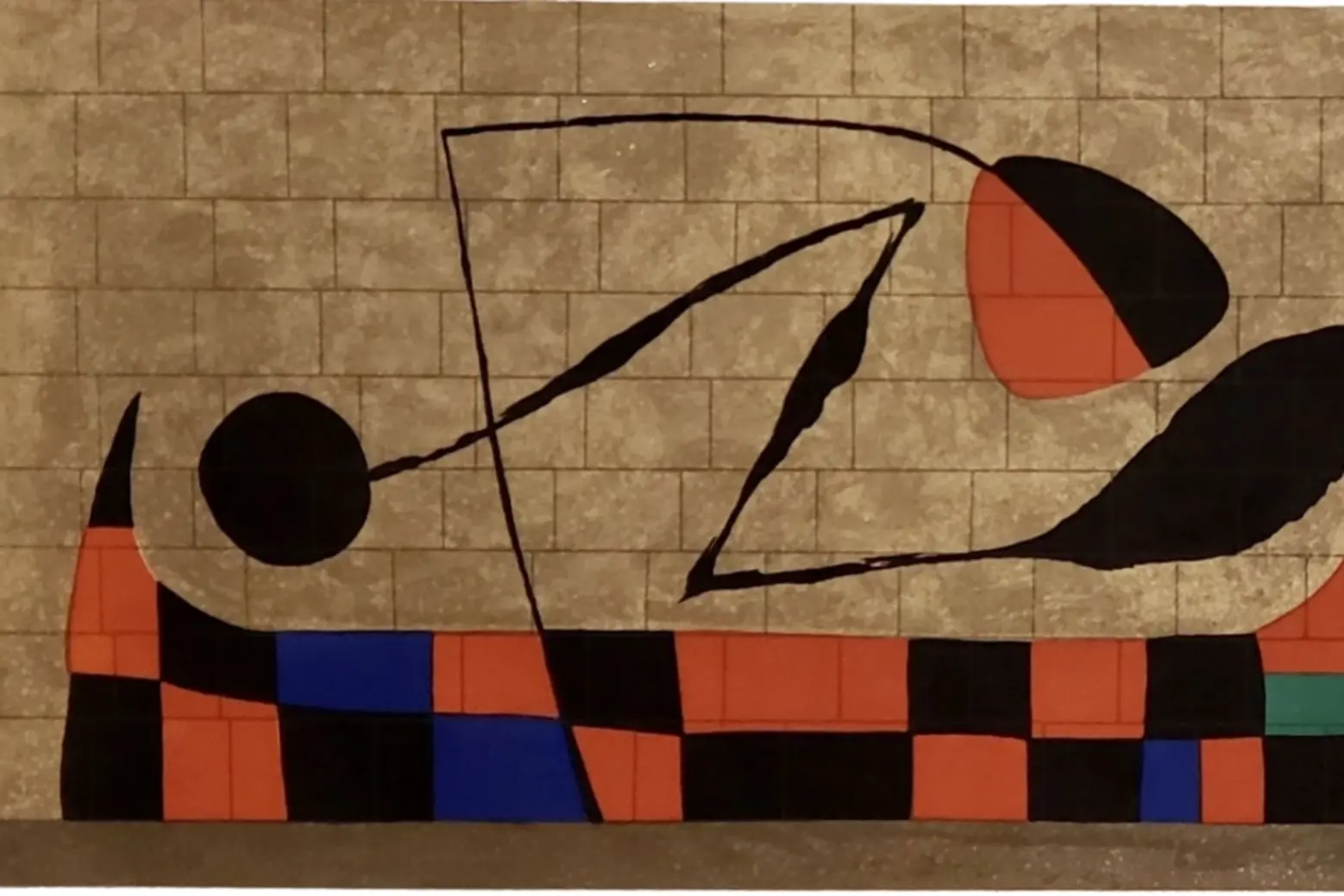
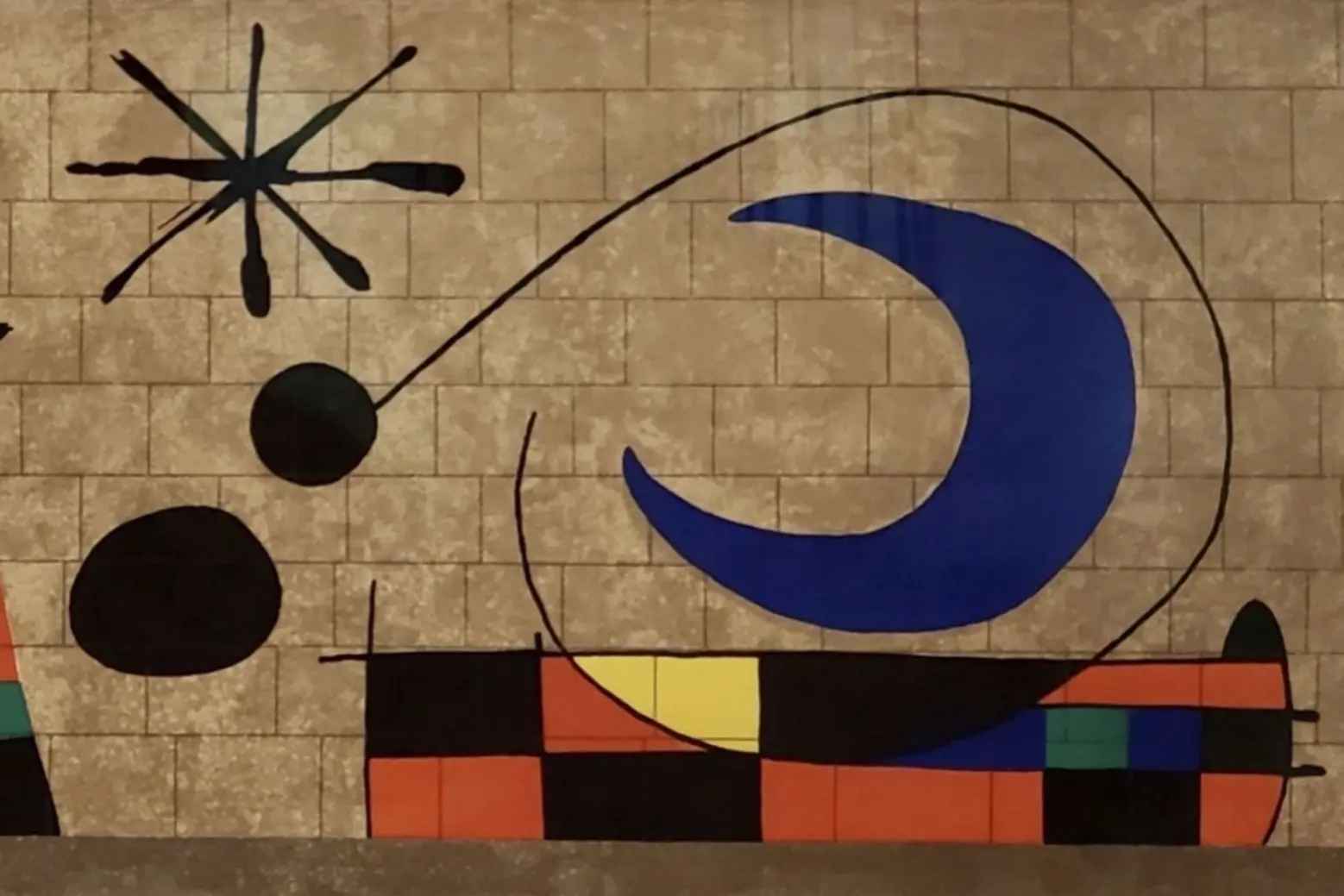
UNESCO identifies the famous Wall of the Sun and Wall of the Moon, created by ceramic master Josep Llorens Artigas, while the Fundació Joan Miró details his sculptural use of bronze, iron, resin, and found objects.
Modernism, in Joan Miró’s hands, never hardened into theory. It stayed playful, feral, poetic, and gloriously alive. He set painting free from dutiful realism, polite decoration, and academic weight, then built in its place a universe where ladders lean upward, birds flicker between worlds, stars pulse with feeling, and every line seems ready to slip the leash of gravity.