Long before abstraction became a modernist manifesto, Hilma af Klint was already painting colossal visions of spirals, atoms, flowers and invisible forces.
Hilma af Klint, Self-Aware of Her Own Genius
Long before abstraction became a modernist manifesto, Hilma af Klint was already painting colossal visions of spirals, atoms, flowers and invisible forces.
June 4, 2026


In 1932, Hilma af Klint placed an X beside The Paintings for the Temple in her notebooks, sealing the works away from public view until twenty years after her death. It was less an act of secrecy than an act of timing. She knew their meaning belonged to the future. A hundred years ago, she was painting toward us.
Hilma af Klint Before Abstraction Had A Name
Before Wassily Kandinsky, Piet Mondrian or Kazimir Malevich became the official prophets of abstraction, a Swedish woman was working in near silence inside her Stockholm studio. Her name was Hilma af Klint, and she was painting images that had almost no language around them yet.
The art world likes its revolutions tidy. It prefers manifestos, movements, salons, male rivalries, neat dates and a clear line of succession. Af Klint disrupts that comfort. She did not arrive at abstraction through a public break with tradition or a loud declaration of aesthetic war. She arrived through botany, anatomy, spiritual séances, scientific diagrams and a private belief that painting could become a map of the unseen.
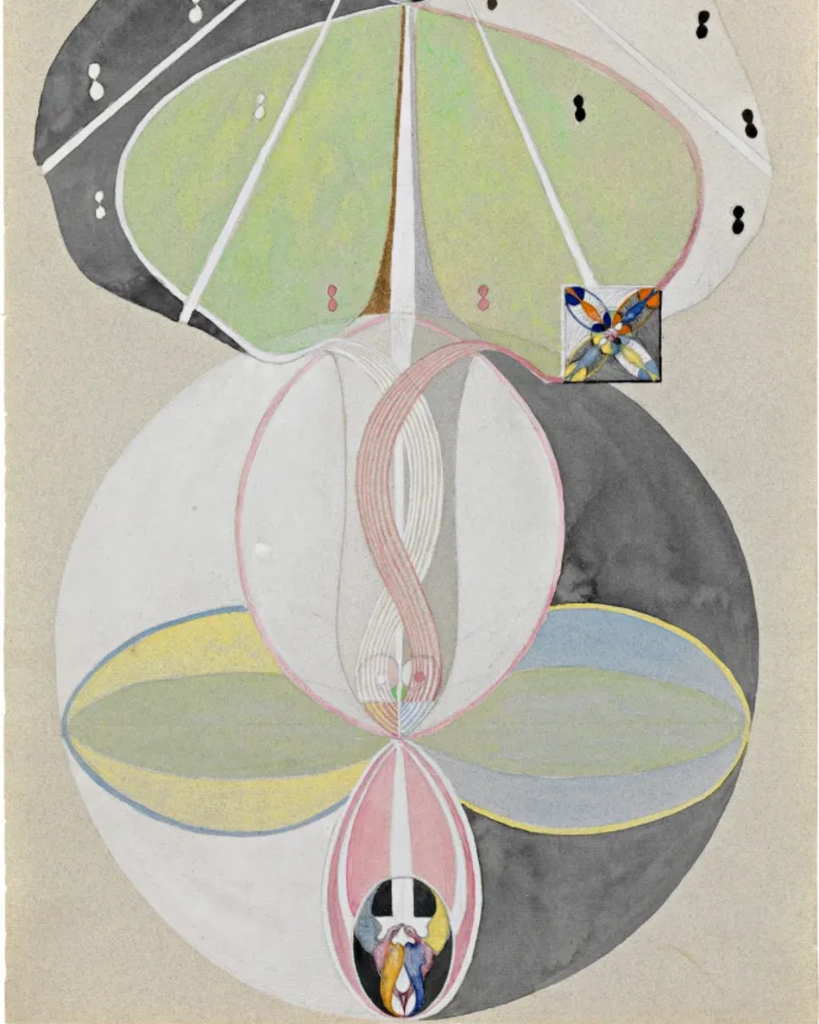
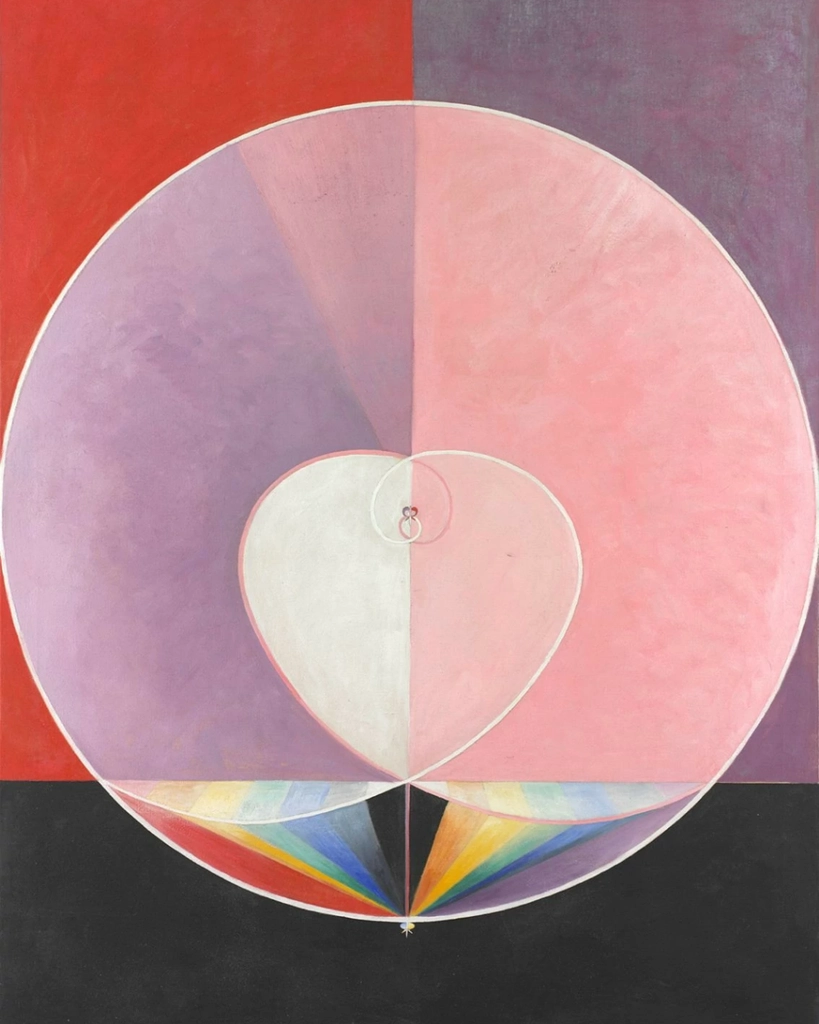
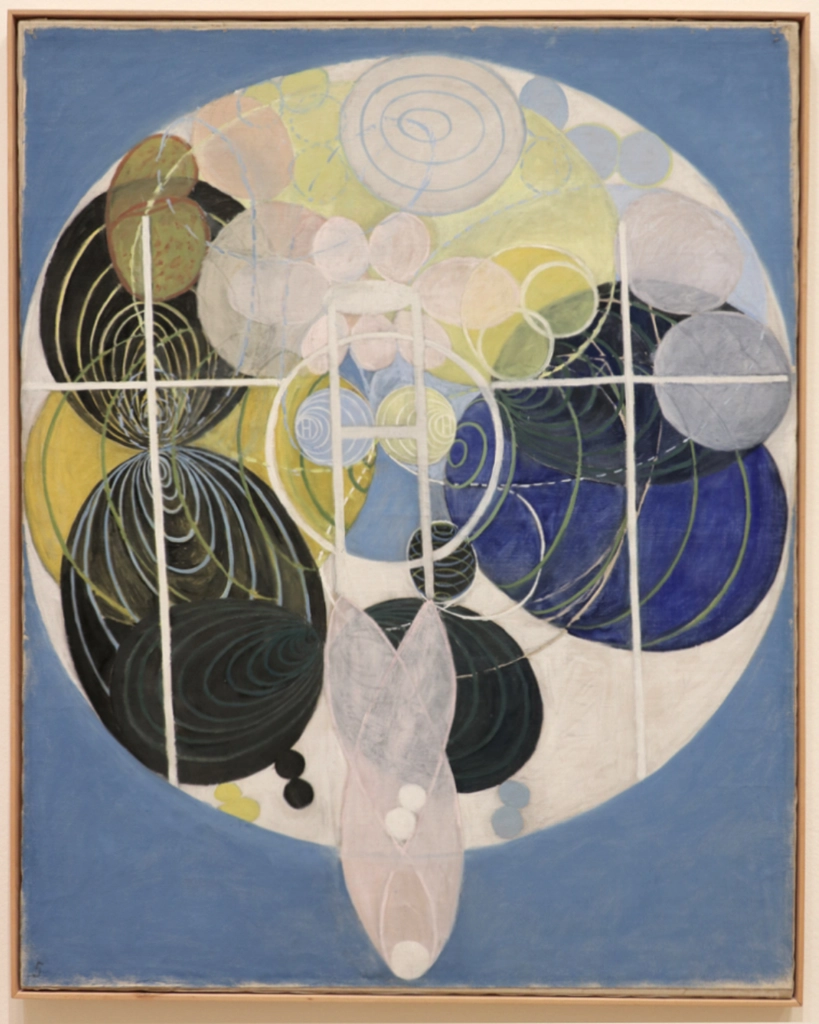
Trained in classical art, af Klint could paint landscapes, portraits and botanical studies with discipline. She understood observation. She understood the visible world. Then, in her forties, she began making something else entirely: vast canvases filled with spirals, circles, petals, grids, waves, eggs, cells and symbols. These were not decorative experiments. They were systems. They were cosmologies. They were messages from a reality she believed ordinary sight could not reach.
Painter Of The Invisible
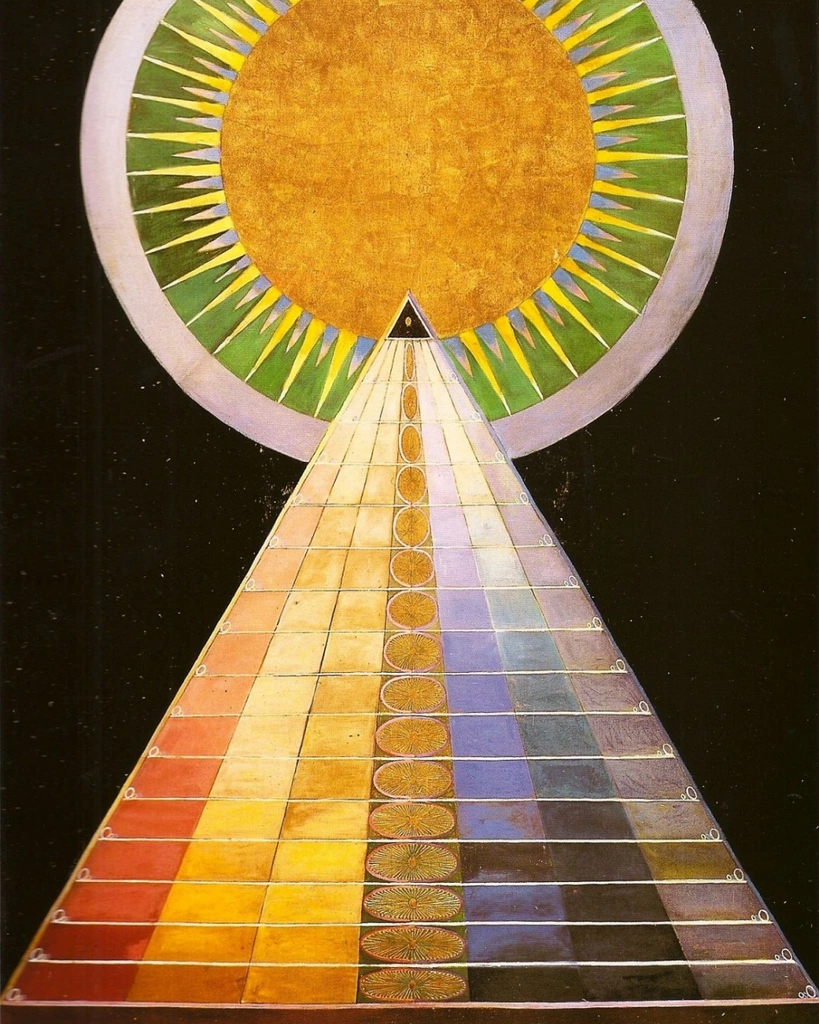
Af Klint’s abstraction feels strangely alive because it never fully belongs to geometry or nature. It moves between the two. One moment, her compositions bloom like flowers opening underwater. The next, they lock into diagrams, circles, pyramids and grids. Her paintings often seem to breathe and calculate at once.
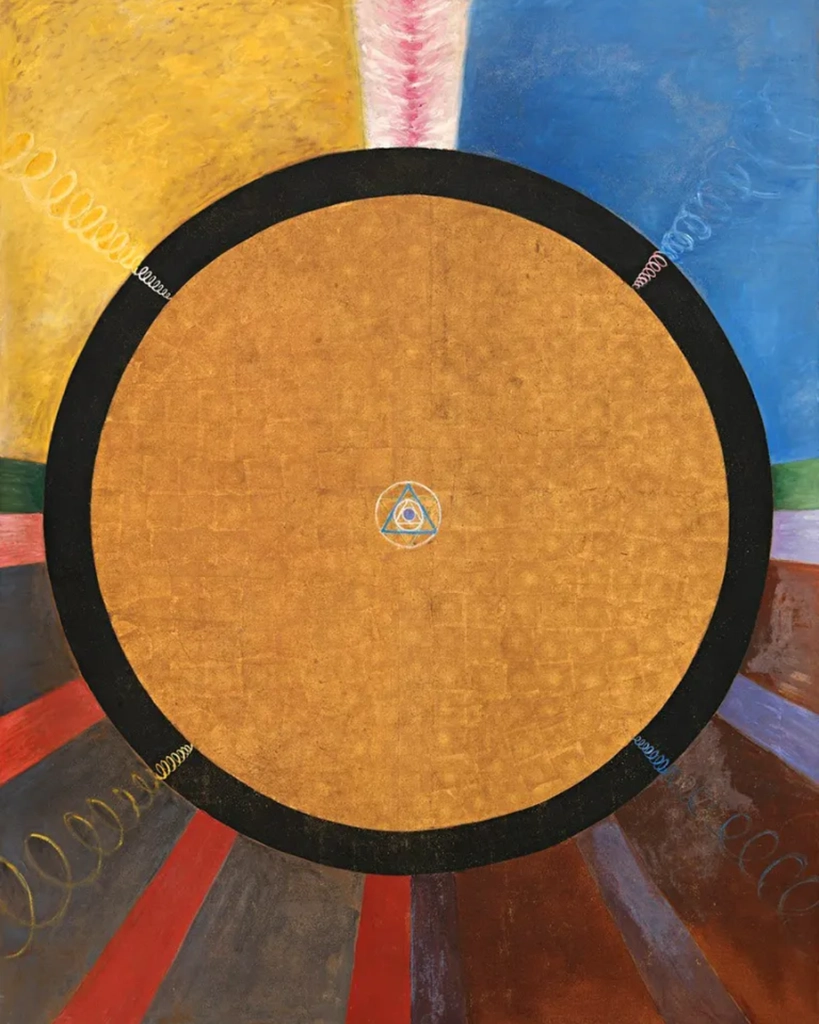
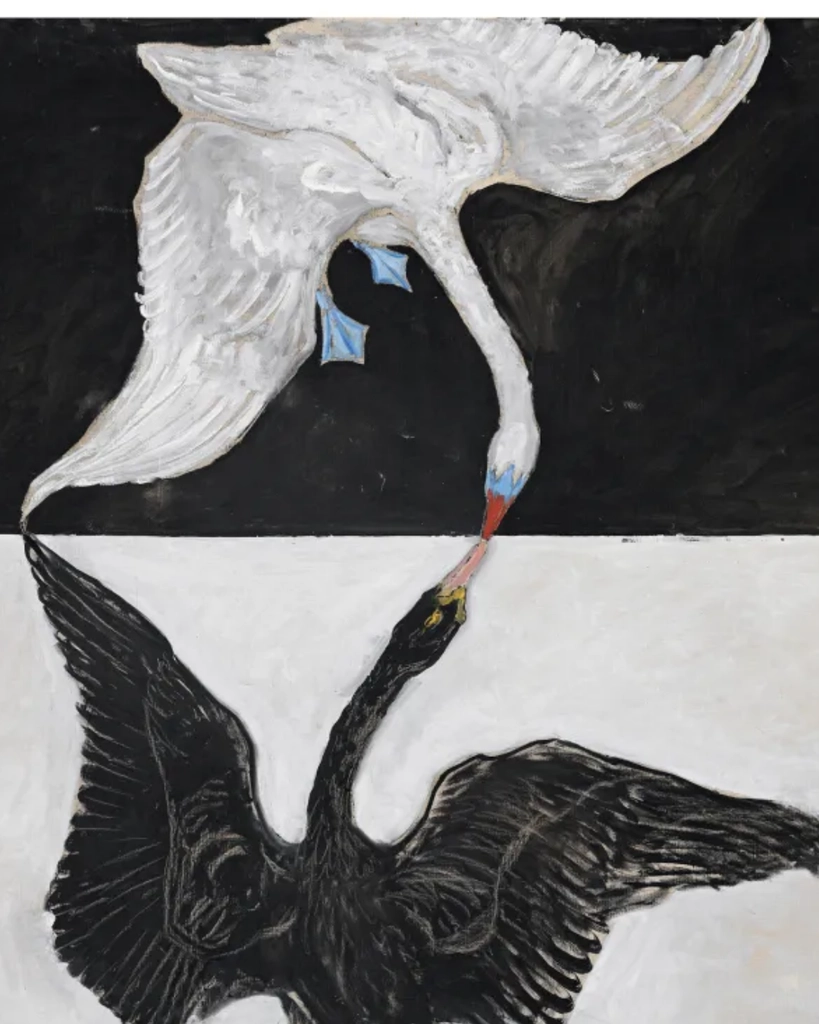
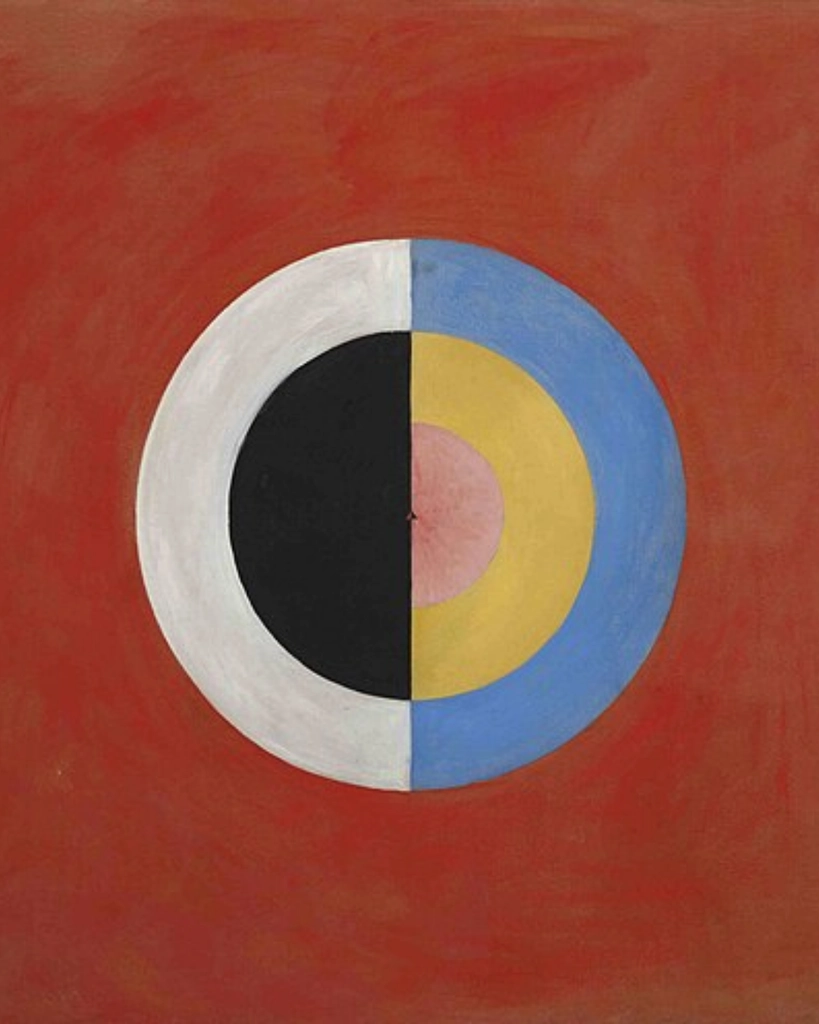
That tension is the force of her style. Organic forms soften the rigidity of structure. Spirals suggest growth, repetition and ascension. Concentric circles feel like planets, eggs or spiritual targets. Lines behave like measurements, while colors carry symbolic charge. Yellow was connected to the female principle and spirit. Blue carried the male principle and matter. Green suggested harmony, the union of opposites.
This was not color as mood alone. It was color as code.
Her scale made the vision harder to dismiss. Some of her defining works rise more than three meters high, confronting the viewer not as pictures, but as presences. The use of tempera gave many canvases a clear, luminous quality, as if the pigment had been lit from within. In a century obsessed with machines, speed and external modernity, af Klint was building a different modernism: one of vibration, polarity, energy and hidden order.
Science, Mysticism And The Female Laboratory
The lazy reading of Hilma af Klint would reduce her to mysticism. That would miss the more dangerous part of her intelligence. She was not simply escaping the rational world. She was expanding it.
Alongside her spiritual practice, af Klint worked with scientific precision. She made anatomical illustrations for equine surgery and studied fungi, plants and natural systems. This scientific eye entered her abstraction with quiet force. Her forms often look like cells, embryos, botanical diagrams, wave patterns or x-ray visions. In works such as The Atom Series and her later nature studies, she seemed less interested in painting objects than in painting the forces beneath objects.
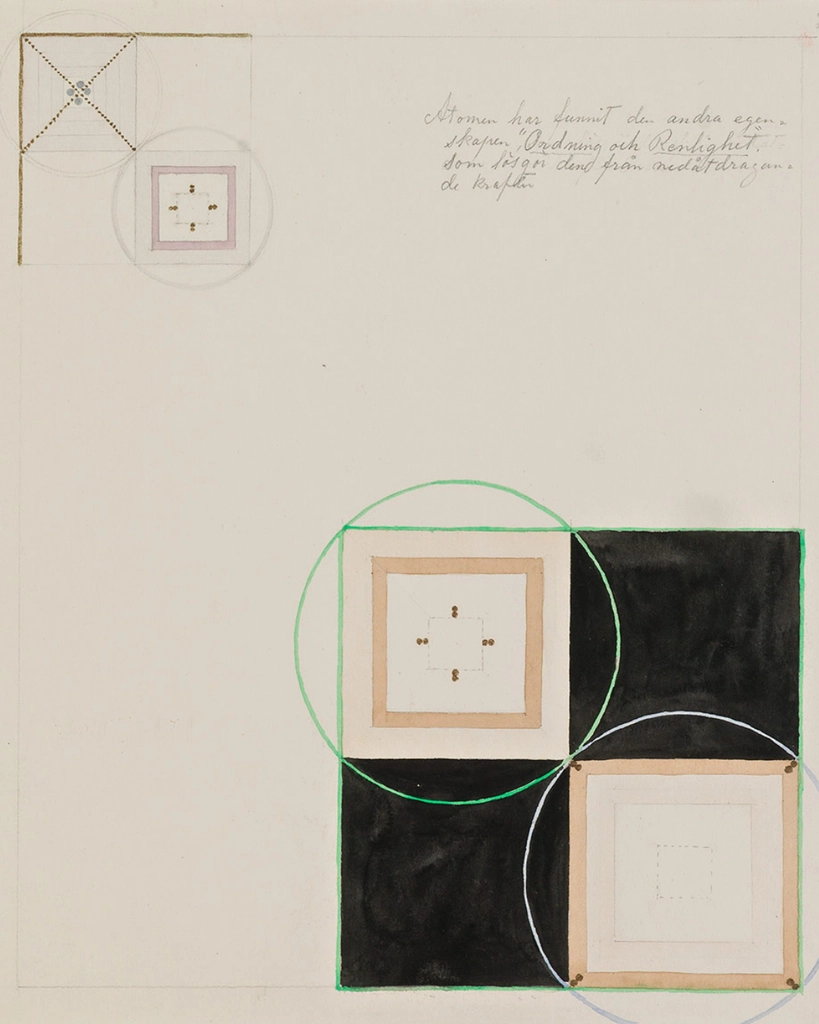
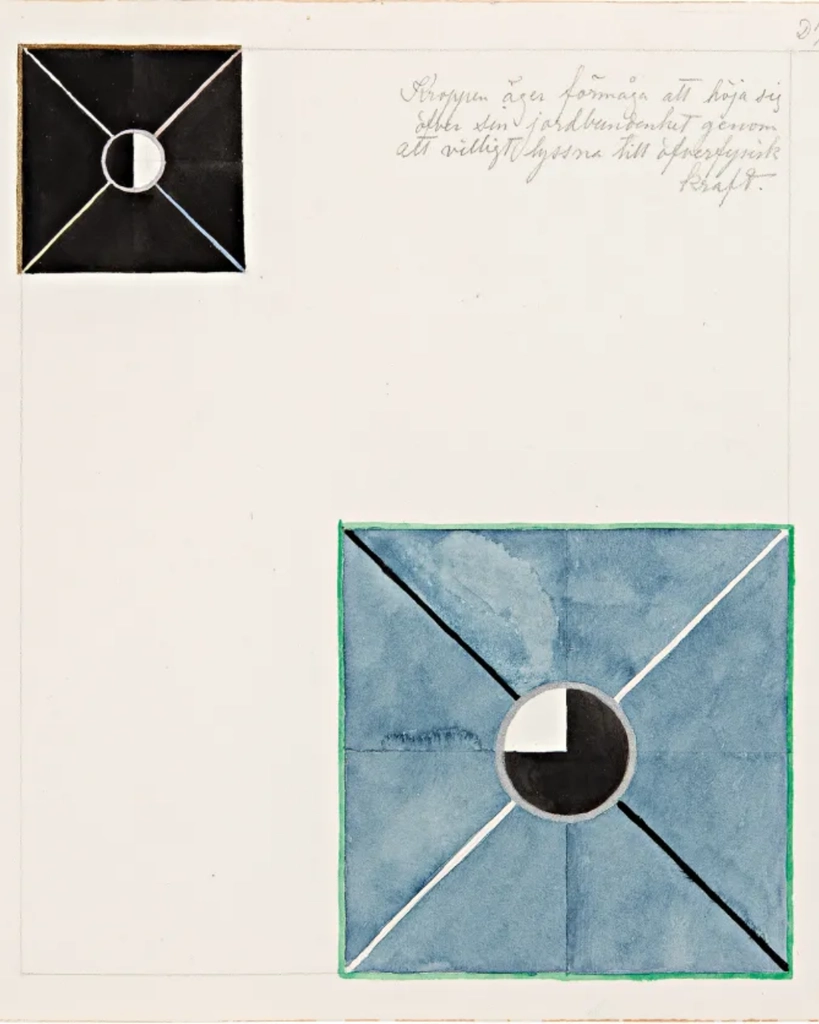
This is where her work becomes especially modern. She belonged to a moment when science itself was destabilizing the visible world. X-rays revealed the interior of the body. Radio waves suggested invisible transmission. New theories of matter changed the meaning of solidity. Af Klint absorbed that atmosphere and turned it into a spiritual science of images.
Her studio became a kind of female laboratory. Not the official laboratory of institutions and masculine authority, but a private chamber where art, energy, belief and observation could meet without asking permission.
The Five And The Secret Grammar Of Vision
In 1896, af Klint and four other women formed De Fem, or The Five, an all-female spiritual group that gathered for séances, automatic drawing and contact with higher spiritual beings. Their practice took place far from the male-dominated art establishment, but it was not marginal in ambition. It was radical in method.
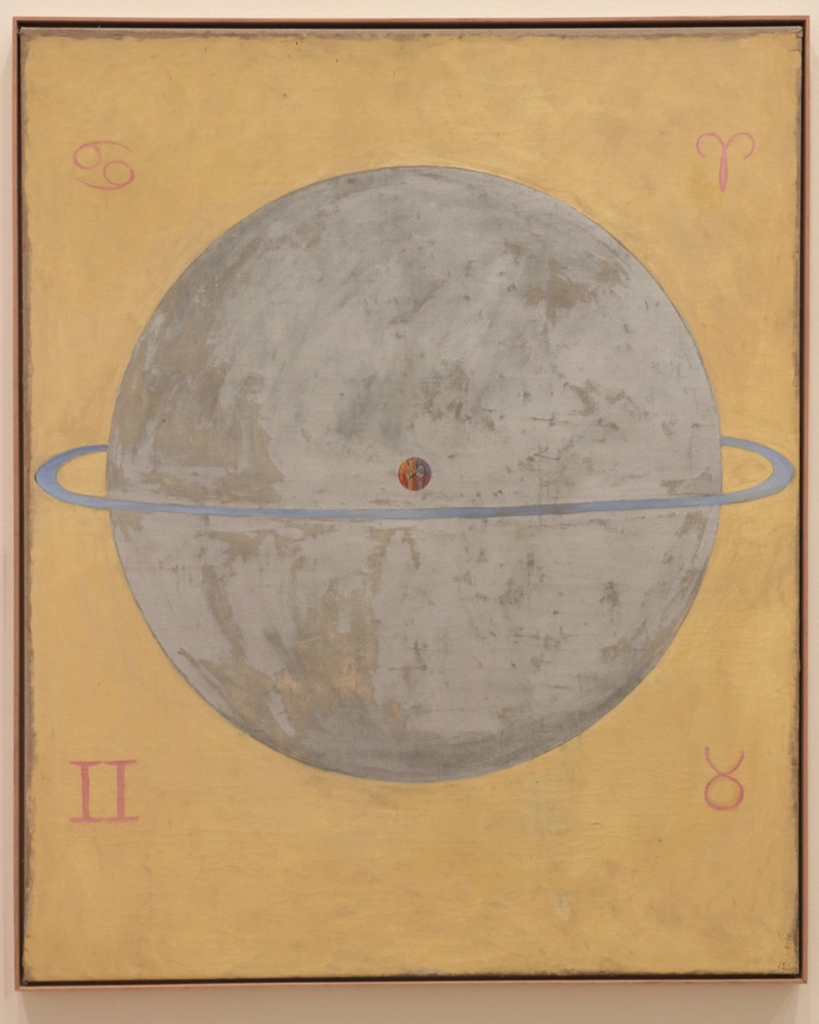
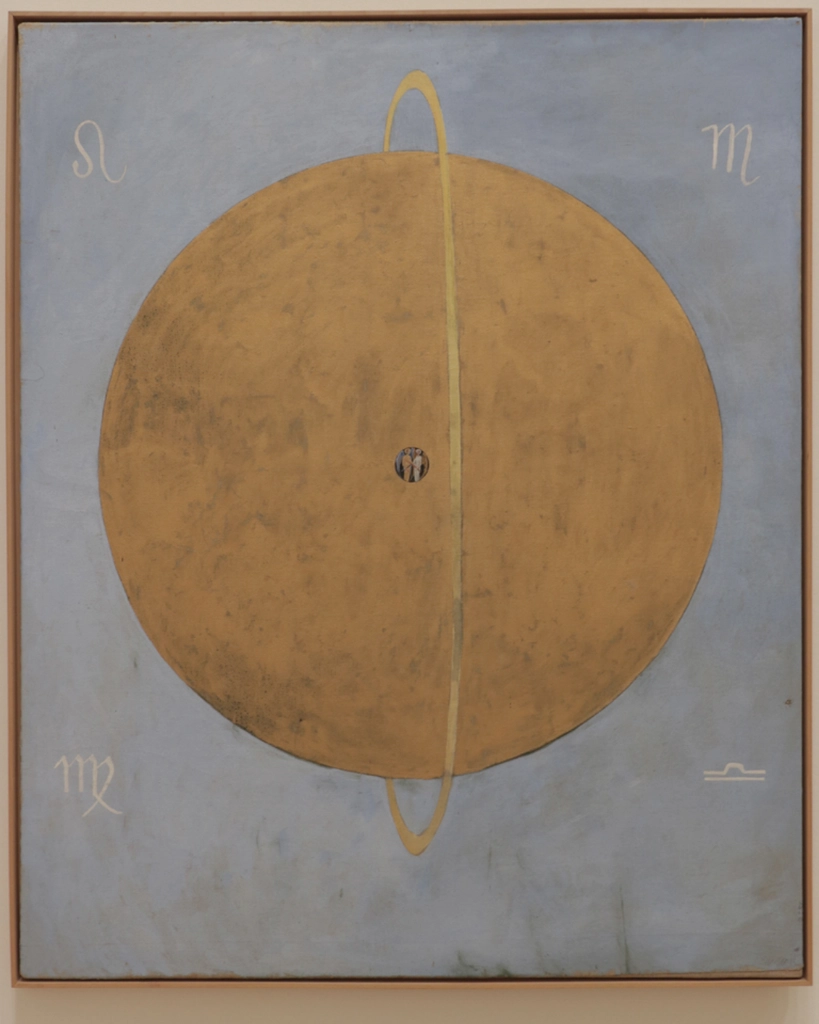
During their sessions, they allowed the hand to move beyond conscious control, producing drawings that anticipated later Surrealist automatic techniques by decades. What the Surrealists would later frame as psychological rebellion, af Klint and her circle treated as transmission. The hand became an instrument. The page became a threshold.
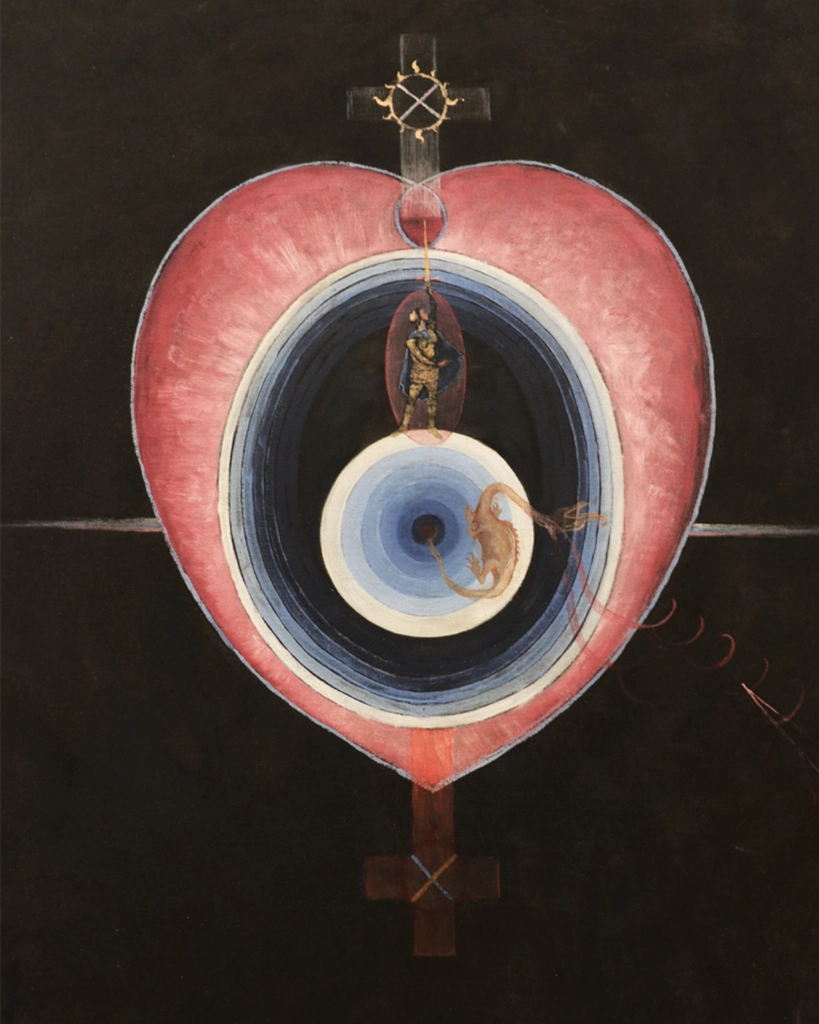
Af Klint believed that spiritual entities called the High Masters guided her work. In 1906, one of them, Amaliel, was said to have commissioned her great project: The Paintings for the Temple, a cycle of 193 works completed between 1906 and 1915.
“The pictures were painted directly through me, without any preliminary drawings and with great force. I had no idea what the paintings were supposed to depict; nevertheless, I worked swiftly and surely, without changing a single brushstroke.”
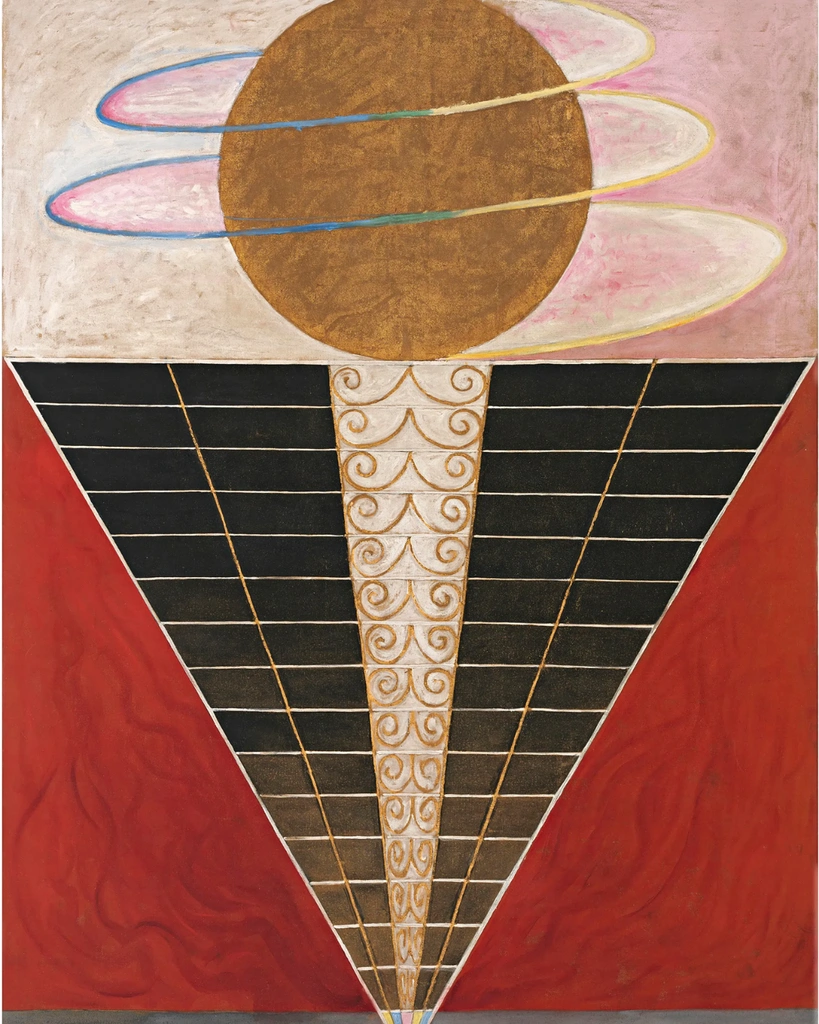
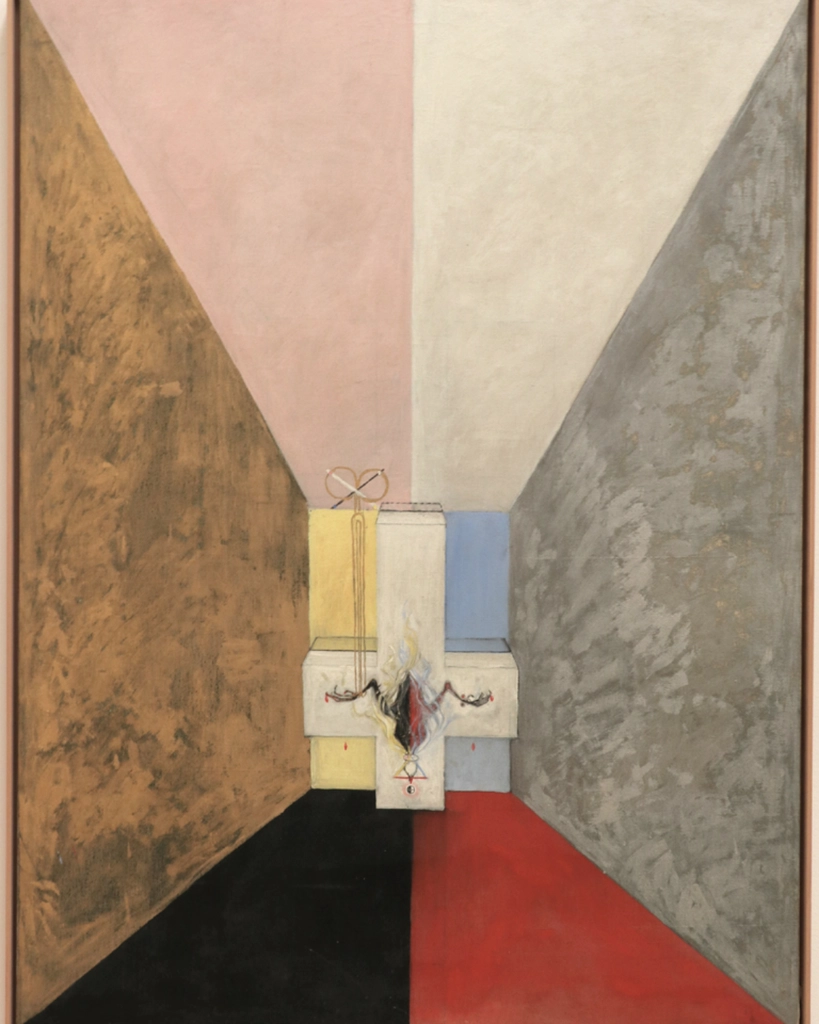
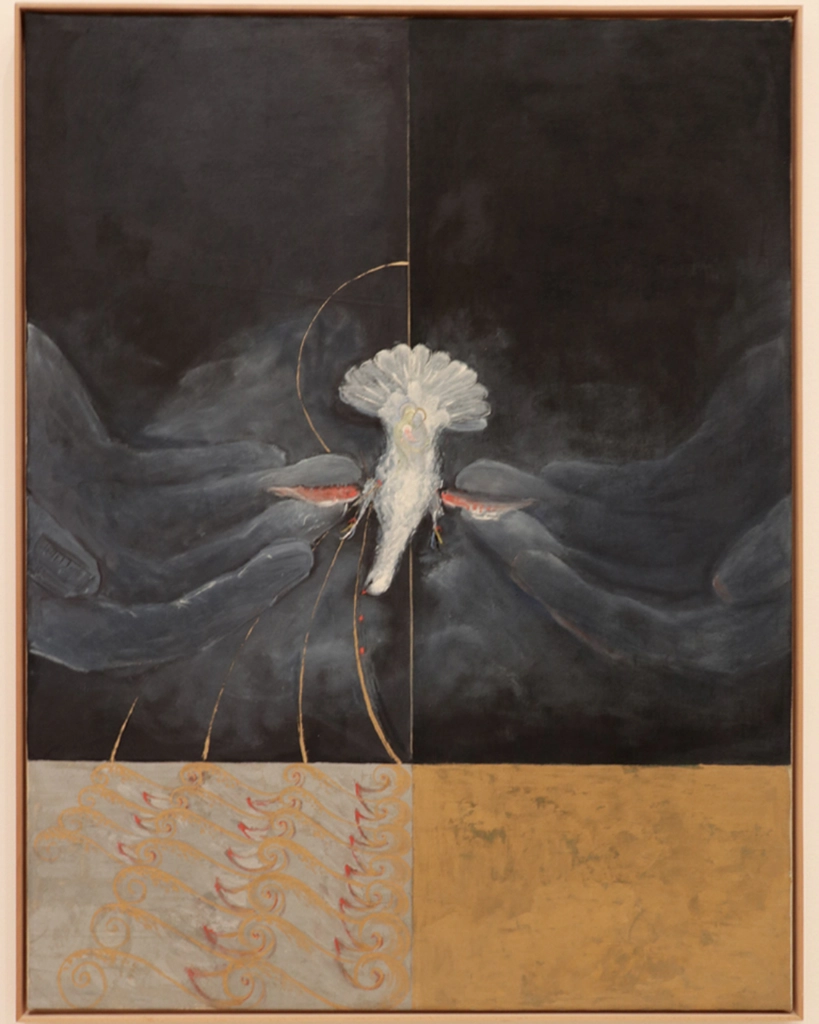
That origin story still unsettles the modern viewer. The contemporary art world is comfortable with theory, trauma, capital and irony. It becomes less comfortable when an artist says the work came through a spirit. Yet the paintings themselves resist dismissal. Their discipline is too strong. Their visual language is too precise. Whatever one believes about their source, the result is impossible to reduce to eccentricity.
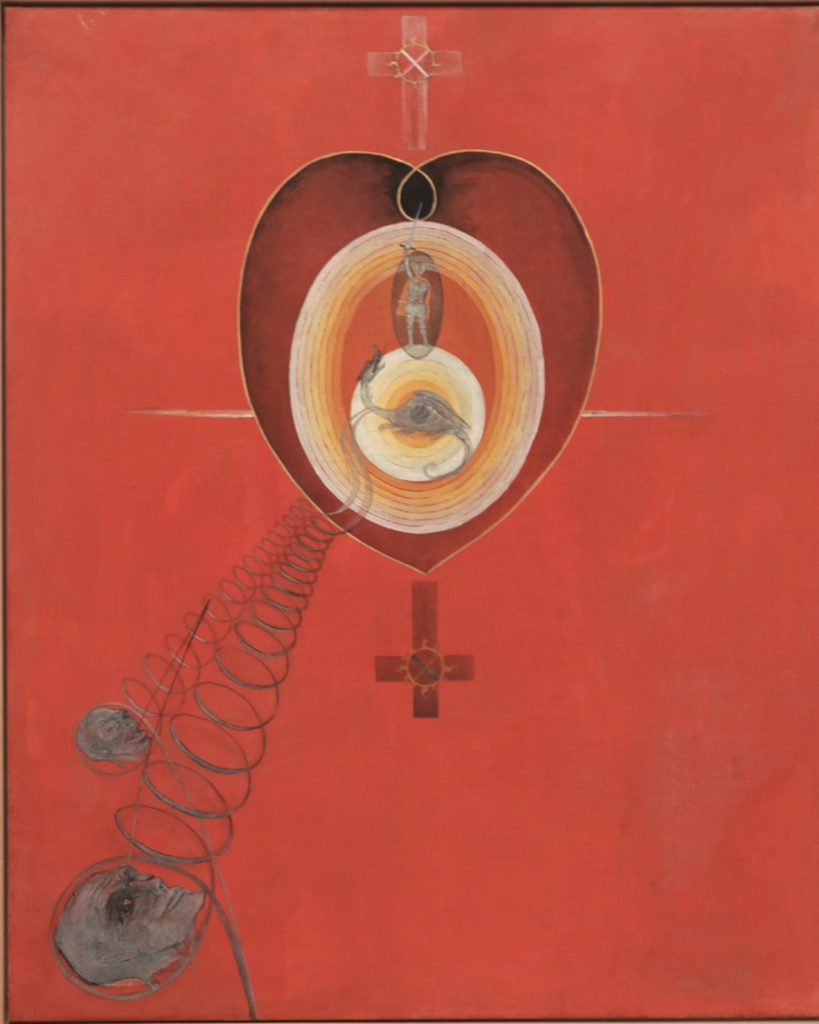
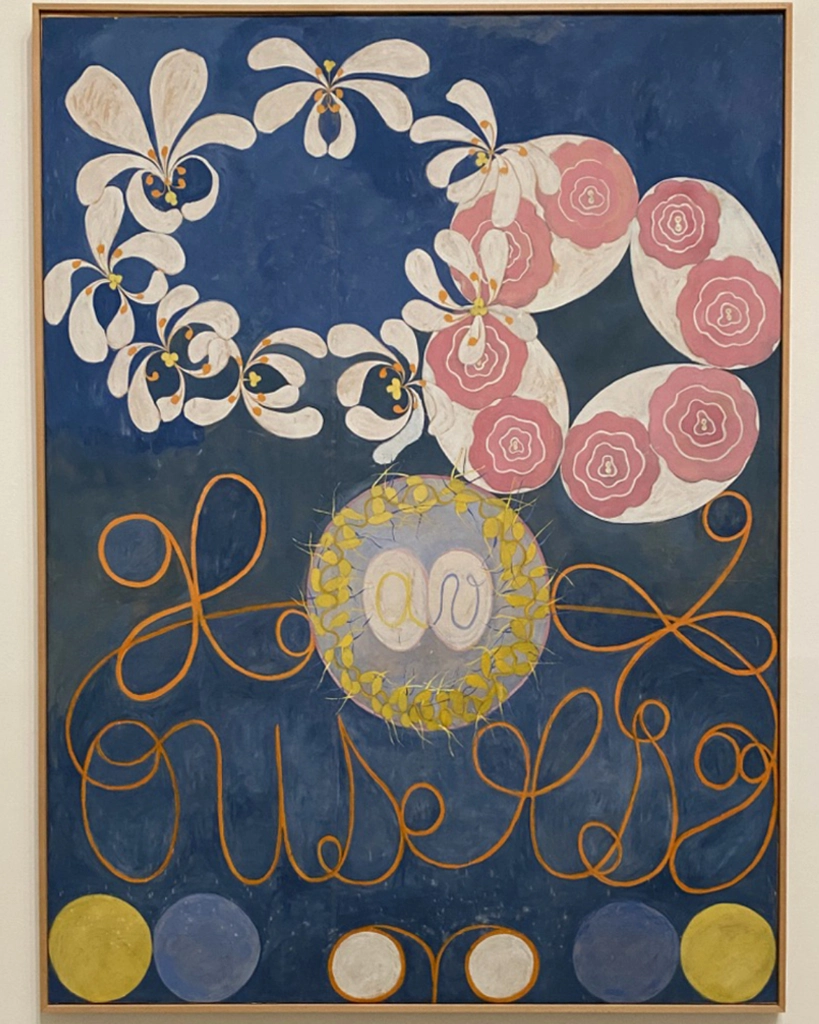
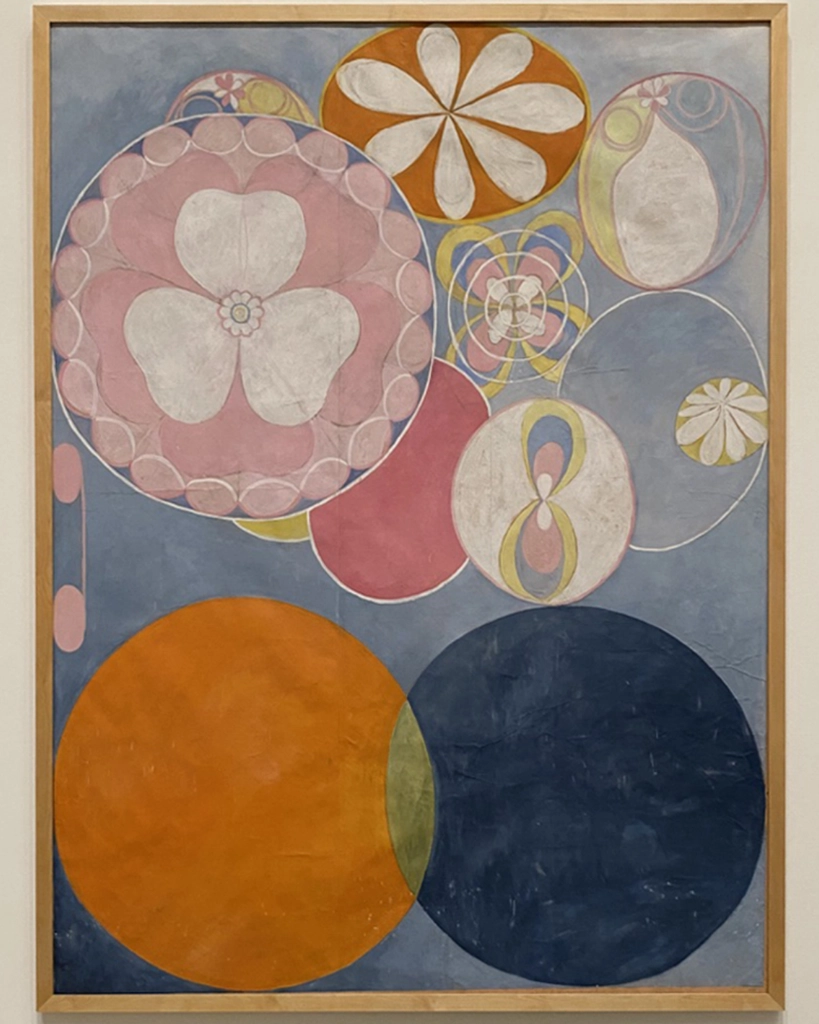
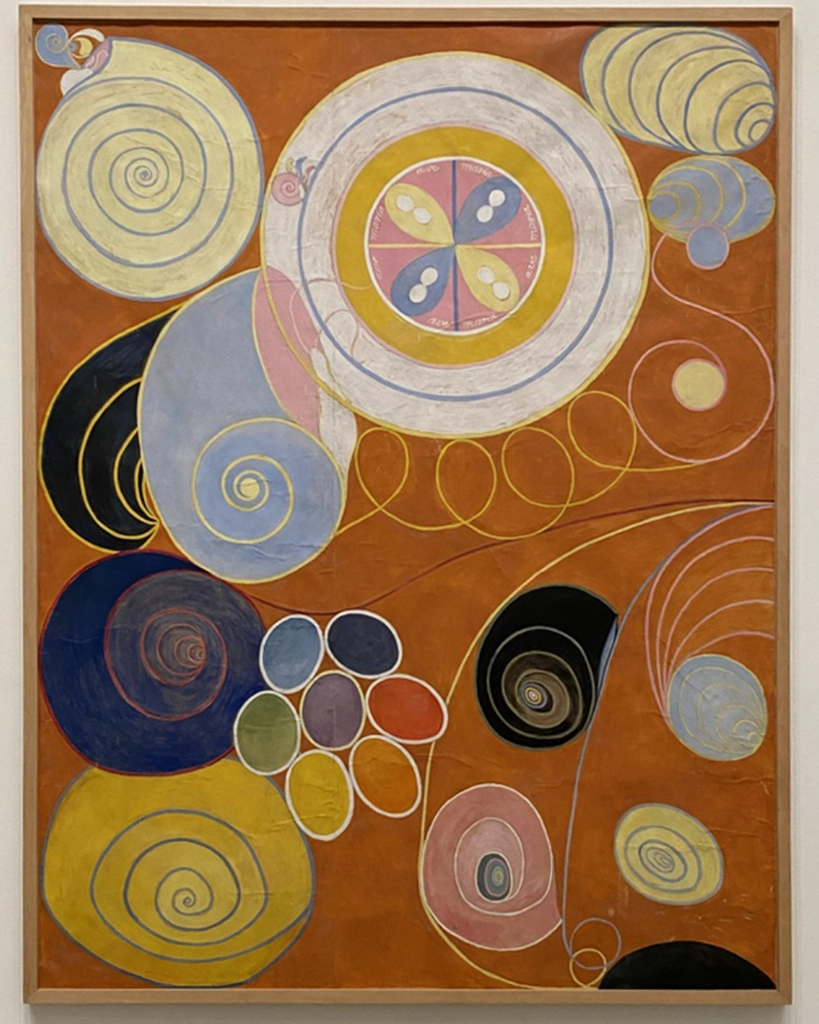
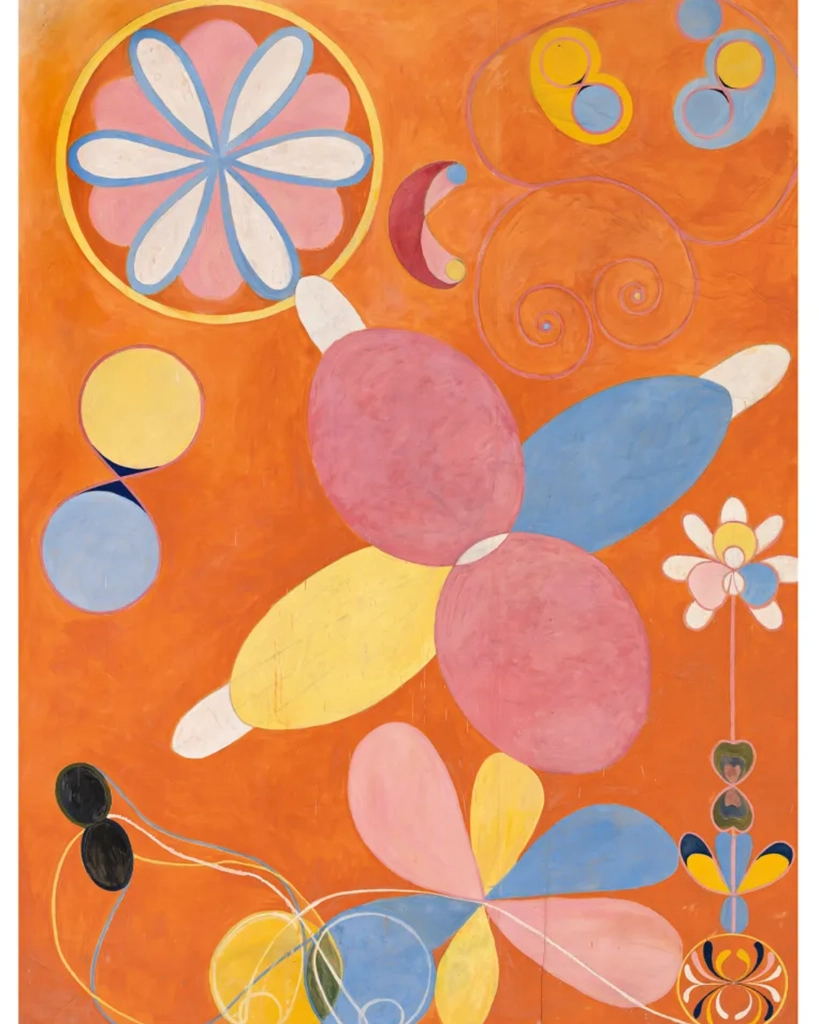
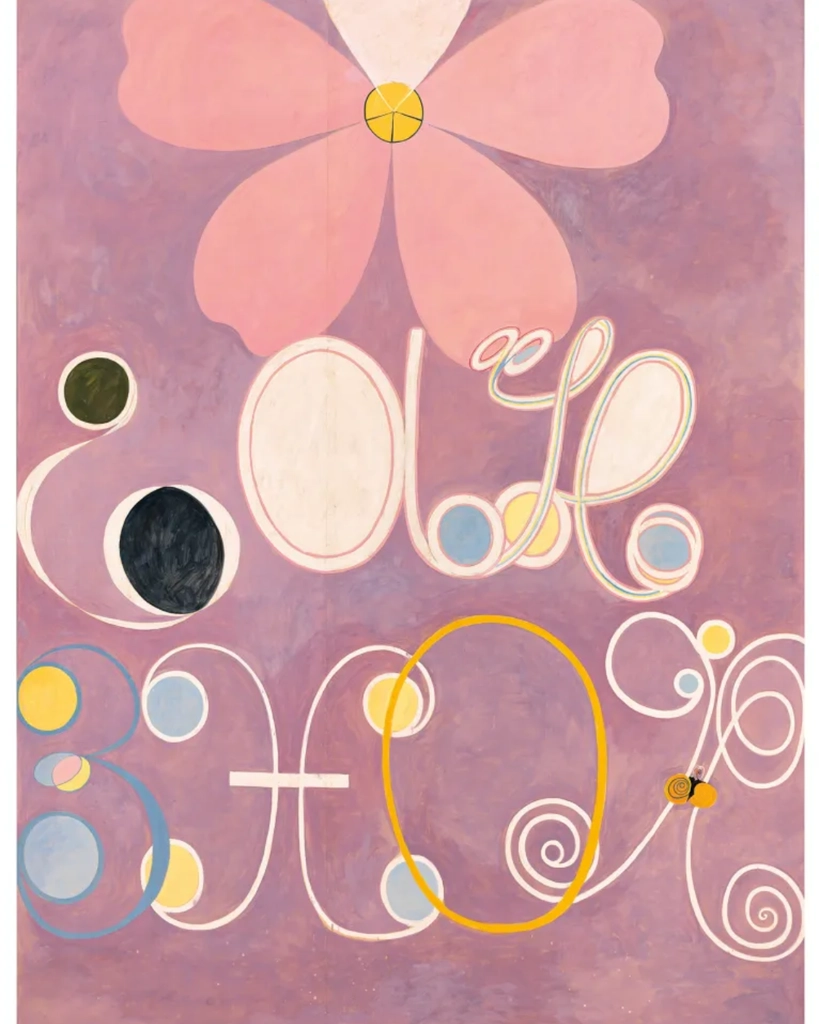
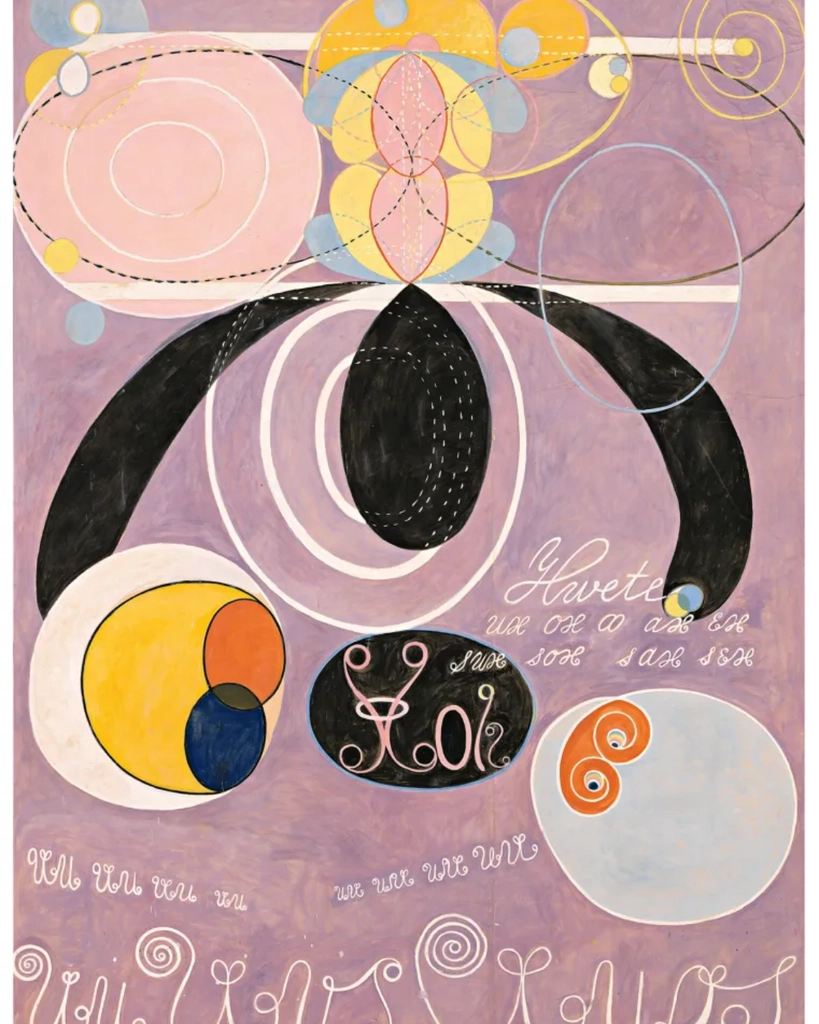
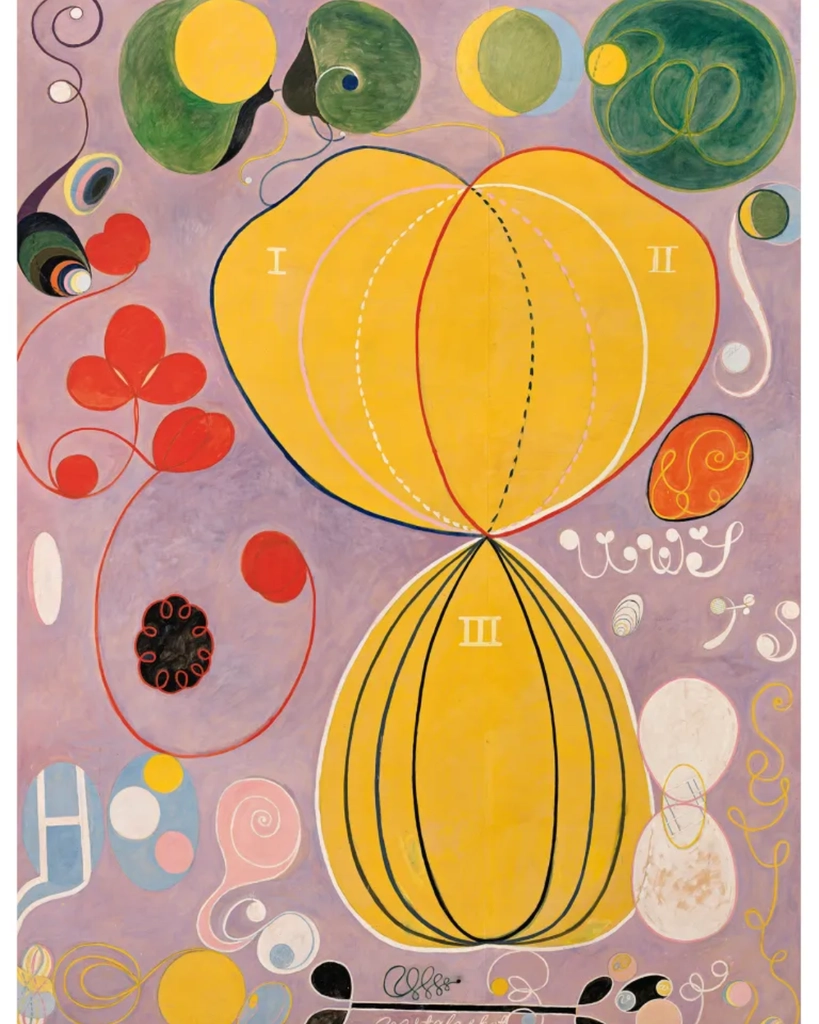
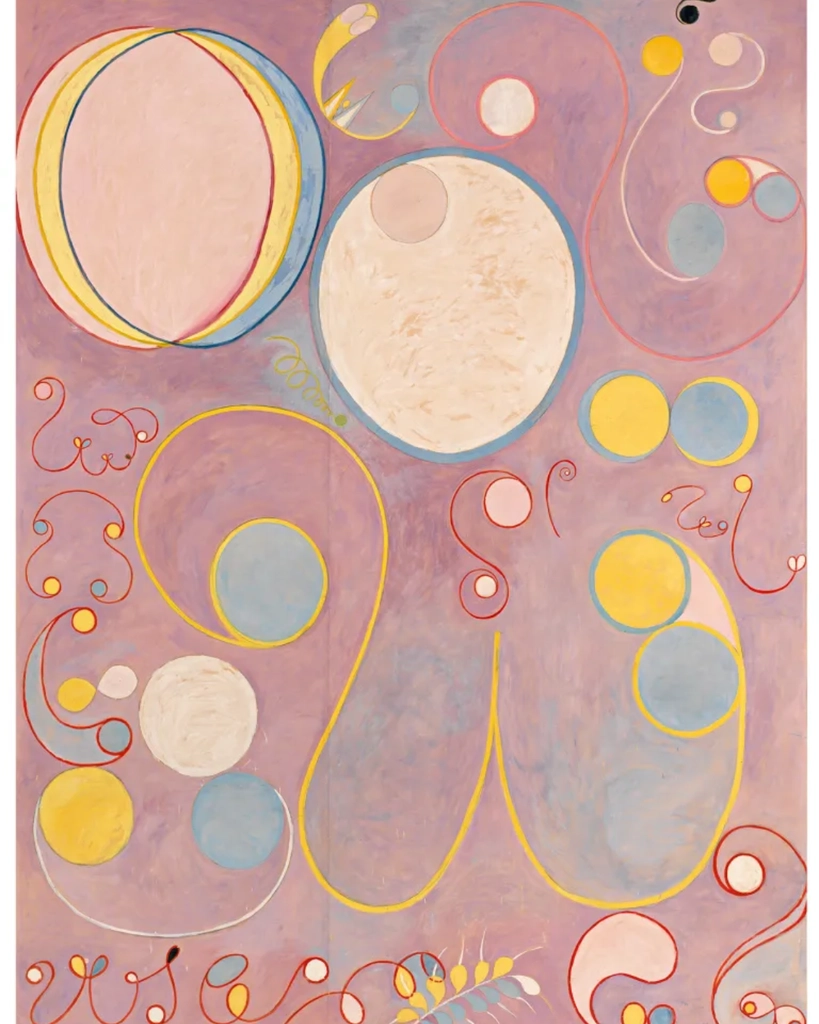
Among the many series within The Paintings for the Temple, The Ten Largest appears almost liberated from the ordinary boundaries of place and time. Across ten monumental canvases, soft pastel forms swirl and converge with cursive letters, creating the sensation of a visual poem in motion. Petals, ovaries, flowers, and spirals seem to pulse with an inner rhythm, as though each shape were caught in the charged moment of becoming. Hilma af Klint understood the series as an exploration of the human life cycle, moving from childhood and youth through adulthood and old age. Created between November and December 1907 on large sheets of paper later mounted onto canvas, the works reveal an ambition unusual for their time. Their scale also suggests that af Klint may have painted them directly on the studio floor, allowing the body, the hand, and the image to move together across a vast pictorial field.
The Temple That Had To Wait
The Paintings for the Temple was not imagined as a normal exhibition. Af Klint envisioned a spiral-shaped building where visitors would ascend through the works, moving upward through levels of spiritual understanding. The architecture was part of the artwork. The viewer was meant to walk, rise and transform.
The temple was never built in her lifetime.
Instead, the paintings were packed away. Af Klint knew the world around her was not ready. She left instructions that her abstract work should remain unseen until at least twenty years after her death. This was not modesty. It was strategy. She understood that early twentieth-century art history had little space for a woman who painted monumental abstraction through a fusion of science, spiritualism and private revelation.
She left behind more than 1,200 paintings, drawings and notebooks. For decades, they sat in crates, almost like a time capsule prepared for a future audience with better eyes.
When they finally emerged, they did more than add a missing woman to the story of abstraction. They broke the clock. The comfortable timeline, where abstraction begins with famous men and public manifestos, suddenly looked incomplete, even fragile.
The Blue Books And The Portable Museum
One of the most quietly astonishing details in af Klint’s story is her creation of the Blue Books. Since the monumental Temple paintings were difficult to transport, she made small, hand-painted replicas of the series inside ten blue volumes. They functioned like a private archive, a miniature museum she could carry with her.
There is something painfully beautiful in that image: a woman with a future too large for her present, carrying the proof under her arm.
She showed these works to figures such as Rudolf Steiner, hoping for recognition or guidance. Yet the response she received did not match the scale of what she had made. The paintings remained caught between revelation and refusal. They were too early, too strange, too female, too spiritual, too difficult to place.
History often calls such artists ahead of their time. The phrase sounds generous, but it hides a cruelty. Being ahead of one’s time often means being unread, unsupported and unseen while the time catches up at its own lazy pace.
The Spiral Finally Found Her
There is a poetic symmetry in what happened many decades later. Af Klint’s dream of a spiral temple never materialized, but her major 2018–2019 retrospective, Paintings for the Future, was held at the Solomon R. Guggenheim Museum in New York. Frank Lloyd Wright’s spiral ramp became, almost accidentally, the architecture she had imagined all along.
Visitors moved upward through her work, circling through color, scale, symbol and revelation. The temple arrived late, but it arrived.
That late arrival is now part of her myth. Hilma af Klint did not simply become visible because the art world became kinder. She became unavoidable because the paintings were too strong to remain obedient to the archive. They had waited, but they had not weakened.
Her legacy is not only that she painted abstraction before the men canonized for it. That fact matters, but it is only the entrance. Her deeper achievement lies in how she changed the purpose of abstraction itself. For af Klint, abstraction was not a retreat from reality. It was an attempt to make reality larger.
She painted what could not be seen but could be felt: polarity, vibration, birth, matter, spirit, harmony, ascension. She turned the canvas into a diagram of forces and the studio into a room where the future quietly rehearsed itself.
Art history once left her in the dark. The irony is that Hilma af Klint had been painting light all along.