MENU
Close





Who knew the grocery run could end in haute joaillerie. With Anabela Chan's Fruit Gems, beetroot, spirulina, blueberry, and dragon fruit slip out of the kitchen and into the jewel box, transformed into dazzling gem materials that make luxury feel wittier, fresher, and far more delicious than usual.
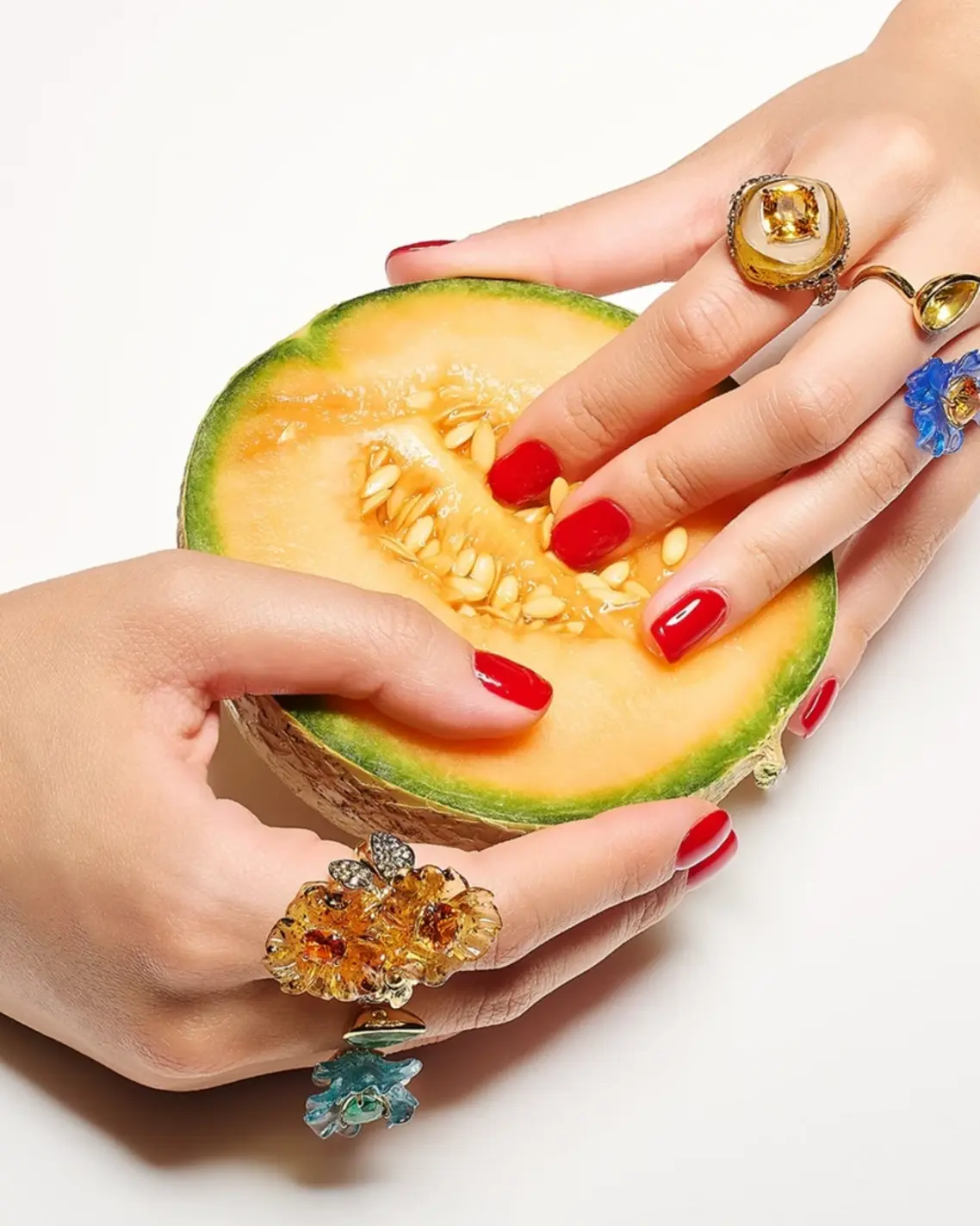
Who knew the grocery run could end in haute joaillerie. With Anabela Chan's Fruit Gems, beetroot, spirulina, blueberry, and dragon fruit slip out of the kitchen and into the jewel box, transformed into dazzling gem materials that make luxury feel wittier, fresher, and far more delicious than usual.
April 8, 2026


Plenty of fine jewelry brands enjoy talking about nature. Far fewer are willing to get specific enough to say beetroot, spirulina, plankton, blueberry, dragon fruit. Fewer still can turn those ingredients into gem materials that are cut, polished, set by hand, and then presented with the visual confidence of proper haute joaillerie.
That is what sets Anabela Chan's Fruit Gems apart. It carries the wit of a brilliant punchline and the house's long-running “Waste to Wonder” research, following the 2020 Blooms! collection made with recycled aluminium from soda cans and pushing that material experiment into a more ambitious terrain where chemistry, lapidary craft, and ornament all meet on equal terms.
The first pleasure of Anabela Chan's Fruit Gems is conceptual. Luxury usually prefers its raw materials with a healthy amount of myth, distance, and geological solemnity. Chan offers a different fantasy. Her source material begins in overripe produce, surplus colour, and the global absurdity of food waste. The brand frames the project around the fact that more than 40% of food produced and available in the West is discarded as excess, citing 9.5 million tonnes annually in the U.K. and 44 million tonnes going to landfill in the U.S. every year. That framing matters gives the collection real stakes. This is not “green” moodboarding in pastel packaging, but a luxury line built from the question of what society throws away and why beauty so often follows extractive logic.
What keeps the idea from becoming preachy is the colour. Chan understands that sustainability without seduction feels like homework in expensive lighting. So Anabela Chan's Fruit Gems goes full peacock. Betalains from beetroot and dragon fruit deliver reds and purples, anthocyanins bring electric blues from blueberries and spirulina, chlorophyll gives lush greens from spinach and plankton, while flavonoids and carotenoids produce bright yellows and oranges from ingredients such as lemon and carrots. Chan offers spectacle first, then lets ethics shimmer into view.
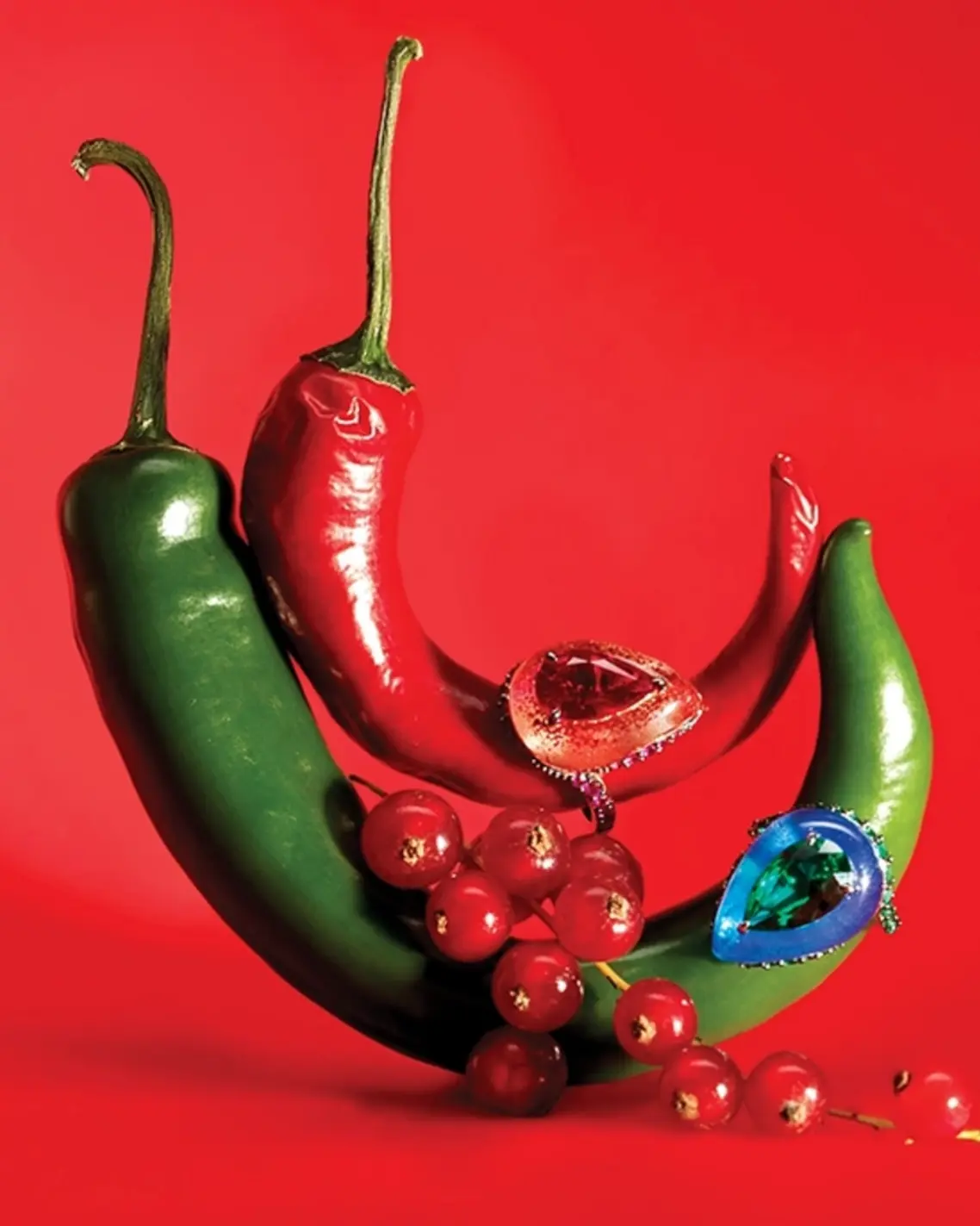
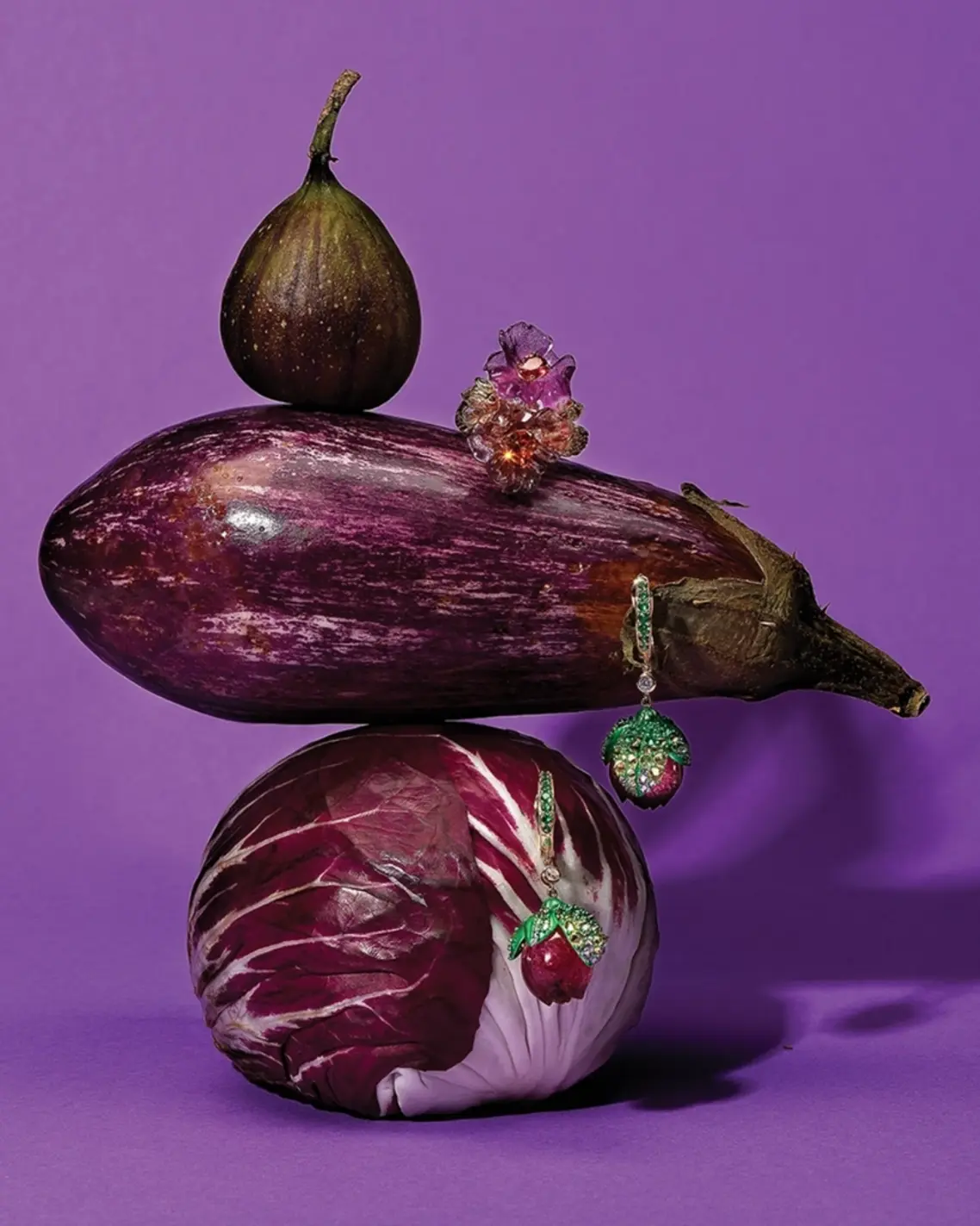
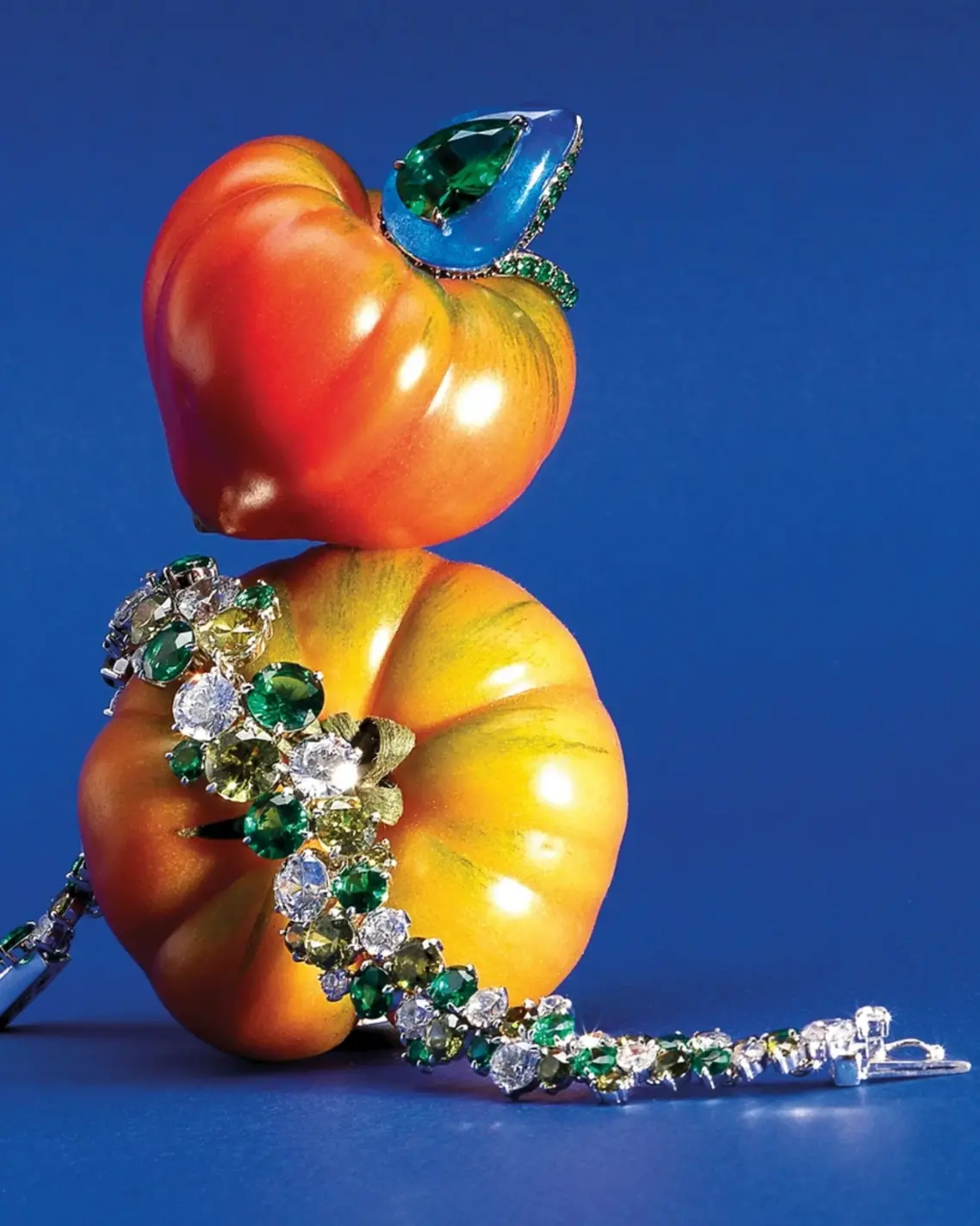
The technical story behind Anabela Chan's Fruit Gems is where the collection shifts from clever to genuinely formidable. According to the brand and trade coverage, the project took more than three years of research and development, with the atelier experimenting across numerous fruits and vegetables before arriving at the strongest results. The methodology blends ancient pigment traditions with material science. Organic matter is processed through stages such as crushing, grinding, simmering, straining, air-drying, and freeze-drying, then stabilised into a plant-based bio-resin derived from renewable sources including corn, soybean, agave, and avocado seeds. The process sounds half apothecary, half laboratory.
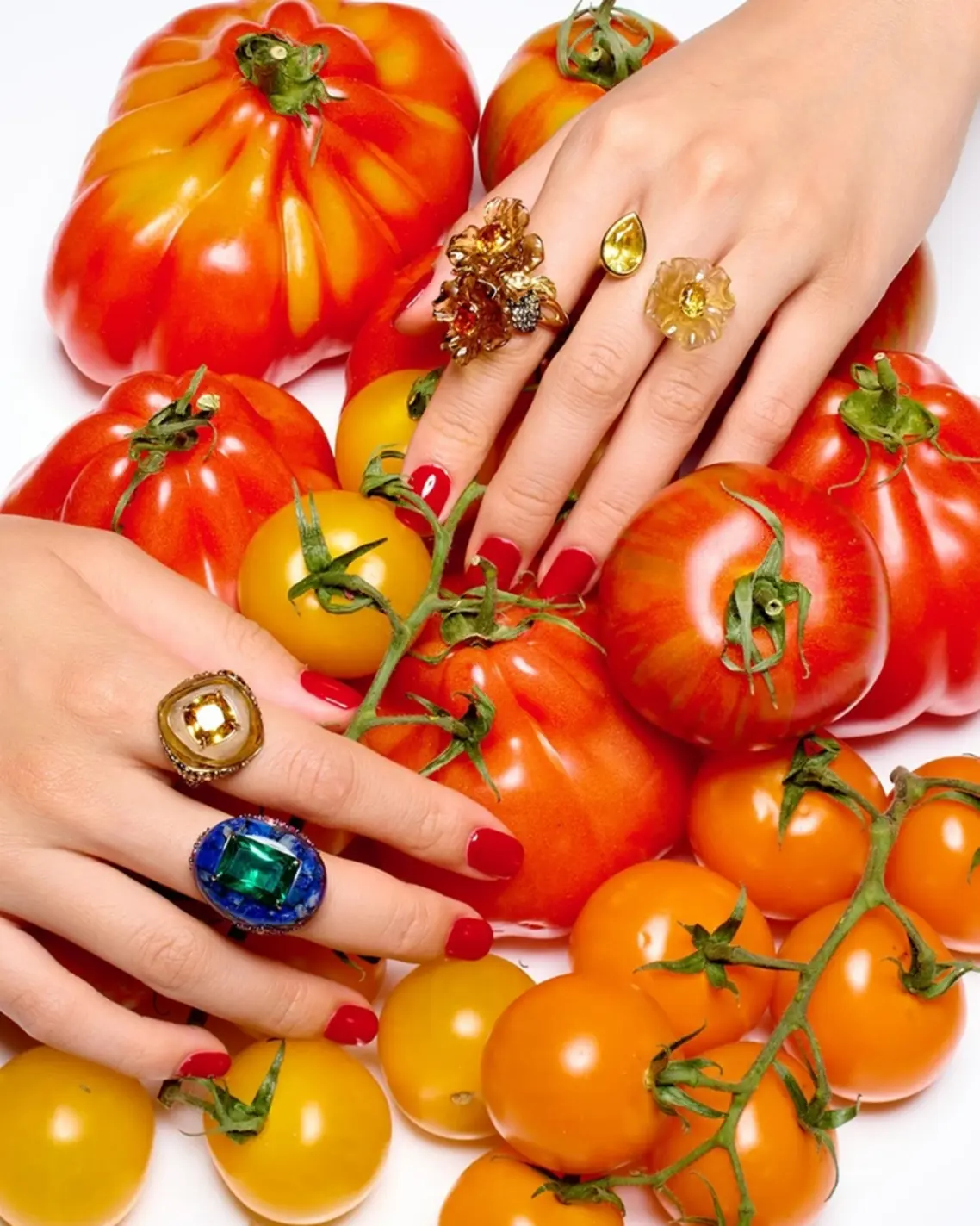
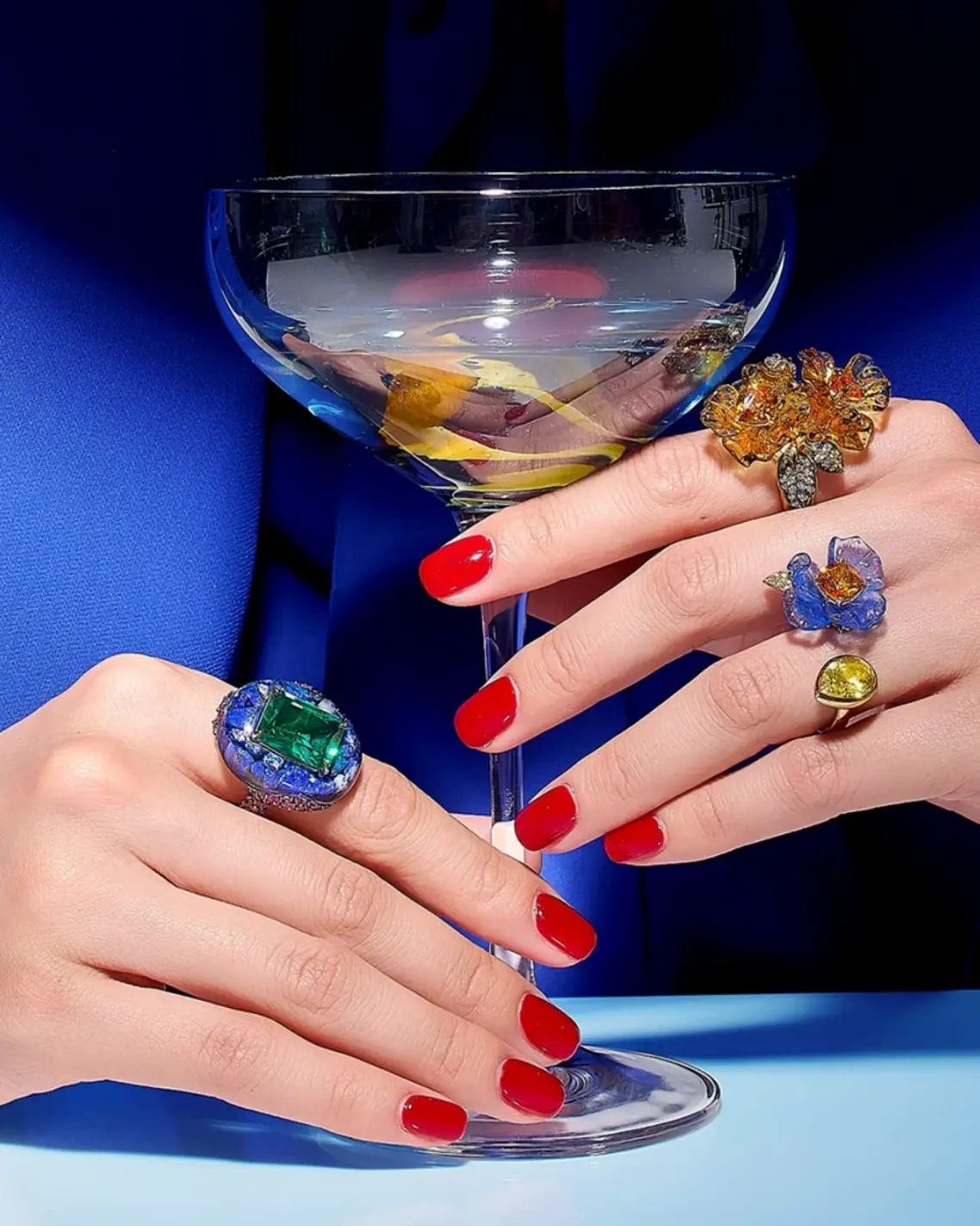
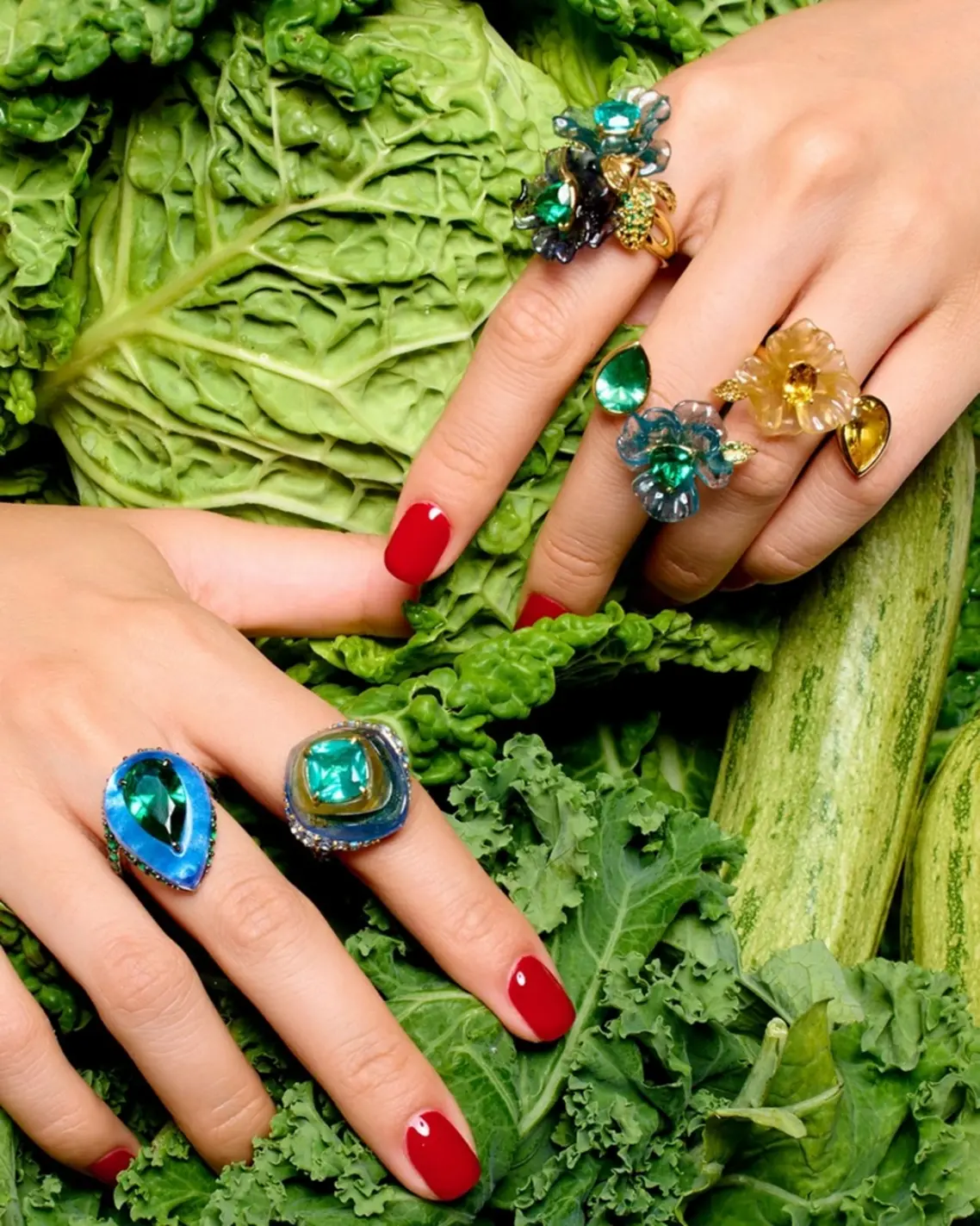
Then comes the truly chic part: Chan treats the resulting material like gemstone rough rather than decorative gimmick. The official innovation materials state that Fruit Gems and Regenerative Gemstones can be cut, faceted, and polished the same way as natural gemstones, with the additional ability to be cast into forms “like molten metals.” That flexibility explains the collection’s odd sense of freedom. Traditional gemstones often demand reverence for their natural form. Fruit Gems behaves more like an invented species with a better publicist. It can become droplets, flowers, sugarloaf cabochons, layered forms, even puffy hearts. In other words, the material itself expands the design vocabulary. Chan is not merely swapping one source for another, she is changing what a gemstone can do aesthetically.
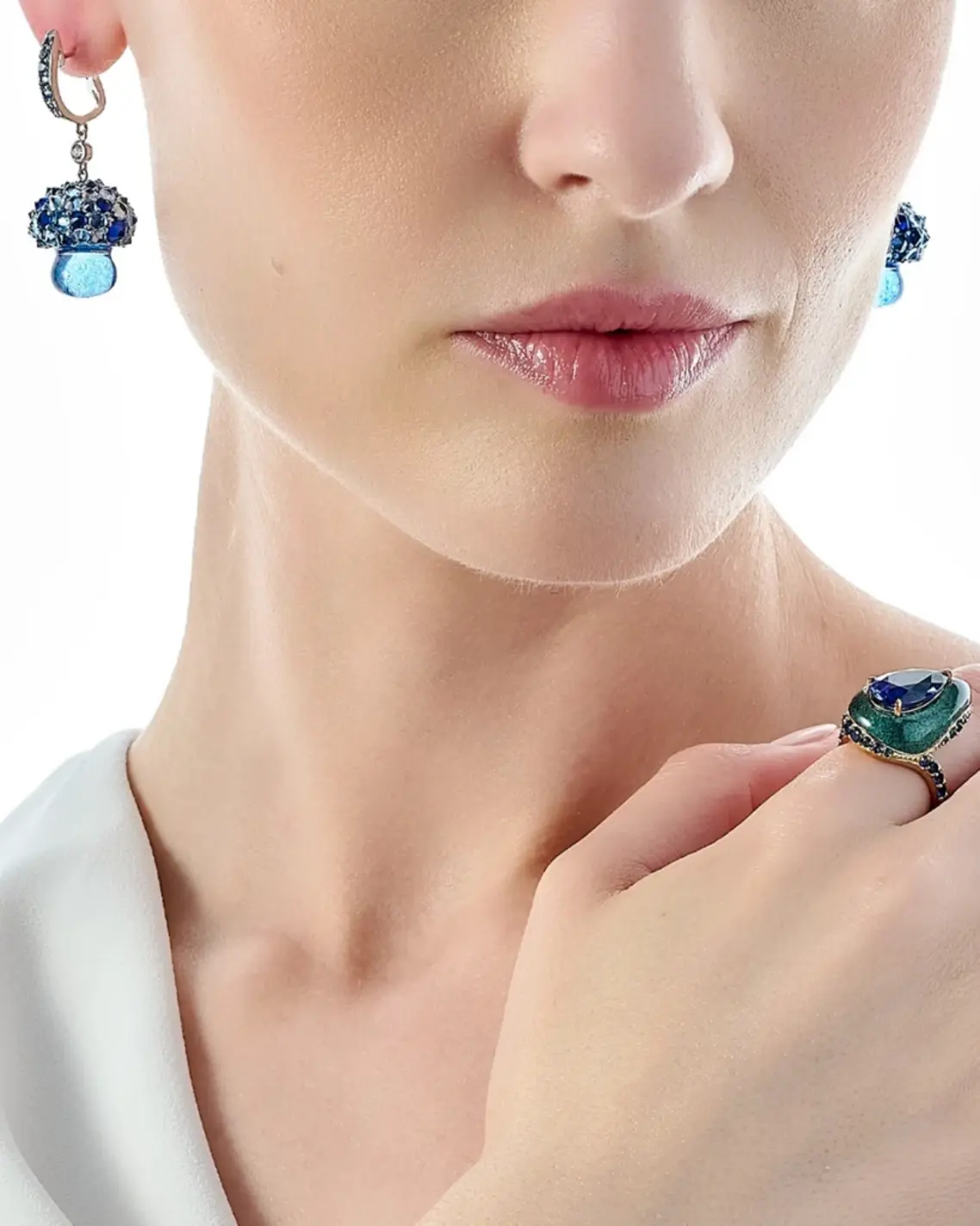
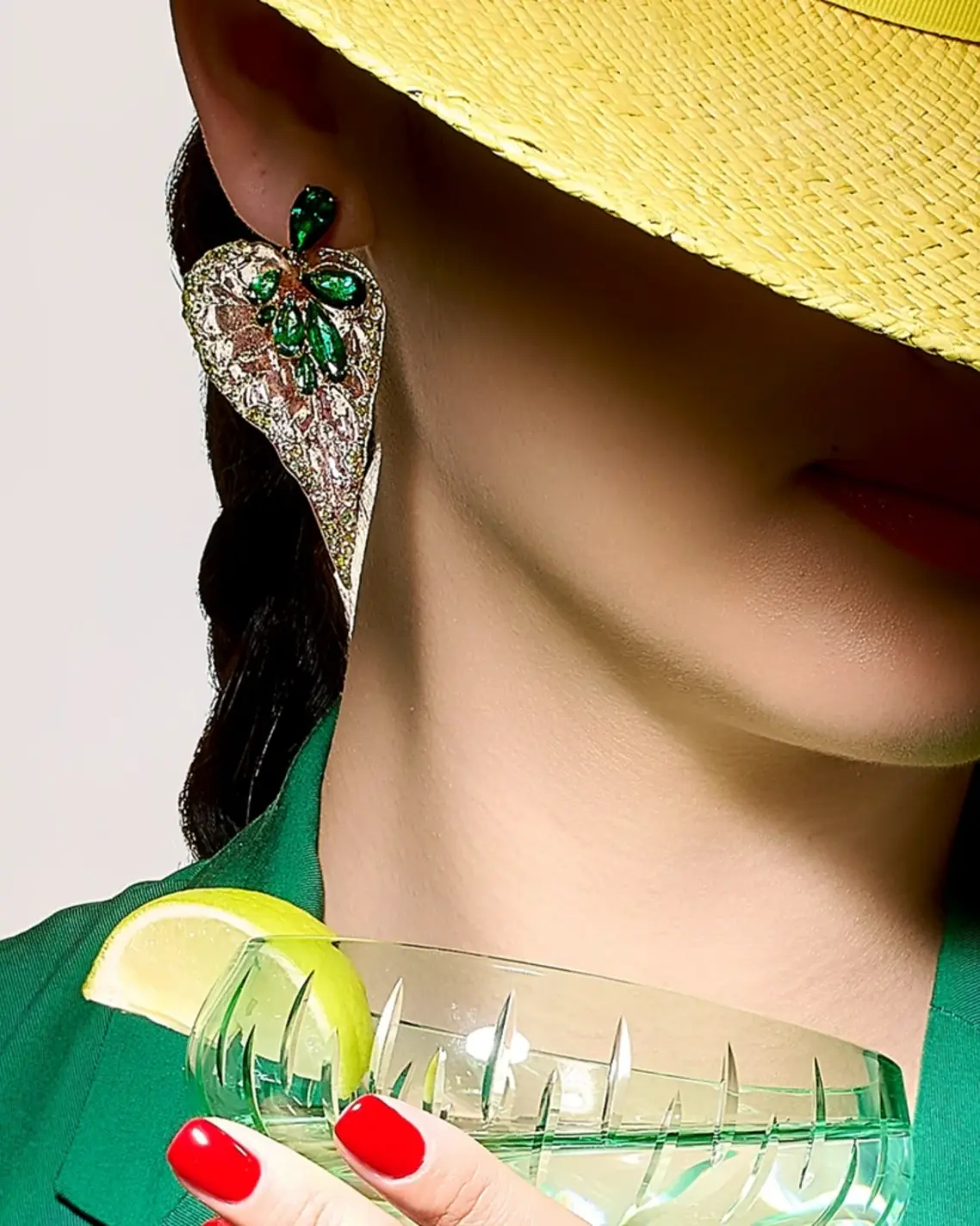
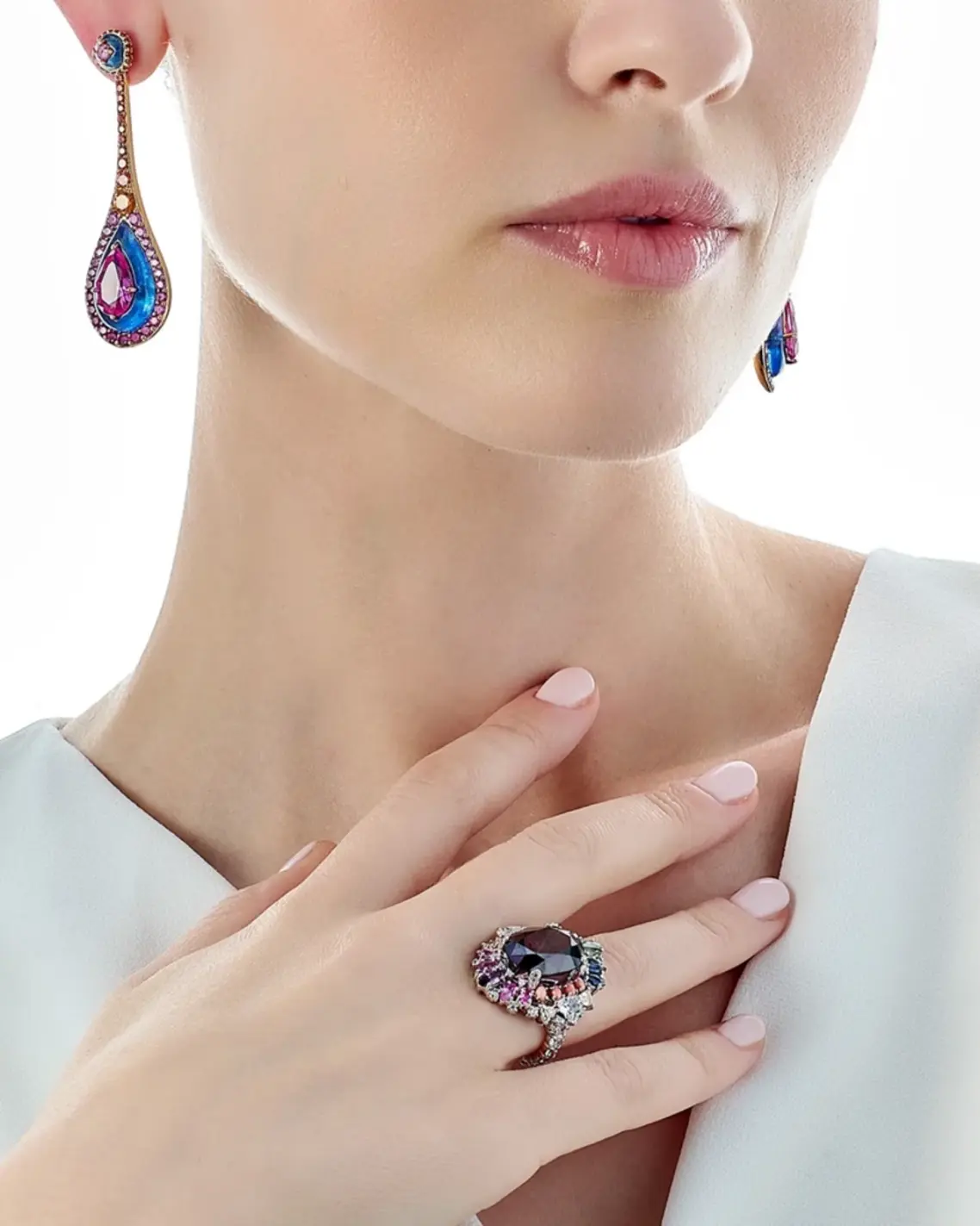
Anabela Chan's Fruit Gems would already be a strong idea on its own, yet Chan makes the collection richer by folding in Regenerative Gemstones. These materials use lapidary off-cuts, the forgotten fragments left behind by conventional stone cutting, and reconstruct them with bio-resin into new ornamental gems. Official brand materials describe regenerated rose quartz, amethyst, malachite, turquoise, chalcedony, and lapis lazuli, alongside a reimagined amber infused with preserved autumn leaves and twigs. That last detail is especially good. Amber has always carried the romance of suspended time. Chan gives it a contemporary sequel by building that romance through deliberate reconstruction rather than ancient accidents.
The individual pieces show how elegantly that thinking translates into design.
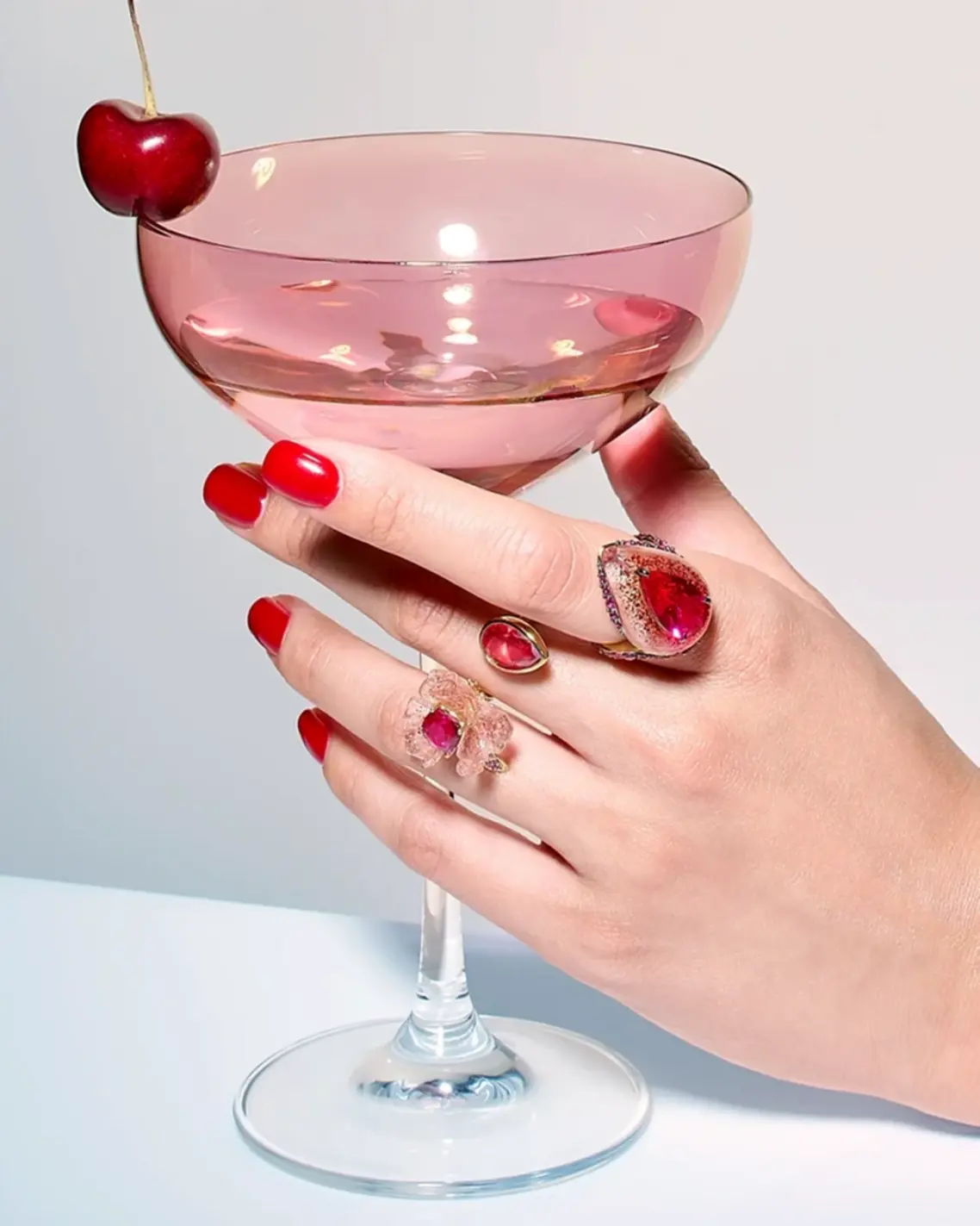
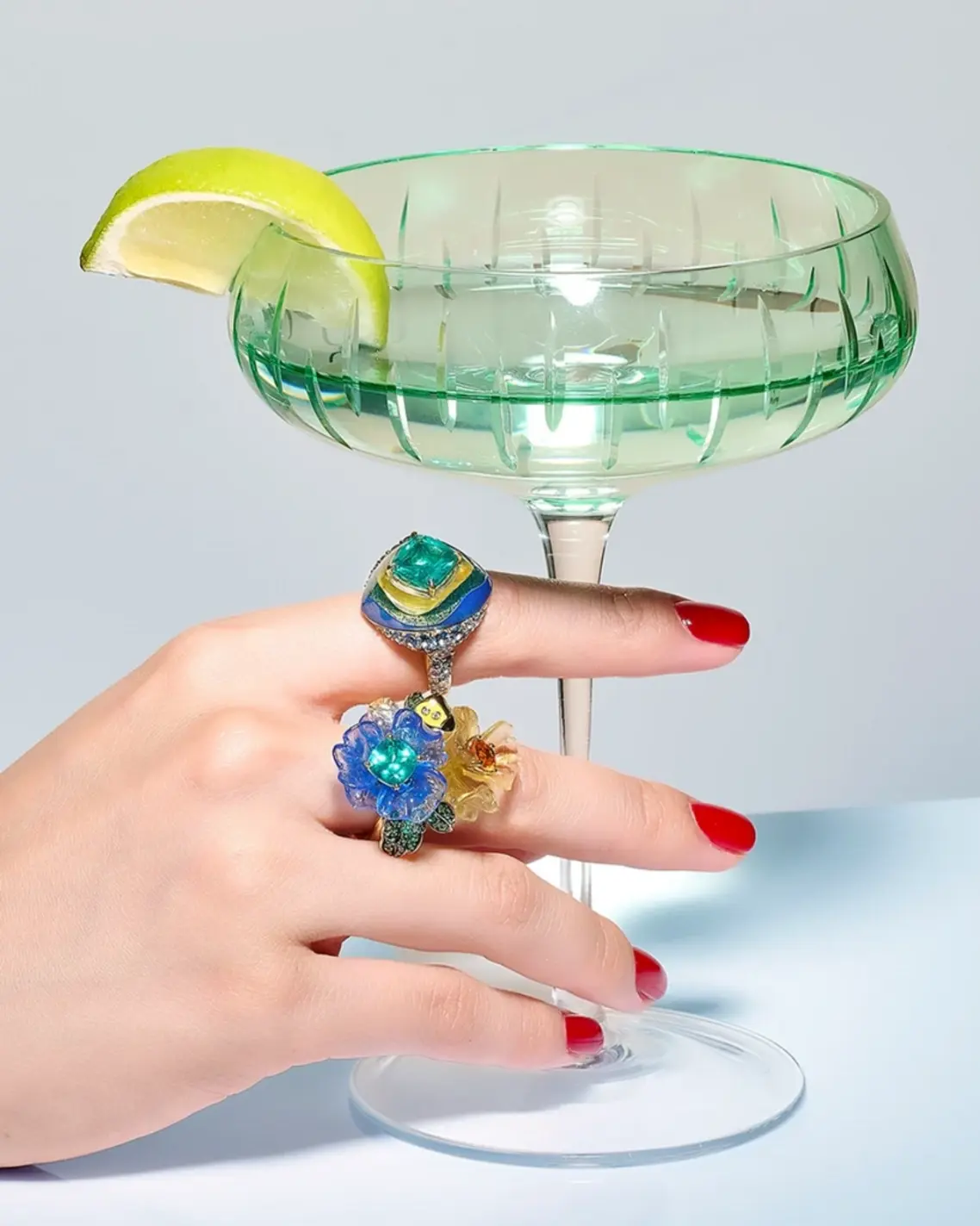
The Ruby Beetroot Elixir Ring is perhaps the clearest example of this material strategy. By concentrating Betalains extracted from beetroot, the piece achieves a dense, velvety crimson with a natural translucency that evokes the allure historically associated with the most coveted rubies. The design carries a certain irreverence as well. A common garden root, transformed through intellectual labour and technical refinement, arrives at the same emotional register as one of the luxury world’s most mythologized gems. The ring therefore becomes more than a beautiful object. It becomes a direct commentary on how prestige is assigned.
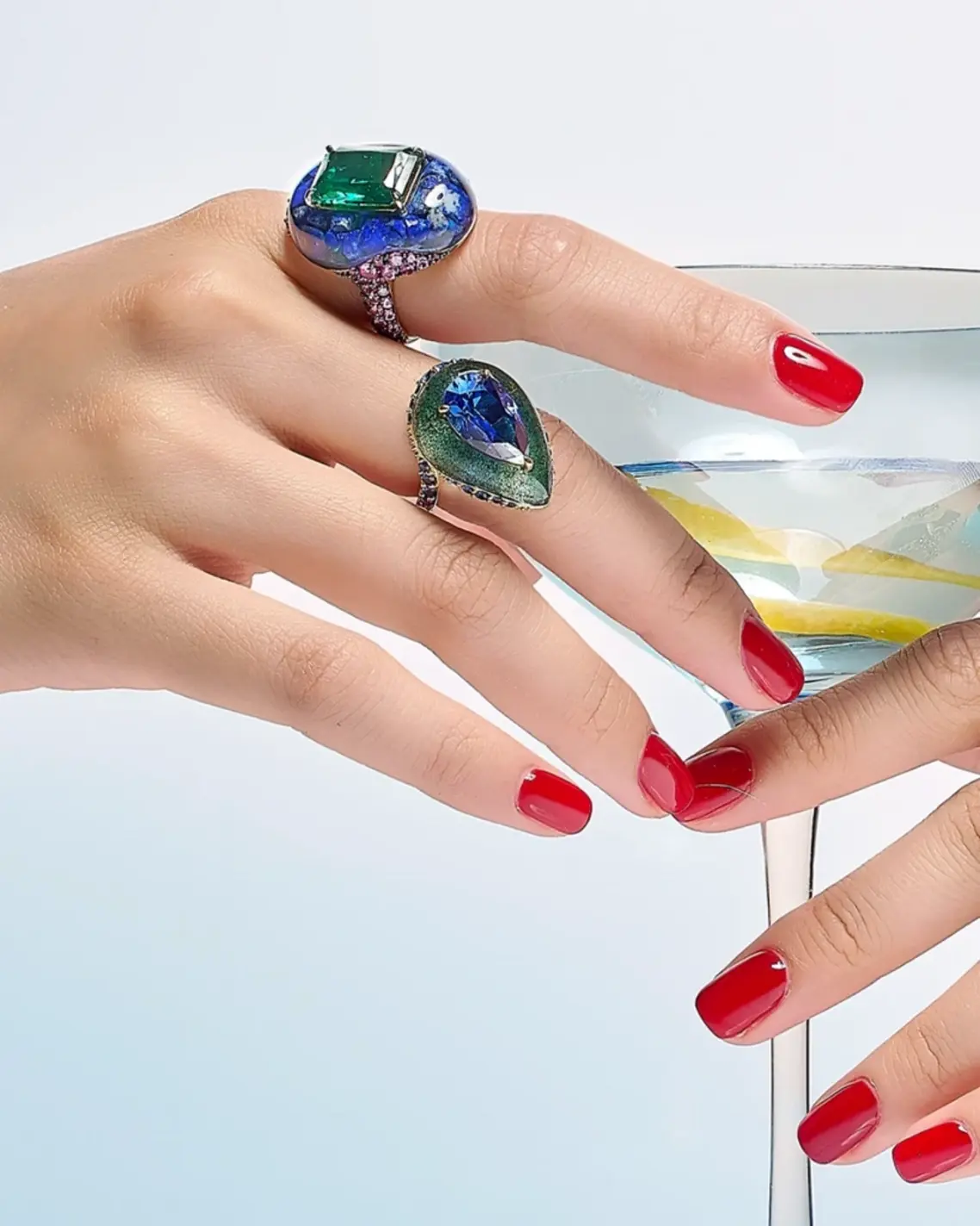
The Ocean Sugarloaf Ring is arguably the collection’s most technically layered creation. Its composition draws on a synthesis of spinach, blue spirulina, and green plankton, allowing multiple green-blue tonalities to coexist within a single stone. This internal layering gives the gem an atmospheric quality, almost as though colour has been suspended in strata. The chosen sugarloaf cut heightens that effect beautifully. With its high-domed surface and faceted sides, the form amplifies the interior landscape of the material rather than flattening it. The stone appears less like a single block of colour and more like a preserved marine environment, a polished slice of deep water held in gold.
The Regenerative Autumn Amber pieces take the collection in a different direction, one that feels almost museological. Here, Chan reimagines amber as a contemporary archive rather than a prehistoric relic. The resin is infused with actual autumn leaves and twigs, turning the jewel into a time capsule of present-day organic life. The effect is poetic and slightly haunting. It leans into an aesthetic of curated isolation, where fragments of the overlooked and the decaying are suspended and made permanent. On the body, these pieces evoke the intimacy of a natural history specimen translated into ornament.
The collection’s scale also helps explain its impact. Trade coverage described Fruit Gems in 2025 as a line of nearly 40 pieces, featuring multiple Anabela Chan's Fruit Gems and Regenerative Gemstones across rings, earrings, and related designs. This impressive number proves Chan was building a language, not tossing out a novelty capsule. The visual language is consistent too: Petunia flowers, elixir droplets, sugarloaf shapes, saturated colour, and a balance between 18k gold vermeil, black rhodium finishes, anodised aluminium, and laboratory-grown accent stones. Nothing about it feels apologetic. Many sustainability-led collections arrive wearing beige, metaphorically speaking. Anabela Chan's Fruit Gems arrives dressed for a maximalist summer wedding and somehow still carries a philosophical thesis inside its clutch. That mix of exuberance and intelligence is rare.
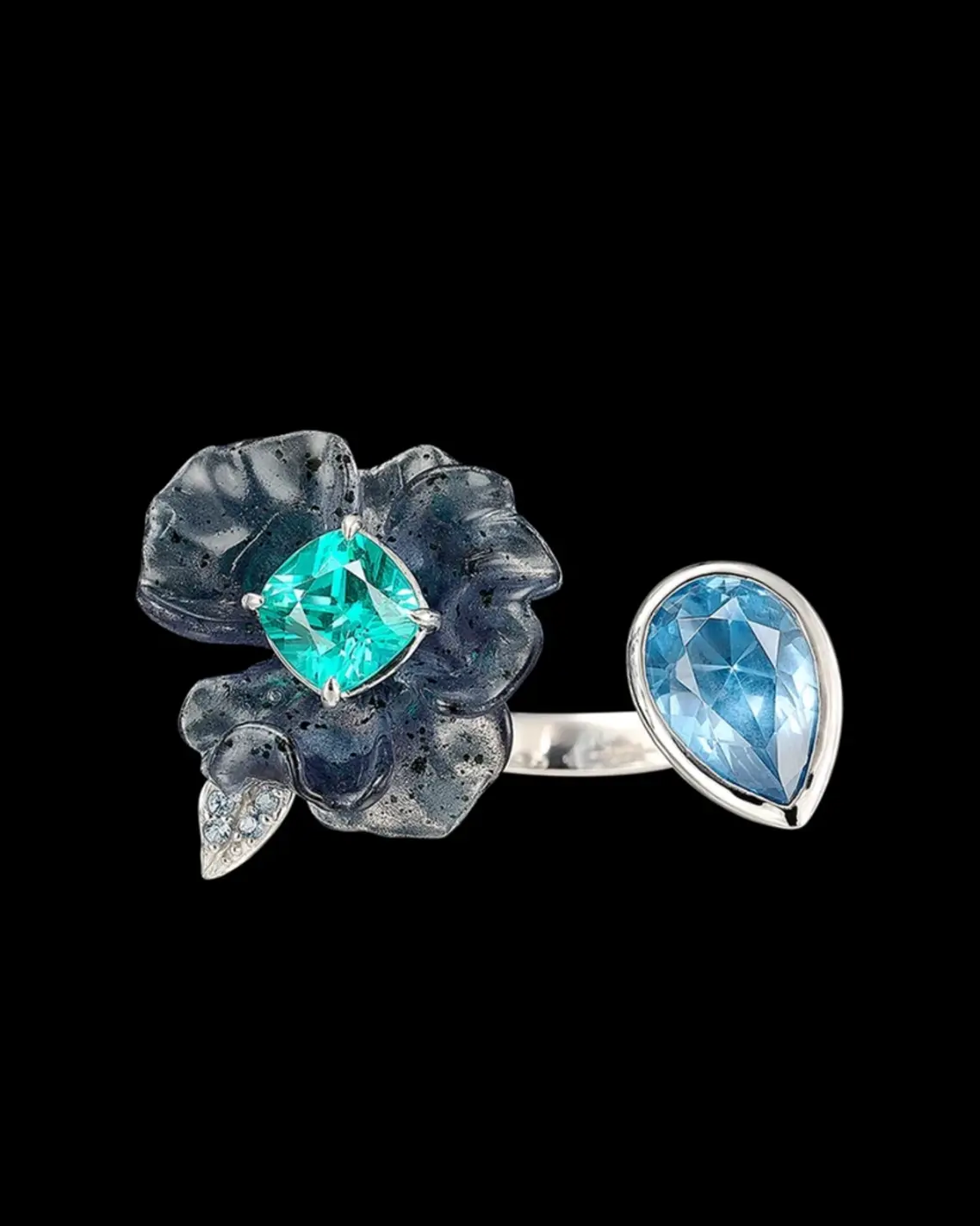
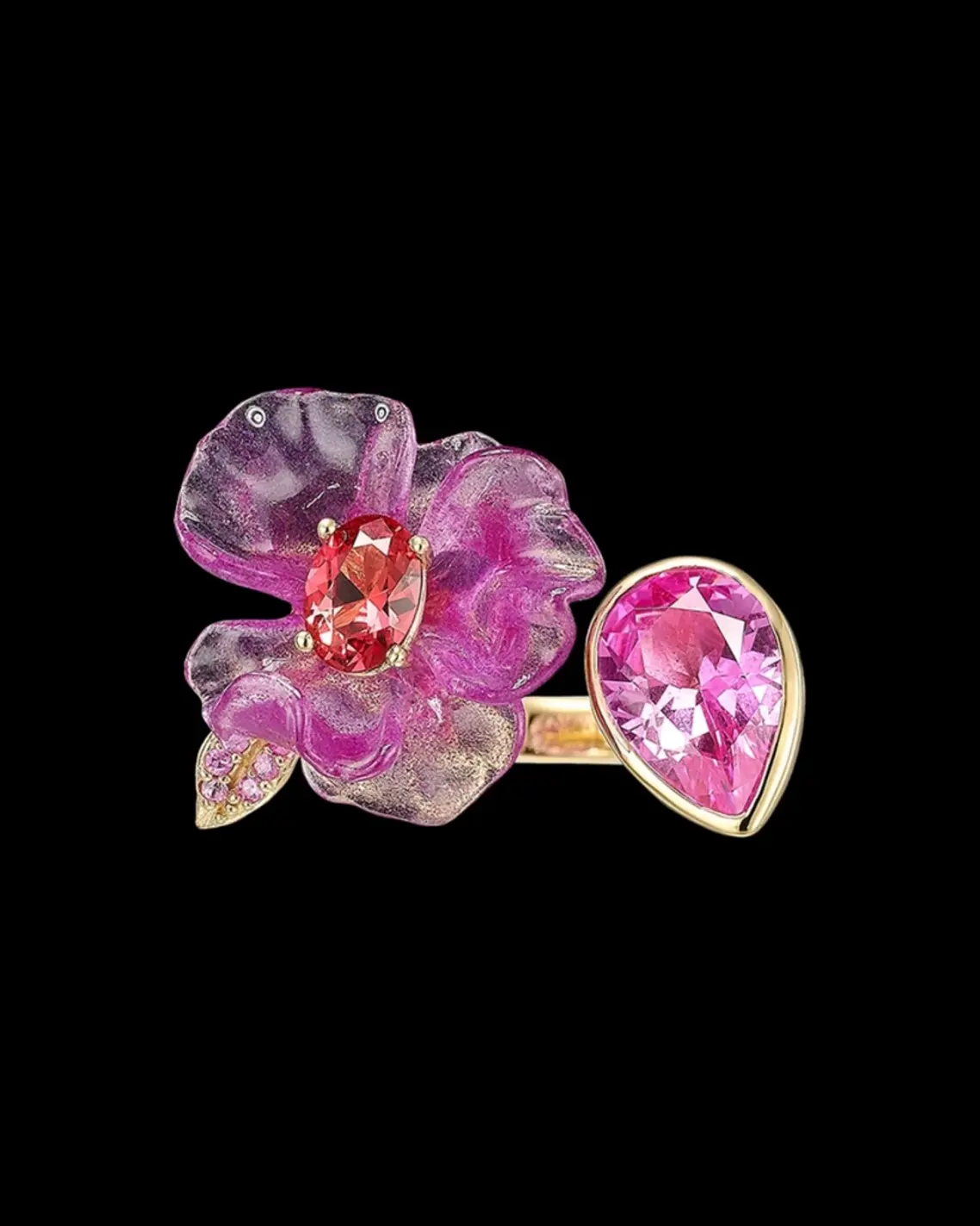
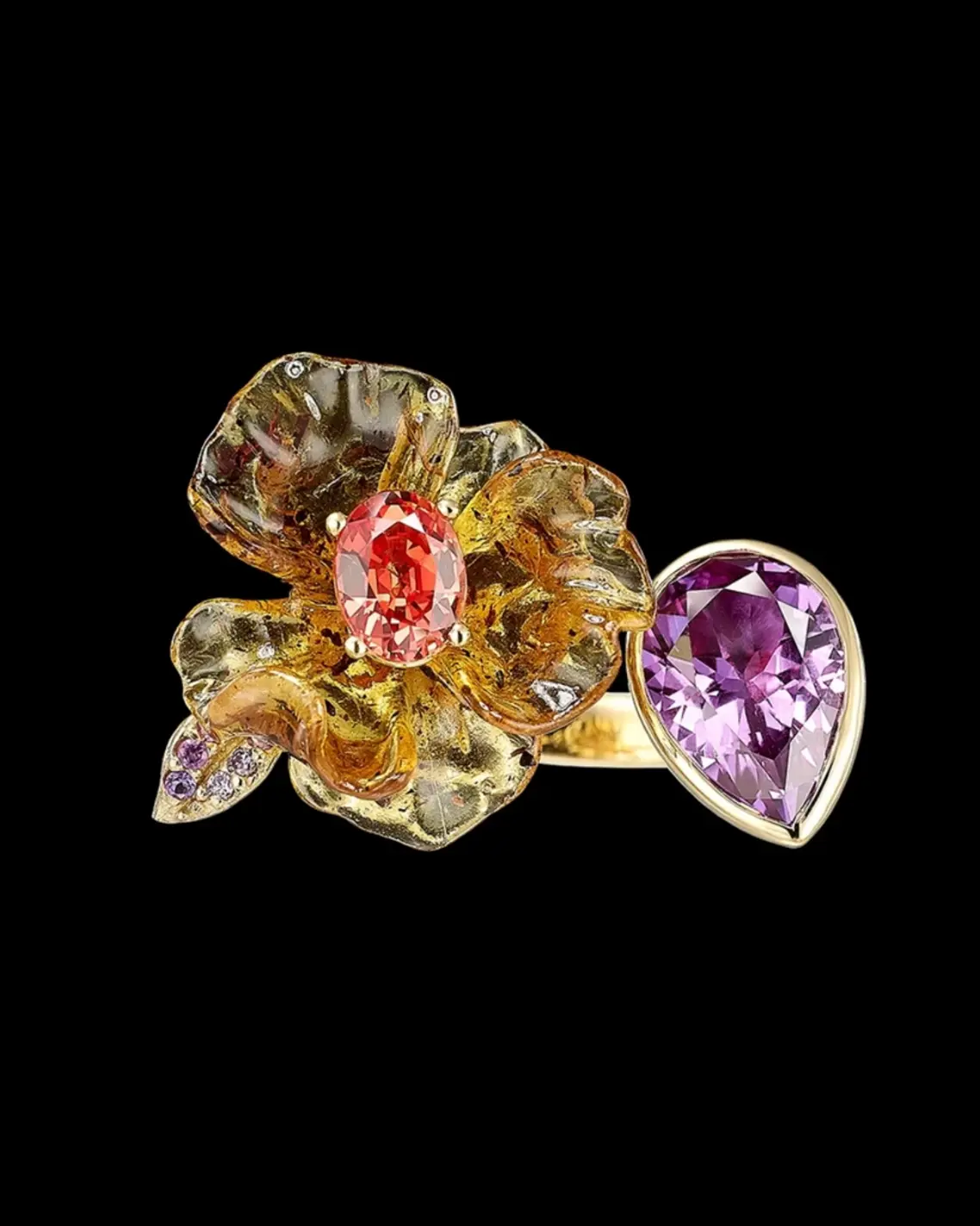
Its social positioning strengthens that impression. The official AC Harvest Initiative states that 10% of proceeds from Fruit Gems creations go to Heifer International and Seeds for Growth U.K. Meanwhile, the brand’s innovation pages frame its laboratory-grown and reconstructed materials around no mining, no excavation, and a significantly lower environmental impact than mined gemstones. In editorial terms, this places Fruit Gems neatly within the wider movement toward slower, more restorative forms of prestige, where value comes from ingenuity, transparency, and craft rather than simple extraction. Yet the collection never loses sight of pleasure. Chan understands a basic truth of fashion and jewellery: People may admire ethics, but they fall in love with desire. Anabela Chan'sFruit Gems succeeds because they manage both. It gives morality a better silhouette. This is ethical jewelry at its finest.