MENU
Close





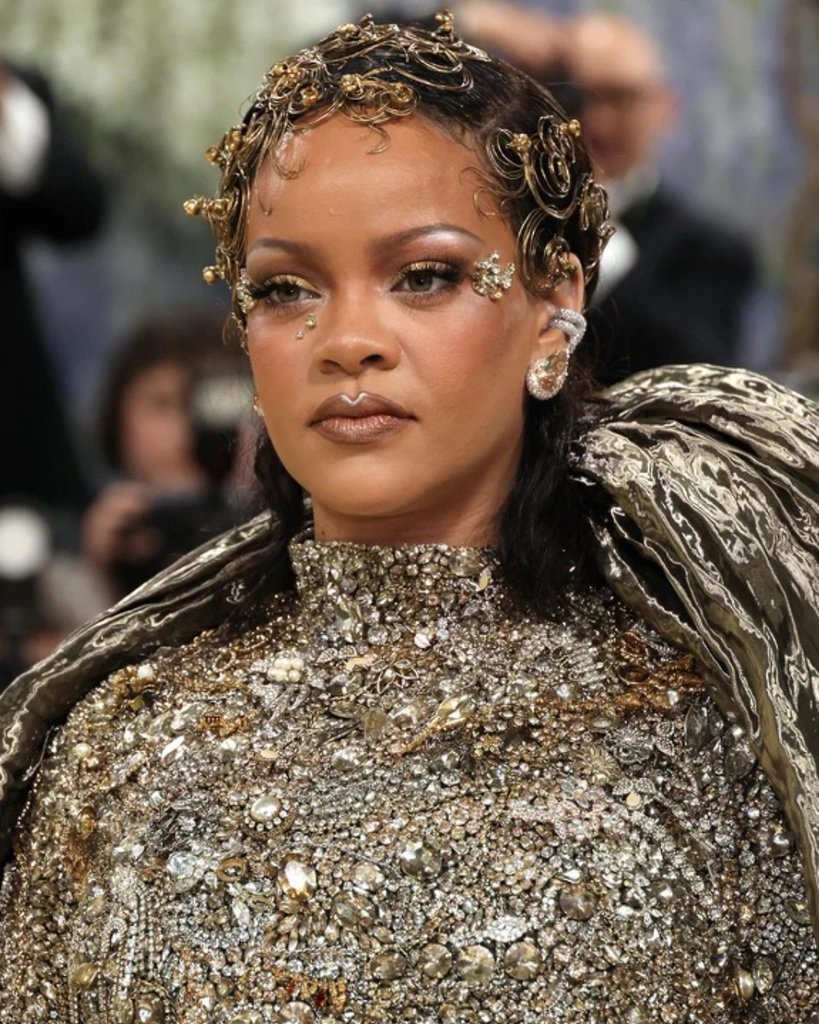
Camera flash is blinding on these Met Gala jewelry pieces. Beneath the impressive spark lies an even better story about heritage, couture, craftsmanship and style. Ready to dive in?
Camera flash is blinding on these Met Gala jewelry pieces. Beneath the impressive spark lies an even better story about heritage, couture, craftsmanship and style. Ready to dive in?
May 4, 2026


The finest Met Gala jewelry moments transformed the red carpet into a gallery of diamonds, serpents, skeletons and sculptural collars. Beyoncé returned in Chopard’s Garden of Kalahari, Rihanna chose rare Golconda diamonds, Lisa turned Bulgari Serpenti into body theatre, and Anne Hathaway made the bold collar necklace feel divine again.
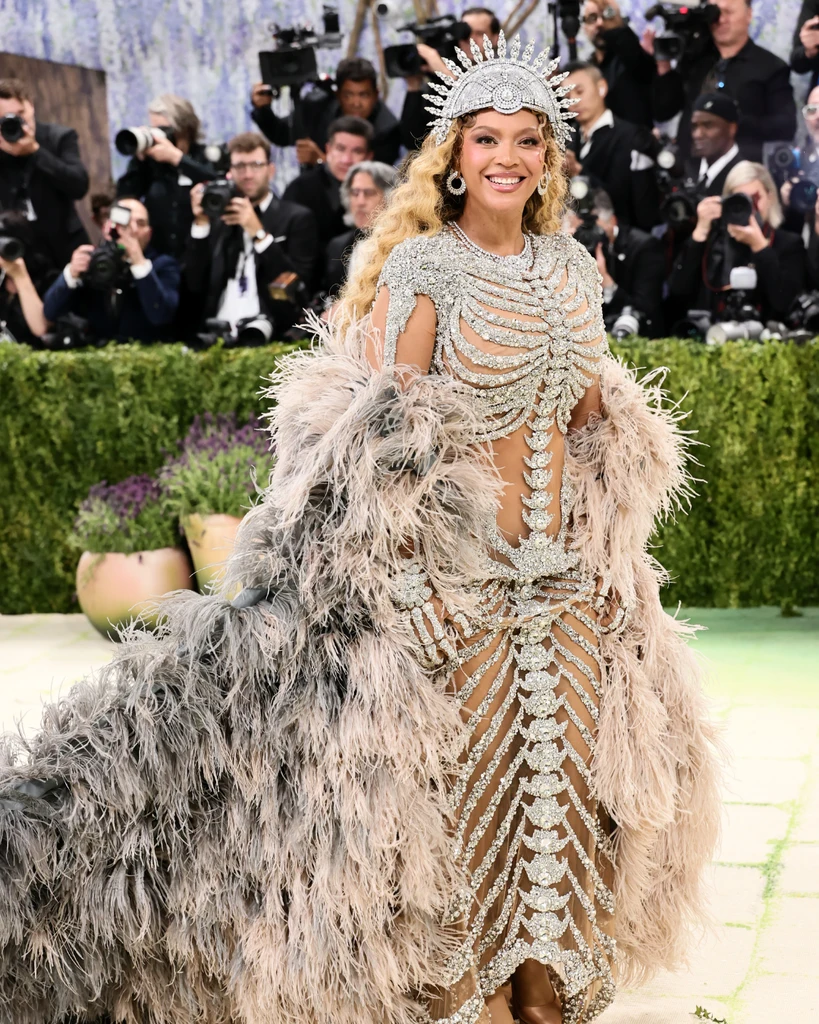
Beyoncé’s return to the Met Gala was always going to carry event status. She arrived with Jay-Z and Blue Ivy Carter, wearing a custom Olivier Rousteing look that placed crystals across the body in a skeleton-like motif. The image was immediate, with ribs, light, flesh, feathers, diamonds, crown. People reported that the look marked her return after a decade away from the Met Gala carpet, with Chopard jewels forming the central luxury statement.
The centerpiece was Chopard’s Garden of Kalahari necklace, set in 18-karat white Fairmined gold and featuring a 6.41-carat brilliant-cut central diamond with roughly 140 additional carats of diamonds. The stones come from the Garden of Kalahari story, tied to the Queen of Kalahari, a 342-carat rough diamond discovered in Botswana. Natural Diamond Council also noted the matching Chopard pieces, including diamond-heavy bracelets and earrings that turned the full look into a wall of white fire.
What made the jewelry so effective was the way it fused with Rousteing’s body concept. Beyoncé was not simply wearing a necklace on top of a gown. The diamonds repeated the gown’s skeletal language. The necklace sat like a jeweled sternum, while the crystal rib cage turned couture into anatomy.
The emerald-accented Chopard cuff added another kind of force. Against the silver-white density of diamonds, green introduced mineral depth, a flash of terrestrial richness inside a celestial look. Beyoncé’s multiple earrings also felt current. Full use of multiple piercings appeared across the carpet this year, but on her it looked regal, almost ceremonial. Queen Bey came to the Met as a crowned figure of light, and the jewelry carried the crown’s authority down the body.
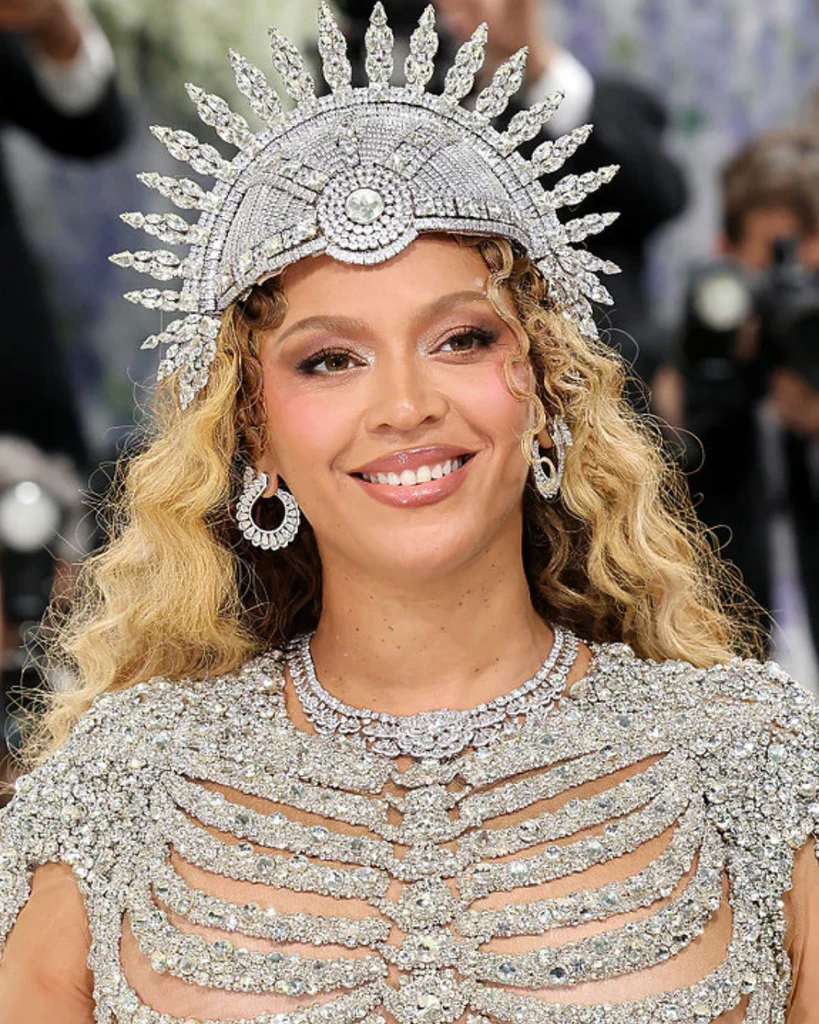
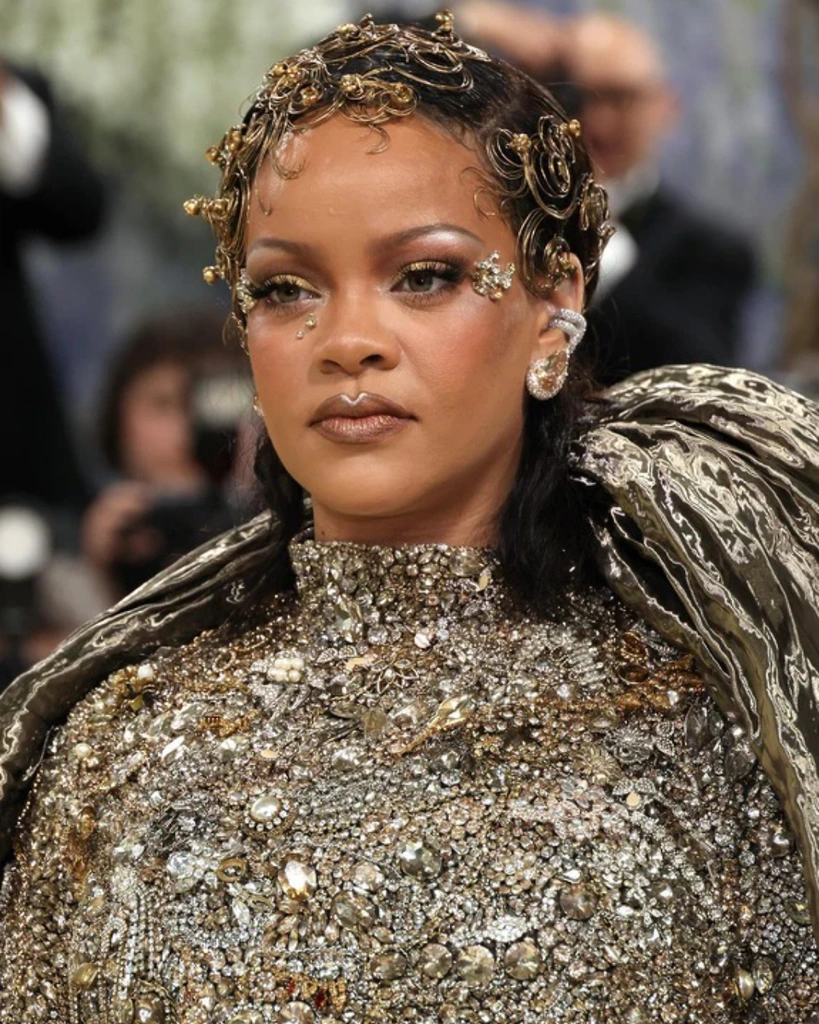
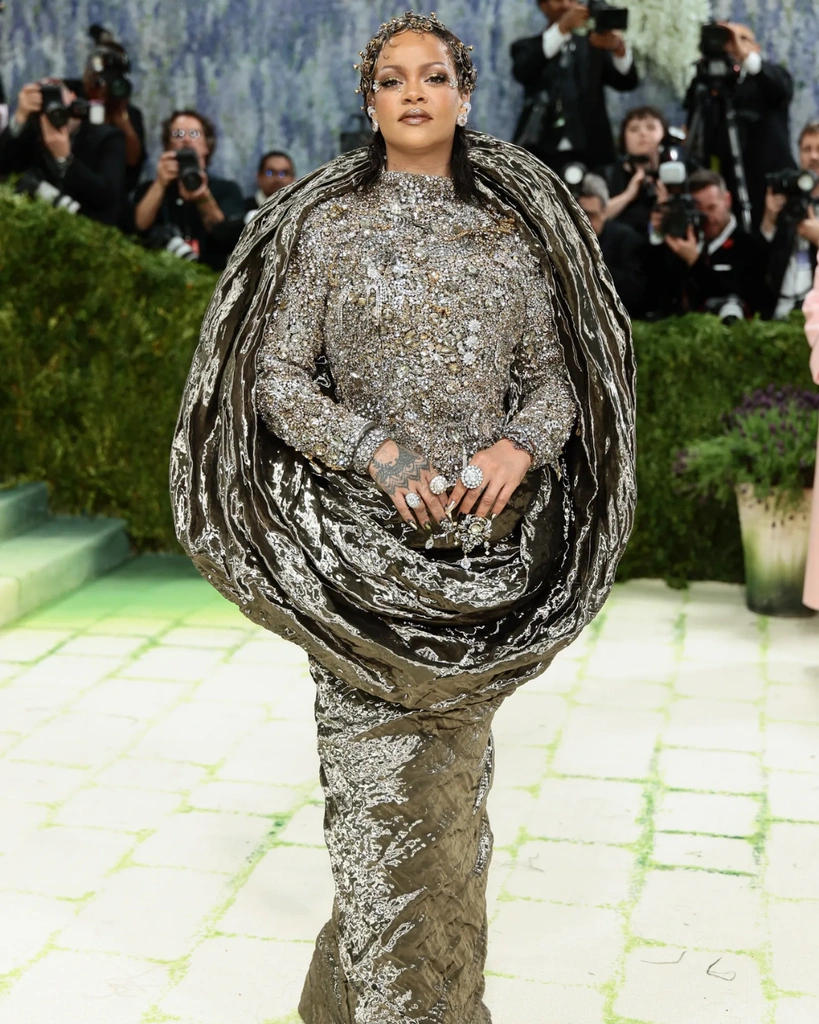
Rihanna understands the Met Gala as an entrance, a finale and a narrative device. Her appearance this year continued that tradition. She paired a metallic Maison Margiela floor-length gown with Glenn Spiro’s Natural “Old Moghul Golconda” earrings, set in rose gold and titanium. National Jeweler identified the earrings as featuring fancy brown-yellow diamonds totaling 51.90 carats, while Natural Diamond Council connected the stones to the historic Golconda region, known for producing some of the world’s most mythic diamonds.
The color mattered. White diamonds often dominate red-carpet jewelry because they photograph cleanly and signal classical luxury. Rihanna’s brown-yellow diamonds moved differently. They brought heat, depth and age. Their tone echoed sand, metal, old gold and desert light, giving the Maison Margiela gown a geological mood. Instead of icy perfection, the earrings suggested history held inside the stone.
The setting also felt precise. Rose gold has been gaining fresh attention in watches and jewelry because of its warmth against skin and its ability to soften major stones. Here, paired with titanium, the rose-gold structure made the earrings feel both ancient and technical. The result was rich, strange and powerful.
Among the strongest Met Gala jewelry moments, hers stood out because it traded sparkle for temperature. The earrings did not just shine. They burned.
Lisa’s Met Gala look was already engineered for attention. Her Robert Wun gown featured extra arms inspired by Thai dance, creating one of the evening’s most discussed silhouettes. Bulgari extended that idea through jewelry, turning the body into a surreal display case. Vogue India reported that Lisa wore a Bulgari High Jewelry Sapphire necklace from the Eclettica collection with High Jewelry earrings set with two pear-shaped sapphires, while her 3D-printed arms were adorned with a High Jewelry Serpenti necklace, bracelet, ring and watch.
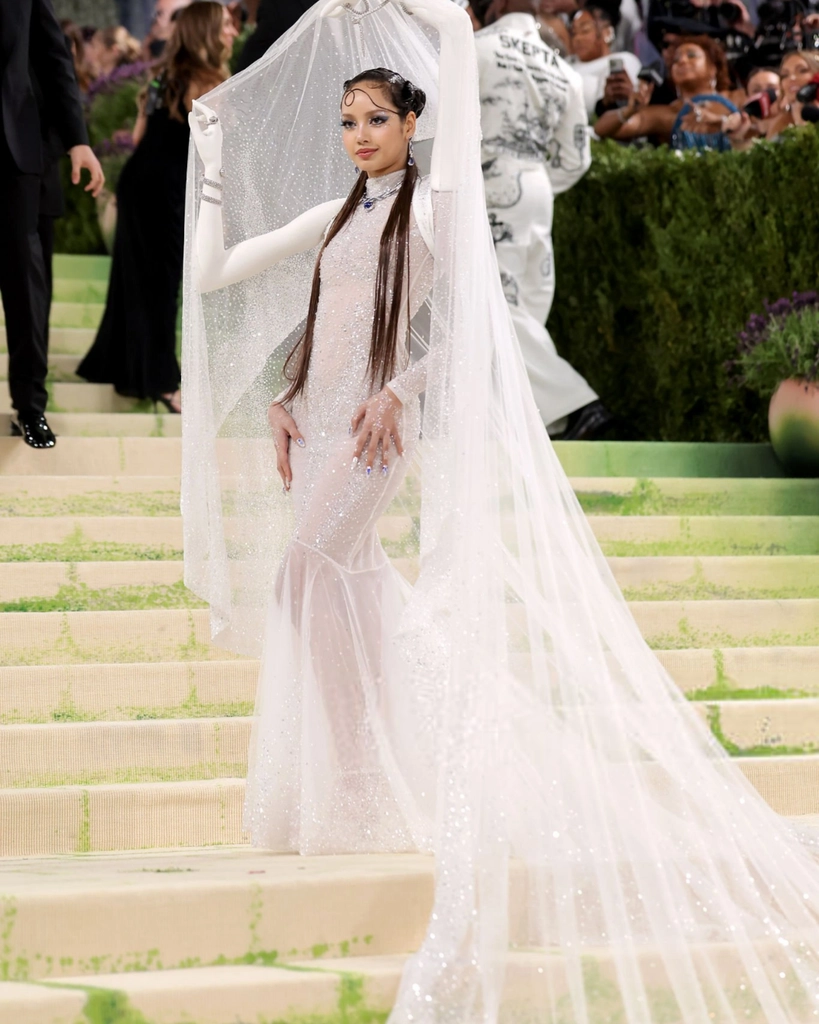
This was one of the night’s cleverest jewelry strategies because it treated the extra limbs as more than costume drama. They became new sites of adornment. A conventional red-carpet look has limited jewelry geography: Ears, neck, wrists, fingers. Lisa’s look expanded the map. Bulgari could coil Serpenti pieces across a body that was partly human, partly sculptural, partly performance prop. Jewelry became choreography.
The Serpenti language was ideal for this. Bulgari’s serpent motif has always carried ideas of rebirth, danger, seduction and transformation. On Lisa, it became even more fluid. The snake did not sit passively at the collarbone or wrist. It moved across an uncanny body, making the boundary between jewel and garment feel unstable.
Her central sapphire necklace added a different kind of intensity. Bulgari’s Eclettica high jewelry universe is built around audacity, contrast and artistic imagination, and the sapphire at Lisa’s throat gave the look a deep blue anchor amid Robert Wun’s pale, ghostly body sculpture.
What made the moment memorable was its inventive styling. Lisa was not simply “decked out” in Bulgari. She turned Bulgari into part of the look’s concept. Multiple Serpenti pieces across the extra arms transformed the jewelry into a visual system: snake, limb, sapphire, watch, hand, body. It was high jewelry as mise-en-scène.
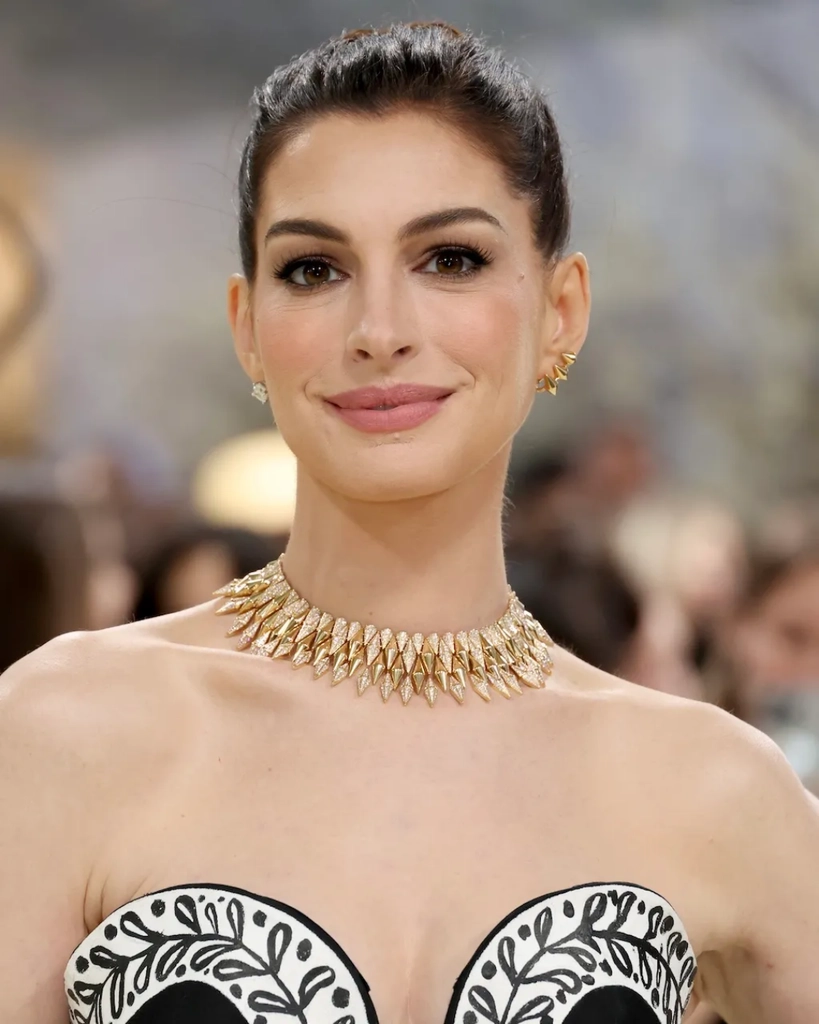
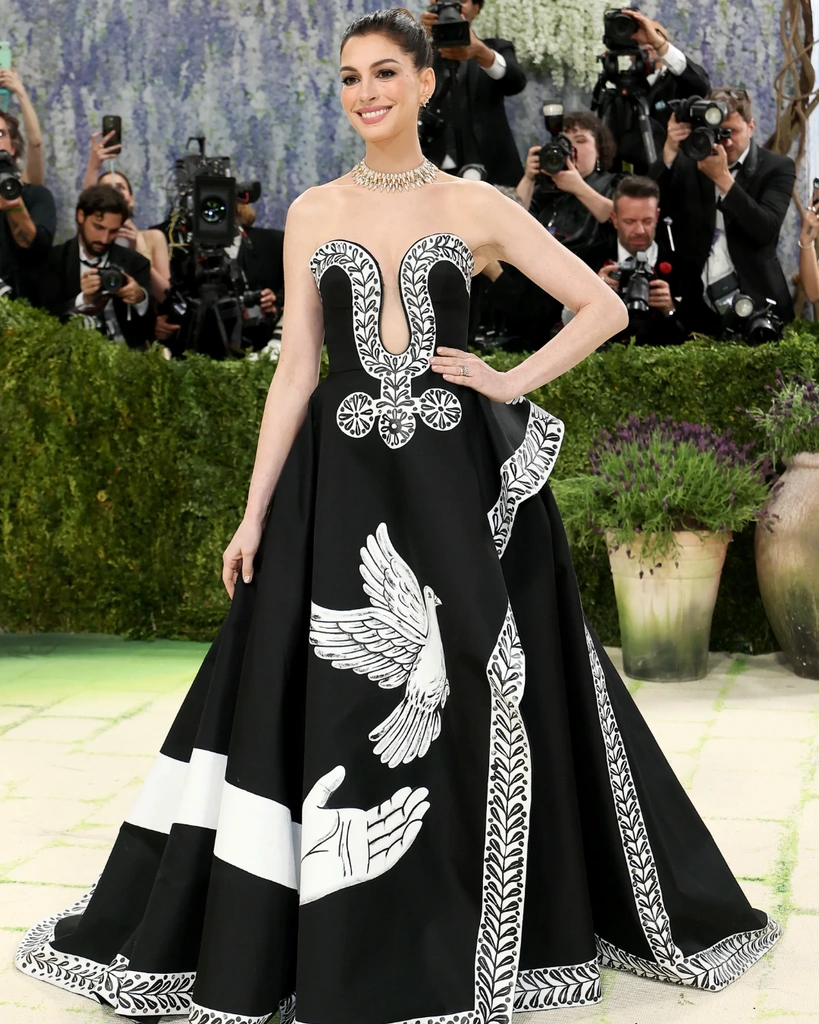
Anne Hathaway’s Bulgari moment worked through a more classical kind of force. She wore a custom Michael Kors gown hand-painted in collaboration with artist Peter McGough, with imagery connected to the Greek Goddess of Peace and inspired by “Ode on a Grecian Urn.” Around the neck, she added a Bulgari Vimini necklace in 18-karat yellow gold with pavé-set diamonds. Town & Country and MEGA both identified the necklace as one of the key details of her Met Gala look.
The Vimini necklace was a masterclass in the bold collar’s current appeal. Fashion has been circling the collar necklace again because it does something few jewels can do: it changes posture. It frames the throat, lifts the face and gives the upper body an architectural edge. Hathaway’s version, with fanning spikes in yellow gold and pavé diamonds, radiated above the painted gown like a halo with attitude.
That tension made the styling sing. The Michael Kors gown was painterly, literary and neoclassical. The Bulgari necklace was sharper, more graphic, more modern. Together, they avoided costume prettiness. Hathaway looked like a fresco that had learned how to walk into a luxury jewelry campaign.
Her additional Bulgari pieces sharpened the effect: Imposing square diamond earrings, a Serpenti ring, and a playful spiked gold earring worn higher on the ear. These details gave the look asymmetry and wit, stopping the goddess reference from becoming too solemn. Hathaway has long been a dream client for luxury houses because she can carry both movie-star polish and a wink of theatrical intelligence. With Bulgari, that balance feels especially natural.
What connected these four looks was a shared understanding of jewelry as body language. Beyoncé used diamonds to redraw anatomy. Rihanna used rare diamonds to bring heat and provenance to metal. Lisa used Bulgari to turn extra limbs into jeweled choreography. Anne Hathaway used a gold collar to make classical painting feel current.
The Met Gala jewelry did the work of sculpture. They framed ribs, warmed the face, coiled around unreal limbs and turned a gown’s neckline into architecture. The red carpet sparkled, but sparkle was only the surface. Beneath it was a richer story about how jewelry can transform the dressed body into a living artwork.