MENU
Close





Boucheron’s Impermanence centers on the beauty of things on the verge of fading. Unveiled as the Maison’s July 2025 Carte Blanche collection, Claire Choisne’s latest high jewelry meditation turns ikebana, wabi-sabi, and vanishing light into one of the most arresting statements the house has made in years.
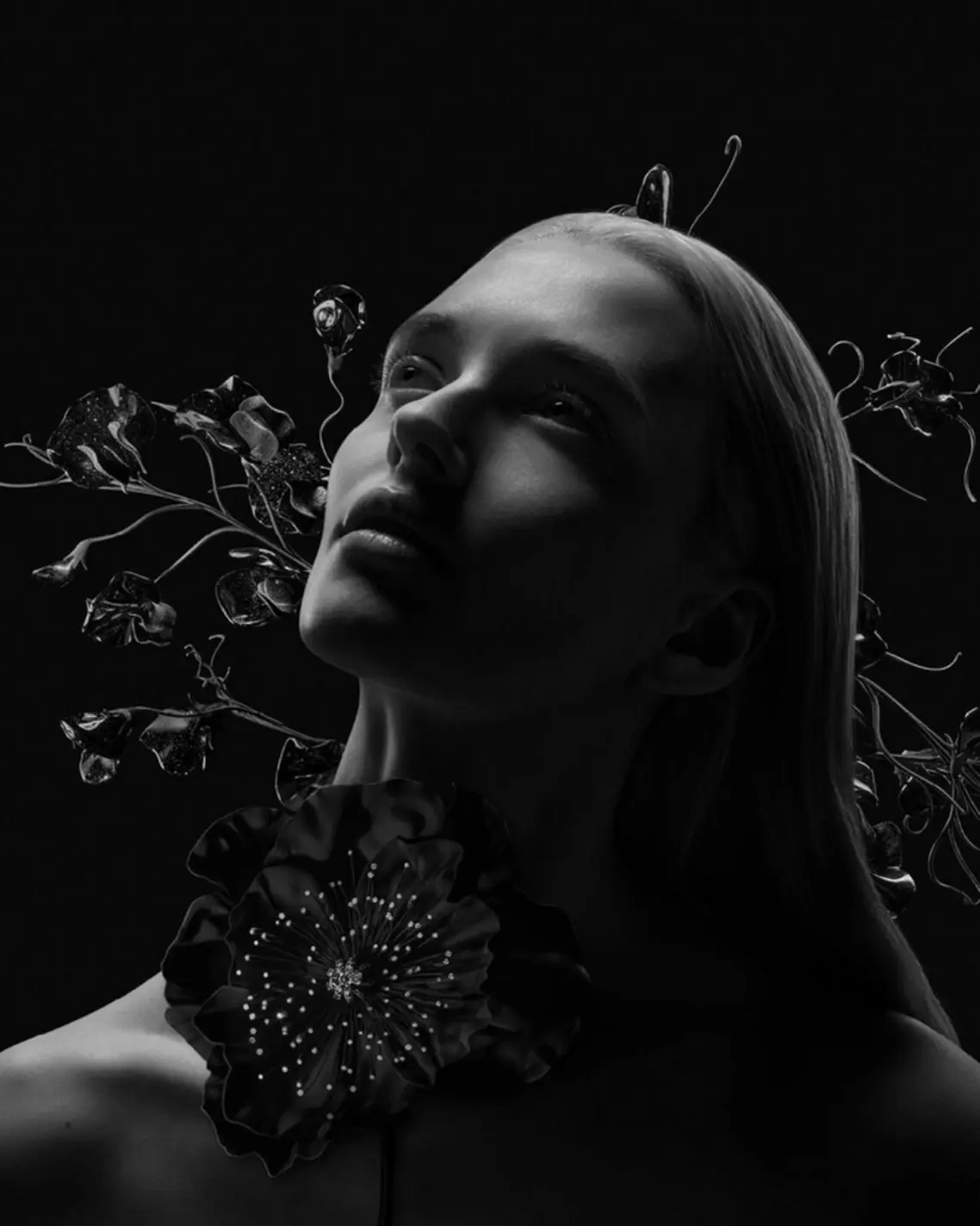
Boucheron’s Impermanence centers on the beauty of things on the verge of fading. Unveiled as the Maison’s July 2025 Carte Blanche collection, Claire Choisne’s latest high jewelry meditation turns ikebana, wabi-sabi, and vanishing light into one of the most arresting statements the house has made in years.
April 11, 2026


Boucheron's Impermanence turns decay, thistles, and vanishing light into high jewelry, redefining fine jewelry brands, best investment jewelry pieces, and luxury jewelry trends.
Luxury usually prefers the flower at full bloom. Claire Choisne prefers the second after certainty, when a stem slackens, a petal darkens, and beauty becomes more moving because it is already slipping away. That is the emotional temperature of Boucheron’s Impermanence. The 2025 Carte Blanche collection includes six botanical compositions, 28 transformable high jewelry pieces, and a visual journey from brightness into near-total blackness. Inspired by ikebana and wabi-sabi, the collection contemplates nature in the act of disappearing, asking viewers to look harder precisely because nothing lasts. Among fine jewelry brands, that is a daring proposition. Most sell eternity. Choisne sells the ache of time.
Choisne refuses the prettified version of nature that luxury has spent decades polishing into submission. Boucheron's Impermanence does not worship the rose at its most flattering angle. It studies the fragile instant before loss. Boucheron itself says the collection invites “a deeper contemplation of our natural world,” while Choisne has said she wanted to “capture the beauty of nature before it vanishes.” That shift moves high jewelry away from static prettiness and toward something more philosophical, more vulnerable, and far more contemporary.
The collection’s structure makes that idea visible. The six compositions move from the lightest to the darkest, with light functioning as the narrative thread until it dwindles into pitch blackness, suggesting the end of a natural cycle. That is not a decorative flourish. It is a worldview. Impermanence is staged as disappearance, where brightness recedes, shadow advances, and the wearer becomes the last body carrying that fading light. For fine jewelry brands, that is a formidable creative move, because it asks clients to treasure transience rather than triumph over it.
The collection’s most unforgettable argument may be Composition No. 5, built around thistles and a rhinoceros beetle. Thistles are hardly the usual mascots of high jewelry seduction. They are prickly, defensive, a little rude. Choisne chose them anyway, which is exactly why the piece feels so alive. Instead of translating nature into something sweeter, she kept its aggression intact. The result is not a bouquet that flatters the eye. It is a floral encounter with attitude. That alone separates Impermanence from the softer sentimentalism that still dominates many luxury jewelery trends.
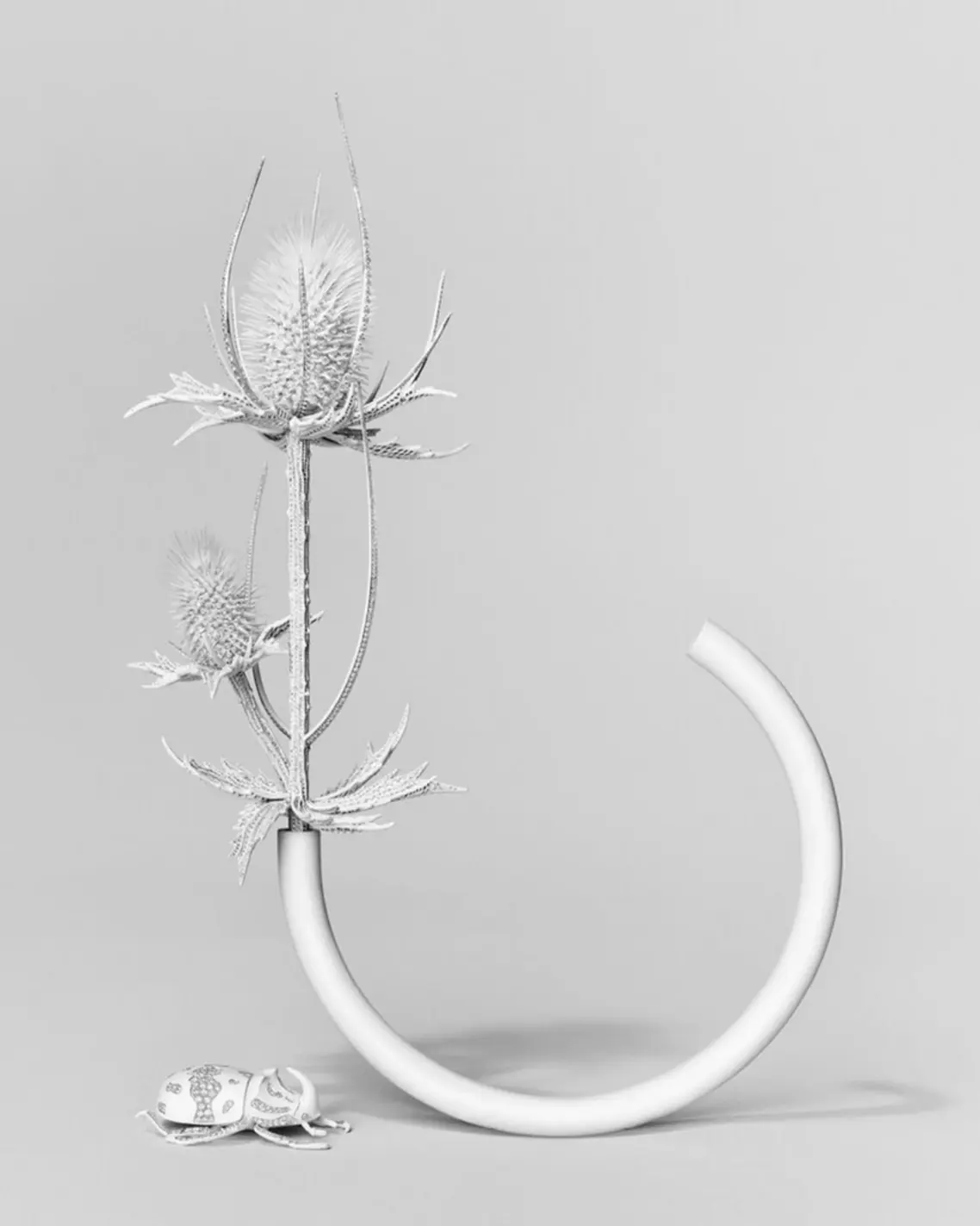
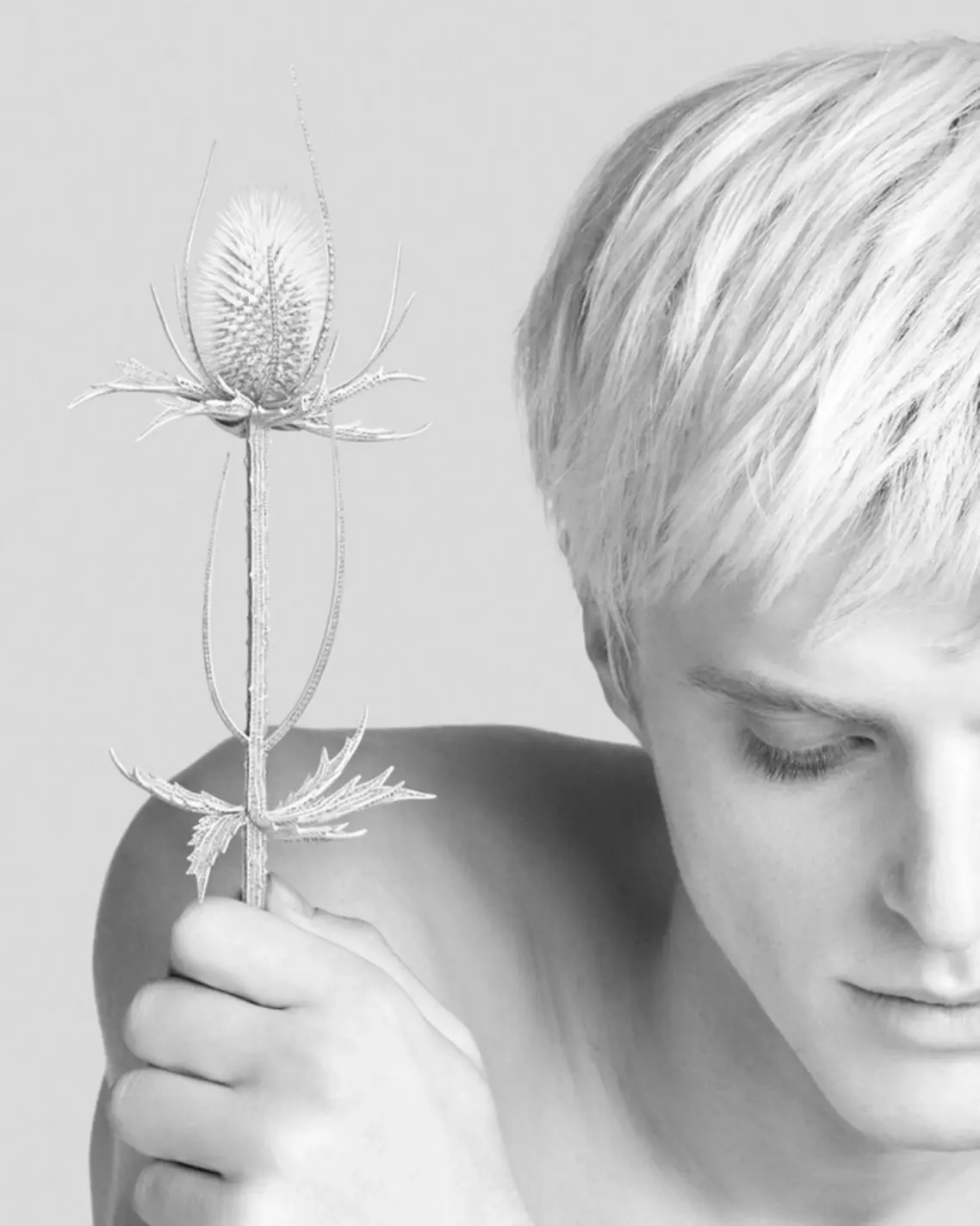
Then comes the technical audacity. To render the thistles’ spiky heads, Boucheron used 3D-printed plant-based resin, a material the house says had not previously been used in high jewelry. Because there was no metal structure inside the blooms, traditional stone setting became impossible. So the artisans invented another route: sewing more than 800 diamonds into the thistles’ alveoli by hand. The larger thistle can be worn as a brooch or crossbody jewel, the smaller detaches into a double-finger ring, and the beetle becomes its own brooch. This is the sort of piece that exposes the poverty of simplistic conversations around the best investment jewelry pieces. Value here is not just in carats or resale mythology. It is in invention, labor, and the courage to make difficulty visible.
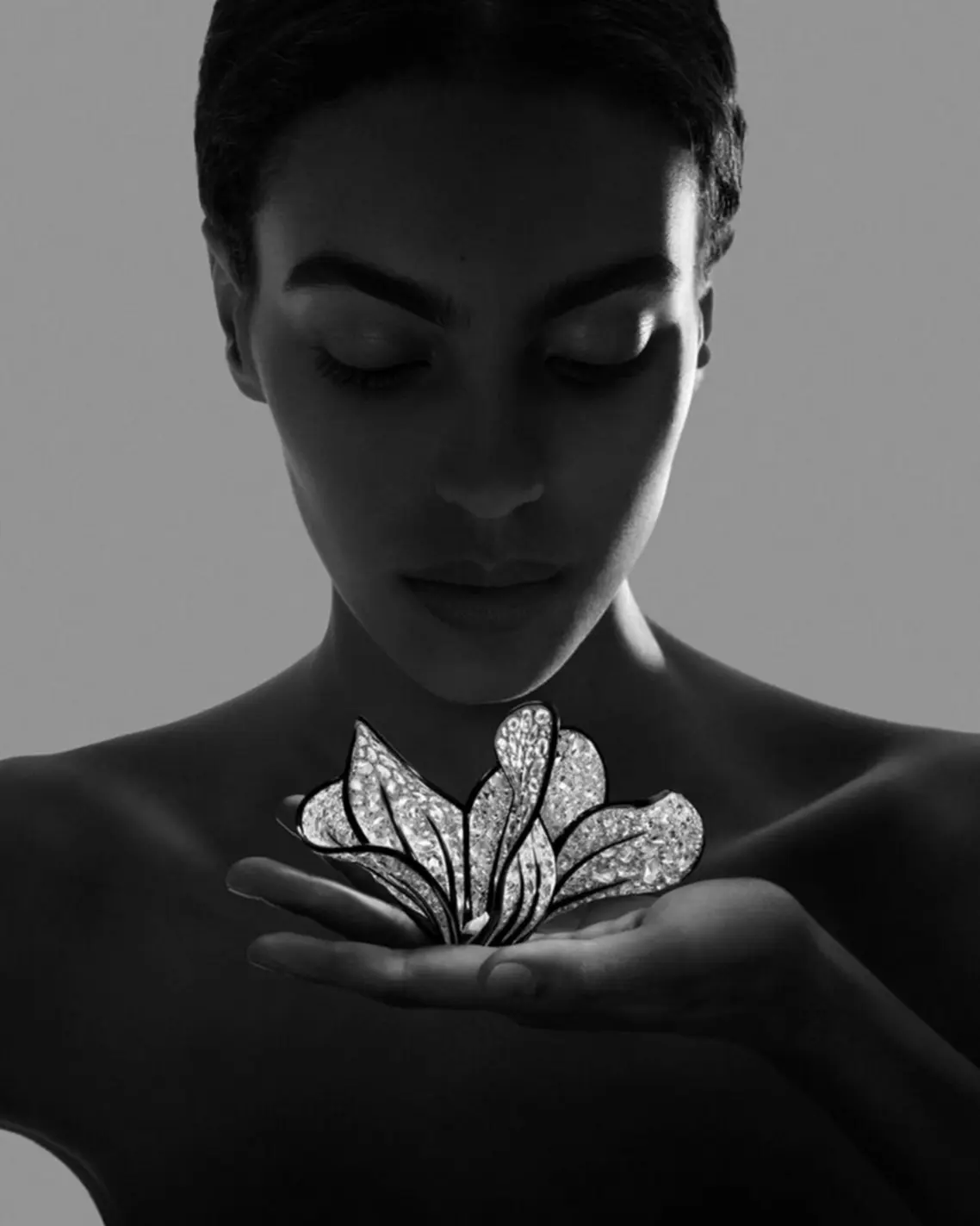
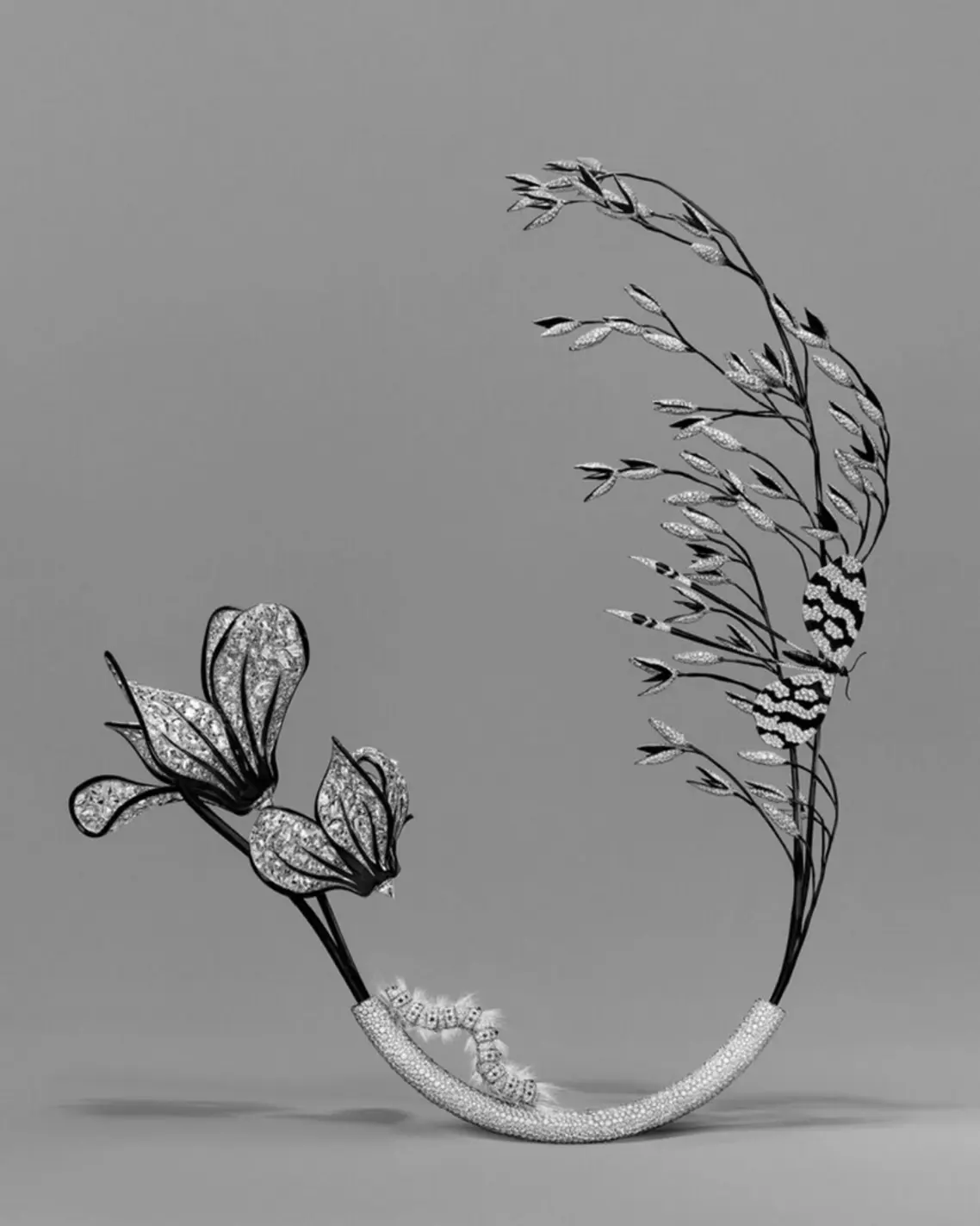
There is also something deliciously subversive about turning couture techniques into jewelry engineering. Boucheron called the new method a “Couture” setting, and the name is perfect. Sewing diamonds into resin sounds almost absurd until Choisne makes it feel inevitable. This is where her work becomes more than product design. It becomes a philosophy of making, where the obstacle is not edited out of the final object but transformed into its very soul. When people ask which pieces become the best investment jewelry pieces over time, they often mean market value. But history tends to remember the jewels that changed the language of the category, and Composition No. 5 has that kind of disruptive energy.
Of course Impermanence contains diamonds, white gold, and the codes expected of Place Vendôme. Yet it also leans into borosilicate glass, ceramic, anodized aluminum, titanium, black lacquer, composite materials, black sand, and plant-based resin. In other words, it asks a quietly provocative question: What if rarity is no longer enough? What if emotion, fragility, and concept matter just as much? That is why Choisne remains so important to conversations around fine jewelry brands. She does not merely update the look of Boucheron. She updates the terms of desire itself.
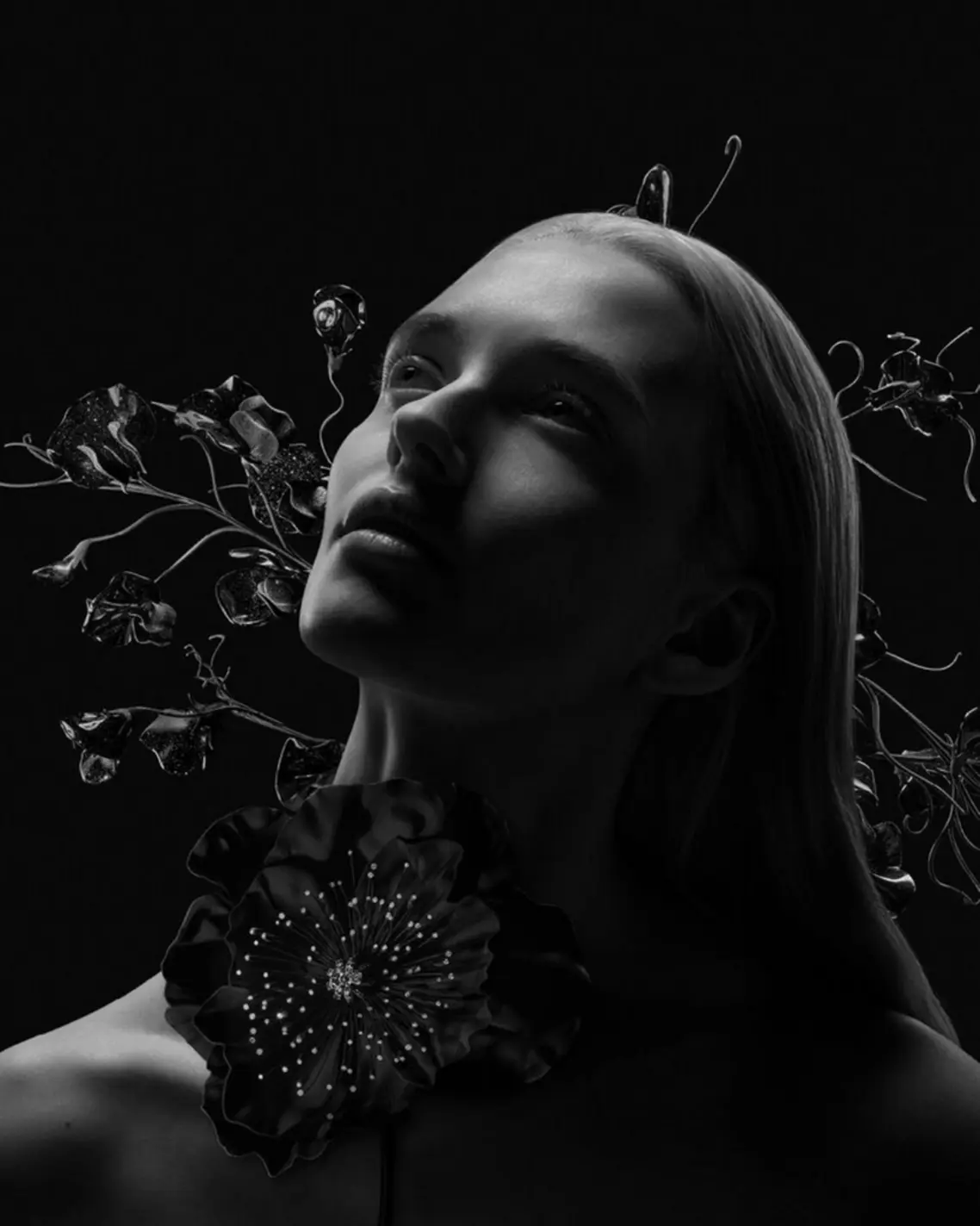
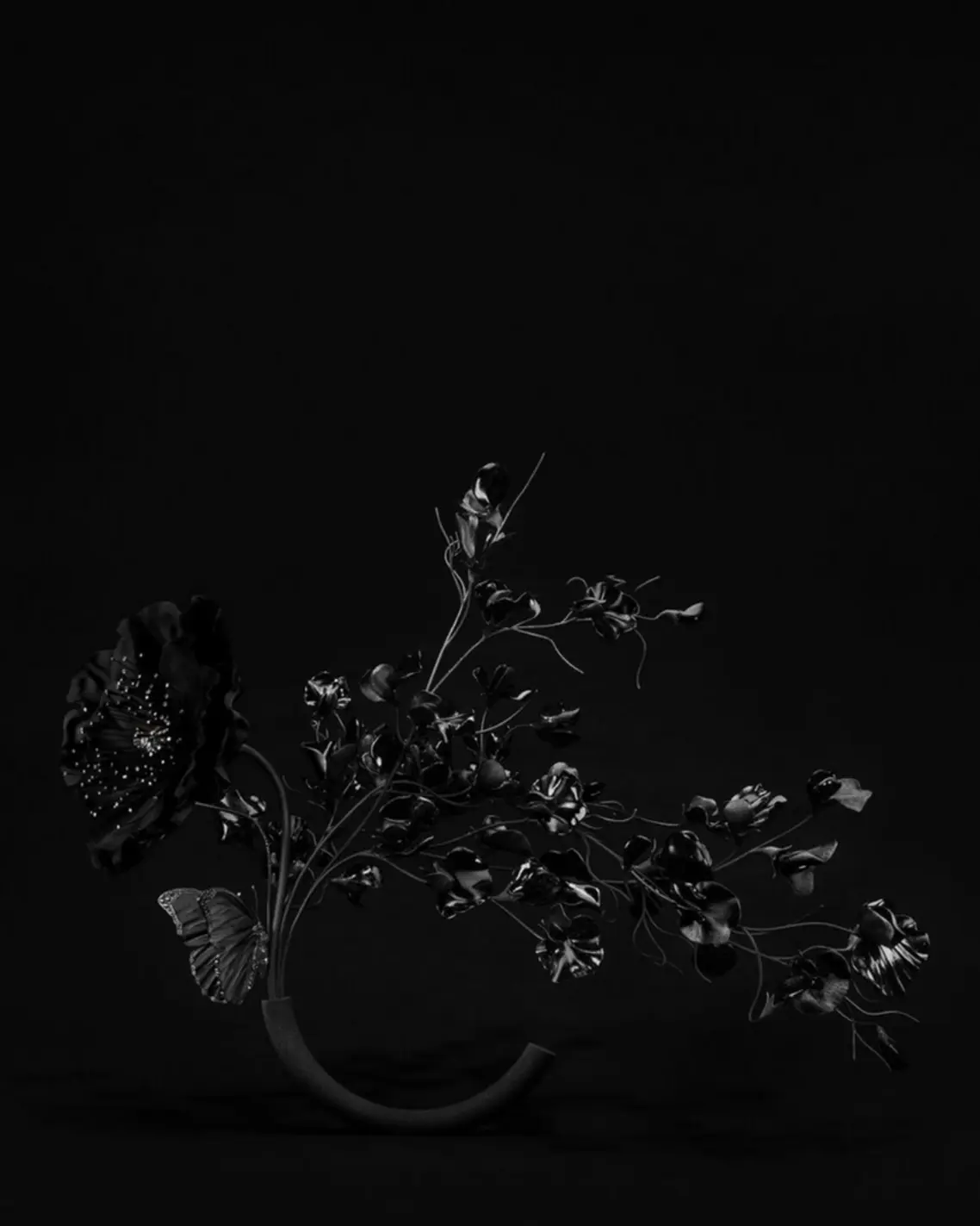
Look across the collection and that thesis becomes impossible to miss. In Composition No. 6, borosilicate glass is drawn to a fineness of 2 millimeters for the tulip and eucalyptus, while sapphire glass and mother-of-pearl give the dragonfly its iridescent wings. By Composition No. 3, the palette has darkened. The iris carries matte and glossy black finishes, while the wisteria combines ceramic, titanium, and aluminum to remain both weightless and robust. By Composition No. 1, light nearly disappears altogether into black titanium petals coated with Vantablack, transparent black glass, onyx, black aventurine, and a vase made by 3D-printing black sand. The collection moves like a sunset with a thesis.
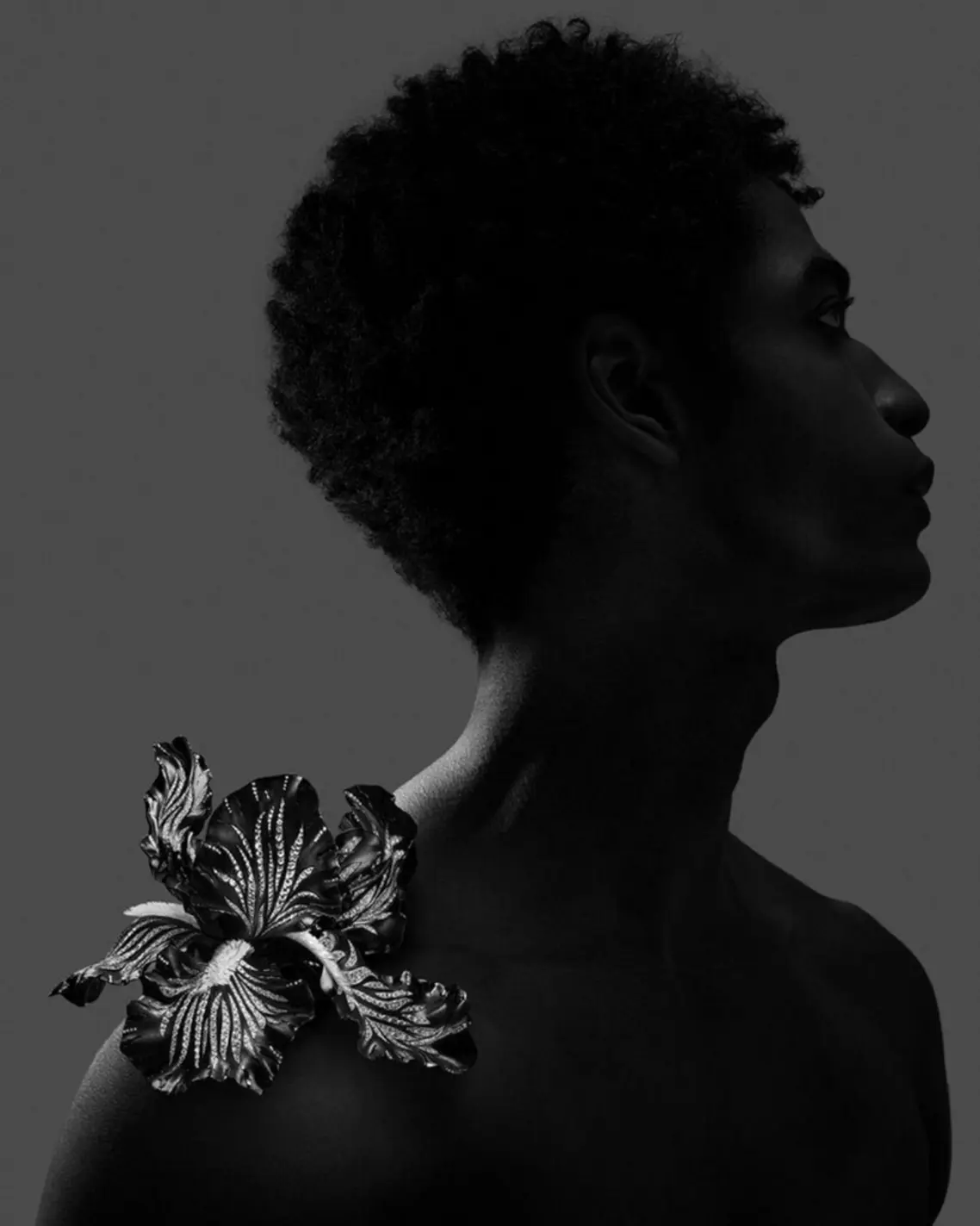
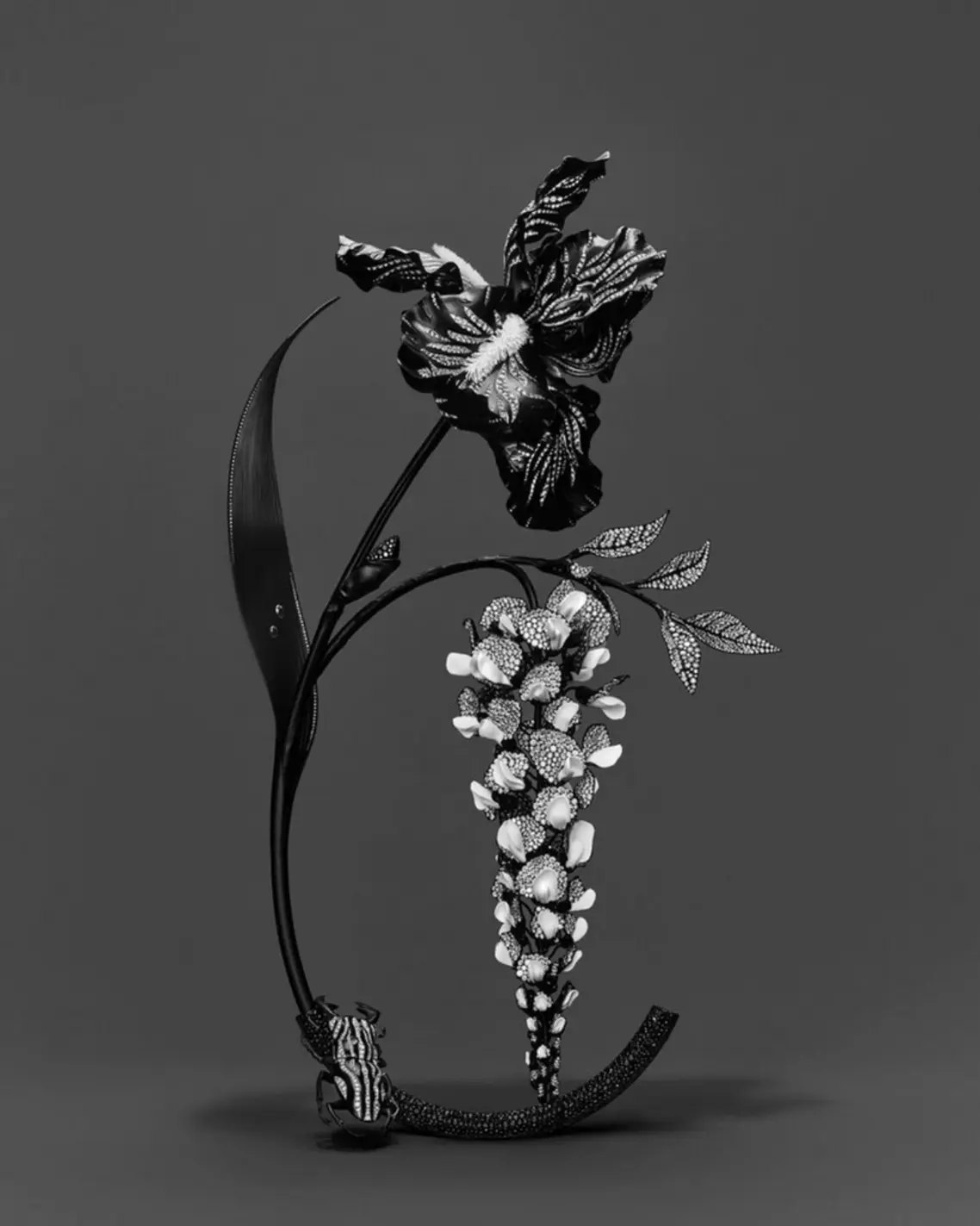
For anyone scanning current luxury jewelery trends, Boucheron's Impermanence arrives as a rebuke to the easy formulas of the moment. There is no dependence here on nostalgic reissues, easy floral romance, or archival repetition disguised as innovation. Instead, Choisne offers risk, in blackness, decay, thistles, insects, fragility, and flowers caught in states that most jewelers would consider commercially awkward.
It also matters because the collection remains wearable in the most Boucheron sense. These are not static museum props. The 28 pieces are transformable, classic Claire Choisne's style. Brooches become bracelets, necklaces become head jewels, blossoms detach, insects migrate, and compositions break apart into individual adornments. That multi-wear intelligence keeps Impermanence from becoming purely conceptual theater. It still understands the body. It still understands movement.
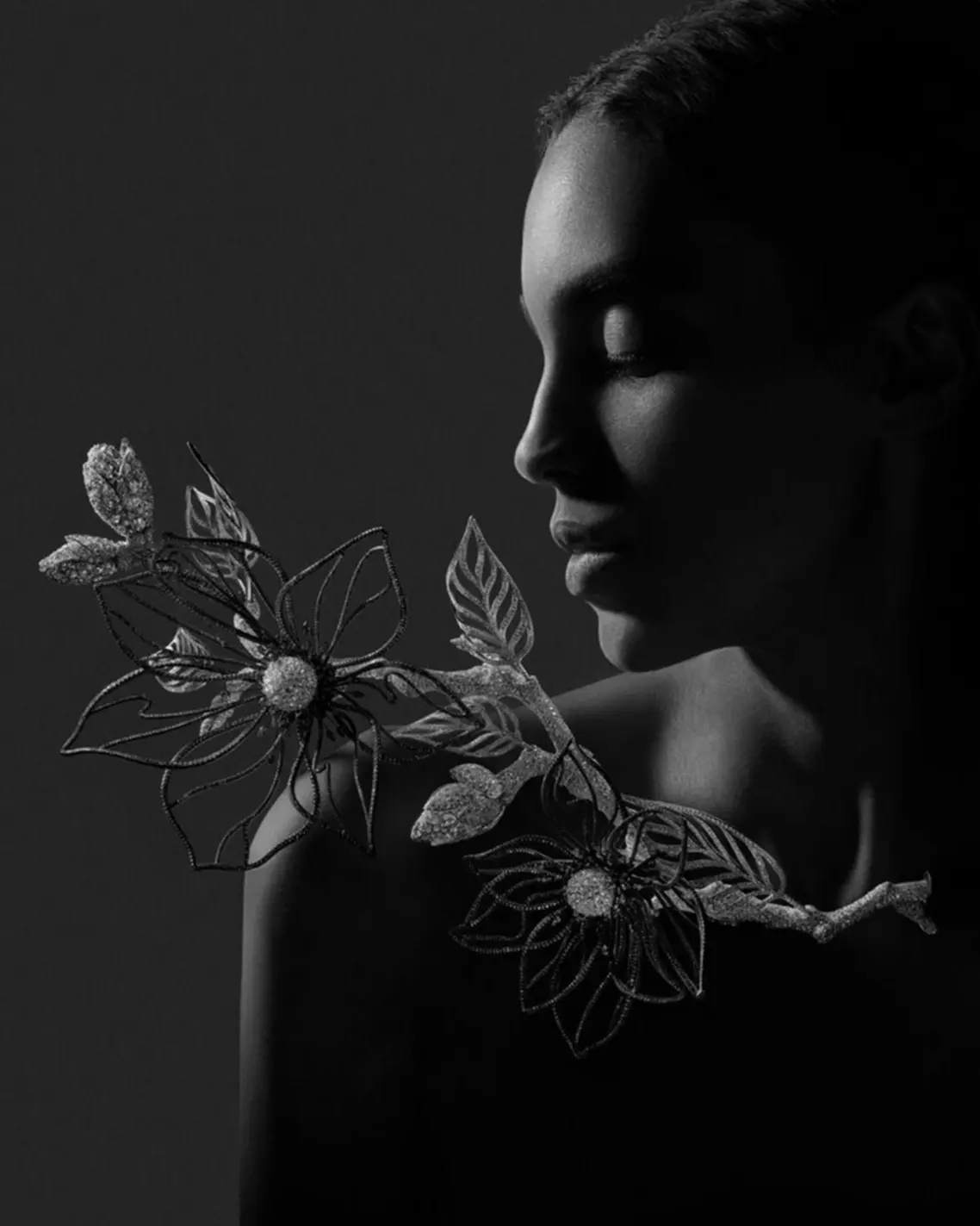
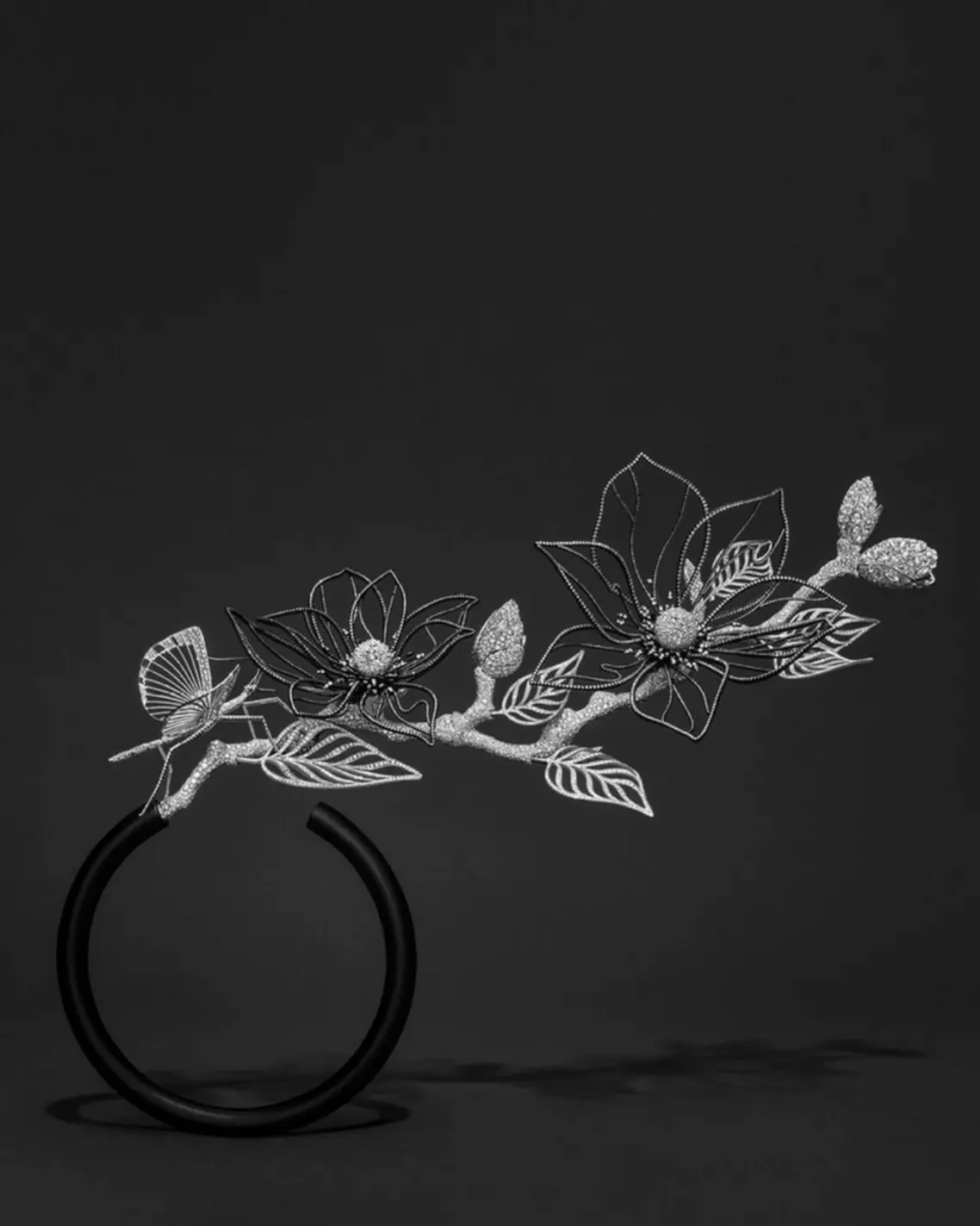
In the end, Boucheron’s Impermanence succeeds because it does something luxury rarely dares to do: It makes disappearance feel precious. Claire Choisne has taken the codes of Boucheron, filtered them through ikebana, wabi-sabi, and a near-scientific appetite for new materials, then delivered a collection that feels mournful, sharp, and quietly transcendent. Among fine jewelry brands, few are willing to make fragility their message. Fewer still can turn that message into one of the year’s most convincing answers to both the best investment jewelry pieces debate and the churn of luxury jewelery trends. Boucheron did not simply make flowers for 2025. It made time visible.