MENU
Close





Van Cleef & Arpels automata belong to the Maison’s “Extraordinary Objects”: tabletop worlds that sing, bloom, and reveal secrets on command. Rooted in the 18th century Golden Age of automata, these creations fuse Parisian métiers d’art with François Junod’s Swiss mechanics, turning timekeeping into an intimate ritual.
Van Cleef & Arpels automata belong to the Maison’s “Extraordinary Objects”: tabletop worlds that sing, bloom, and reveal secrets on command. Rooted in the 18th century Golden Age of automata, these creations fuse Parisian métiers d’art with François Junod’s Swiss mechanics, turning timekeeping into an intimate ritual.
February 3, 2026


The tradition of automata crystallized in the late 18th century, when European courts became obsessed with machines that could mimic life, and pioneers such as Pierre Jaquet Droz, working with Jean Frédéric Leschot, unveiled astonishing humanoid figures like the Writer, the Draughtsman, and the Musician in the 1770s. Van Cleef & Arpels entered this lineage through a parallel, equally aristocratic route: precious objects.
Since 1906, the Maison has produced objets d’art meant for desks and tables, pieces that fused ornament with function, That heritage set the stage for a modern pivot in 2017, when Van Cleef & Arpels introduced its first “Extraordinary Object” automaton, Fée Ondine, realized through close collaboration with the Sainte Croix based master François Junod. Today, these Extraordinary Objects remain creatures of rarity, often unique pieces or made in vanishingly small numbers, with the Maison itself describing Fée Ondine as a unique creation. Pricing stays largely private, yet glimpses emerge through the market, including reported figures such as CHF 2.58 million for Éveil du Cyclamen, while the making process reads like fine art commissioning: Junod has noted that each of the 2024 automatons required around 15 months to complete, a timeline that reflects the density of crafts, the patience of calibration, and the relentless pursuit of motion that feels genuinely alive.
Each automaton functions like a miniature theater production, built by specialists whose crafts rarely share the same stage.
Artistic direction often begins with the Van Cleef & Arpels studio in Paris, drawing from the Maison’s codes and archives, then translating motifs into sculpture, color, and movement.
François Junod, automaton maker designs the mechanical “brain,” developing the choreography of cams, levers, and gear trains. His partnership with the Maison began with Fée Ondine in 2017 and continues as the engine behind many recent Extraordinary Objects.
Meilleur Ouvrier de France artistry appears in key surface crafts, especially lacquer. Watch and jewelry reporting cites Catherine Nicolas, a lacquer artisan recognized with the Meilleur Ouvrier de France distinction, as a collaborator whose work helps give petals and botanical elements their precise gradients and depth.
Composers and acoustic specialists shape sound as part of the spell. Several pieces pair animation with chimes or a carillon, treating music as the emotional “lighting” of the scene. For example, Fée Ondine unfolds to a crystalline melody, while Naissance de l’Amour rises to the sound of a carillon.
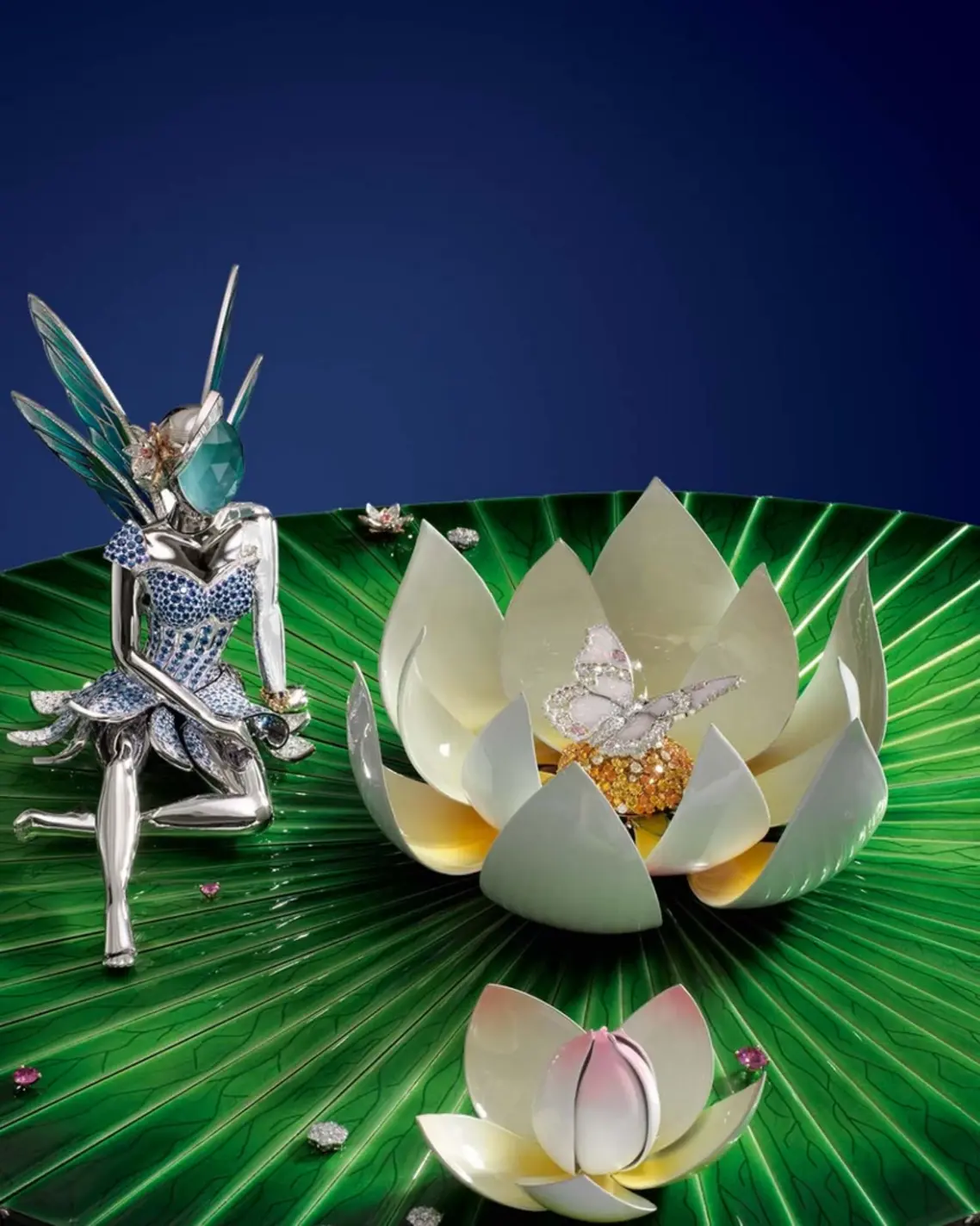
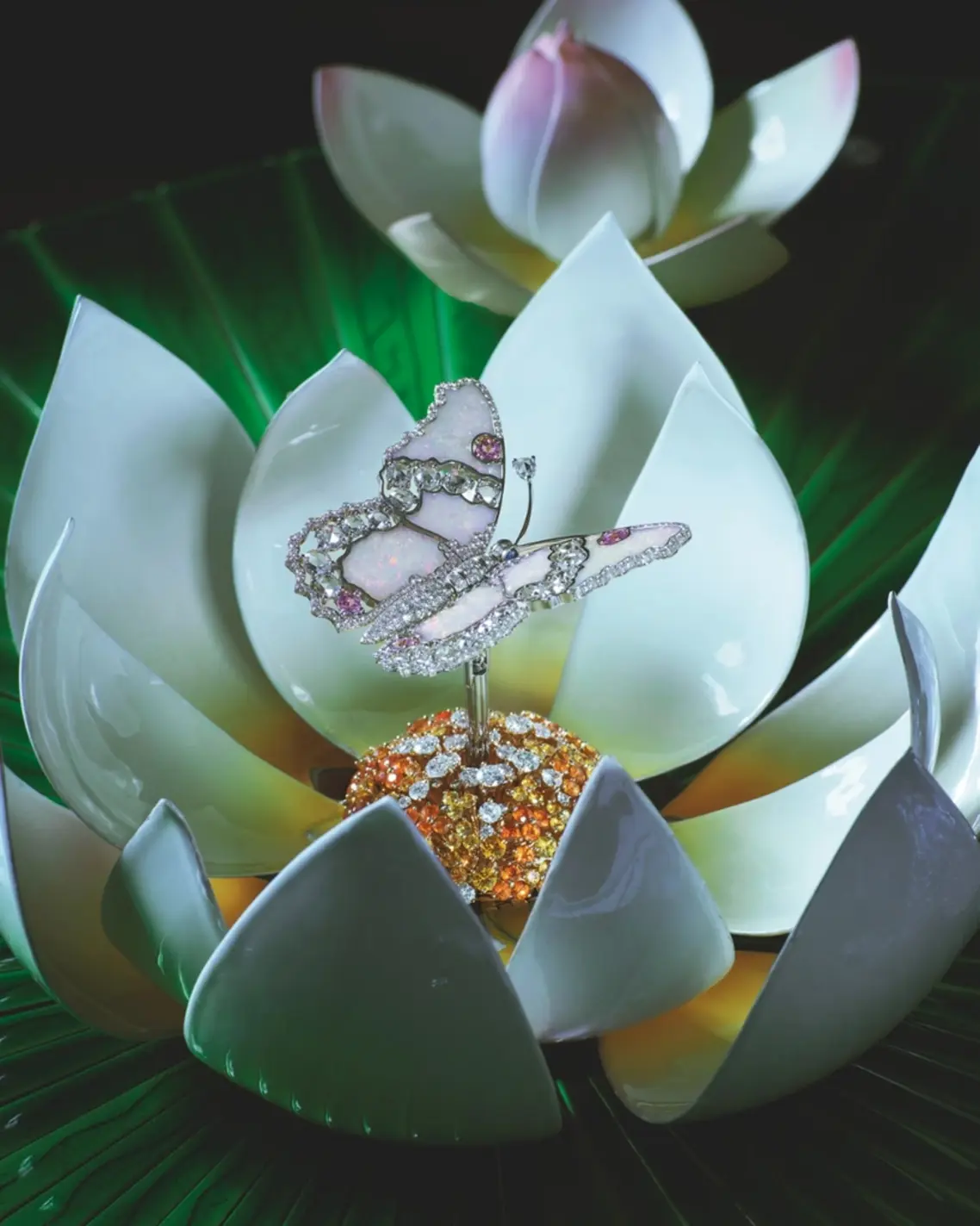
Fée Ondine set the tone for everything that followed: nature, a fairy, a hidden mechanism, and synchronized choreography. When activated, it comes to life for about 50 seconds. The water lily leaf ripples, the flower blooms, the fairy awakes, and a butterfly rises, beats its wings, and twirls before the scene returns to stillness.
Its engineering lesson is weight. The water lily leaf is made of about 60 enameled strips assembled together, designed to ripple during animation. The petals had to be shaped by hand and crafted exceptionally thin to keep the moving elements light enough for the mechanism to animate.
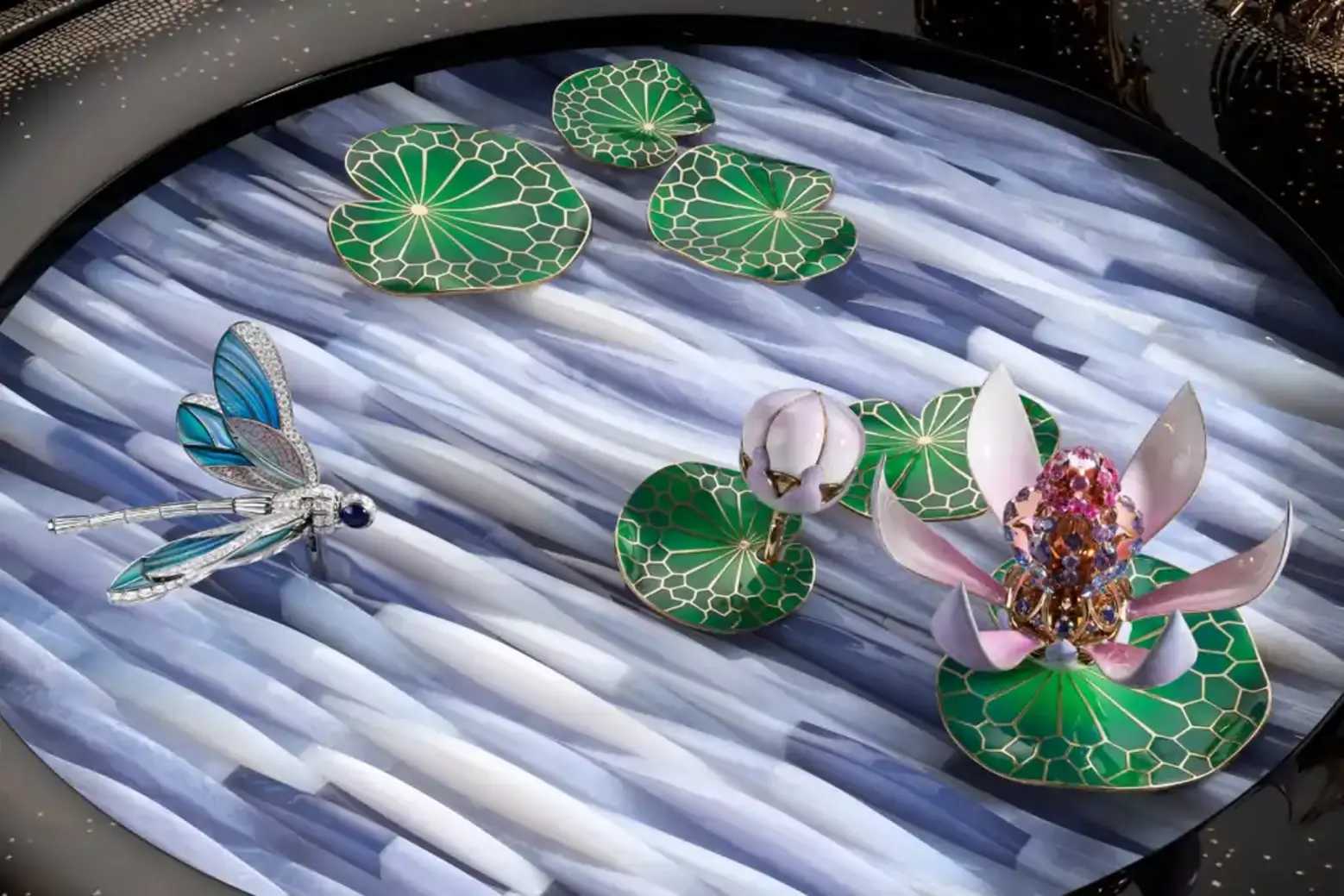
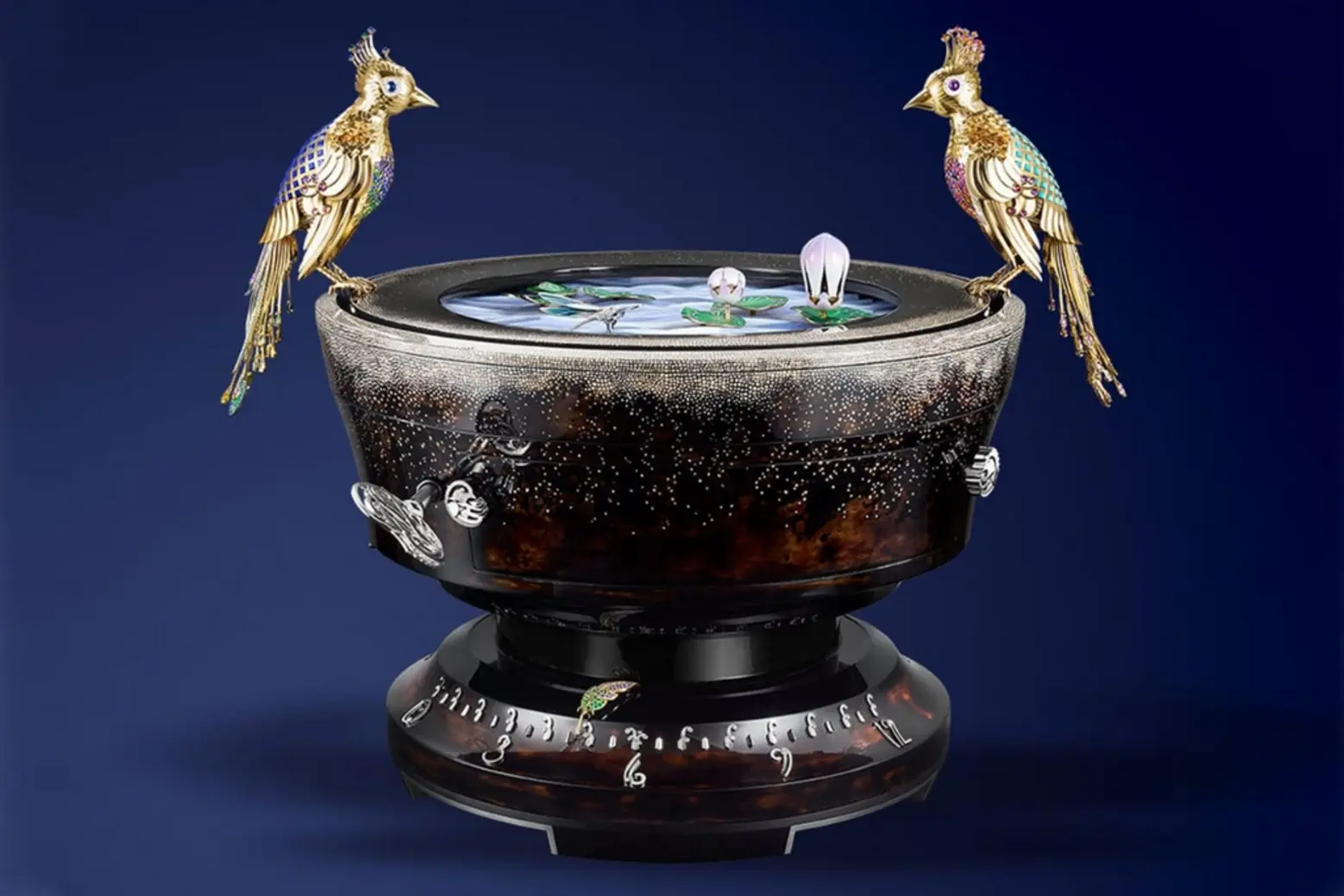
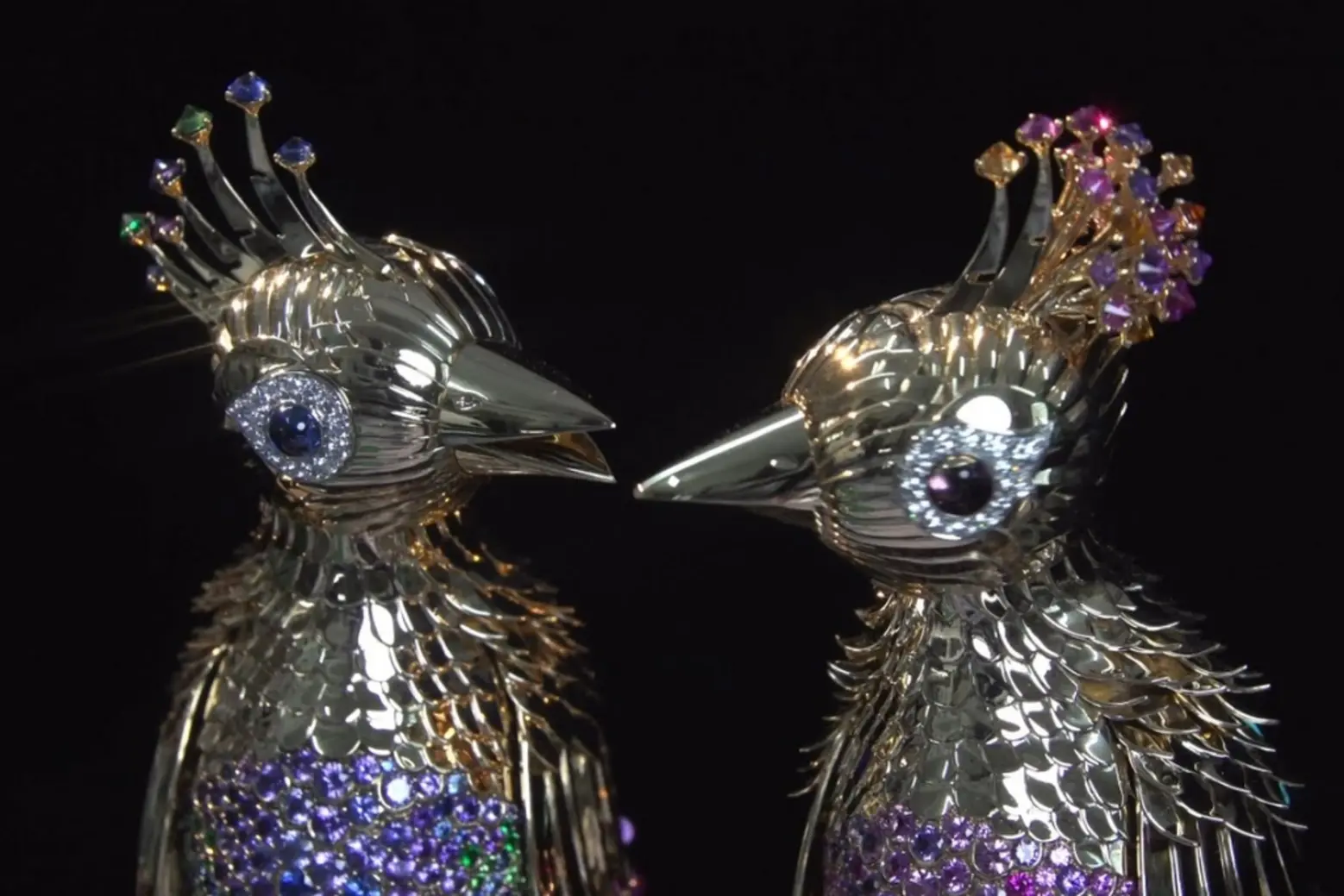
Fontaine aux Oiseaux stages a tender courtship: rippling water, a blooming water lily, a dragonfly rising and whirling, and two birds moving closer with articulated legs lifting one after the other in striking realism.
Reality extends to micro gestures. Van Cleef & Arpels describes subtle wing fluttering, an eyelid beat, and a raised foot as effects made possible by high precision mechanical expertise, the kind of detail that turns movement into character.
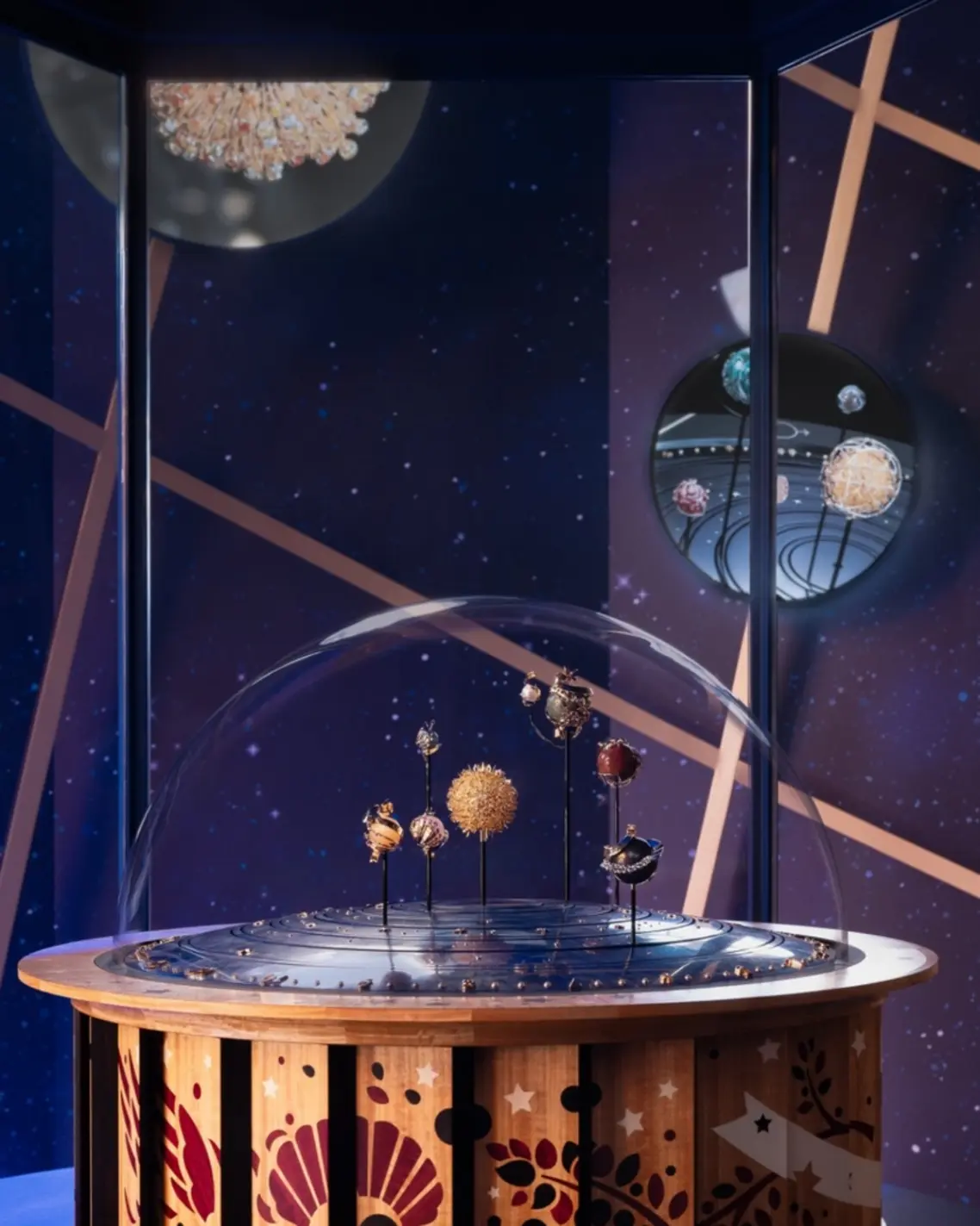
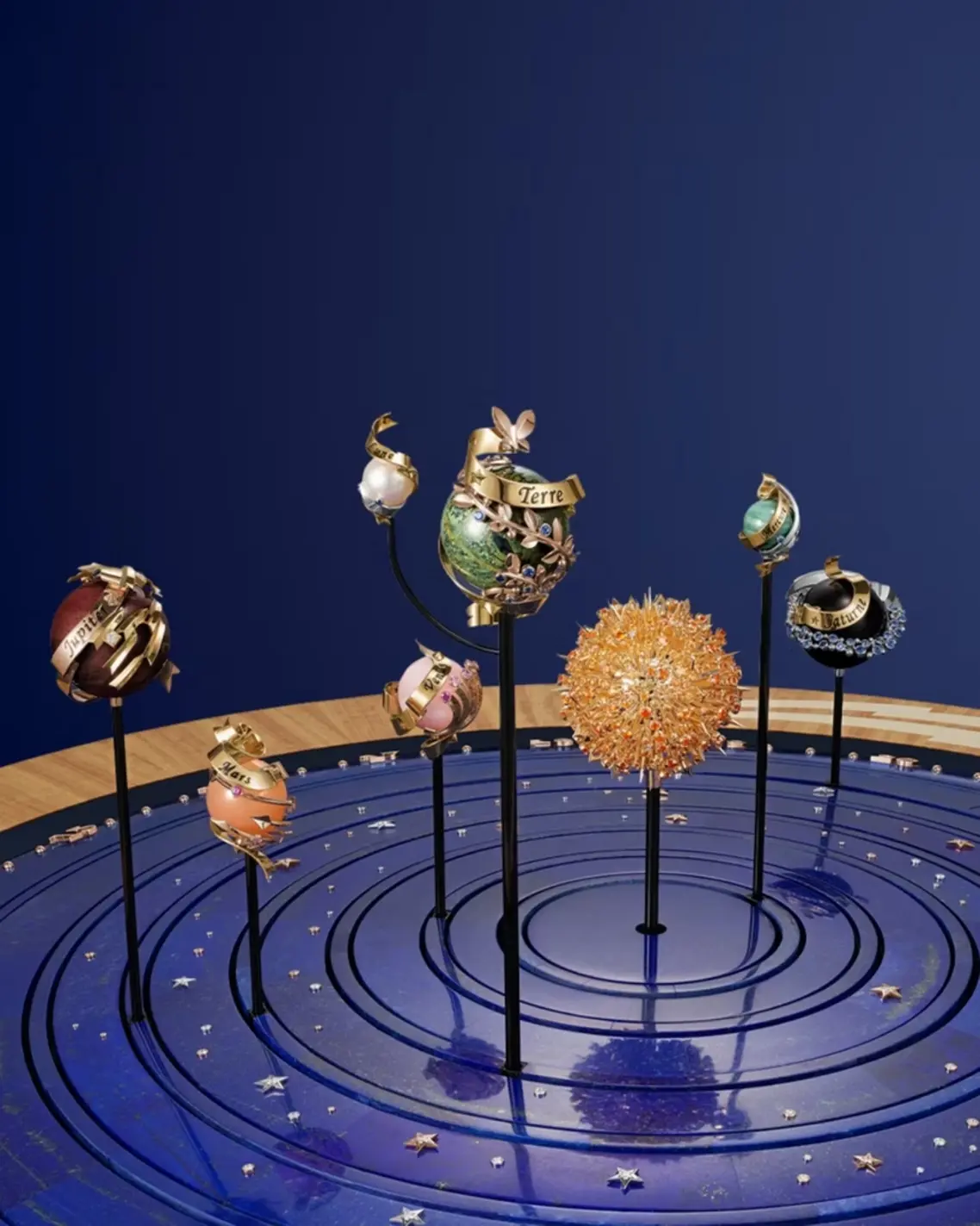
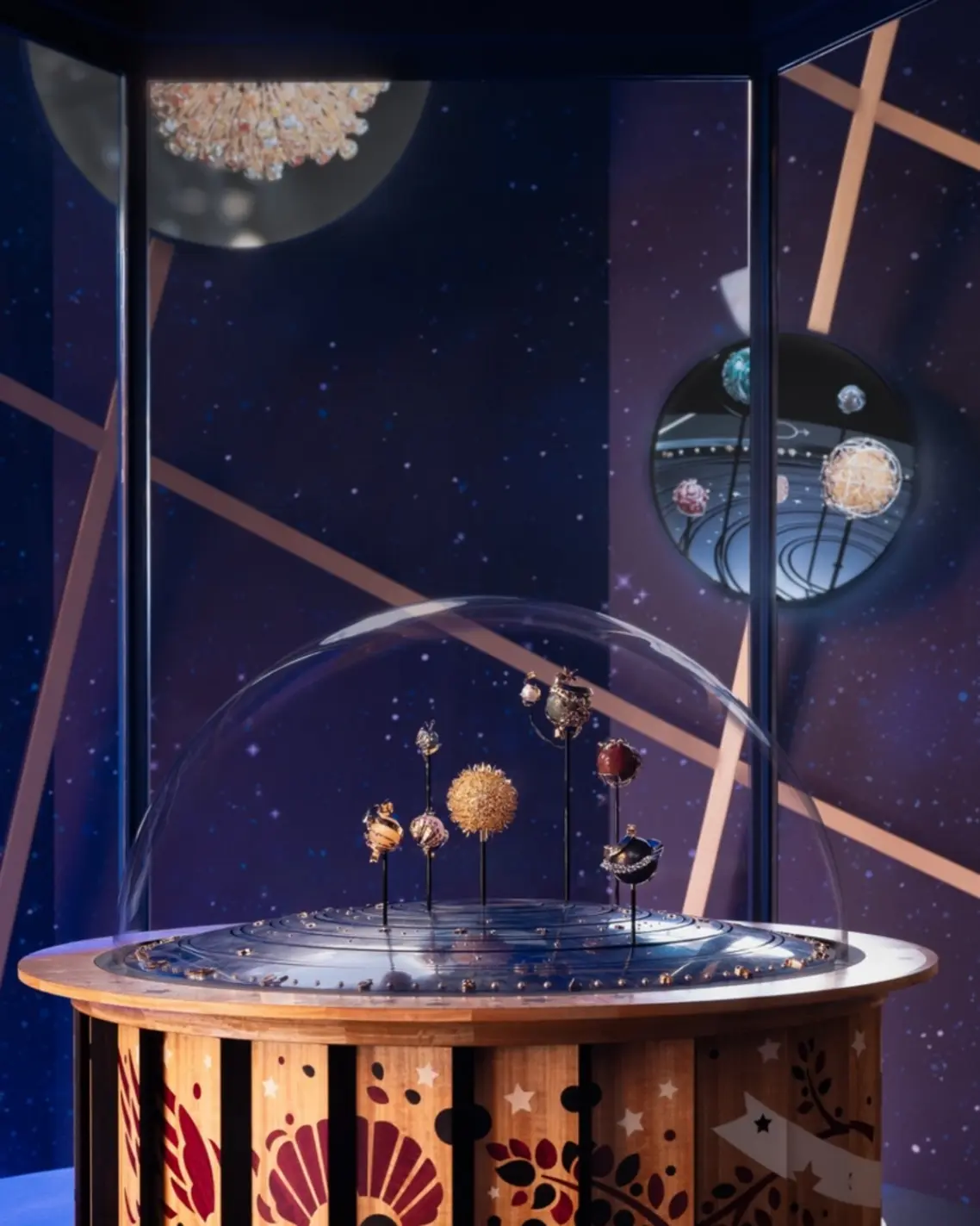
Planétarium scales the automaton concept into cosmology: 50 centimeters high and 66.5 centimeters in diameter, it presents the sun and planets visible from Earth, and each heavenly body moves at its genuine speed of rotation.
A shooting star sweeps the planets along in a ballet accompanied by a crystalline melody, and the design even introduces poetic “rule bending,” with every second planet moving in the opposite direction to its natural orbit for fairy tale effect.
In 2025, the language of Van Cleef & Arpels automata shifted toward something quieter and more intimate: nature as a guarded secret, revealed only by touch, then returned to stillness. The Maison’s scenes rely on materials chosen for their ability to behave like light and landscape at once. Plique à jour enamel turns wings and petals into stained glass, catching illumination as if it were breath. Petrified palmwood, iron eye stone, jasper, and thulite anchor the composition with geological gravitas, so the bases feel as deliberate as the gems above them. Mystery Set rubies sharpen the illusion of pure color, a skin of stones with no visible metal to break the spell, while lacquer completes the enchantment, layered and dried with patience until metal reads as leaf, and craft becomes its own kind of life.
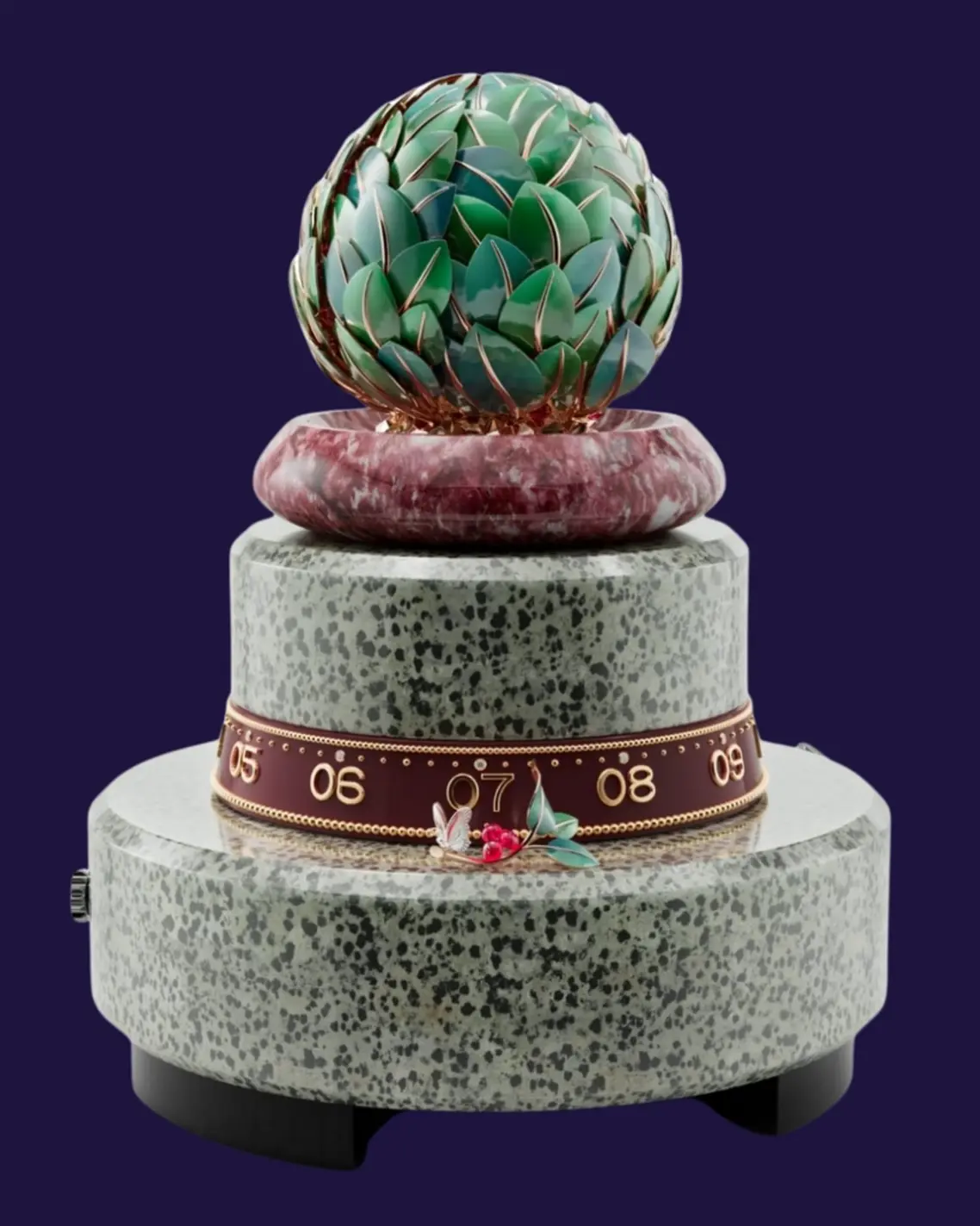
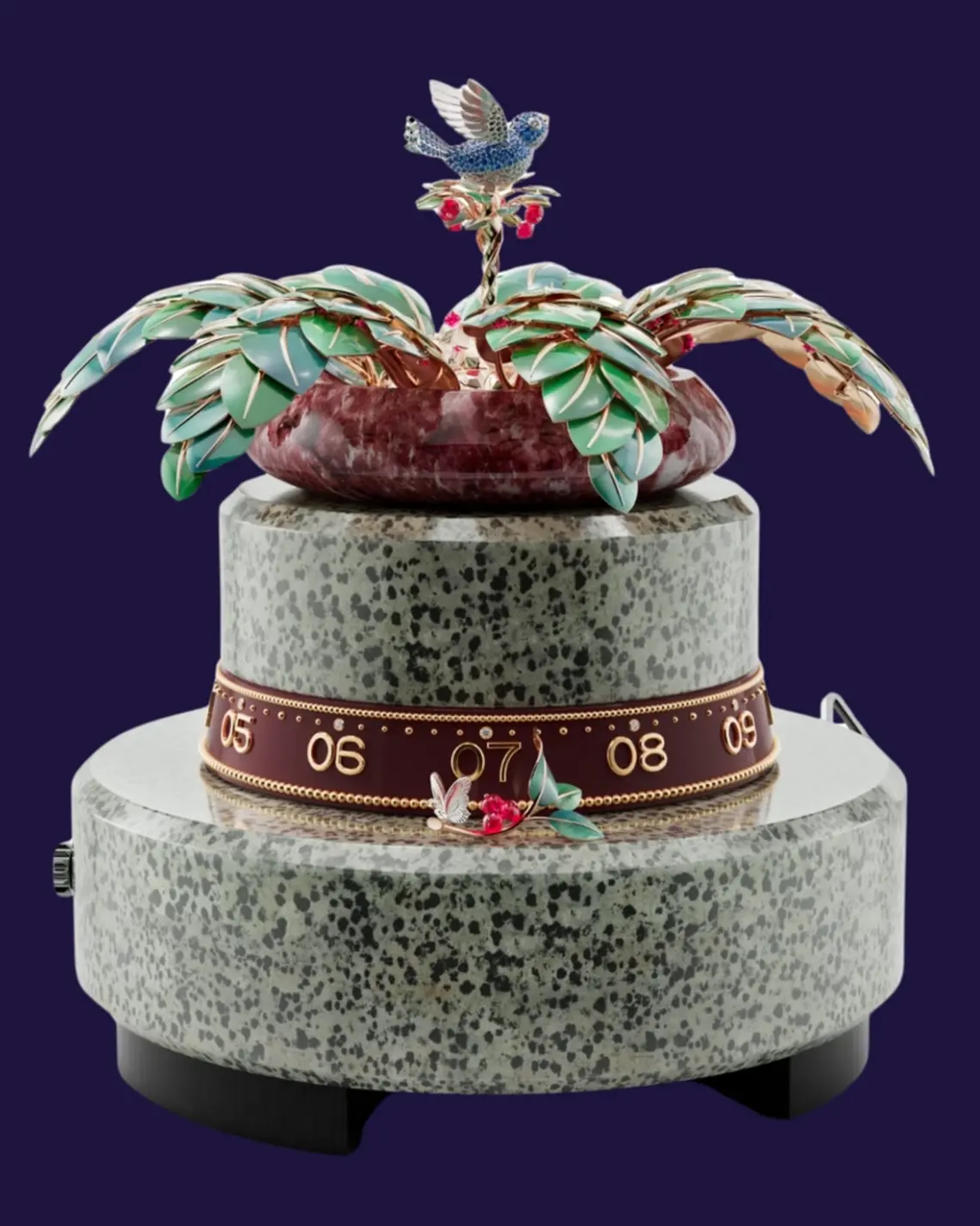
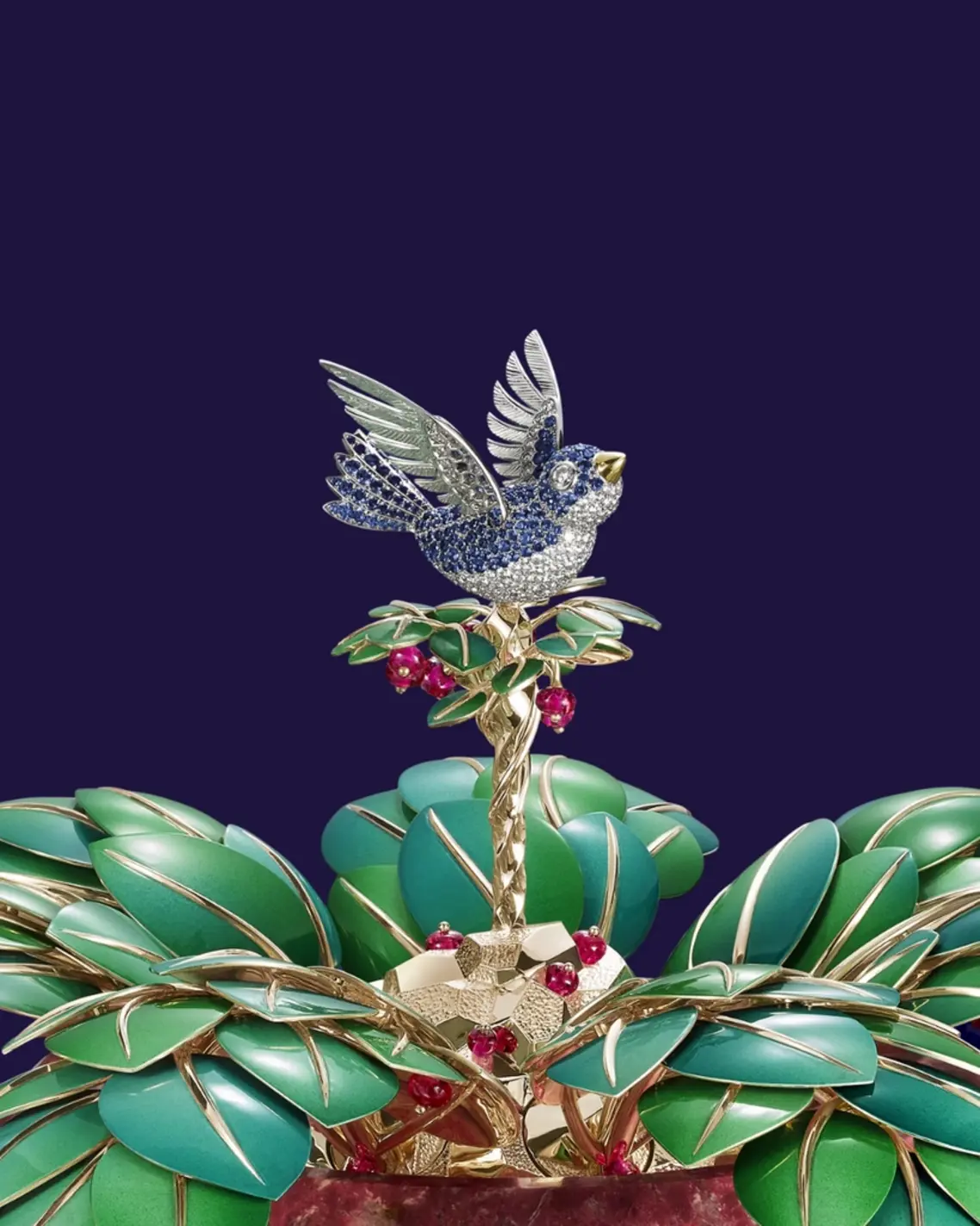
In stillness, Apparition des Baies masquerades as pure botany: lacquered rose gold leaves gathered into a lush, protective dome. Touch the mechanism and the bouquet begins to breathe. Leaf by leaf, it opens, revealing a white gold bird set with diamonds and sapphires, wings lifting with uncanny realism, before the foliage closes again and the miracle disappears back into its own greenery. The feat is discipline as much as spectacle: 126 leaves, overlapped and intertwined, each built through eight airbrushed lacquer coats, with long drying pauses and careful sanding between layers to create a seamless green gradient across the entire form.
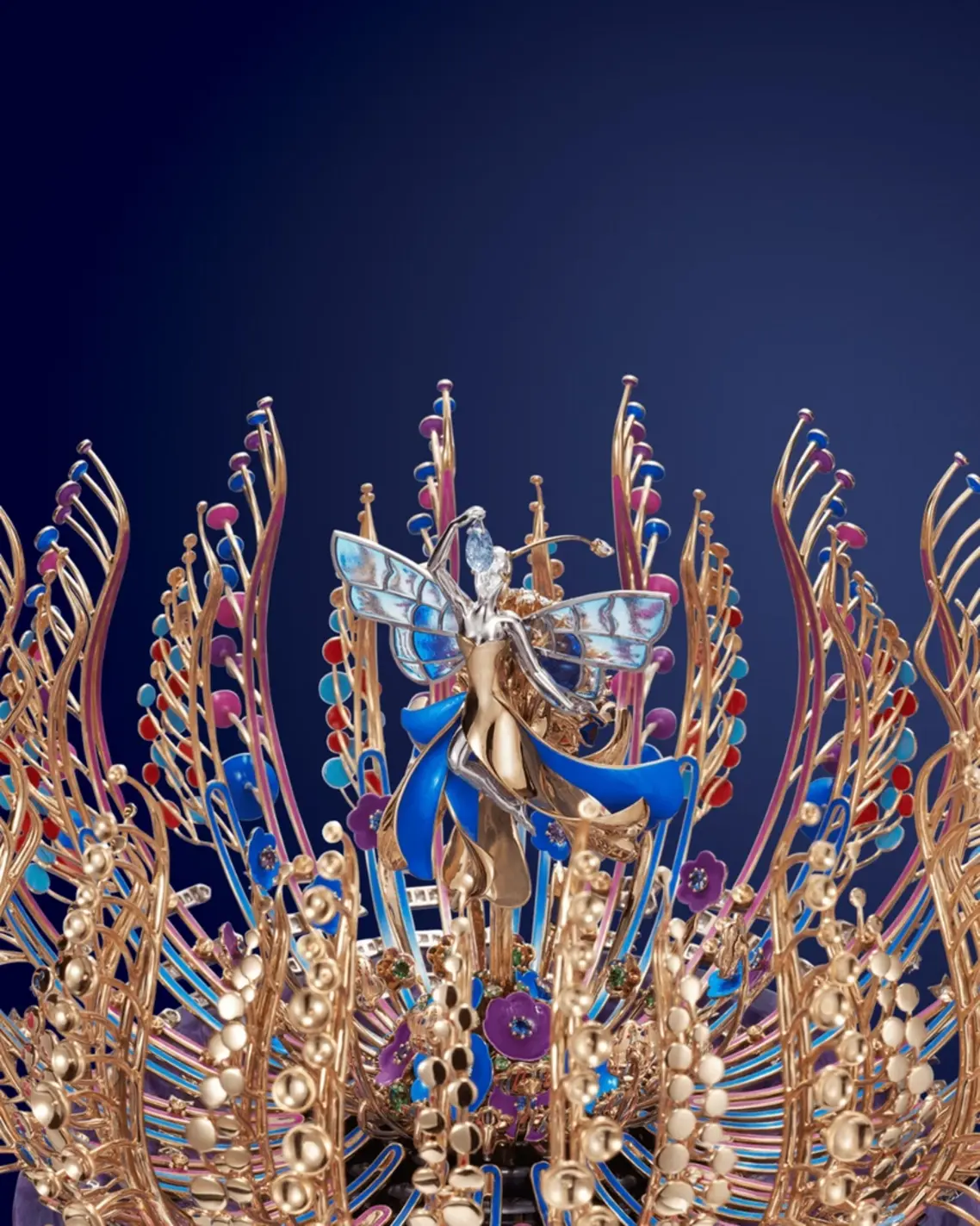
Bouton d’)r turns the Maison’s 1930s paillette motif into choreography. The bouquet shimmers, parts, and reveals a fairy, her features suggested by a rose cut diamond as she pirouettes in place. Plique à jour enamel wings flutter like stained glass in motion, and a briolette cut sapphire becomes her captured drop of light. Precision here is multiplied into abundance: 684 lacquered caps, assembled by hand onto fine stems, creating a surface that glitters, ripples, and changes texture as the piece moves.
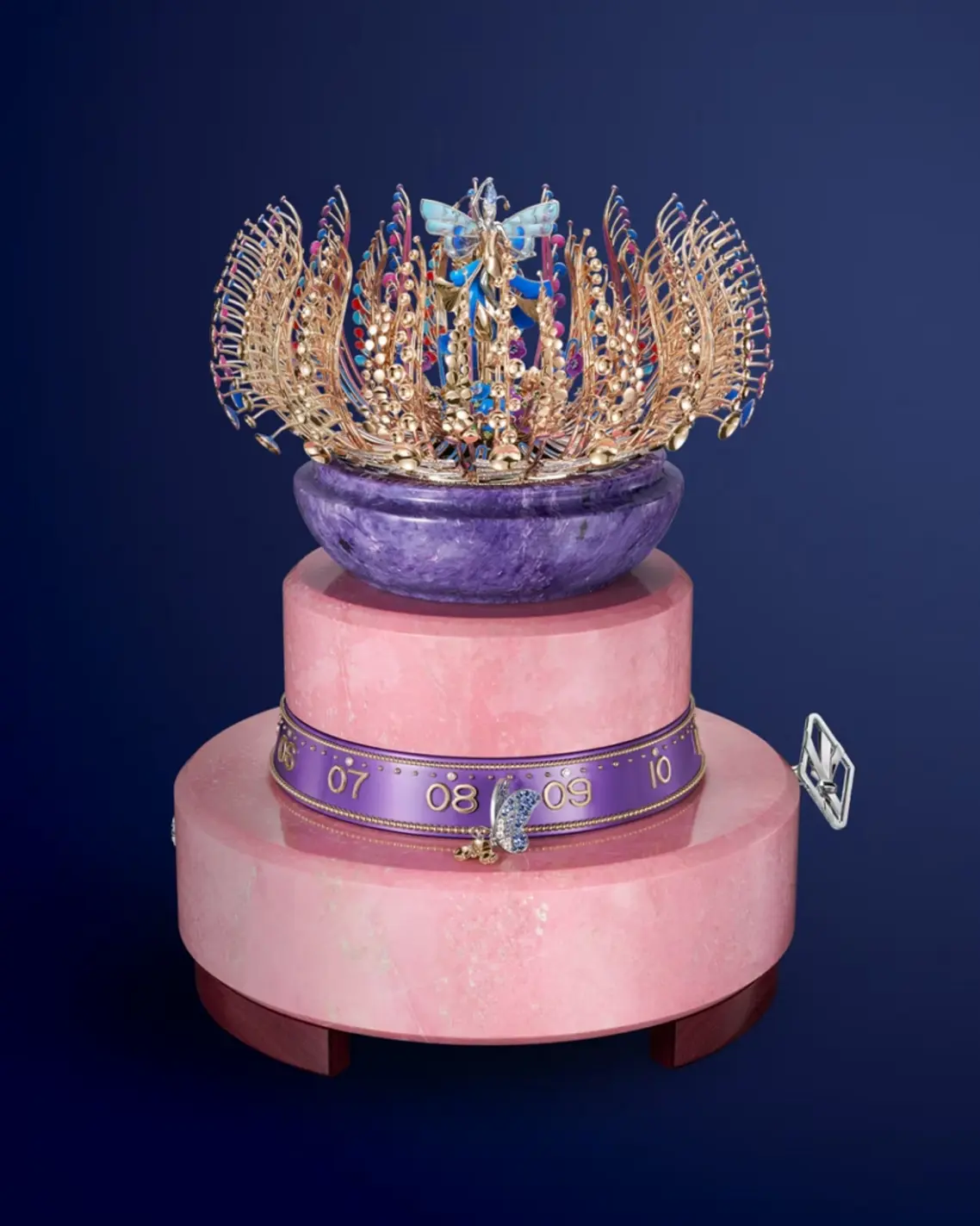
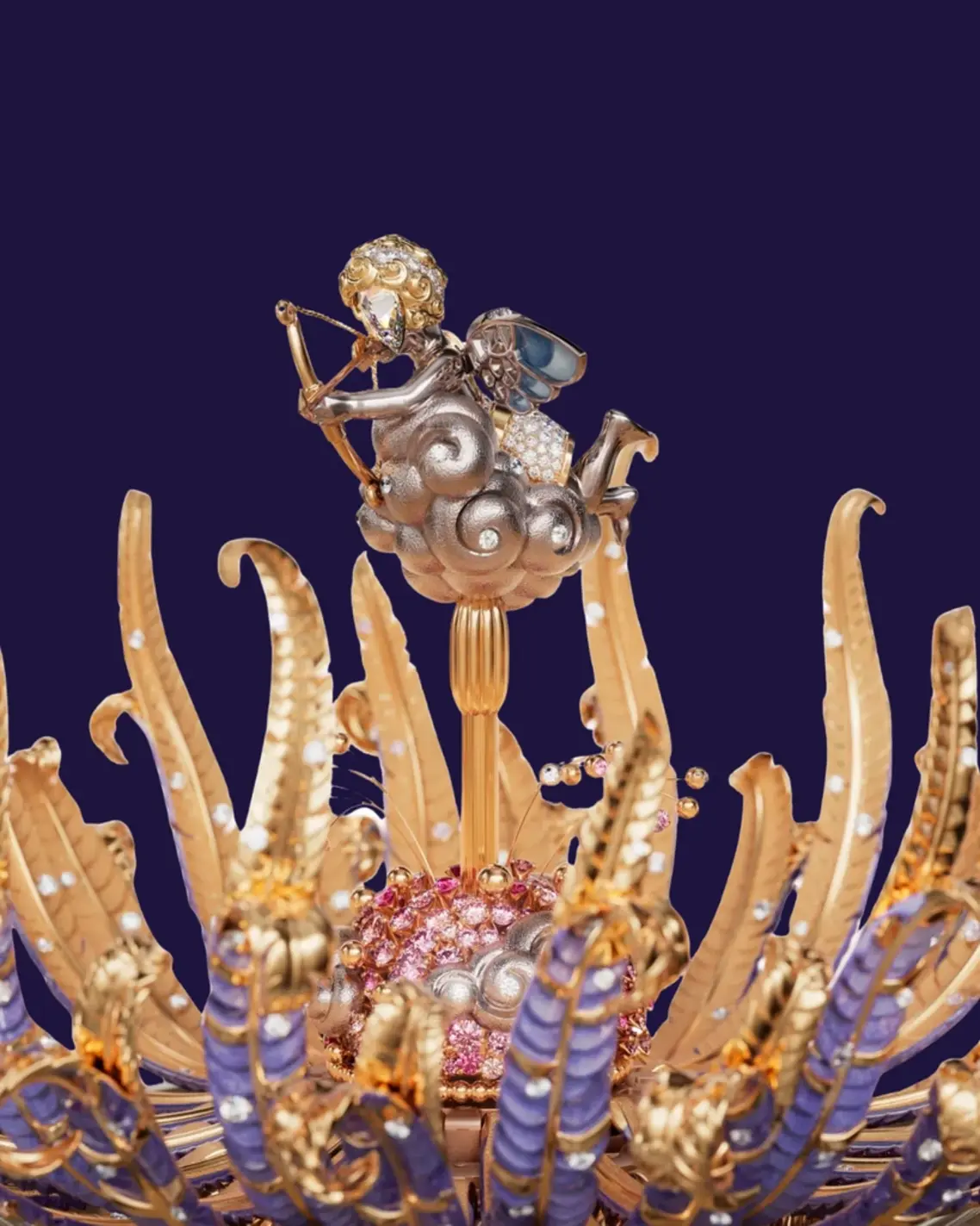
Unveiled at Watches and Wonders 2025, Naissance de l’Amour stages a gentler revelation. Cupid rises from a feathered basket, turns as if listening to his own melody, and retreats again into concealment. His plique à jour enamel wings beat briefly while a carillon plays, giving the scene the cadence of a small, private ceremony. Timekeeping is folded into storytelling: a rotating ring displays the hours through two lacquered feathers set with diamonds, as if time itself were being written in plumage.
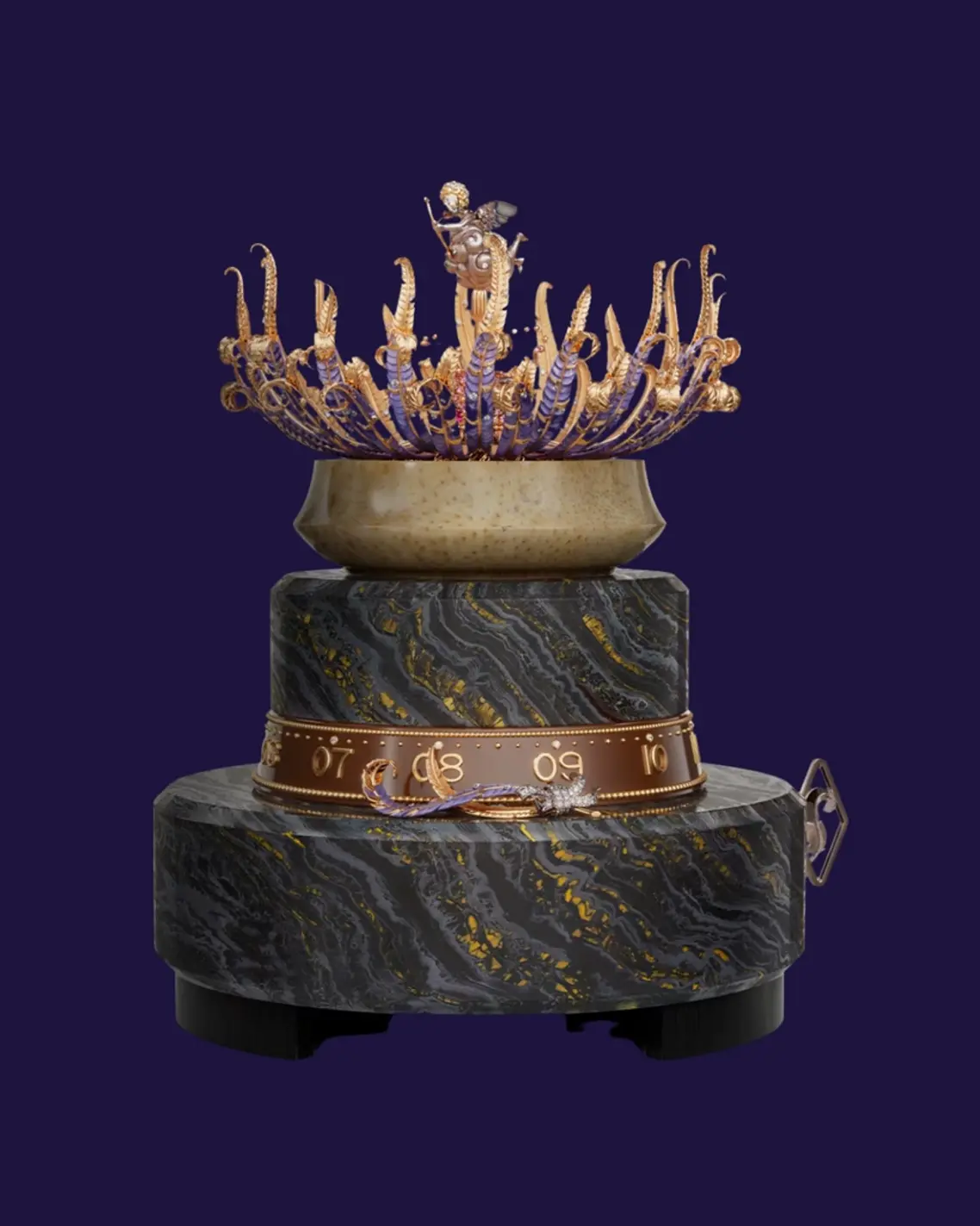
Van Cleef & Arpels automata sit at the summit of what high jewelry can become: sculpture that tells time, time that turns into narrative, and mechanics that deliver emotion. From Varuna’s early precious object legacy to Fée Ondine’s 50 second spell, the Maison keeps refining a single ambition: make wonder repeatable, and keep it intimate.