MENU
Close





Why does Gen Z personal style still crave a uniform, even in a culture obsessed with individuality, self-expression, and the performance of standing out?
Why does Gen Z personal style still crave a uniform, even in a culture obsessed with individuality, self-expression, and the performance of standing out?
March 25, 2026
Advertisement

Advertisement



In the age of individuality, Gen Z still longs for a uniform, which is funny, really, because this is the generation supposedly raised on self-expression, personal branding, niche aesthetics, and the endless little theater of being seen. Yet the craving is there, tucked beneath the mood boards and the shopping carts and the algorithmically approved taste. The fantasy of dressing like a singular person remains delicious, of course. The reality often feels closer to wanting a formula that spares you from public humiliation before 9 a.m. That tension sits right at the heart of Gen Z personal style, where the desire to look original often collides with the need to feel safe.
Gen Z’s answer to what counts as “safe” to wear at work comes loaded with all the complications modern office dressing now demands. The look matters because the job makes it matter, even when there is no official uniform in sight. So a uniform gets built anyway, piece by piece: some version of the ruched boatneck tank, black jeans, a shrug, red ballet flats. The point is rarely self-revelation. The point is to look polished, current, and fluent in the subtle codes of taste, to dress like someone who understands The Row even if the salary remains firmly elsewhere. In certain professional ecosystems, that alone functions like a dialect.
That office style often lands in the realm of conservatively trendy. Outside work, personal preferences spill into view more freely: jorts, pointy-toed boots, a distressed tank, something lower, sharper, less edited. At work, though, individuality must remain legible, tasteful, and properly edited. Quiet luxury, that polished little religion Fast Company has already dubbed the unofficial uniform of the client-facing creative profession, becomes her answer. By committing to a particular flavor of basic, Gen Z manages to project just enough edge while keeping everything office-safe. It is style as plausible deniability, and in many ways it becomes its own Gen Z uniform.
Uniforms, or at least a uniform state of mind, are making a comeback in the workplace, particularly among Gen Z. The slow death of remote work, combined with the rise of GRWM culture, has left office dress codes in a state of surreal collapse. What exactly is office-appropriate anymore? Vanessa Friedman at The New York Times says shorts can be acceptable. Vogue has effectively declared business casual dead. Meanwhile, Gen Z, the cohort that entered the workforce largely through Zoom rectangles and webcam angles, keeps stumbling into dress-code controversies, from wearing activewear to work to taking the “office siren” trend far too literally.
The result is a kind of cultural whiplash. Workplace dressing now produces anxiety, confusion, and a level of guesswork that feels faintly absurd. In tech, where sweatpants and T-shirts became standard issue, many young workers have started imposing Steve Jobs-style uniforms on themselves simply to avoid attracting the attention of HR. In this climate, getting dressed for work becomes less about personal style in its purest form and more about building a reliable formula, one that can pass inspection, satisfy vague expectations, and save a person from the endless tiny panic of wondering whether they got it wrong.
And once Gen Z lands on a formula, the temptation to cling to it becomes enormous. A grey linen shirt, Dickies, black adidas sneakers, pieces that feel acceptable enough, easy enough, invisible enough, start doing a great deal of emotional labor. Personal wardrobes may be far more informal, though work asks for a version that passes inspection without demanding too much thought or too much spending. There is a certain brutal honesty in that. The beauty of a uniform lies in its mindlessness, especially when the official rules on paper barely resemble what people are actually wearing in real life.
At first glance, this hunger for uniformity seems almost scandalously counterintuitive. Gen Z has come of age online with a buffet of style inspiration, criticism, references, and opinions available at all hours. This has produced immense pressure to express yourself through fashion, to identify your personal style through viral systems like the Three Word Method, or to quantify your wardrobe through apps like Indyx. When even third-grade teachers are showing up in full Chopova Lowena, a generic skirt-and-top combination feels practically anonymous. That is exactly what makes Gen Z personal style so psychologically fascinating: it promises individuality, then quietly rewards fluency, repetition, and the comfort of dressing like you already belong.
And yet the internet, in one of its favorite little tricks, pressures people toward individuality while manufacturing sameness at industrial speed. Thanks to excellent dupes and the trend cycle’s habit of flattening aesthetics into instantly replicable formulas, everyone seems to own Tabis, follow outfit equations, and recreate the same Pinterest looks. Algorithms have pushed trends across state lines, country lines, continent lines. TikTok turned the concept of big pants and a small shirt into a universal law, as if Moses himself had descended from the mountain carrying low-rise denim and a cropped knit. For all its promises of originality, Gen Z personal style keeps getting nudged toward the same silhouettes, the same references.
Sameness, then, becomes impossible to escape. Outside the office, there are already unspoken codes governing the way people dress. New York Magazine’s brutal viral cover story insisted that a white baby tee, blue jeans, and ballet flats create a West Village girl as neatly as a quarter-zip manufactures a corporate Chad. Naming the uniformity has become a sport in itself, a little internet bloodsport where the winner is the person who identifies the aesthetic first or most mercilessly.
Every supposedly esoteric look, it turns out, can be reduced to an archetype. The Greenpoint Girls are posting ultra-specific brand lists on TikTok. The Bushwick Bros have turned these personas into viral Performative Male competitions. An Instagram account called Starter Packs Only has built an audience of more than 200,000 followers by posting annotated flat lays of these identities in the language of early-2000s Tumblr. The whole thing feels both anthropological and slightly humiliating, which is probably why it thrives. At some point, the aesthetic starts looking suspiciously like a Gen Z uniform in better lighting.
And while the algorithm makes a convenient villain for this kind of cultural flattening, it is also clear that young people are nursing a secret appetite for conformity. Dressing the part signals belonging. In a moment when class codes, generational codes, and sartorial rules are all being dismantled at once, when tech billionaires are normalizing the insolence of the lazy fashion style begins to feel like total anarchy. For anyone even remotely online, that kind of freedom can be less liberating than exhausting.
So of course young people want an easier way to look like they belong. It is self-expression within the confines of conformity. Which is really the entire modern fashion predicament in one devastating little sentence.
Style has always worked this way, in truth. People absorb rules, observe norms, and then spend years experimenting with them, sanding them down, twisting them, and refining the image they present to the world. But for Gen Z, the stakes feel higher because their public sphere is effectively the whole internet. Looking the way you want to look, or at least looking correct according to an ever-shifting storm of trends, signifiers, and codes, feels like performing before an audience of millions instead of merely walking into a lecture hall. Add in the internet’s ability to immortalize someone’s appearance through a screenshot or meme, and it becomes easy to understand why building Gen Z personal style now feels so fraught.
Style, for a while, became irrelevant. Then public life returned, and people suddenly had to figure out how to appear again. The result was an identity crisis that hardened into a pathological urge to express themselves everywhere they go. It became almost like a right. Which sounds dramatic, until you remember how much contemporary life encourages people to treat appearance as biography.
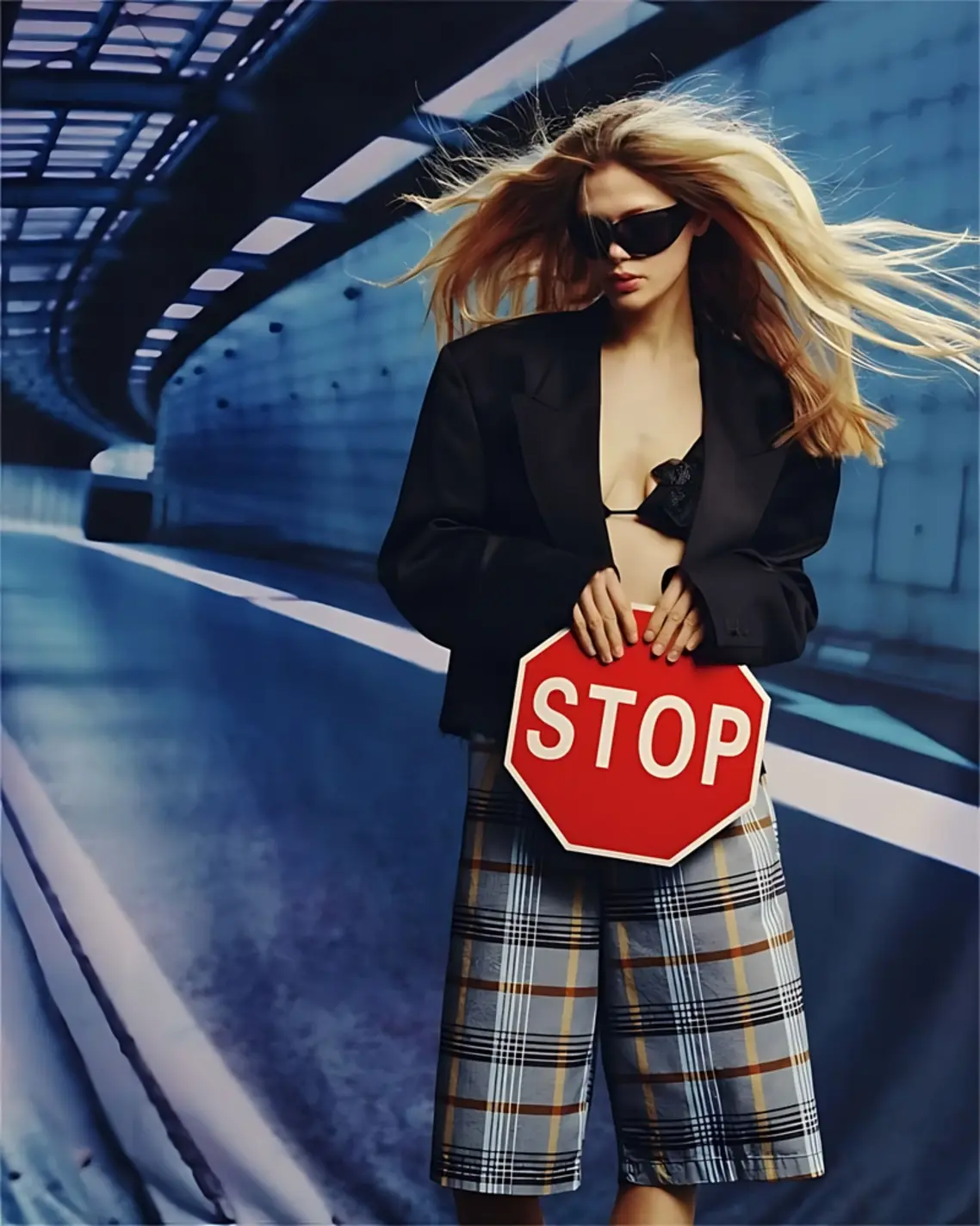
Still, developing a personal style is rarely as seamless as clicking through SSENSE. For plenty of Gen Z, dressing became unexpectedly difficult the moment life stopped offering a built-in structure. School uniforms, campus habits, old family opinions, dated Tumblr references, all those early systems once made clothing choices feel simple enough. Then real life arrived with its flood of new experiences, new moods, new social codes, and suddenly getting dressed required far more negotiation. The old formulas, coral and teal, skinny jeans, high-waisted shorts, the inherited logic of an earlier internet, started giving way to bras abandoned with ceremony, enormous jorts, baby tees, and all the other little experiments of a generation trying things on in public. Trends become less a surrender than a tool. Gen Z watches them, uses them, tests them, and through that process begins to figure out what actually feels right.
And that may be one of the least glamorous but most useful truths in fashion. Trends and aesthetics feel safe when you are still figuring yourself out. They offer a framework. Dressing for different social situations can feel like attending a theme party every single day, each setting arriving with its own mood, its own codes, its own silent expectations. For a casual evening, a bodycon boat-neck knit dress with sandals. For a night out, dark-wash jeans, a peasant top, and ankle boots. The rules may be blurrier and faster-moving than before, but the instinct to seek them out remains completely intact.
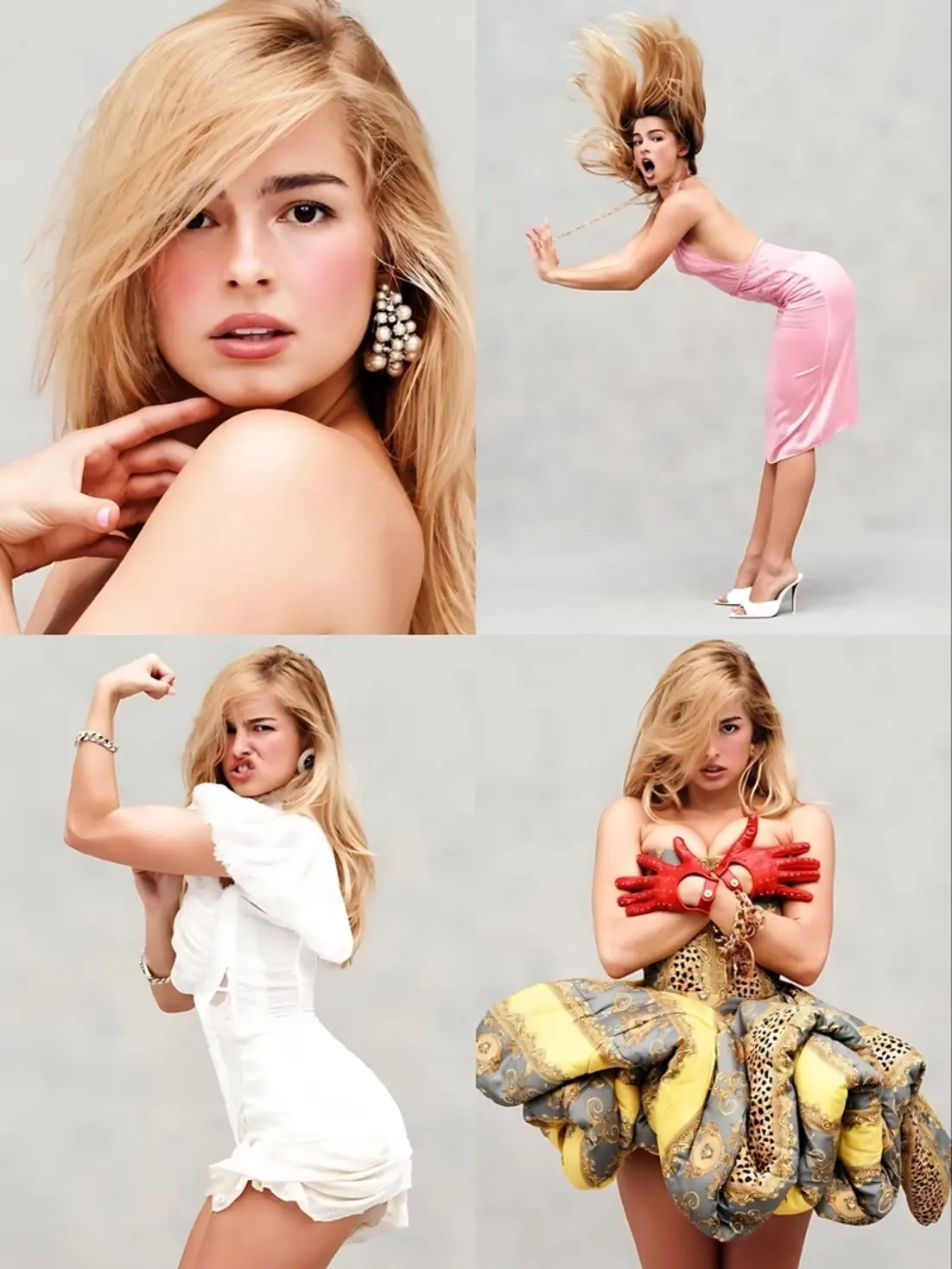
For Gen Z, the desire to articulate identity through clothing, when fused with the internet’s obsession with microtrends, creates a landscape in which specific garments arrive with built-in meaning. Clothing says so much now that the wearer has to monitor the message almost constantly.
For some, that surveillance produces caution more than creativity. Comfort becomes the main motivator because the risk rarely feels worth the potential flop. On the rare occasions Gen Z tries something new, the whole exercise can feel like beta testing in public. Self-consciousness creeps in fast, and self-consciousness often feels worse than being generic. One failed experiment, a floral beach-hat vibe sourced from Depop, can draw enough looks to end the trial on the spot and kill any fantasy of becoming a hat person. After that, the retreat into reliability looks very specific: the Regal Dress from Aritzia for work, a rotation of Brandy Melville elsewhere, familiar pieces that ask fewer questions and attract less scrutiny.
In that kind of equation, the labor of following the rules feels easier than the burden of appearing performatively different. Worse still, there is always the possibility that all the effort passes unnoticed anyway. No one on the street is necessarily going to understand what an outfit is trying to say, which makes the whole performance feel even riskier.
And that is the real sting Gen Z keeps running into. For all the references, mood boards, shopping hauls, and aesthetic explainers available to them, building truly individual looks day after day remains objectively hard. Everyone wants personal style. Far fewer people want, or can afford, the time, research, thought, experimentation, and tailoring that genuine personal style often requires. Uniform dressing becomes a Gen Z uniform, a life raft bobbing in the choppy waters of sartorial uncertainty.
Context is what actually defines personal style. It is the missing ingredient separating a performative subway reader from a person genuinely reading on the train, or a fashion risk from your father’s lawn-mowing shoes. Fashion is full of misreadings, coded references, local signals, algorithmic influences, and if-you-know-you-know conventions dictated by geography, community, and online culture. It is difficult terrain. Confidence comes later.
Which is why Gen Z personal style pull toward a uniform makes perfect sense. They begin with what they know. They are using formulas, archetypes, safe silhouettes, and aesthetic frameworks as the first scaffolding of a style identity that will likely grow stranger, sharper, more personal, and more precise over time. Every good wardrobe, after all, begins with the basics.
Advertisement