MENU
Close





On the Eastern & Oriental Express, Tastes of Tomorrow turns rail dining into a moving philosophy of place. The March 23, 2026 journey pairing André Chiang and Simon Rogan framed luxury not as excess, but as a live exchange between terroirs, memories, and landscapes in motion.
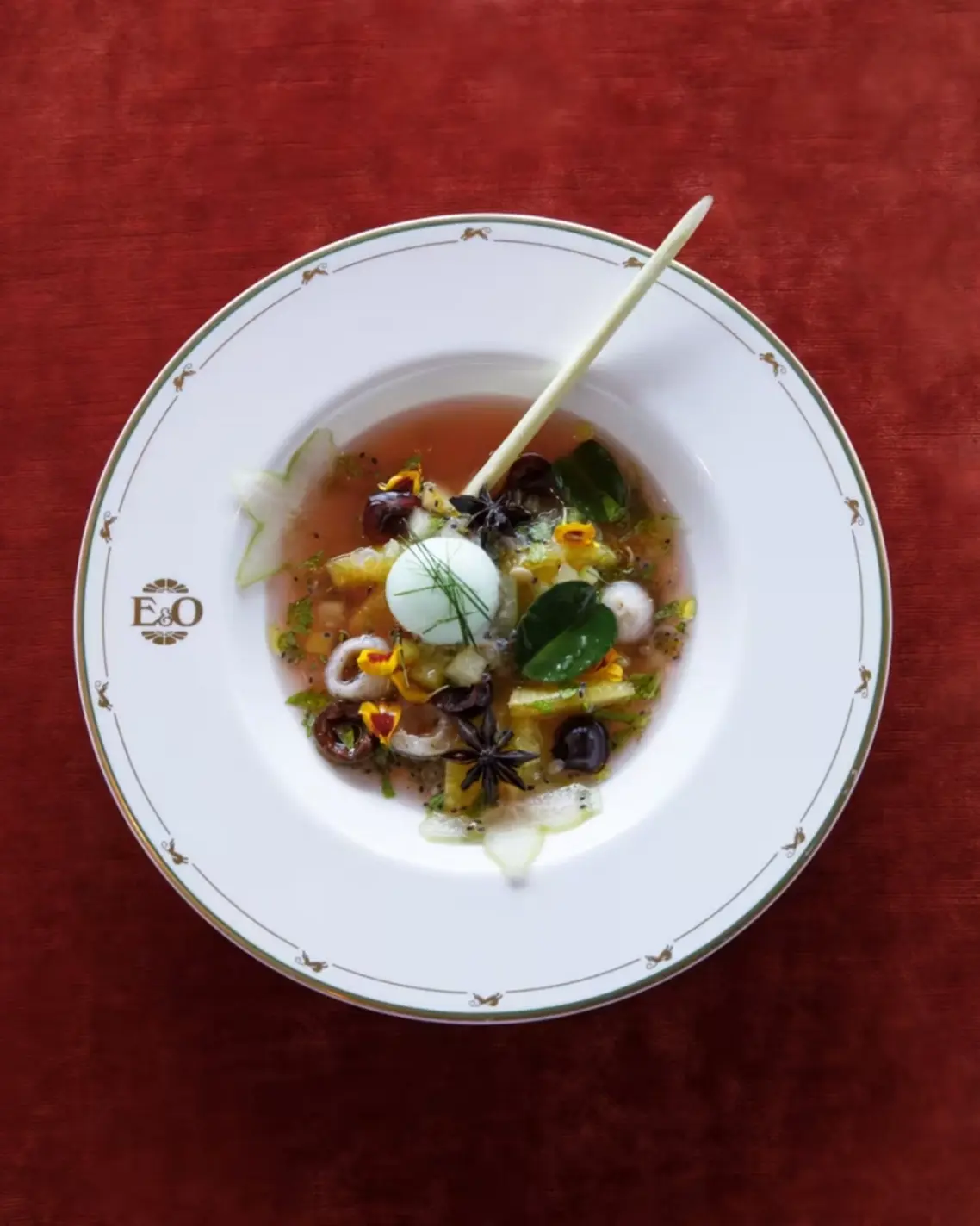
On the Eastern & Oriental Express, Tastes of Tomorrow turns rail dining into a moving philosophy of place. The March 23, 2026 journey pairing André Chiang and Simon Rogan framed luxury not as excess, but as a live exchange between terroirs, memories, and landscapes in motion.
March 23, 2026


Tastes of Tomorrow has pushed the Eastern & Oriental Express beyond the old fantasy of train dining as polished nostalgia. Belmond’s 2026 series is framed around “home, identity and cultural fusion,” and its March 23 departure gave that idea real force by pairing the train’s culinary curator, André Chiang, with Simon Rogan, the first guest chef of the season. The result was a three-night Malaysian journey that treated the dining room less as a service space than as a testing ground for how regional memory, technique, and movement might meet on the same table.


The pairing works because each chef arrives with a distinct philosophy rather than a signature dish alone. Chiang’s well-known Octaphilosophy reduces cuisine to eight core elements, including salt, texture, memory, terroir, artisan, and uniqueness, which gives his cooking a structured, almost architectural clarity. Rogan, meanwhile, has spent years building a farm-driven ecosystem around Our Farm in Cumbria, a working 12-acre site growing produce with biodiverse and organic principles at its core. On the train, those two systems meet: Chiang’s intellectual precision and Rogan’s agricultural intimacy. What emerges is a version of “New Asian terroir” that does not flatten difference, but stages it. Cumbria is not made to disappear into Malaysia, and Malaysia is not reduced to garnish.

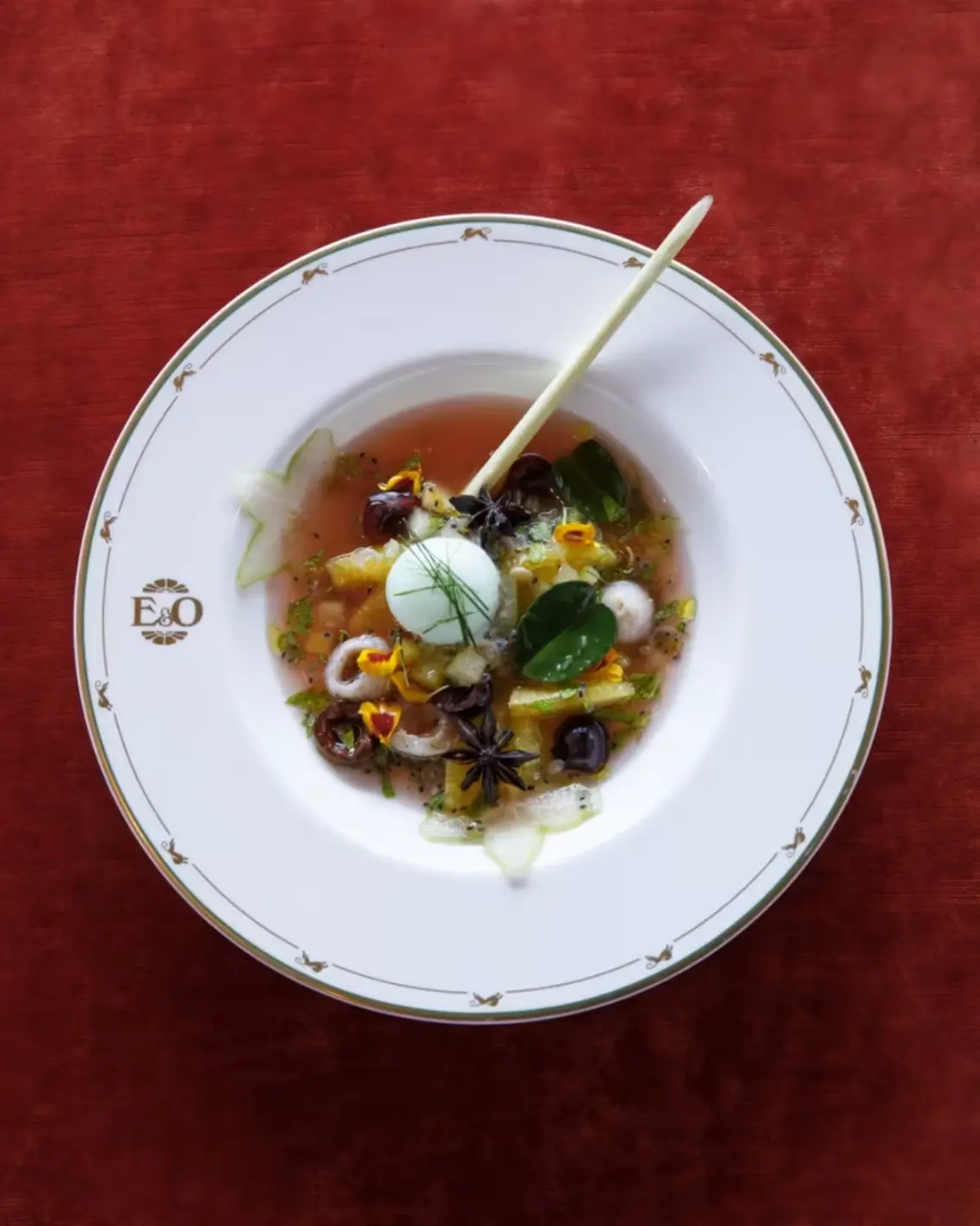
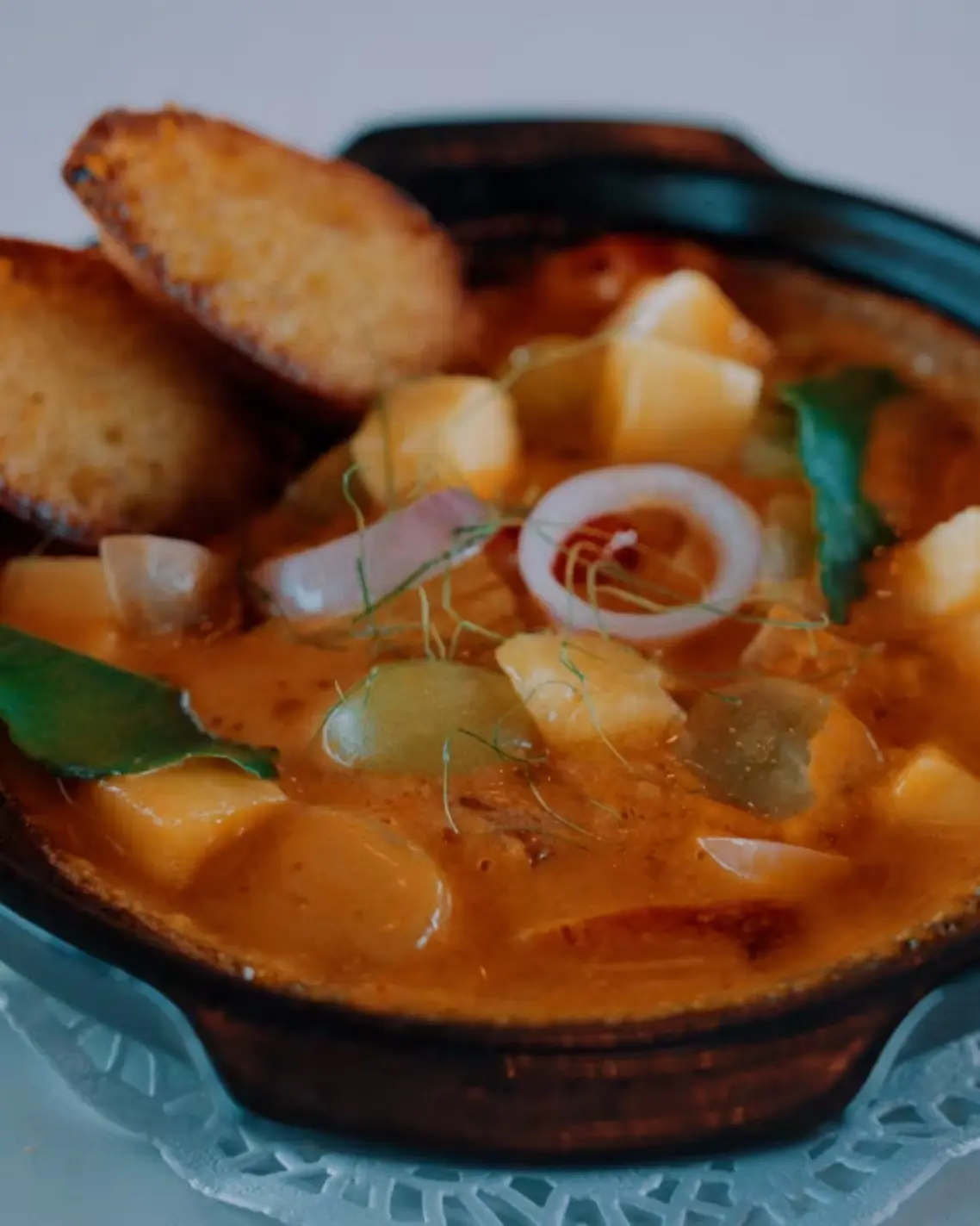
That is what gives the March journey its charge. Rogan’s own team described the route as gliding from Singapore through lush jungle and into Penang, with experiences extending to Langkawi, Perlis Geopark, and George Town. Belmond describes the train’s cuisine more broadly as a modern take on elevated Malaysian cooking, served in its dining carriages as the landscape unfolds outside. In that context, the collaboration becomes more than a chef residency. It becomes a moving argument that taste can be shaped by geography even while the geography itself keeps changing.
That idea gives Tastes of Tomorrow its editorial value. Luxury on the Eastern & Oriental Express is no longer simply the preservation of tradition, nor the stunt of novelty for its own sake. It is the disciplined collision of culinary languages on a train built for slowness, spectacle, and sensory focus. Belmond has already scheduled further 2026 editions for September 28 and November 16, suggesting that this was never a one-off event but an evolving platform. The most interesting table, in other words, may be the one that refuses to stay still.