MENU
Close





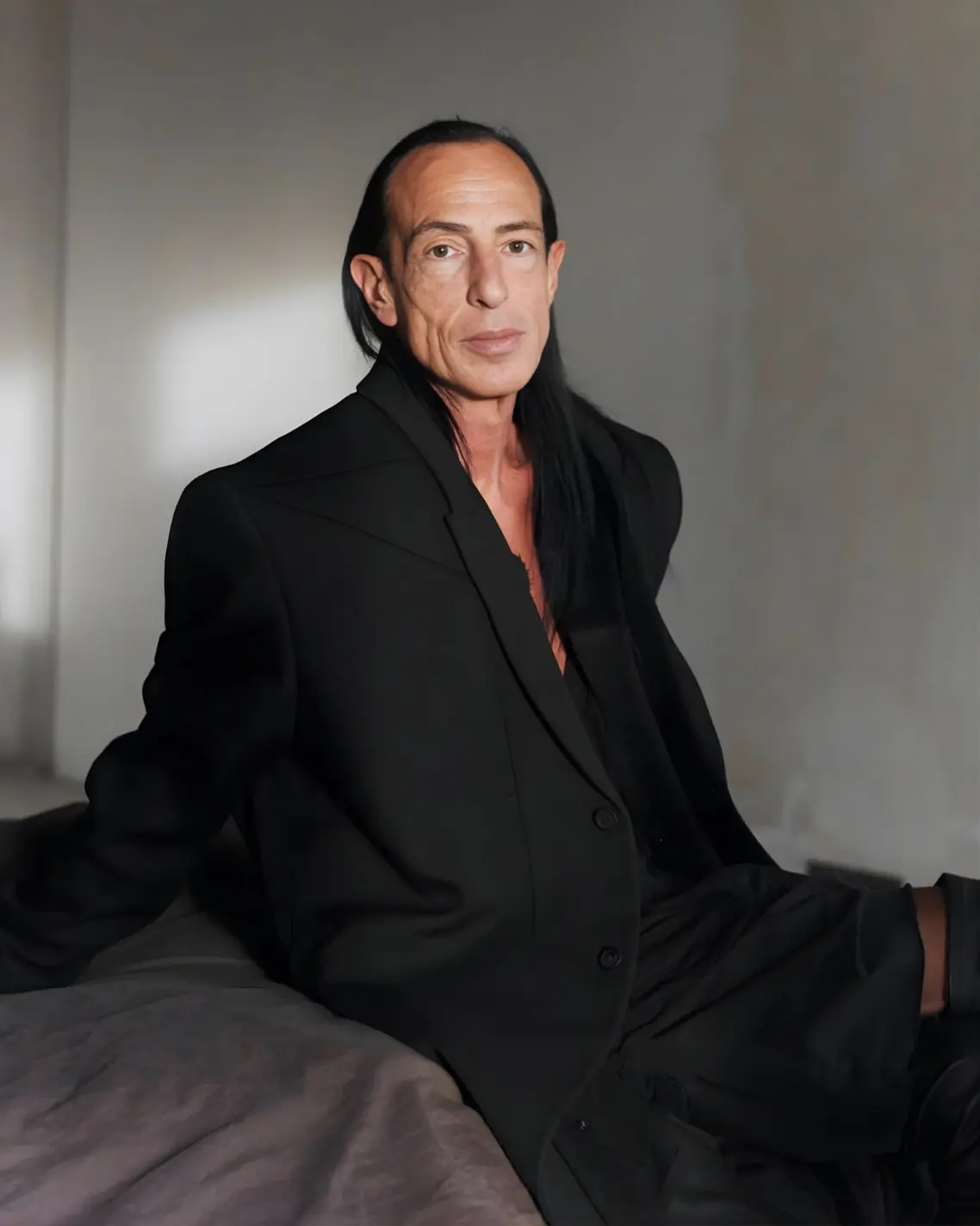
Rick Owens altered the emotional temperature of modern fashion. Across more than three decades, he turned darkness into philosophy, damage into glamour, and the runway into a site of ritual, protest, and devotion. What he gave fashion was a complete alternative system of beauty.
Rick Owens altered the emotional temperature of modern fashion. Across more than three decades, he turned darkness into philosophy, damage into glamour, and the runway into a site of ritual, protest, and devotion. What he gave fashion was a complete alternative system of beauty.
March 24, 2026
Advertisement

Advertisement



Rick Owens finds his deepest significance through the physical work. By transforming materials linked to urban fatigue and ruin into garments with ceremonial gravity, he redefined black as a specialized code instead of a simple color choice. He successfully evolved glamour into something harsher and more intellectual, establishing a design language so comprehensive that it functions as its own distinct world. The Palais Galliera retrospective, Temple of Love, captures this reality by framing his career through the lenses of tenderness, ego, and a consistent refusal to align with dominant aesthetics. Rick Owens does not just participate in the industry, but instead proposes a complete alternative to traditional fashion.
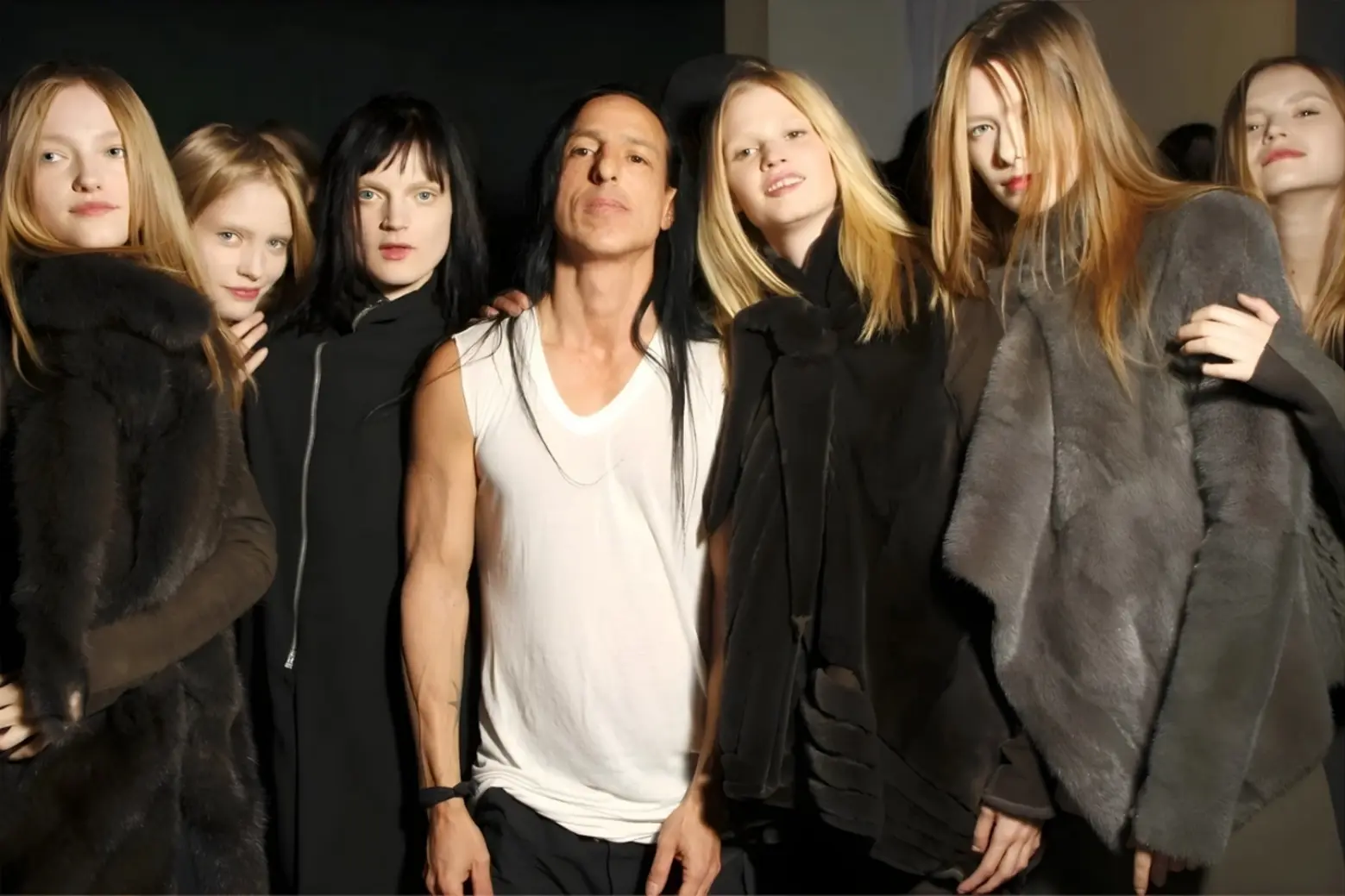
The earliest part of the story is crucial since it formed the eye that would subsequently reshape fashion. Born in California in 1961 and raised in Porterville, Rick Owens grew up with Catholic order, paternal strictness, and a deep exposure to spiritual ritual, biblical imagery, late nineteenth century French literature, and early Hollywood cinema. Those influences never sat in the background. They became structural components of his fashion language. The gravity in his clothes, the fascination with ceremony, the instinct for silhouette as something almost devotional, all begin there. Even when the garments appear feral, the framework underneath them feels governed by order.
That combination of discipline and fantasy helps explain why Rick Owens has always felt larger than a trend cycle. His work carries the memory of old glamour and the severity of ritual at the same time. In the Palais Galliera framing of Temple of Love, his references stretch from Joris-Karl Huysmans to modern and contemporary art and the great Hollywood films of the early twentieth century. Clothes inherit that density, they arrive with a backstory of symbols, shadows, opera, and moral atmosphere. Rick Owens gave fashion a darkness that felt cultivated instead of decorative.
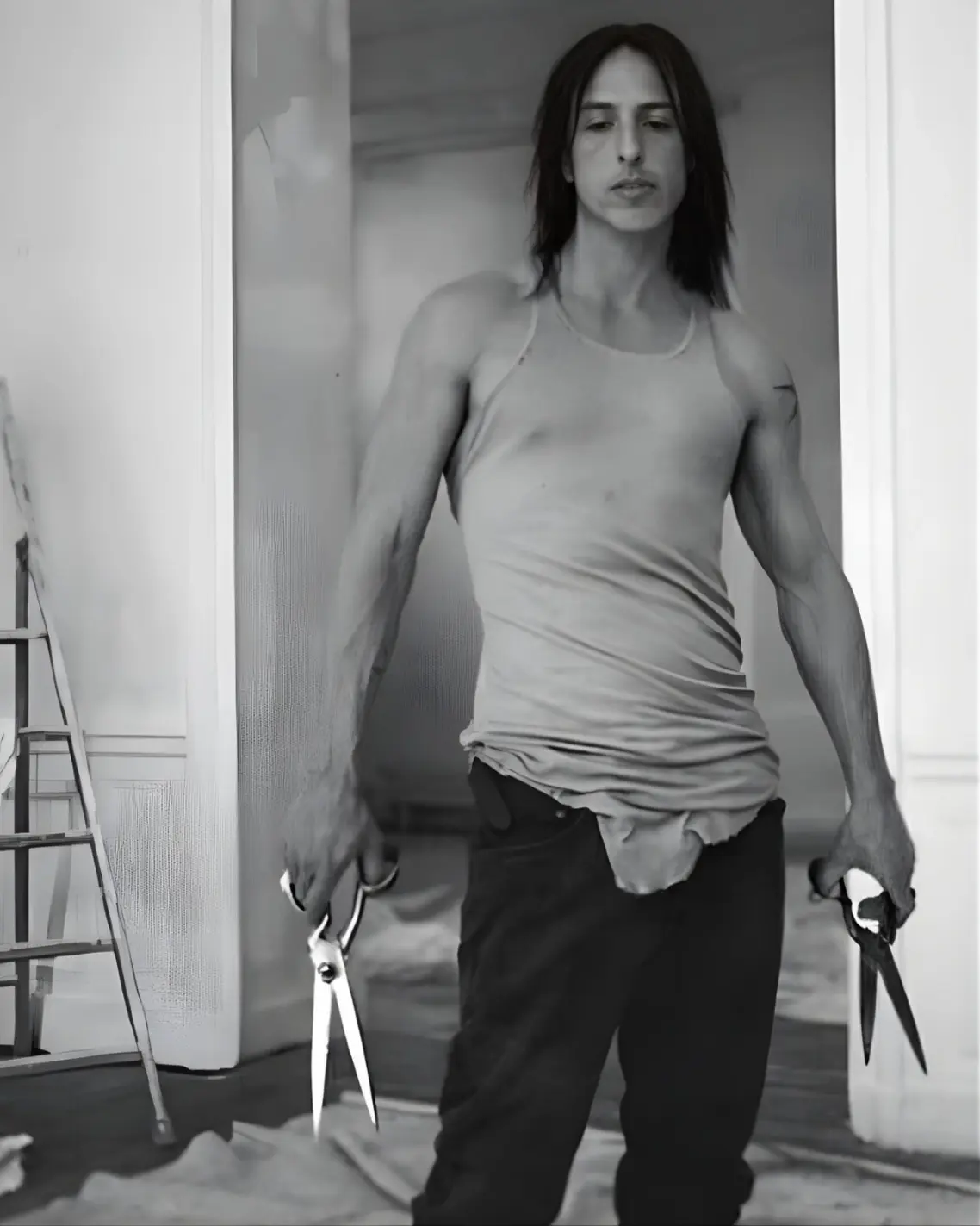
Los Angeles gave Rick Owens the technical skill that keeps his work from collapsing into mood alone. He studied at Otis, left, then trained in pattern making and draping at Los Angeles Trade Technical College. He later worked copying the patterns of designer garments, a practical education that taught him how clothes are built from the inside out. That experience matters because in his world, for all its mythic atmosphere, rests on serious construction. The drape, the collapse, the extension of the shoulder, the brutal line of a boot, the way a gown hangs like a relic or a shroud, all of it comes from someone who understands structure with precision.
Los Angeles also gave him the underworld that sharpened his taste. The Galliera timeline traces his immersion in underground nightlife and sex clubs during the 1980s, along with a 1986 group of fetish-inspired accessories featured in Interview. This is where the Rick Owens language began to harden into something singular. He absorbed club culture, bodily transgression, Hollywood decay, and the visual pleasure of excess, then filtered it through discipline. Out of that collision came a new proposition for fashion, one where severity and sleaze could inhabit the same look without canceling each other out. Rick Owens took the residue of nightlife and taught it how to stand upright.
The Los Angeles years also introduced his enduring affection for materials that appear weathered, used, and emotionally lived in. The Galliera press release describes his earliest designs as inspired by underground culture and the glamour of 1930s fashion, made with reclaimed military bags, army blankets, and washed leather because resources were limited. That necessity became aesthetics. He found richness in salvage, made scarcity look aristocratic, and gave fashion a language of damage that felt elevated instead of impoverished.
Rick Owens entry into Michèle Lamy’s studio in 1987 is one of the decisive moments in the formation of his fashion universe. His own recollection of that period makes clear that working for Michèle Lamy was the job that led to what became Rick Owens. Through her, he found a creative counterpart, an energy source, and a larger social imagination for his work. Michèle Lamy has always been far more than a muse. She belongs to the brand in a way that goes far beyond partnership. She gives him scale, texture, and a living embodiment of the atmosphere he was building.
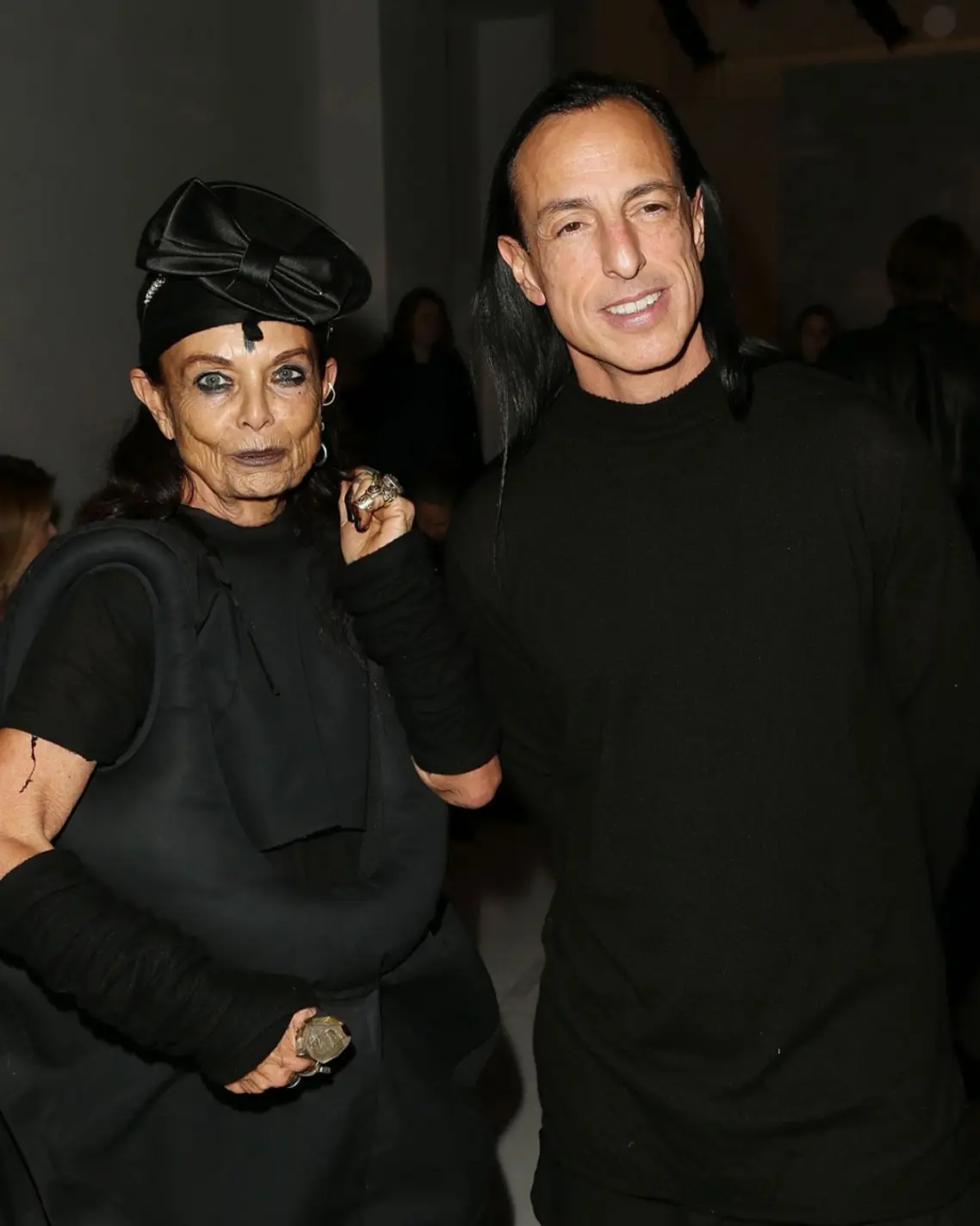
The early 1990s in Los Angeles brought the first version of the house into view. Rick Owens began selling his work informally through Charles Gallay, then established his company in 1994 on Las Palmas Avenue with only two employees. Les Deux Cafés, opened by Michelè Lamy opposite the studio, became part salon, part staging ground, part social extension of the label. By 1997, he was producing seasonal collections, beginning with MONSTERS for Spring Summer 1998. These details matter less as biographical milestones than as proof that Rick Owens world existed before official canonization. It arrived early as a complete emotional climate, a mix of severity, nightlife, faded elegance, and controlled perversion.
His first major gift to fashion was a new kind of glamour. Rick Owens took the old codes of elegance and ran them through dust, ash, leather, ruin, and discipline. His biased gowns, draped T-shirts, shrunken jackets, and salvaged materials gave fashion a silhouette that felt bruised and noble at once. The Galliera press release and the CFDA member profile both point to the same ingredients, 1930s glamour, underground culture, recycled army surplus, washed leather, black, and the muted grey he calls dust. These became the foundations of an aesthetic that made beauty feel tested by life instead of sealed away from it.
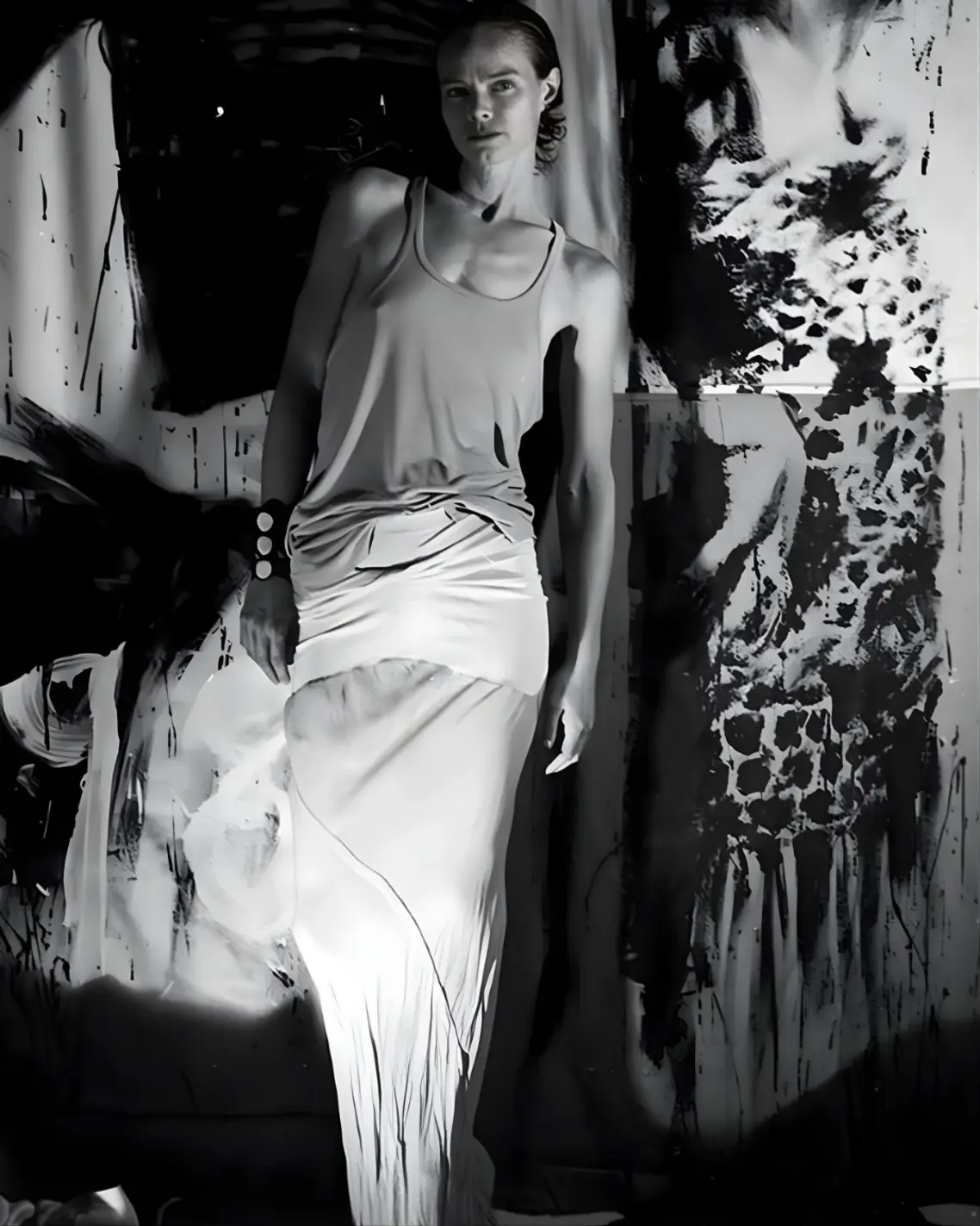
What separated Rick Owens from designers who merely flirted with darkness was his closeness to goth as an entire way of seeing, a symphony of sorrow and melancholy sharpened into form. He understood that black could signal more than mood. It could hold restraint, hauteur, eroticism, alienation, and refusal all at once. In Owens’s hands, that sensibility became less theatrical and more architectural, less about surface styling and more about how a body claims space with discipline. When he described black as a humble color, he stripped it of cliché and returned it to something more inward and exacting. From there, his challenge to standardized beauty felt almost inevitable. He made room for an allure that was colder, harsher, and more self-possessed, where seduction arrived with rigor and shadow carried its own authority.
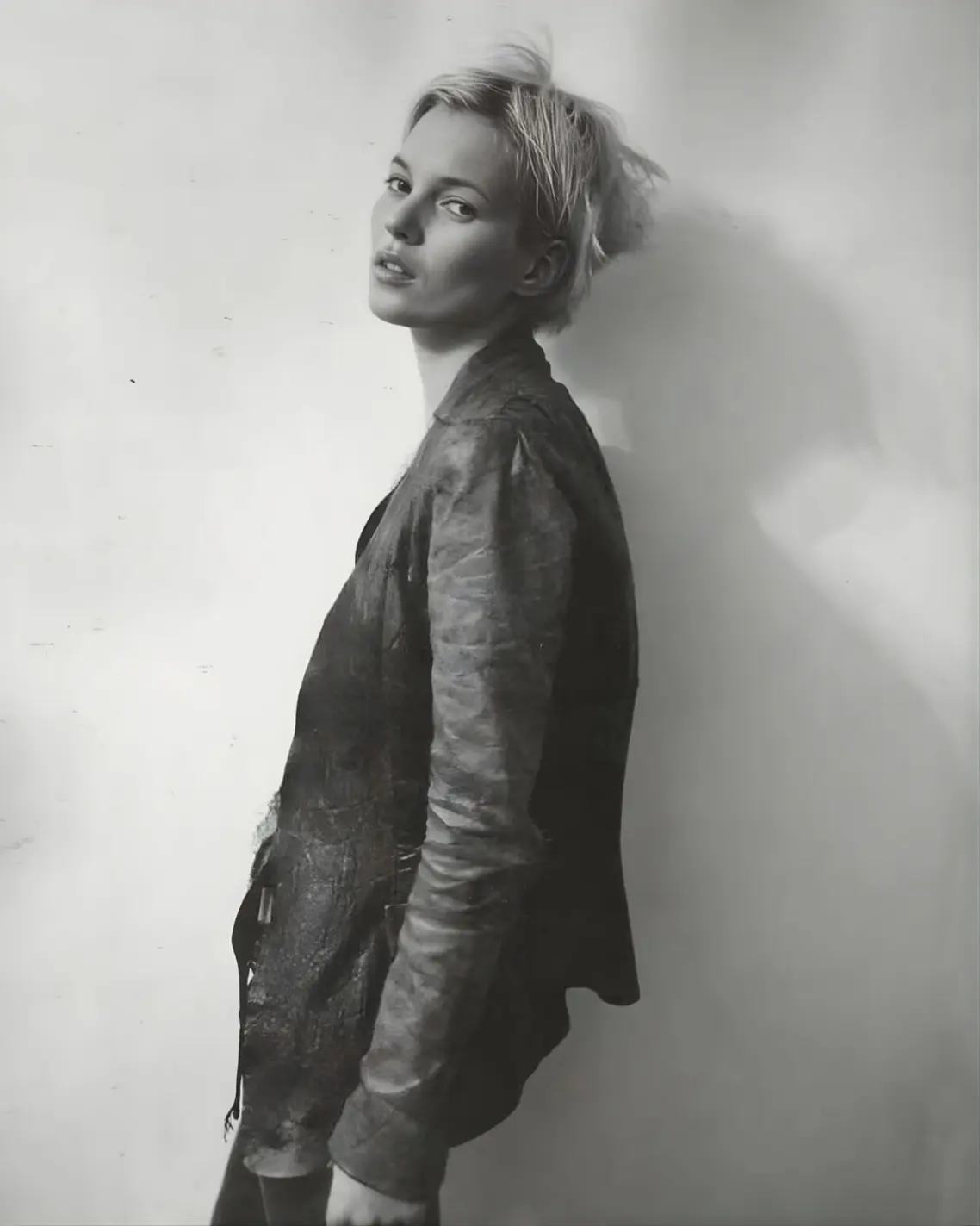
When fashion finally caught up to Rick Owens in the early 2000s, it was meeting a designer whose language already felt complete. The breakthrough moment came in 2001, when Kate Moss wore one of his leather jackets in a Corinne Day editorial for Vogue Paris, the kind of image that can shift a career because it captures a designer’s world in a single frame. That visibility quickly opened the door to his first New York runway show, backed by Vogue, and in 2002 he won the CFDA Award for Emerging Talent. What mattered in that rise was not speed but clarity. Rick Owens arrived with a silhouette, a mood, and a philosophy the industry could already recognize as authored.
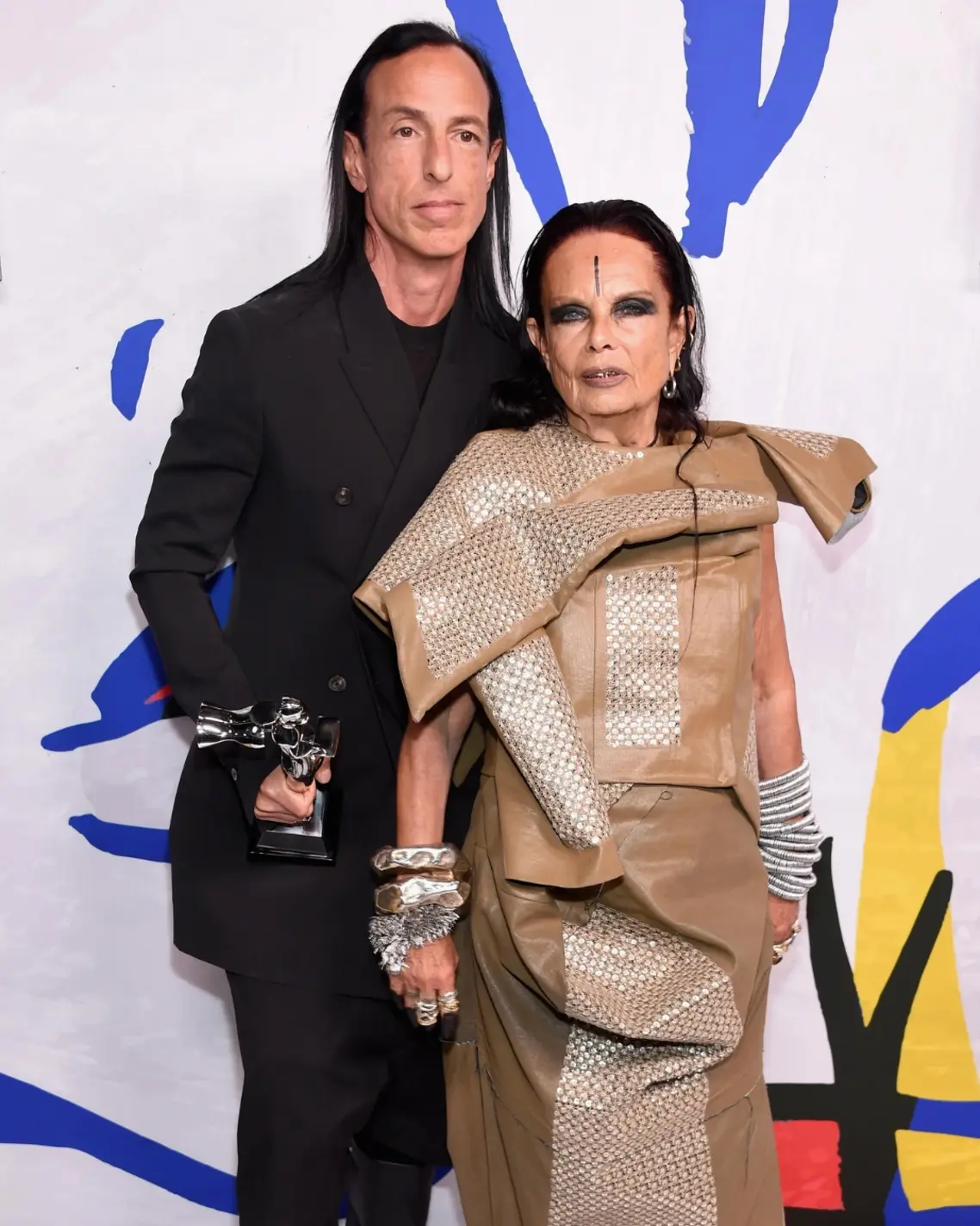
The years that followed confirmed that this was not a brief cult fascination but the consolidation of a major design voice. In 2007 he received the Cooper-Hewitt National Design Award for Fashion Design, a recognition that placed him inside a wider design conversation beyond runway novelty. The CFDA profile also notes his 2017 Lifetime Achievement Award, a distinction reserved for figures whose influence has altered the field itself, and his work has since been canonized further through large-scale institutional recognition, including Temple of Love at Palais Galliera, his major Paris retrospective featuring more than 100 silhouettes across three decades of work. By then, the achievement was larger than awards alone. Rick Owens had done something rarer: he turned an outsider code into a lasting system of fashion authority without sanding down any of its menace, discipline, or erotic charge.
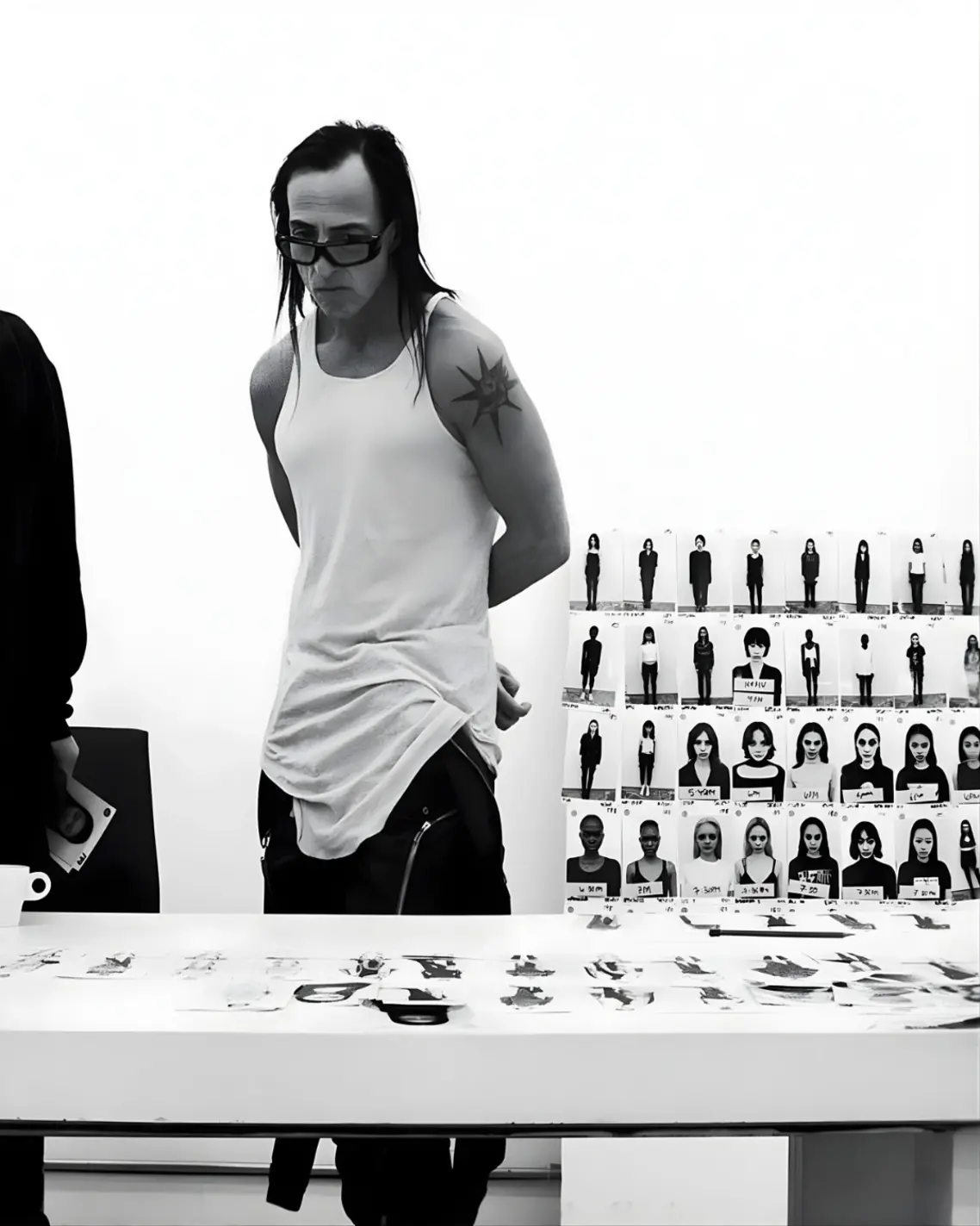
The move to Paris in 2003 expanded Owens’s scale. He took on Revillon, relocated permanently with Michèle Lamy, and later established Owenscorp at Place du Palais Bourbon, formalizing the broader universe around the label. In Paris, the silhouette grew more architectural, the shows were more ceremonial, and the mood was more monumental. The Galliera exhibition notes that his aggressive and sumptuous creations came to be compared with Brutalist architecture, a comparison that captures the severe grandeur of his work without flattening its sensuality. Paris gave Rick Owens the stage where his private vocabulary could become public monuments.
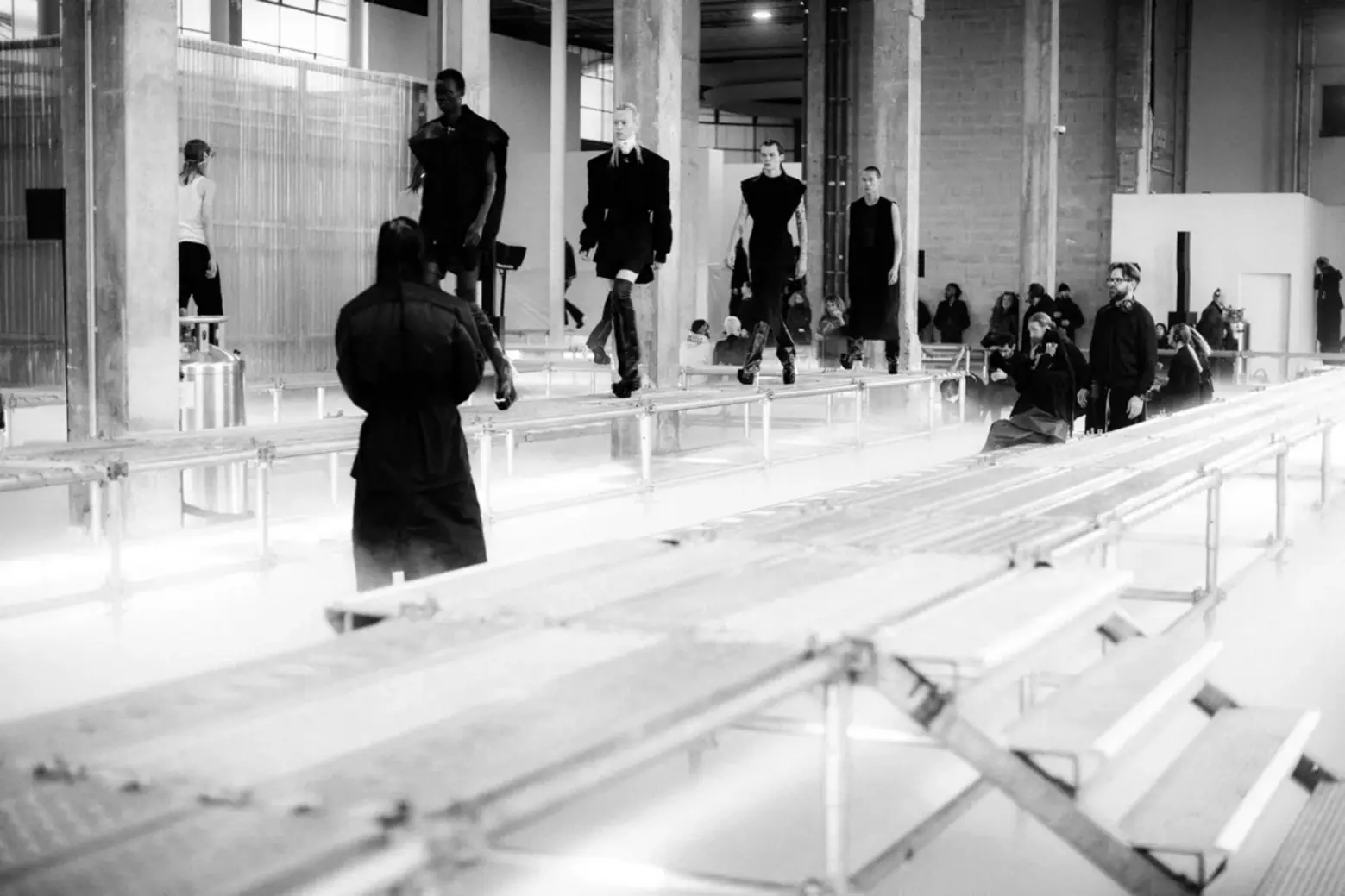
The Paris years also deepened the moral force of his collections. Galliera describes the period from 2013 onward as one in which the work took on a sharper ethical charge, reacting to discrimination, male dominance, and climate inaction through enlarged, sculptural forms. During the pandemic, when he showed collections in Venice near his factories, that monumentality acquired a more meditative tenderness. Official interviews around Temple of Love return repeatedly to warmth, goodwill, hope, and love as active values within his work. Rick Owens gave fashion a rare combination, bombast with conscience, excess with soul. Paris did not tame the vision, it gave it stone, height, and echo.
One of Owens’s clearest achievements lies in how he expanded without losing sharpness. The main line remained the center, while DRKSHDW translated his shapes into workwear and Lilies distilled the house through silk viscose jersey. CFDA’s profile of the brand makes that structure clear, and it also points to a quality that defines his approach to growth. He extends the language instead of diluting it. Each branch of the house carries the same silhouette intelligence, the same friction between grace and barbarity, the same appetite for sculptural presence.
Furniture confirmed that his real ambition had always exceeded clothing. Launched in 2005, the furniture line drew on shapes Owens associated with Eileen Gray, Brâncuși, and California skate parks, later appearing in Paris and Los Angeles museum settings. The Galliera exhibition folded those objects back into the larger retrospective, with cement sculptures in the garden recalling pieces from the furniture line. This is where Owens’s contribution to fashion becomes especially clear. He did not simply design garments. He designed a total environment, a room, a posture, a ritual, a full sensory world in which clothing becomes one part of a larger architecture of taste.
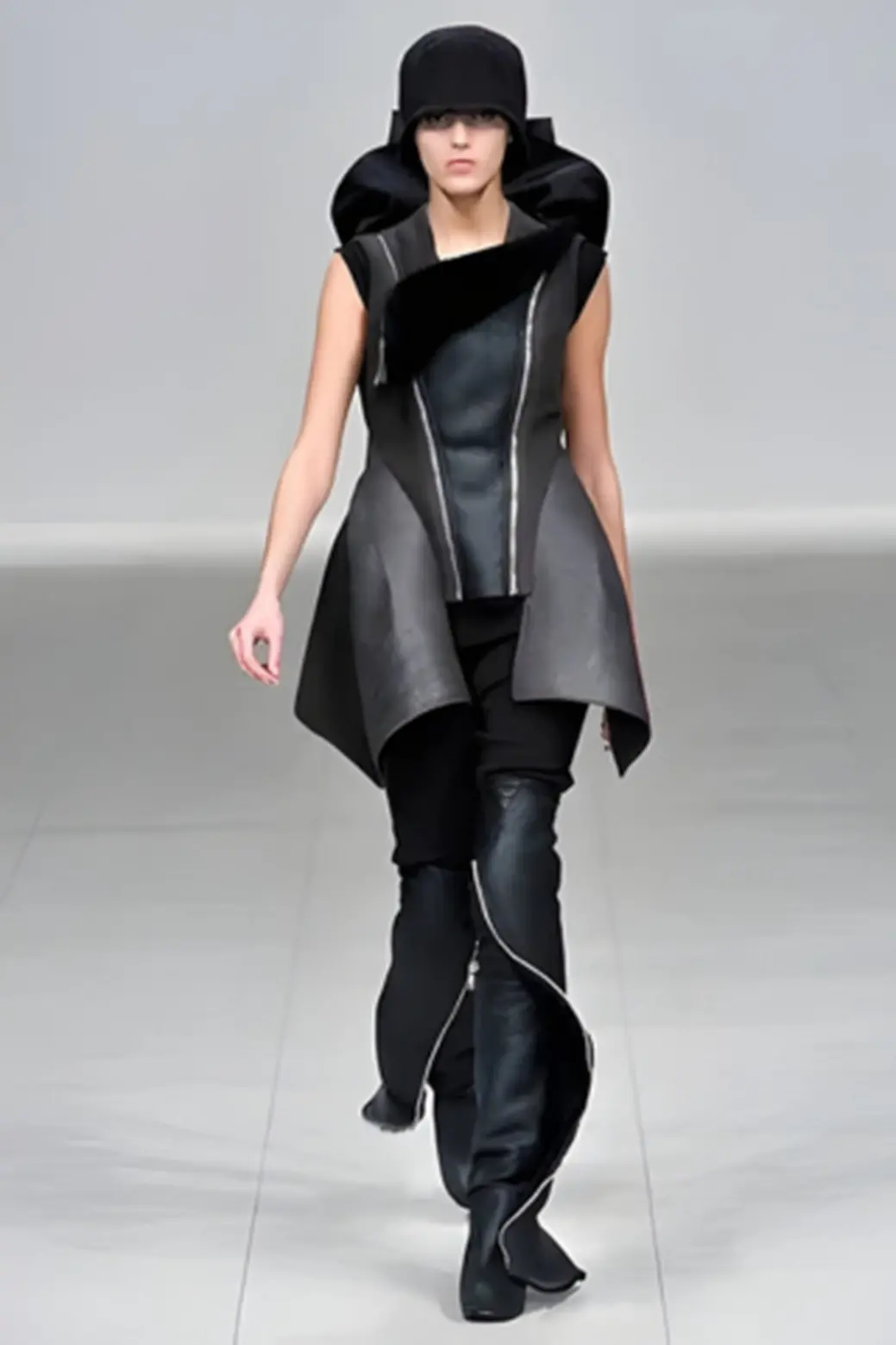
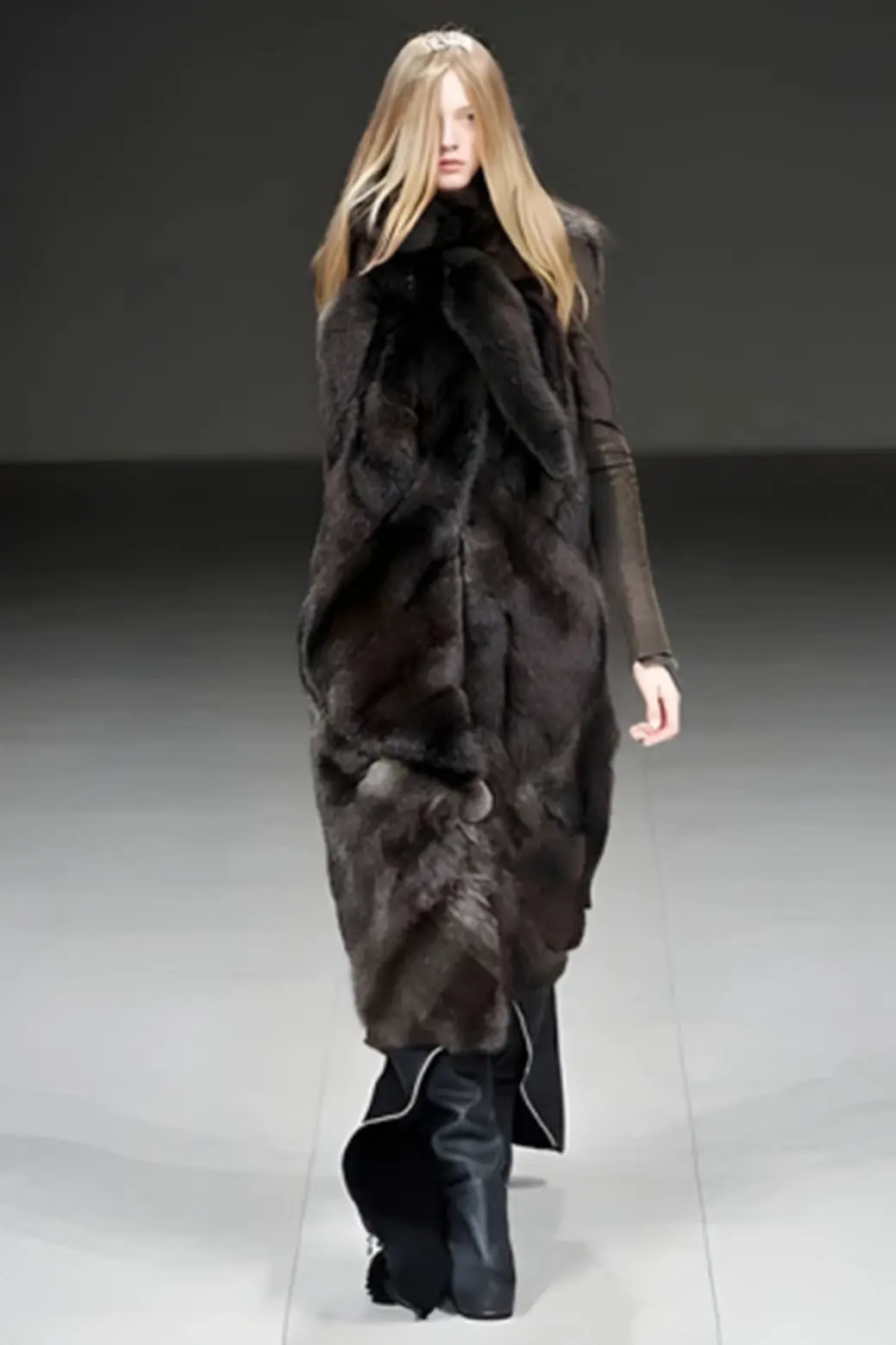
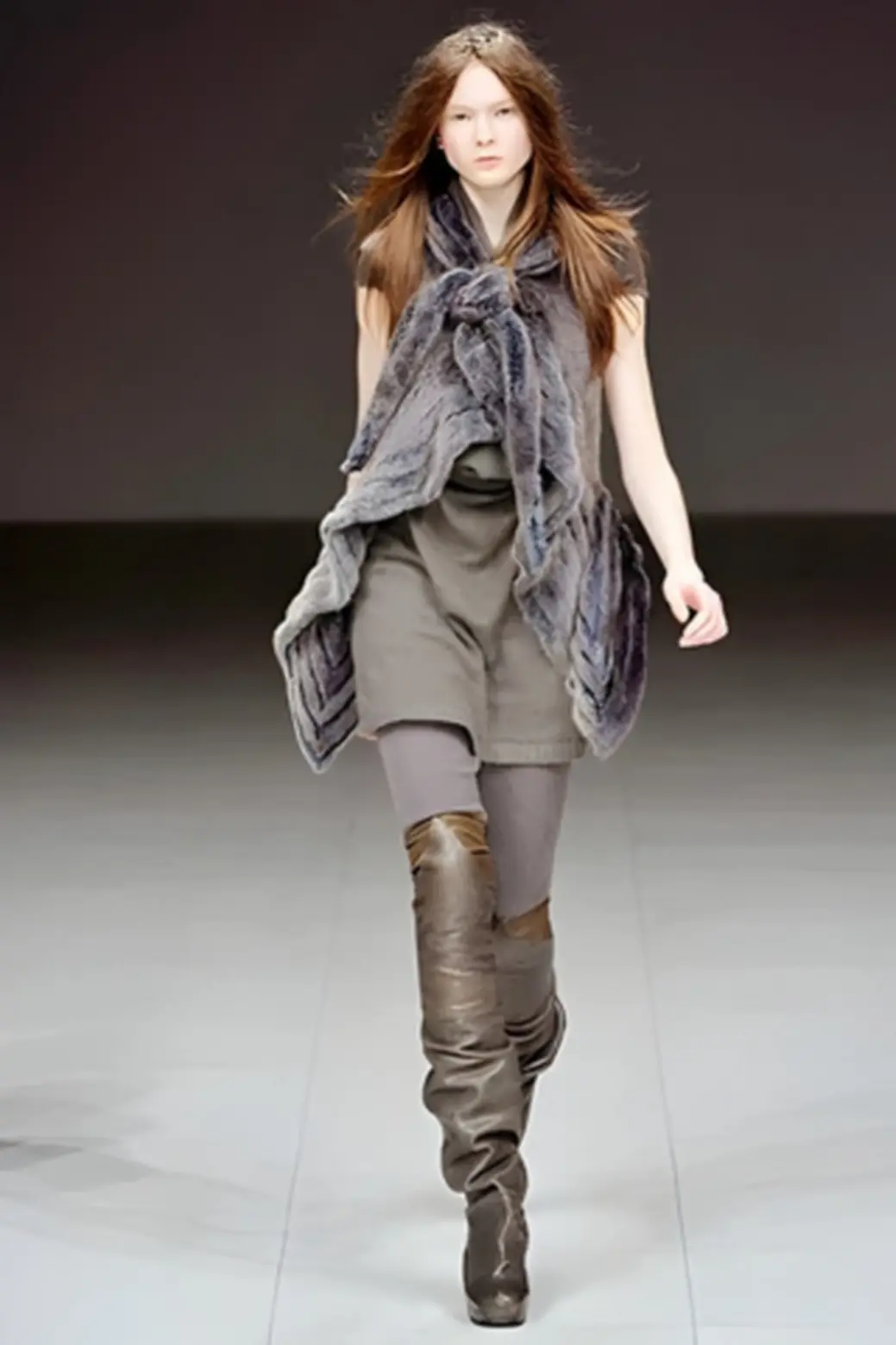
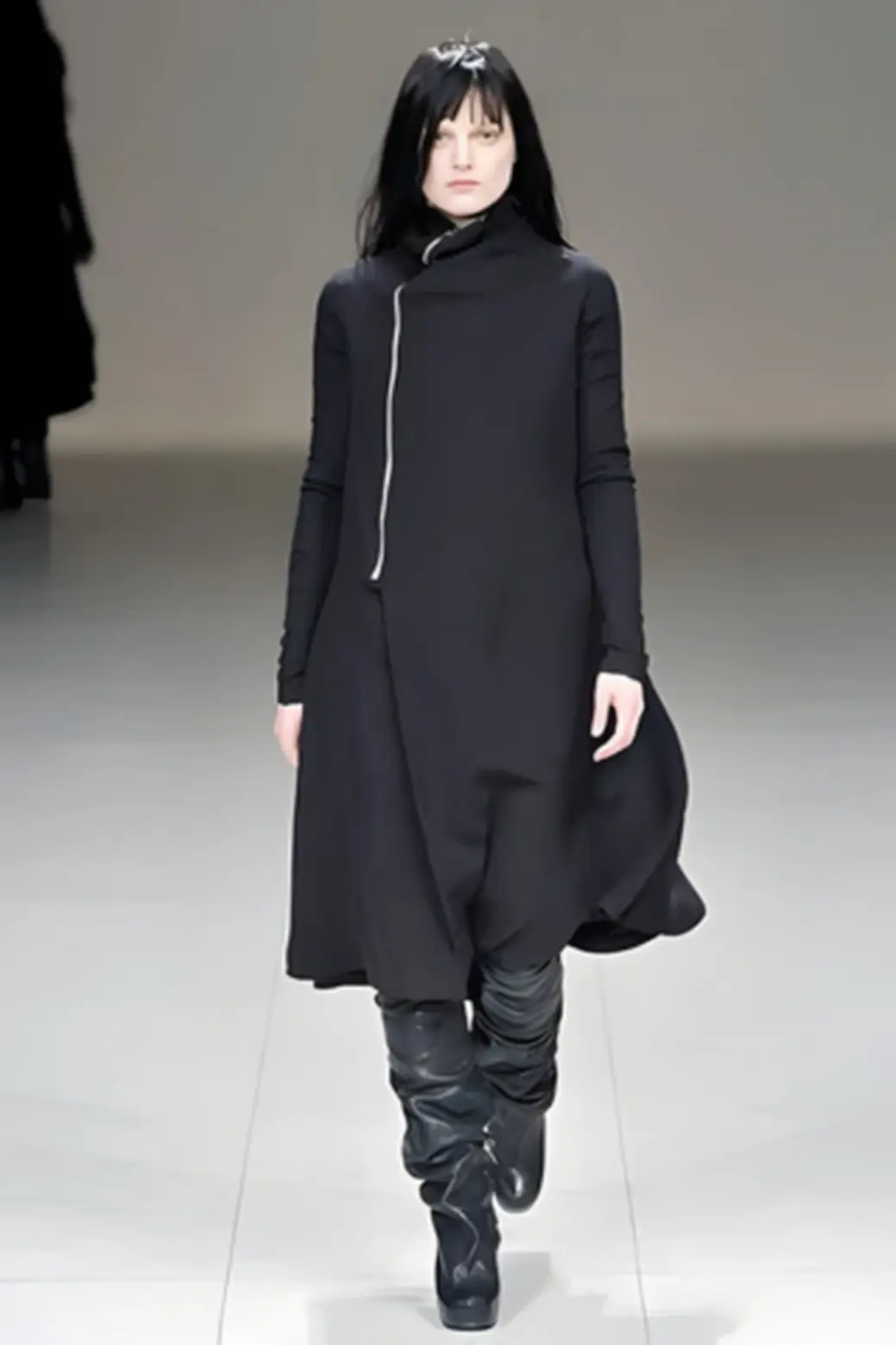
Rick Owens runways altered the terms of what a fashion show could hold. At Palais Galliera, his shows are framed as expressive events with a political and social charge, condemning discrimination and male dominance while celebrating strength, otherness, and bodily presence. The all-female stepping team of Spring Summer 2014 brought a raw, confrontational physicality to the runway, while Fall/Winter 2015 pushed the male body into view with a provocation that refused modesty as fashion’s default code. Then came Spring/Summer 2016, the season of carried bodies, where models were strapped to other models in ways that suggested burden, rescue, dependence, devotion, and survival all at once. The image was startling, but the power of it ran deeper than shock. Rick Owens turned the runway into a site where fashion could carry emotional weight, not just visual impact, and where the body itself became part of the argument.
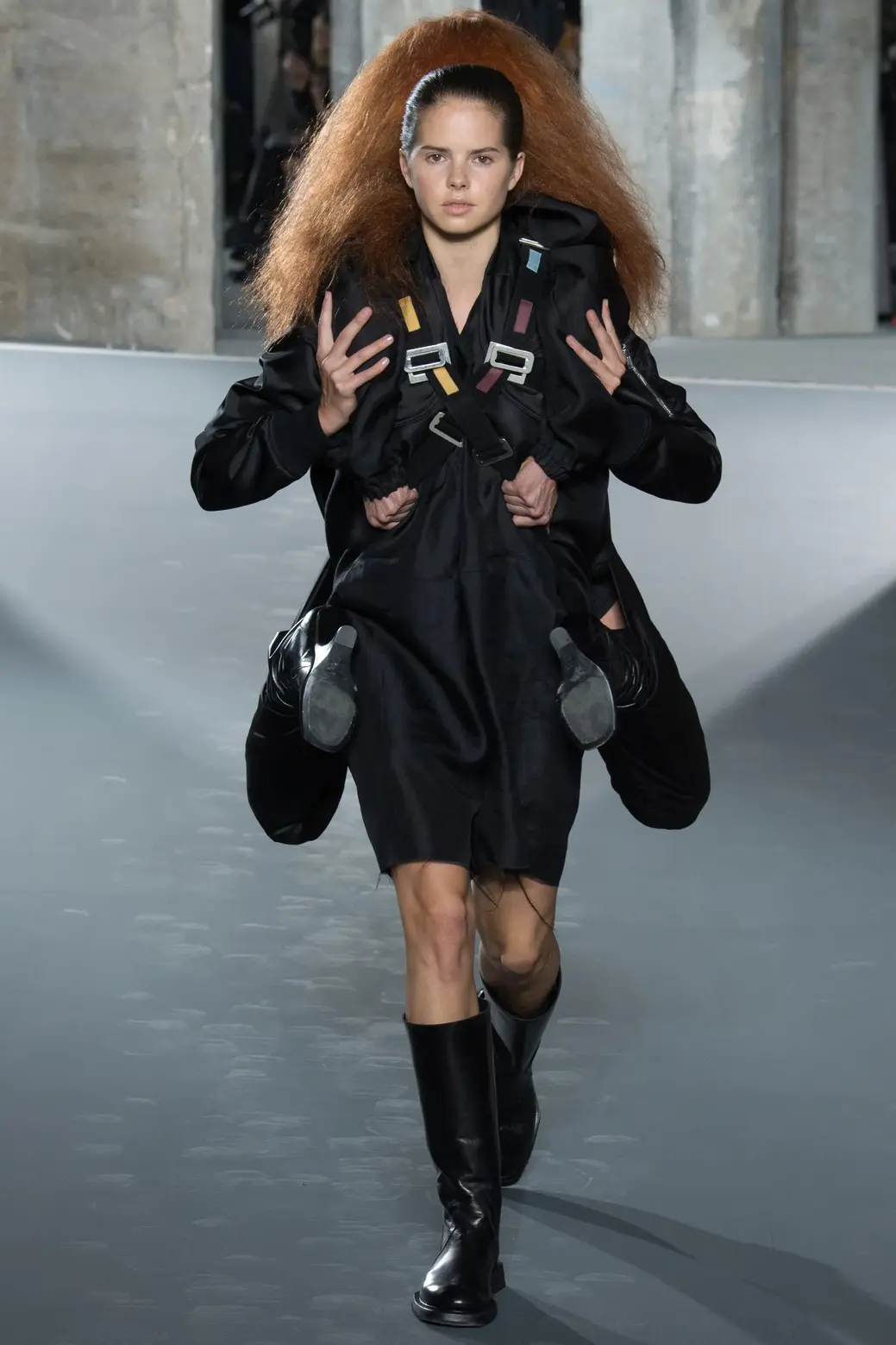
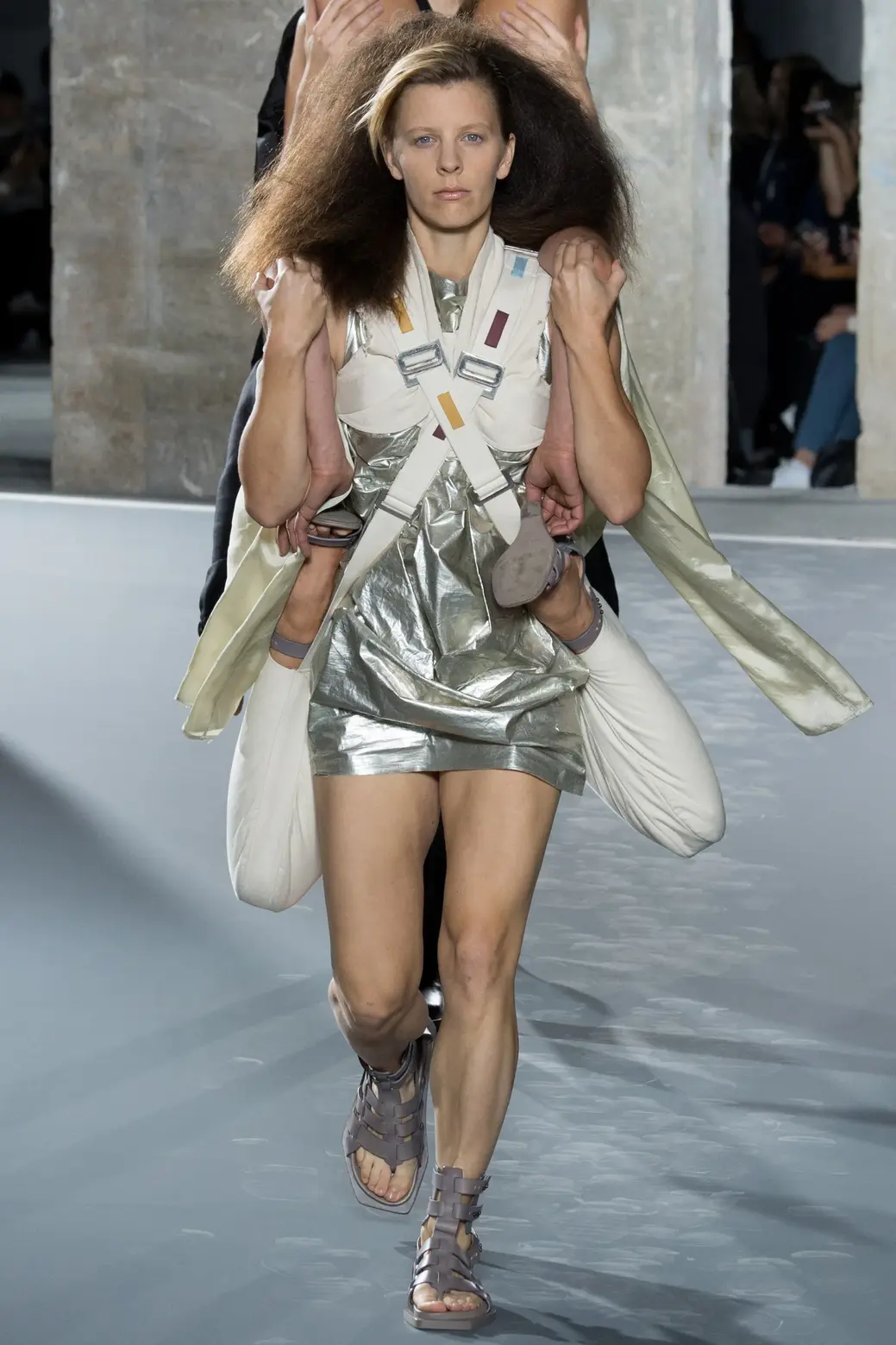
That tension between confrontation and tenderness is part of what keeps his shows lodged in fashion memory. The extremity is never empty. It is charged with thought, with discomfort, with the insistence that fashion should still be able to disturb a room into attention. Even at its most theatrical, the work keeps circling back to the same deeper concerns, control and collapse, defense and love, beauty and damage. On Rick Owens runway, spectacle is only the outer shell. Inside it sits something far more serious, a proposal about how bodies live with fear, power, desire, and each other.
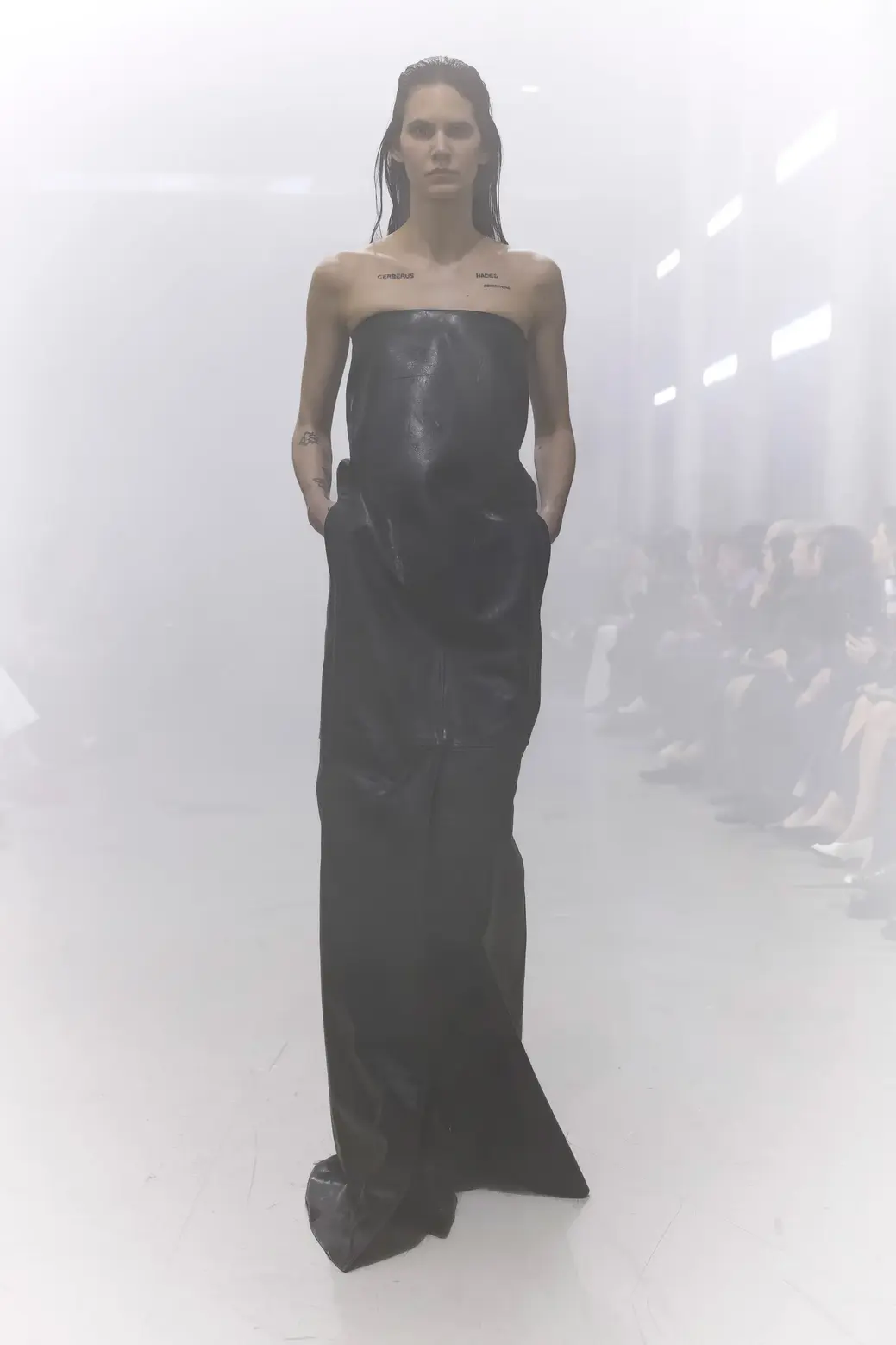
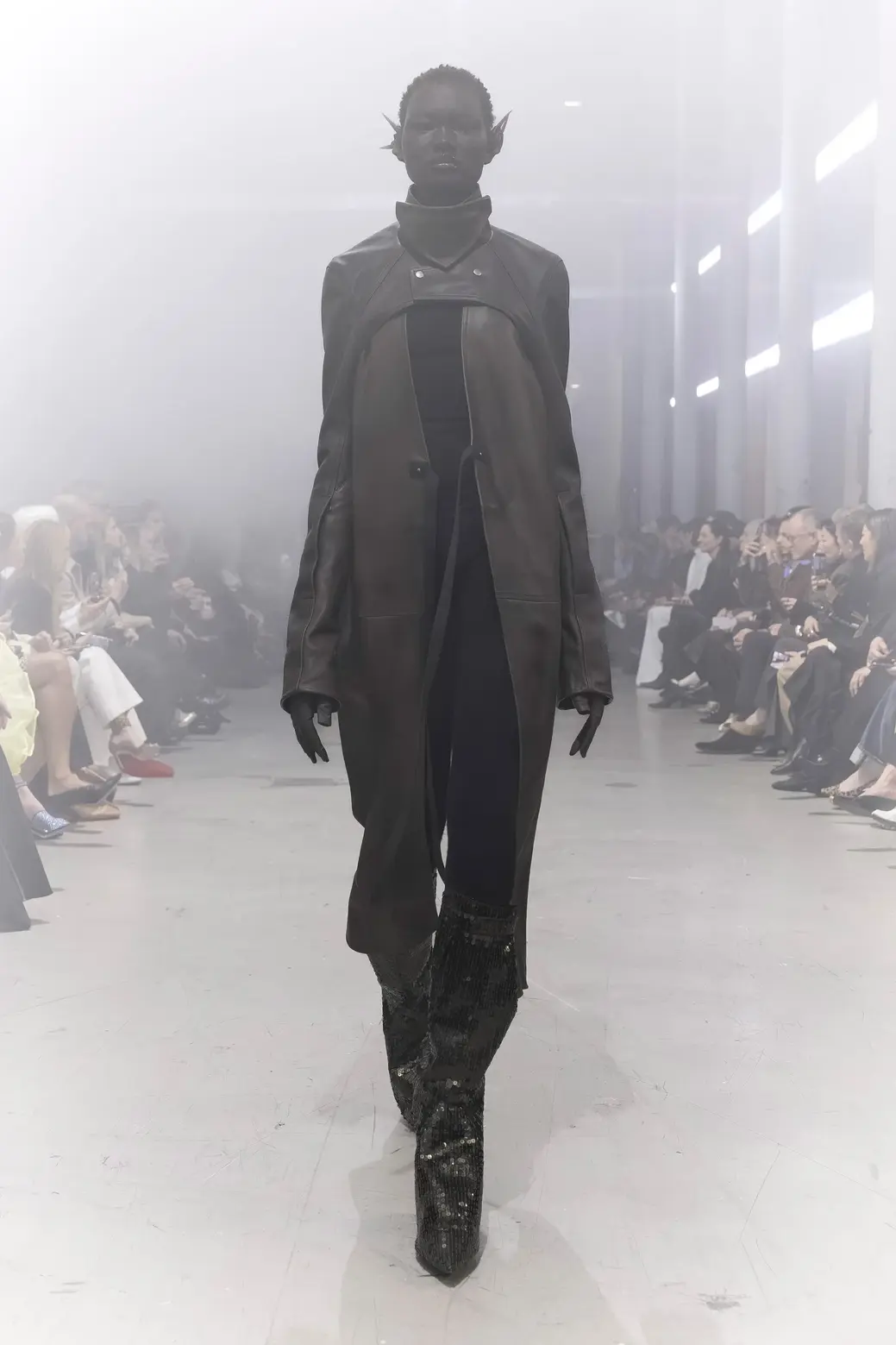
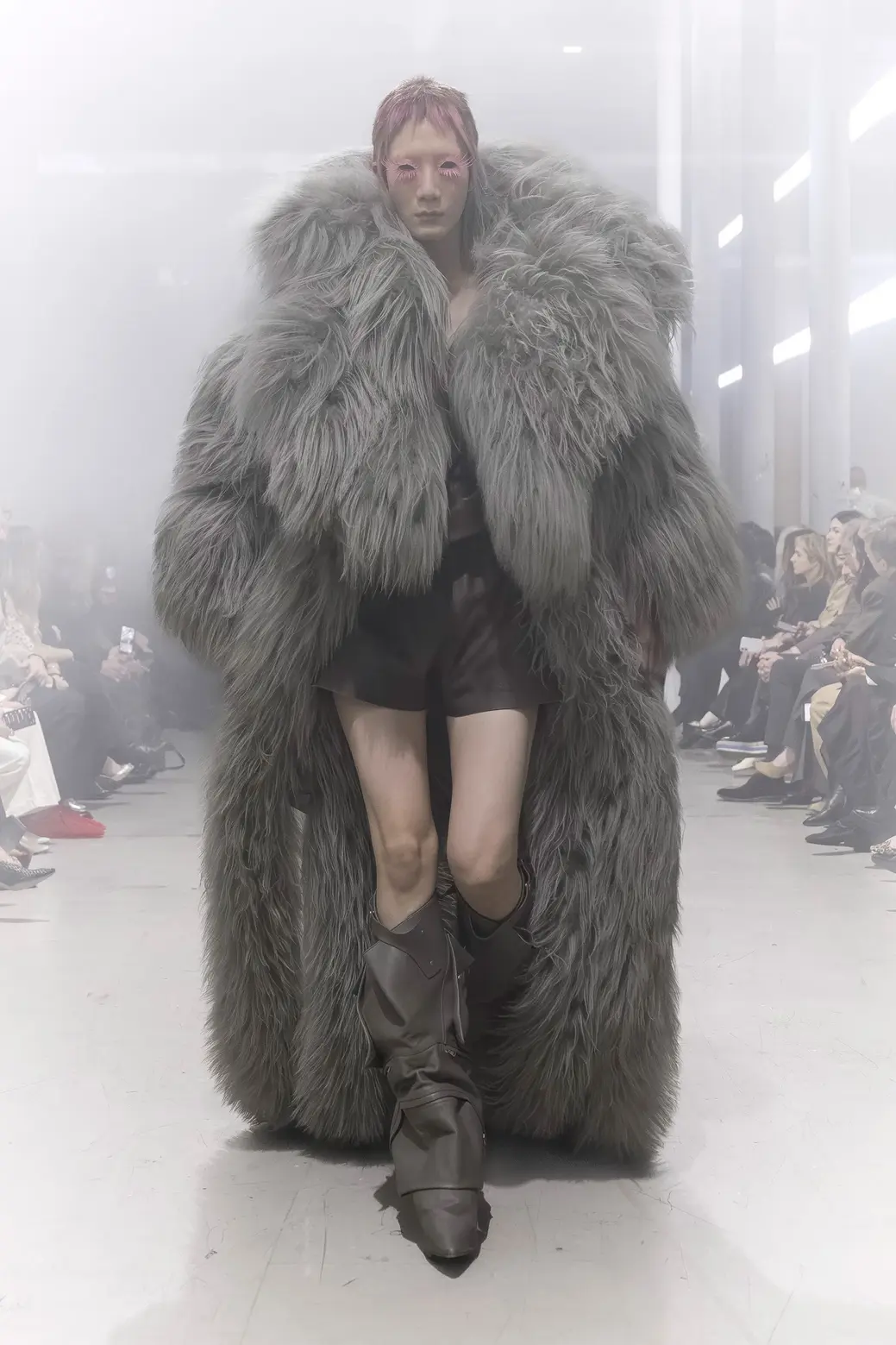
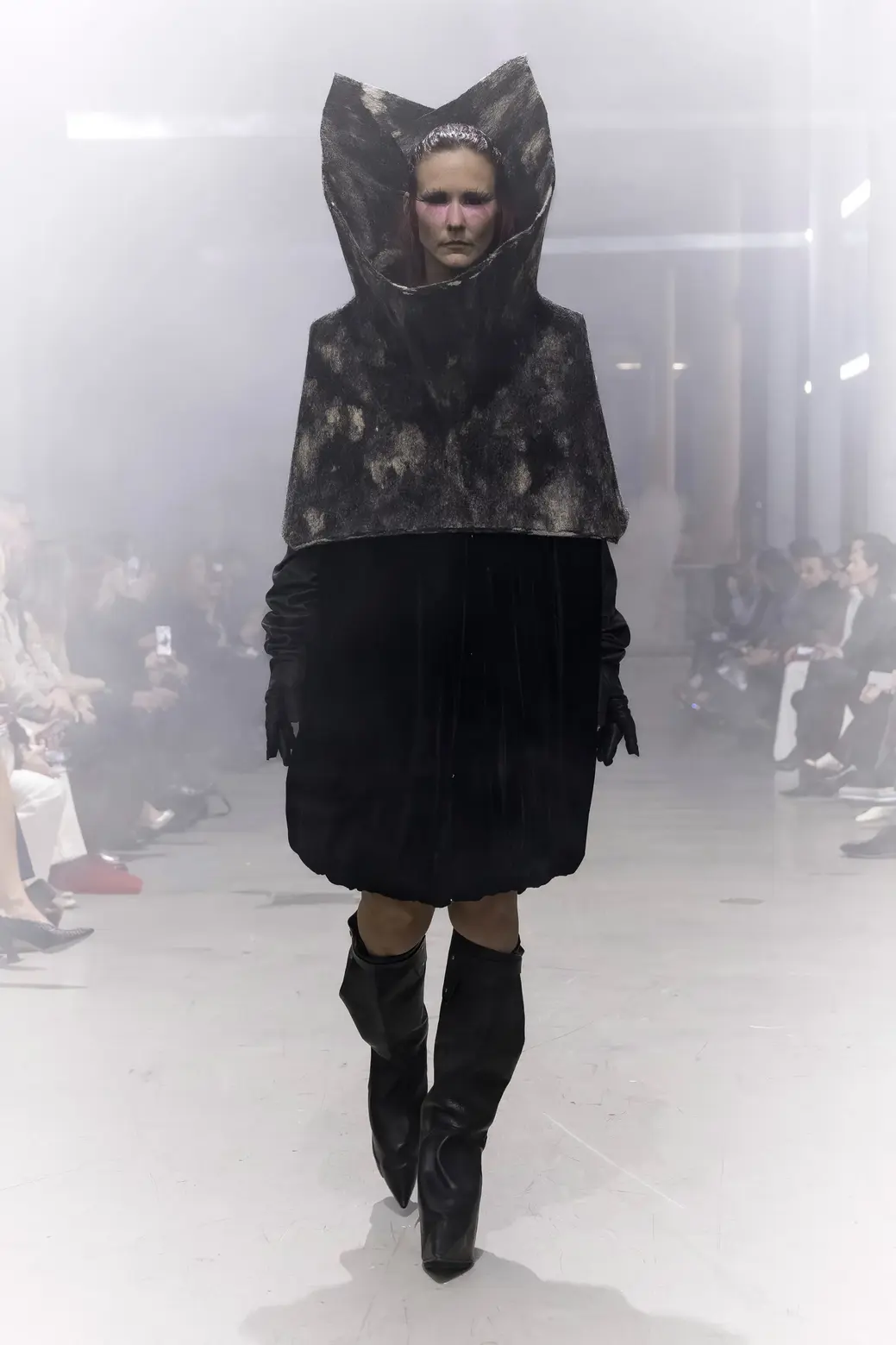
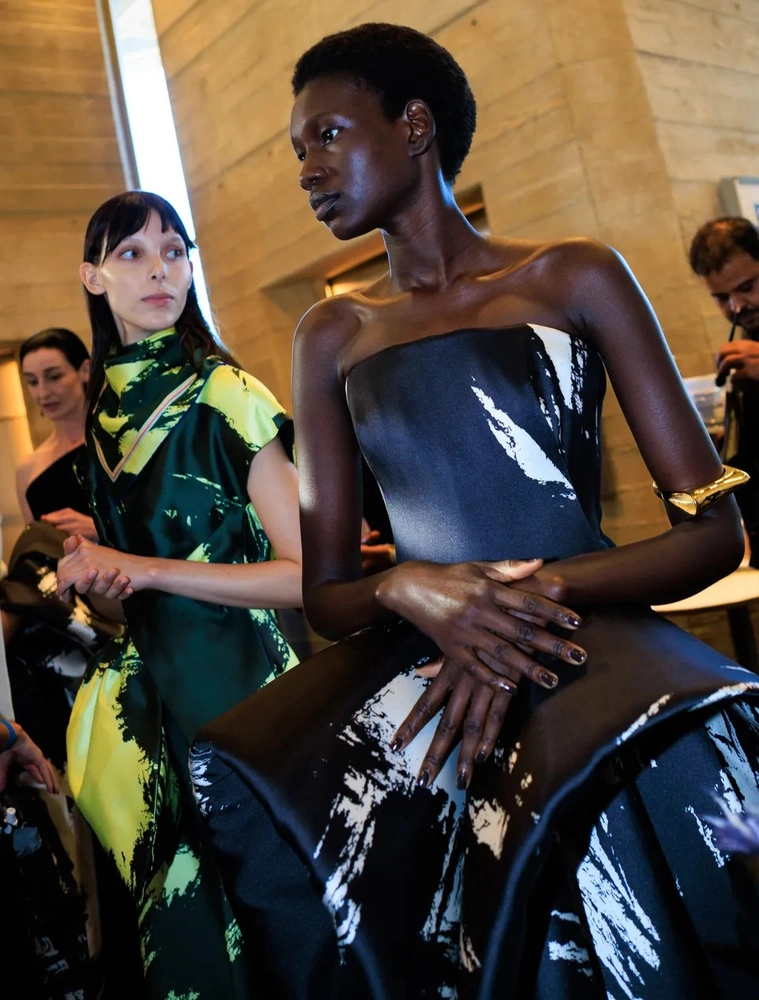
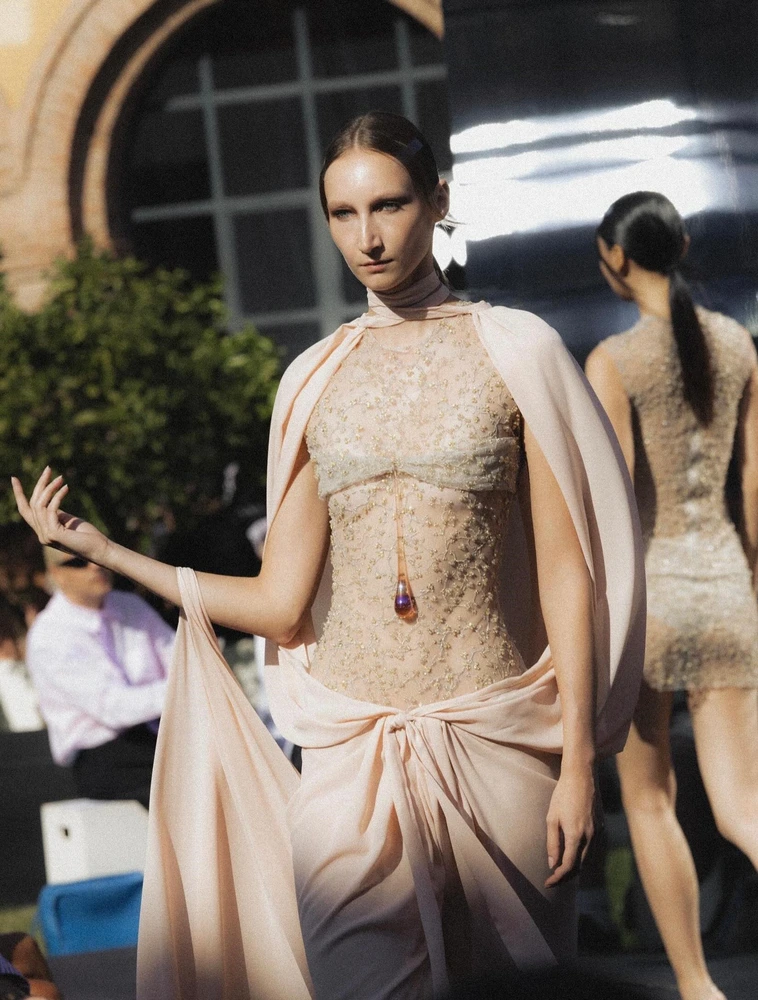
That proposition still feels alive in Rick Owens Fall 2026, which gives you a natural bridge to the internal link. Shown in Paris on March 5, 2026, the collection pushed out warrior-like women in muddy earth tones, with engulfing goat-hair coats inspired by Marlene Dietrich’s swansdown jacket, alongside Kevlar column dresses and marbled felt collars that made protection look ferocious. The season is a form of glamour under pressure, and that feels right. Decades into his career, Rick Owens still treats the runway as a place where elegance has to wrestle with threat, exaggeration, and defiance before it earns the right to feel beautiful.
Collaborations often expose the weakness of a designer’s identity. His collaborations work because they read as extensions of the same world, passed through different materials, price points, and cultural codes. The Palais Galliera chronology places that arc clearly, beginning with Eastpak in 2009 and continuing through Adidas, Birkenstock, Veja, Moncler, Champion, Dr. Martens, Converse, and Rimowa. Seen together, those names reveal something crucial about his authorship. He can step into sportswear, orthopedic sandals, luggage, or heritage boots and still leave the object sounding unmistakably like him. The scale shifts, the category changes, the audience widens, but the severity, the ritual, and the appetite for distortion stay intact.
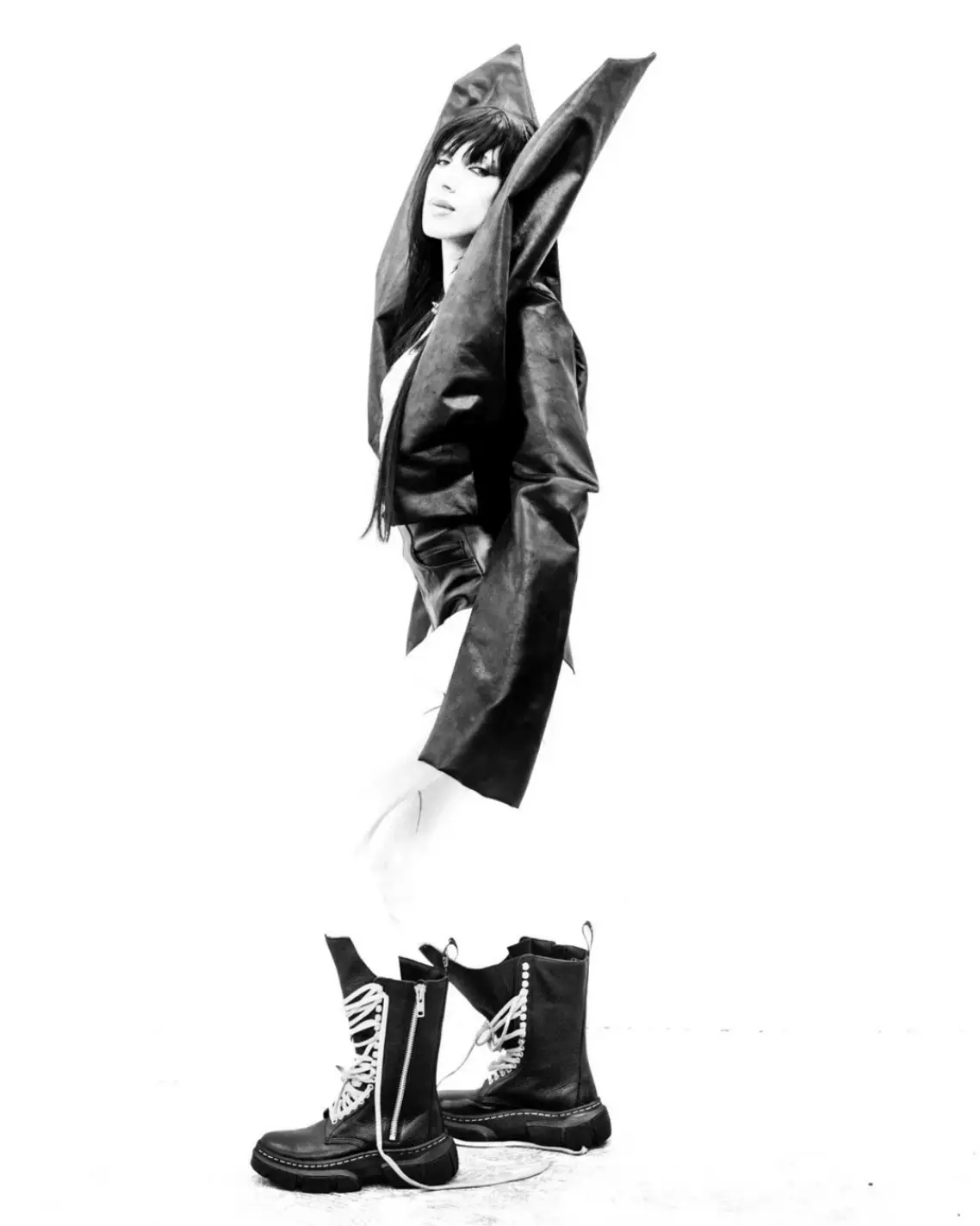
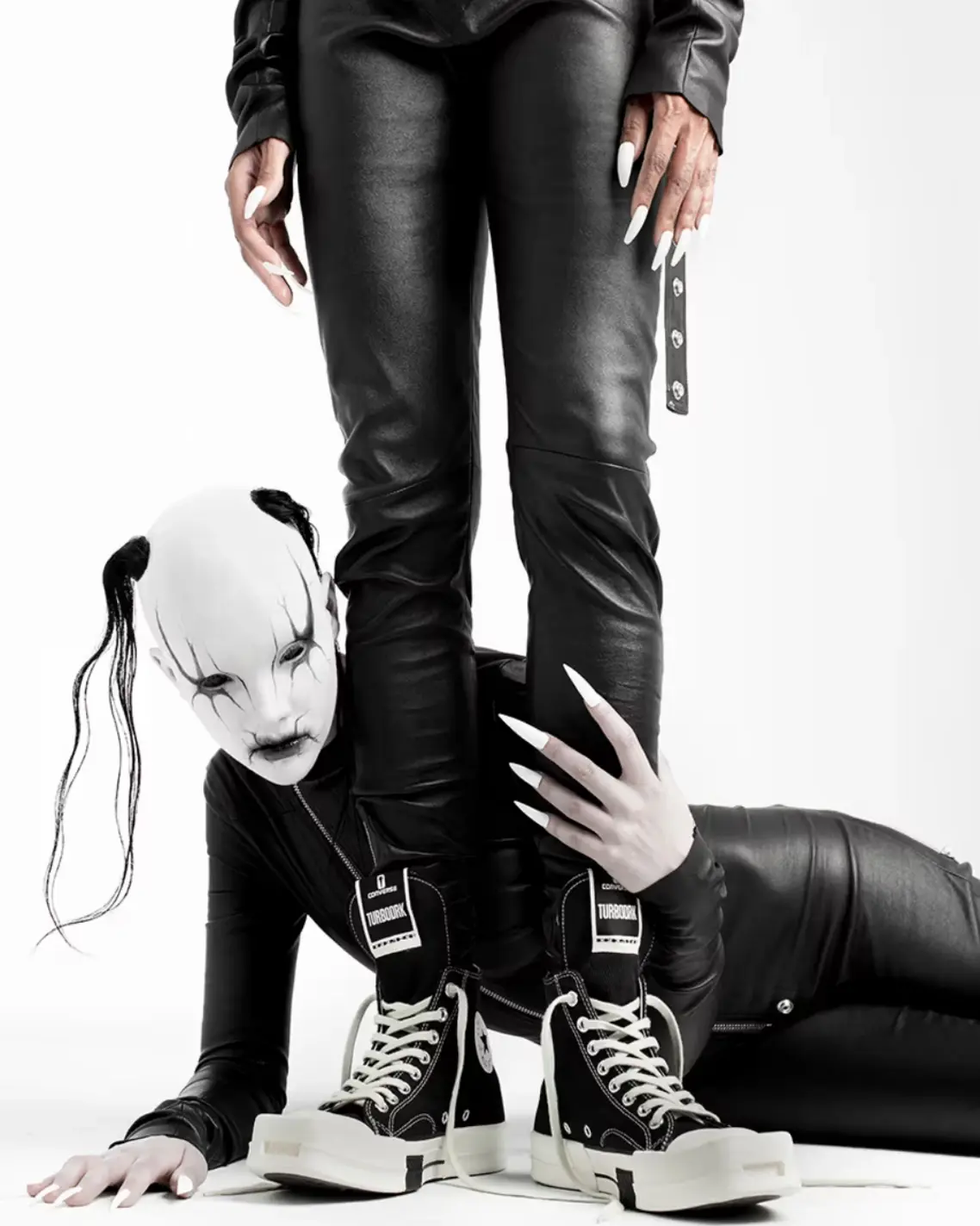
Footwear became one of the clearest arenas for that translation. With Dr. Martens, the transformation is immediate. The classic boot is stretched into something heavier and more theatrical through megalacing, an extended tongue, a side zip, and a quad sole that pushes the silhouette toward monumentality. The collaboration page itself frames the partnership through exaggerated proportions and towering scale, which is exactly why the shoes photograph so well. They still carry the recognizable Dr. Martens foundation, but the Owens intervention gives them more menace, more height, and sharper, almost architectural aggression. The Converse projects move in a slightly different direction, though the authorial fingerprint stays just as visible. On the official site, the DRKSHDW Chuck 70 is described through distortion and restructuring, with the classic lines of the sneaker bent into stranger proportions. That shift matters because it reveals something essential about Owens’s design intelligence. He does not need to erase an icon to make it his own. He changes the stance, the tension, and the body language of the object. The result still reads as Converse, but it walks with a different attitude, one that feels more severe, more elongated, and more aware of its own silhouette.
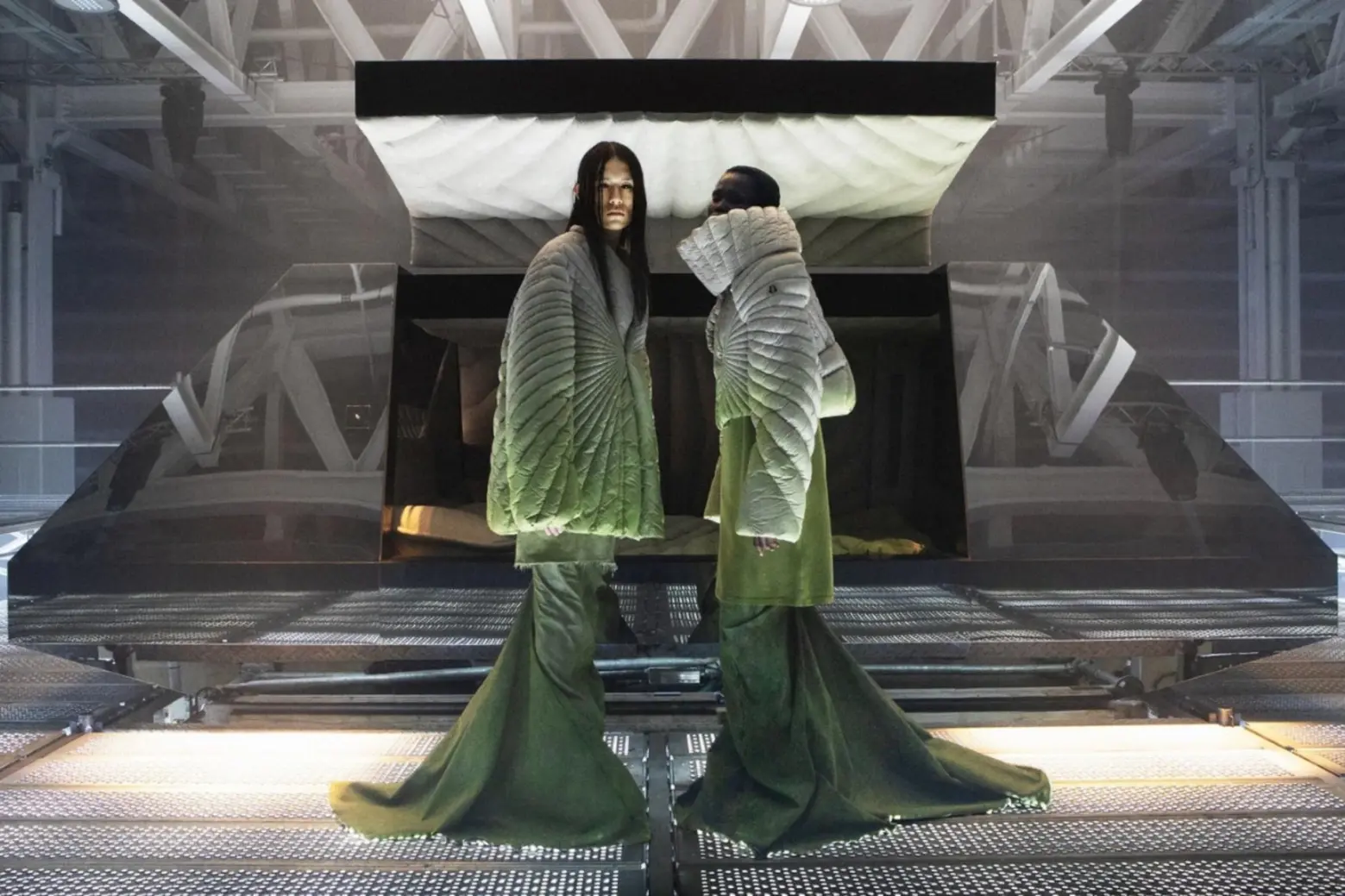
Moncler opened up yet another register, one built around insulation, shelter, and volume. On Moncler’s official pages, the collaboration moves through oversized puffers, flight jackets, robes, capes, extra-long coats, and even a steel mountain refuge that extends the partnership beyond clothing into environment. That breadth makes the imagery especially rich. The garments are inflated and protective, but the shapes never lose elegance. Rick Owens takes Moncler’s expertise in outerwear and pushes it toward something almost ceremonial, where warmth becomes silhouette and function becomes theater. Even the summer project, shaped around Berlin brutalism and lightweight outdoor dressing, keeps that same mood of hard-edged luxury and controlled extremity.
This is also why the collaborations strengthen Rick Owens’s vision, which survives translation. Whether he is working on a boot, a sneaker, a puffer, or a suitcase, the same instincts return, elongation, distortion, monumentality, and a refusal to let usefulness remain merely useful. Even when the product is practical, the feeling is ceremonial. That consistency is one of his great achievements. Plenty of designers can style a partnership. Much fewer can pass through another brand’s object and leave behind a silhouette that still feels unmistakably authored.
Rick Owens’s reach into pop culture starts with music, because his fashion has always carried a soundtrack as much as a silhouette. On his official site, he describes shoes and music as the starting points of every collection. His leather biker jacket takes its name from the Stooges, his swollen Converse mutation nods to the Ramones, and his wider creative world has extended to artists such as Zebra Katz and Christeene. Even his own reference system moves easily from English rock to Cher and Charli xcx, which helps explain why his universe never feels sealed inside fashion alone.
That mood crossed decisively into mainstream culture once musicians began wearing Rick Owens as a full identity instead of a single borrowed item. He was name-checked early in rap by A$AP Rocky and Kanye West, and Rocky explicitly connected wearing Rick Owens to a lane between streetwear and high fashion that he felt could speak to a different audience. Beyond music, Rick Owens built a following that stretches across sport, film, and celebrity culture, with figures such as Russell Westbrook, Jennifer Lopez, Nicole Kidman, and Justin Bieber all pulled into his orbit. At that point, Rick Owens stopped reading as an insider reference and started functioning as cultural shorthand for a certain kind of authority, severe, intellectual, and proudly outside the ordinary.
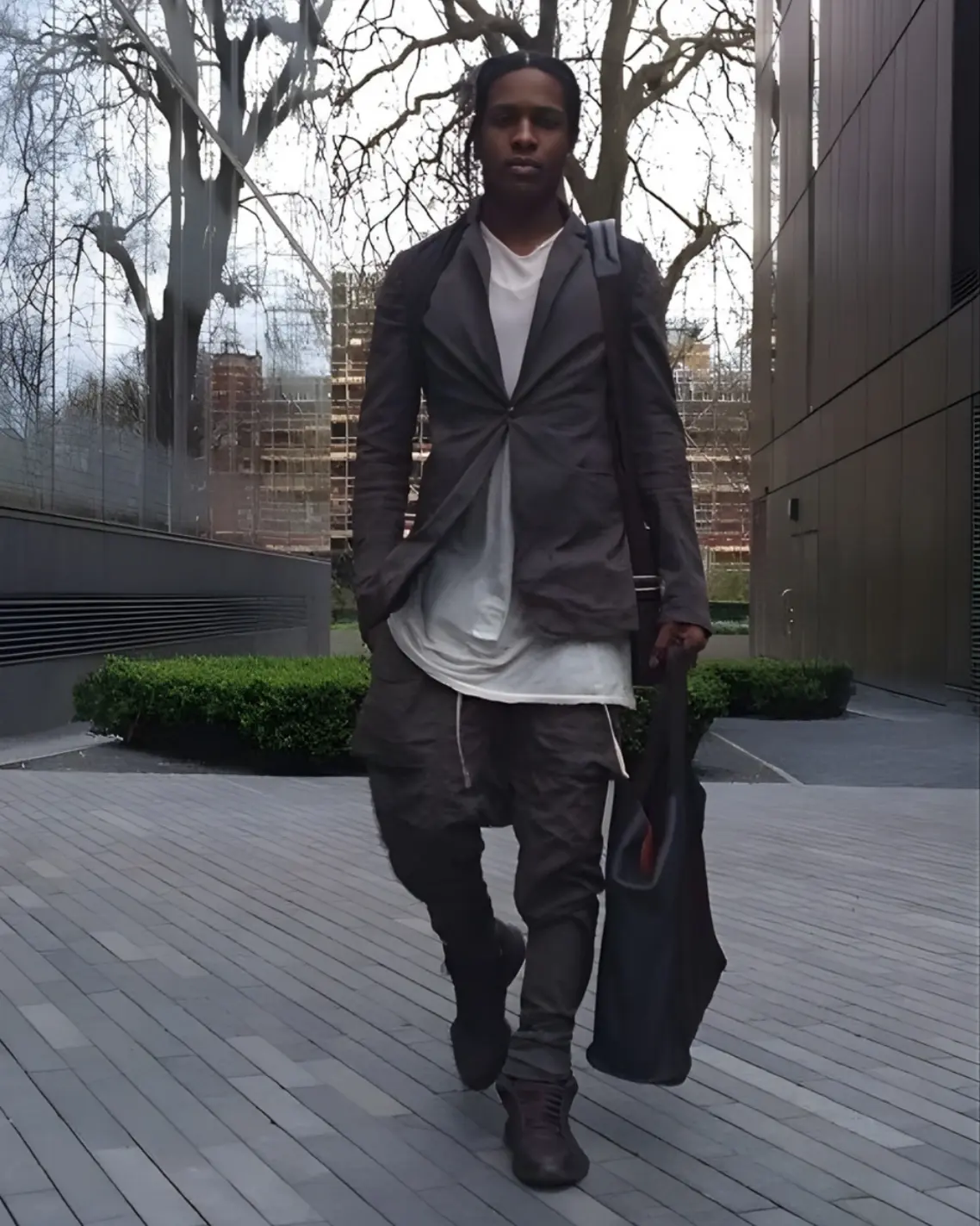
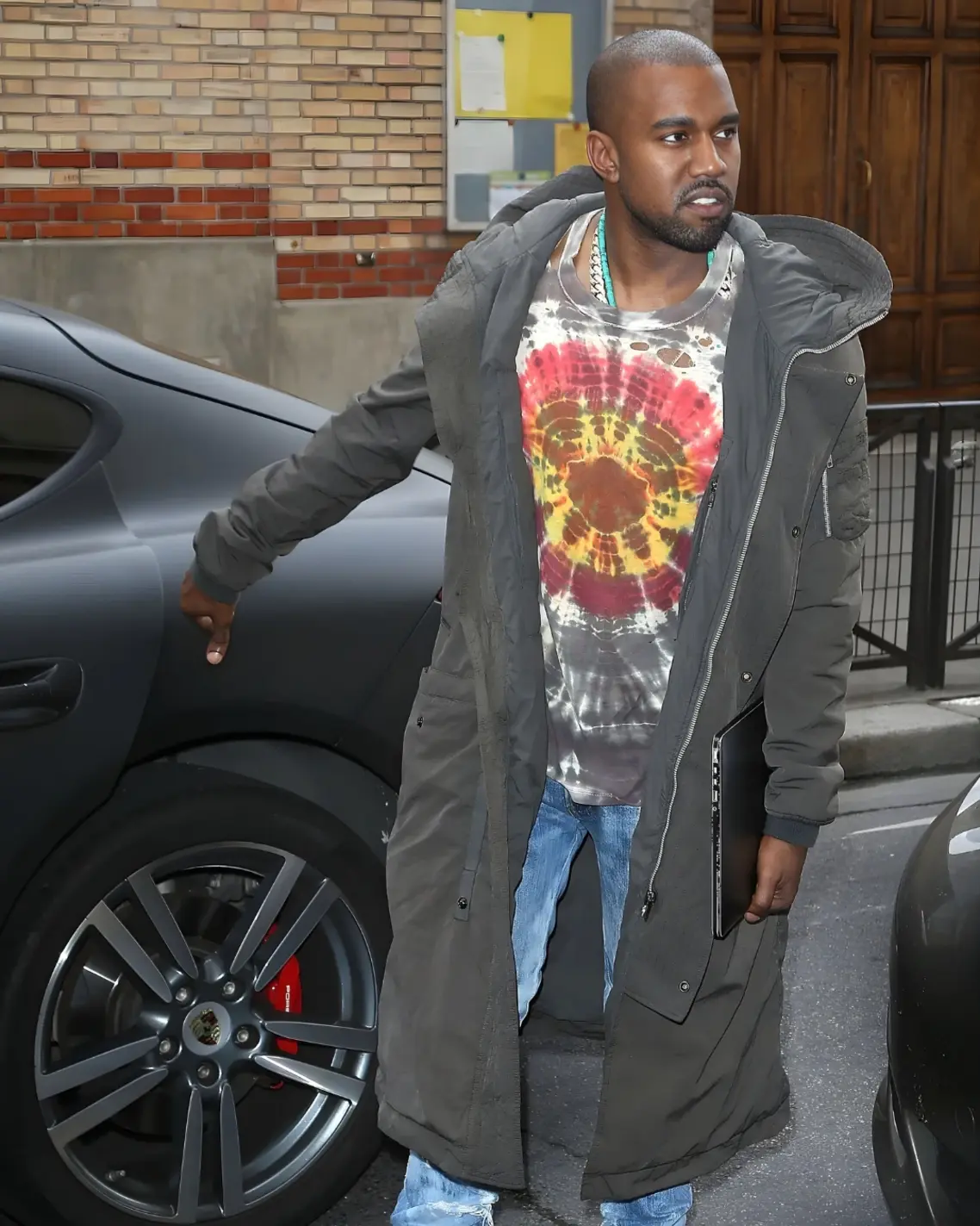
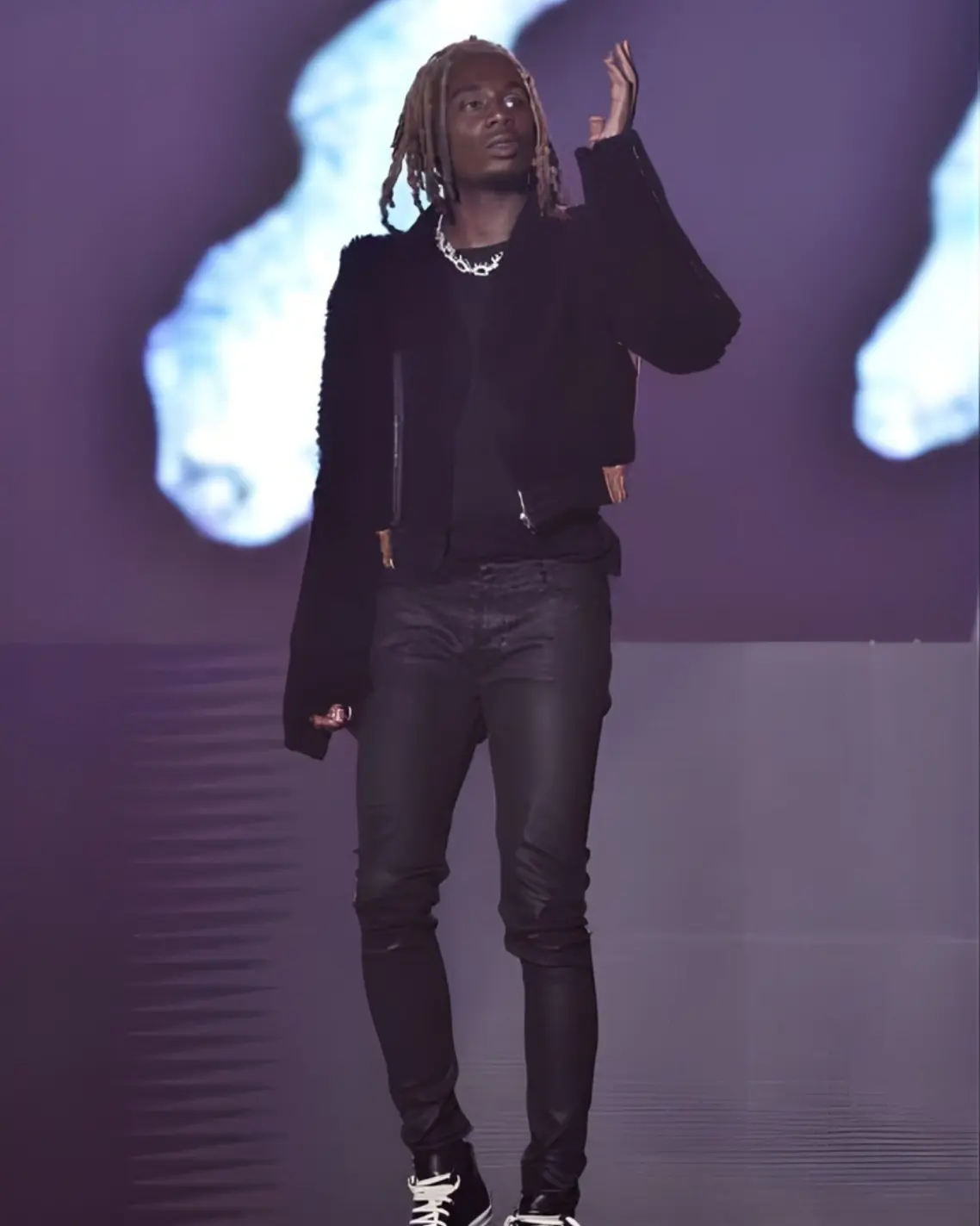
His fan culture has been just as significant. The official account of his shows describes crowds of black-clad devotees lining up for hours outside, with the atmosphere closer to an open-air rock concert than a conventional runway. Even his 200-person 2024 presentation leaned heavily on design students who idolized him, which says a great deal about how his influence moves through younger generations. Rick Owens offers entry into a recognizable language of black layers, exaggerated footwear, ritualized glamour, and disciplined rebellion. That is why his pop-cultural footprint feels larger than celebrity dressing alone. It behaves more like a subculture that learned how to dress itself.
Rick Owens has always treated fashion as a moral and emotional medium. Across his recent reflections around Temple of Love, he returns to the same set of tensions, control and collapse, defense and love, damage and elegance. In the Palais Galliera material, he describes his clothes as autobiography, carrying both the calm elegance he wants to reach and the damage gathered on the way. He also speaks of offering an alternative to standard cultural aesthetics, opening space for those who do not see themselves in the dominant image of beauty. The clothes begin there, in that refusal to accept a single polished ideal as the only available fantasy.
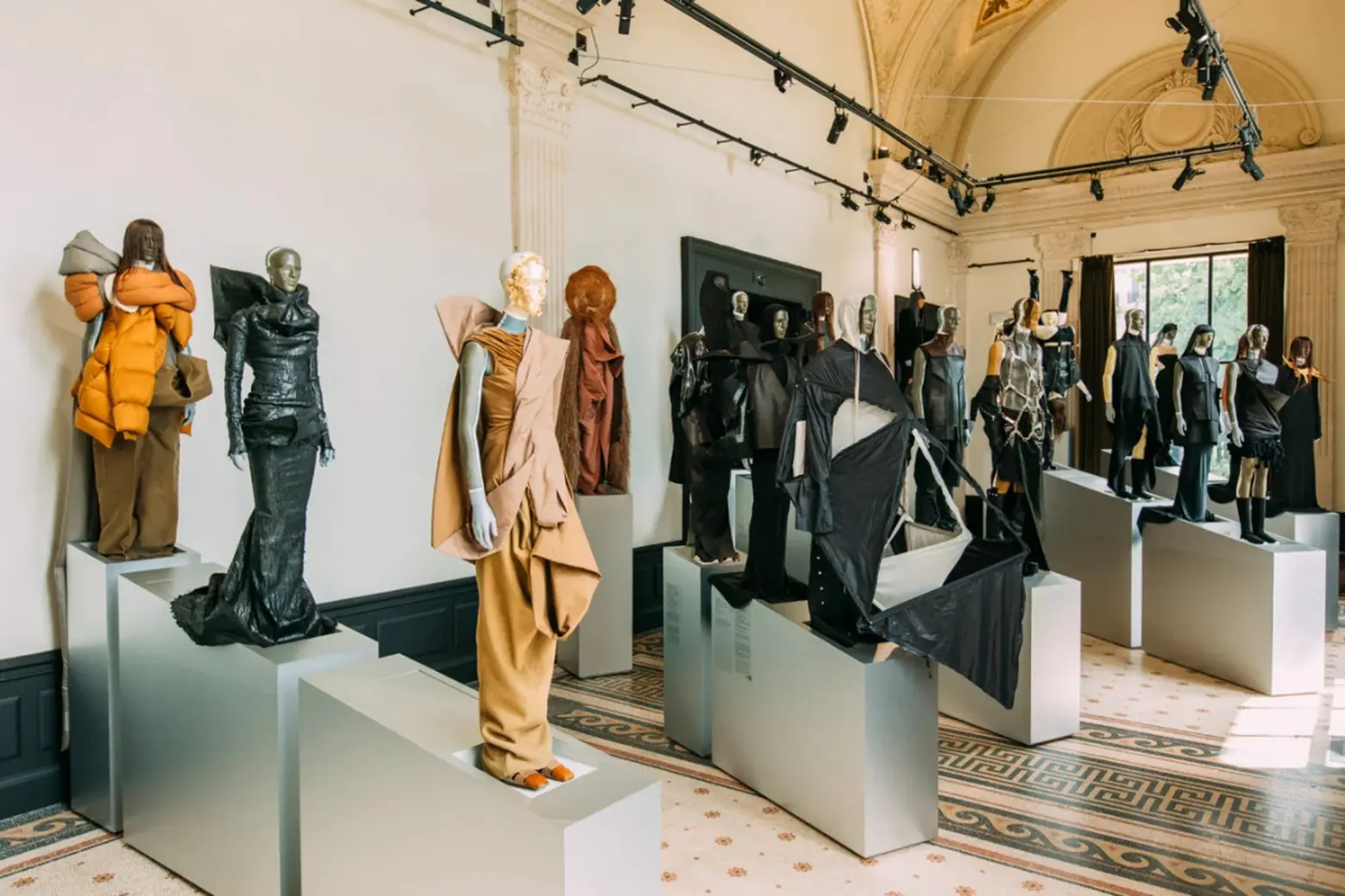
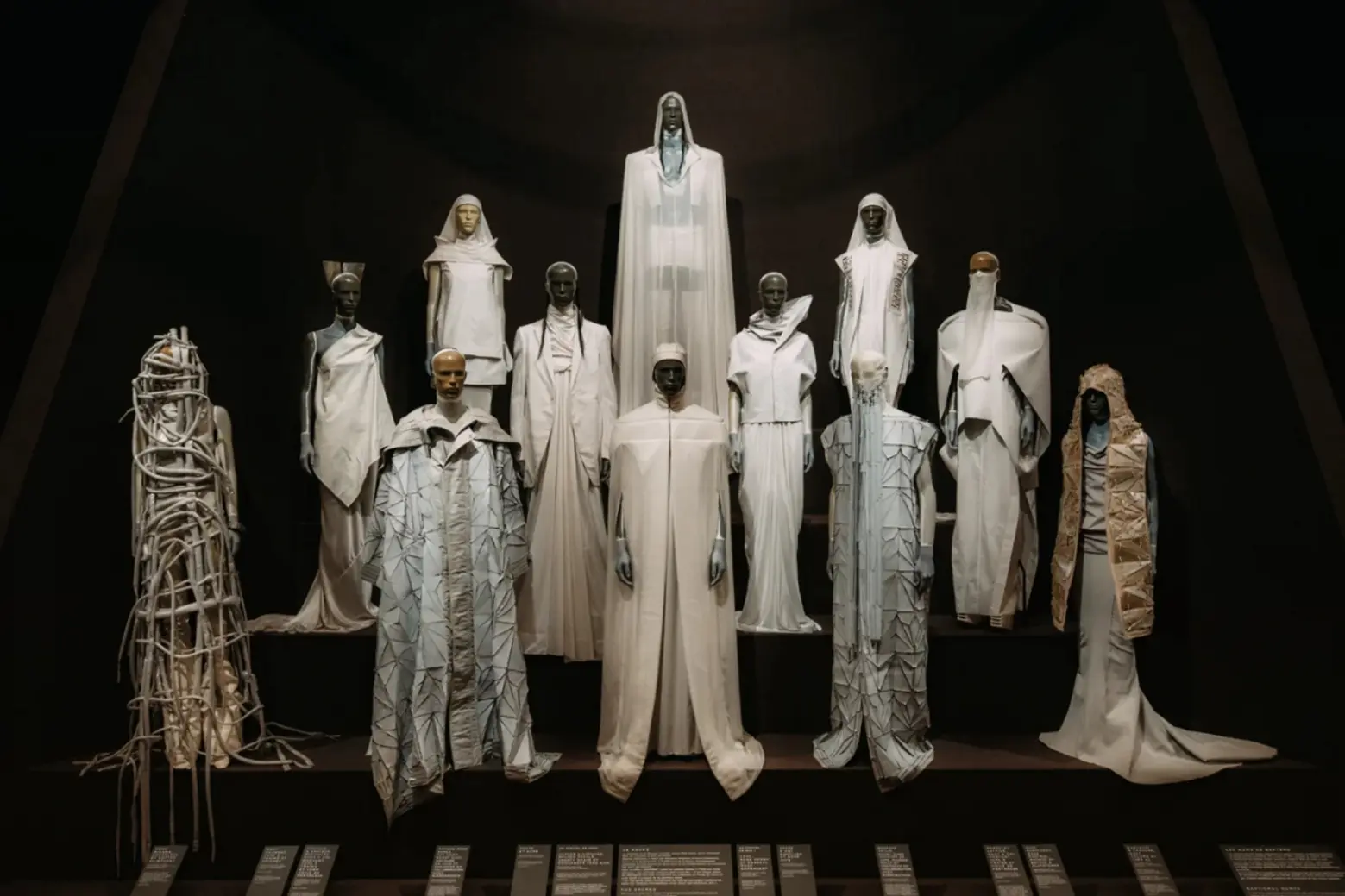
That philosophy gives his work its unusual charge. The severity never feels empty, because it is constantly in conversation with tenderness. The black never reads as mere gloom, because he has described it as humility. Even the grandest silhouettes carry a trace of vulnerability, as if monumentality were being used to protect something fragile underneath. His fashion holds power and exposure in the same frame, which is why it can feel at once armored, erotic, and strangely intimate.
What stays with people, finally, is the sense that his work offers a form of recognition, a sharper kind of permission, to be severe, excessive, awkward, disciplined, alien, glamorous, and fully seen all at once. That is the pulse running through the Owens world, and it keeps clothes from hardening into costumes. They remain alive because they still hold contradictions without trying to smooth it away.
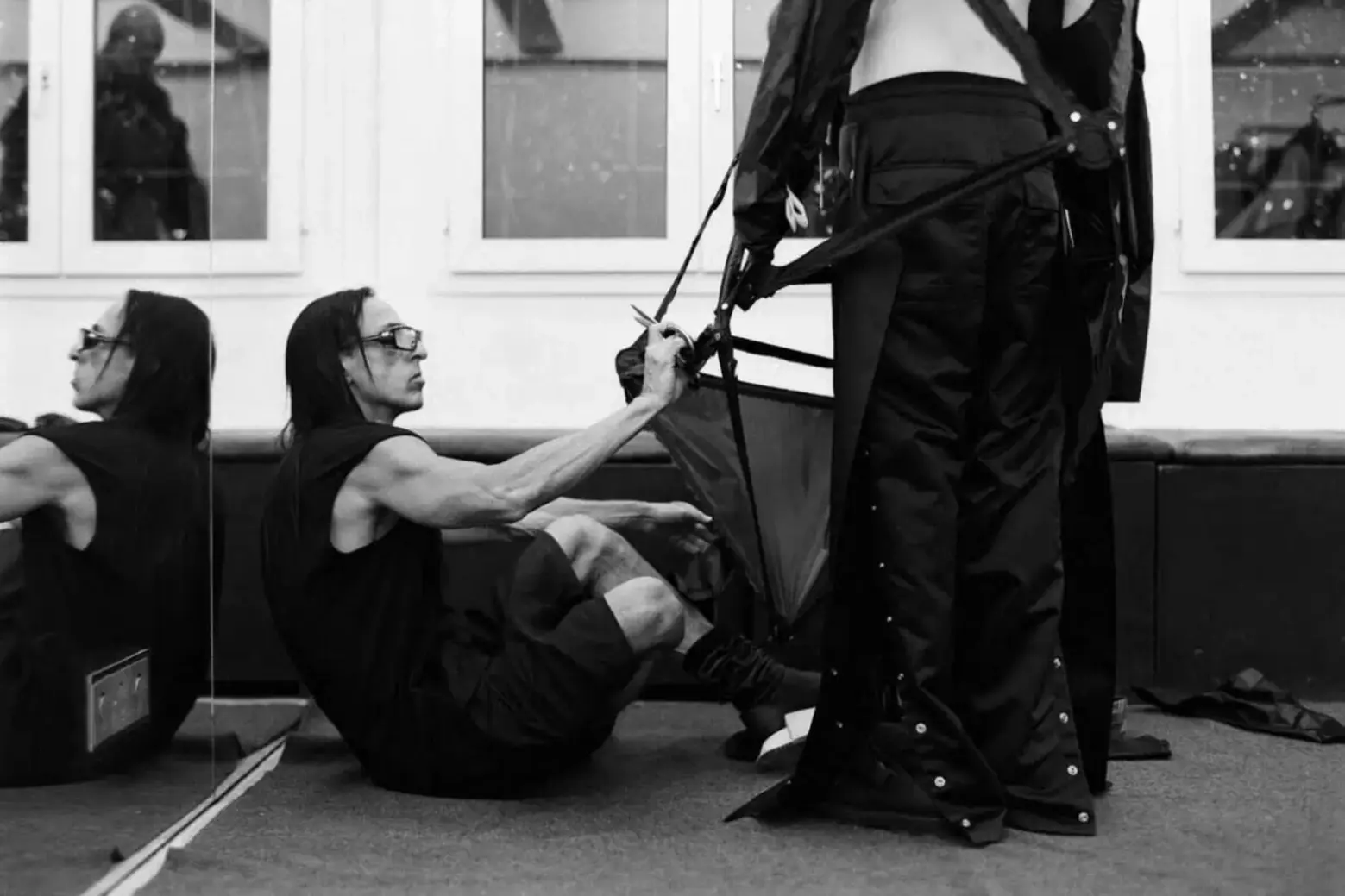
Rick Owens occupies a rare position in fashion because his work has never depended on novelty to stay alive. Over decades, he has held onto a vocabulary that remains instantly recognizable, the long line, the scorched glamour, the ritual severity, the tension between monumentality and exposure, and kept pushing it into new proportions without draining it of force. The industry has honored that consistency with distinctions including the CFDA Lifetime Achievement Award, yet the real measure of his stature sits elsewhere, in the fact that his world still feels authored down to the last shadow.
What survives in the end is more than a silhouette or a signature palette. Rick Owens built a complete emotional language around clothing, one where black could read as humility, where distortion could carry elegance, and where the outsider could step into view with something close to grandeur. His work never chased mass approval, yet it altered the wider taste of fashion all the same. You can see traces of his influence in the industry’s appetite for elongated forms, brutalist sensuality, and beauty that feels darker, stranger, and less obedient than it once did.
That is what keeps Rick Owens larger than cult status. He created a climate, a whole atmosphere of discipline, desire, control, and defiance that still hangs over contemporary fashion.
Advertisement