MENU
Close





Miyoko Ito’s Nagisa surfaces again in New York with the kind of quiet drama that only a long absent painting can pull off. After a public life that pauses in 1980, the 1977 canvas returns to view at Sotheby’s ahead of its February Contemporary Curated sale, inviting audiences to meet an artist whose work turns interior weather into landscape.
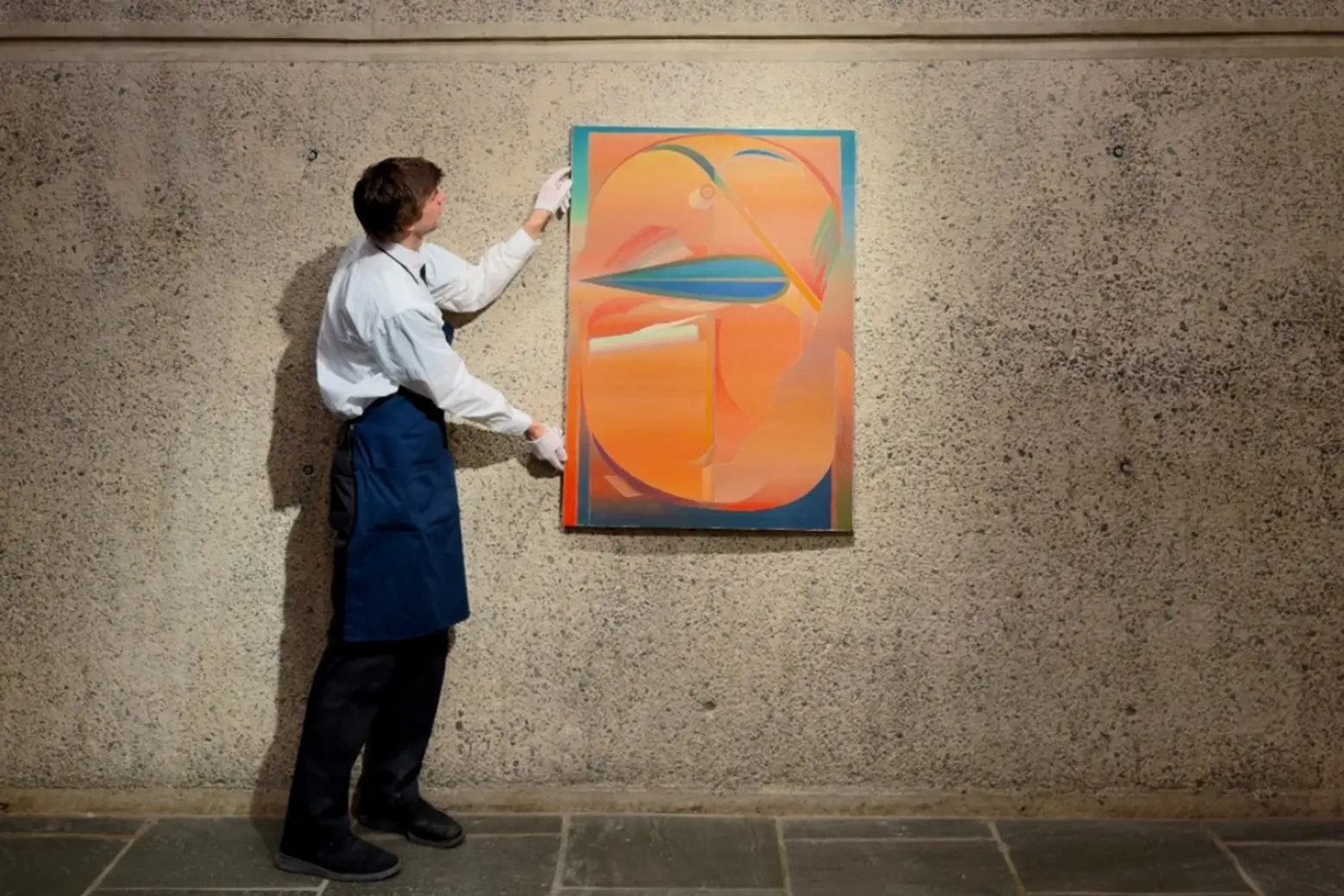
Miyoko Ito’s Nagisa surfaces again in New York with the kind of quiet drama that only a long absent painting can pull off. After a public life that pauses in 1980, the 1977 canvas returns to view at Sotheby’s ahead of its February Contemporary Curated sale, inviting audiences to meet an artist whose work turns interior weather into landscape.
February 13, 2026


Sotheby’s lists Nagisa as oil on canvas, 47 by 34 inches, executed in 1977, with an estimate of $200,000 to $300,000. It comes from a private collection in St. Louis and was acquired from Phyllis Kind Gallery in Chicago in the year it was made, then largely stays out of public circulation. Its 1980 appearance at the Renaissance Society at the University of Chicago becomes a key timestamp in its story, almost like a last sighting before a long tide out.
That absence gives the current viewing a charge: a chance to see an artwork again in real time, with real scale, rather than as a citation in a catalogue or a thumbnail on a screen. Sotheby’s announces public viewing at 945 Madison Avenue from 18 to 24 February.
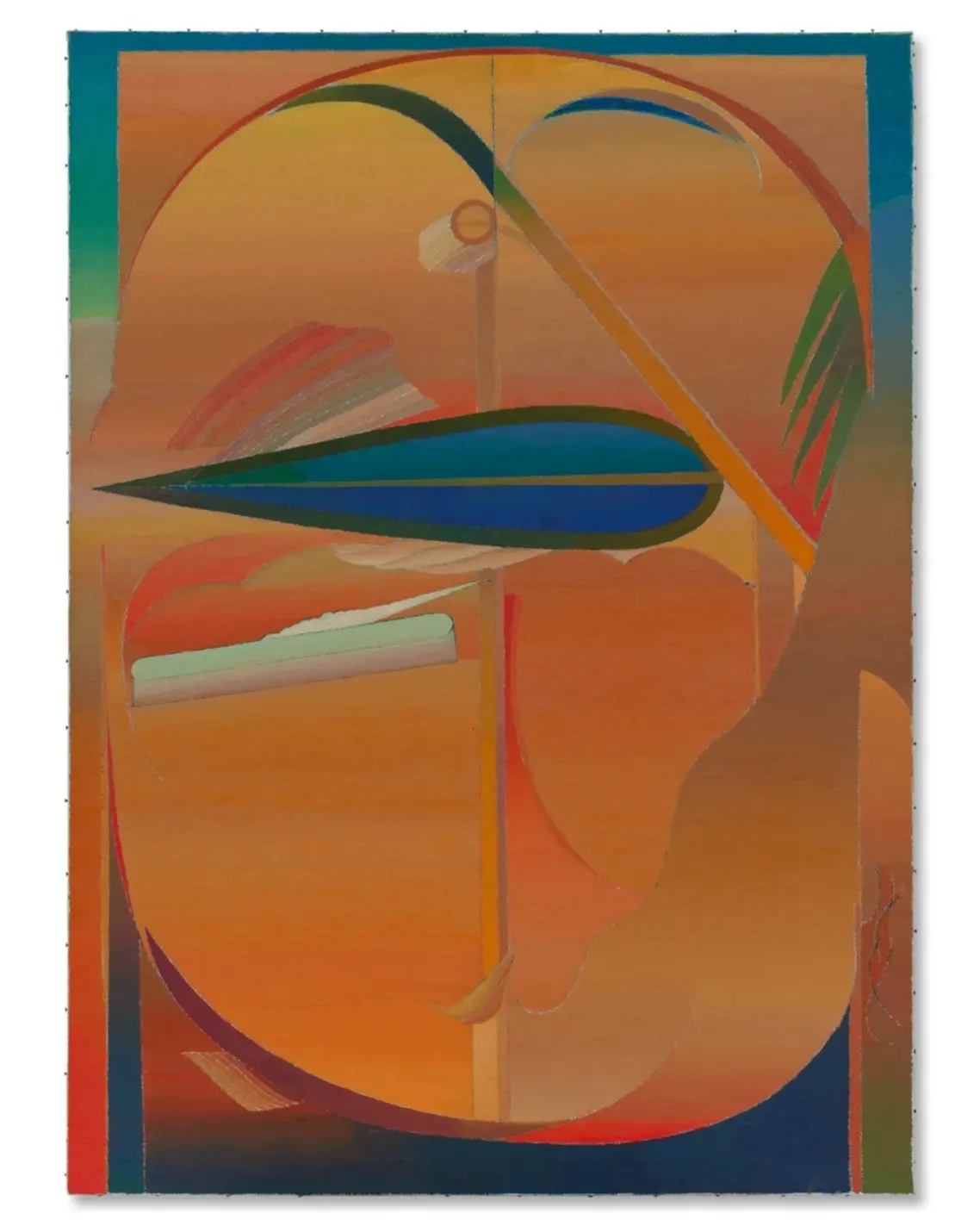
“Nagisa” translates to “beach,” and the painting behaves like a shoreline without illustrating one. The palette runs hot and atmospheric: oranges and sand tones in layered fields, interrupted by cooler blues and greens that read like sea, shadow, or a sudden change in temperature. A dark, elongated blue form slices across the center like a horizon you can hold in your hand: part surf, part vessel, part punctuation.
The geometry stays crisp, yet the overall effect feels humid, coastal, and slightly dreamlike. Arcing bands sweep through the composition with the rhythm of wind and wave, while a small circular note near the top suggests sun, moon, or a bright shell caught in a pocket of light. The painting keeps offering two readings at once: abstraction as structure, and landscape as sensation.
Ito’s paintings often carry a tension between inner life and outer world, a push and pull between constructed forms and distant horizons. A UC Berkeley Art Museum and Pacific Film Archive press release describes her legacy as an exploration of that very tension, with works that feel both “first person and topographic,” as if a psyche and a place share the same map.
Her biography helps explain why a “beach” might arrive as a memory architecture instead of a postcard scene. Ito was born in Berkeley in 1918, spent formative childhood years in Japan with deep exposure to calligraphy and art education, then returns to the US and faces the ruptures of World War II. In 1942, she and her husband were incarcerated in the Tanforan Assembly Center and later at Topaz in Utah, a forced displacement that becomes part of the backdrop of her adult life and work.
That history rarely appears as literal narrative in her paintings. Instead, it shows up as mood: careful surfaces, held back emotion, and forms that feel chosen with the precision of someone who understands what it means to rebuild a world from fragments.
A beach usually promises escape. Miyoko Ito’s Nagisa does something sharper: it turns escape into a structure, and memory into a place you can stand inside, with color acting as weather and geometry acting as resolve.