MENU
Close





On September 15, 1954, Marilyn Monroe’s subway frate white dress rose on Lexington Avenue, one breeze, one crowd, and a sidewalk turned into a legendary moment of the culture.
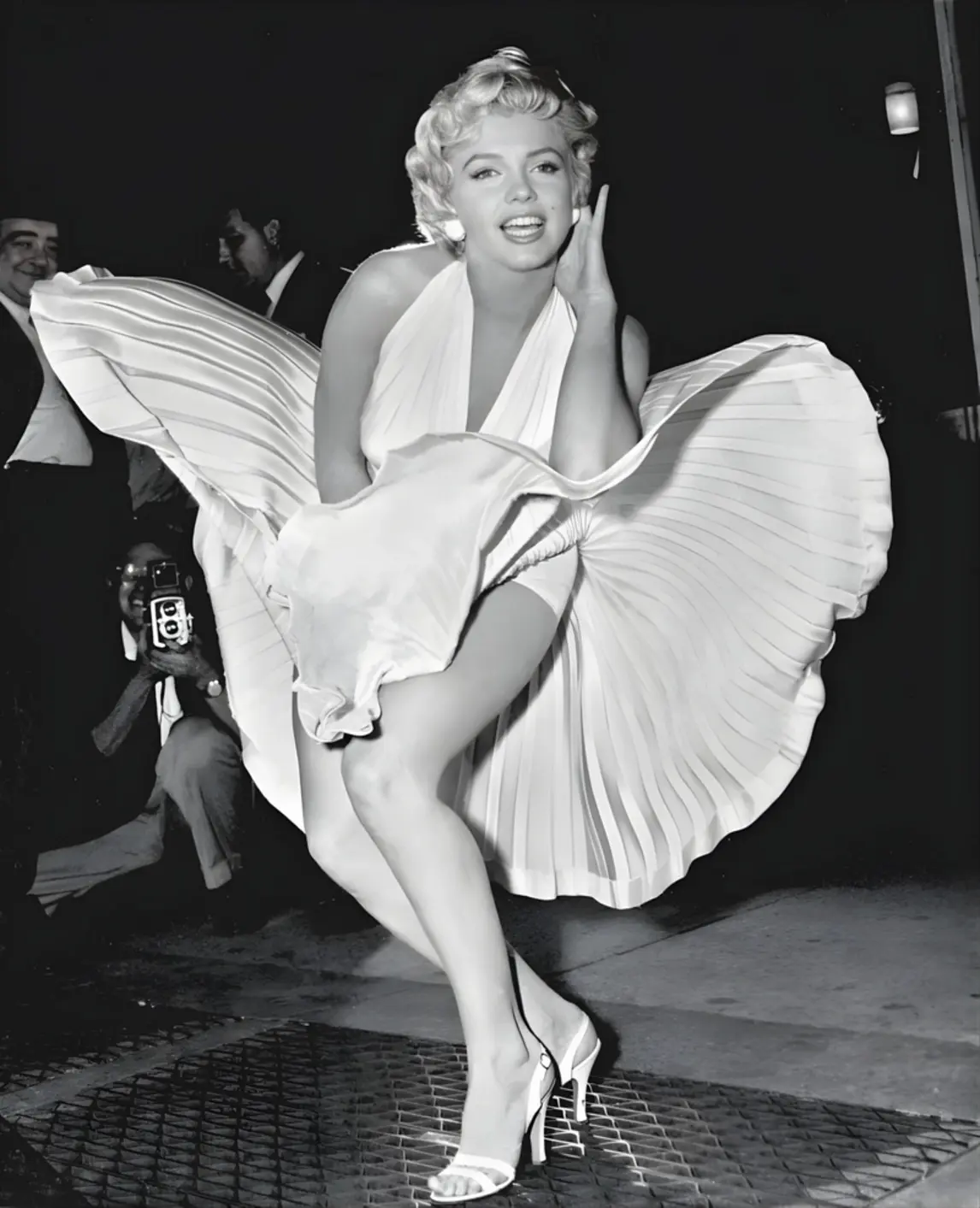
On September 15, 1954, Marilyn Monroe’s subway frate white dress rose on Lexington Avenue, one breeze, one crowd, and a sidewalk turned into a legendary moment of the culture.
September 15, 2025


At around 1 a.m. on Lexington Avenue, outside the Trans Lux 52nd Street Theater, a film shoot turned into a public event. Marilyn Monroe and co-star Tom Ewell were filming a brief beat for The Seven Year Itch when a subway grate supplied the plot twist: a rush of air from below, a skirt lifted into motion, and a sidewalk suddenly crowded with cameras.
William Travilla, the film’s costume designer, built it as a piece of engineering: a halter bodice with a plunging neckline, an open back, a cinched waist, and a pleated skirt designed to hold its shape as it moved. The material is often described as a light ivory tone on screen, and sources note the dress used pleated fabric that reads as crisp even under harsh lights. In other words, it was a garment meant to translate airflow into architecture.
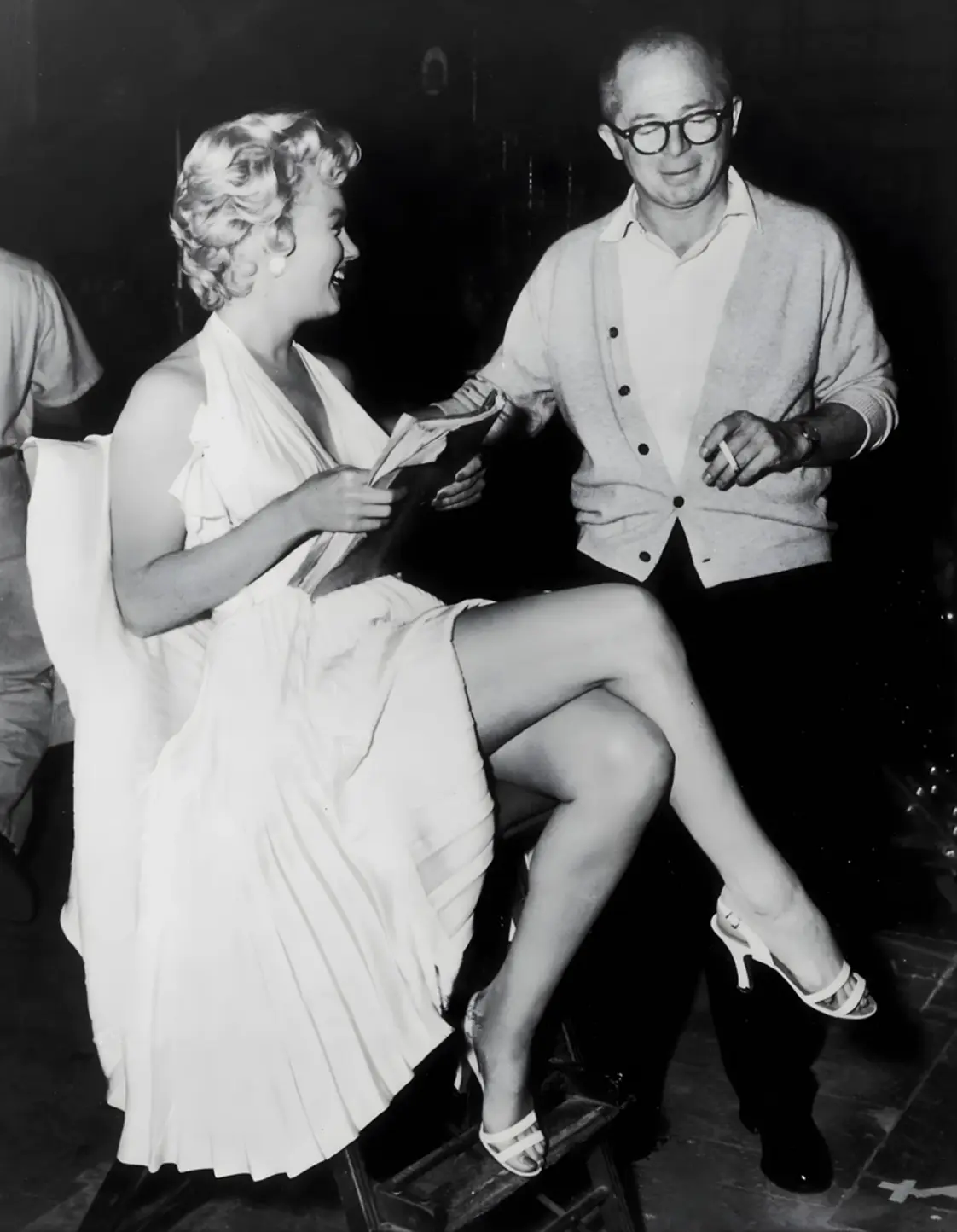
That translation mattered because the scene’s power sits in its contradiction. It is playful and precise at once: a flirtation performed with choreography, timing, and discipline. Monroe’s genius here is emotional technique. She plays surprise, then delight, then composure, like a short romantic story told through posture and breath. The breeze is the cue; her response is the narrative.
The street supplied the rest of the drama. Thousands of onlookers and photographers reportedly showed up, drawn by the promise of spectacle and the novelty of watching Hollywood belong to New York for a night. Police helped control the scene, and a wind machine was used to push air up through the grate, turning the moment into something repeatable for multiple takes.
Here is the twist: the location shoot produced the photographs that conquered culture, yet the film itself leaned on a later re-creation. Accounts describe the street conditions as too chaotic and loud for clean production, so the scene was reshot on a controlled soundstage back at 20th Century Fox in Los Angeles. The finished version served the movie; the Lexington Avenue images served immortality.
Though Monroe wore two pairs of white underwear to ensure she wasn't revealing too much, her husband at the time, Joe DiMaggio, apparently disapproved of the scene's suggestive nature. Photographer George S. Zimbel captured DiMaggio storming off the set and it was later reported that the couple got into an argument that night, ultimately resulting in their divorce. About three weeks later, the Daily News announced the separation.
Why did the stills outgrow the film? Because they condensed an entire era into one frame: postwar optimism, city nightlife, the new force of celebrity, and the fast-rising power of publicity photography. The shot also offered a romantic idea of urban intimacy: a couple leaving a movie, lingering on the sidewalk, letting the city’s own breath touch skin and fabric.
In the end, the film kept rolling, the city went back to sleep, and the myth stayed awake, because Marilyn Monroe and her white dress turned a passing gust on Lexington Avenue into a forever image.