Fashion resale may have begun as a sustainability promise, but its real power now lies in something colder: the ability to decide what fashion is still worth after the first purchase.
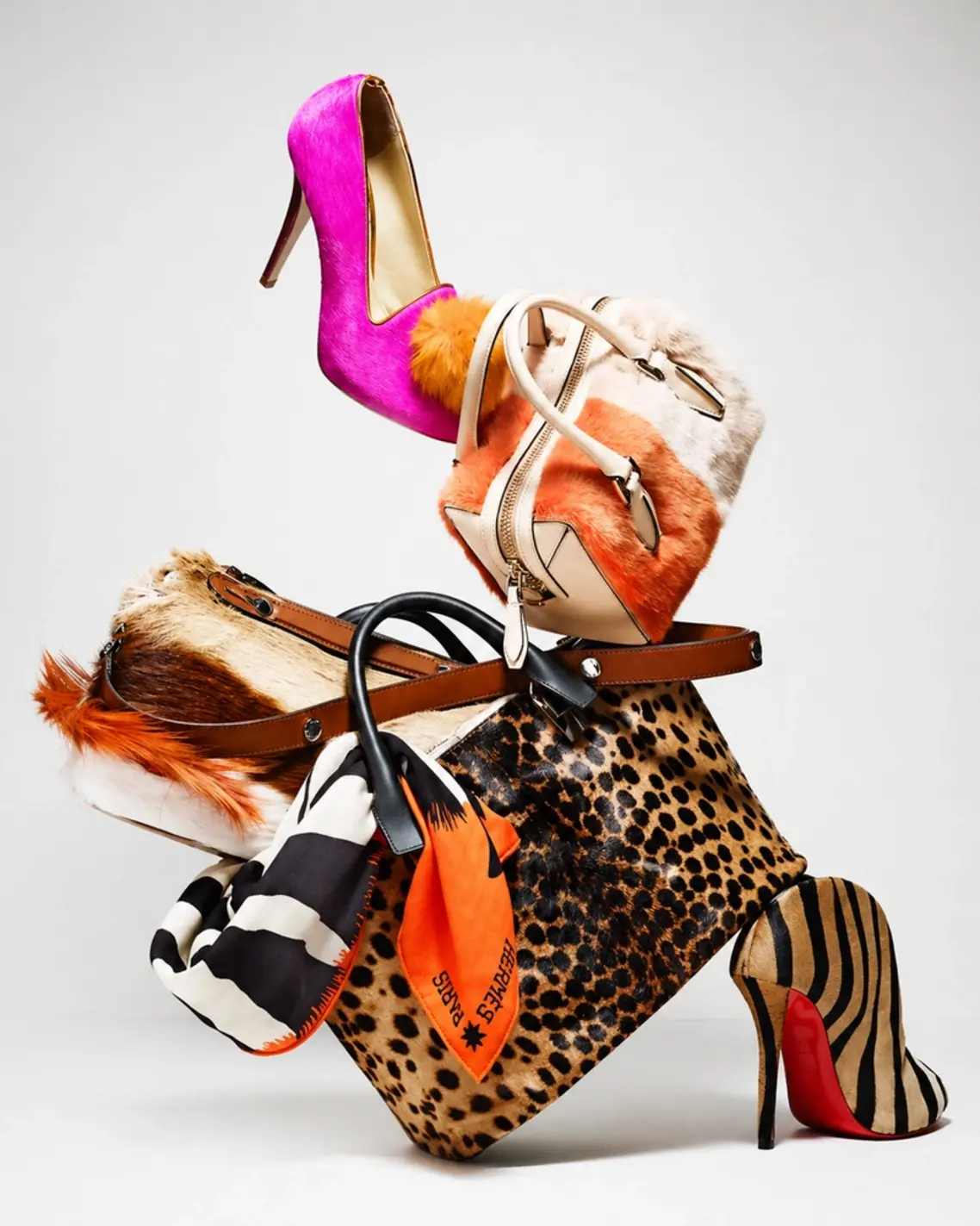
Fashion resale may have begun as a sustainability promise, but its real power now lies in something colder: the ability to decide what fashion is still worth after the first purchase.
April 28, 2026
Advertisement

Advertisement



The contemporary fashion landscape is witnessing a seismic shift as the fashion resale transitions from a niche subculture to a dominant economic force, currently expanding at four times the rate of the primary apparel sector.
With 60% of American consumers now participating in the pre-owned economy, we are seeing the emergence of a value flywheel that fundamentally disrupts the traditional linear make-sell-discard model. According to ThredUp’s 14th annual Resale Report 2026 and supporting data from GlobalData, the secondhand market reached a staggering $55.5 billion in 2025, capturing 12% of the total $458 billion spent on apparel, footwear, and accessories. While the raw dollar value is significant, the true narrative lies in the velocity of growth; a 14% year-over-year increase suggests a trajectory toward $80 billion by 2030. However, one must ask: If the secondary market continues to outpace primary retail so aggressively, at what point does the alternative market become the primary arbiter of a brand’s perceived worth? The 60% to 75% price discount inherent in fashion resale is no longer just a bargain-hunting metric. It is the baseline for a new consumer psychology that treats clothing as a depreciating asset rather than a disposable commodity.
This evolution is punctuated by the robust performance of diverse platforms, from ThredUp’s 20% revenue surge to $311 million, to The RealReal’s $2.1 billion in gross merchandise value, and even the grassroots scale of Goodwill, which generated $7 billion in sales. This is not merely a retail trend but a circular mandate where consumers act as temporary stewards rather than final owners. The data reveals that 46% of all consumers, and a telling 58% of Gen Z, now browse resale platforms before even considering a new purchase. This suggests a reversal in the traditional shopping funnel. Are brands now essentially manufacturing for fashion resale, with the initial sale acting as little more than a distribution event for future resellers? With 60% of consumers citing resale value as a critical factor in their initial purchase decisions, the residual value of a garment has become a primary driver of its initial desirability, forcing a radical recalculation of lifetime value within the fashion ecosystem.
The transition toward a circular economy, once pigeonholed as a narrow sustainability initiative, has matured into a comprehensive structural revolution. As highlighted by Richard Honiball and Deborah Patton in The Great Realignment, we are reaching the end of the linear era. The modern consumer no longer views the end of their personal use as the end of the product's life. This shift is evidenced by the fact that 52% of Gen Z and Millennials have attempted to resell over half of their wardrobes to recapture purchasing power. Consequently, the narrative that new is better is being dismantled by the realization that better lasts longer. This has birthed the stewardship model, where brands like Eileen Fisher, Patagonia, and Arc’teryx are repositioning themselves as service providers managing a fleet of durable assets rather than mere manufacturers. In a world where a single jacket can generate revenue three or four times over its lifespan, can a brand truly afford to remain a silent spectator in the fashion resale economy?
Despite the clear economic incentives, a significant readiness gap persists among traditional fashion houses. While 60% of surveyed brands admit that lacking a resale presence creates a permanent structural disadvantage, and 42% fear losing the Gen Z/Millennial demographic, only a meager 16% claim to be ready to scale resale operations immediately. The bottleneck is largely operational, with 38% citing logistical shortfalls. This has paved the way for Resale-as-a-Service providers like ThredUp, Trove, and Archive to bridge the gap for major players like J. Crew and Lululemon. Fashion resale has moved from a sustainability experiment to a primary lever for customer acquisition. If trade-in programs are now the baseline for long-term relevance, will the brands that fail to internalize these logistics essentially be handing their customer data and loyalty over to third-party platforms?
Even in the high-income luxury segment, where household incomes average $365,000, the influence of fashion resale is profound, though driven by different psychological triggers. For the affluent, the barrier to purchase is no longer capital, but permission. As Chandler Mount of the Affluent Consumer Research Company notes, regret anxiety has introduced a new friction into the market. Luxury items are now judged by whether they deserve space in a future life. Interestingly, seeing a brand thrive on resale platforms acts as a confidence signal, assuring 40% of luxury shoppers of a product's enduring quality. Is the secondary market now the ultimate stress test for luxury, where a brand’s prestige is validated not by its boutique price tag, but by its ability to retain value in the hands of the second or third owner? Ultimately, resale has moved from the periphery to the core, functioning as a cohesive flywheel that provides the permission and confidence required for the entire fashion industry to sustain its momentum in an increasingly conscious market.
Advertisement