MENU
Close





On 2 December 2025, one of the Fabergé’s most elusive treasures quietly rewrote auction history in London.
On 2 December 2025, one of the Fabergé’s most elusive treasures quietly rewrote auction history in London.
December 2, 2025


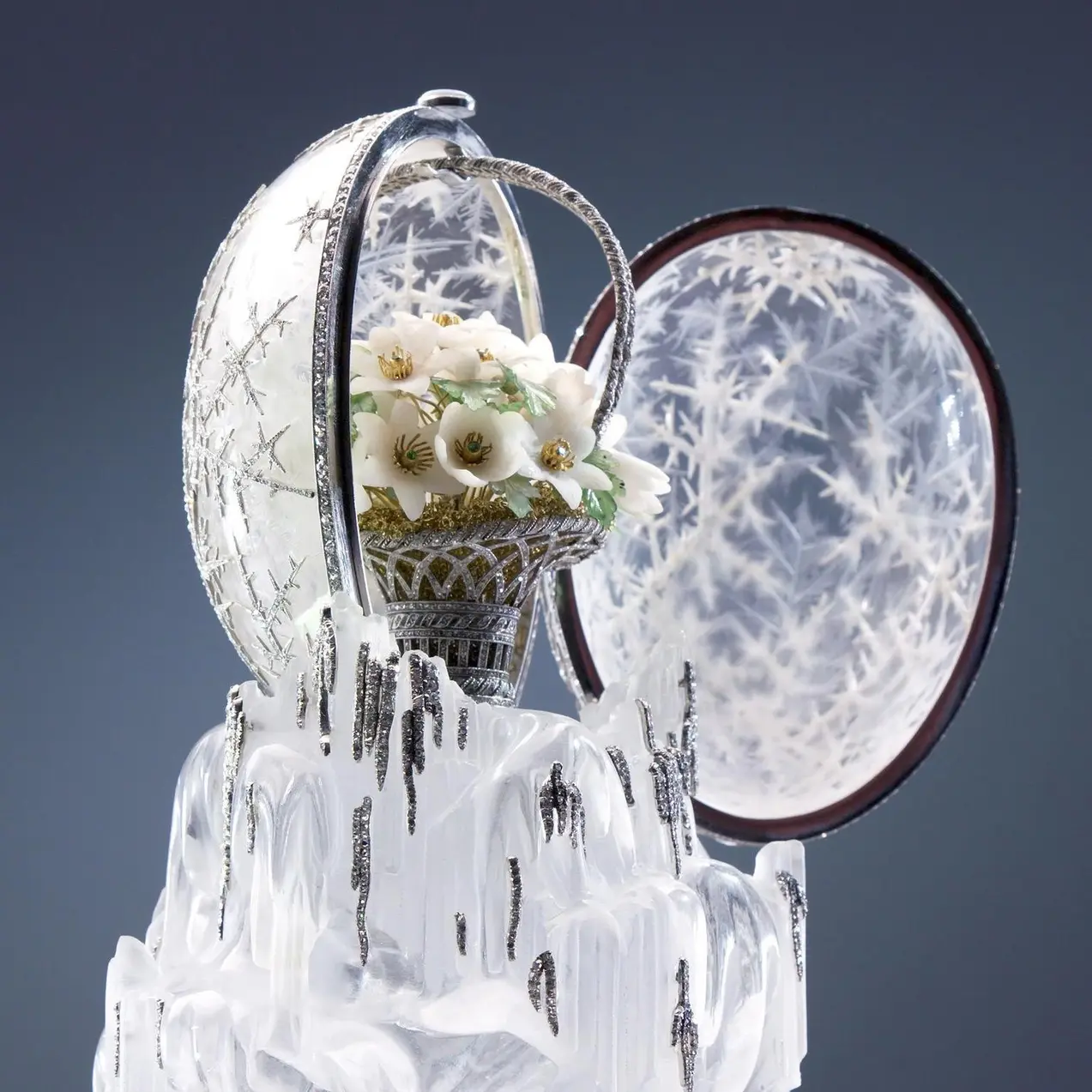
At Christie’s, the Fabergé Imperial Winter Egg of 1913 sold for 22.9 million pounds, around 30.2 million dollars, becoming the most expensive Fabergé object ever to go under the hammer and setting a new benchmark for Russian decorative arts.
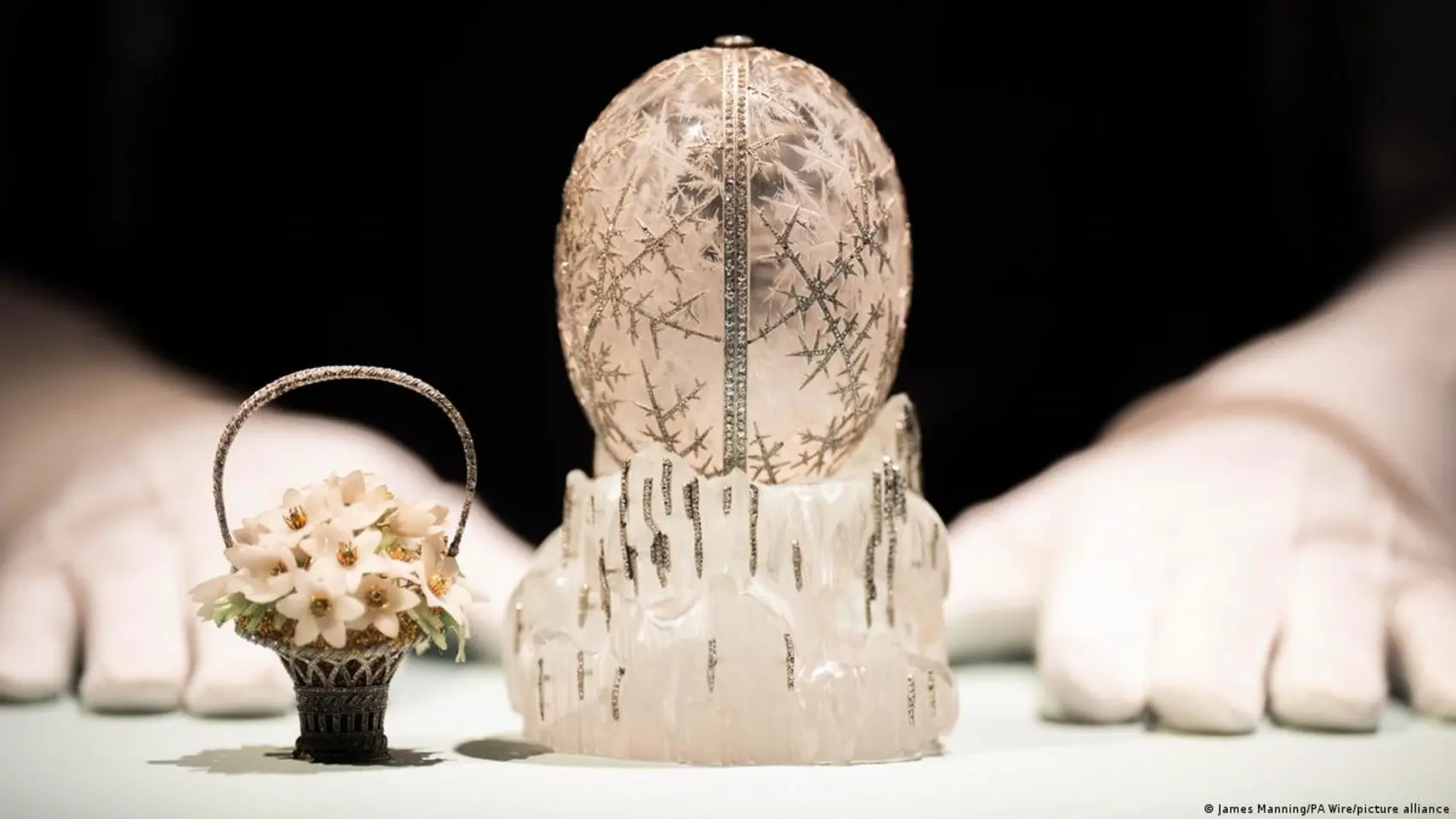
Commissioned by Tsar Nicholas II as an Easter gift for his mother, Dowager Empress Maria Feodorovna, the Winter Egg has always been a symbol of imperial excess and disappearing worlds. Just 10 centimetres tall, it is carved from rock crystal so clear it resembles a shard of frozen water. Platinum snowflake motifs and around 4,500 tiny diamonds cascade across the surface, while the crystal base is sculpted to look like melting ice.
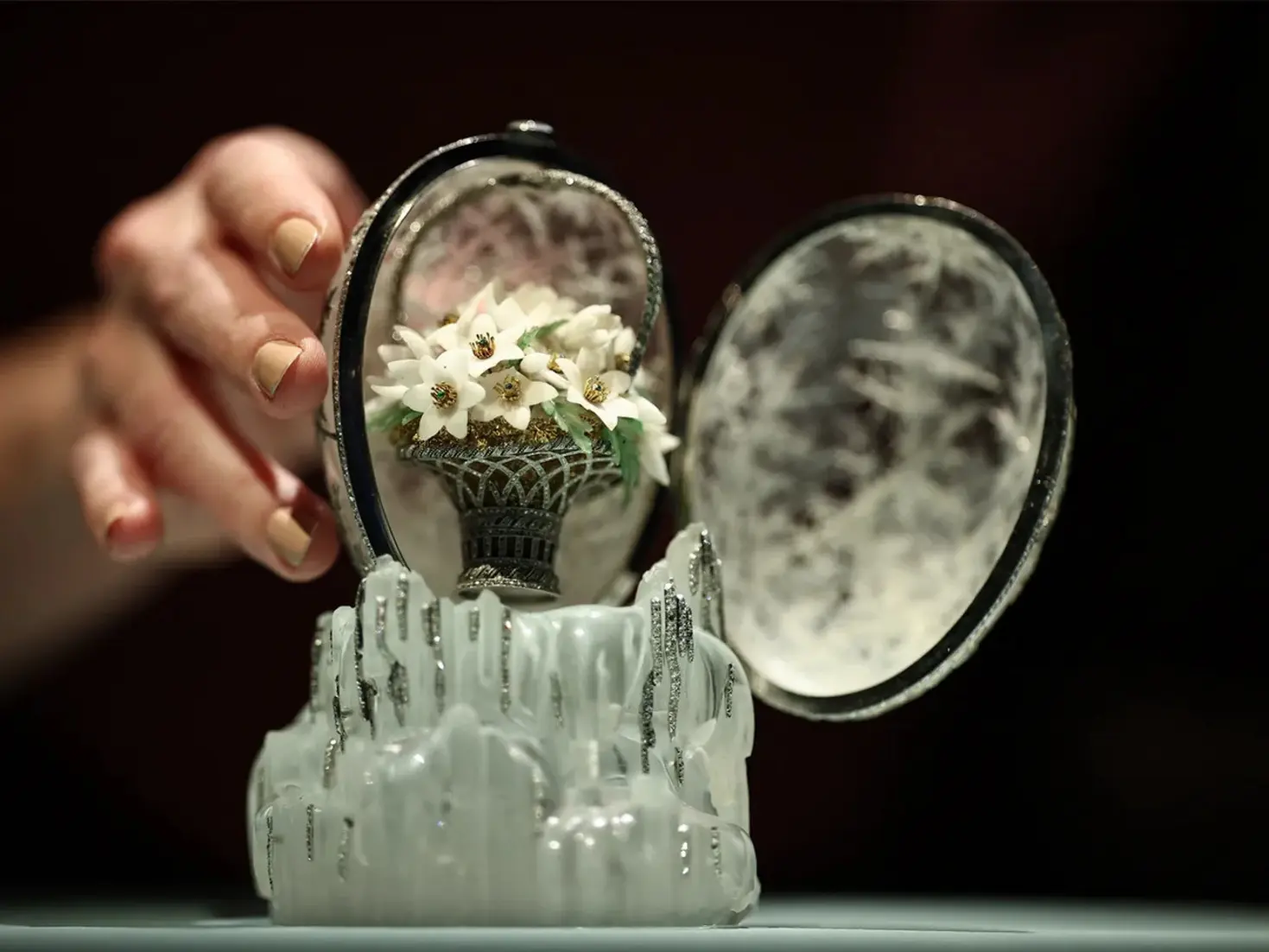
Inside sits the traditional Fabergé “surprise” a removable basket of white quartz flowers, their petals and leaves picked out in diamonds and green stones, a delicate metaphor for spring emerging from winter. The design is attributed to Alma Pihl, one of Fabergé’s few female designers, whose obsession with frost patterns on glass inspired the entire composition.

The egg’s journey to this record sale is almost as dramatic as its design. Seized and sold off by Soviet authorities in the 1920s, it passed through London dealers for a few hundred pounds, vanished from public sight for nearly two decades, then resurfaced at Christie’s Geneva in 1994 and again in New York in 2002. Each time it appeared, it set a new price record for a Fabergé piece; this latest auction continues that pattern on a far grander scale.
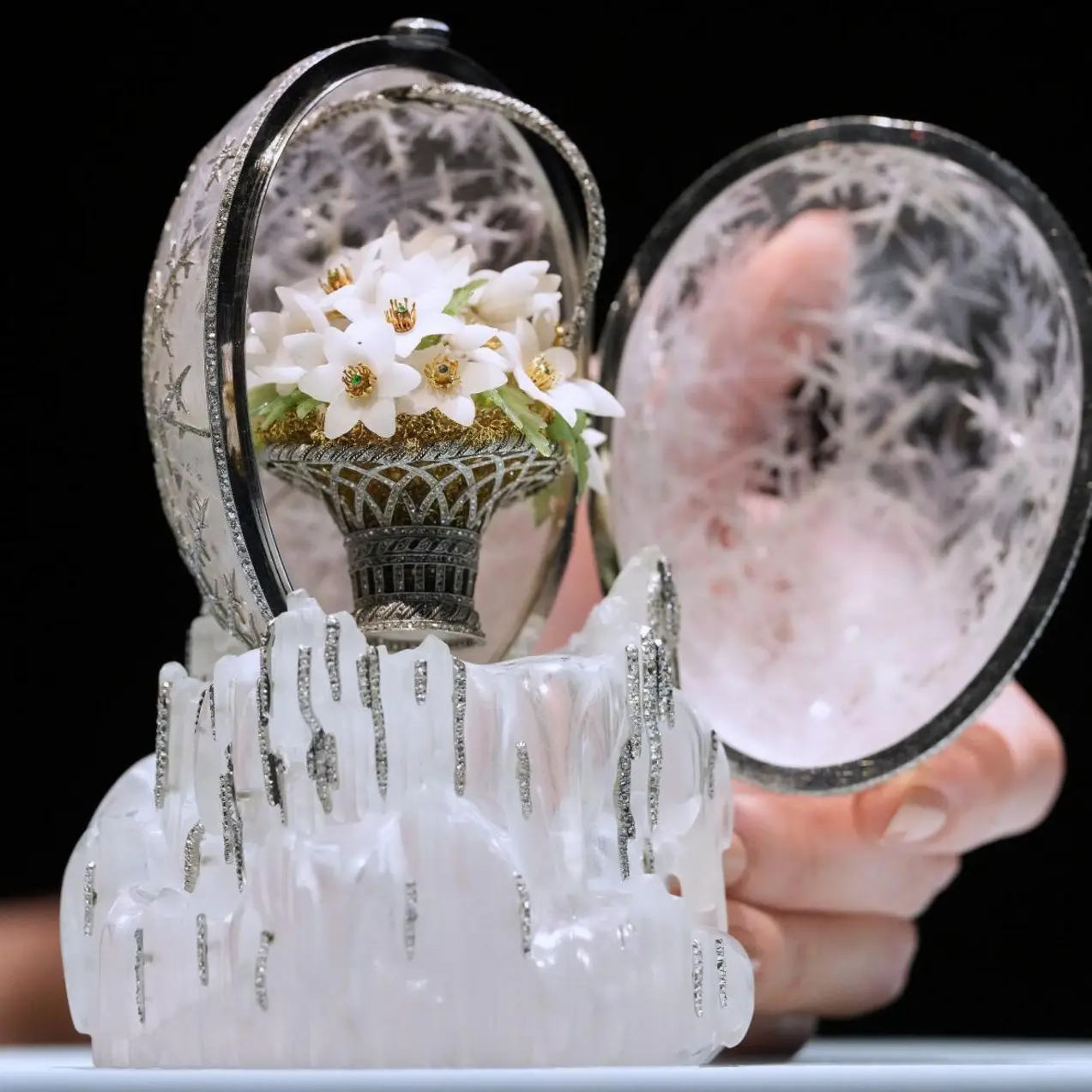
Today only seven imperial Fabergé eggs remain in private hands, with the rest held in museums, which explains the intense competition in the room. Christie’s specialists have called the Winter Egg the “Mona Lisa of the decorative arts” a work where history, craftsmanship and myth converge in a single, palm sized object of ice, light and staggering value.