MENU
Close





High jewelry is abandoning the safety of perfect whiteness for colorful gemstones that look electrically alive.
High jewelry is abandoning the safety of perfect whiteness for colorful gemstones that look electrically alive.
July 12, 2026


For much of modern jewelry history, colorful gemstones were treated as ornament around the supposedly serious business of white diamonds. Rubies, sapphires and emeralds supplied romance; diamonds supplied authority, liquidity and the reassuring language of the four Cs. That hierarchy is now being disturbed. At the highest end of the auction market, color increasingly functions as proof of geological improbability, immediate visual identity and finite supply.
Sotheby’s New York High Jewelry auction on June 16, 2026 offered a concentrated view of that shift. The 119-lot sale realized $43.4 million, exceeding its $38.7 million high estimate. Ninety-eight percent of the lots sold, while more than 63 percent surpassed their upper estimates. The defining results came from blue, pink, yellow and electric turquoise.
One auction cannot describe an entire global market, yet this sale revealed where competitive energy is gathering. Collectors are pursuing stones whose value can be understood in a glance but whose existence is difficult to repeat. Colorful gemstones create instant emotional recognition while remaining tied to mine closures, unusual chemistry, distinctive origins and microscopic variations that resist standardization.
The sale’s headliner was an unmounted 10.02-carat Fancy Intense Blue diamond, a cut-cornered rectangular modified brilliant graded VS2 and Type IIb by the GIA. It realized $8.7 million, above its reported estimate of more than $6 million, and was only the third Fancy Intense Blue diamond weighing at least 10 carats to appear at auction since 2008.
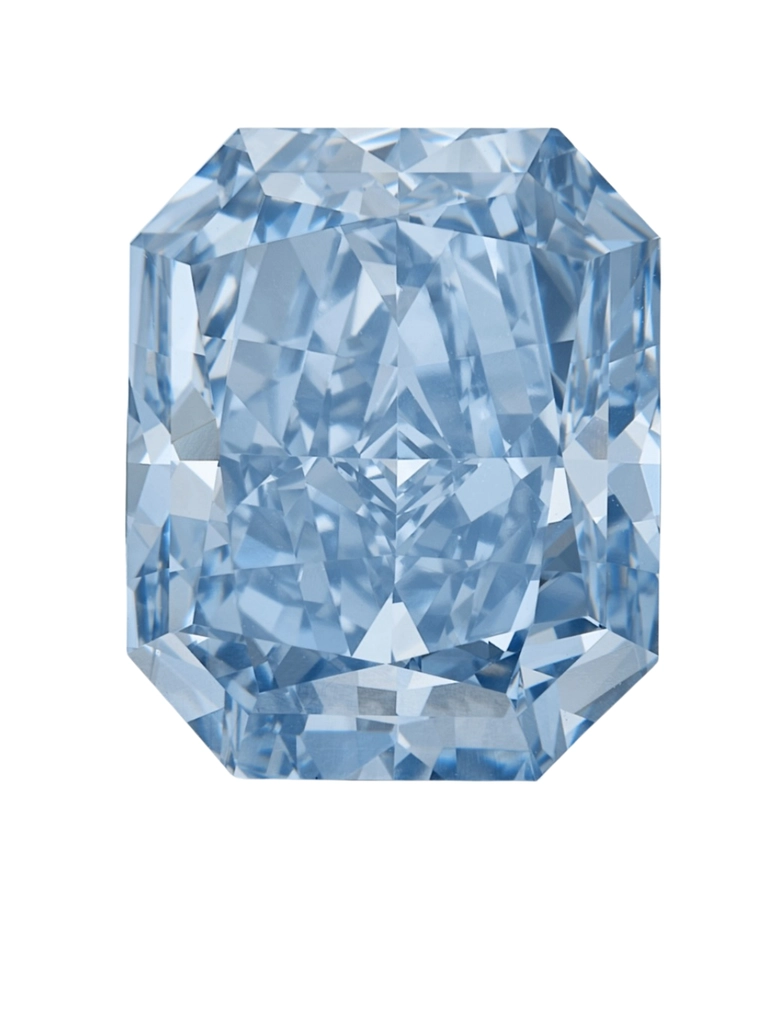
Its power came partly from the absence of distraction. There was no maison mounting, royal owner or elaborate necklace architecture. Offered loose, the diamond presented itself as pure geological event and future possibility. Its buyer acquired both a gem and the right to determine its next identity.
That lack of a finished setting is significant. Luxury traditionally depends on authorship: the signature, archive and craftsmanship of a famous house. Here, the stone was persuasive enough to exist before design. Instead of purchasing a completed historical narrative, the collector purchased the beginning of one.
Blue diamonds derive their color primarily from traces of boron within their carbon structure. GIA research found that only 0.3 percent of diamonds examined in one major sample were predominantly blue, while the institute describes blue diamonds with meaningful saturation as extremely rare.
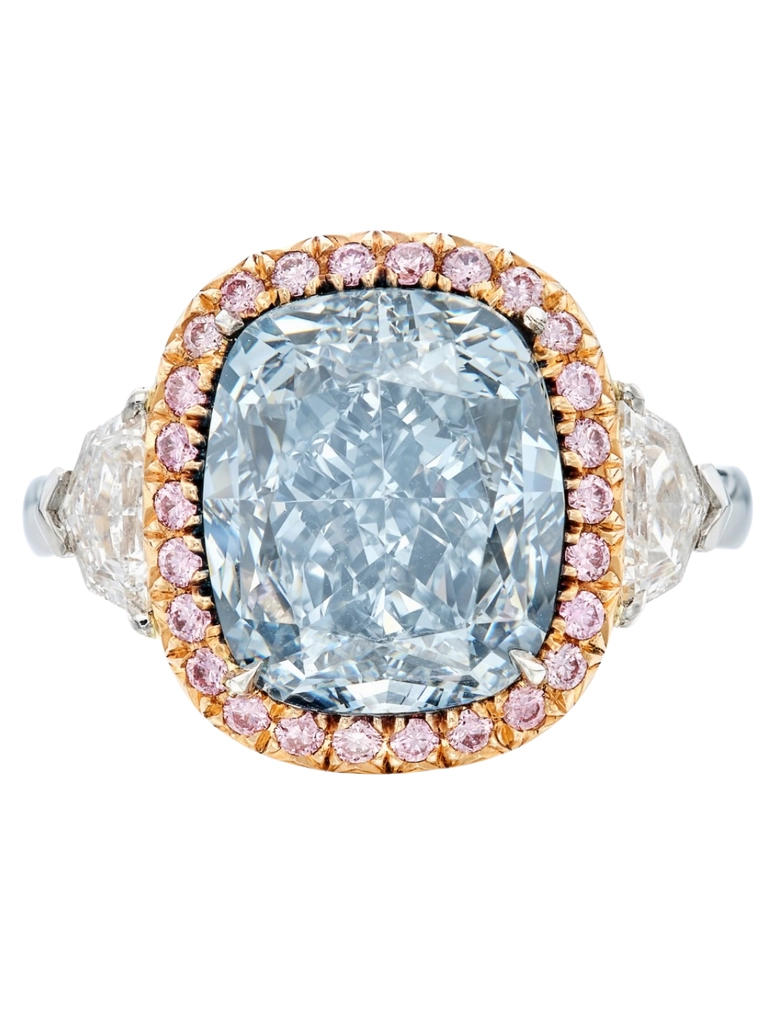
This is central to the colorful gemstone trend: hue alone is insufficient. Collectors are increasingly sensitive to purity, saturation and secondary tones. “Blue” behaves less like a category than a hierarchy. Gray-blue, green-blue, Fancy Intense and Fancy Vivid occupy different emotional and financial territories. The more precisely a stone can be described, the more singular it becomes.
Pink diamonds carry an equally potent narrative, although their color emerges through a different natural violence. GIA research attributes the color in 99.5 percent of pink diamonds to distortion within the crystal lattice rather than trace elements. Their beauty is therefore linked to pressure: the stone appears delicate because its internal structure was physically altered.
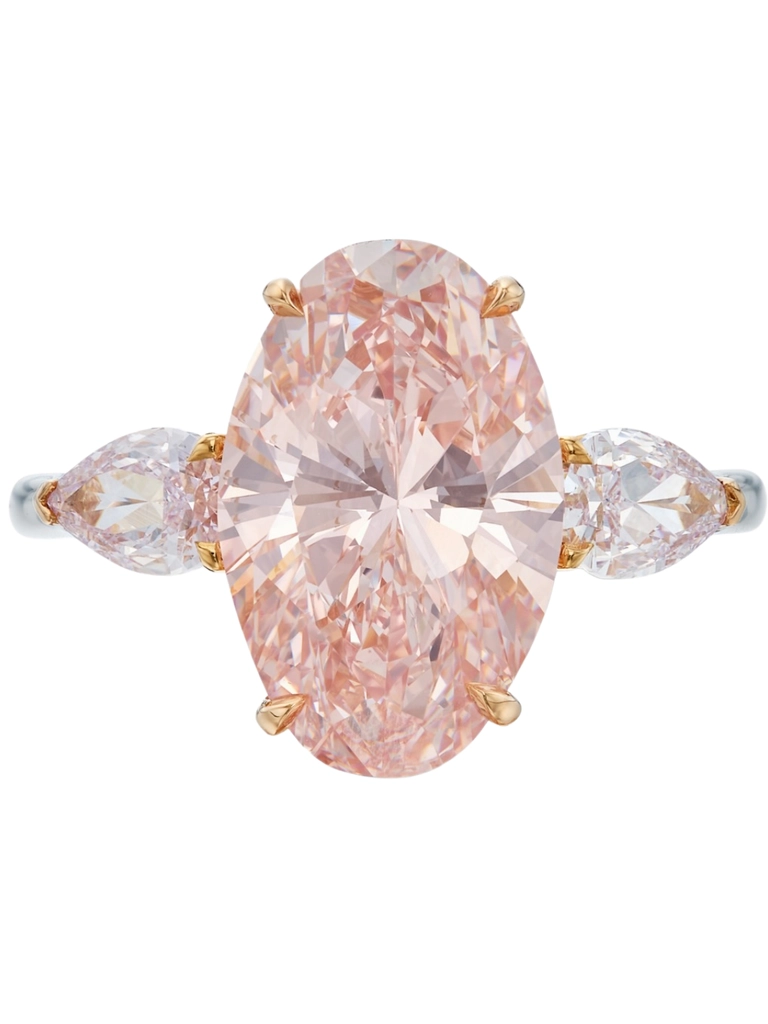
At Sotheby’s, a 5.02-carat oval Fancy Intense Pink diamond, graded Internally Flawless, realized $2.9 million. Two pear-shaped Light Pink side stones created a tonal composition instead of surrounding the center with conventional white brilliance. A much larger 13.77-carat Fancy Light Purplish Pink diamond brought $1.5 million, demonstrating that size matters, but saturation, clarity and purity of hue can matter more.
Pink diamonds also benefit from contemporary jewelry’s clearest scarcity story. Rio Tinto’s Argyle mine in Western Australia ceased production in November 2020 after 37 years. The company states that almost the entire global supply of rare pink and red diamonds came from Argyle. Existing stones have consequently become a finite archive circulating between vaults, jewelers, collectors and auction rooms.
The mine closure gives pink diamonds a narrative other colorful gemstones struggle to match. Their scarcity is no longer merely geological; it is historical and measurable. No new Argyle production can be introduced to ease demand. Every verified stone belongs to a completed chapter.
This does not mean every pink diamond rises automatically. The five-carat intense pink nearly reached the top of its estimate, whereas the lighter 13.77-carat stone sold at the bottom of its range. Collectors are buying concentrated color, desirable modifiers, strong documentation and a rarity story that survives scrutiny.
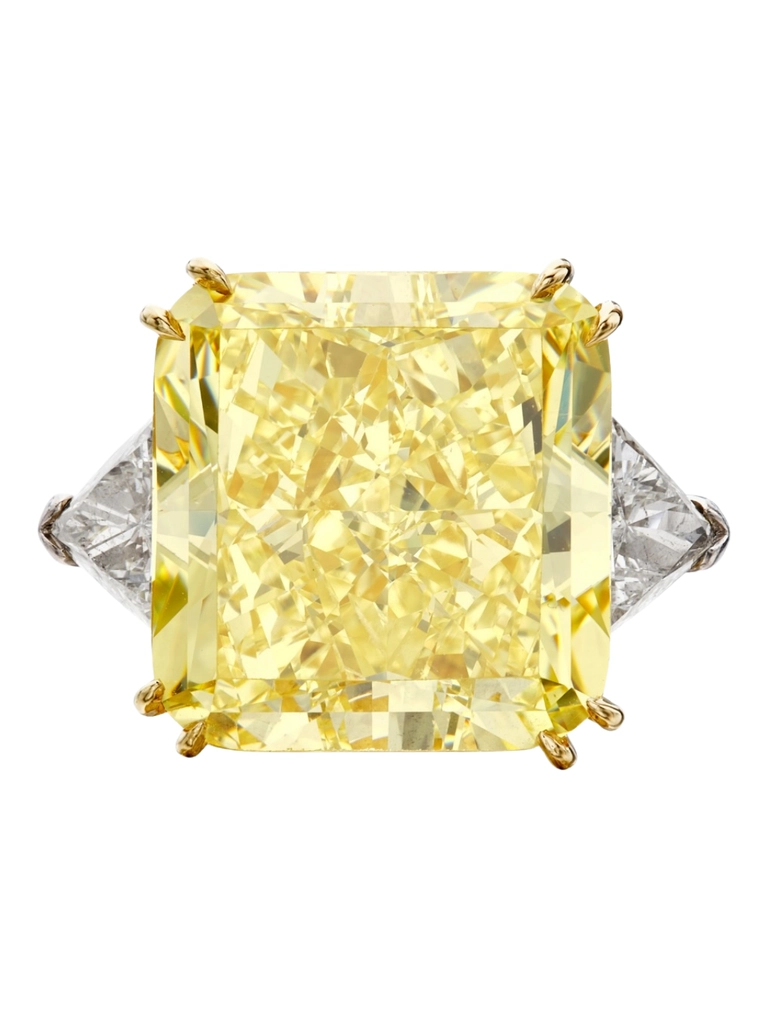
Yellow and brown are among the more common fancy diamond colors, yet scale and saturation can transform familiarity into spectacle. A 34.75-carat Fancy Intense Yellow diamond ring realized $1 million against an estimate of $600,000 to $800,000. Its result suggests that buyers still respond forcefully when a familiar hue arrives with exceptional mass, brightness and presence.
The greater disruption came from Paraíba tourmalines. Five stones from one private collection achieved a combined $3.4 million. A 7.70-carat Brazilian example realized $1.4 million against an estimate of $350,000 to $550,000, while a 6.11-carat Mozambique stone brought $972,800.
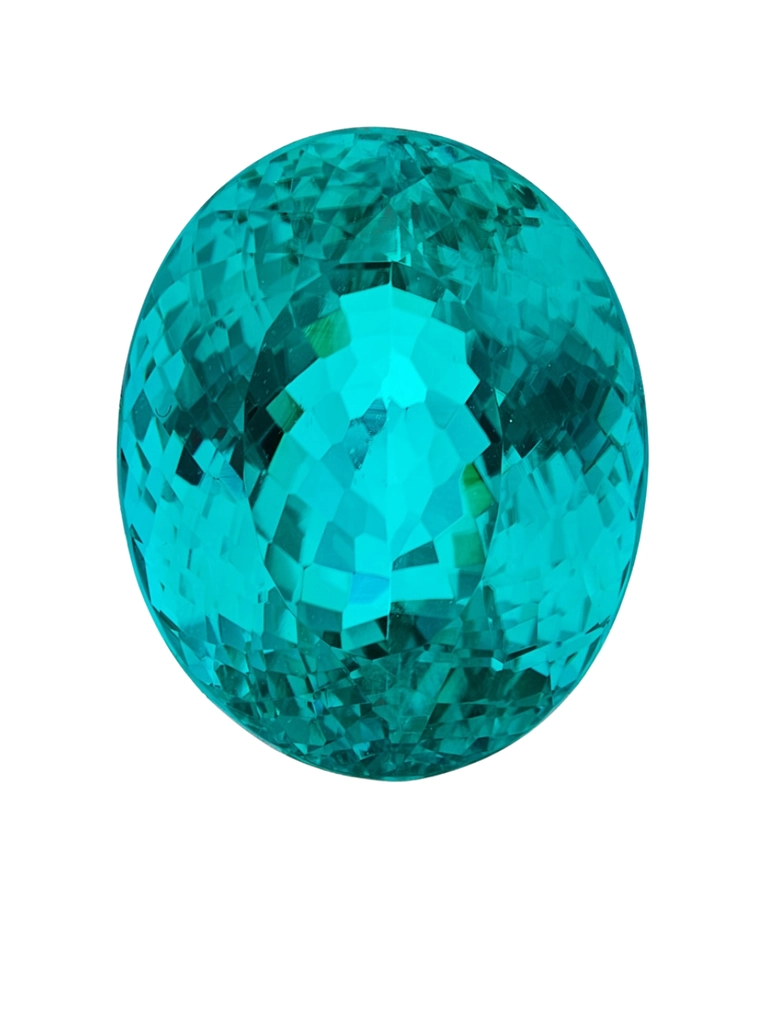
Paraíba’s appeal is chromatic rather than traditionally aristocratic. Copper and manganese produce its vivid blue-to-green glow, routinely described as neon or electric because it appears to generate light rather than merely reflect it. The material was first discovered in Brazil during the 1980s, with related copper-bearing tourmalines later identified in Nigeria and Mozambique.
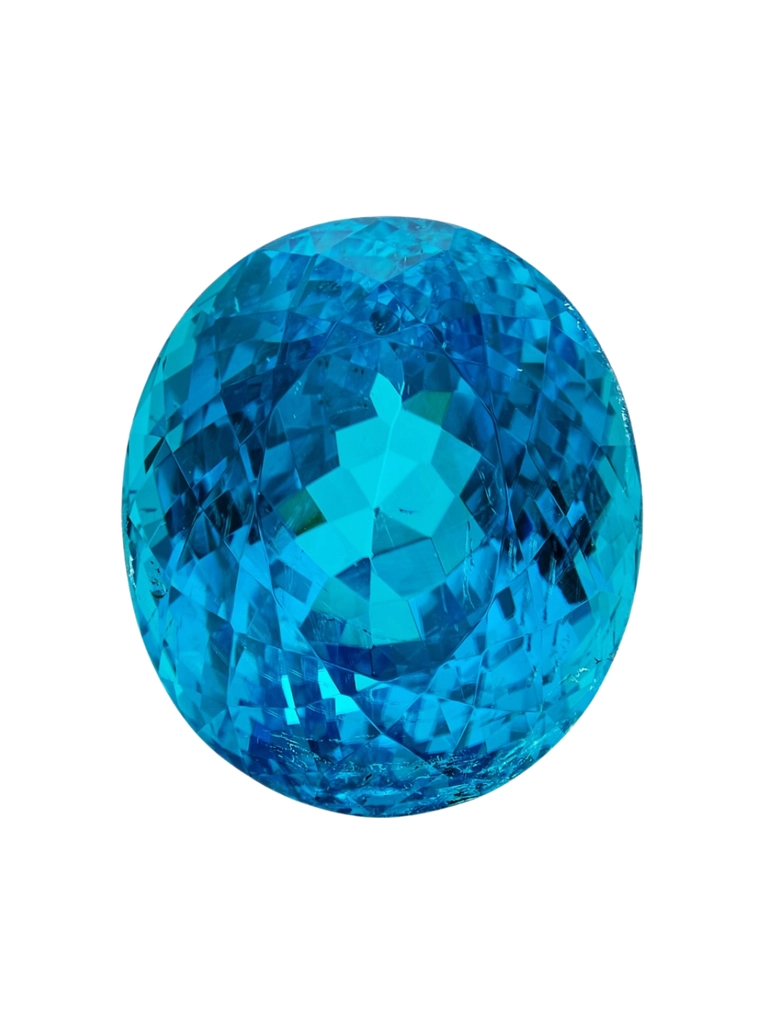
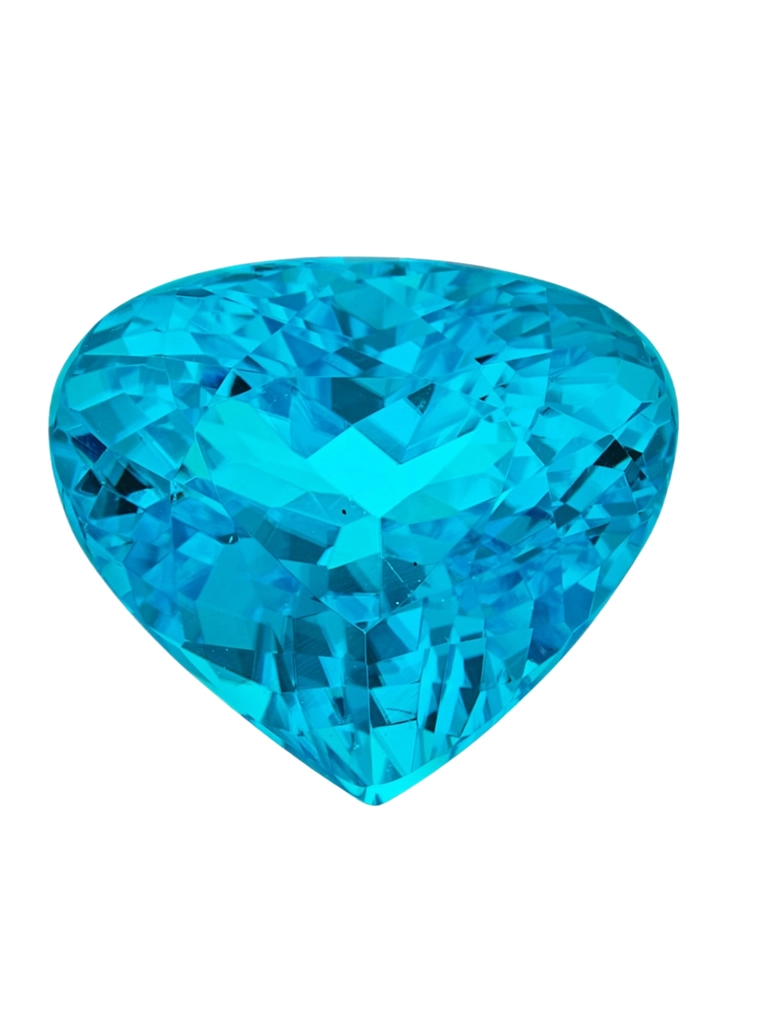
Geographic origin also influences value. Brazilian specimens carry particular prestige because of their history, restricted production and intense color, although exceptional African stones now compete at the highest level. The market has become sophisticated enough to distinguish among stones that casual buyers might place inside the same turquoise-blue category.
These results weaken the diamond monopoly over portable rarity. A collector who once searched mainly for an important blue or pink diamond can now direct similar attention toward Brazilian Paraíba, Kashmir sapphire, Colombian emerald or another stone defined by a narrow combination of color, origin and quality.
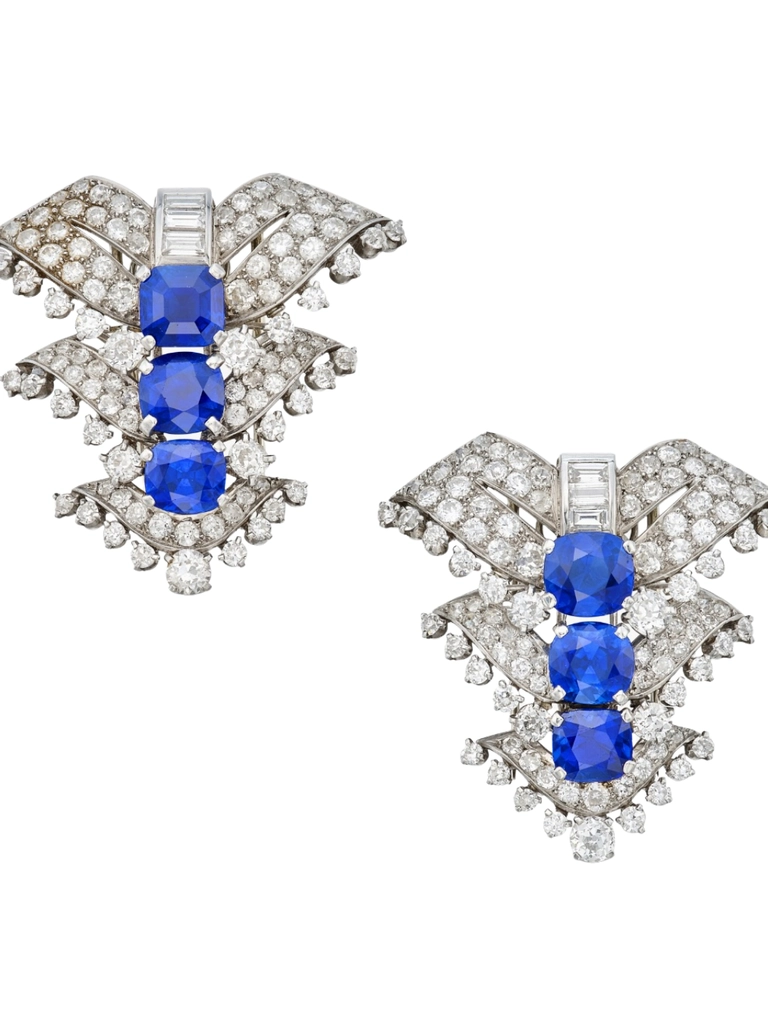
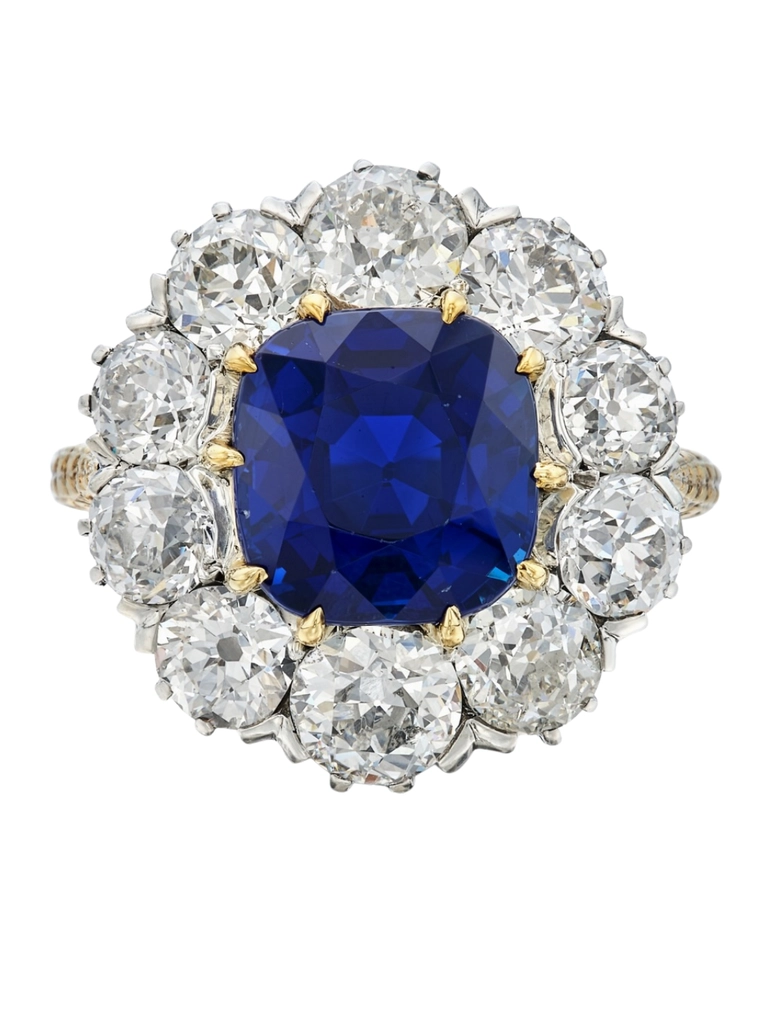
High jewelry’s hierarchy is becoming more plural, but also more exacting. Colorful gemstones have opened the field to a wider range of minerals while demanding deeper expertise regarding treatment, trace elements, laboratory reports and provenance.
The rise of colorful gemstones also reflects a cultural change in how luxury communicates. White diamonds project universal prestige, but their visual language can become interchangeable. A vivid blue diamond, purplish pink or Paraíba tourmaline is immediately characterful. Across a ballroom, auction room or phone screen, color creates recognition before provenance is explained.
That visibility attracts houses seeking signature designs and collectors building personal rather than institutional-looking jewelry wardrobes. The loose blue diamond was especially revealing: its lack of a setting increased its imaginative value by allowing the buyer to become a co-author.
Still, “colored capital” should be treated carefully. Auction success does not turn every colorful stone into a reliable investment. In May 2026, a six-carat Fancy Vivid Blue diamond offered by Sotheby’s Geneva failed to sell, while Christie’s sold the 5.5-carat blue-green Ocean Dream for $17.3 million. The contrast exposes a selective market shaped by estimate, hue, provenance, timing and a very small buyer pool.
The June sale’s white-diamond results provide further context. An 11.33-carat D-color, Type IIa, Internally Flawless old mine-cut diamond from Sotheby’s collaboration with De Beers realized $896,000. It was a superb stone, yet several colored gems generated greater urgency.
The market has not rejected white diamonds; it has reassigned excitement. White stones continue to offer grandeur, history and technical perfection. Colorful gemstones, however, offer personality before the jewel has even been designed.
The colorful gemstone trend is larger than a seasonal appetite for rainbow jewelry. It represents a new definition of exclusivity. The most desired stones combine visible difference with a supply story that cannot be expanded on demand: boron entered one diamond, pressure distorted another, copper ignited a tourmaline, and a mine then closed forever.
For designers, this encourages settings built around a gem’s individual personality rather than forcing every stone into a house formula. A blue diamond may require architectural restraint; a Paraíba tourmaline may need metalwork that amplifies its internal electricity; a pink diamond may become even more expressive when placed beside related tones rather than predictable white accents.
For auction houses, origin reports, archival research and scientific grading become central to storytelling. For collectors, education matters as much as appetite because tiny differences in tone, treatment, provenance and saturation can produce enormous differences in value.
The future of high jewelry may still sparkle white, but its most aggressive desires now arrive in color. Colorful gemstones do more than brighten a jewel. At their best, they make rarity visible—and turn the accidents of the earth into something no laboratory, brand or buyer can order twice.