September 12, 2010. There are fashion statements—and then there are moments that permanently scar pop culture’s collective memory. On this day, Lady Gaga stepped onto the stage of the MTV Video Music Awards wearing a dress made entirely of raw meat, and fashion was never quite the same again.
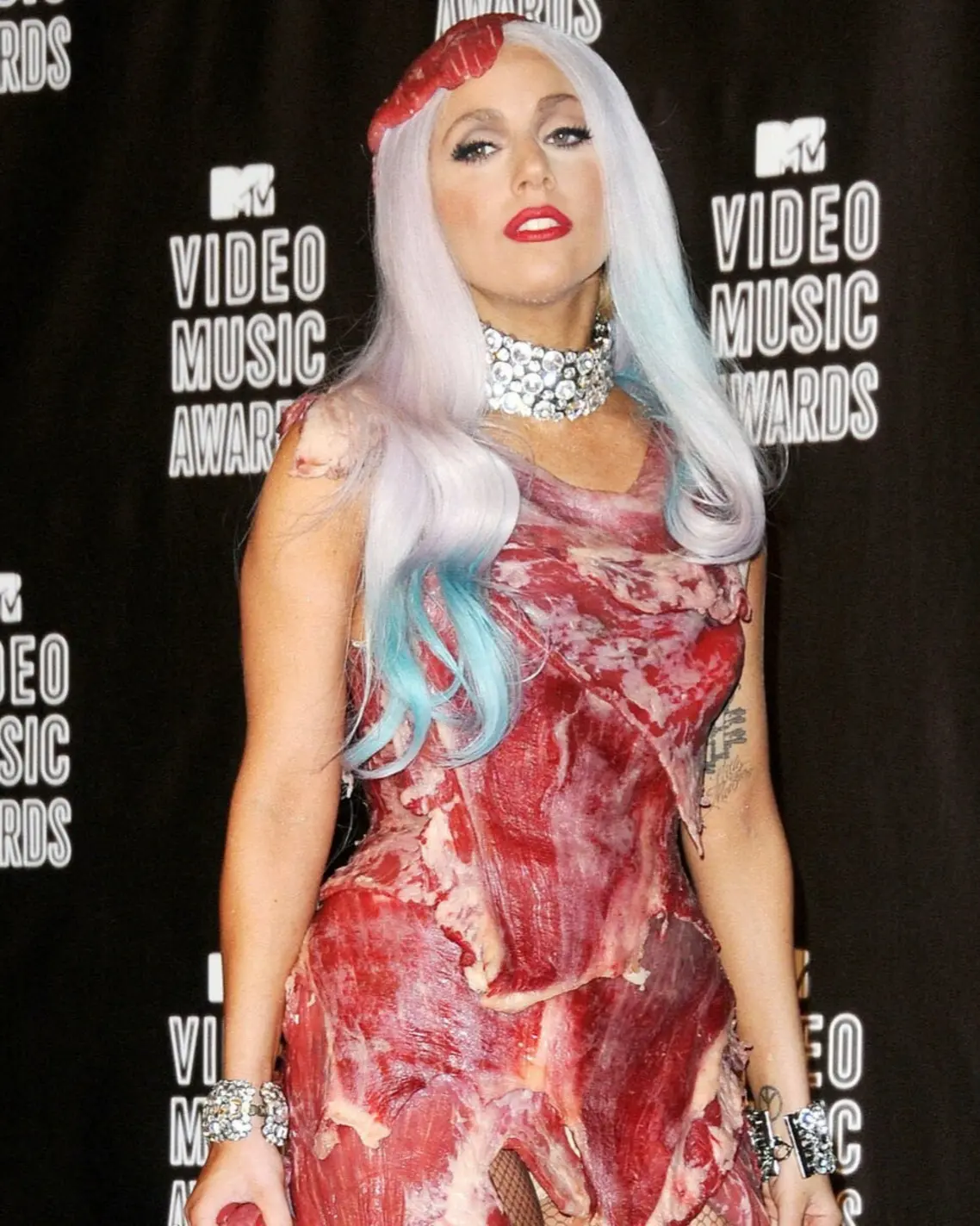
September 12, 2010. There are fashion statements—and then there are moments that permanently scar pop culture’s collective memory. On this day, Lady Gaga stepped onto the stage of the MTV Video Music Awards wearing a dress made entirely of raw meat, and fashion was never quite the same again.
December 17, 2025


Slashed high at the thigh, draped with a cowl neckline, and accessorized with matching beef boots, a meat hat, and a meat clutch, the dress was designed by artist Franc Fernandez, in collaboration with Gaga’s fashion director Nicola Formichetti. If you thought it was a prank, think again. This was a fully constructed garment—stitched onto a corset, engineered like fashion, and smelling unmistakably of flesh.
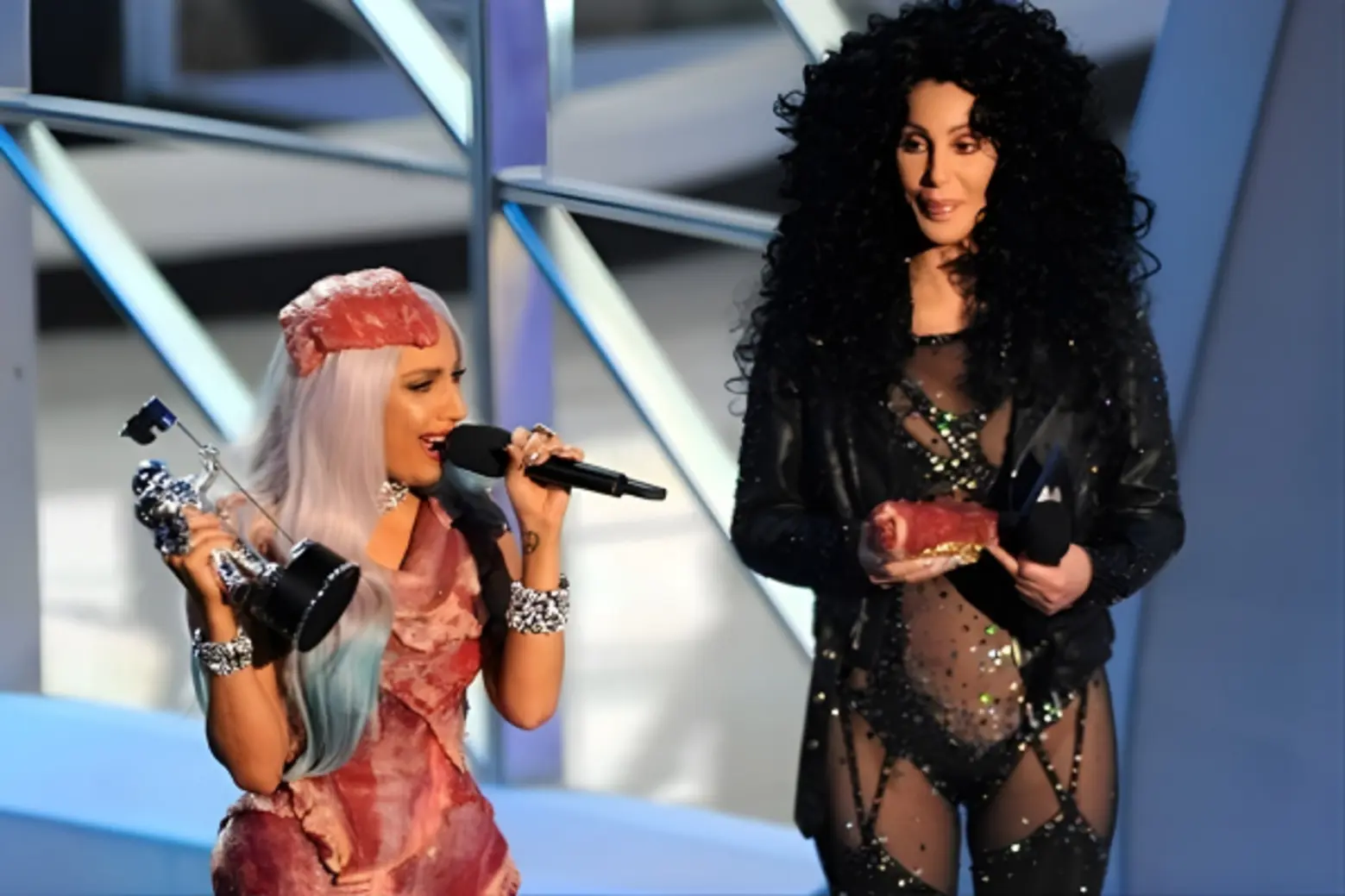
As Gaga accepted her award for Bad Romance, she quipped, “I never thought I’d be asking Cher to hold my meat purse.” What made the moment even more surreal? Cher is a vegetarian.
Even Cher—queen of naked dresses, feathered headdresses—looked momentarily stunned. To upstage Cher at an awards show is a near-impossible feat. Gaga managed it with flank steak.
What made the dress so unsettling was the cut was almost classic—sensual, statuesque, even elegant. By replacing silk and satin with meat, the dress collapsed the distance between luxury and decay, seduction and mortality. The body was no longer adorned; it was mirrored.
Accessories also reinforced the concept. Matching meat boots, a meat hat, and a meat clutch extended the idea of total look styling to its most grotesque extreme, turning Gaga herself into a walking still life. Fashion here became performance art, and the red carpet transformed into a site of confrontation rather than celebration.
From a theoretical perspective, the dress sits squarely within the tradition of the grotesque body. Animal rights groups condemned it. Critics called it grotesque, offensive, excessive. And yet, that was precisely the point. As fashion scholar Francesca Granata notes, placing raw flesh on the outside of the body destabilizes boundaries—inside versus outside, living versus dead, subject versus object. The phrase “a piece of meat,” often used to describe the objectification of women, was made literal.
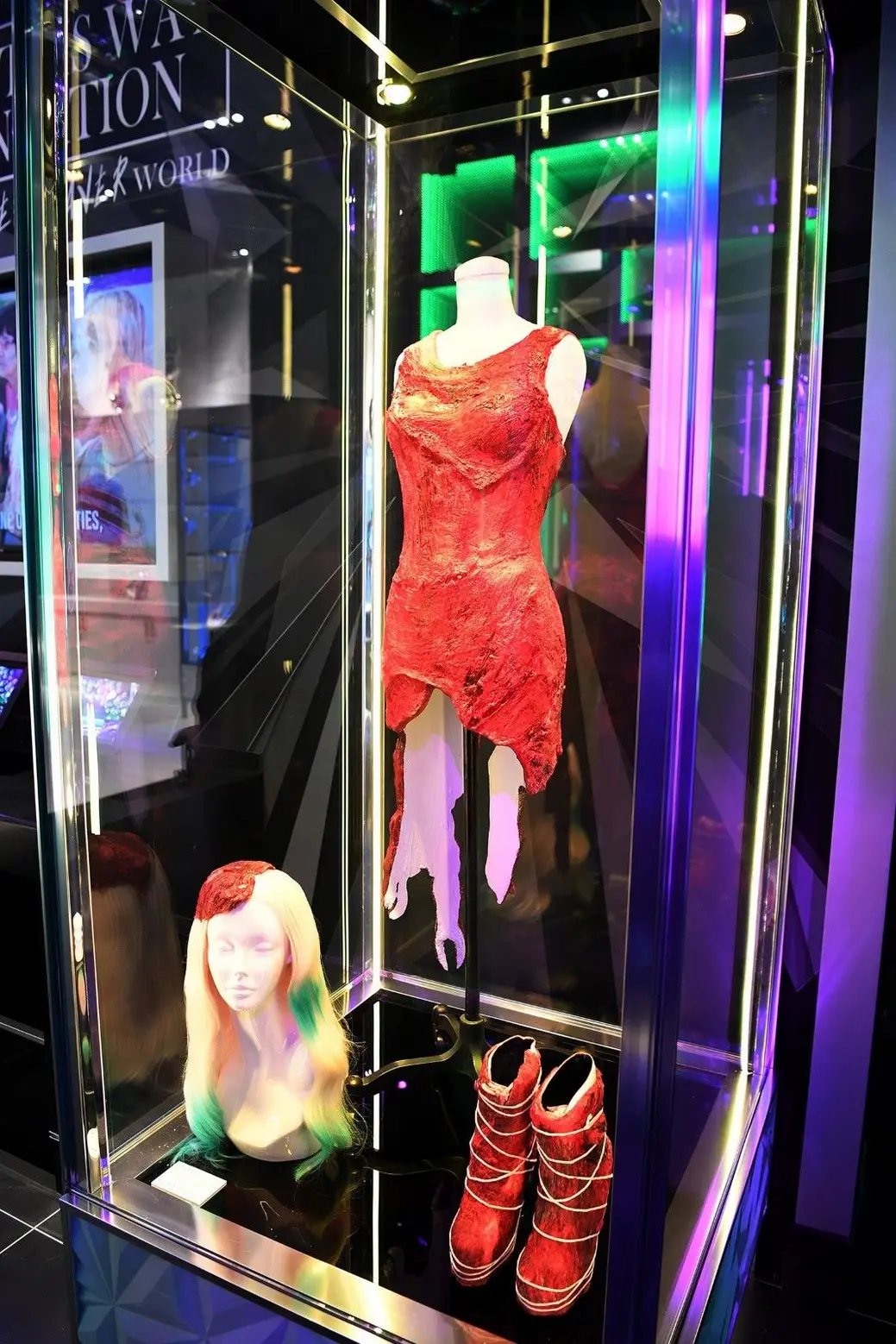
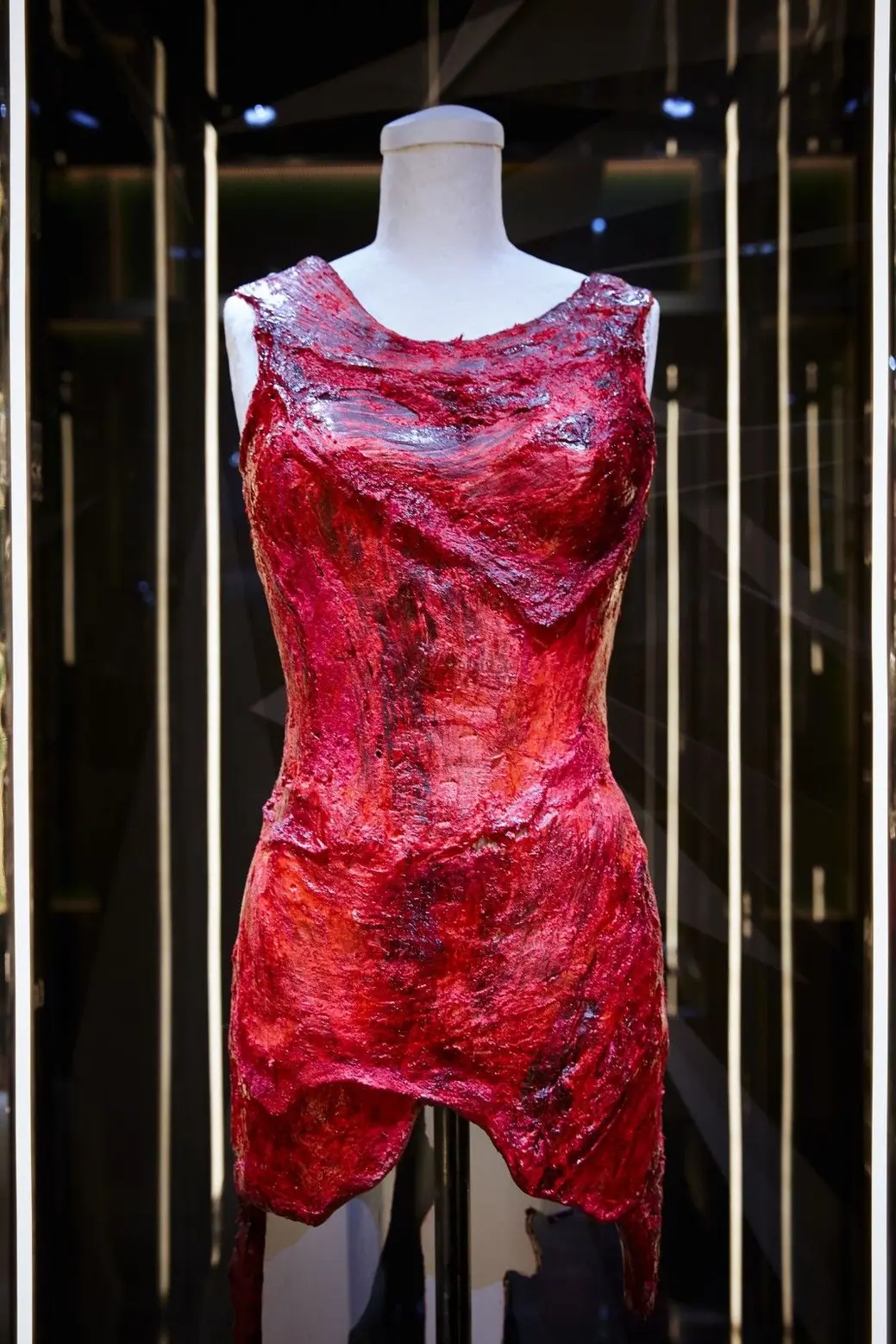
And then came preservation. With the help of a taxidermist, the dress was cured, dried, and transformed into “jerky.” Today, it lives undeniably immortal on at the Haus of Gaga museum at Park MGM in Las Vegas.
More than a decade later, the meat dress remains unmatched—not just for shock value, but for how clearly it proved Gaga’s thesis: fashion can be political, uncomfortable, absurd, and unforgettable all at once.
In this sense, the meat dress was fashion pushed to its conceptual limit—where clothing stops flattering the body and starts asking why the body must be flattered at all.