MENU
Close





In the Year of the Fire Horse, luxury watchmakers revisit the Chinese zodiac through craftsmanship, cultural intelligence and mechanical intent—tracing how Lunar New Year Watches have evolved from experiment to institution. For much of the Swiss watch industry’s history, cultural symbolism was treated cautiously. Motifs rooted outside Europe—particularly those tied to astrology or folklore—were often regarded as decorative rather than substantive. That attitude began to shift decisively in the early 2010s, when a small number of maisons approached the Chinese calendar not as ornament, but as structure.
In the Year of the Fire Horse, luxury watchmakers revisit the Chinese zodiac through craftsmanship, cultural intelligence and mechanical intent—tracing how Lunar New Year Watches have evolved from experiment to institution. For much of the Swiss watch industry’s history, cultural symbolism was treated cautiously. Motifs rooted outside Europe—particularly those tied to astrology or folklore—were often regarded as decorative rather than substantive. That attitude began to shift decisively in the early 2010s, when a small number of maisons approached the Chinese calendar not as ornament, but as structure.
January 16, 2026


Blancpain’s introduction of the Traditional Chinese Calendar in 2012 marked a turning point. A year later, De Bethune presented a twelve-piece zodiac cycle inspired by the water clock of Beijing’s Old Summer Palace. Together, these two projects reframed the zodiac as a legitimate field of horological enquiry—mechanical, artistic, and historical.
More than a decade on, Lunar New Year watches have become a recurring fixture of the high-end calendar. Yet their significance varies widely. Some function as seasonal gestures. Others reveal deeper thinking: about timekeeping systems, cultural translation, and the role of narrative in contemporary luxury.
In 2026, the Year of the Fire Horse provides a particularly telling snapshot of where this category now stands.
Within Chinese cosmology, the Horse occupies a distinct position. It is associated with movement, stamina, autonomy, and an outward-facing energy. In Fire years, these traits are sharpened further—linked to charisma, volatility, and transformation.
For watchmakers, the symbolism is not merely decorative. The Horse lends itself naturally to mechanical metaphor: oscillation, torque, stored energy, release. When handled with restraint, it offers an opportunity to align cultural meaning with horological logic.
The most compelling Year of the Horse watches are those that understand this parallel—and avoid reducing the animal to a pictorial cliché.
When Blancpain unveiled the Villeret Traditional Chinese Calendar in 2012, it did something no Swiss maison had attempted before: it translated the lunisolar Chinese calendar—zodiac animals, heavenly stems, earthly branches, leap months—into a fully mechanical wristwatch. The result was neither intuitive nor commercially obvious, but it established credibility.
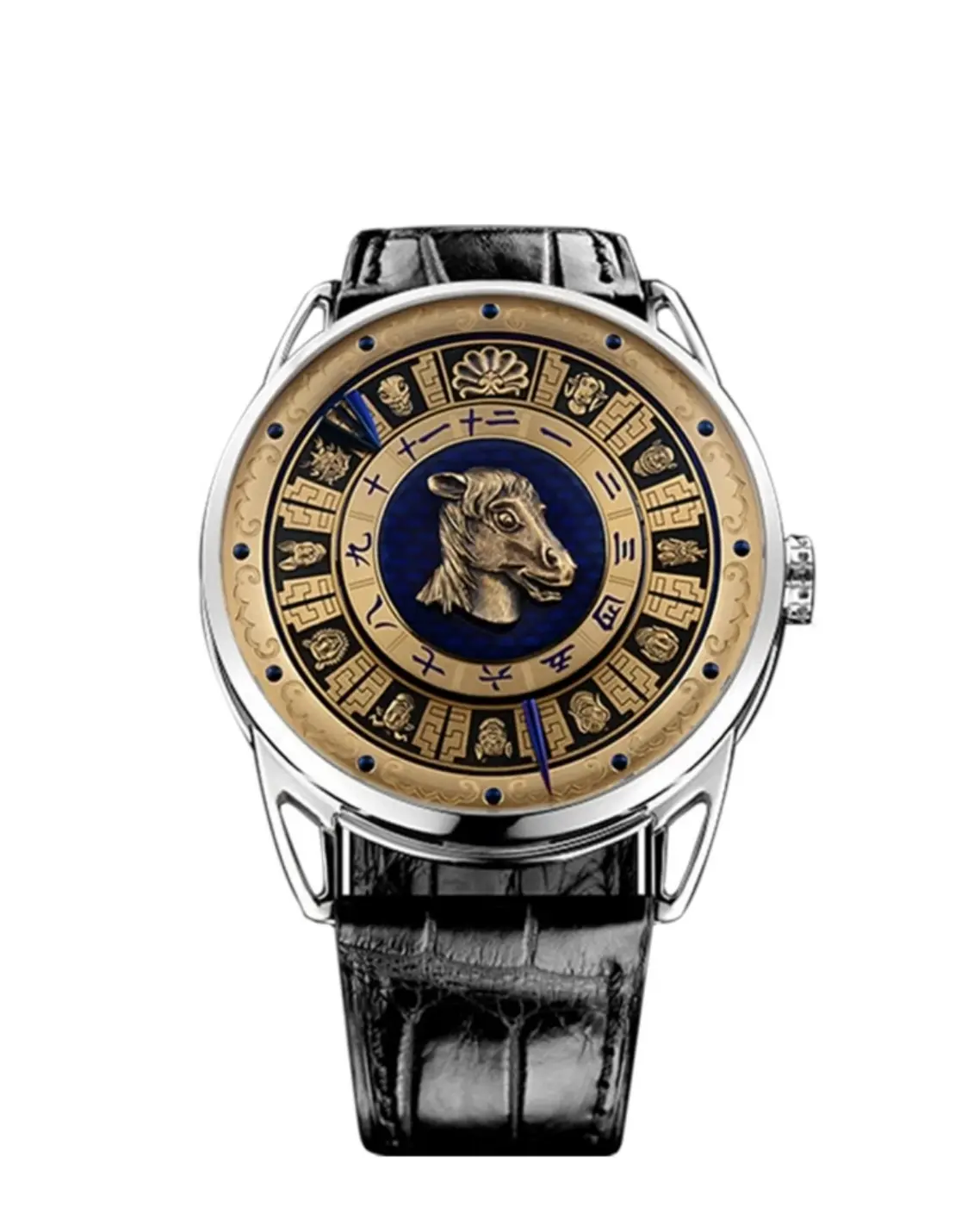
De Bethune’s zodiac project, launched in 2013, took a different route. Inspired by the bronze animal heads designed by Jesuit missionaries for the Qing court, the DB25 series treated the zodiac as a closed artistic cycle rather than an annual marketing exercise. Each piece stood on its own, yet belonged to a coherent whole.
These early efforts matter because they set a benchmark. Against them, today’s Lunar New Year watches are easier to read—both in ambition and intent.
TAG Heuer: A Contemporary Accent
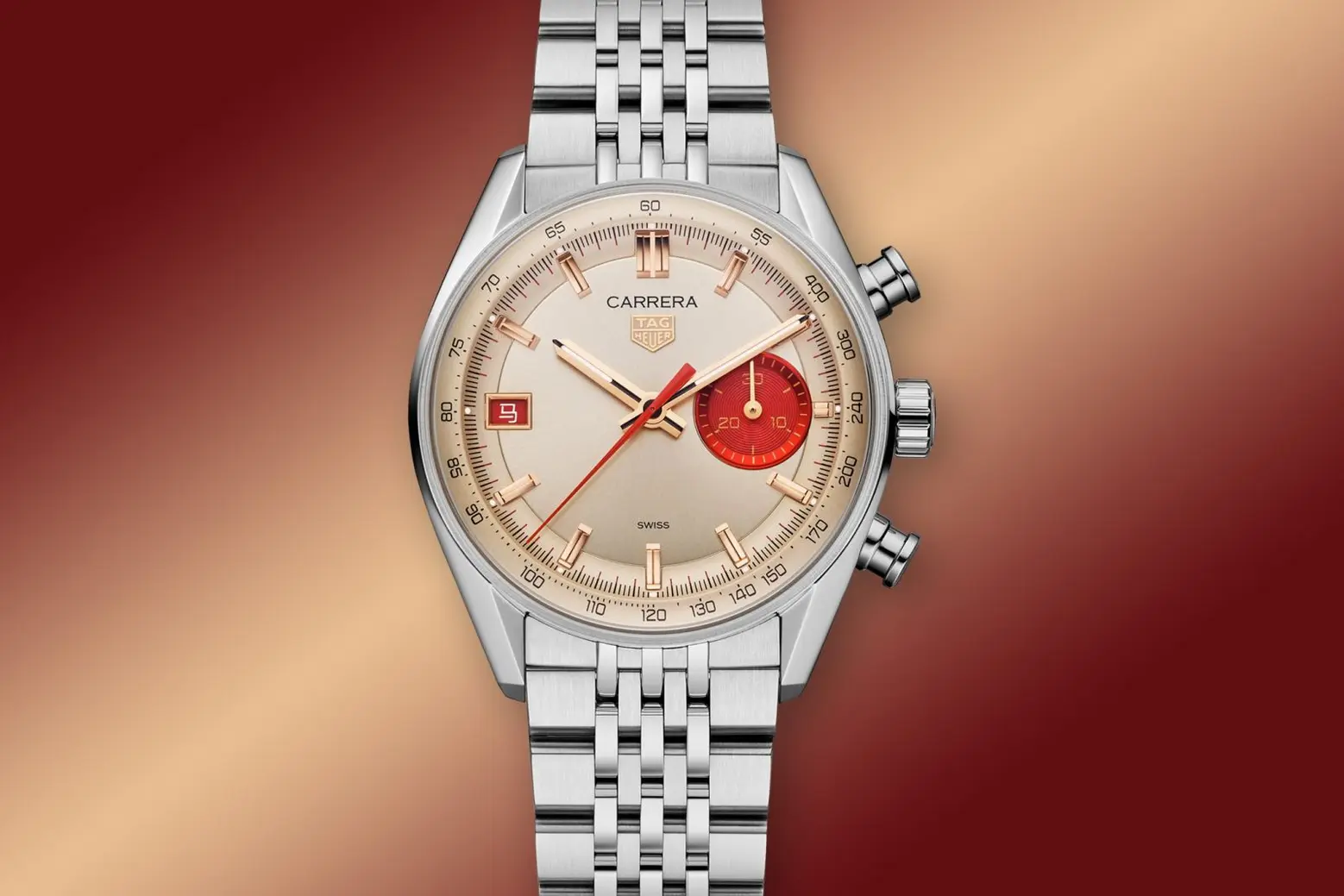
TAG Heuer’s Carrera Chronograph Year of the Fire Horse adopts a light-touch approach. The 39mm Glassbox case and in-house automatic chronograph movement anchor the watch firmly in the Carrera lineage. Cultural reference is restrained: a deep red dial, gold accents, and the Chinese character for Horse discreetly placed at nine o’clock.
The Fire Horse engraving on the caseback is visible only to the wearer, reinforcing the sense that this is not a display piece but a contextual one. Limited to 250 examples, it reflects TAG Heuer’s current strategy—global, contemporary, and culturally aware without overstatement.
Hermès: Animation as Craft
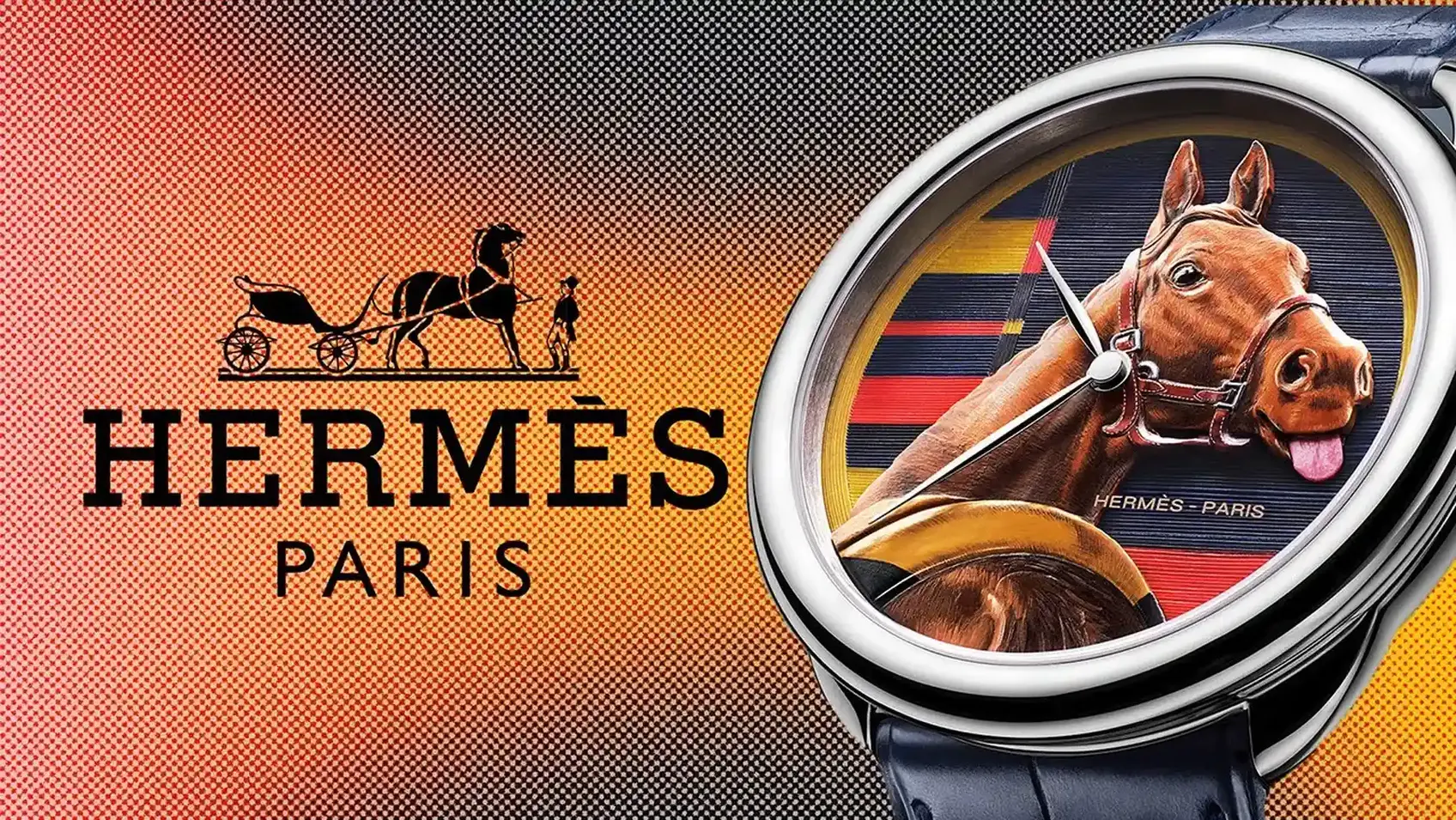
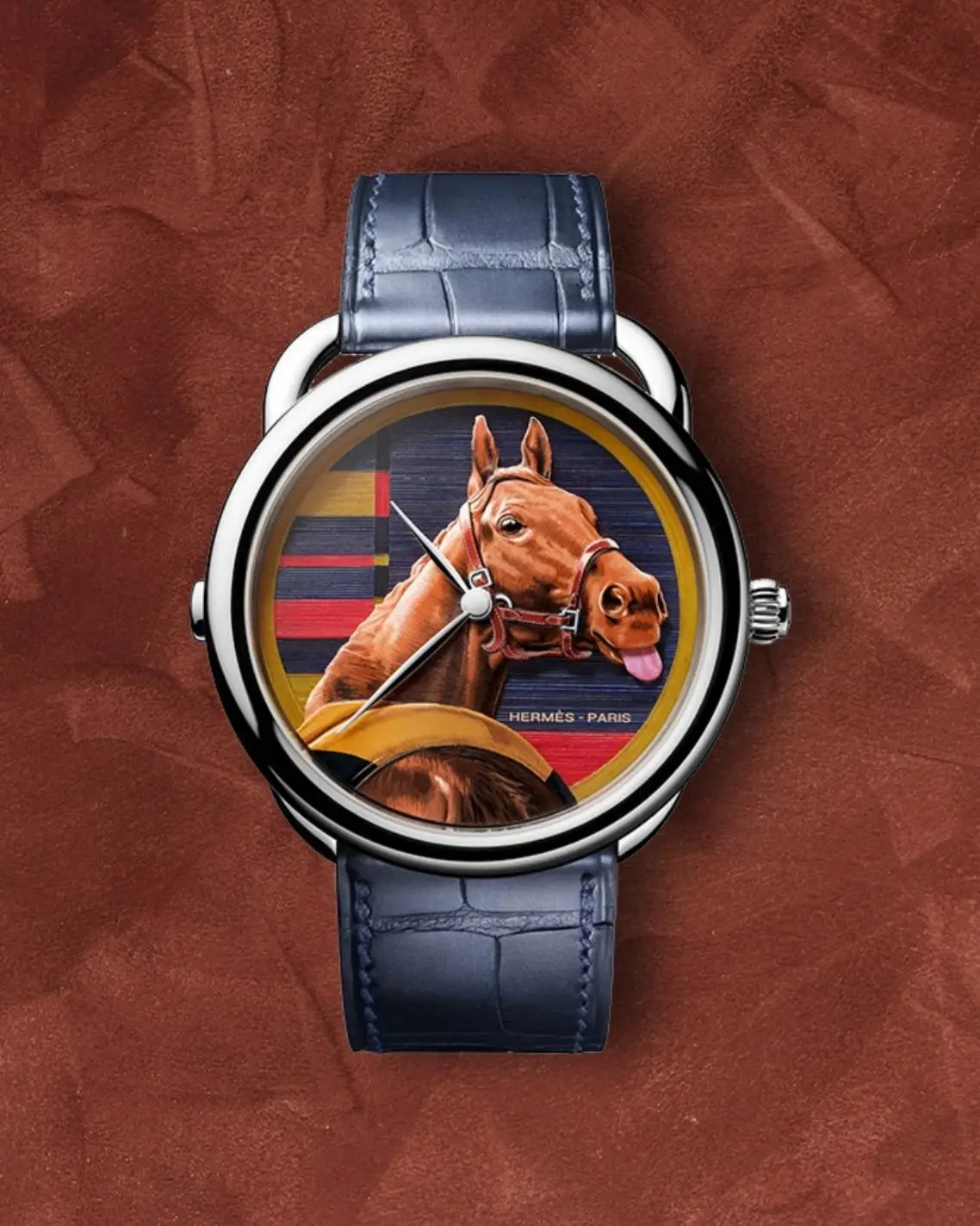
Hermès approaches the Horse from a position of fluency rather than homage. The Arceau Rocabar de Rire is neither traditional nor reverential. Instead, it uses humour as a technical and artistic device.
At the press of a pusher, the engraved horse animates, extending its tongue in a moment of unexpected levity. The dial combines engraving, miniature painting, and horsehair marquetry—each stripe composed strand by strand. Beneath the playfulness lies disciplined execution, powered by Hermès’ in-house H1837 calibre.
Produced in a series of twelve, the watch reflects Hermès’ broader philosophy: craftsmanship first, symbolism second, interpretation always personal.
Vacheron Constantin: The Continuity of Métiers d’Art
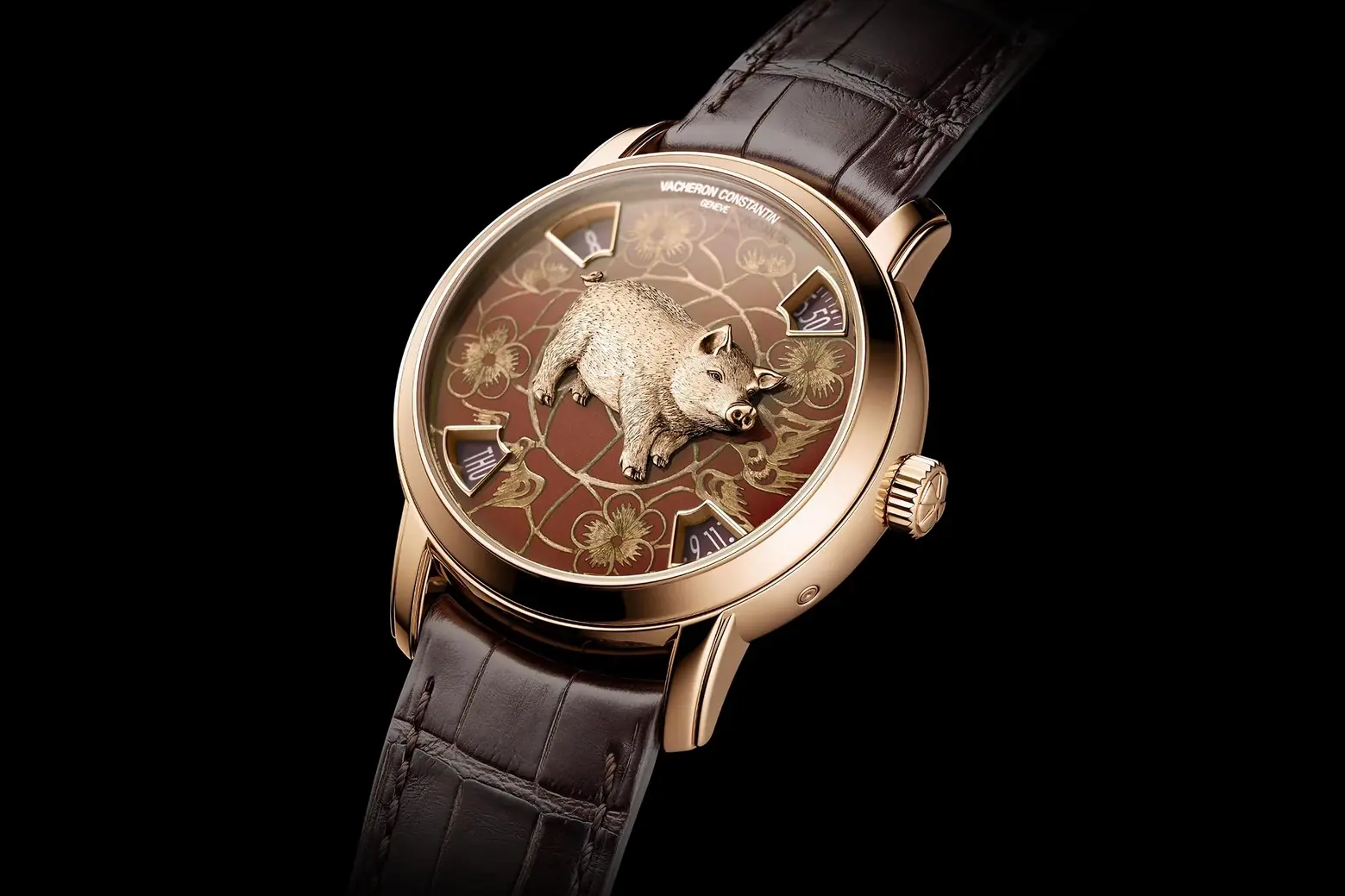
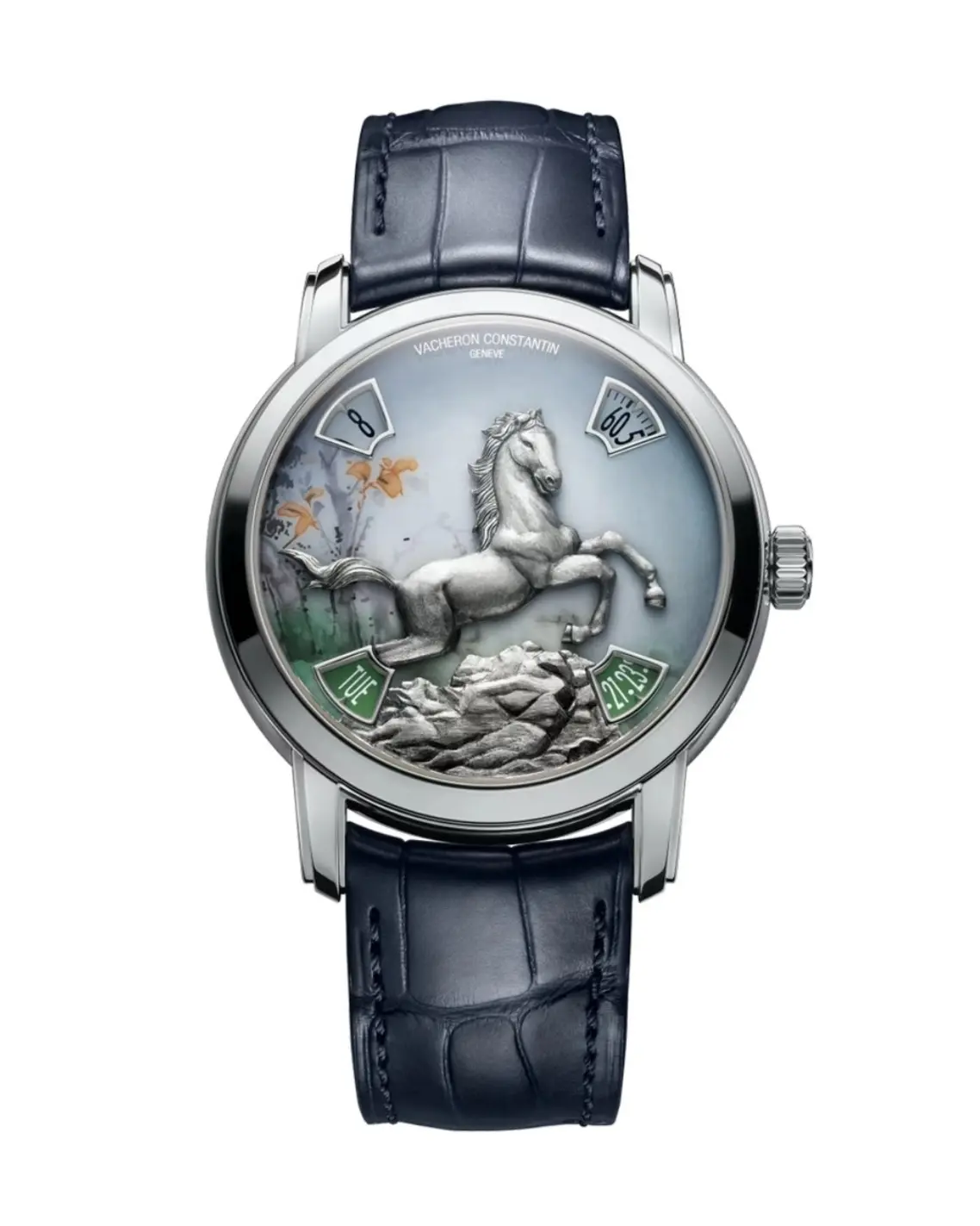
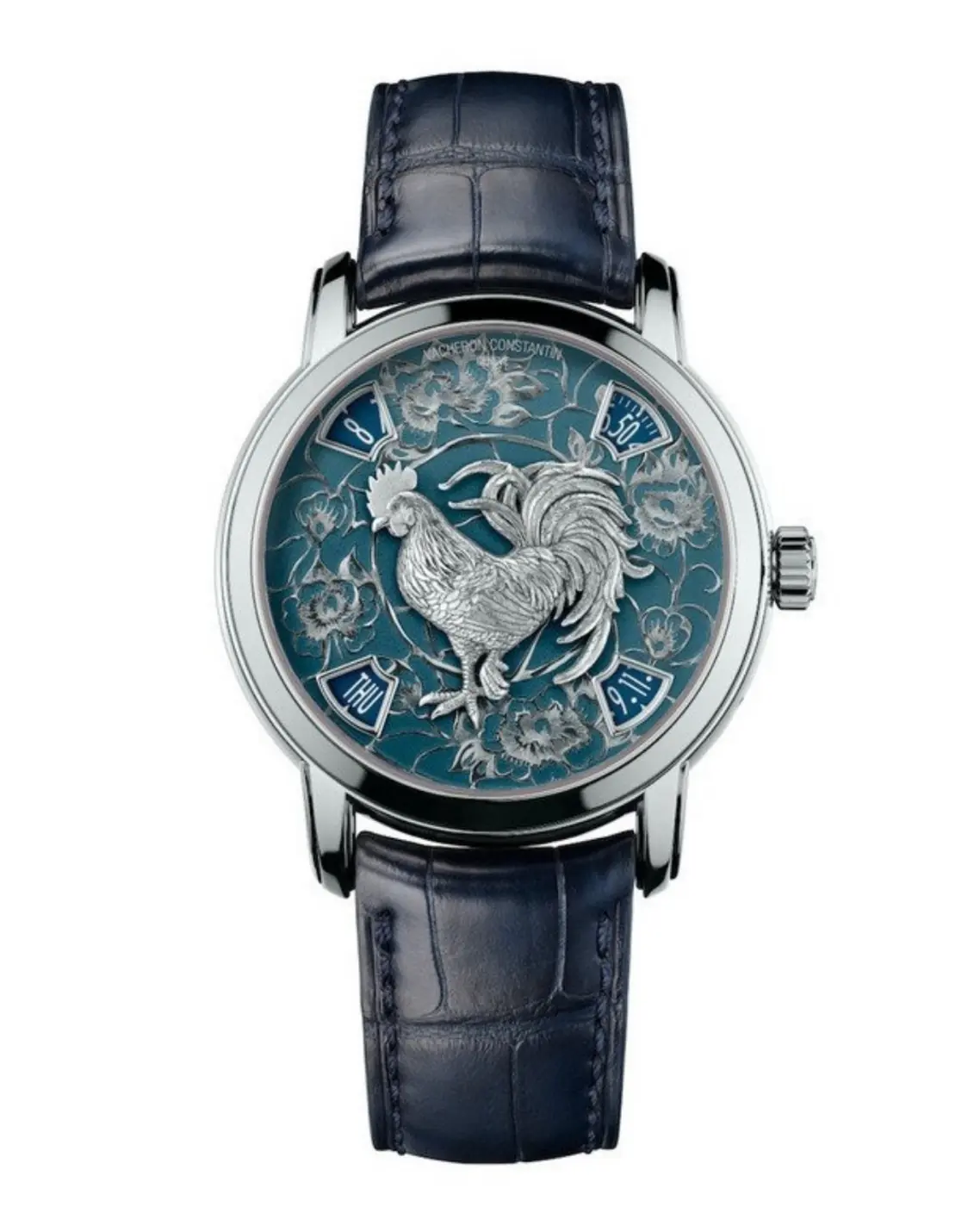
Vacheron Constantin’s Métiers d’Art Legend of the Chinese Zodiac series has, over the years, become one of the most consistent expressions of zodiac watchmaking. The Year of the Horse edition follows the established format: a sculptural gold animal, hand-engraved and enamelled, set against a richly textured dial.
Time is indicated via four peripheral apertures, preserving the visual integrity of the artwork. Inside, the self-winding calibre 2460 G4 operates unobtrusively. Available in pink gold or platinum, each version is limited to 25 pieces.
What distinguishes this series is not novelty, but continuity—a quality often undervalued in seasonal editions.
Dior: The Zodiac as Couture Object
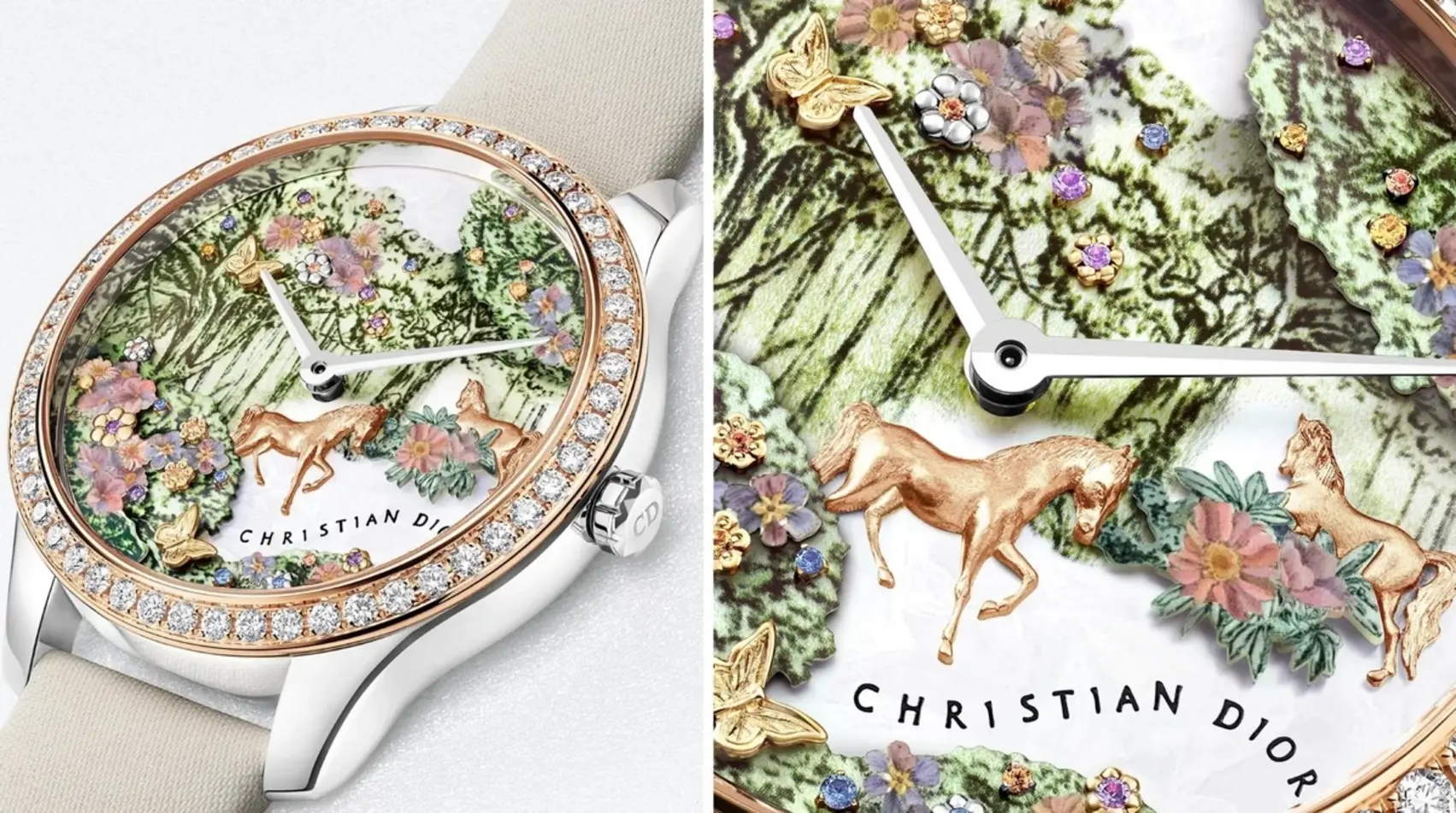
Dior’s Grand Soir Year of the Horse occupies a different territory altogether. The watch is less concerned with horological innovation than with translation—specifically, how a traditional symbol can be reframed through the lens of couture.
The horse motif appears in Dior’s interpretation of Toile de Jouy, rendered in mother-of-pearl, precious stones, and delicate engraving. The 36mm case positions the watch firmly within the maison’s jewellery watch universe.
While mechanically simple, the piece underscores an important point: cultural engagement in watchmaking does not always require mechanical complexity to be credible.
Patek Philippe: Symbolism Through Permanence
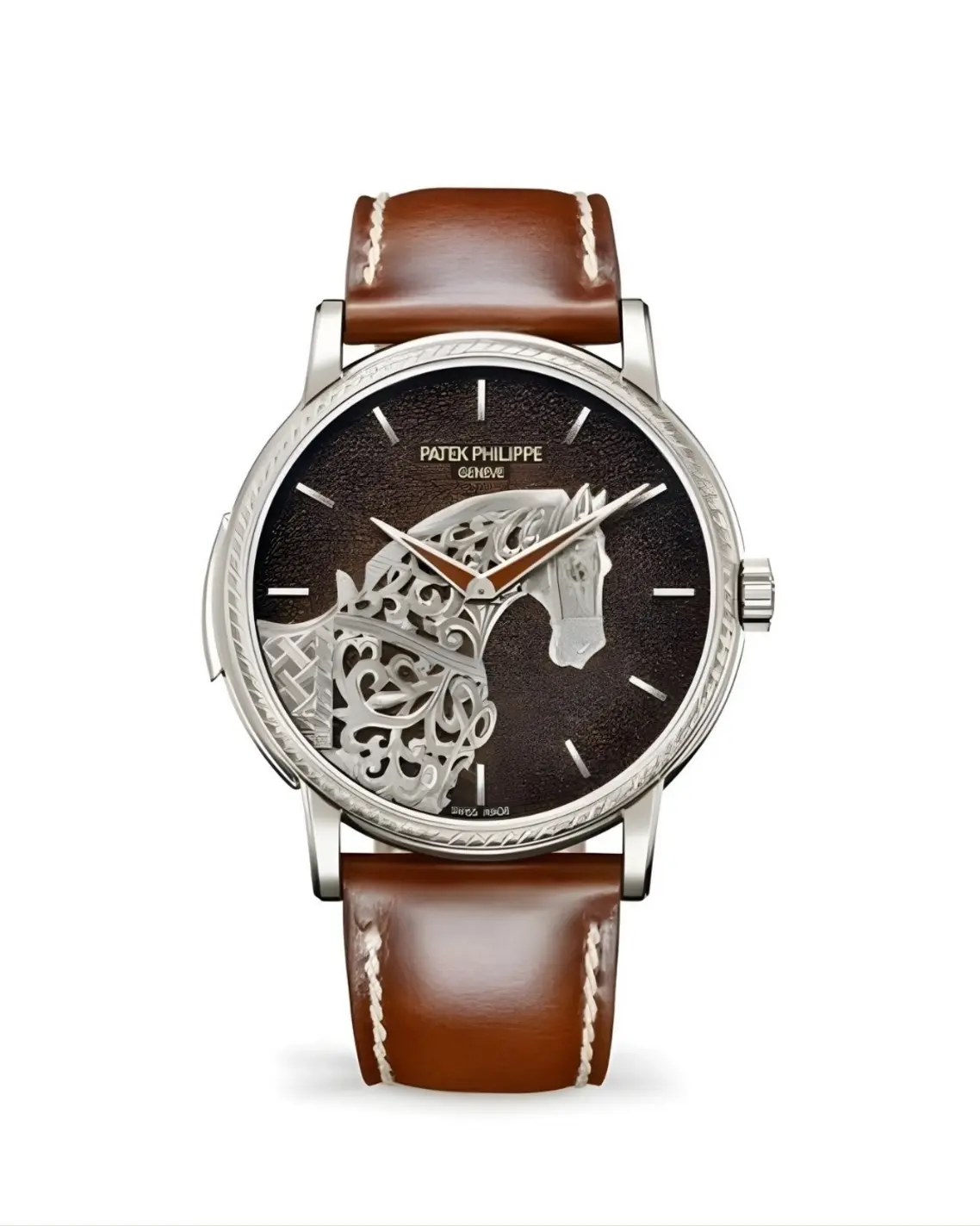
Patek Philippe rarely labels its watches as Lunar New Year editions. Instead, it allows symbolism to emerge through subject and timing. The Ref. 5278 minute repeater, featuring a hand-engraved horse motif carved into solid gold, exemplifies this approach.
The engraving process alone requires hundreds of hours. Inside, one of Patek Philippe’s most refined minute repeater calibres delivers cathedral gongs and exceptional acoustic clarity. The piece aligns closely with the brand’s long-held philosophy—perhaps best summarised by its oft-quoted line: you never own a watch; you merely look after it for the next generation.
In this context, the Horse becomes less a zodiac sign than a metaphor for endurance and continuity.
Longines: Equestrian Heritage Revisited
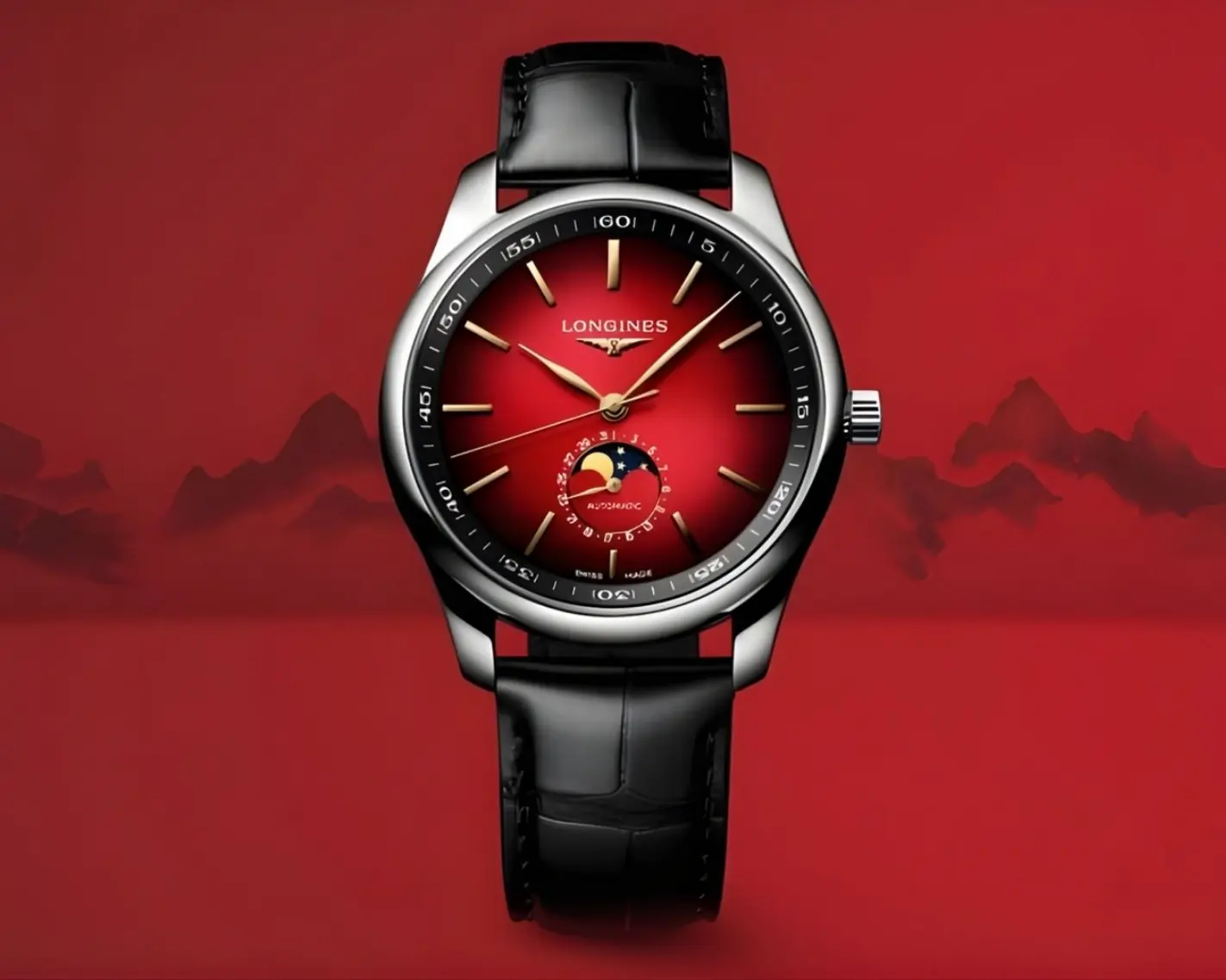
Longines’ connection to equestrian sport lends natural credibility to its Year of the Horse editions. The Master Collection model for 2026 features a restrained red dial, moon-phase complication, and a sapphire caseback engraved with a galloping horse inspired by the work of Xu Beihong.
Produced in 2,026 examples, the watch is neither rare nor extravagant. Instead, it functions as a bridge—linking cultural symbolism with Longines’ historical identity.
Arnold & Son: Nocturnal Drama
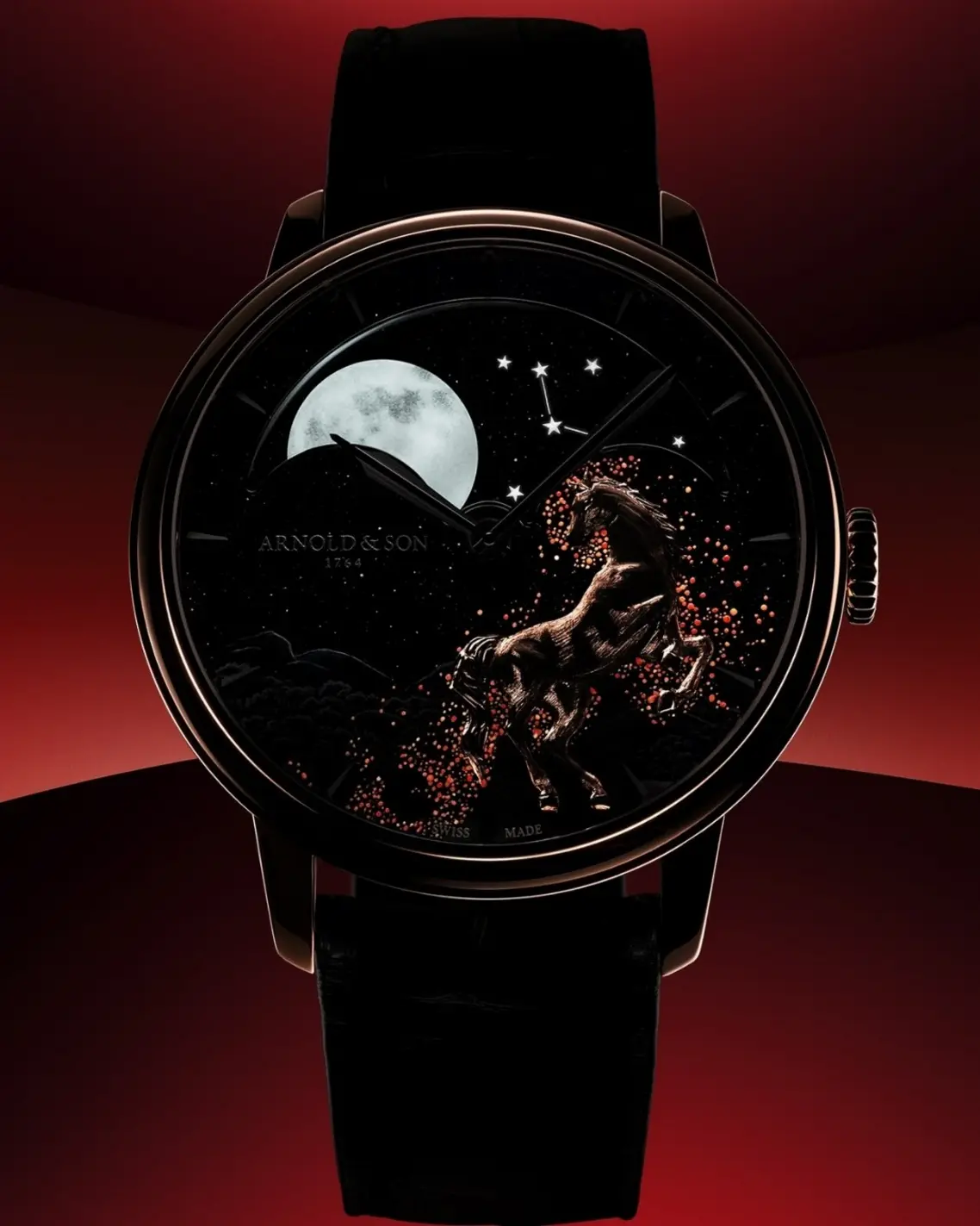
Arnold & Son’s Perpetual Moon Year of the Horse leans into atmosphere. A rearing horse, hand-engraved in red gold, appears against an aventurine sky, illuminated by gold dust and subtle luminous accents.
The perpetual moon complication, accurate to one day in 122 years, reinforces the theme of celestial time. Limited to eight pieces, the watch is unapologetically theatrical, yet technically disciplined.
Chopard: Lacquer as Cultural Medium
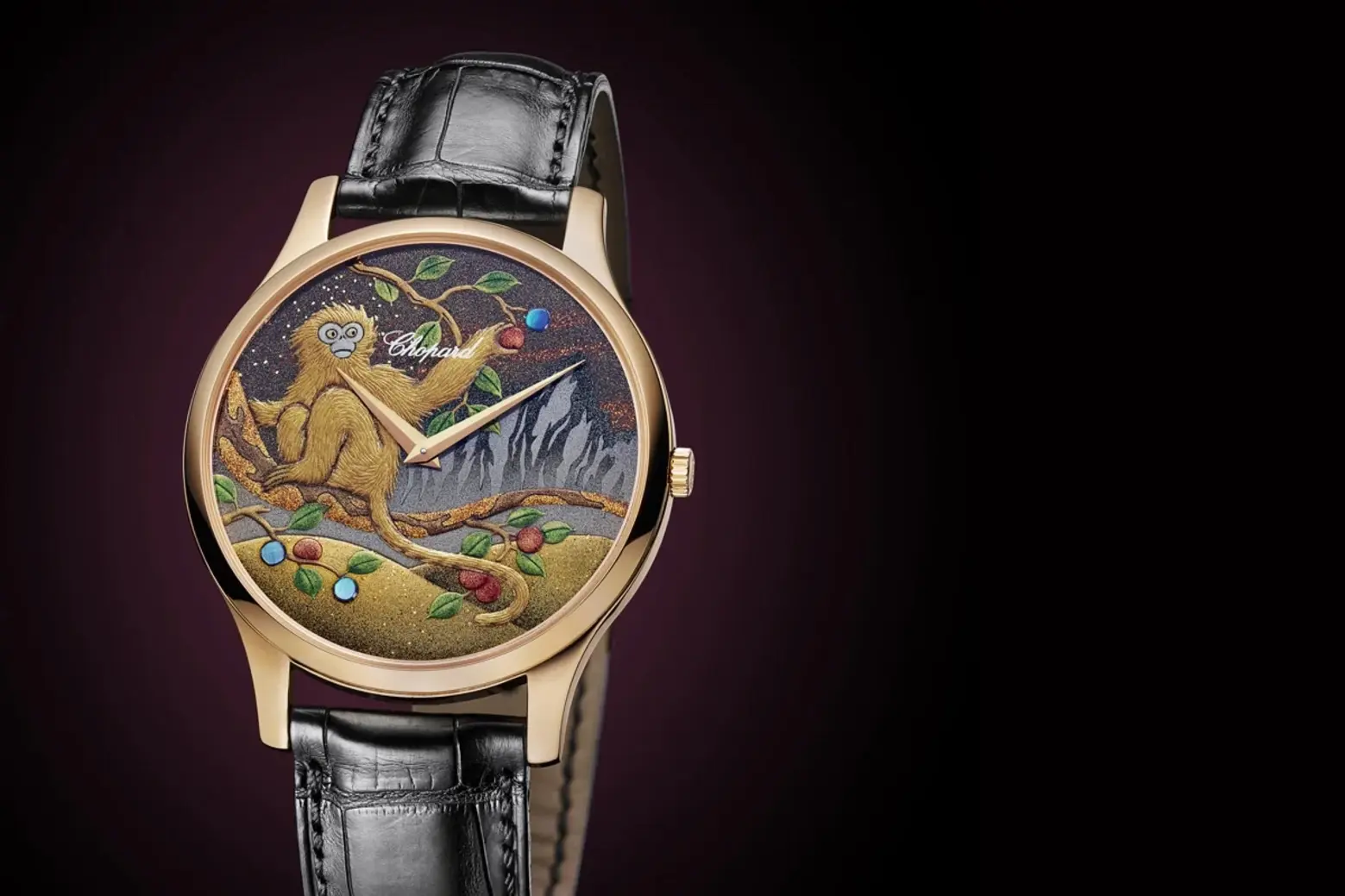
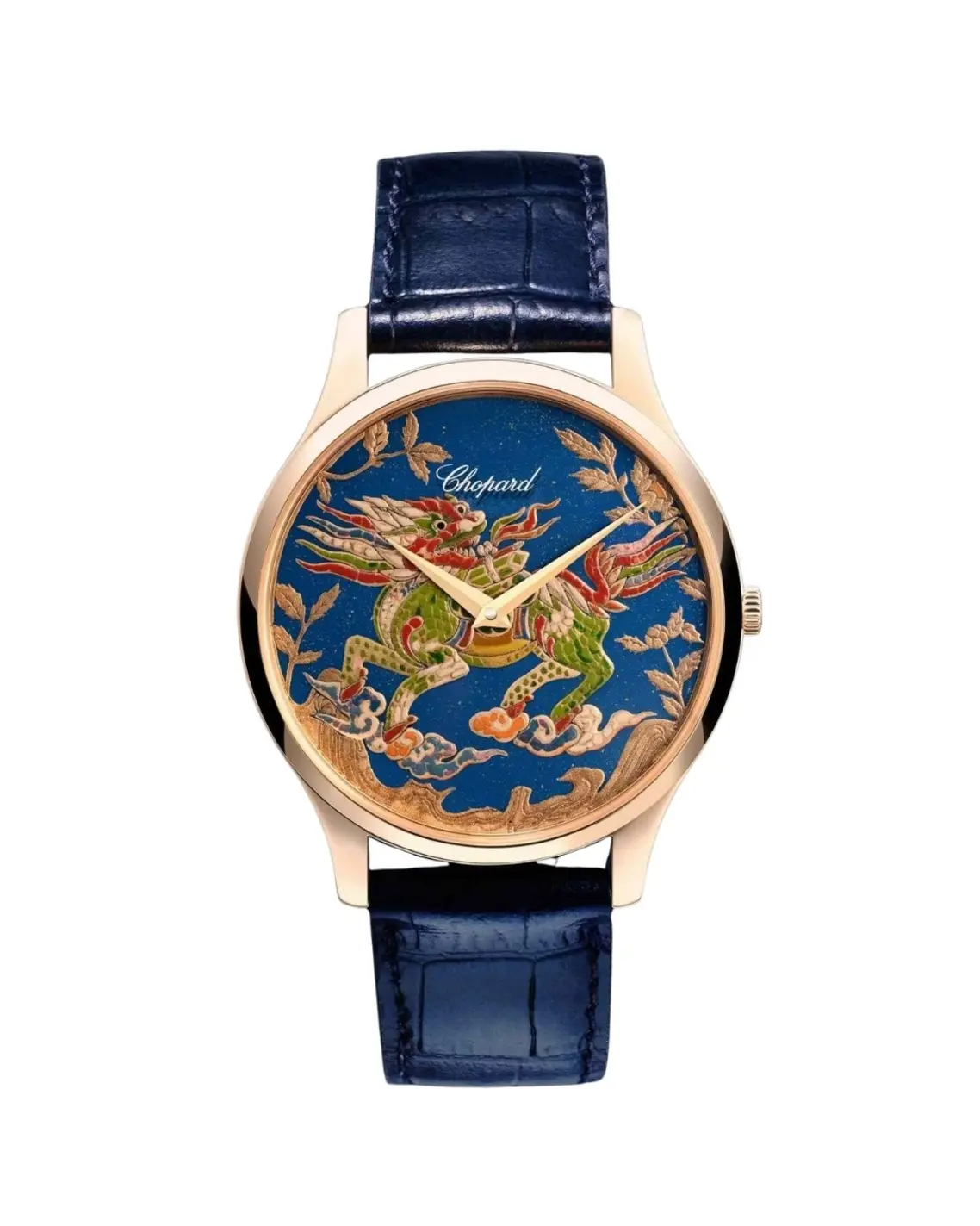
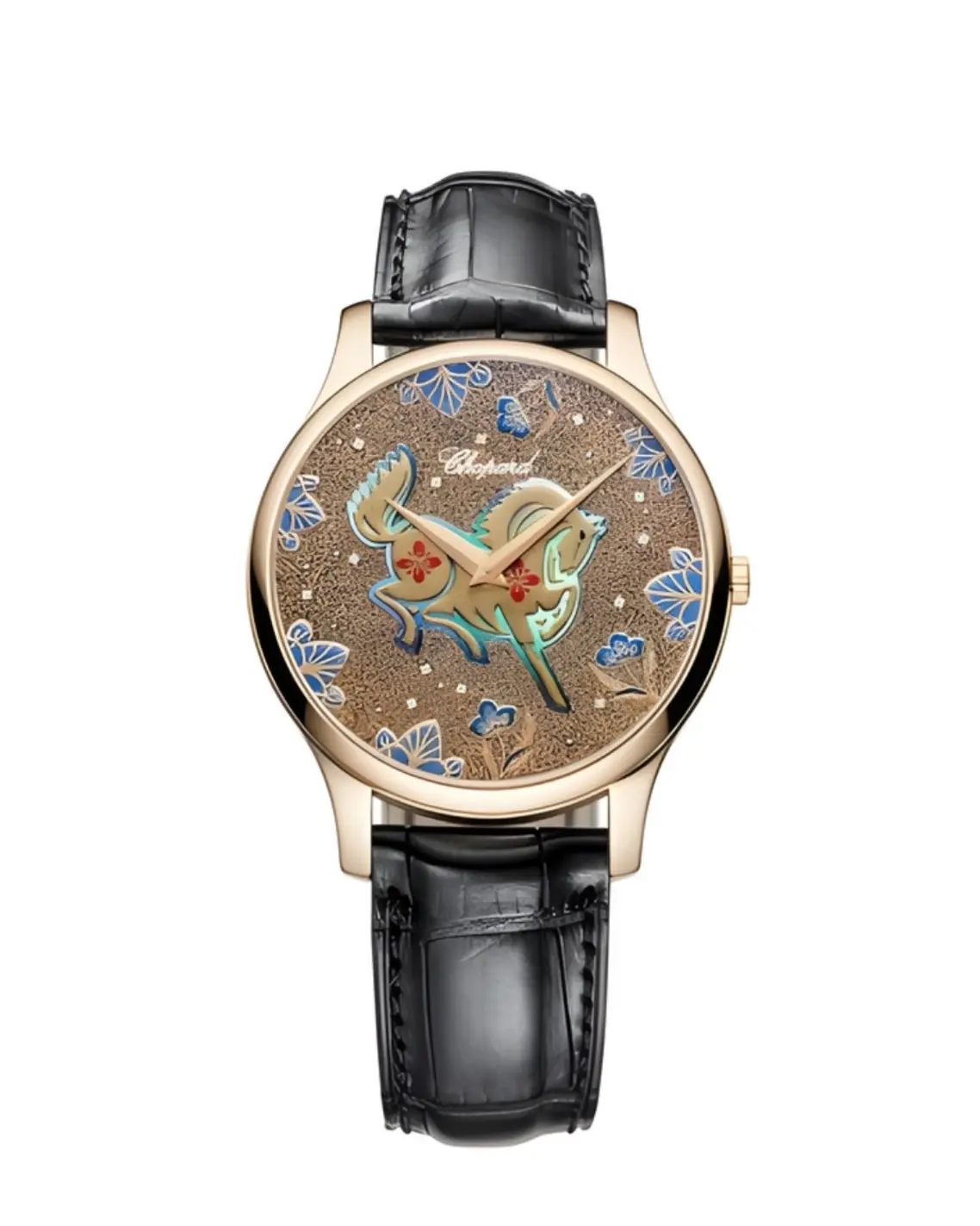
Chopard’s L.U.C XP Urushi series continues to explore the intersection of Swiss mechanics and Japanese lacquer artistry. The Year of the Horse edition employs Urushi and Maki-e techniques to depict the animal in motion, using layers of lacquer and gold powder.
Housed in rose gold and powered by an ultra-thin in-house movement, the watch speaks to a quieter form of luxury—one rooted in process rather than spectacle.