MENU
Close





VistaJet’s Private World Programme redefines private aviation through long-range aircraft, wellness-led design, global reach, and seamless travel continuity.
VistaJet’s Private World Programme redefines private aviation through long-range aircraft, wellness-led design, global reach, and seamless travel continuity.
April 14, 2026


In private aviation, luxury is no longer measured by a wider cabin or a more discreet flight. For today’s ultra-high-net-worth travellers and globally mobile executives, what matters is something more elusive: a seamless system in which travel no longer interrupts life, but extends it. That is where VistaJet’s Private World Programme becomes distinctive. Positioned by the company as a bespoke world of experiences for members, supported by a global network of carefully selected partners and advisors, Private World suggests a wider ambition than transport alone. It treats the journey not as a gap between two destinations, but as a curated part of the lifestyle itself.
What makes the programme compelling is that it does not simply add privileges to an already premium private aviation product. It reframes private aviation as an integrated way of living. Traditional charter logic still tends to revolve around getting a client from one point to another with speed, privacy and convenience. Private World operates on a more sophisticated premise: that the journey itself should carry nearly as much value as the place one is going. It is less concerned with transport as a transaction than with continuity as a service. VistaJet’s own membership offering reflects that broader positioning, describing access not only to aircraft but to Private World and a range of onboard and offboard benefits designed around the member.
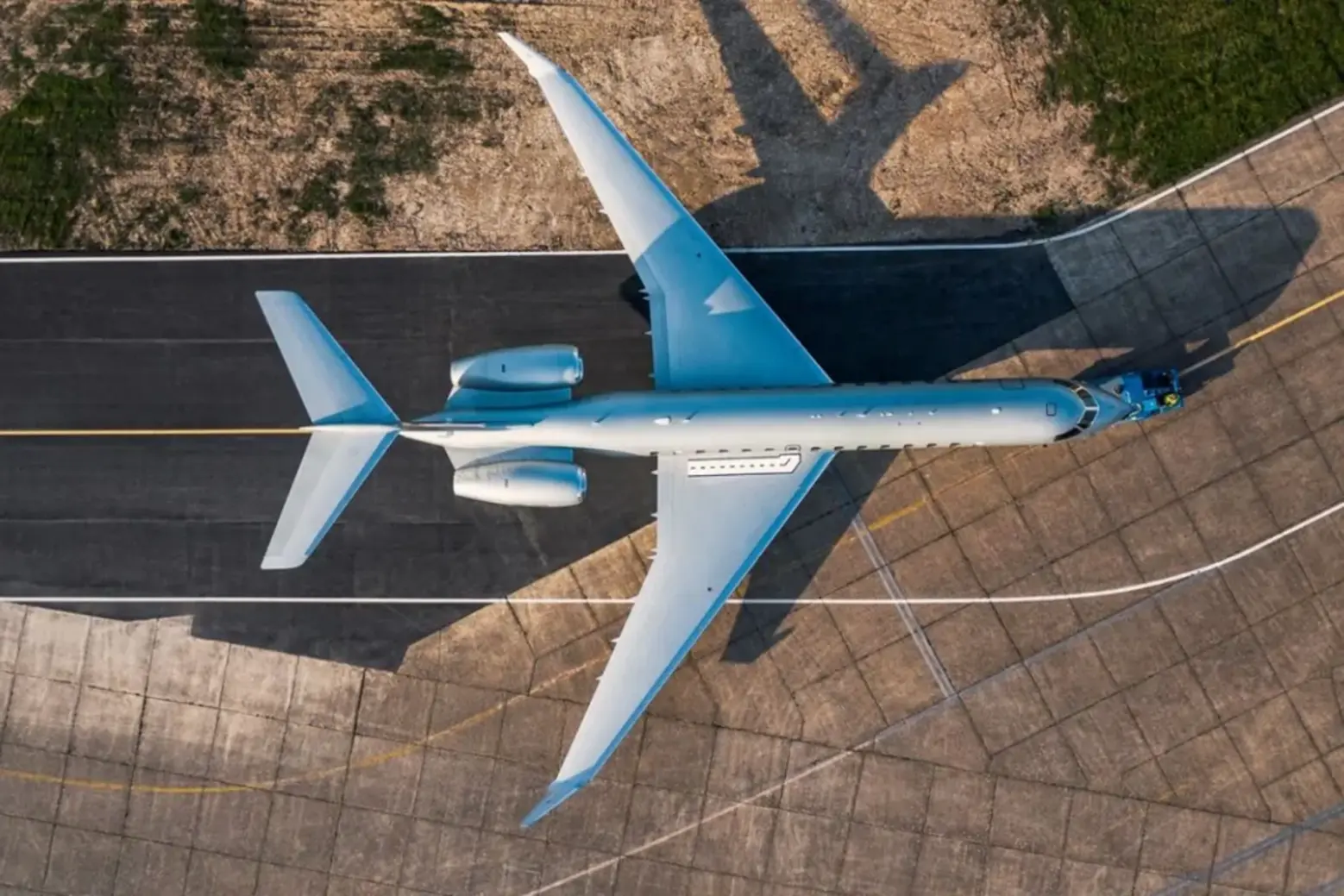
That philosophy begins with the aircraft itself. Within the VistaJet ecosystem, the Bombardier Global 7500 serves as the physical foundation for what Private World promises at the level of feeling. According to Bombardier and VistaJet, the aircraft offers a published range of 7,700 nautical miles, or 14,260 km, a maximum speed of Mach .925, a maximum altitude of 51,000 ft, and four true living spaces, including a permanent bedroom. That also means one detail often overstated in lifestyle coverage deserves correcting: Mach .95 is not the currently published maximum speed of the Global 7500. Bombardier states that the aircraft can be upgraded to Mach .95, while that figure is more directly associated with the newer Global 8000 programme. In its current form, the Global 7500 is already one of the most capable long-range aircraft in private aviation, and it hardly needs embellishment.
Seen purely through the lens of distance, the aircraft is enough to alter one’s intuition about scale. With a range of 14,260 km, the Global 7500 can cover more than one third of the Earth’s circumference in a single non-stop flight, if measured against the planet’s equatorial circumference of roughly 40,075 km. That is a more interesting claim than any inflated promise of omnipresence. It suggests not that one aircraft can literally reach anywhere in one bound, but that the geography of long-haul travel has been radically compressed. The effect is not theatrical omnipotence. It is the quiet redefinition of what feels near.
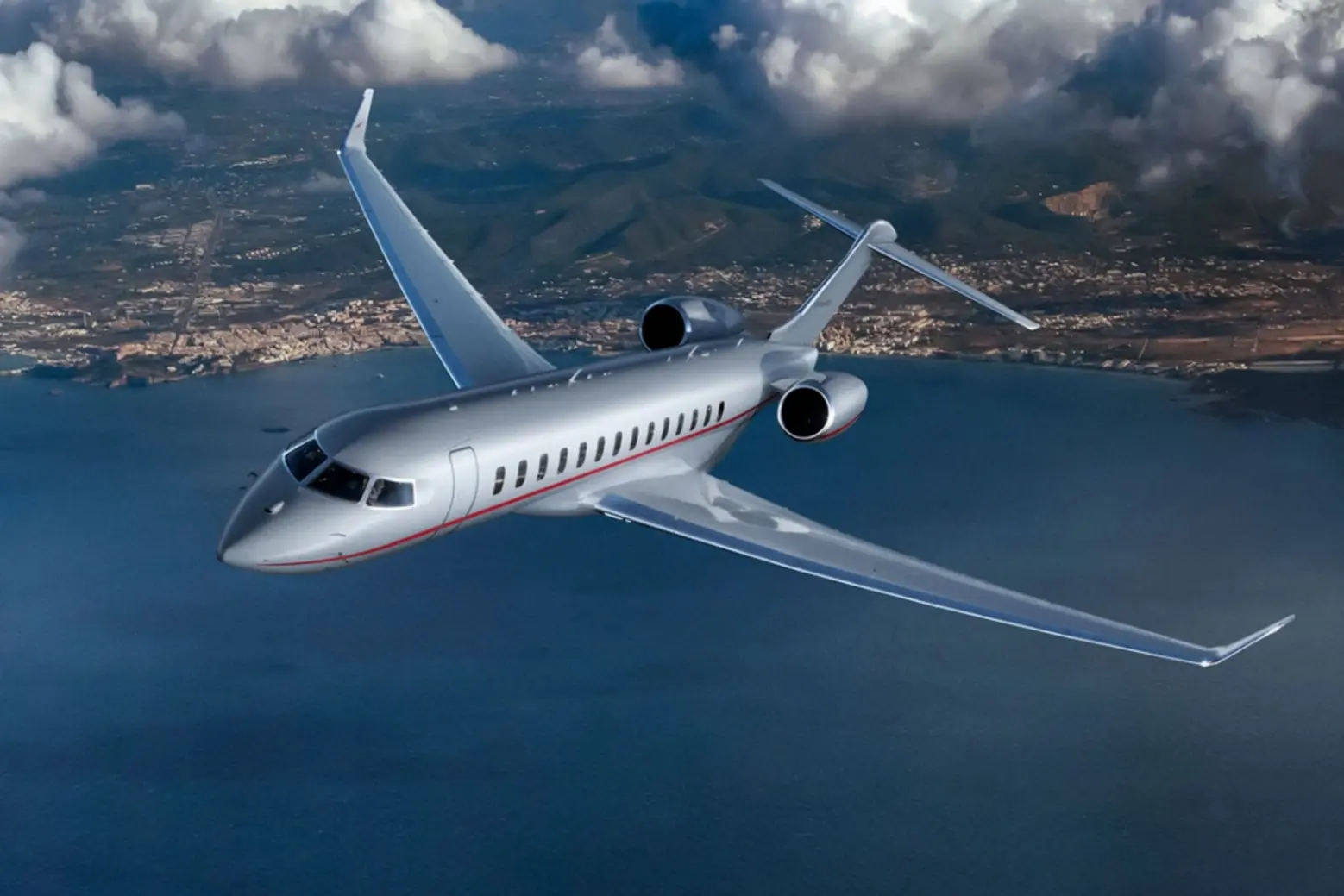
Yet the true force of VistaJet lies not in a single aircraft, but in the system that surrounds it. Vista today describes its operating reach in terms of 200+ aircraft in the group fleet, 2,100+ alliance jets, 6 operation hubs, 35+ offices, and flights across 187 countries. In other words, if the Global 7500 makes the world smaller in physical terms, Vista’s broader infrastructure makes it more navigable in operational terms. That distinction matters. The promise is not that one jet alone can deliver anyone to every point on earth. The promise is that, through a sufficiently large and intelligently organised network, almost any global movement can be arranged with an unusual degree of smoothness. For the traveller, the result is not simply reach. It is reduced friction. In a category as competitive as private aviation, that kind of operational fluency is its own form of luxury.
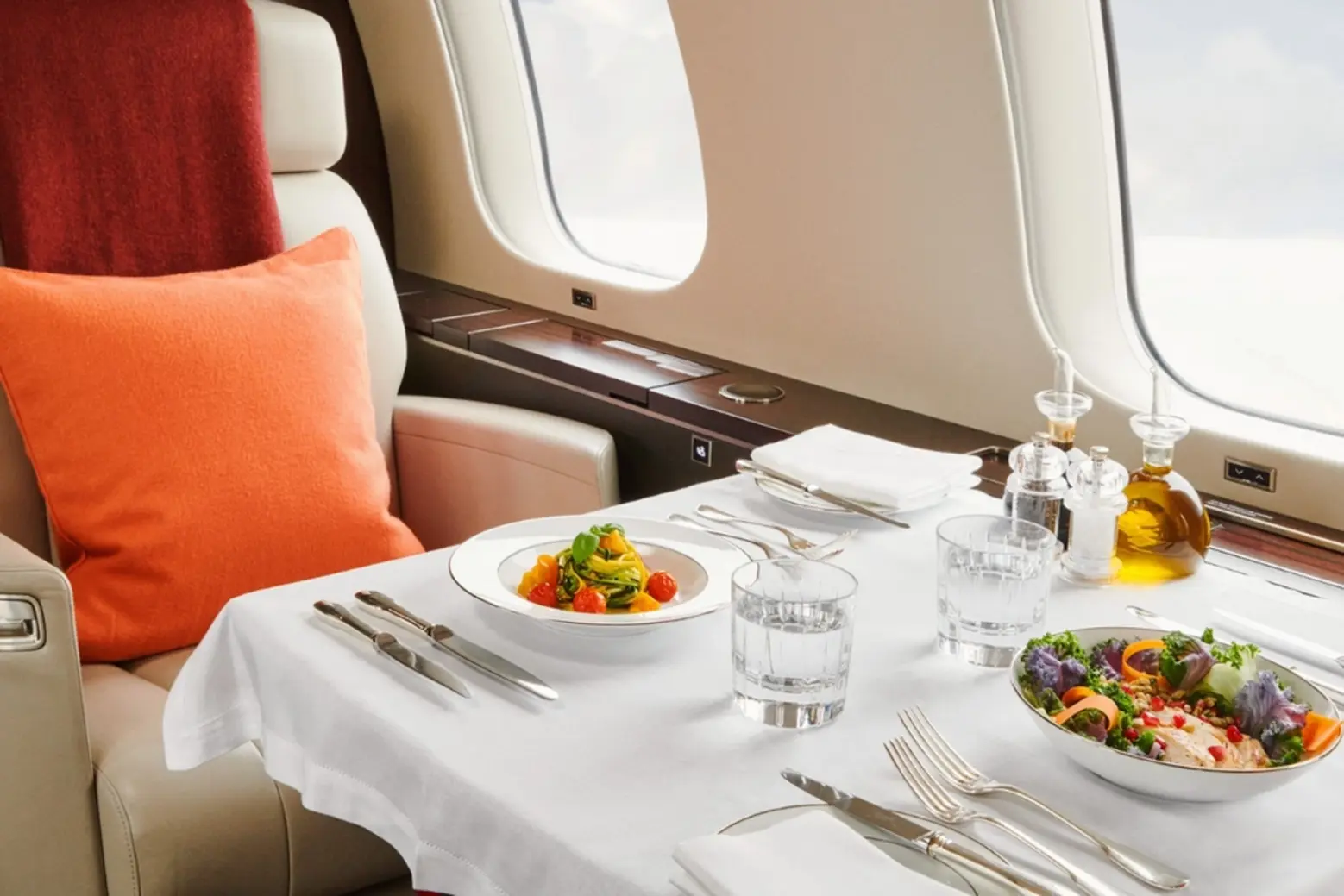

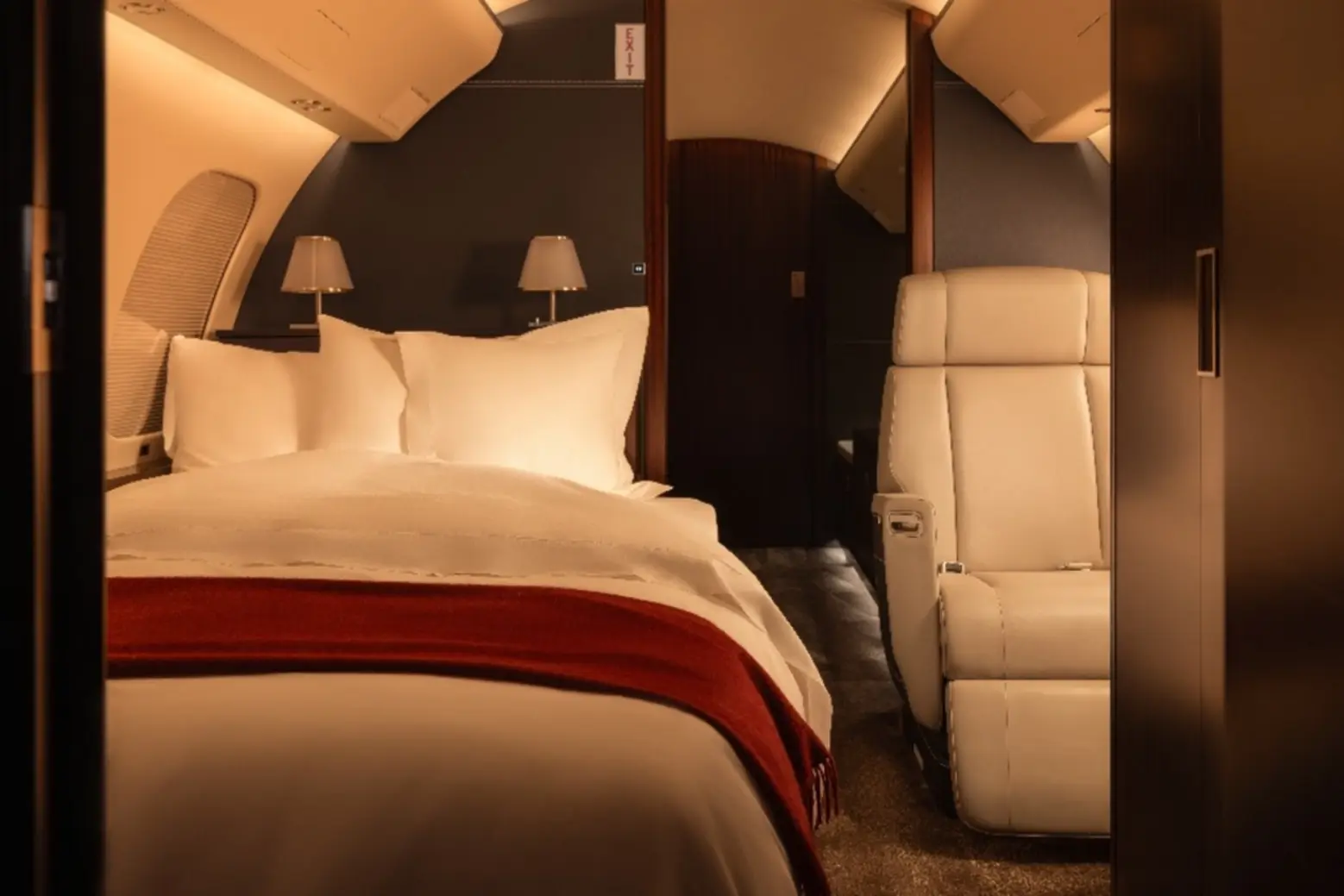
This is precisely where Private World reveals its deeper ambition, especially in the area of wellbeing. VistaJet does not treat wellness as decorative uplift applied to private aviation. It treats it as part of travel performance itself. The clearest expression of this is the Sleep Programme, launched in late 2025 and developed with longevity and health expert Peter Attia. The programme was introduced in response to the fact that more than 58% of VistaJet flights cross multiple time zones, and it applies principles of recovery, circadian alignment and cognitive performance to rest both in the air and around the journey. Lighting, temperature and sound are adjusted to support melatonin release before sleep; hypoallergenic bedding and environmental controls are used to sustain rest; waking is aided through carefully timed light exposure, hydration and nutrition. It is an unusually rigorous way of saying something simple: private aviation should not merely protect productivity. It should protect the body that productivity depends on.
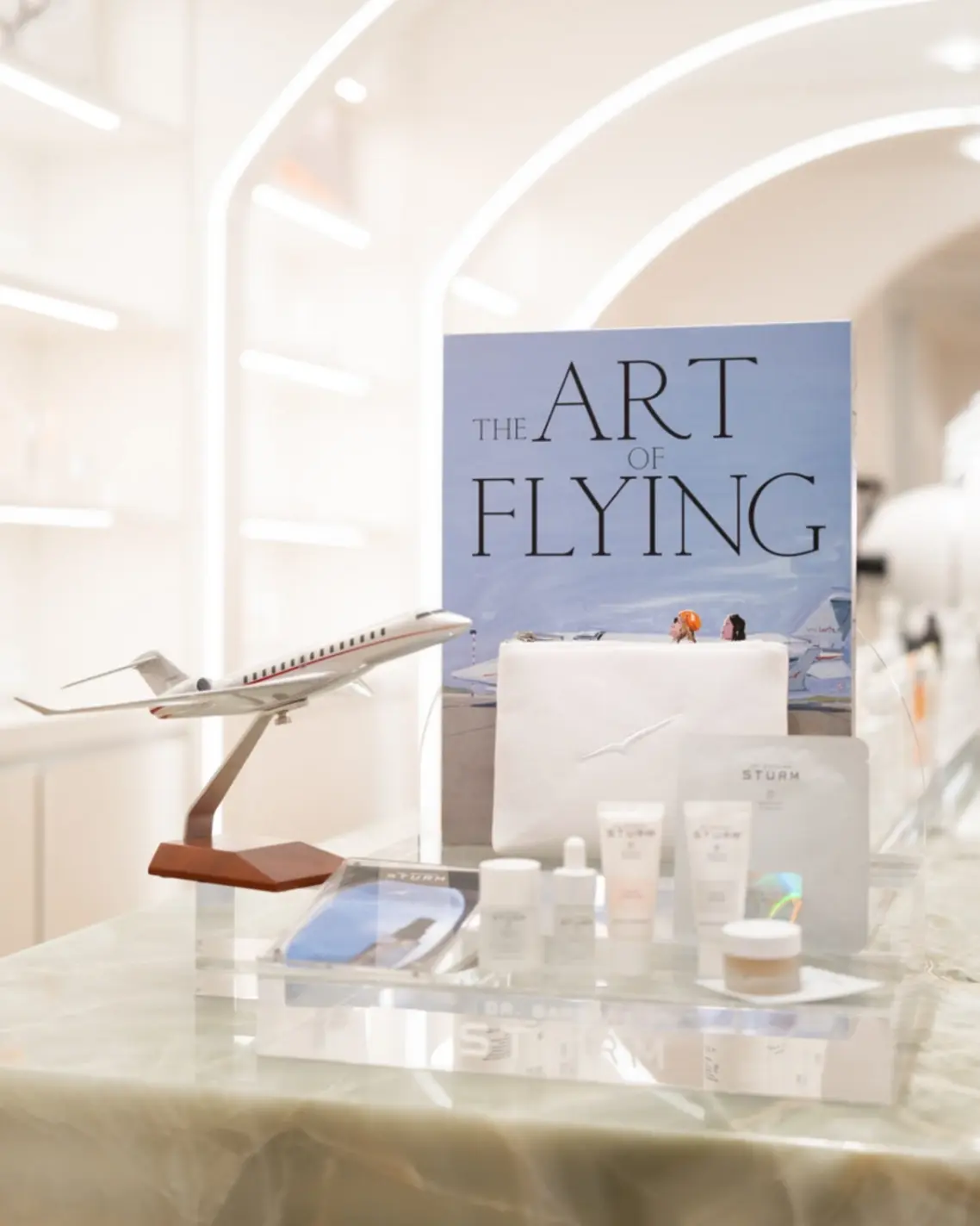
If sleep addresses recovery at its deepest level, skincare and self-care reveal the more nuanced emotional intelligence of the programme. VistaJet’s collaboration with Dr. Barbara Sturm is not merely a prestige partnership designed to flatter the brand image. The company states that it includes expert-led training for Cabin Hosts, bespoke facial treatments at 40,000 feet, and tailored skincare solutions before, during and after the flight. In practical terms, this brings the codes of high-performance wellness hospitality into the aircraft cabin itself. In symbolic terms, it reveals the company’s understanding of where modern luxury has moved: away from conspicuous abundance, and toward a condition in which the traveller arrives not just on time, but intact.

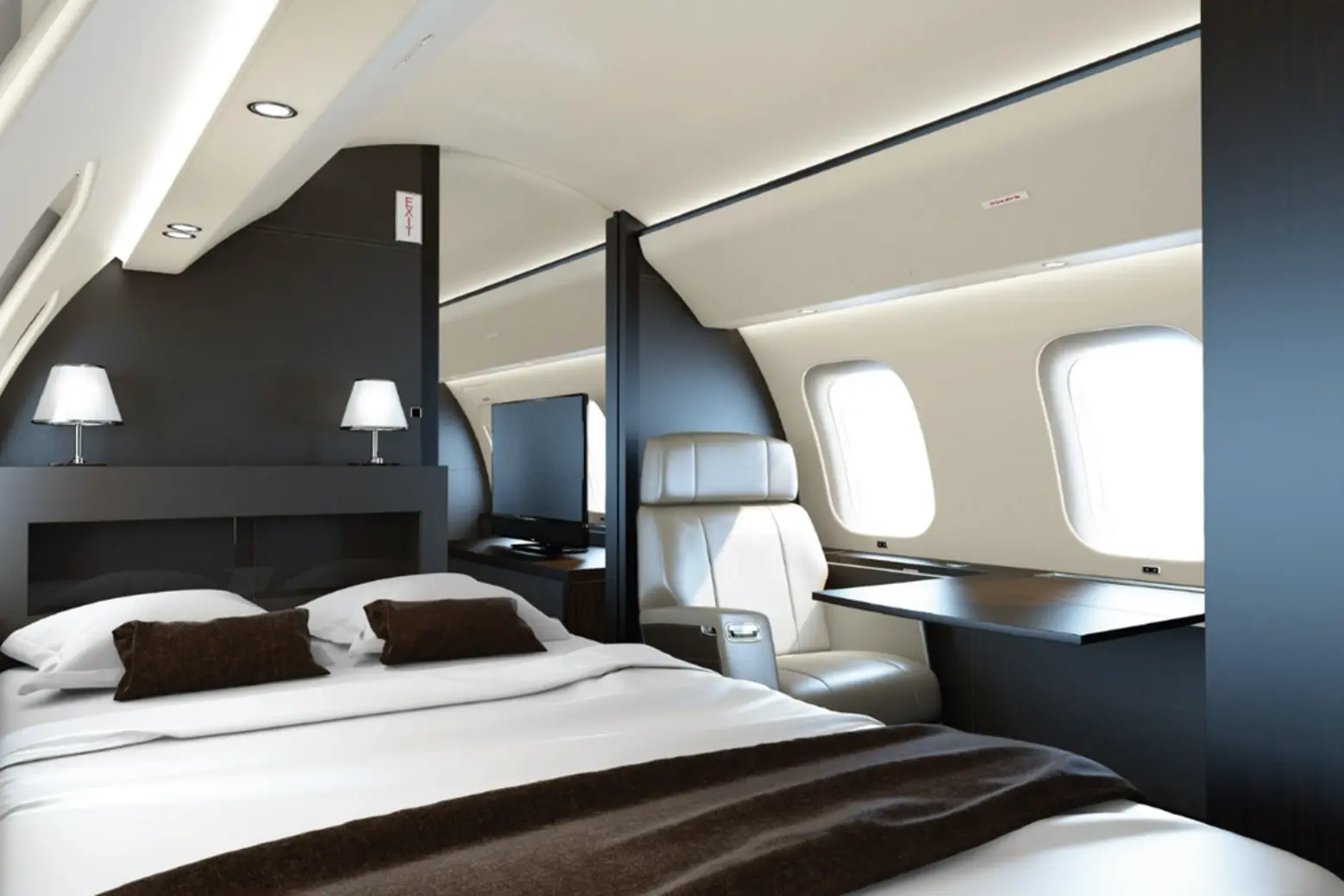
Even the aircraft’s engineering feeds into that same idea of continuity. Bombardier describes the Smooth Flĕx Wing as functioning like an in-air shock absorber, while VistaJet repeatedly emphasizes the unusually smooth ride of the Global 7500. The aircraft’s maximum altitude of 51,000 ft also places it around 10,000 ft above the typical 35,000 ft cruising altitude of a commercial airliner, a difference that contributes to both smoother passage and a stronger sense of separation from commercial air travel altogether. Combined with four distinct living spaces, a permanent bedroom, and a cabin designed less as a row of seats than as a sequence of environments, the result is psychological as much as physical. At a certain point, the boundary between walking through a quiet office and moving from one cabin to another begins to blur, regardless of geography, time zones, or even the rotation of the Earth — and that is perhaps the most precise definition of luxury in the modern age.
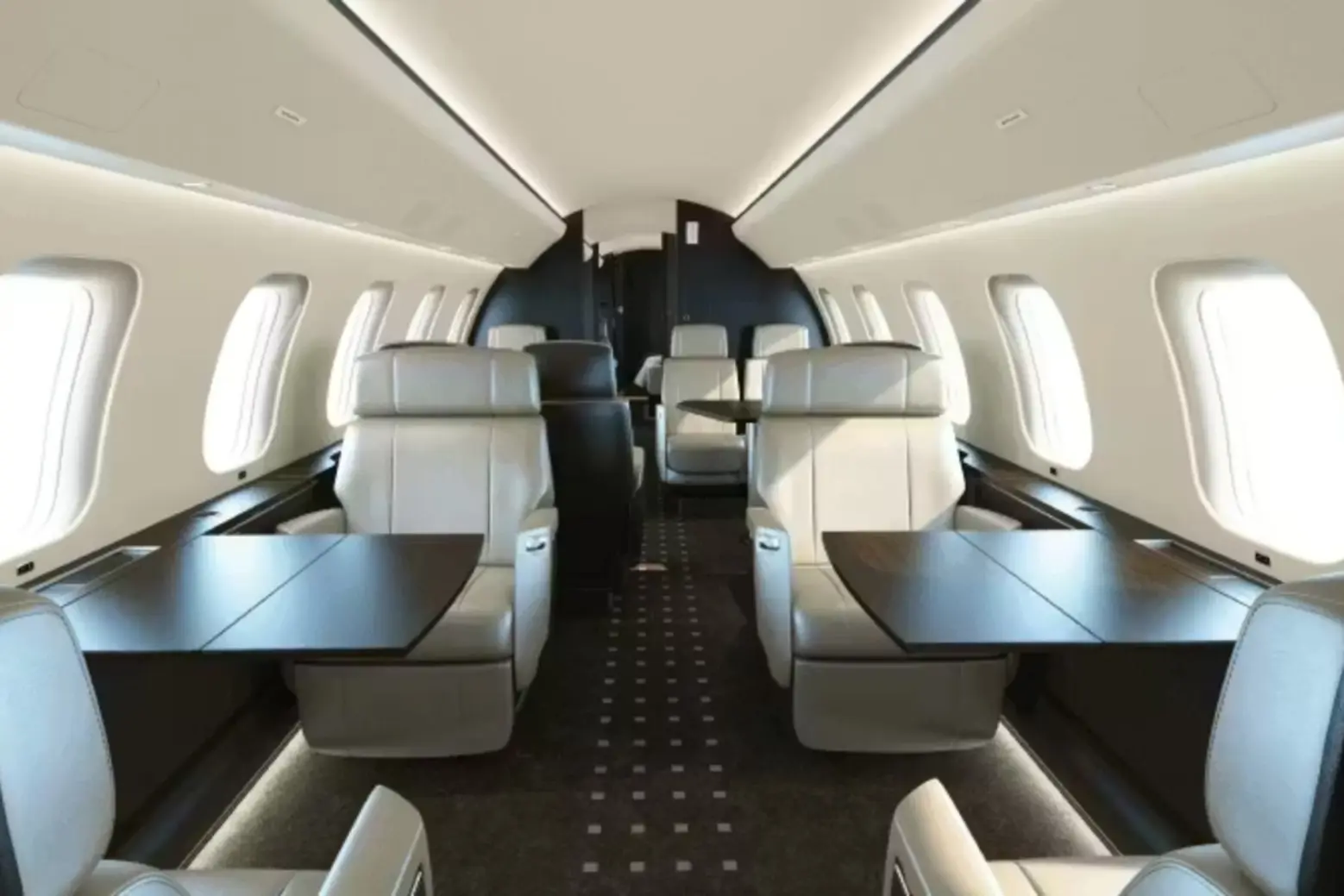
That, ultimately, is what Private World Programme offers at its highest level. It does not merely provide access to a private jet. It provides access to a condition in which time, privacy, health, logistics and atmosphere are no longer split into separate services, but held together as one continuous experience. In a market saturated with the language of exclusivity, bespoke tailoring and premium service, VistaJet’s more meaningful proposition is that private aviation itself can be reorganised around the traveller rather than the other way around. Not faster alone, not softer alone, and certainly not more ostentatious alone — but more intact.
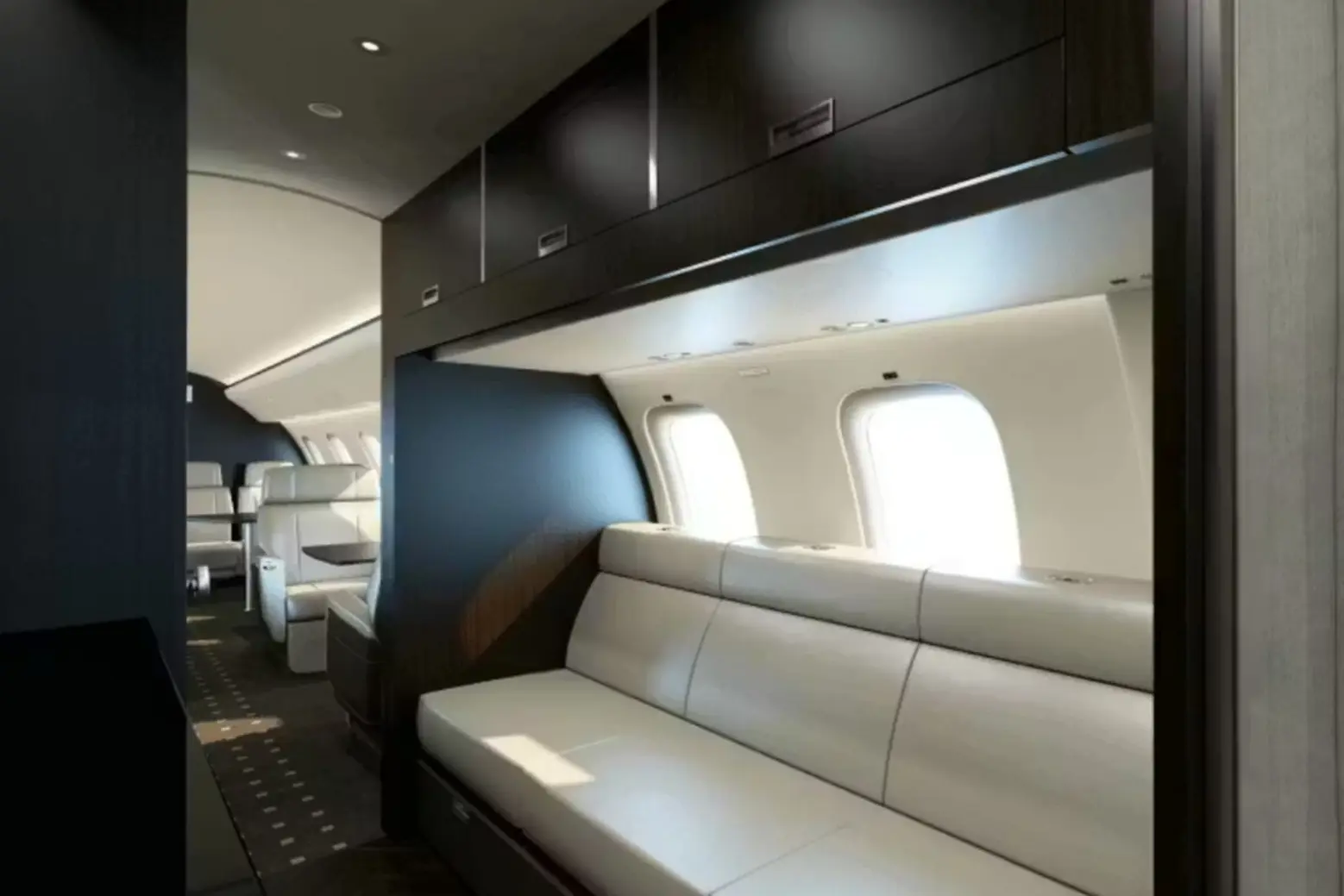
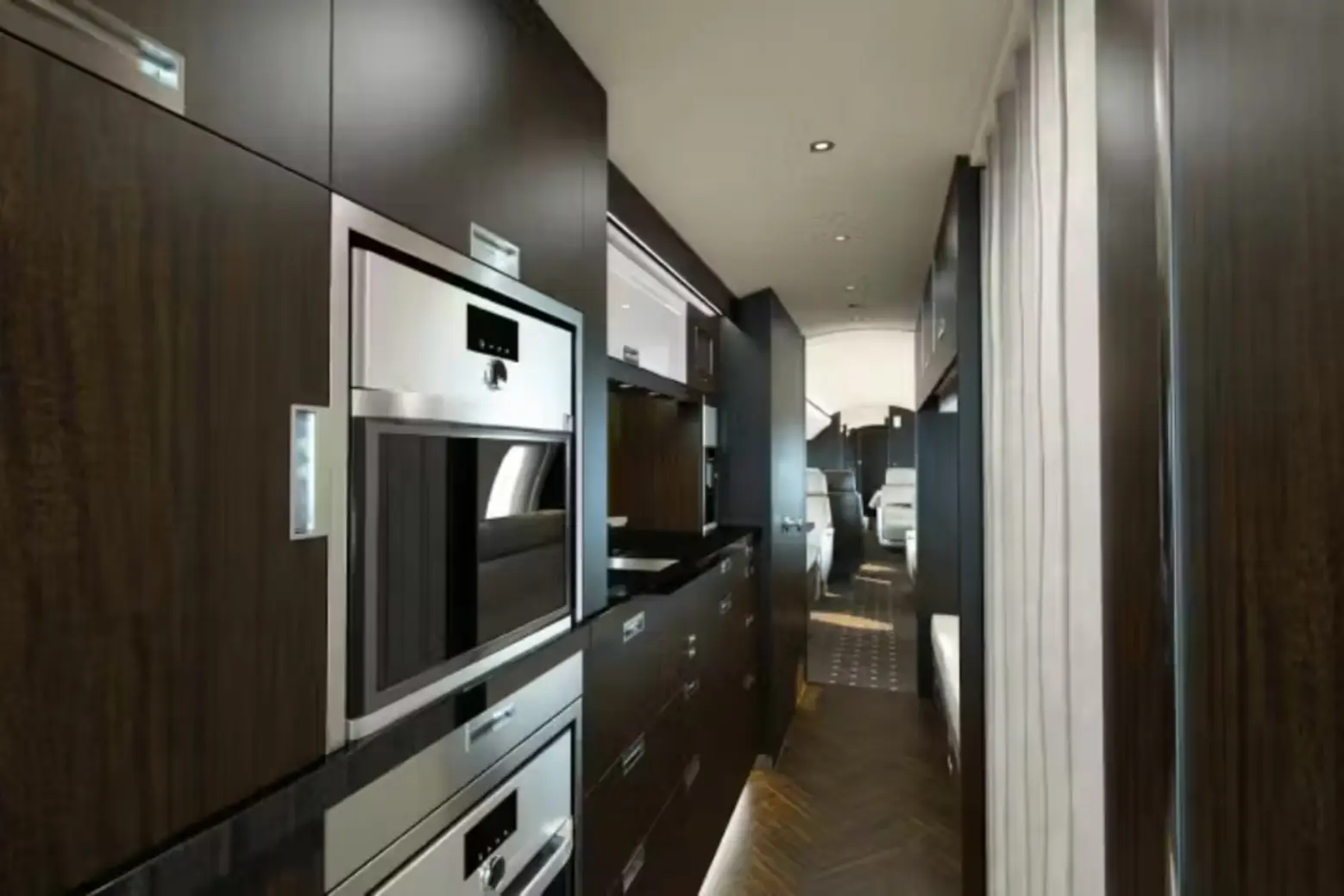
Private World’s real achievement is not simply that it shortens distances. It is that it reduces the cost those distances impose on the body, on rhythm, and on the continuity of life. In that sense, VistaJet is doing something more ambitious than selling private aviation. It is selling the possibility that movement across continents need no longer feel like disruption at all.