MENU
Close





On May 15, 1940, nylon stockings arrived like a promise from the future: smooth, strong, and impossibly modern, until wartime scarcity turned them from everyday polish into an object of longing.

On May 15, 1940, nylon stockings arrived like a promise from the future: smooth, strong, and impossibly modern, until wartime scarcity turned them from everyday polish into an object of longing.
May 15, 2026


Before nylon stockings, hosiery belonged to a more delicate world of silk, rayon, runs, repairs, and careful handling. Then DuPont introduced a new kind of fiber, born in the laboratory and promoted with the promise of strength, smoothness, and modern glamour. What arrived in stores on May 15, 1940, was not just another accessory. It was a piece of chemistry made intimate, worn directly on the skin, and instantly absorbed into the rituals of getting dressed.

By the time nylon stockings reached stores, desire had already been carefully staged through the 1939 New York World’s Fair, where nylon appeared as a marvel of modern industry rather than an ordinary textile. When stockings finally entered the wider market, they became a sensation, with crowds forming at stores and millions of pairs selling in only days. A fiber invented through polymer research suddenly carried the emotional charge of fashion: polish, durability, and the thrill of something new.
Their power belonged to a moment when technology was beginning to reshape modern life, while clothing still held the private hopes of the body. Nylon gave women a smoother, more affordable alternative to silk, and its appeal sat between practicality and fantasy. It made legs part of the new machine age without losing the softness of fashion.
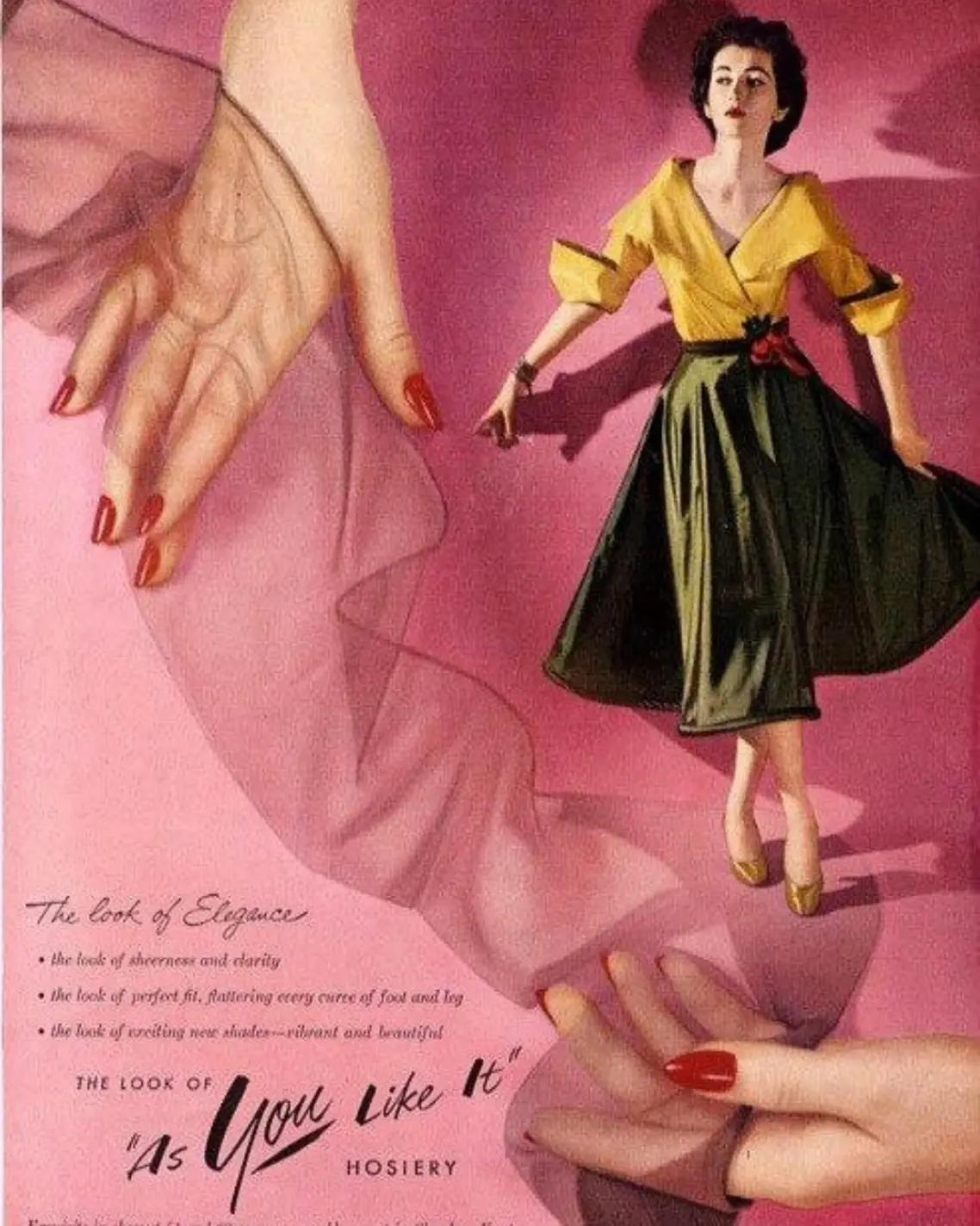

Then came the interruption that made the myth deeper. With the United States entering World War II, nylon was redirected toward military uses, from parachutes to other defense materials, and civilian stockings became scarce. The object that had seemed like a symbol of easy modernity turned into something rationed, desired, and remembered through absence.


When nylon returned after the war, it carried the memory of queues, scarcity, science, and feminine polish, turning hosiery into one of the first places where modern materials touched everyday desire. Its influence never stayed locked in the 1940s. Stockings and tights kept returning through fashion as a surface of transformation, from polished postwar legs to sheer runway layering, patterned hosiery, colored tights, and the new styling codes of recent 2026–2027 collections. What began as a technical answer to silk became a visual language for the body, proving that nylon stockings belong to fashion history not only as an invention, but as a material shift that still shapes how designers frame the leg today.


The story begins with chemistry, but it ends with culture. Nylon stockings remain a sharp piece of fashion history because they proved that a new material could change not only what women wore, but how modernity felt on the body.