In Naples, Mario Talarico transforms the umbrella into a piece of living culture. Rooted in a family legacy that began in 1860, the house brings together whole-stick woods, silk, horn, and local superstition in objects that carry the texture of weather and the spirit of the city.
Mario Talarico, the Umbrella Master of Naples
In Naples, Mario Talarico transforms the umbrella into a piece of living culture. Rooted in a family legacy that began in 1860, the house brings together whole-stick woods, silk, horn, and local superstition in objects that carry the texture of weather and the spirit of the city.
March 4, 2026


“When I make an umbrella, I kiss it like a son, because I’m never going to see it again. I can’t make another one like the one I’ve made,”
In the world of bespoke umbrellas, British makers are often framed as the guardians of discipline: sober, architectural, impeccably restrained. Mario Talarico stands for something else entirely. In Naples, the umbrella becomes warmer, stranger, more theatrical. It remains an object of function, yes, but it also turns into folklore, sculpture, inheritance, and local pride. That is why people rarely describe Talarico as merely a shop. It feels closer to a shrine, one where weather, superstition, family memory, and artisan skill are folded into the same handle. Founded in 1860, the house has become one of the great surviving emblems of Neapolitan craftsmanship, and even after the death of Mario Talarico Sr. in June 2024 at the age of 92, its identity remains very much alive through Mario Talarico Jr., who now carries the name and the tradition forward.
The Shrine in the Spanish Quarter
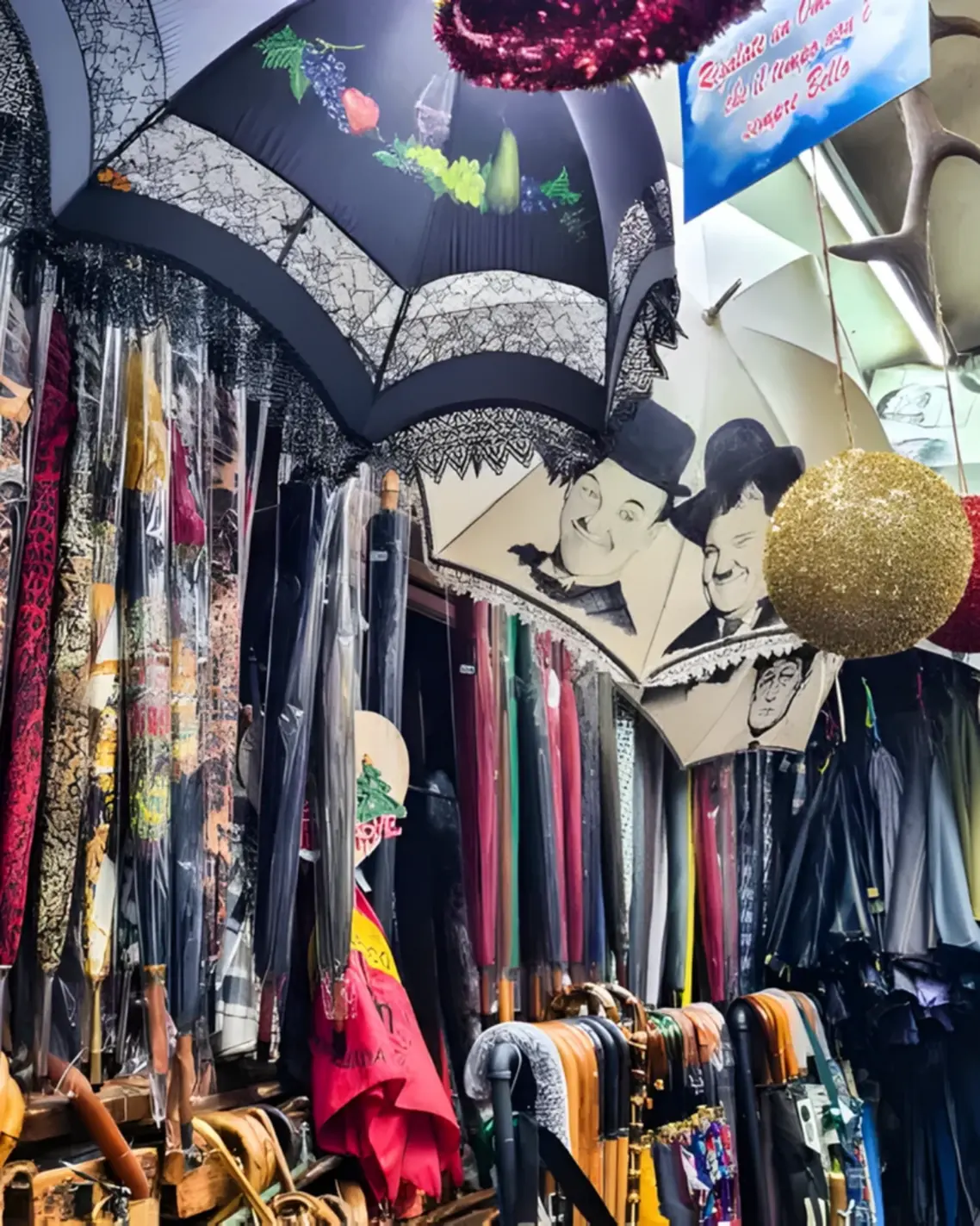
To understand Talarico, you have to begin with place. The workshop sits at Vico Due Porte a Toledo 4/B, near Via Toledo and the Quartieri Spagnoli, one of Naples’ most vivid and layered neighborhoods. Sources consistently describe it as small, crowded, and almost implausibly humble from the outside. Talarico does not present luxury as polished distance. It presents luxury as intimacy, density, and lived history.
That sense of inheritance is not decorative. It is physical. The old drawers filled with components and a bench said to be nearly 200 years old, worn down by generations of labor. The business can be traced all the way back to Giovanni Buongiovanni in 1860, then through Emilia Buongiovanni and the Talarico family line, before arriving at Mario Talarico Sr. and, from 2006 onward, Mario Talarico Jr., who joined the workshop and eventually became its current owner. After Mario Sr.’s death in 2024, reports described the nephew’s public promise to continue the craft and make his uncle proud. In a luxury culture crowded with invented heritage, this is the rare case where that romance is real.

What Makes a Mario Talarico Umbrella
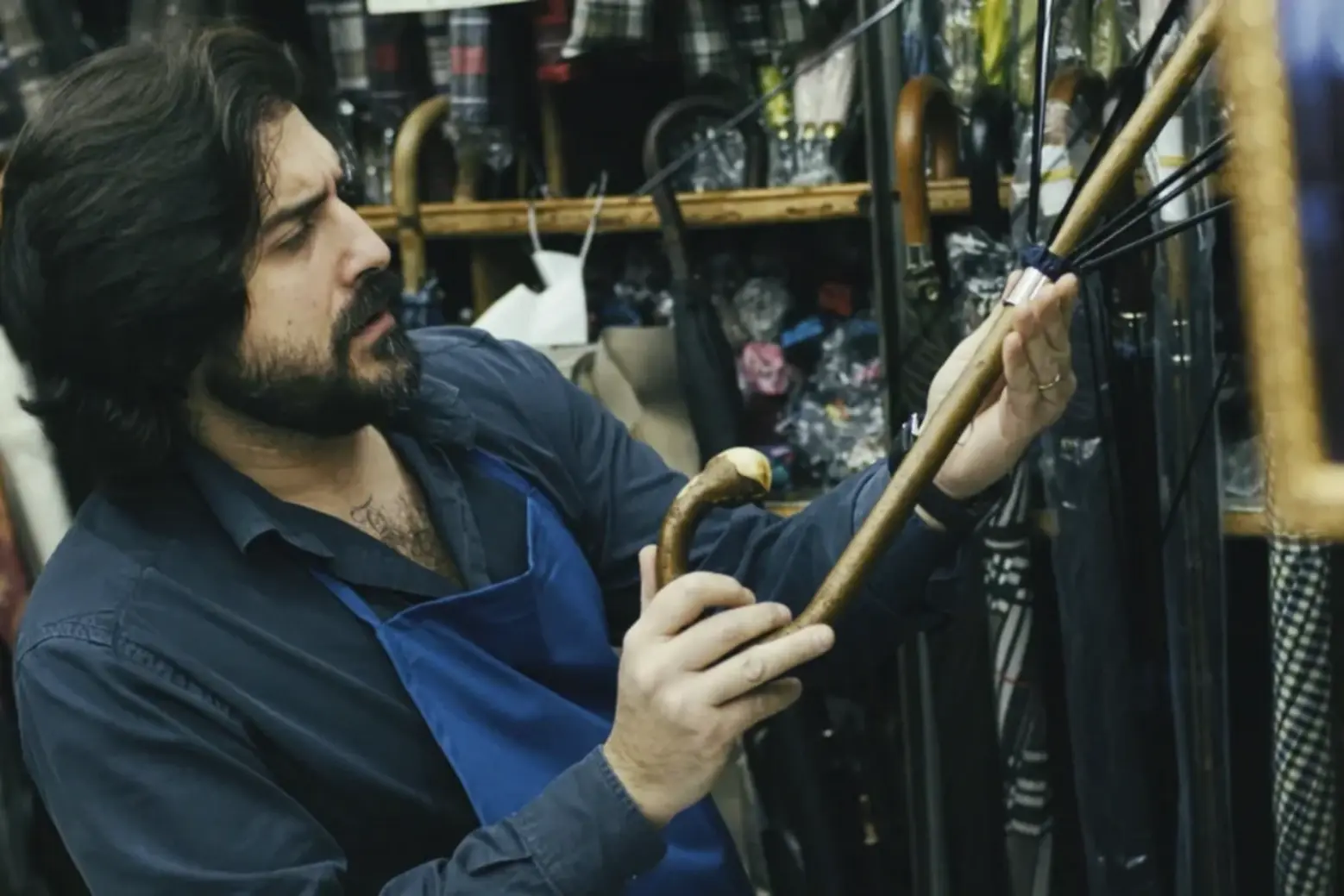
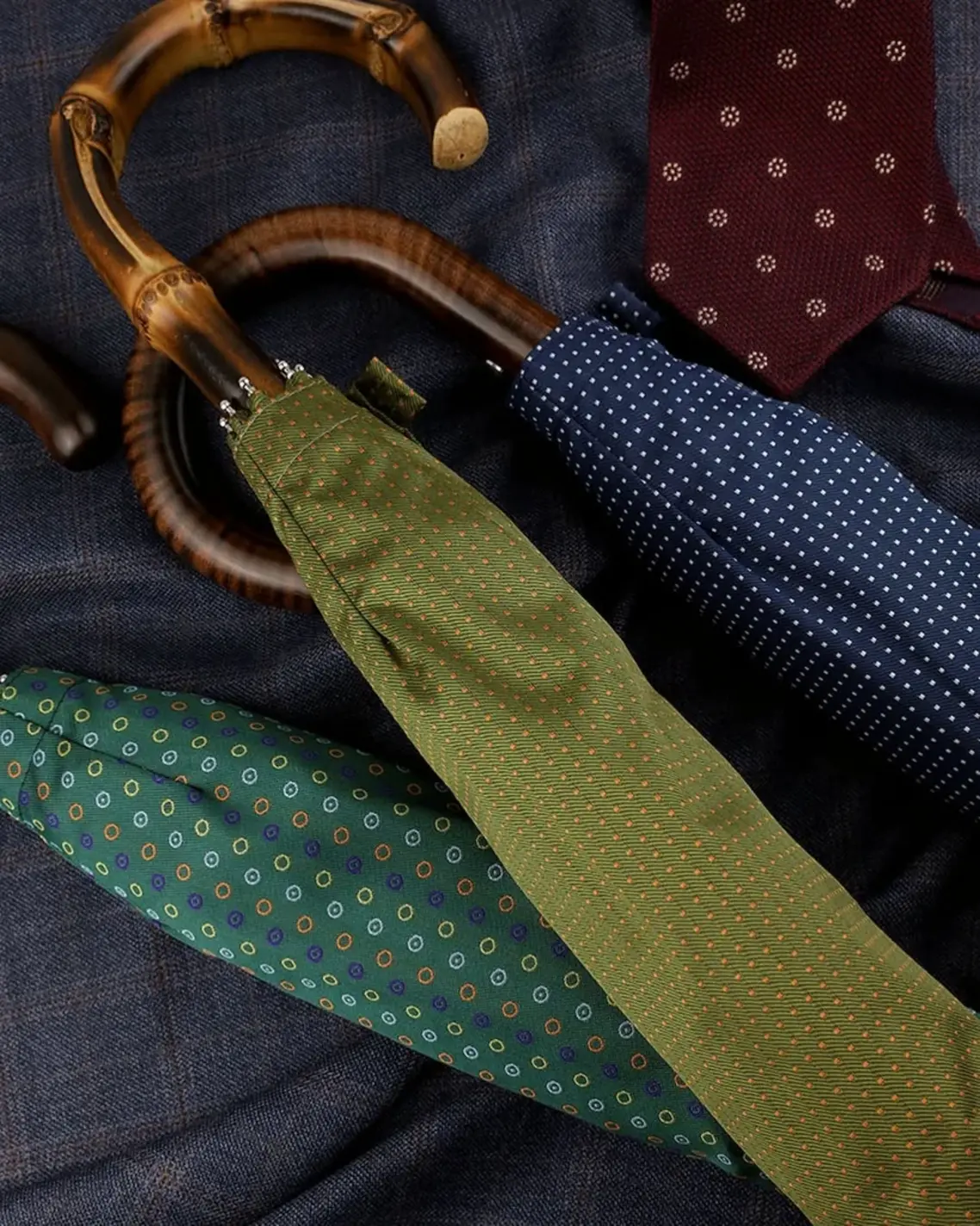
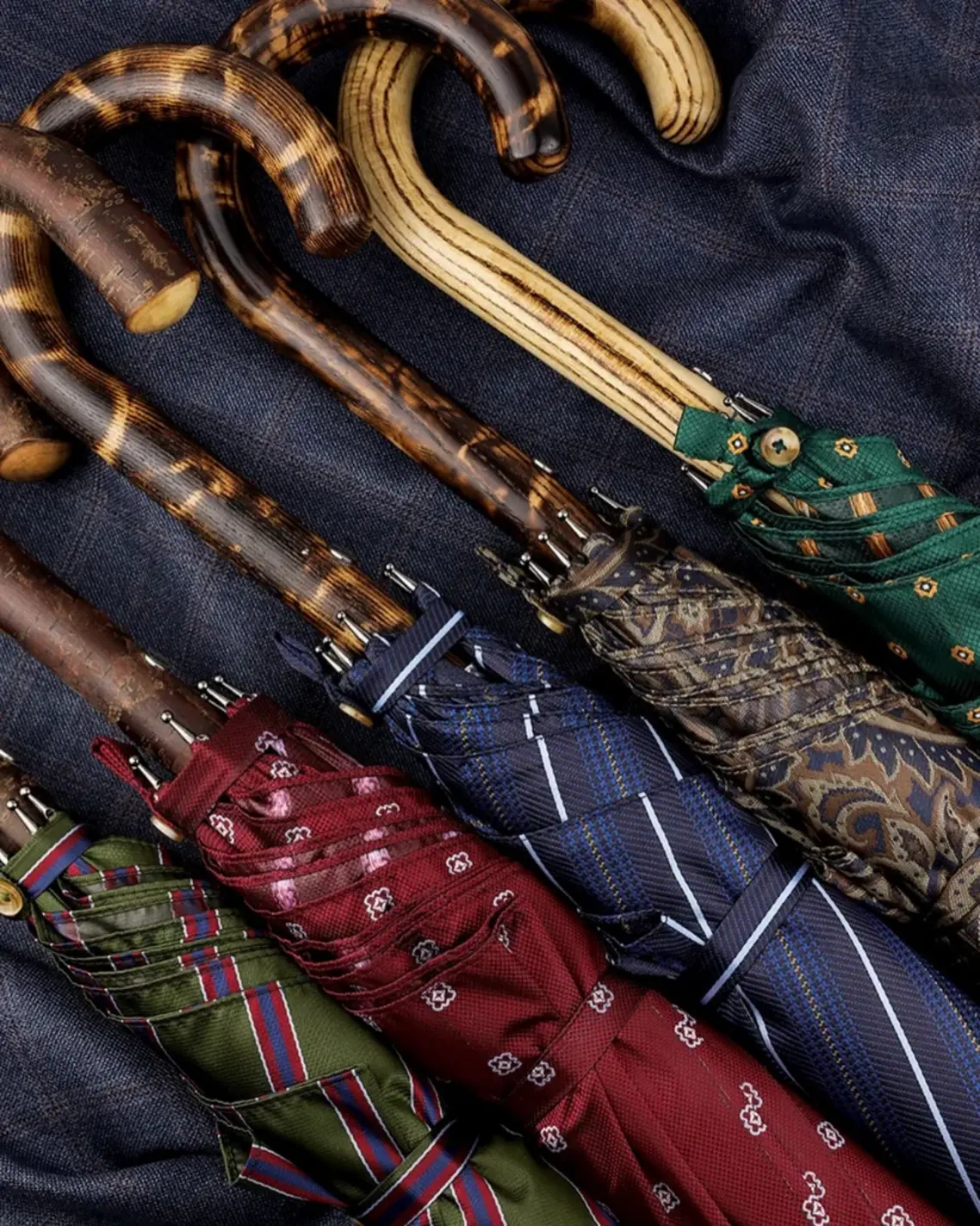
What distinguishes a Talarico umbrella is first the wood. The best-known pieces are mounted on whole sticks or solid woods, with shafts and handles shaped from single pieces rather than treated as interchangeable industrial parts. Whole woods and precious materials such as real horn, bamboo, Sorrento lemon wood are used to create the durable handles. This matters because the umbrella keeps the life of the material visible. It does not erase the tree in pursuit of mechanical sameness. It allows irregularity to become elegance.
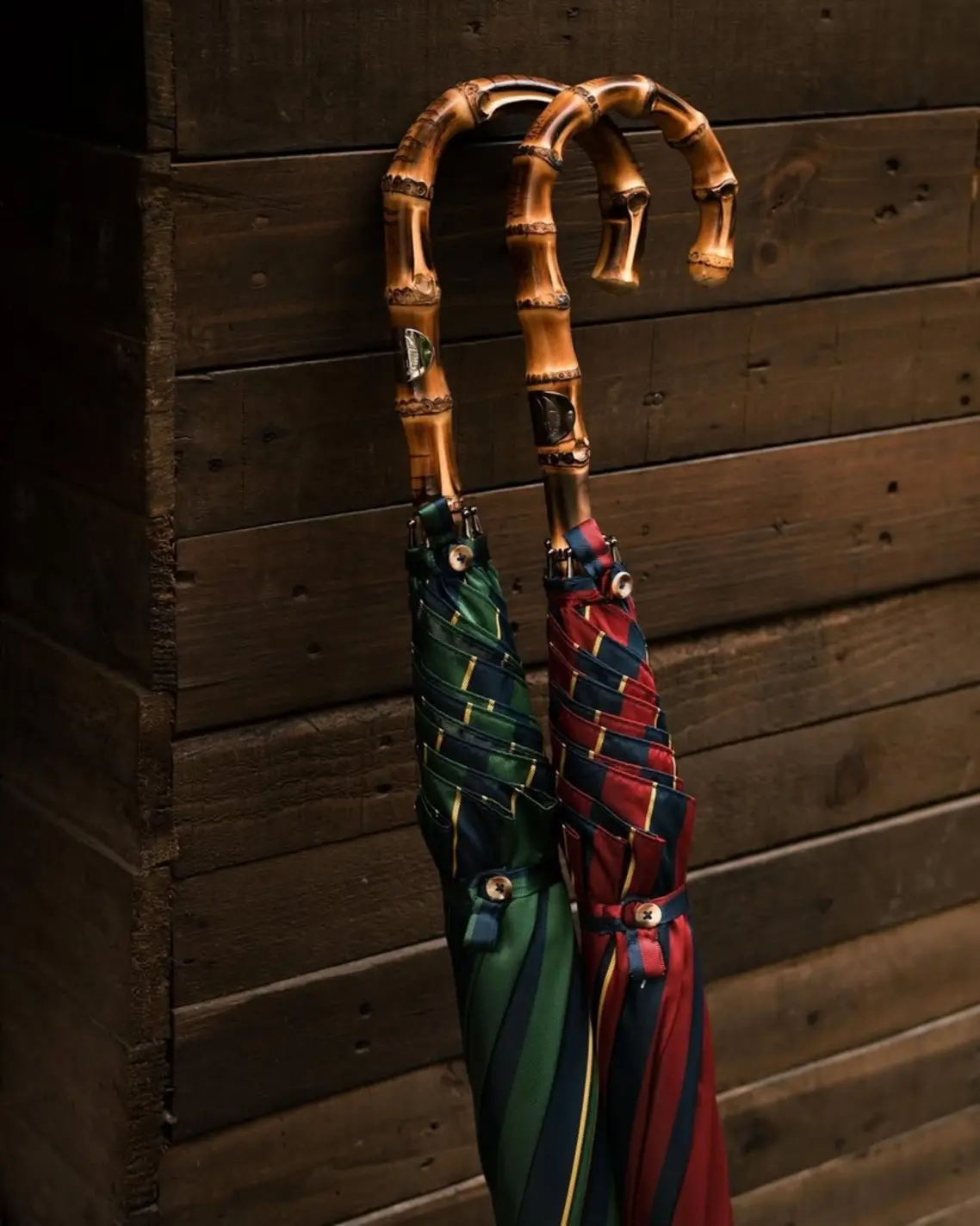
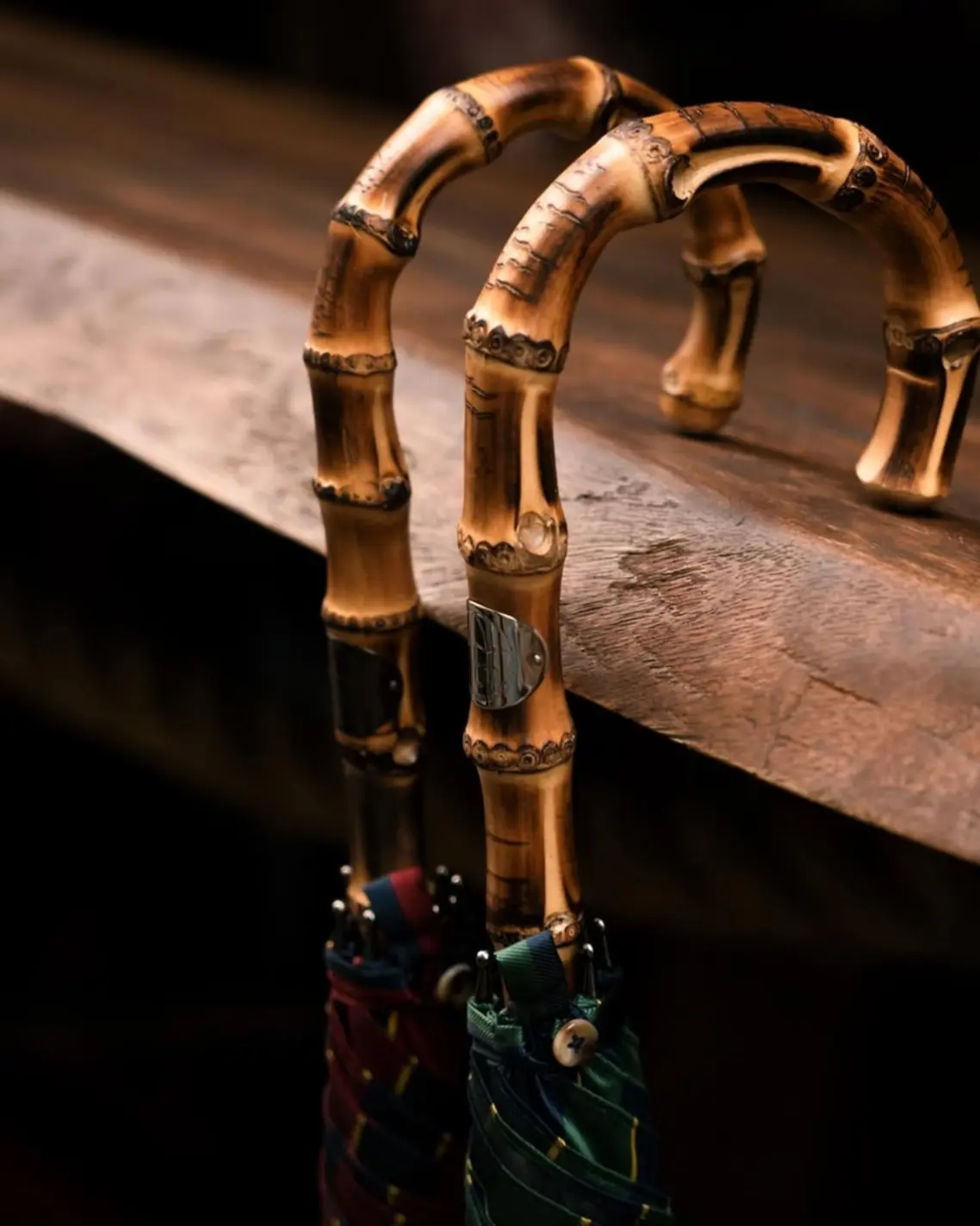
Then come the details that turn craftsmanship into character. Genuine horn tips, brass hardware, hand-cut canopies, ribbon closures, and horn buttons are the Talarico offerings. Permanent Style, in its workshop account, describes Mario Jr. sewing the canopy with strips of waterproof cloth and creating the protective skirt around the central mechanism by hand, a small but crucial flourish that protects against rust and marks the difference between mere assembly and real making. Campania Secrets adds that the fabric is cut and sewn by hand and identifies San Leucio silk as part of the Talarico vocabulary. Taken together, these details explain why a Talarico feels less like an accessory and more like a condensed argument for the dignity of manual work.
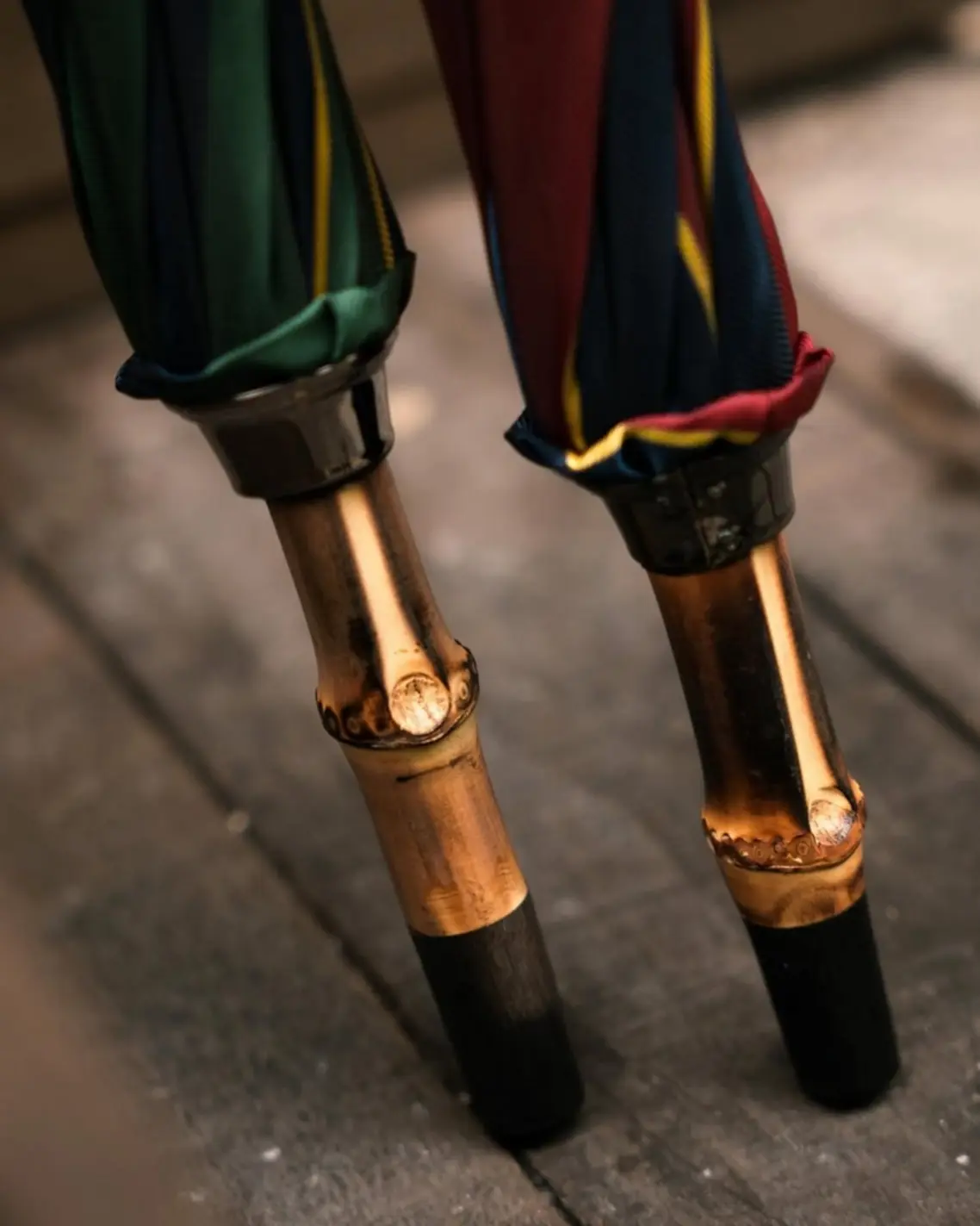
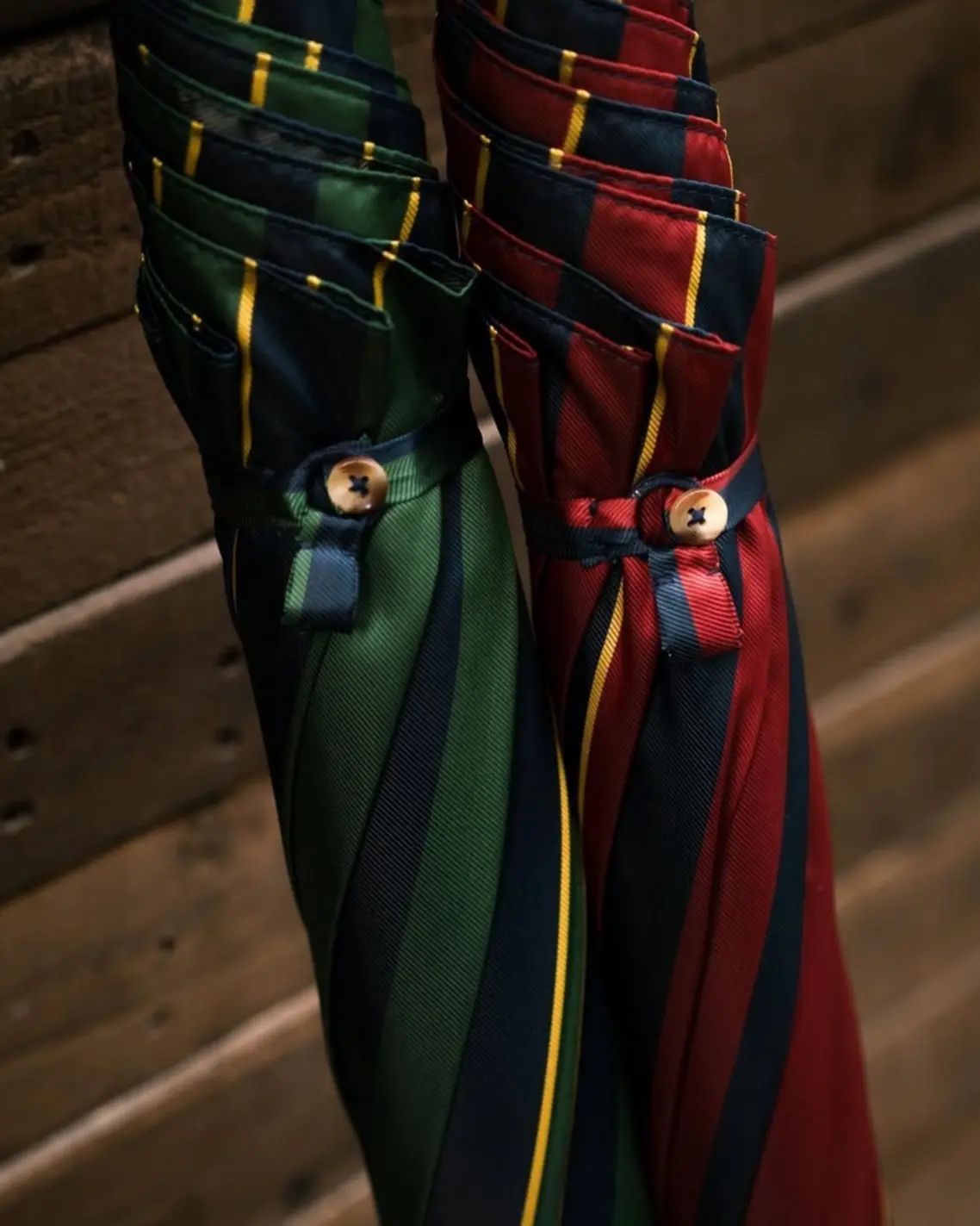
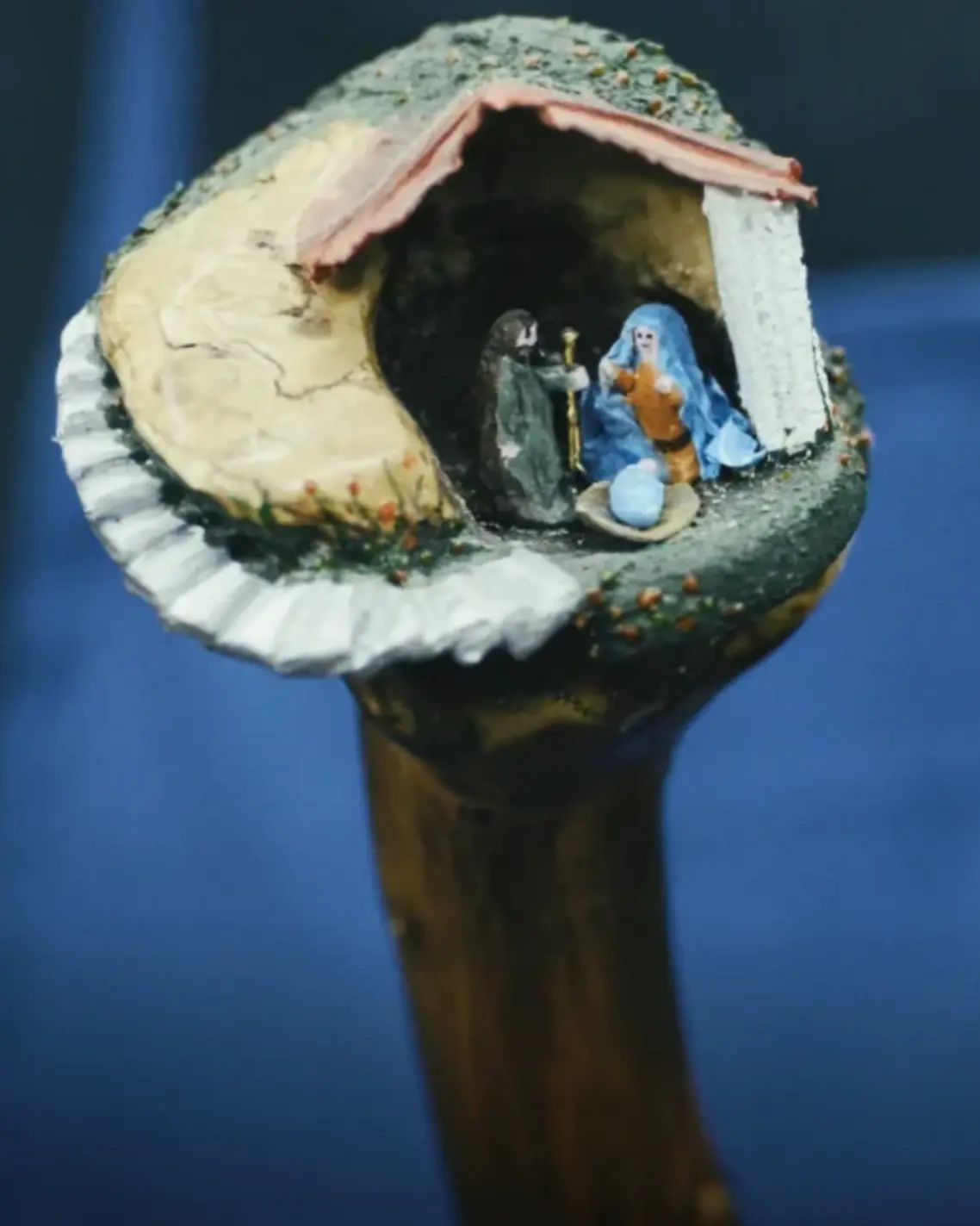
And then there is the distinctly Neapolitan refusal of blandness. Talarico’s world includes regimental stripes, polka dots, horn finials, and perhaps most charmingly the cornetto rosso, the red good-luck horn reimagined as a folding umbrella handle. Official product snippets show these “cornetto rosso porta fortuna” models at €45, with smaller versions at €35, proving that even the brand’s lighter, more playful pieces carry a local symbolic charge. This is where Talarico separates itself from Anglo-Saxon umbrella culture. The English umbrella often aspires to discretion. The Neapolitan umbrella is allowed to be expressive, witty, lucky, and slightly superstitious. It does not merely accompany style. It participates in it.
Lore, Legends, and Neapolitan Character
A house like this inevitably gathers stories, and Talarico’s are unusually good. The workshop has produced umbrellas for the English royal family, while Italia su Misura names Pope Francis and King Charles III among the present-day admirers of the house, alongside past figures such as Eduardo De Filippo and Totò. Campania Secrets goes further, calling the black whole-bamboo umbrella finished in real horn the “Ferrari of umbrellas” and linking it to a letter of thanks from Charles after a custom commission. Whatever one’s tolerance for luxury legend, the larger point holds: the clientele reflects the singularity of the object. Talarico does not flatter status through logos or spectacle. It attracts those who understand that a handmade umbrella can still carry the weight of a civilization’s manners.

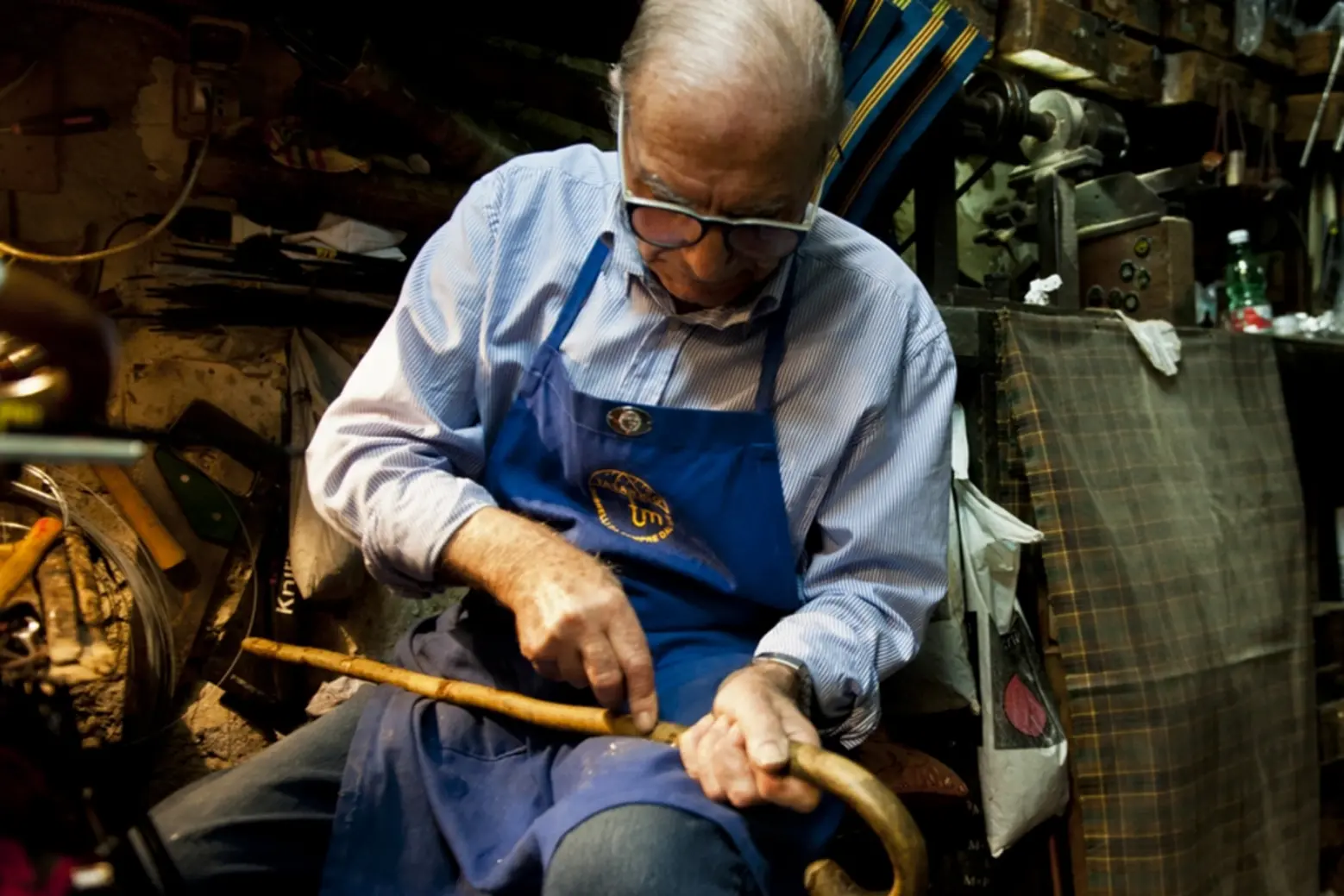
Yet the mythology remains grounded in Naples, which is what saves it from becoming sterile luxury folklore. Sirenuse’s 2025 profile quotes Mario Jr. insisting that every client matters equally, whether pope, king, or ordinary visitor, and notes that the workshop’s handmade umbrellas begin at a comparatively approachable price for full-size wooden models. TripAdvisor reviews, while anecdotal, echo the same impression over many years: Visitors describe the shop as hidden, welcoming, museum-like, and deeply personal. The emotional draw of Talarico lies in this tension. It is exalted and local at once. Royal associations may enlarge the legend, but the soul of the brand still lives in the alley, the bench, the conversation, and the act of choosing an umbrella from the wall in Naples itself.
The Modern Talarico: Price, Access, and Desire
In 2026, Talarico operates across several levels at once, which only makes the brand more interesting. Search snippets from the official store show entry pieces such as decorative or folding umbrellas from about €25 to €69, lucky-horn umbrellas around €45, and many full-size handmade wooden models clustering around €249 to €299. The more elevated signatures rise quickly: The official snippets list Whole Bamboo at €890 and Canna di Malacca intera at €1,200. On the international retail side, No Man Walks Alone has listed hand-made solid-stick Talaricos at $395, while Kirby Allison shows travel umbrellas around $395 to $465, malacca-handle full-size pieces at $695, and exotic alligator-handle examples at $1,250. So the modern Talarico is not one thing. It is a spectrum, from charming Neapolitan souvenir to serious collector’s object.
Access has widened, but the romance still favors pilgrimage. Search snippets from the official site indicate shipping across Italy in 24 to 48 hours and worldwide delivery in roughly 2 to 5 days via DHL, which means the object travels more easily now than the mythology might suggest. Even so, the best version of a Talarico purchase remains stubbornly old-fashioned: Go to Naples, walk into the workshop, look at the woods, weigh the handle in your hand, and choose the piece that seems to choose you back. That is the final genius of Mario Talarico. It proves that luxury can still feel human-sized. In a market saturated with polished sameness, these umbrellas preserve the idea that craft can remain intimate, eccentric, and unmistakably rooted in a city’s soul. At Talarico, the umbrella still does what great objects should do. It keeps out the rain, certainly. But it also keeps history alive.