MENU
Close





On April 20, 2026, Fendi Baguette 26424 Re-Editions took over Milan Design Week with a tightly curated return of the house icon, bringing 20 archival-minded re-editions to Palazzo Fendi Milano in a project that treated the Baguette as both handbag and design object.
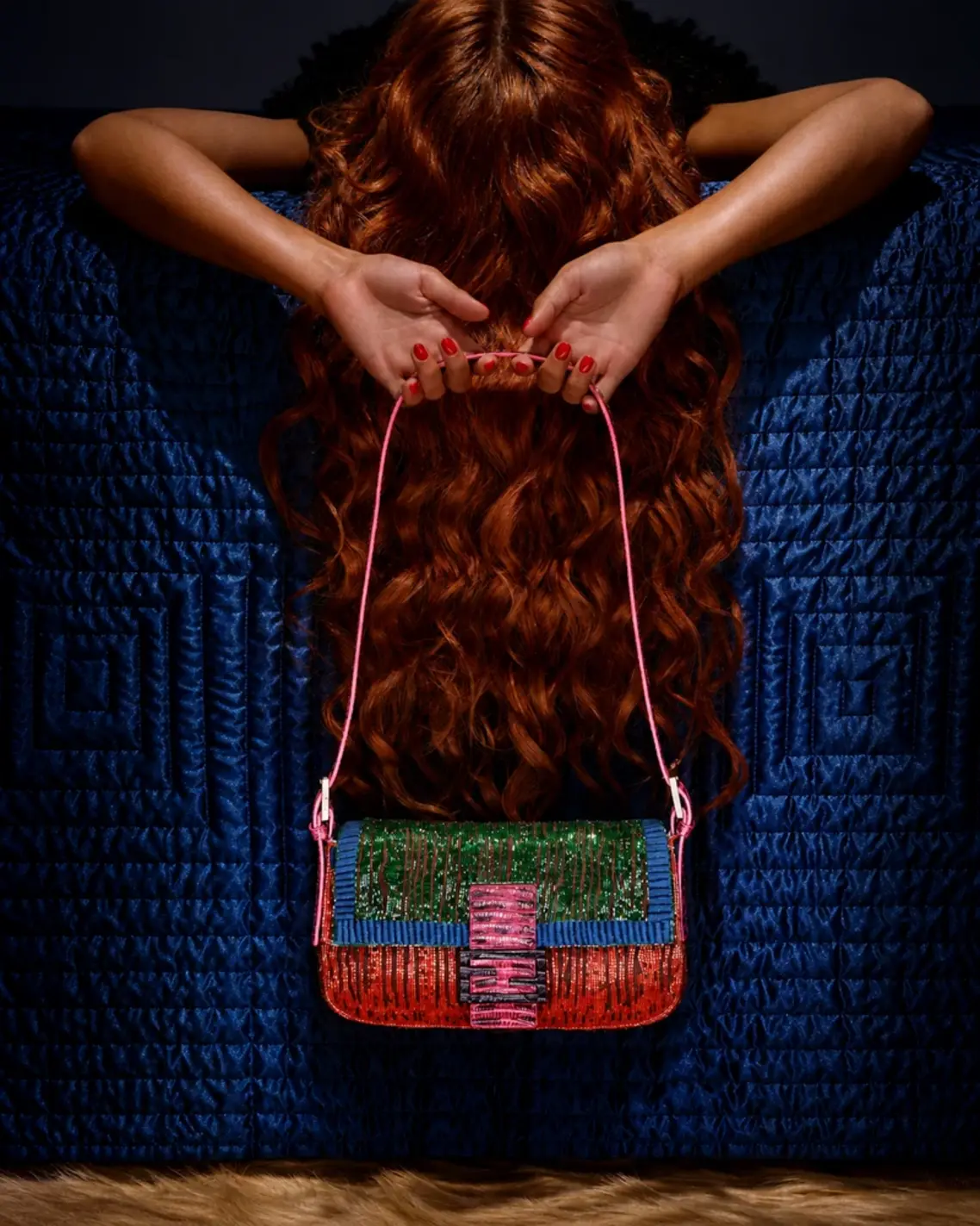
On April 20, 2026, Fendi Baguette 26424 Re-Editions took over Milan Design Week with a tightly curated return of the house icon, bringing 20 archival-minded re-editions to Palazzo Fendi Milano in a project that treated the Baguette as both handbag and design object.
April 20, 2026


The installation had already begun showing at the flagship from April 17, giving the launch the feel of a private preview opening into a public design-week event.
This was the Baguette 26424, named after the original code assigned to the Baguette when it first entered the house in 1997. For 2026, Fendi and Maria Grazia Chiuri brought it back in a softer silhouette with longer straps and stronger under-the-arm ease, preserving the original spirit while making the shape feel more fluid and current. The line was first tied to the Fendi Fall/Winter 2026–27 collection, then given its own spotlight during Milan Design Week.
Fendi Baguette 26424 Re-Editions arrived in 20 versions, with six reserved as Milan exclusives. The materials and surfaces pushed the project well beyond a straightforward reissue: sequins, beads, mirror embellishment, raffia, and dense embroidery turned each bag into a small decorative object with its own mood and texture. One raffia-and-bead version alone required 22,600 hand-applied beads and more than 70 hours of artisan work to complete.
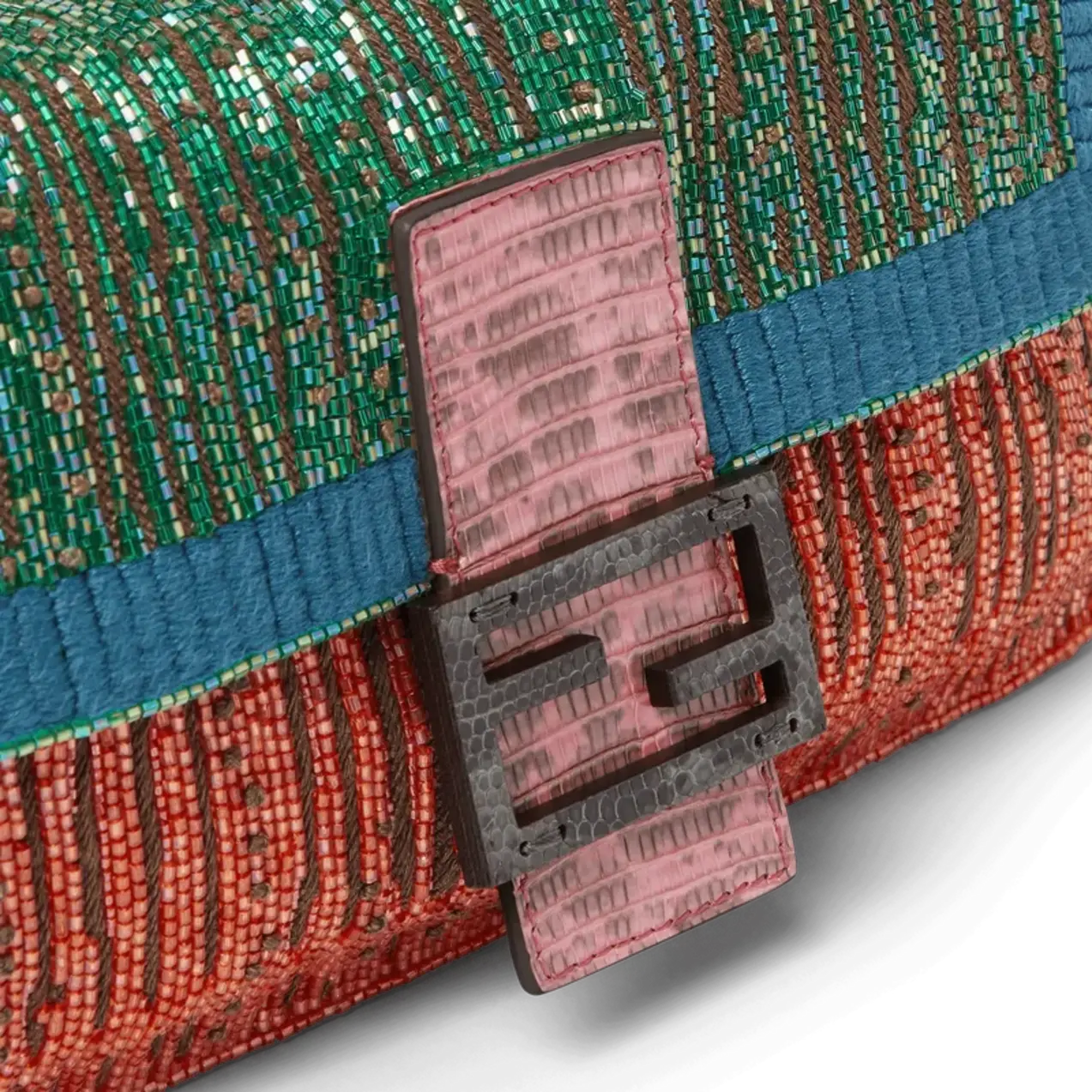
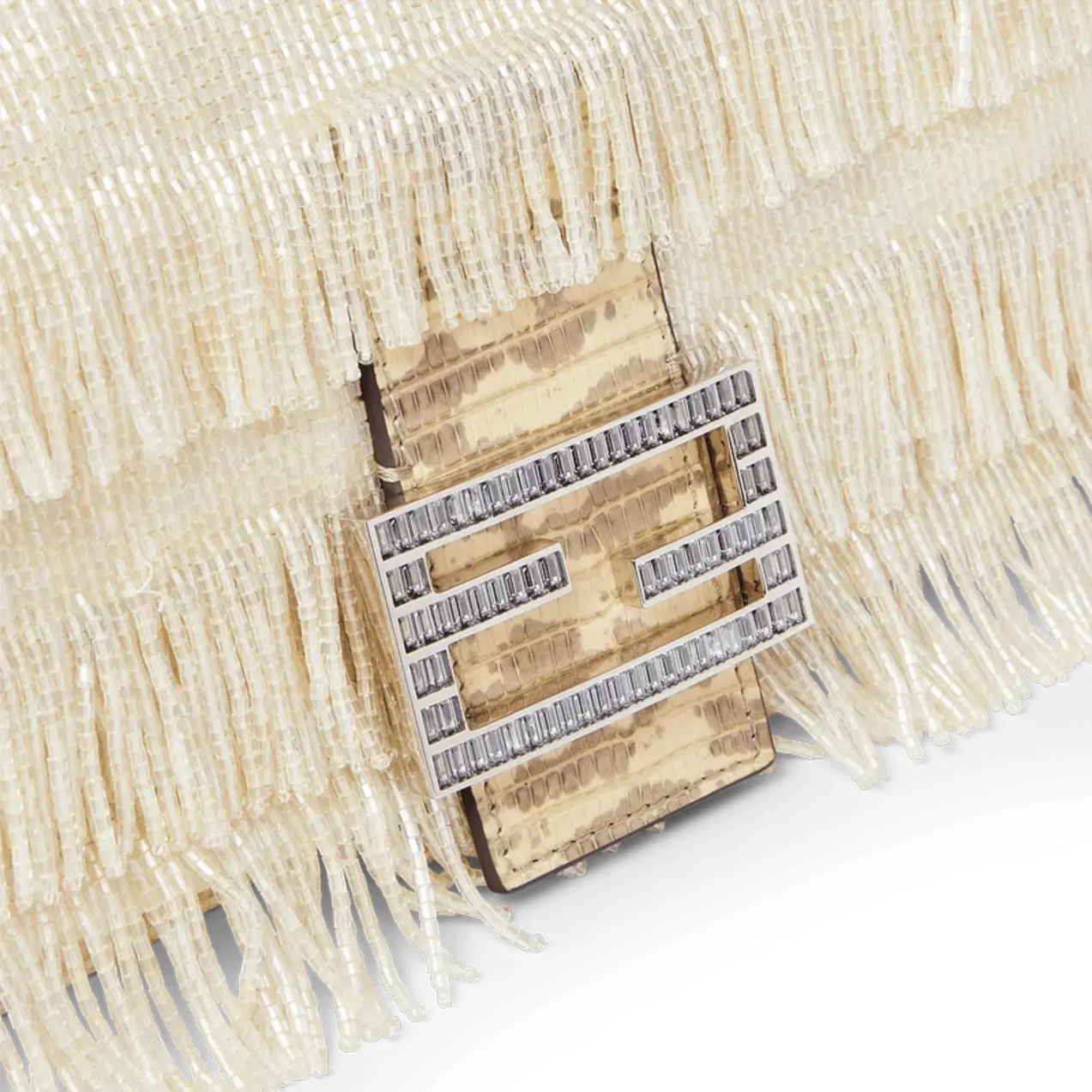
The display strategy sharpened the idea further. Each bag came housed in a bespoke wooden crate with a special re-edition metal tag, stencil detailing, and a yellow canvas belt, echoing the language of art transport and private collection. At Palazzo Fendi, artisans were seen hand-sewing tens of thousands of beads onto the bags, collapsing the distance between boutique launch, workshop, and exhibition. That combination of process and object gave the project real design-week authority.
There was also a clear sense of relaunch rather than simple replay. Nearly three decades after the Baguette’s debut, Fendi used Milan Design Week to present the house icon as a living form with room for personality, excess, and reinterpretation. After Milan, 14 iterations were slated to travel onward to the Shanghai IFC and New York 57th Street boutiques, extending the design-week unveiling into a larger international rollout.
Fendi Baguette 26424 Re-Editions entered Milan Design Week as a fashion relaunch, carrying all the right ingredients: the original 1997 code, a refreshed silhouette, six Milan-only pieces, live beadwork, and packaging conceived like an art crate. In that setting, the Baguette did not just come back. It arrived as an object of memory, craftsmanship, and display.