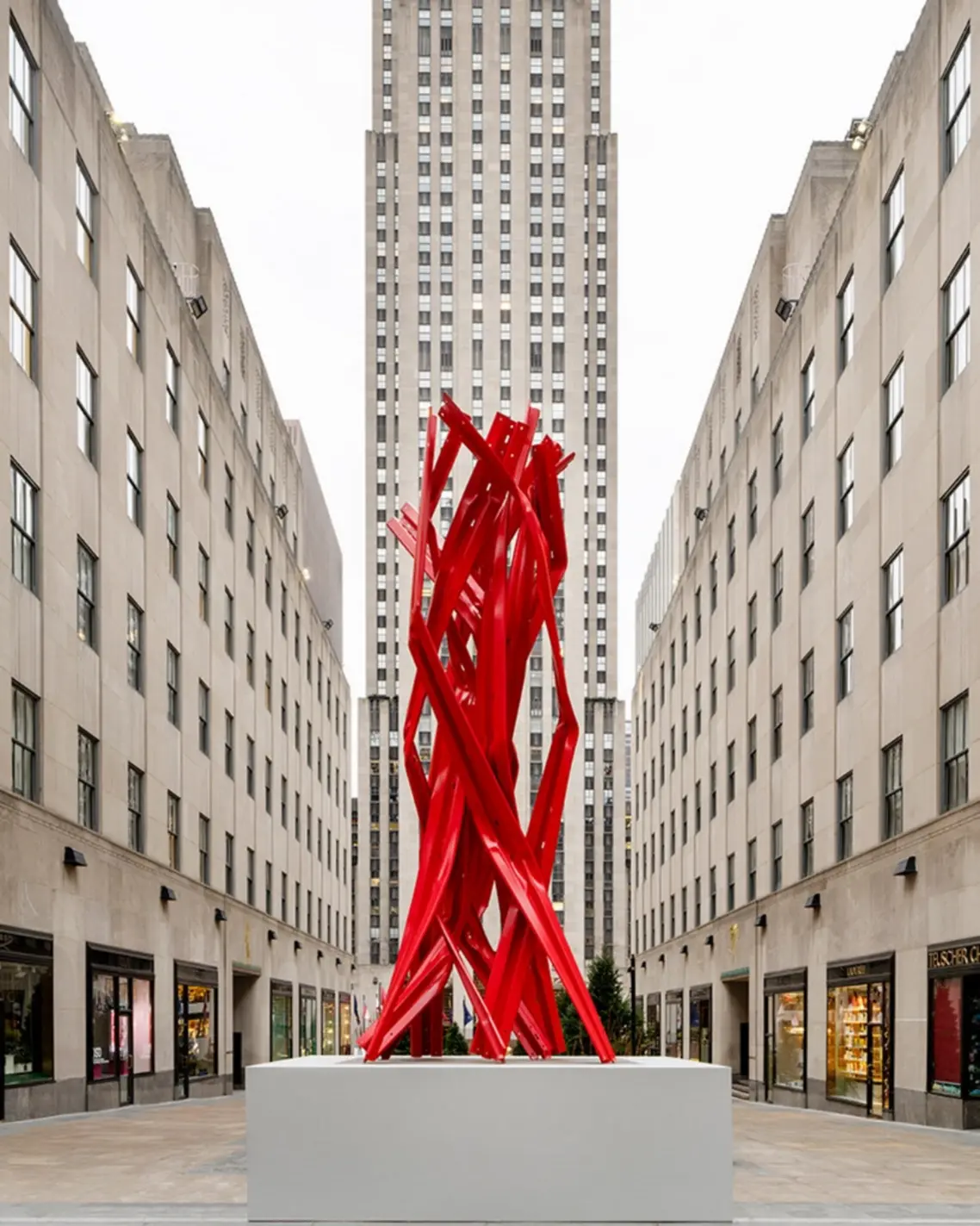
At Rockefeller Center, Bettina Pousttchi’s Vertical Highways V03 turned the language of infrastructure into something far more unstable and seductive, proving that even a guardrail can become a monument once it is stripped of duty and pushed into motion.
Bettina Pousttchi’s Vertical Highways V03 Lands in New York
At Rockefeller Center, Bettina Pousttchi’s Vertical Highways V03 turned the language of infrastructure into something far more unstable and seductive, proving that even a guardrail can become a monument once it is stripped of duty and pushed into motion.
April 17, 2026


Bettina Pousttchi’s Vertical Highways has become one of the most distinctive sculptural series in contemporary public art, and its newest chapter recently made that reputation newly visible in New York. Vertical Highways V03 (2025) was on view at Rockefeller Center’s Channel Gardens from March 18 to April 17, 2026, marking the first public presentation of the series in the United States. Installed at the Fifth Avenue entrance to the historic promenade, the work entered into direct conversation with one of Manhattan’s most iconic architectural stages, placing Pousttchi’s industrial vocabulary against the poised geometry of Rockefeller Center.
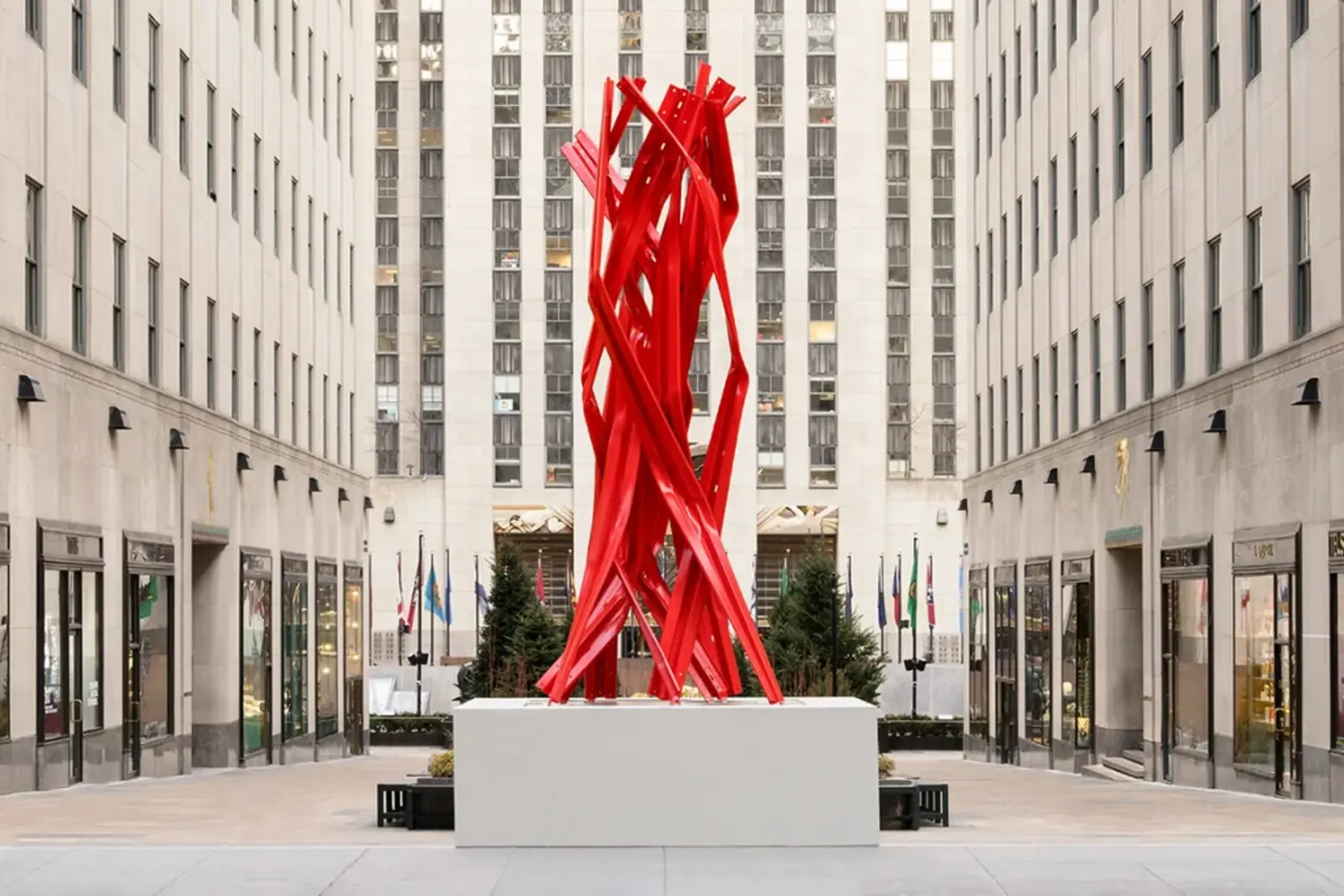
What makes the series so compelling is its material logic. Pousttchi works with highway guardrails and steel, pressing, bending, and reconfiguring these familiar instruments of regulation into upright sculptural forms. In their original setting, guardrails discipline movement, channel traffic, and quietly dictate behavior. Once turned vertical, they lose that practical authority. They stop functioning as barriers and begin operating as signs: of motion, instability, shifting borders, and the strange poetry hidden inside urban control systems. Rockefeller Center’s own description of the work emphasizes exactly this transformation, noting that the sculpture removes infrastructure from its regulatory role and reimagines it as a symbol of change inside the modern city.
That conceptual turn places Pousttchi in a rich lineage. Her work clearly nods to the readymade, yet it refuses the cool detachment of simply selecting an object and calling it art. Instead, she subjects the material to visible force. The result feels like a readymade after impact, one shaped by labor, pressure, and urban memory. At the same time, the serial repetition of steel components and the work’s monochrome force connect it to Minimal Art, even as its twisted silhouette feels closer to a body in motion than to any static industrial grid.
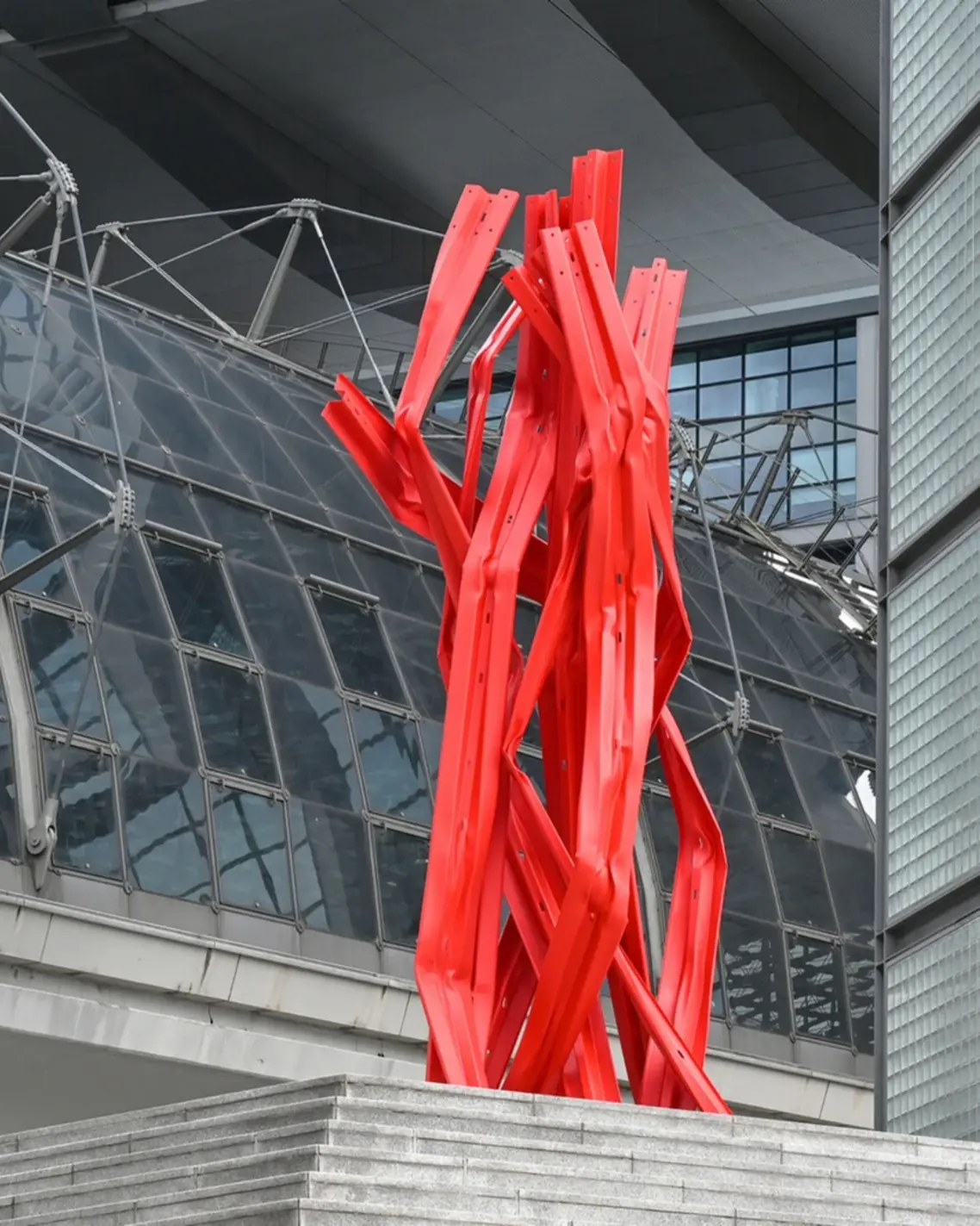
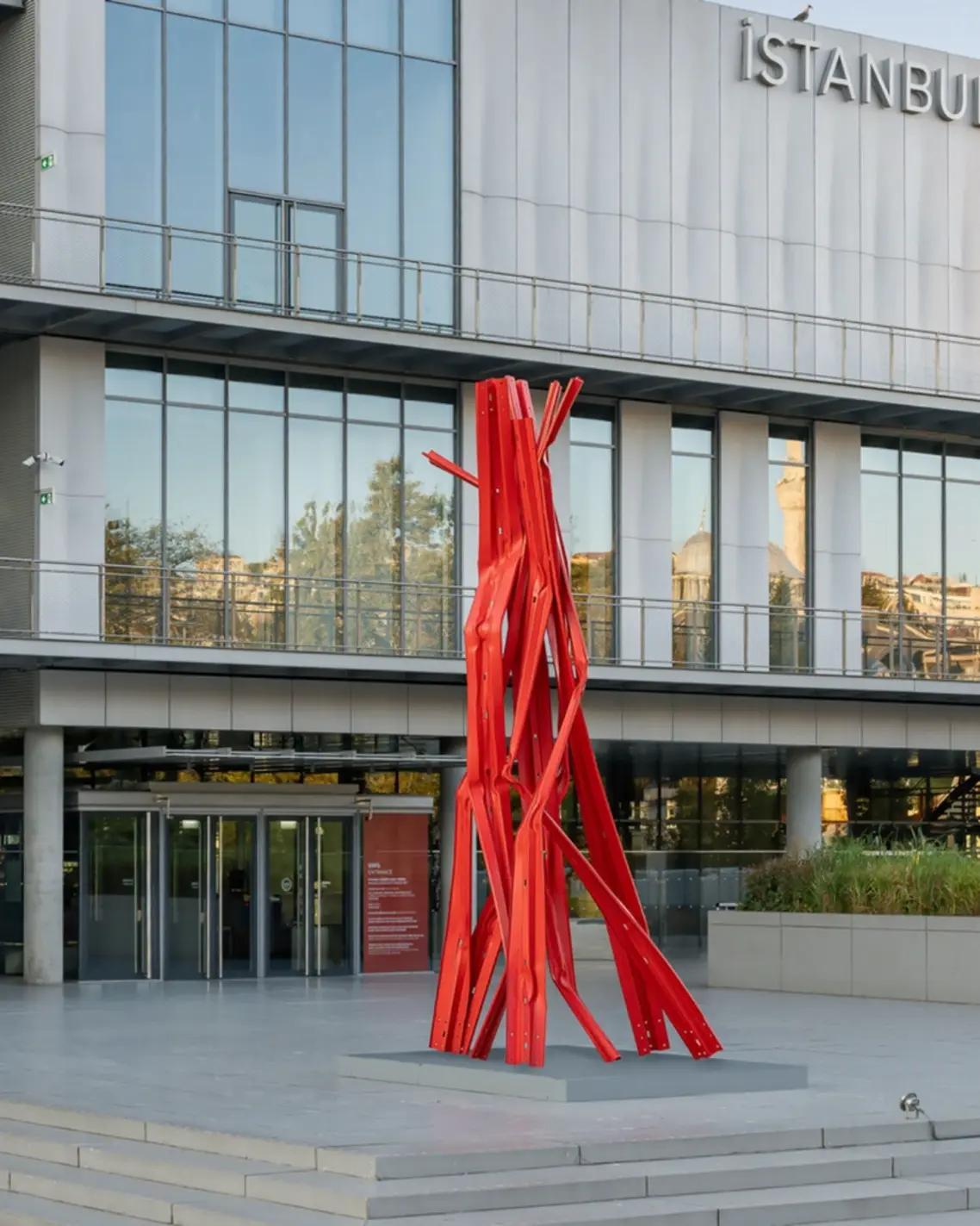
The New York installation also belongs to a wider international arc. Earlier versions now stand permanently at Berlin Central Station and Istanbul Modern, where Vertical Highways V01 and V02 continue Pousttchi’s exploration of architecture, circulation, and civic space. Istanbul Modern describes V02 as a fluid red form that evokes the energy of the city, while the artist’s own site positions both works as permanent public landmarks. Together, they confirm that Vertical Highways is more than a series of sculptures. It is an ongoing inquiry into how cities organize us, and how art can return that rigid order to the realm of imagination.