At the Fondation Louis Vuitton, Calder: Rêver en équilibre opens spring in motion with nearly 300 works of Alexander Calder that turn wire, metal, and air into a living choreography.
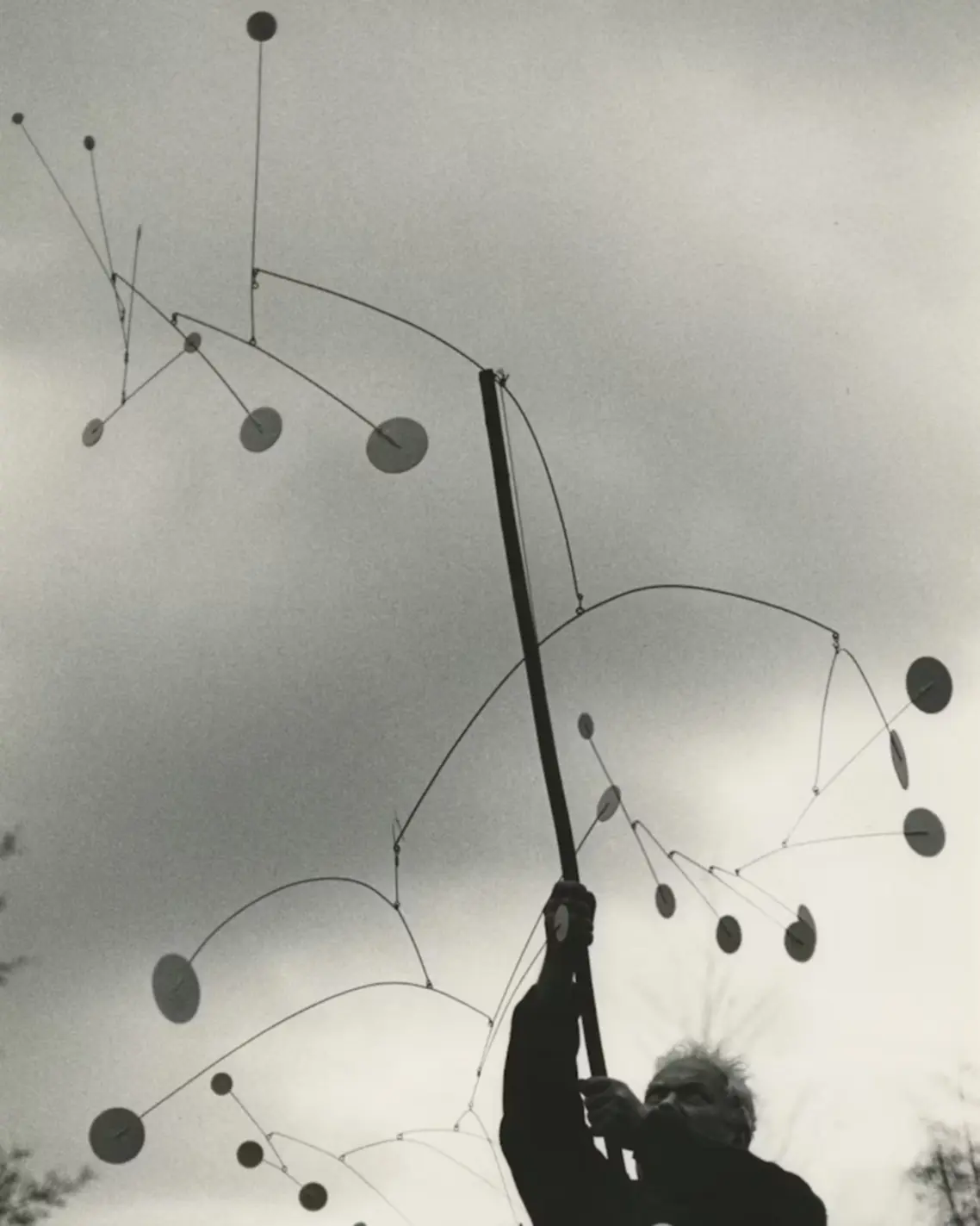
Alexander Calder: Dreaming in Balance Opens in Paris
At the Fondation Louis Vuitton, Calder: Rêver en équilibre opens spring in motion with nearly 300 works of Alexander Calder that turn wire, metal, and air into a living choreography.
April 15, 2026


The Fondation Louis Vuitton, Frank Gehry’s glassy legacy, has just opened one of Paris’s defining exhibitions of spring 2026: Calder: Rêver en équilibre, on view from April 15 through August 16. Conceived to mark both the centenary of Alexander Calder’s arrival in France in 1926 and the fiftieth anniversary of his death in 1976, the retrospective unfolds across more than 3,000 square meters and brings together nearly 300 works in close collaboration with the Calder Foundation. It is one of the most ambitious Calder exhibitions ever staged, and it uses the Fondation’s full spatial drama to make that ambition felt from the first room onward.
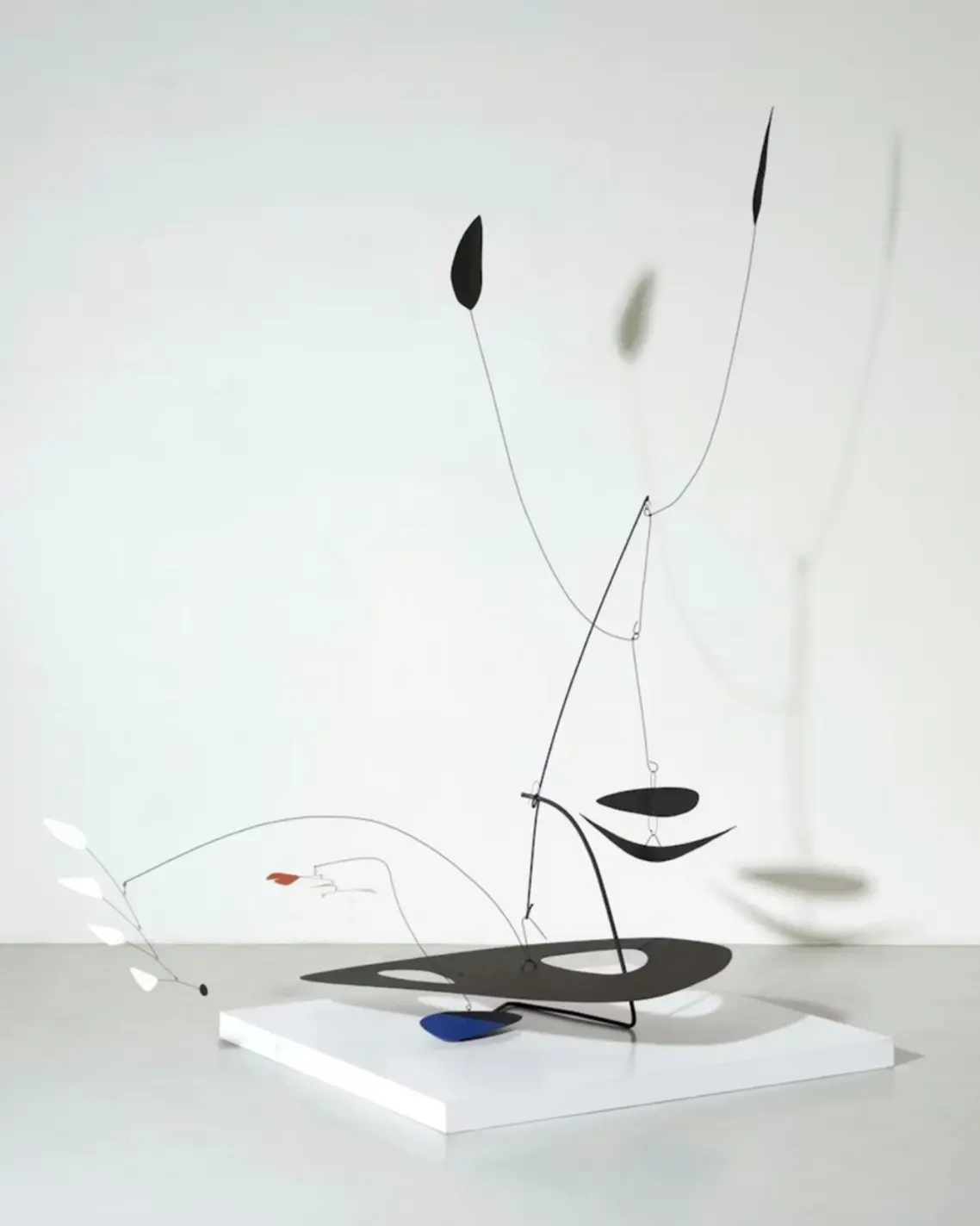
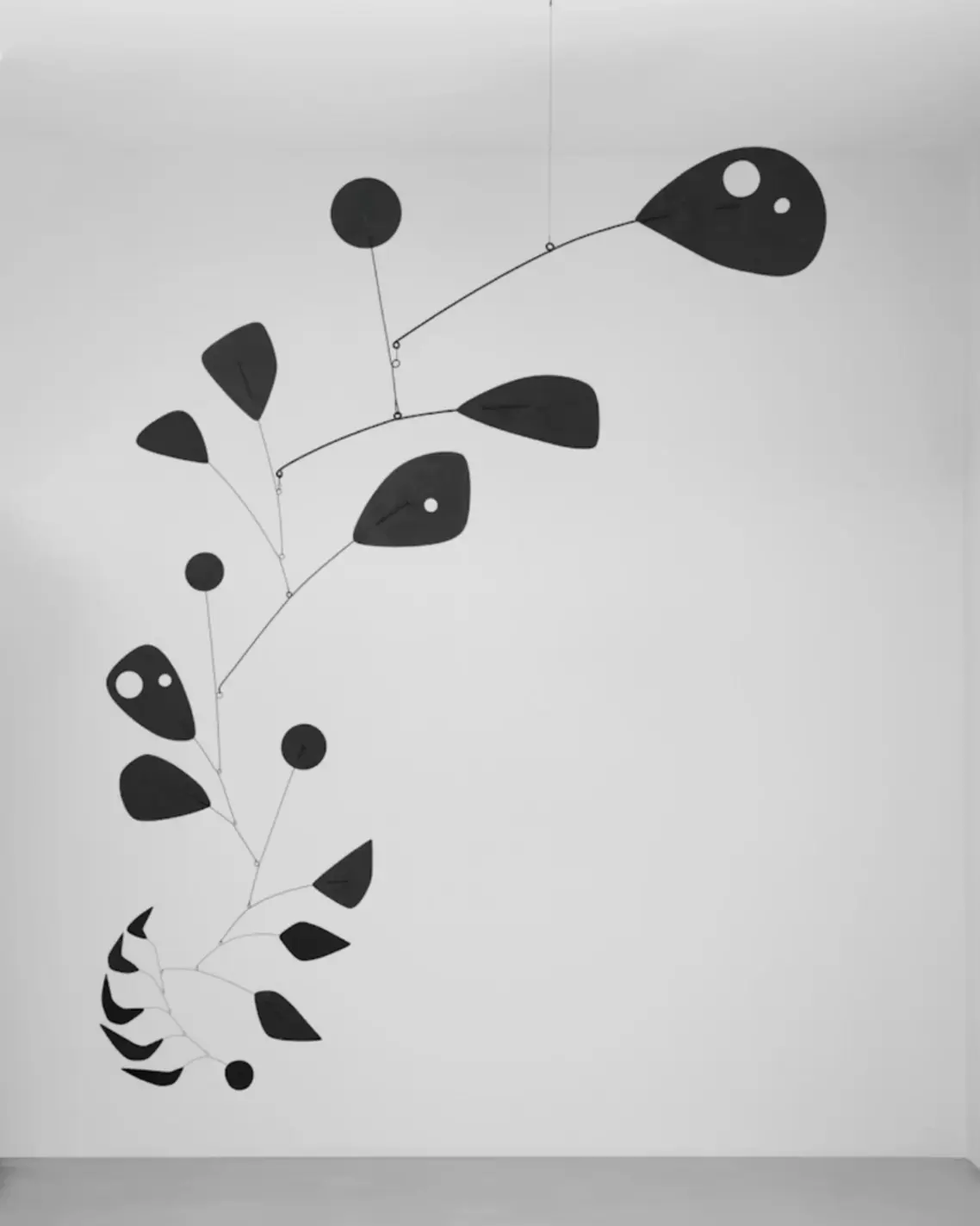
What makes the exhibition especially compelling is its refusal to behave like a static survey. Led by Suzanne Pagé with guest curators Dieter Buchhart and Anna Karina Hofbauer, the show treats Alexander Calder’s work as a total environment, one shaped by movement, light, sound, gravity, and the shifting relation between object and air. The Fondation has dedicated all of its exhibition spaces, and for the first time its adjoining lawn, to Calder’s work, creating a direct dialogue between his planes, volumes, and suspended forms and Frank Gehry’s flowing architecture. The result feels less like a retrospective than a system in motion.
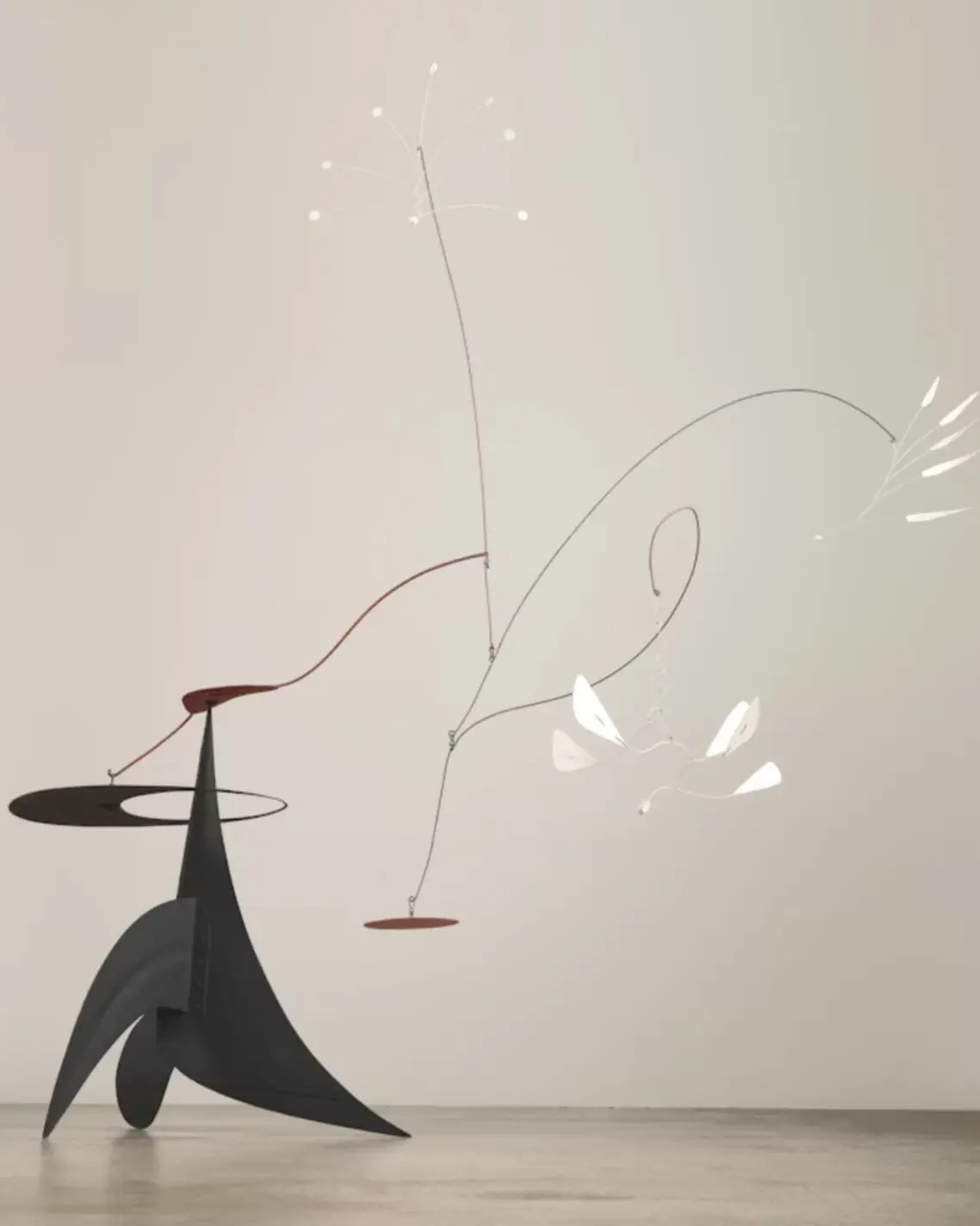
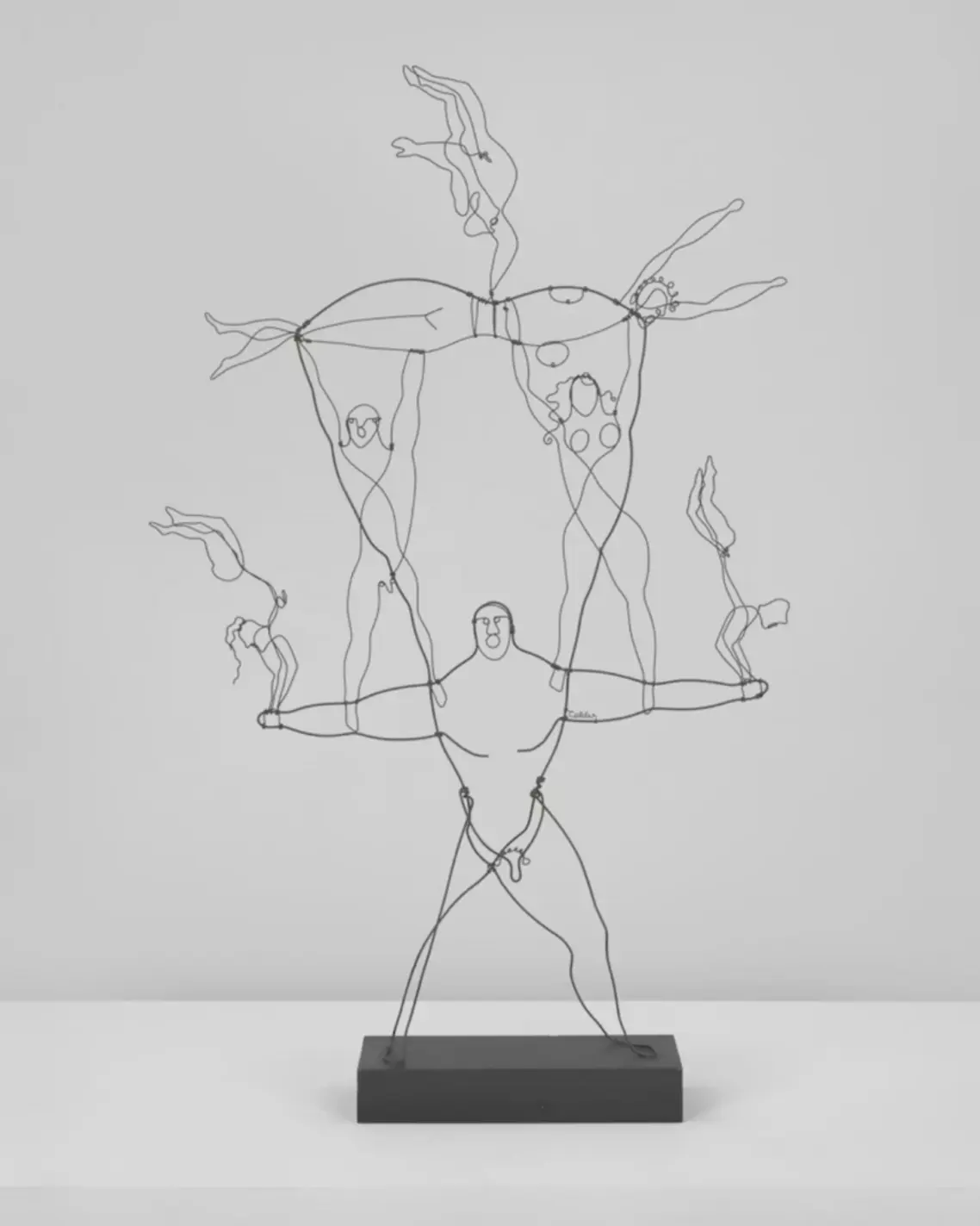
The exhibition begins with one of its great attractions: the Cirque Calder, returning to Paris through an exceptional loan from the Whitney Museum of American Art, its first in 15 years. That early miniature circus already contains the artist’s lifelong fascination with performance, balance, wit, and animation. From there, the show expands into wire portraits, carved wooden figures, mobiles, stabiles, paintings, drawings, jewelry, and the beloved Constellations. A further layer comes through 34 photographs by figures including Henri Cartier-Bresson, André Kertész, Man Ray, Gordon Parks, Irving Penn, and Agnès Varda, offering a vivid portrait of Calder as both mythic modernist and working artist.
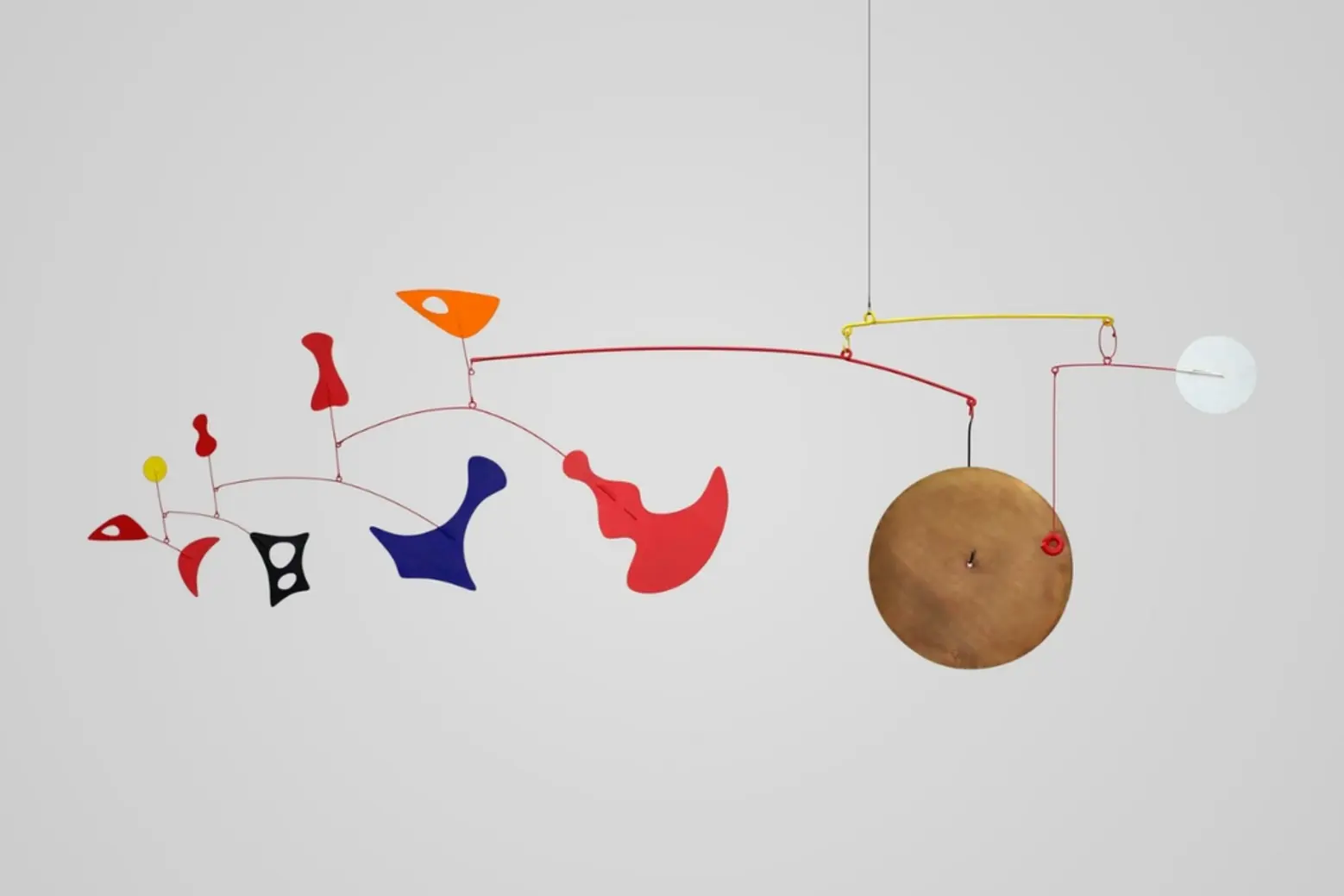
One of the exhibition’s sharpest ideas is its emphasis on time as a sculptural dimension. Alexander Calder’s kinetic abstractions, later called “mobiles” by Marcel Duchamp, are presented as works whose meaning is completed through motion, breeze, and duration. Even the jewelry gallery reinforces this principle, revealing how Calder could condense his language into intensely personal portable sculptures made from brass wire, silver, and found materials.
The current context only deepens the show’s appeal. From April 18 to May 3, the Foundation is extending the Alexander Calder atmosphere through its holiday program, including a pop-up Cantine du Marché in the auditorium, family activities, and flip-book workshops inspired by movement and animation. It is a fitting frame for an exhibition that understands Calder not as a monument of modernism, but as an artist who made sculpture breathe.