MENU
Close





On April 15, 1972, at the Basel Fair in Switzerland, Audemars Piguet unveiled The Royal Oak, a watch that arrived like a clean, metallic provocation. The early 1970s carried real pressure for Swiss watchmaking, shaped by the oil crisis and the accelerating quartz revolution. The taste of the moment leaned toward small, classical, precious-metal pieces. Audemars Piguet chose a different language: luxury expressed in steel, scale, and industrial clarity.
On April 15, 1972, at the Basel Fair in Switzerland, Audemars Piguet unveiled The Royal Oak, a watch that arrived like a clean, metallic provocation. The early 1970s carried real pressure for Swiss watchmaking, shaped by the oil crisis and the accelerating quartz revolution. The taste of the moment leaned toward small, classical, precious-metal pieces. Audemars Piguet chose a different language: luxury expressed in steel, scale, and industrial clarity.
April 15, 2025


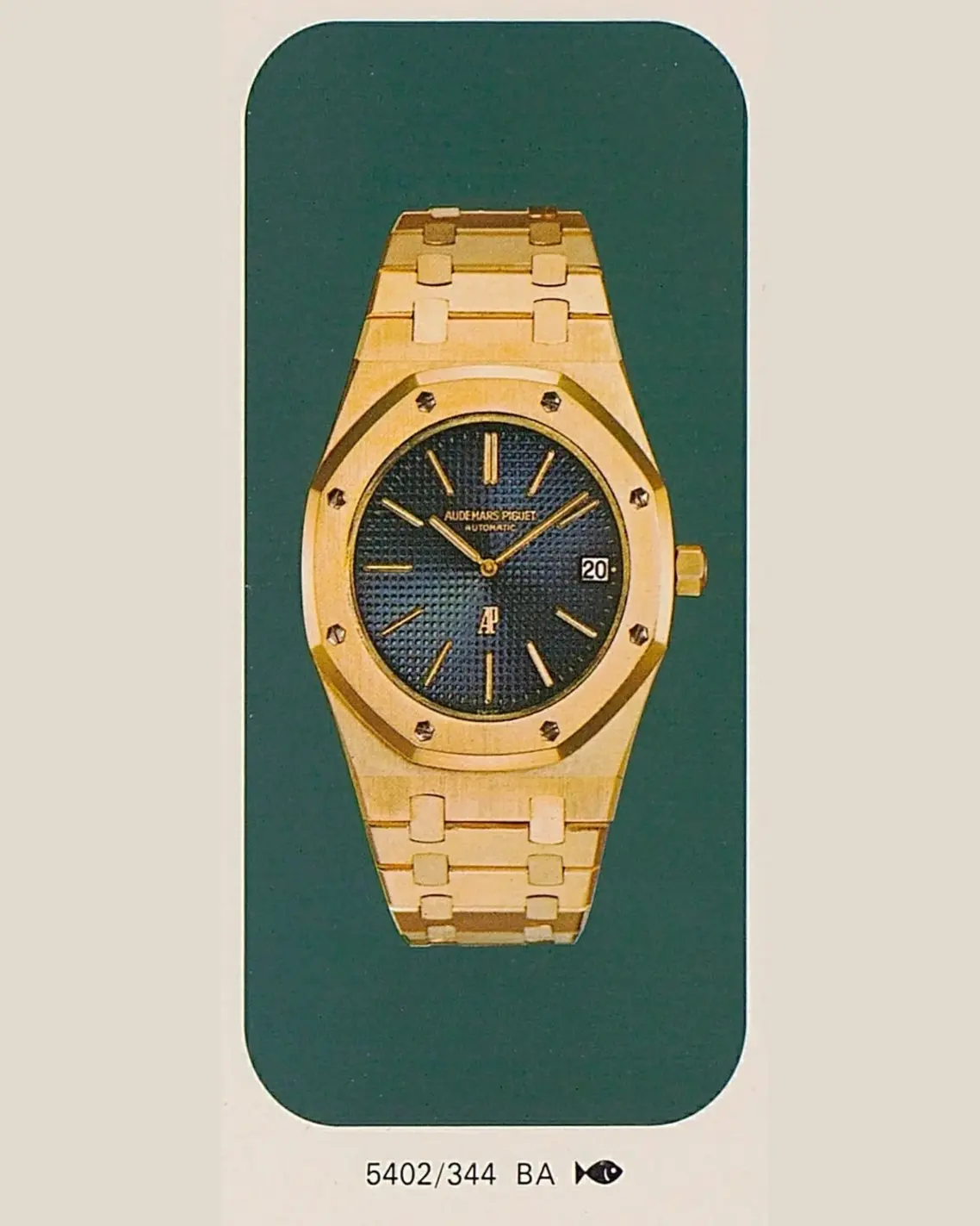
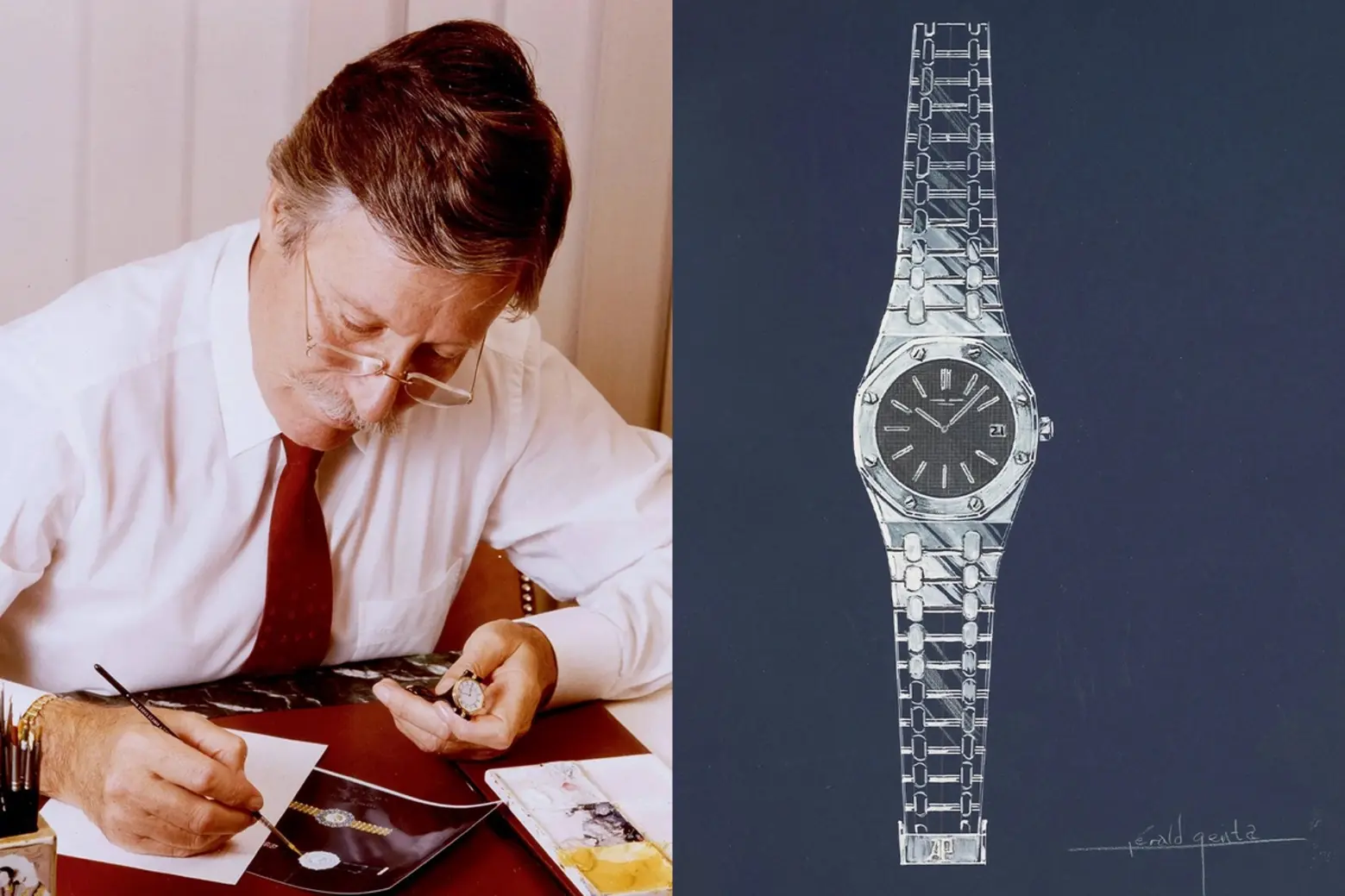
Two milestones lit up that launch. First, The Royal Oak earned its reputation as the “first luxury sports watch” by treating stainless steel with jewelry-level refinement - brushed and polished surfaces finished to a standard usually reserved for gold. Second, it introduced a silhouette that became a blueprint: an octagonal bezel, visible hexagonal screws (made in gold), and a bracelet designed to feel like architecture, integrated, tapered, and inseparable from the case.
The product itself read as purpose turned glamorous. The watch delivered hours, minutes, and date through a mechanical self-winding movement, paired with a blue dial stamped in a tapisserie motif, tiny squares divided by channels that catch light like woven metal. Its case skipped traditional lugs, letting the bracelet’s trapezoidal links descend in size for a sleek, fitted line on the wrist.
Behind the form, the story carried myth and maritime steel. Gérald Genta designed the watch; legend ties its shape to diver helmets seen near the Rhône in Geneva, while the name “Royal Oak” points to Royal Navy ships and the English tale of Charles II’s oak-tree escape, symbols of endurance and majesty translated into a modern object.
Even the brand’s own timeline admits the impact took time to fully ignite, yet the idea proved permanent. Decades later, anniversaries returned to the original codes, reinforcing how the 1972 launch of The Royal Oak reshaped what a luxury watch could look like, feel like, and mean.