MENU
Close





Tadao Ando: How a self-taught architect transformed concrete and light into spiritual spaces. Explore his minimalist philosophy, iconic buildings, and unique blend of Japanese restraint with modernism.
Tadao Ando: How a self-taught architect transformed concrete and light into spiritual spaces. Explore his minimalist philosophy, iconic buildings, and unique blend of Japanese restraint with modernism.
December 8, 2025


Self-taught and shaped by a life far beyond architecture, Tadao Ando rose from the boxing ring to become one of the most influential architects of our time. Through travel, art, and an uncompromising discipline, he transformed raw concrete, light, and silence into spaces that invite reflection, movement, and a deeper awareness of how architecture is lived rather than merely seen.
Space is a luxury. In a world full of excess, emptiness is rare, silence is scarce. Unoccupied space becomes valuable precisely because it resists saturation. Few architects embody the art of nothingness like Tadao Ando: “If you give people nothingness, they can ponder what can be achieved from that nothingness." By removing distraction, he creates spaces where attention can settle and people can breath. Walls do not compete for notice, and rooms are not overdetermined by function or decoration. What remains is space itself - an open canvas for perception, thought, and emotion. This restraint demands mastery, because emptiness exposes structure, proportion, and light without disguise.
In post-war Japan, young Tadao Ando saw the rebuilding of his war-torn homeland. He learned by observing the buildings, the cities and the way people occupy space. With borrowed books from public libraries, Tadao taught himself architecture. The works of Le Corbusier particularly interested him, the rational geometry and use of béton brut left a deep imprint, yet Ando’s interpretation would later become distinctly Japanese, less about monumental power and more about restraint, silence, and introspection.
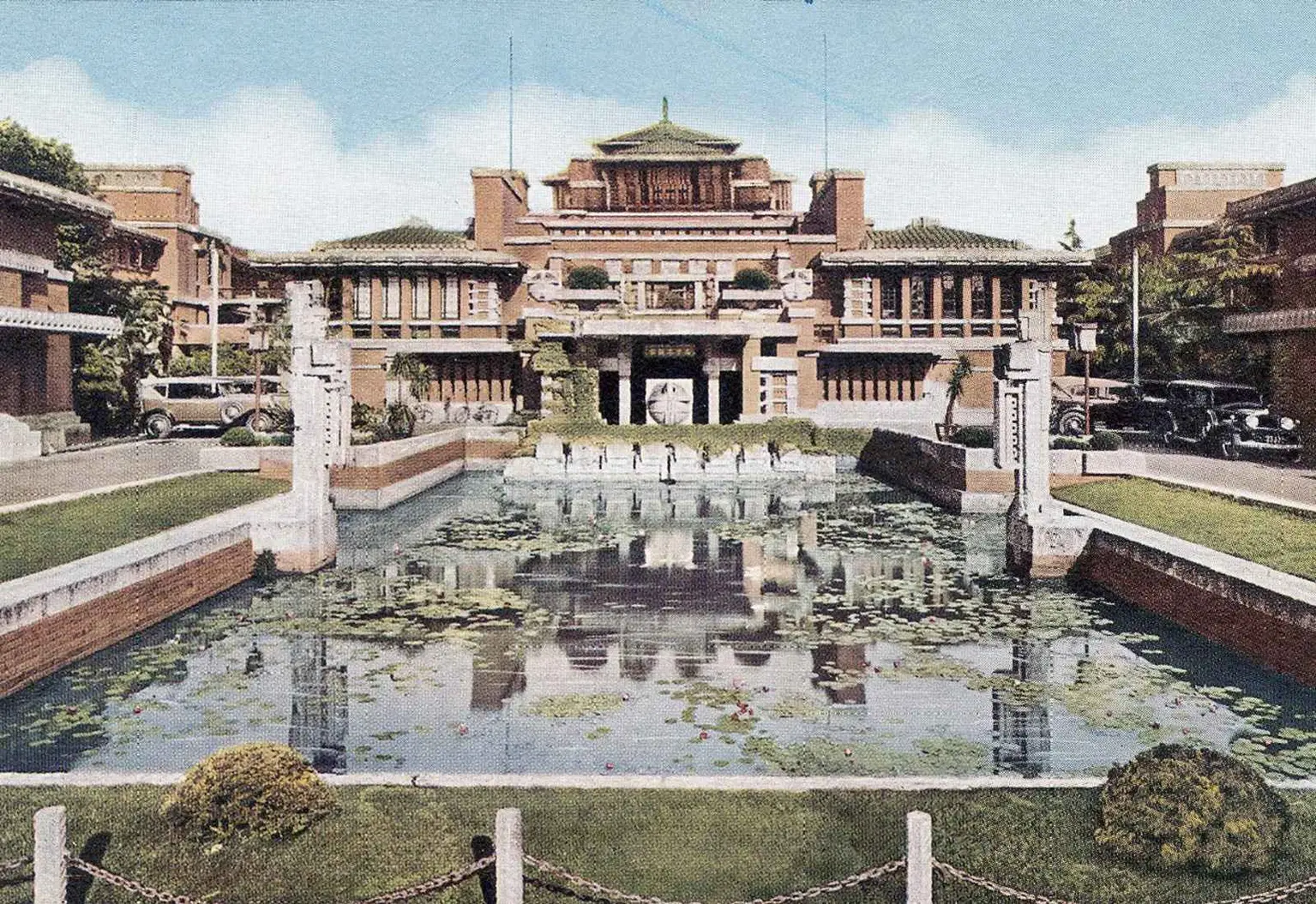
A pivotal moment came during a high school trip to Tokyo, where encountering Frank Lloyd Wright’s Imperial Hotel convinced him to abandon boxing and pursue architecture less than two years after graduation. Without formal training, he educated himself through night classes in drawing and correspondence courses in interior design, building his practice through observation and discipline. Unbound by academic doctrine, he began shaping an architectural voice that resisted trends and rejected ornament.
Before architecture claimed him, boxing did. Tadao was a professional fighter, his wins funded his "architectural apprenticeship" to Europe, the United States and Asia. Ando absorbed Roman ruins, modernist villas, Gothic cathedrals, and dense urban streets as lived experiences, studying how light shifts through a day, how materials weather time, and how people move through thresholds and courtyards. Through this physical encounter with architecture, he formed a global sensibility anchored by a deeply Japanese understanding of space - one that would later synthesize Western modernism with restraint, ritual, and the spiritual force of emptiness.
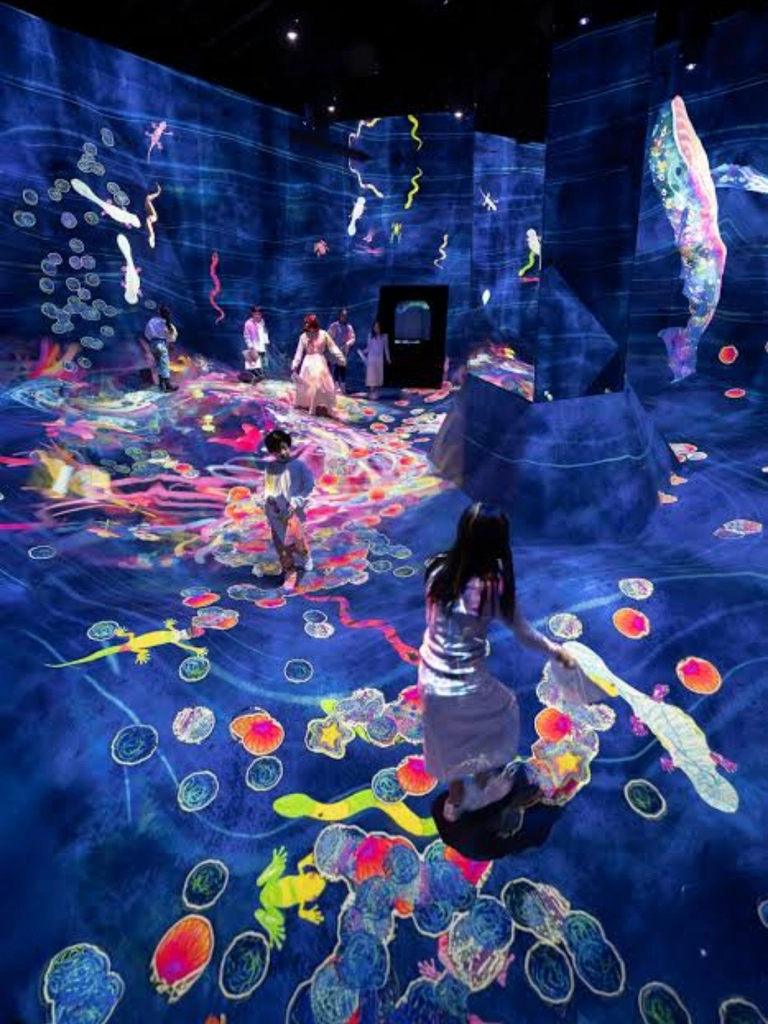
Beyond architecture, Ando’s thinking was profoundly shaped by encounters with art. He was deeply influenced by the Japanese Gutai group, whose radical postwar art practices emphasized action, materiality, and the direct engagement between body and medium. Gutai artists rejected static representation in favor of process, gesture, and experience - ideas that resonate strongly in Ando’s spatial compositions.
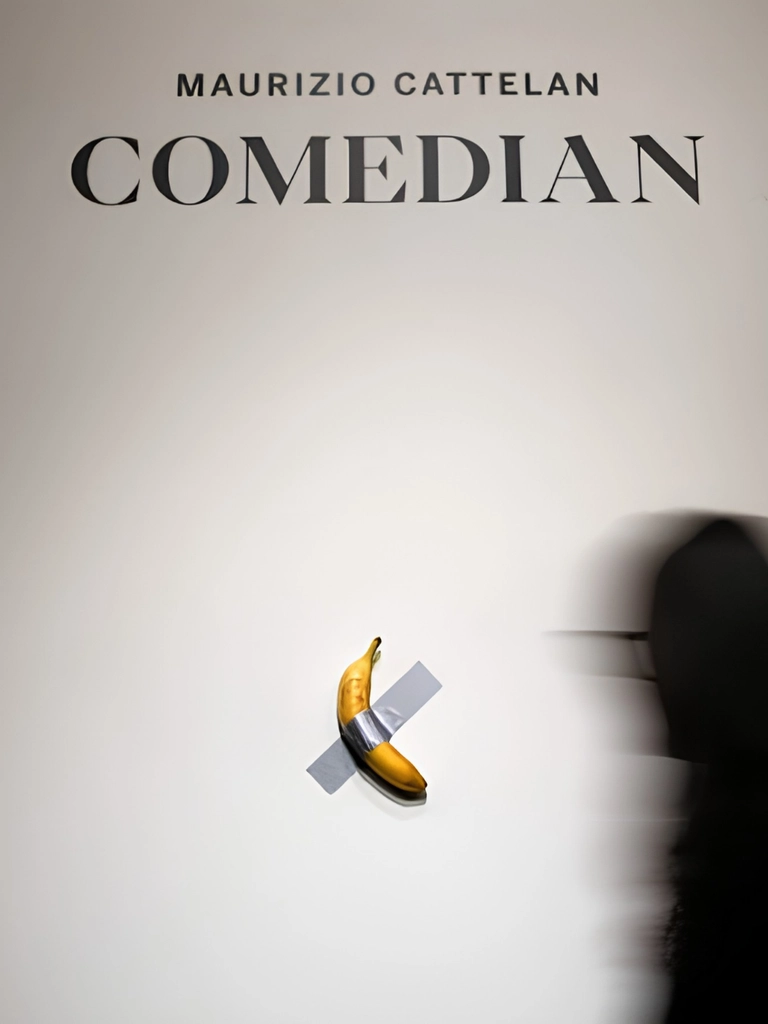
Western artists also shaped his thinking. Jackson Pollock’s action painting showed creation as physical, time-bound, and intuitive. Marcel Duchamp’s conceptual provocations expanded ideas of art and authorship, and helped Ando see meaning as something formed by context and perception, as much as by form.
These influences encouraged Ando to treat architecture as an experiential art rather than a visual object. His buildings are not meant to be consumed in a glance, they unfold slowly, demanding movement, patience, and attention.
Ando’s signature material - exposed concrete, has often been misunderstood as cold, brutal and represents industrial aggression. In Ando's hands, concrete becomes the epitome of discipline and purity. Smooth surfaces reflect light softly, its neutrality amplifies shadow, and its permanence anchors fleeting human experience. The precision of formwork, the flawless alignment of tie holes, and the calm repetition of planes reflect his belief that architecture should be rigorously controlled to create emotional freedom within.
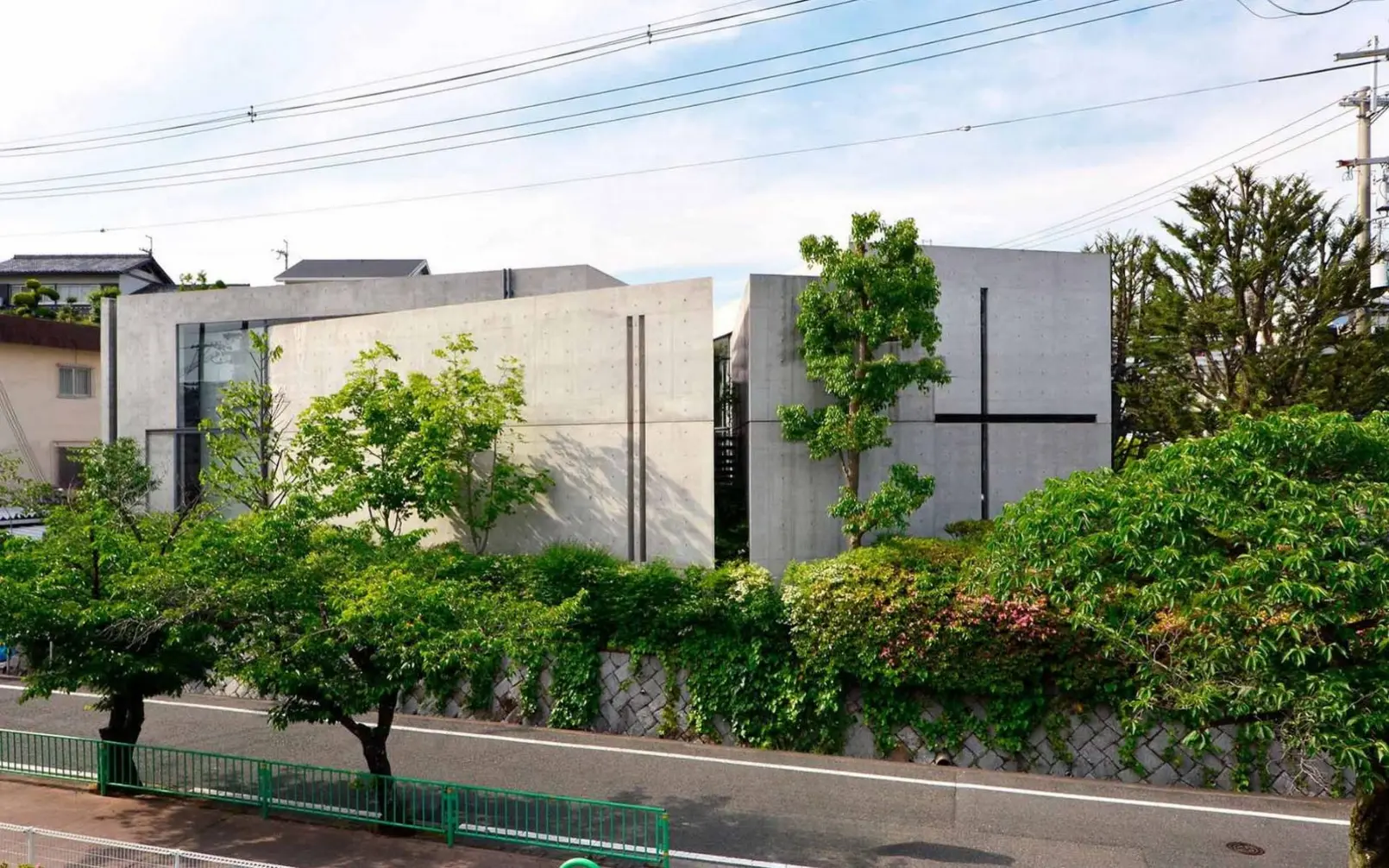
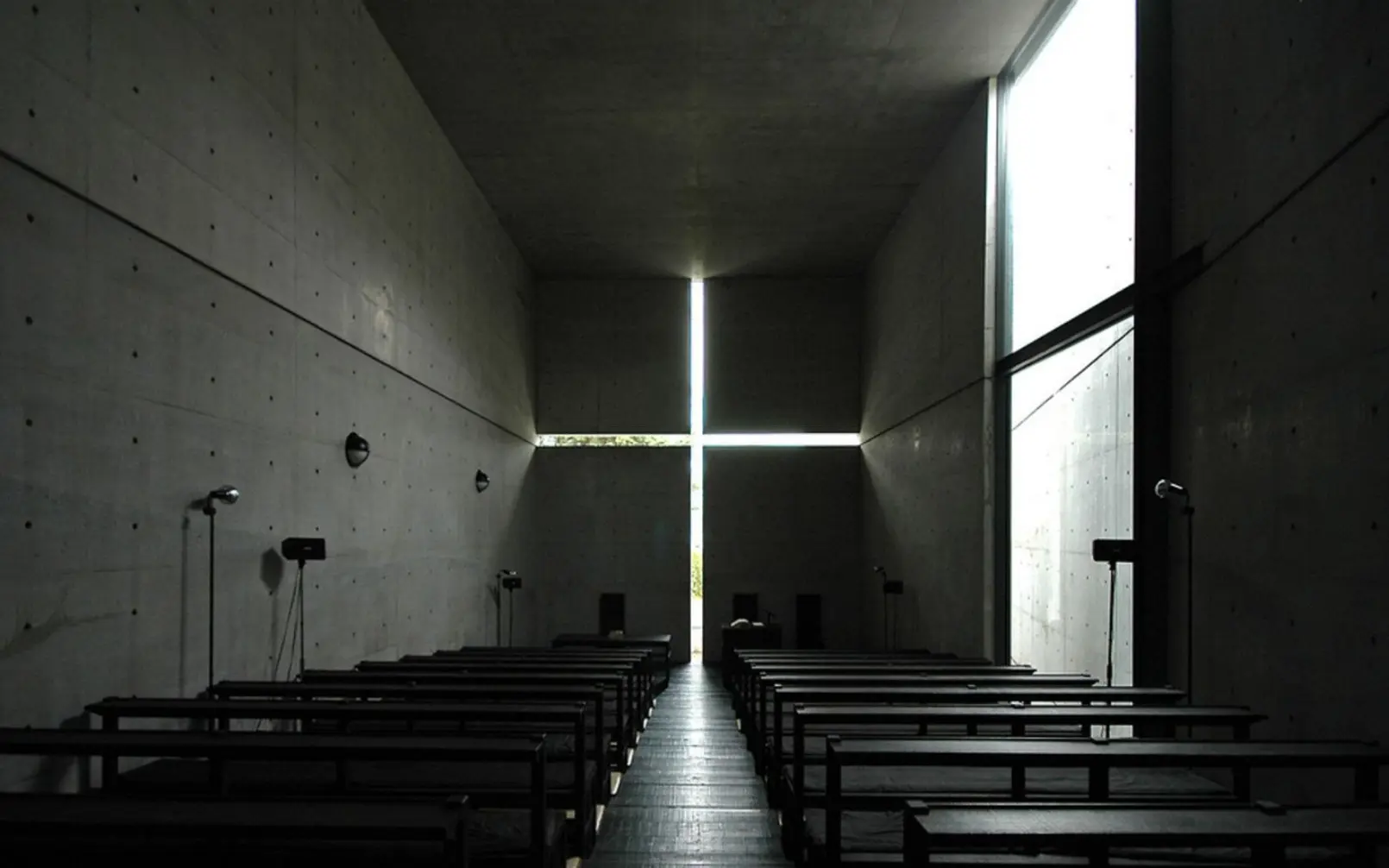
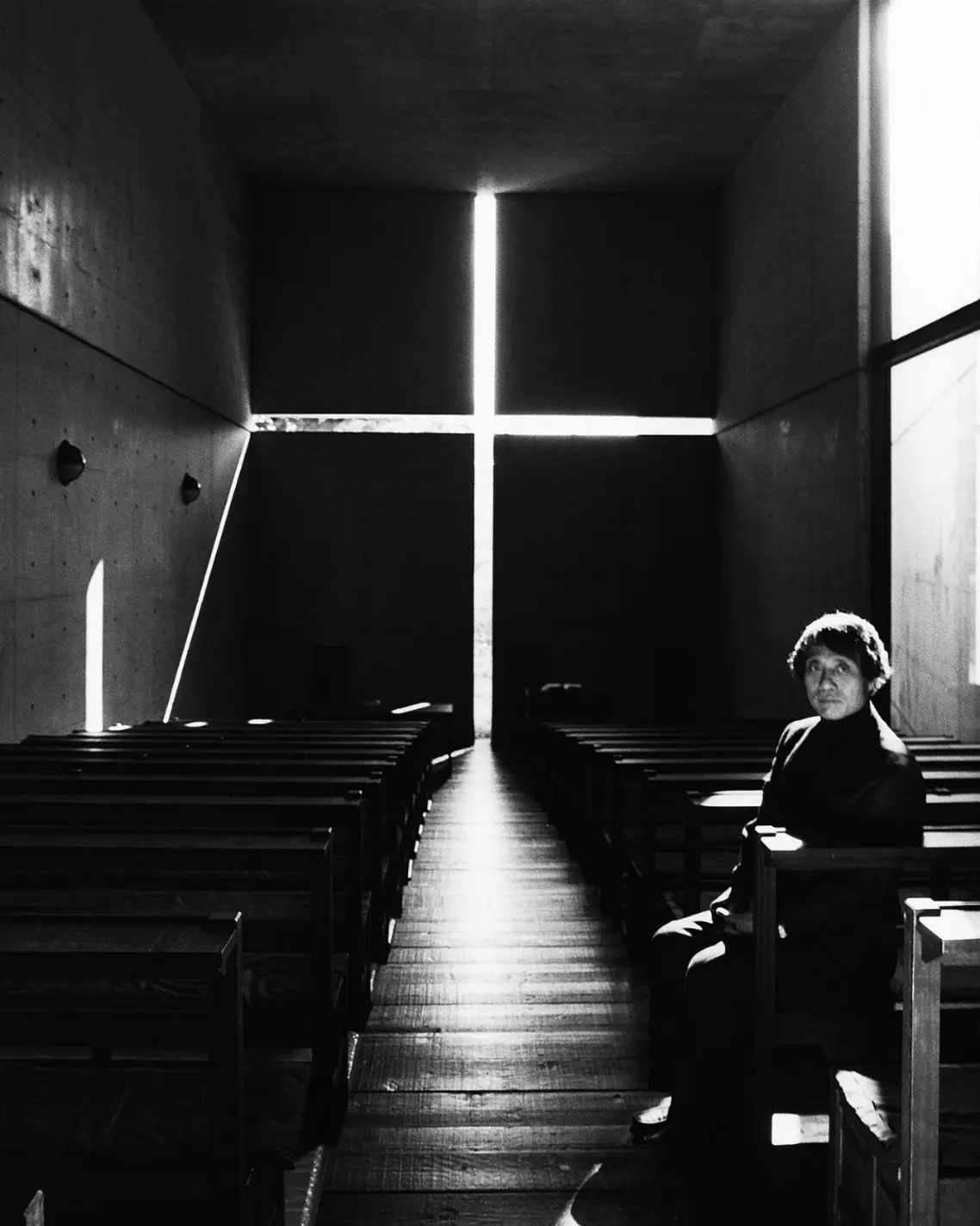
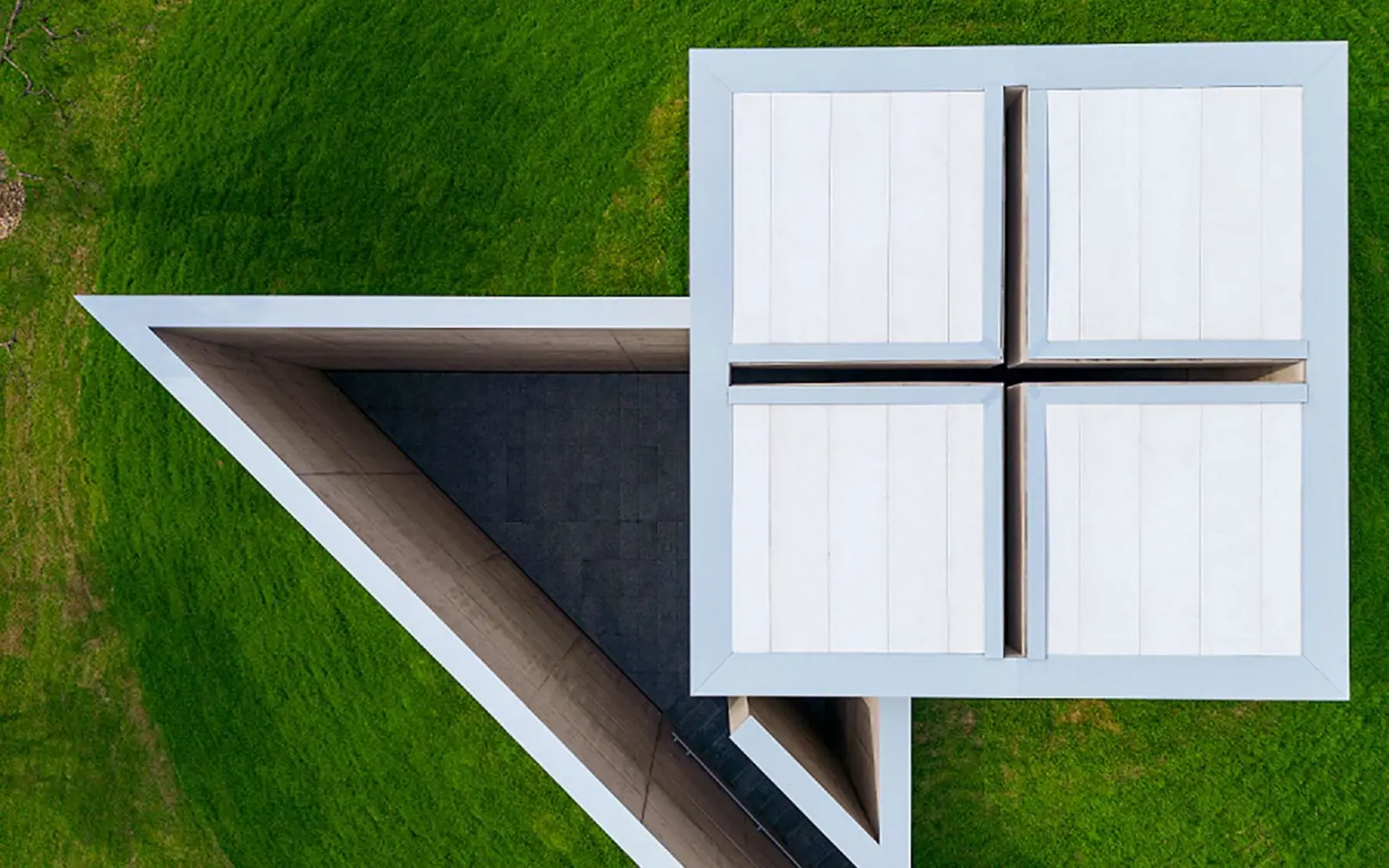
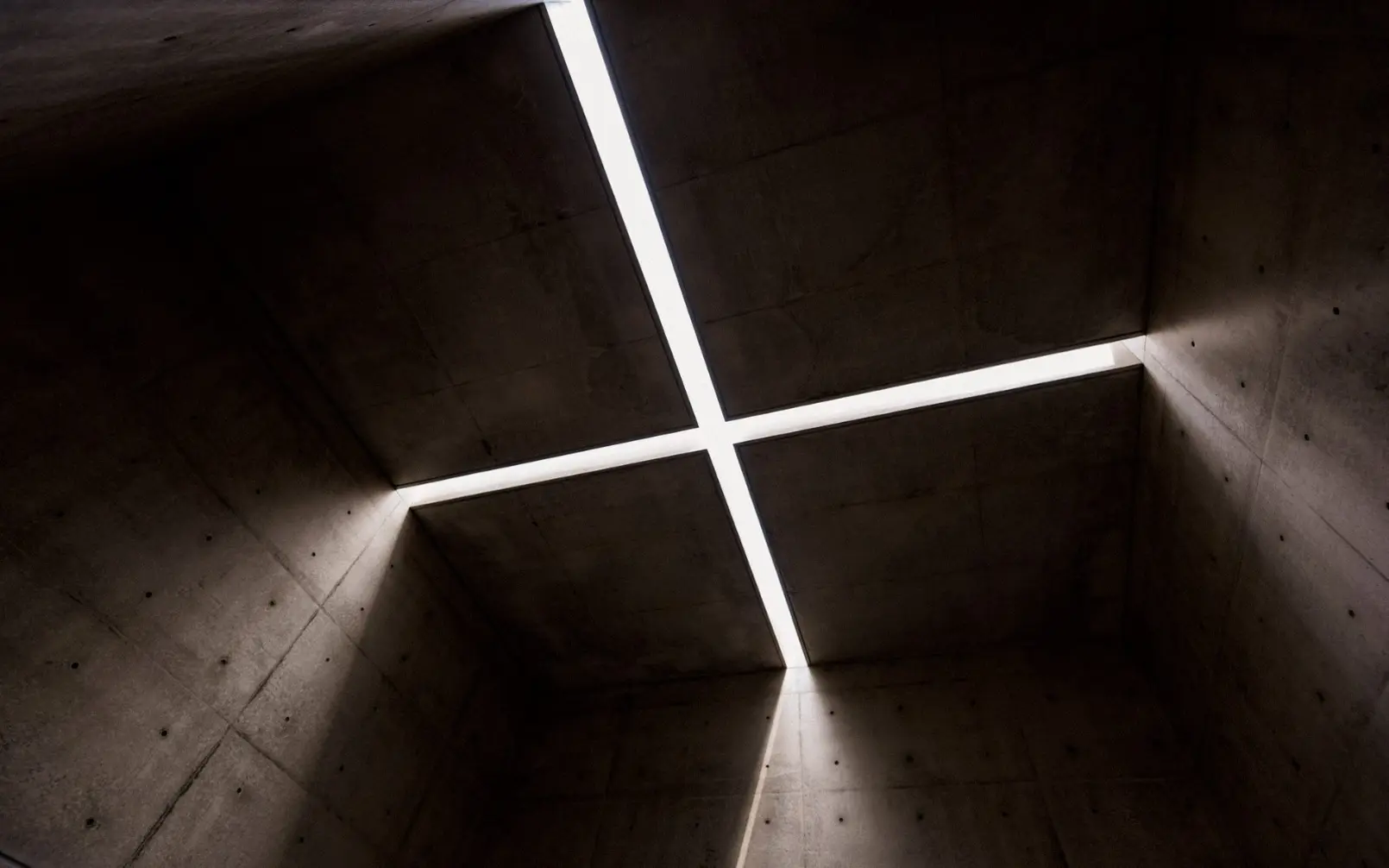
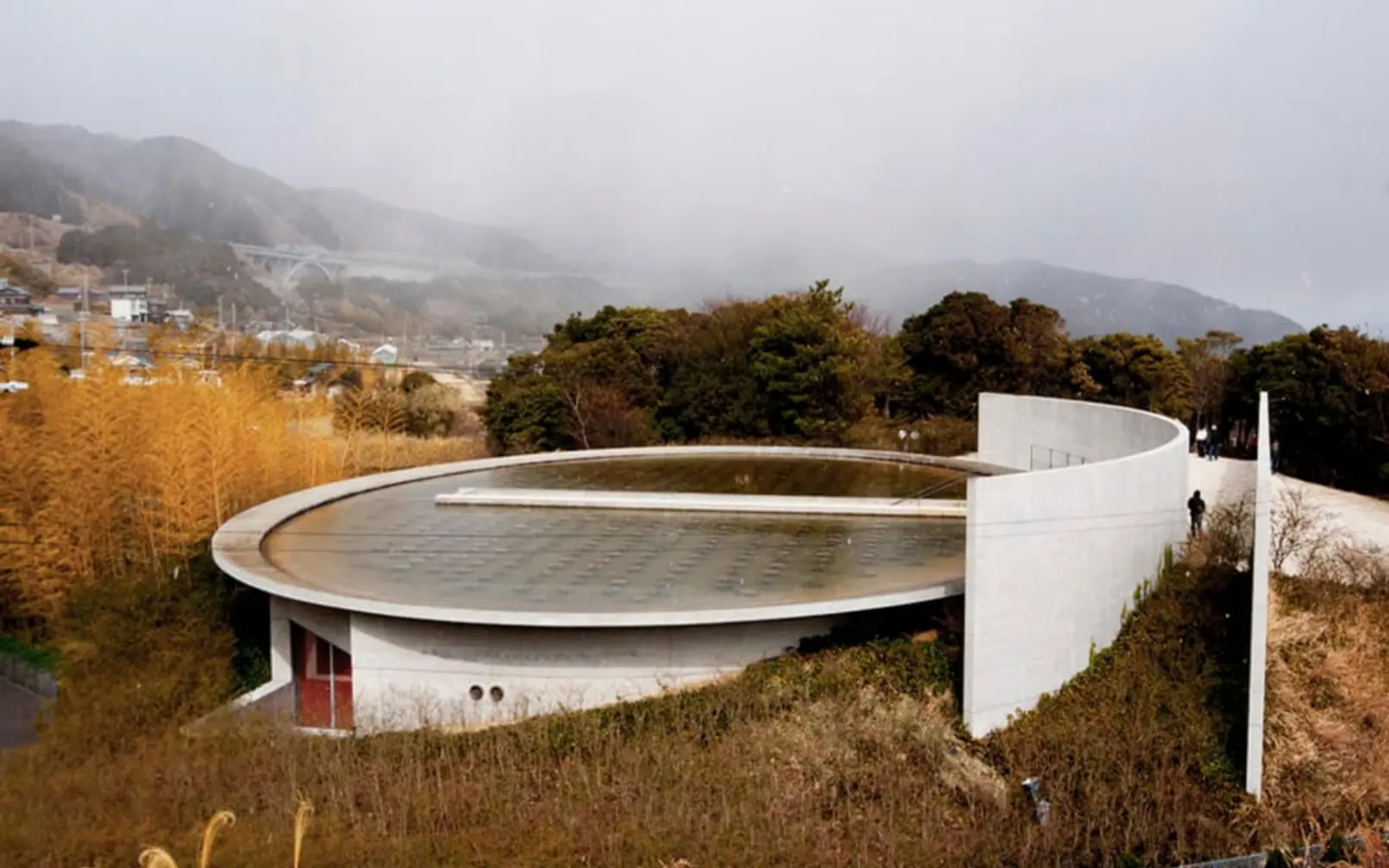
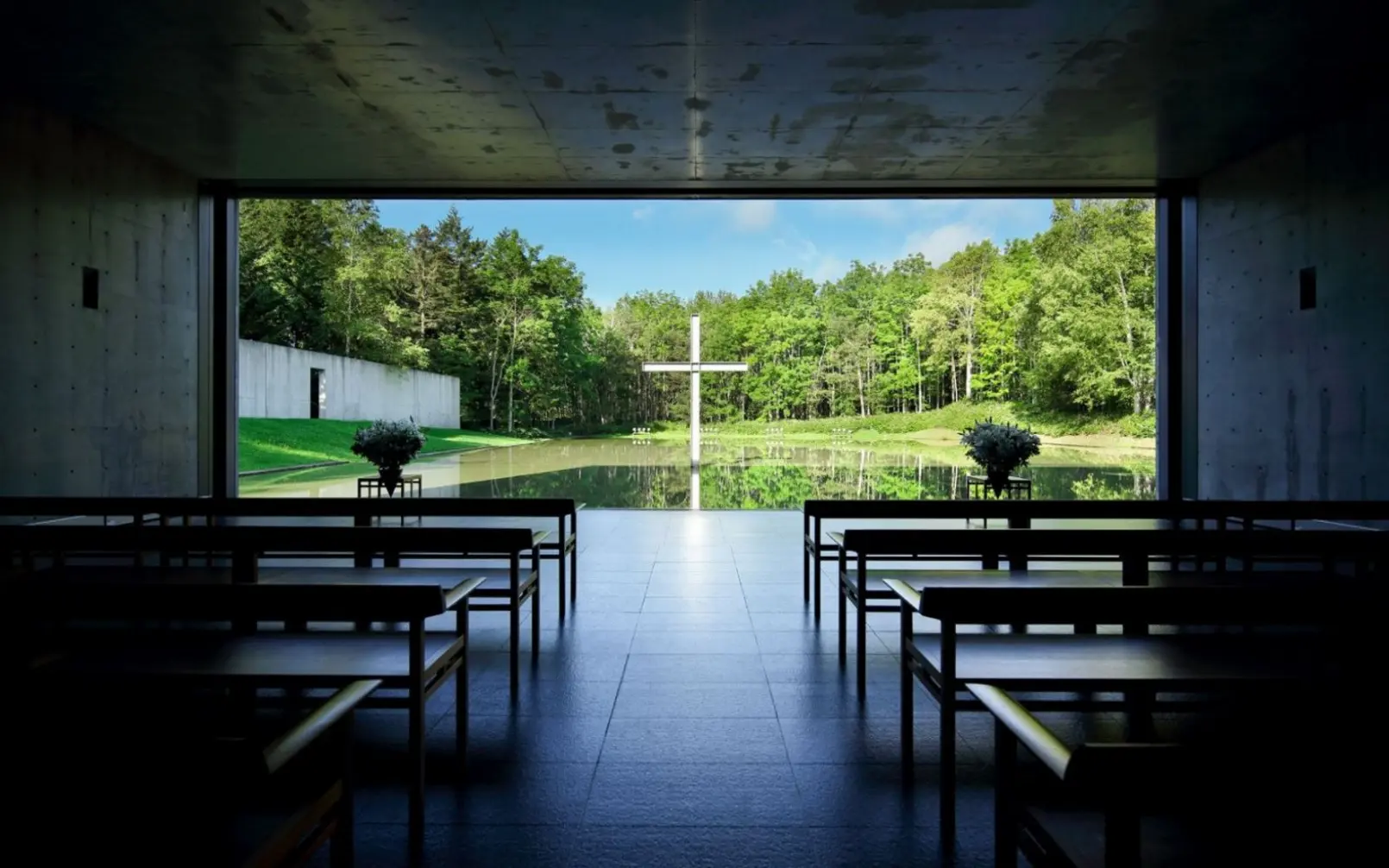
This philosophy reaches its most iconic clarity in the Church of the Light in Ibaraki, where a pure concrete volume is cut by a cruciform opening that transforms daylight into a luminous presence. There is no ornament, no symbolic excess, only geometry, material, and light. A similar restraint defines the Water Temple on Awaji Island, where visitors descend through a lotus-covered pool before entering a subterranean sanctuary, and the Church on the Water in Hokkaido, where concrete frames nature itself as a sacred altar.
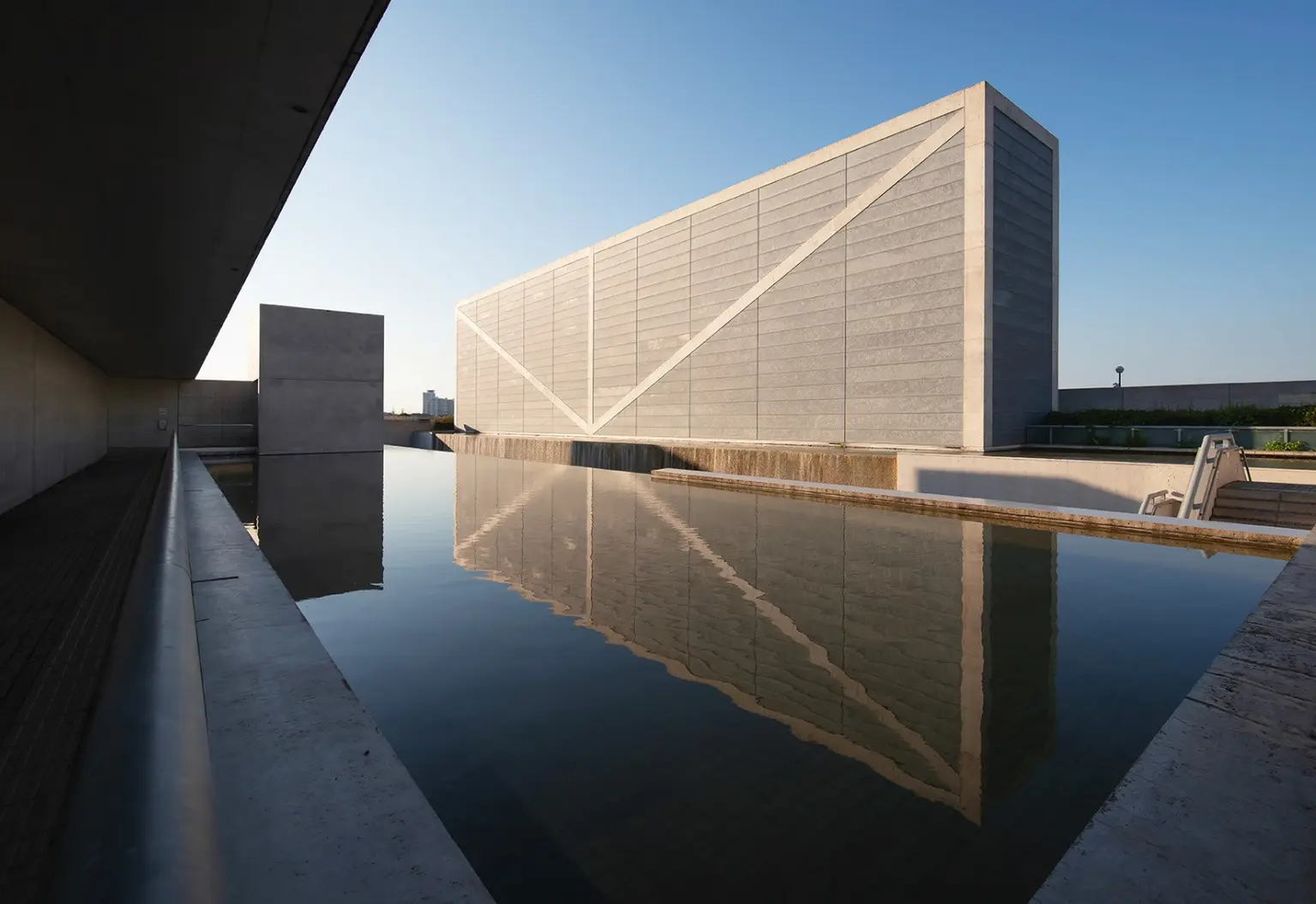
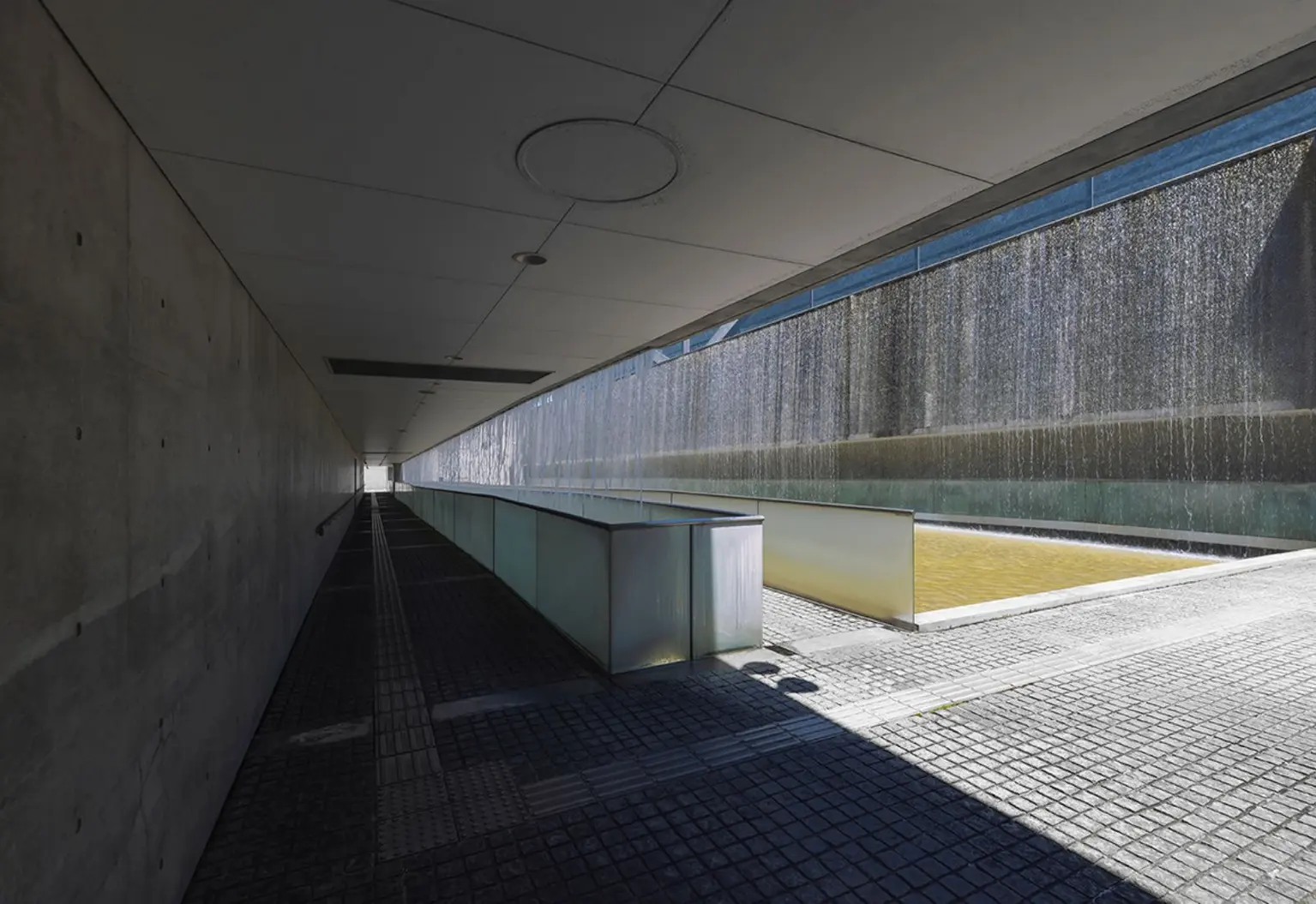
Across these works, as well as in the Modern Art Museum of Fort Worth and the Hyogo Prefectural Museum of Art, concrete functions as a tool of restraint rather than display. At Fort Worth, smooth exposed concrete anchors the museum’s long horizontal forms, providing a calm counterpoint to glass and water while allowing light and reflection to take the lead. At Hyogo, concrete takes on a more directional role. Walls, ramps, and planes guide movement and heighten awareness of distance and procession. Ando uses concrete to discipline space, letting atmosphere and experience emerge quietly.
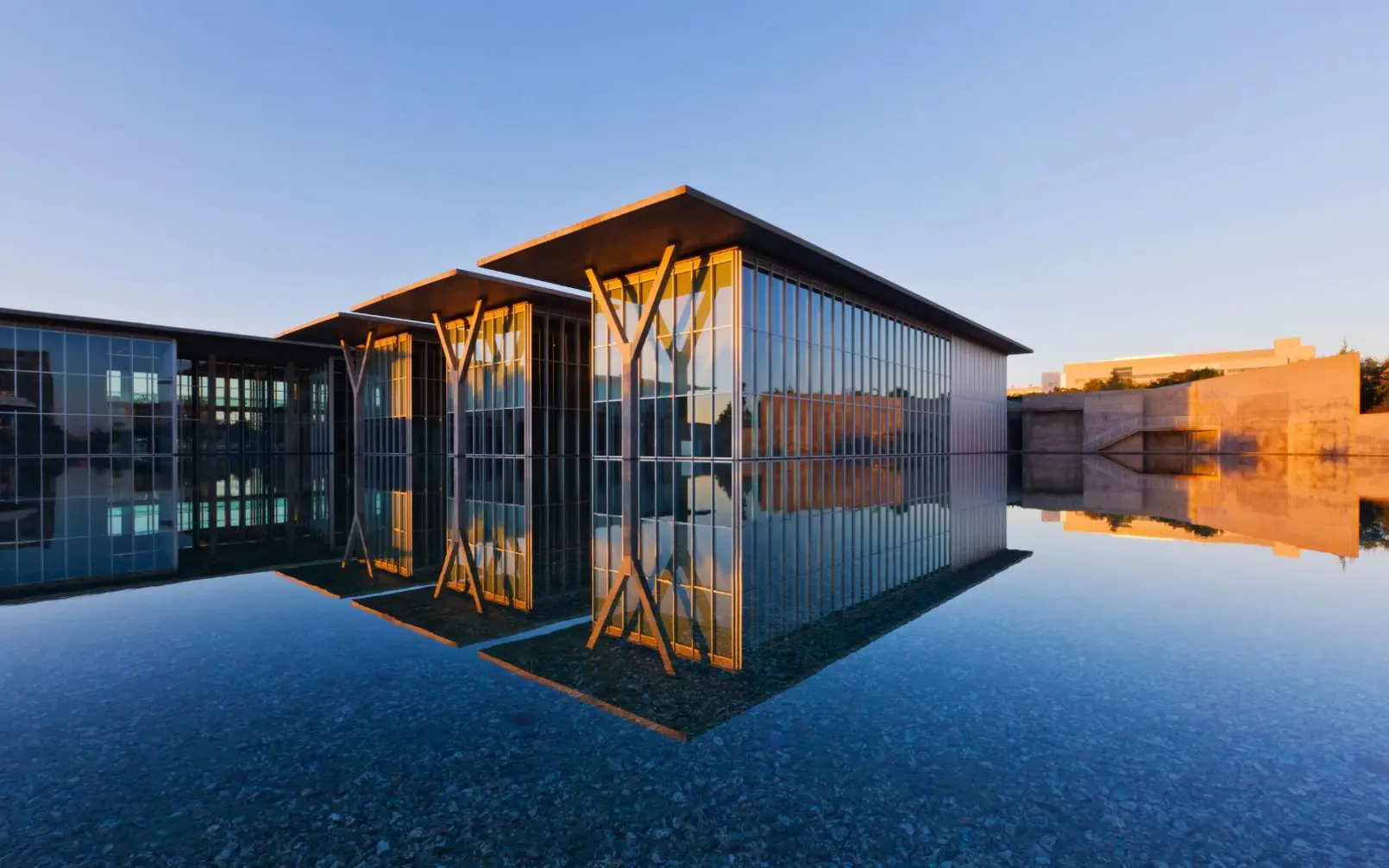
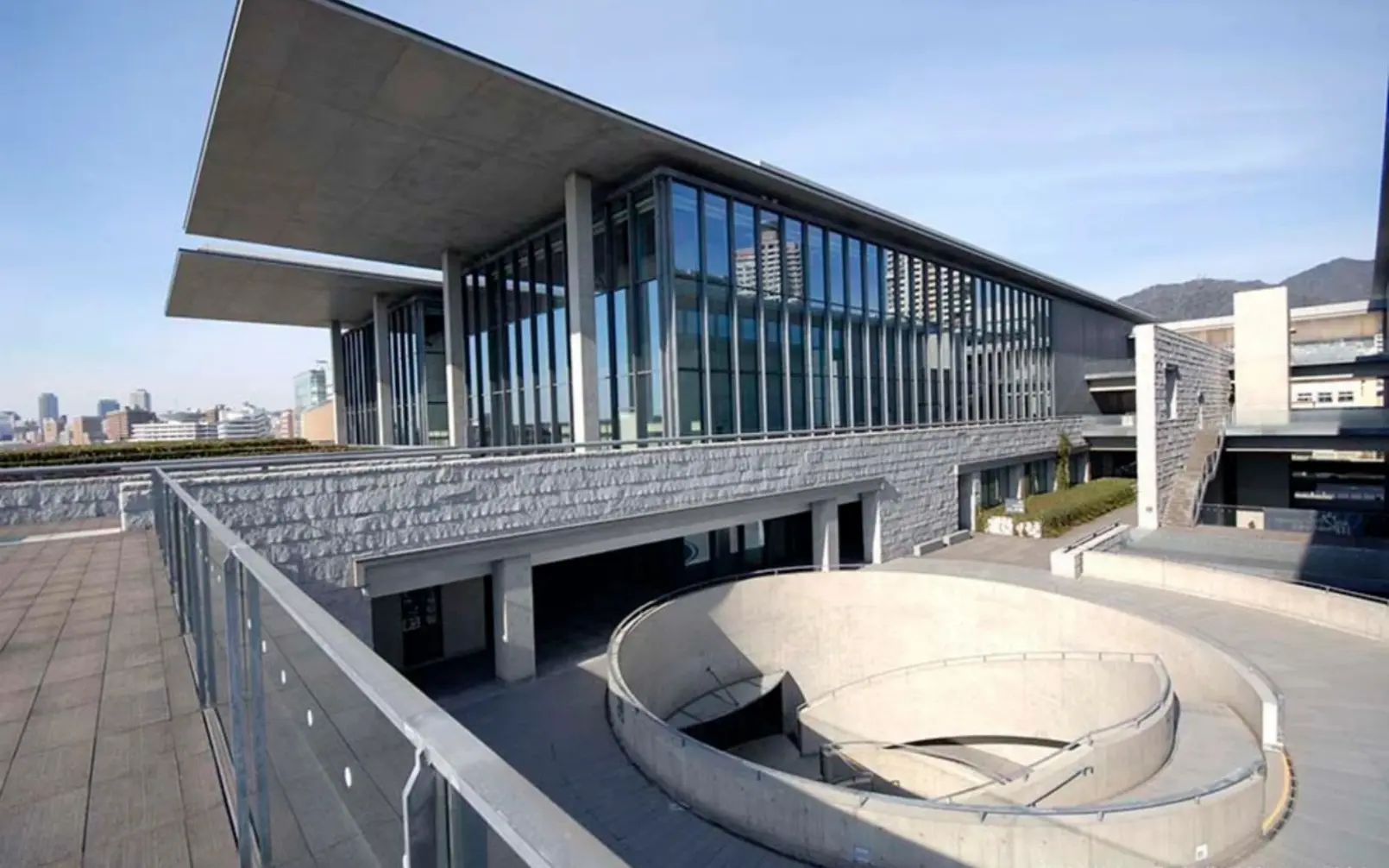
Knowing that "we borrow from nature the space upon which we build", Tadao Ando treats nature as an active collaborator rather than a backdrop. Light, wind, water, and weather become building materials. Natural elements framed and choreographed, never forced into submission. Openings invite daylight as it shifts hour by hour, courtyards pull the sky into the plan, and still water returns the architecture as reflection and mood. Moving through his spaces becomes a quiet dialogue between body and environment, where compression sharpens the senses and releases restores the world outside.
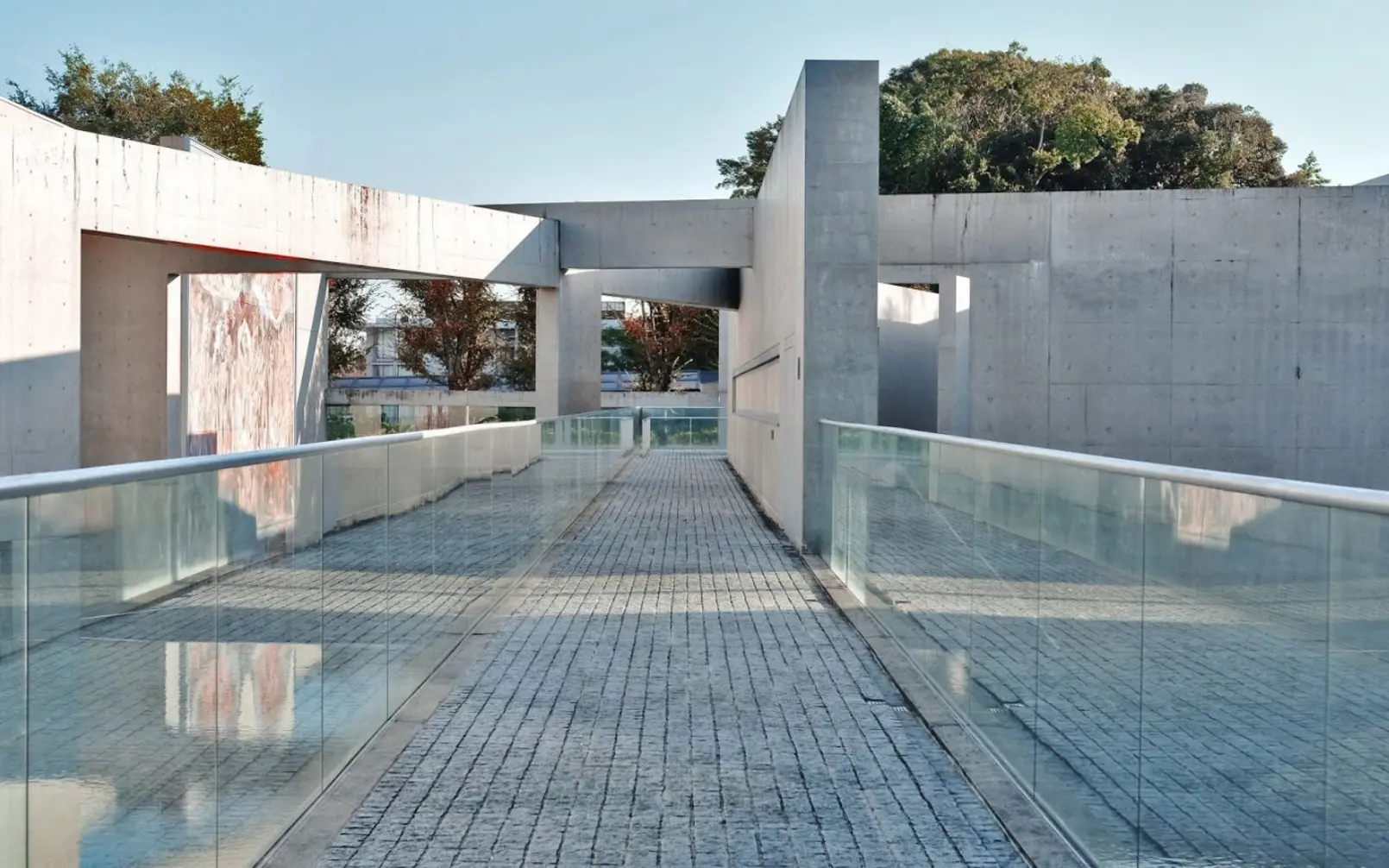
At the Garden of Fine Arts, Kyoto, Tadao Ando creates an open-air museum where architecture and landscape move as one. Concrete ramps, bridges, and water features guide visitors through light, shadow, and vegetation, allowing sky and weather to complete the experience. Art unfolds through movement rather than enclosure.

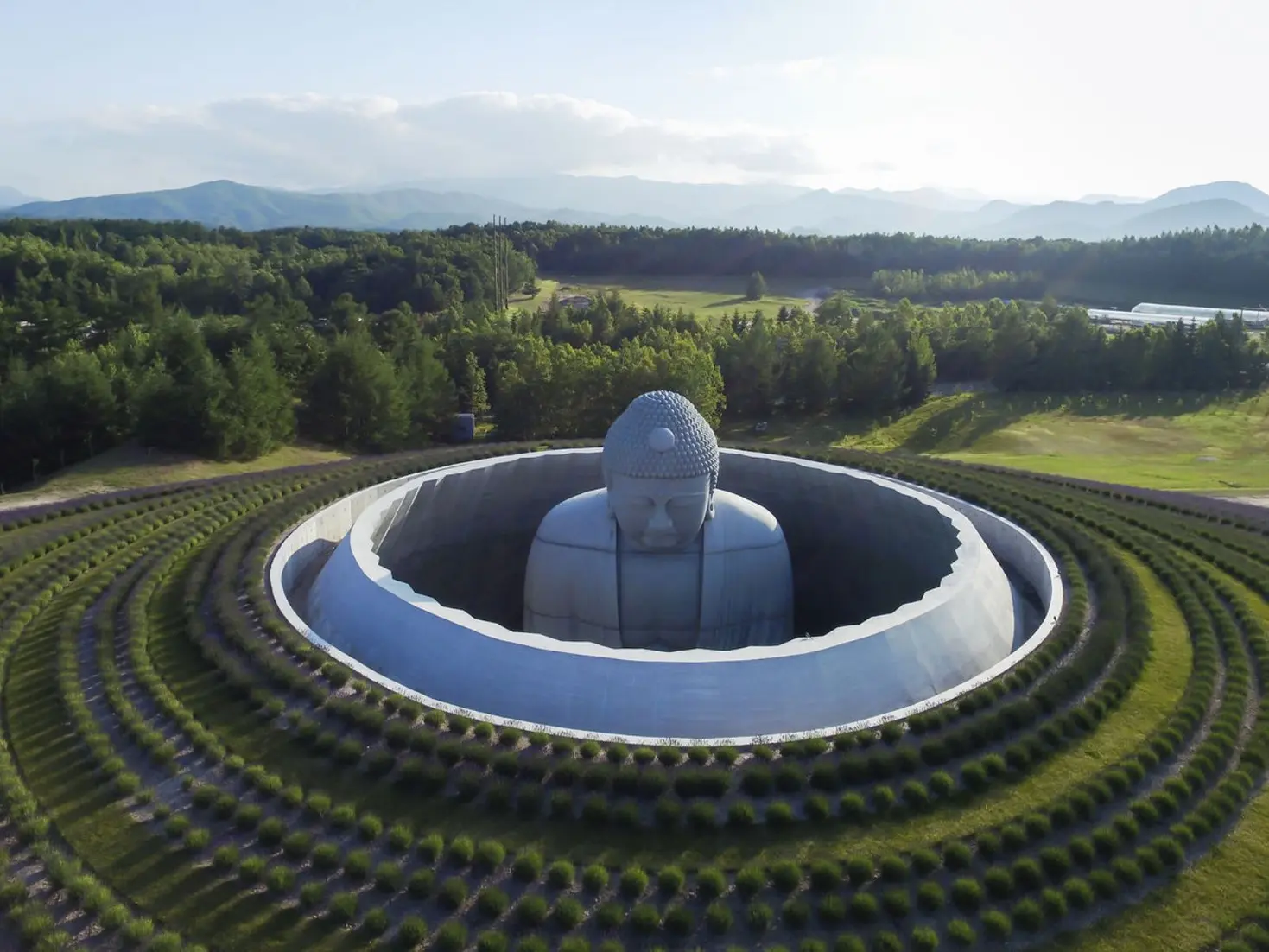
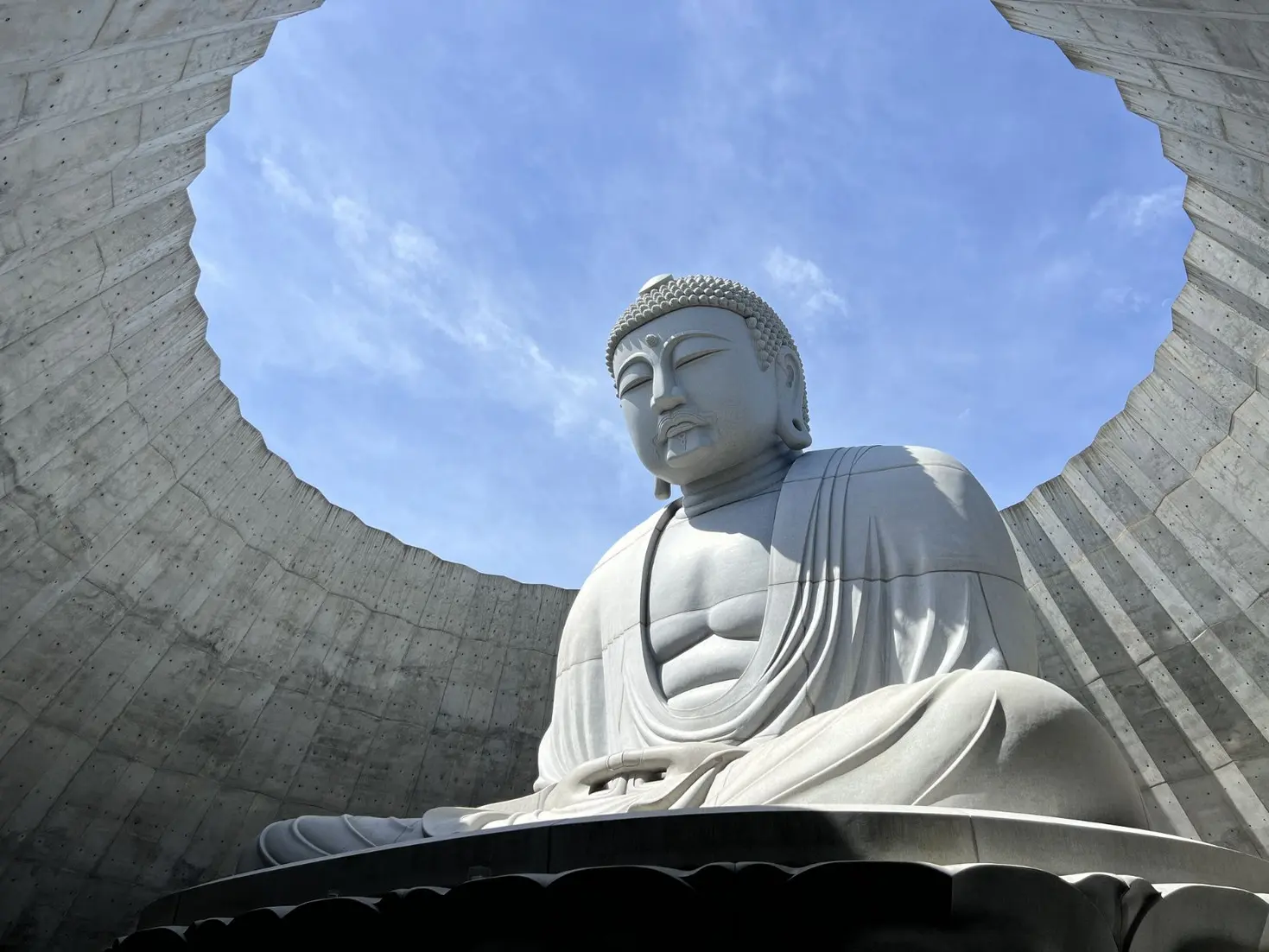
At the Hill of the Buddha in Sapporo, Ando embeds architecture within the land itself. A monumental Buddha emerges from a lavender-covered hill, approached through a narrow concrete passage that heightens anticipation before opening to sky. Nature becomes ritual, and architecture frames a moment of quiet revelation.
In Japan's Seto Inland Sea, Naoshima - once a simple fishing island, now exists as a rare synthesis of art, architecture, and nature, where museums are embedded into hillsides and sculptures face the open sea. Under Naoshima's sunlit sky, Ando’s philosophy was fully realized. Rather than imposing architecture onto the island, Ando allowed the land, the sea, and the sky to dictate form. His buildings appear restrained, often partially buried or embedded into the terrain, revealing themselves slowly through approach and movement.
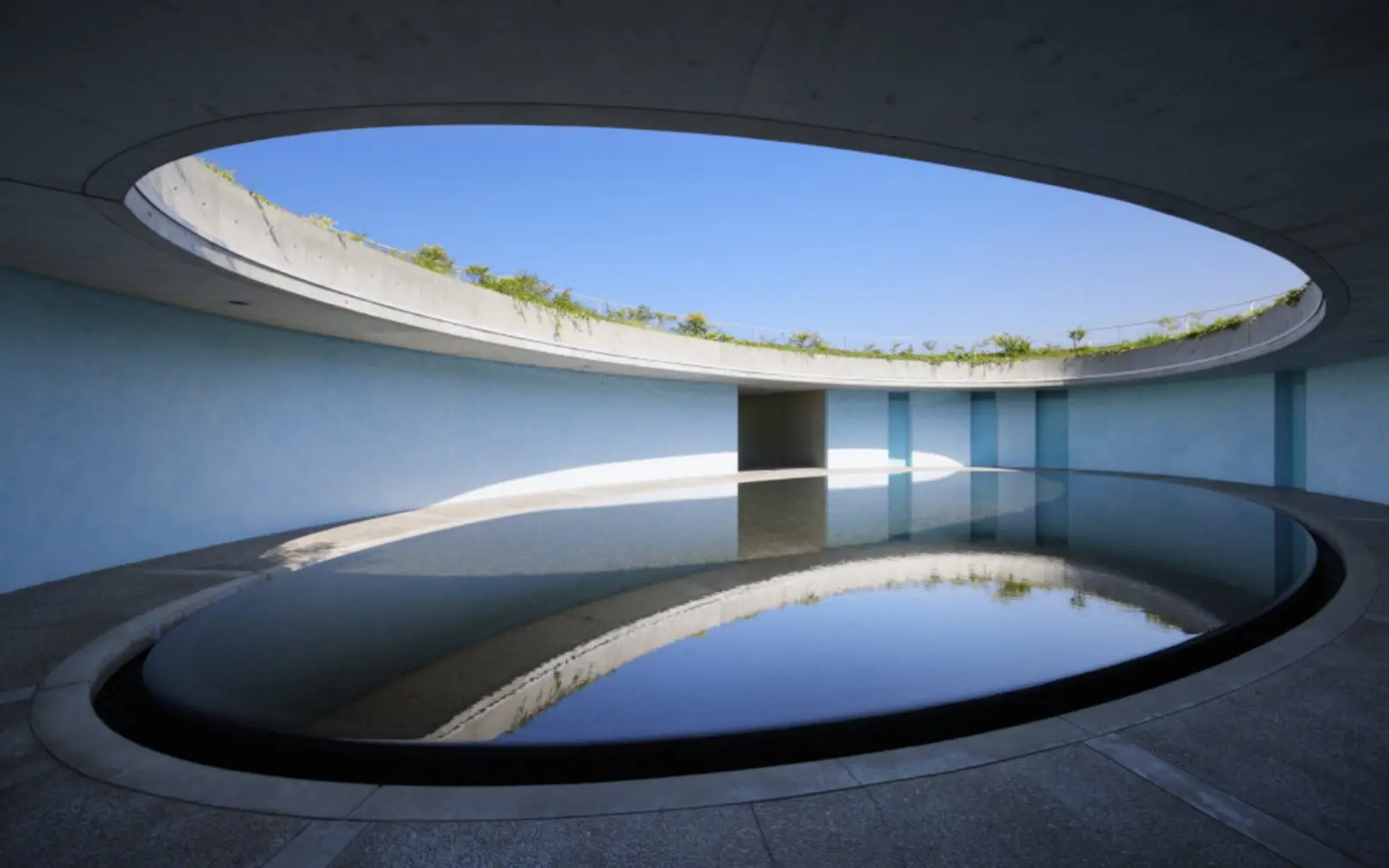
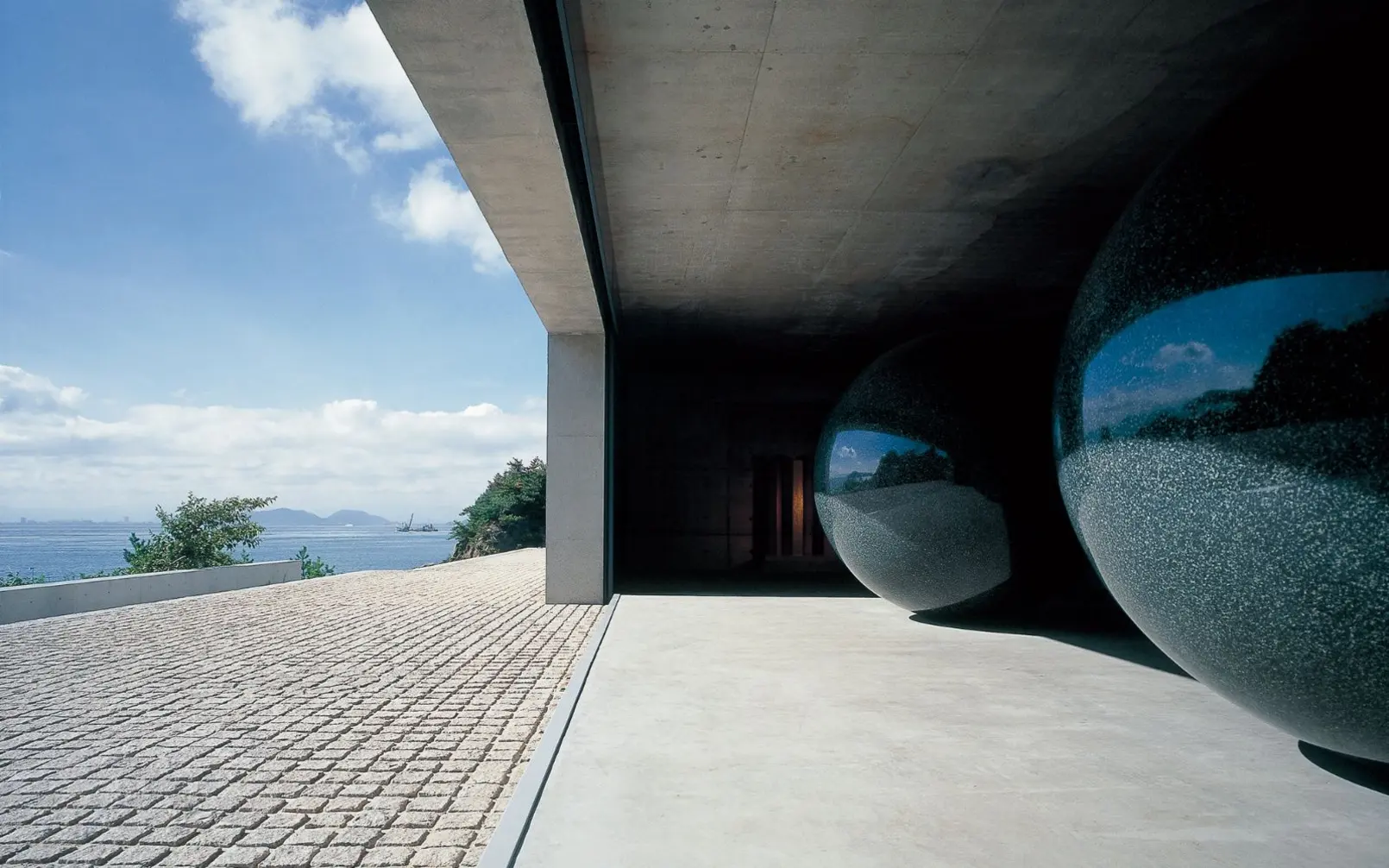
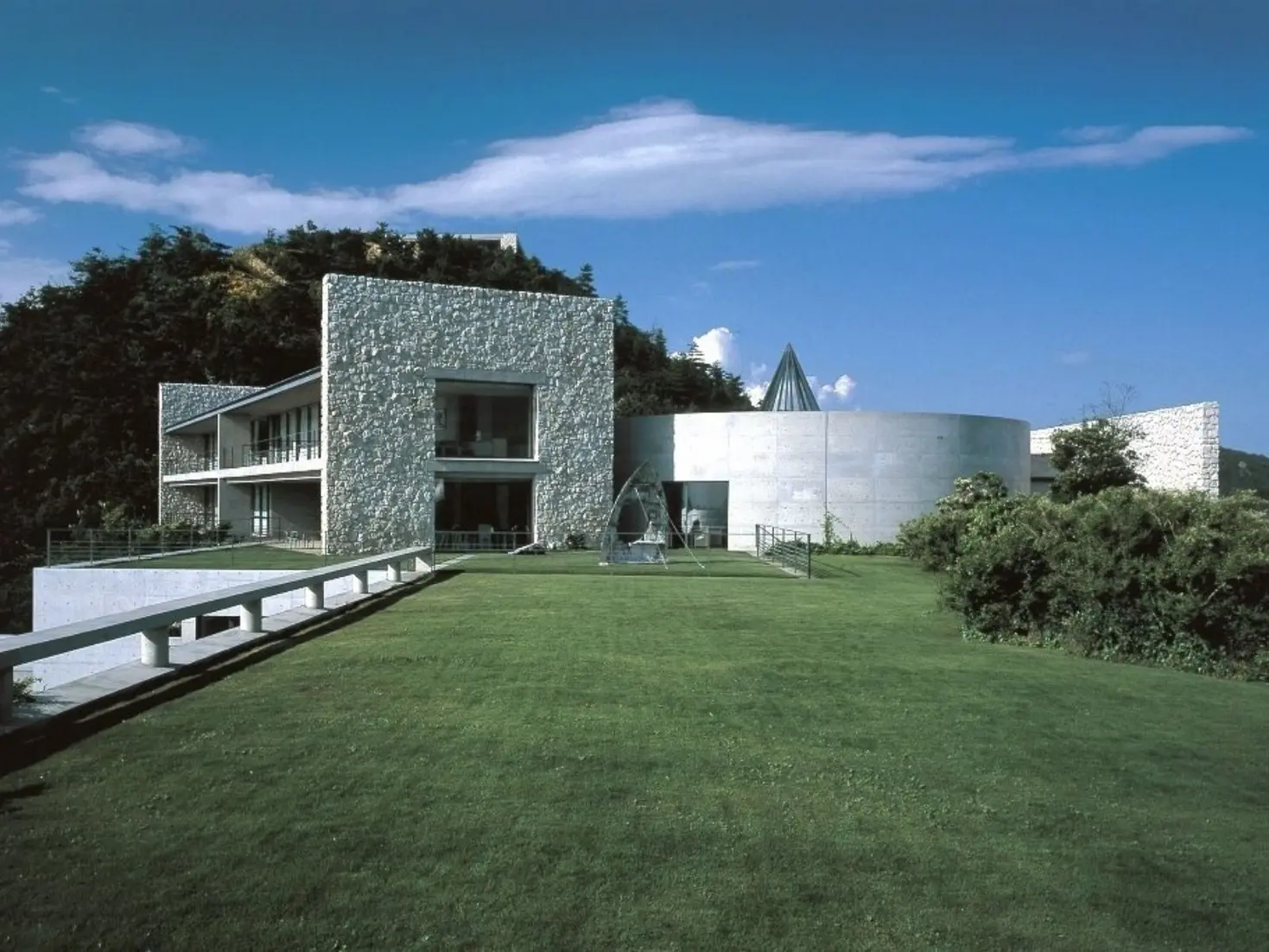
The collaboration began with Benesse House Museum, where hotel, museum, and landscape coexist without hierarchy. Concrete walls frame views of the Seto Inland Sea, while courtyards and terraces dissolve boundaries between art, architecture, and nature. Guests move seamlessly between interior galleries and open air, experiencing artworks alongside horizon lines and changing light.
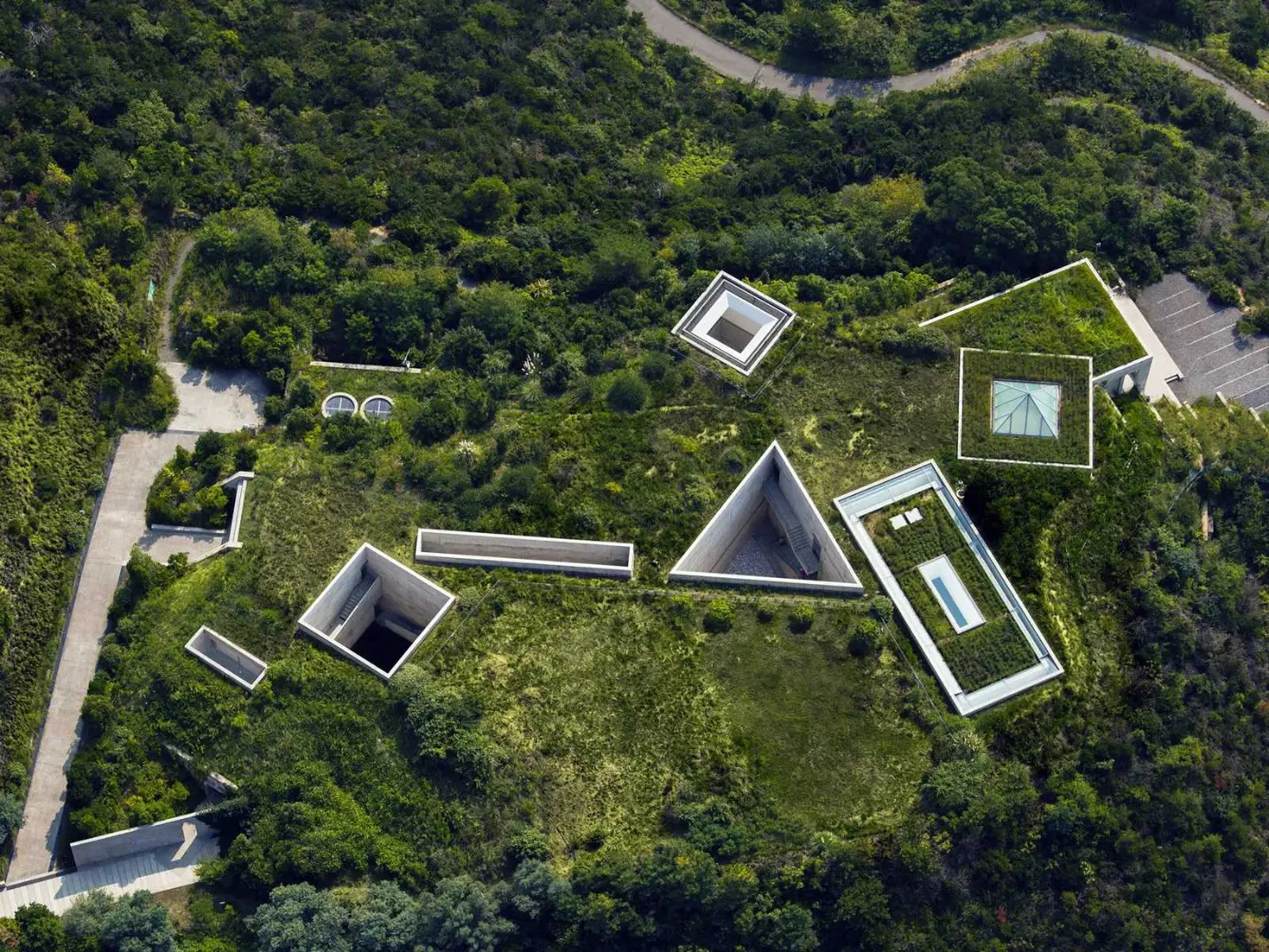
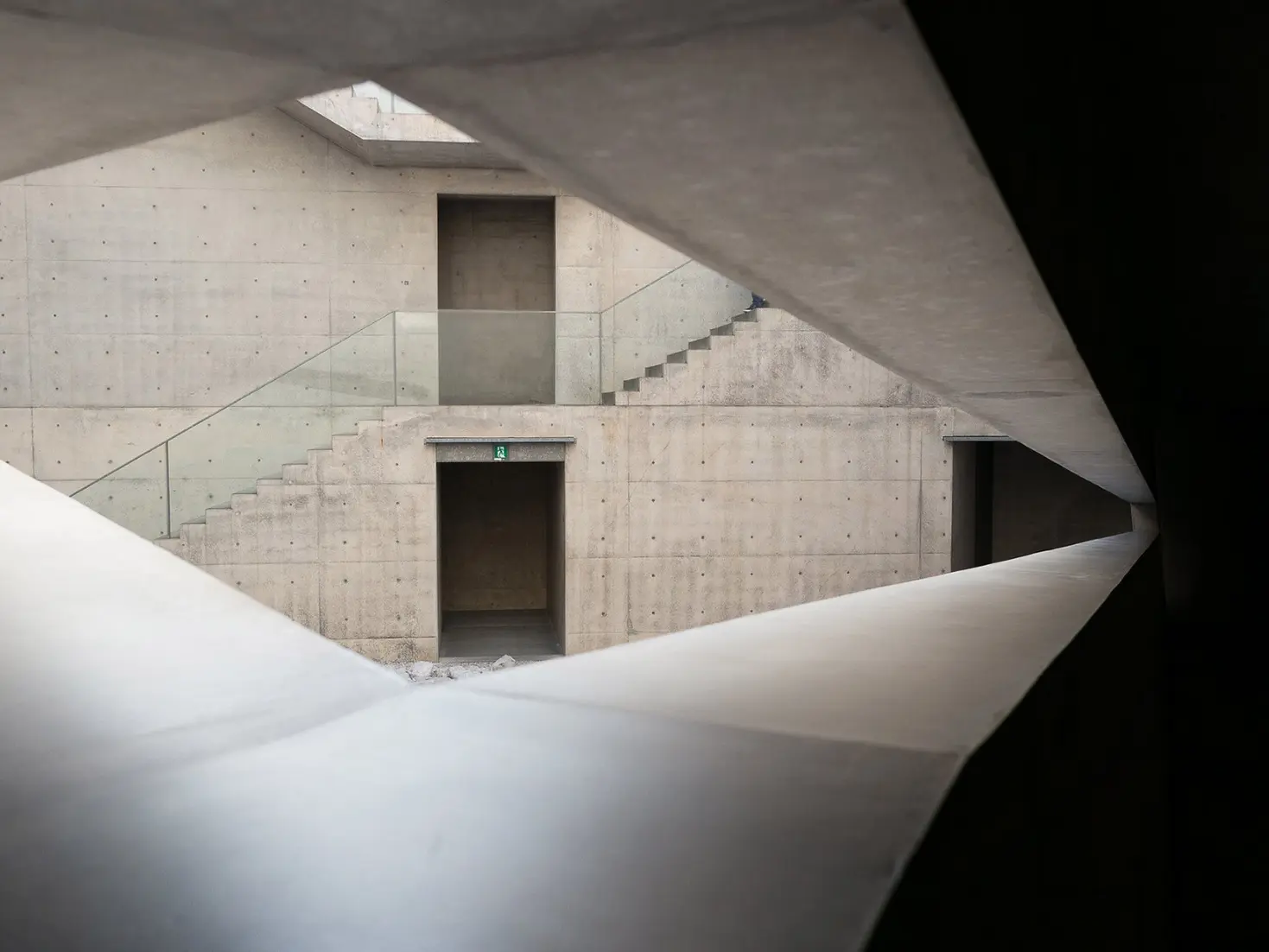
This dialogue deepens at the Chichu Art Museum, a masterpiece of architectural restraint. Built almost entirely underground, the museum relies solely on natural light to illuminate works by Claude Monet, James Turrell, and Walter De Maria. Light shifts throughout the day, altering perception and reminding visitors that time and weather are part of the exhibition. Here, Ando reduces architecture to geometry and silence, allowing nature to complete the experience.
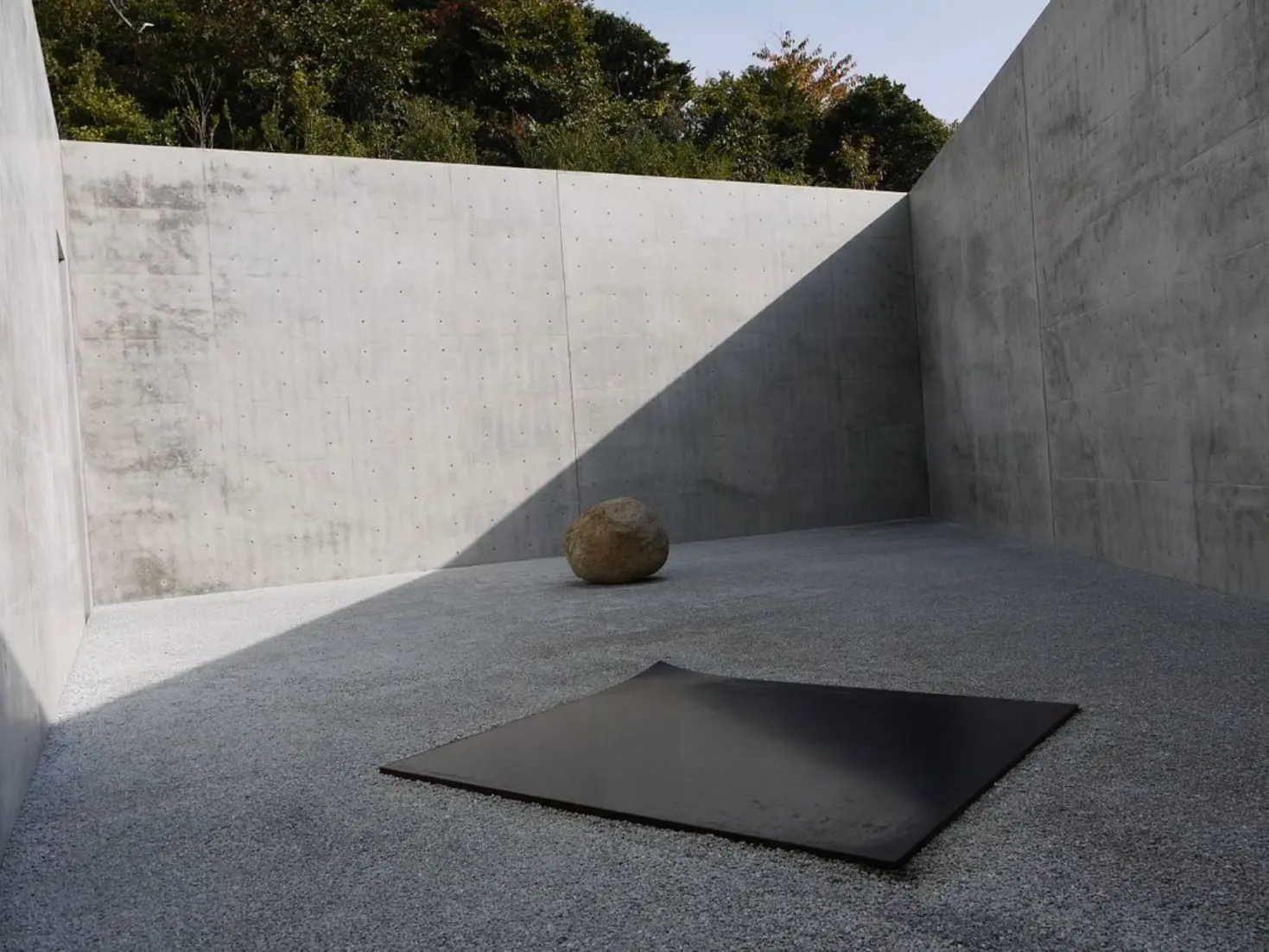
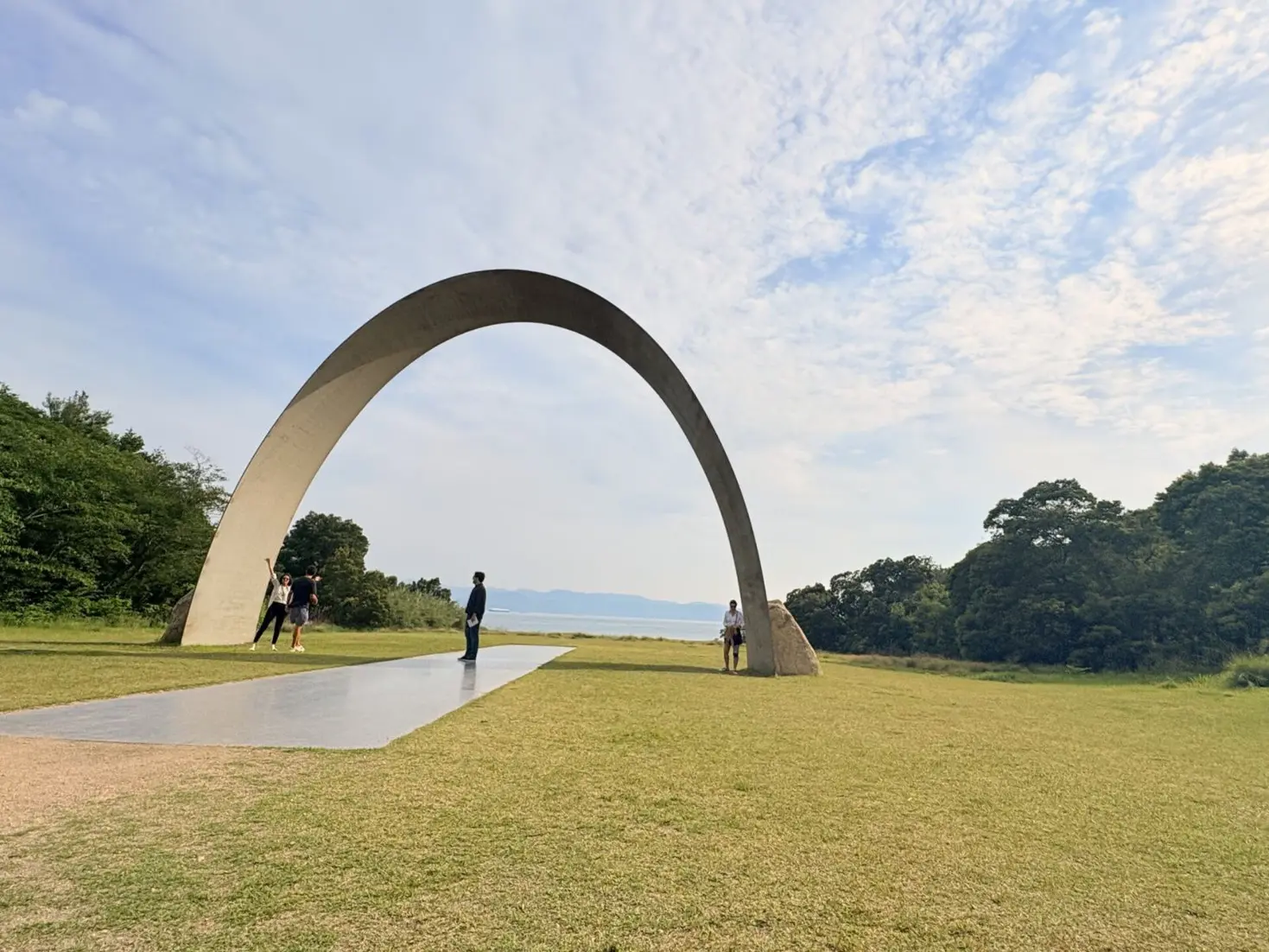
At the Lee Ufan Museum, Ando creates a hushed framework for the artist’s minimalist works. Narrow passages, angled walls, and controlled openings choreograph movement, emphasizing emptiness, distance, and reflection. Architecture and art engage in quiet conversation, each intensifying the presence of the other.
Tadao Ando’s career defies easy categorization. He is modernist, yet deeply rooted in Japanese tradition. He is minimalist, yet emotionally rich. He is self-taught, yet internationally revered. In 1995, he was awarded the Pritzker Architecture Prize, confirming that formal education is not a prerequisite for architectural greatness.
More than any single building, Ando’s legacy lies in his philosophy. He reminds us that architecture begins not with software or theory, but with observation, discipline, and lived experience. From the boxing ring to the world’s great cities, from Gutai performances to silent concrete walls, Ando transformed everything he encountered into architecture.