MENU
Close





Often described as the father of modern painting, Paul Cézanne reshaped modern art by rebuilding reality through color, structure, and form, laying the foundation for Cubism and abstraction.
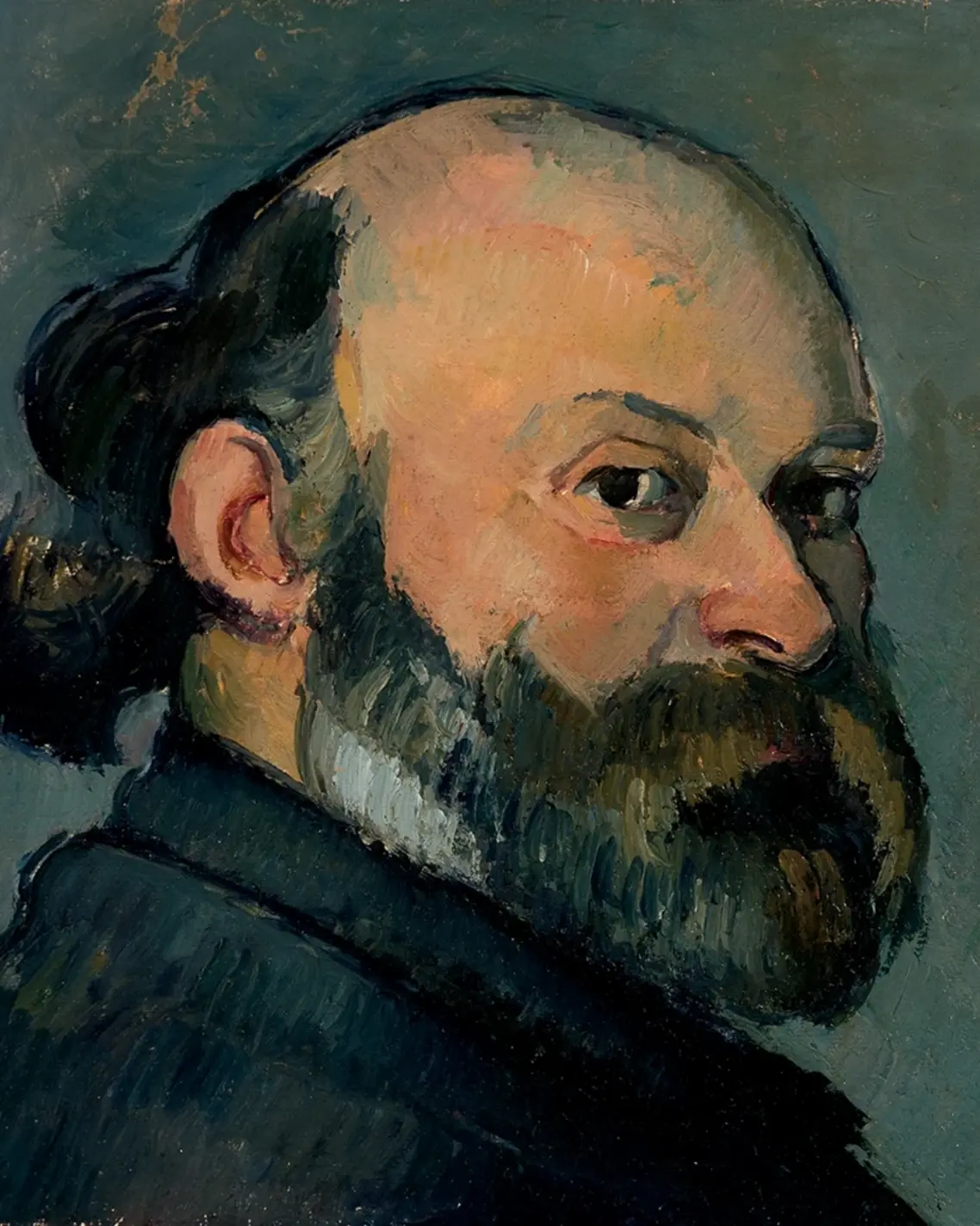
Often described as the father of modern painting, Paul Cézanne reshaped modern art by rebuilding reality through color, structure, and form, laying the foundation for Cubism and abstraction.
January 10, 2026


Cézanne’s painting style marked a profound break from traditional representation. Rather than shaping form through dramatic contrasts of light and shadow, he constructed volume using carefully modulated planes of color. Each brushstroke functions like a structural element, deliberate and architectural, lending his paintings a sense of gravity and permanence that feels almost sculptural. By reducing nature to cylinders, spheres, and cones, Cézanne shifted painting away from illusion toward construction, redefining how space and form could exist on a flat surface. This approach became a cornerstone for modern art and directly inspired figures such as Pablo Picasso and Georges Braque, who later acknowledged Cézanne as a crucial precursor to Cubism.
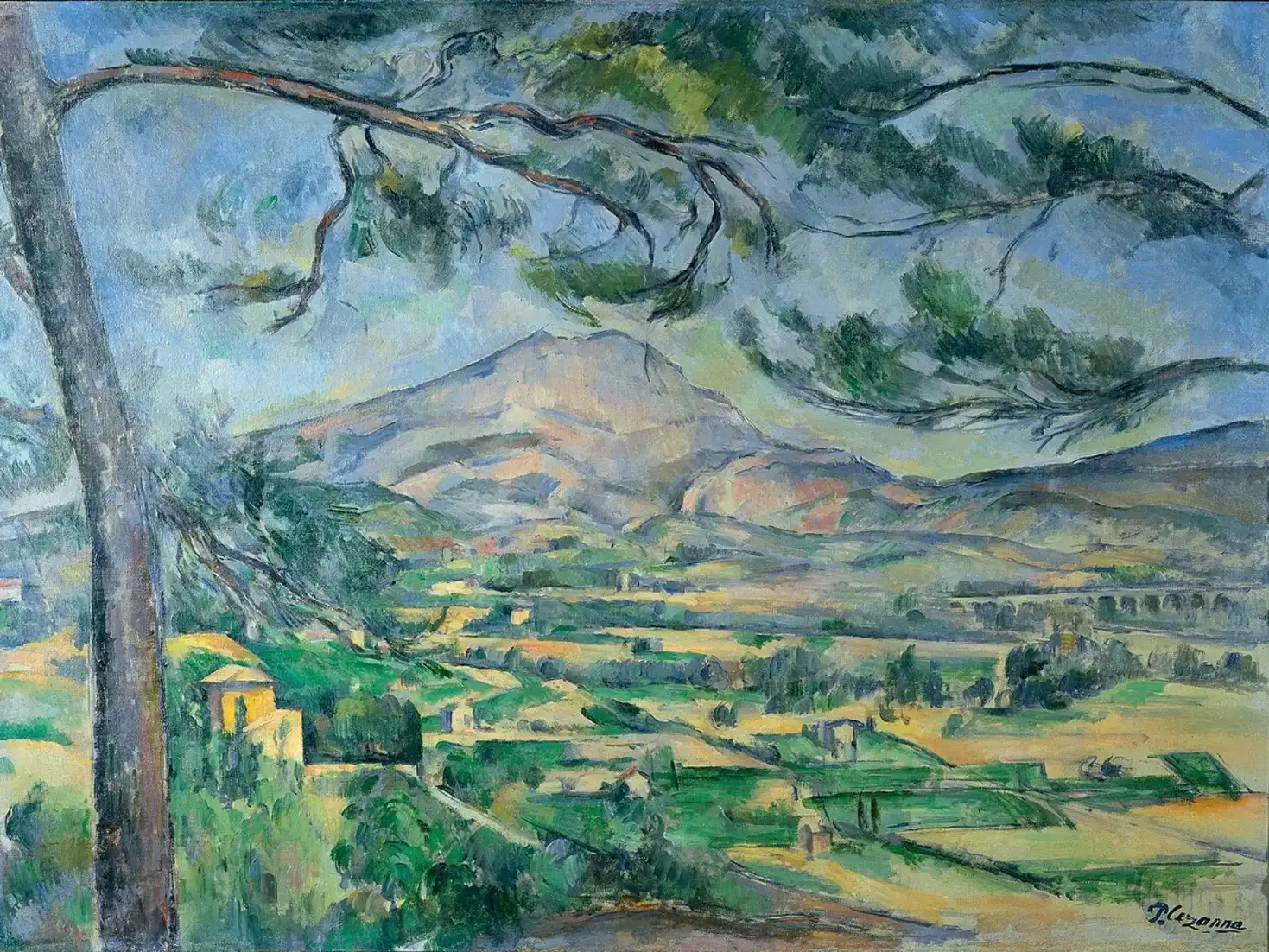
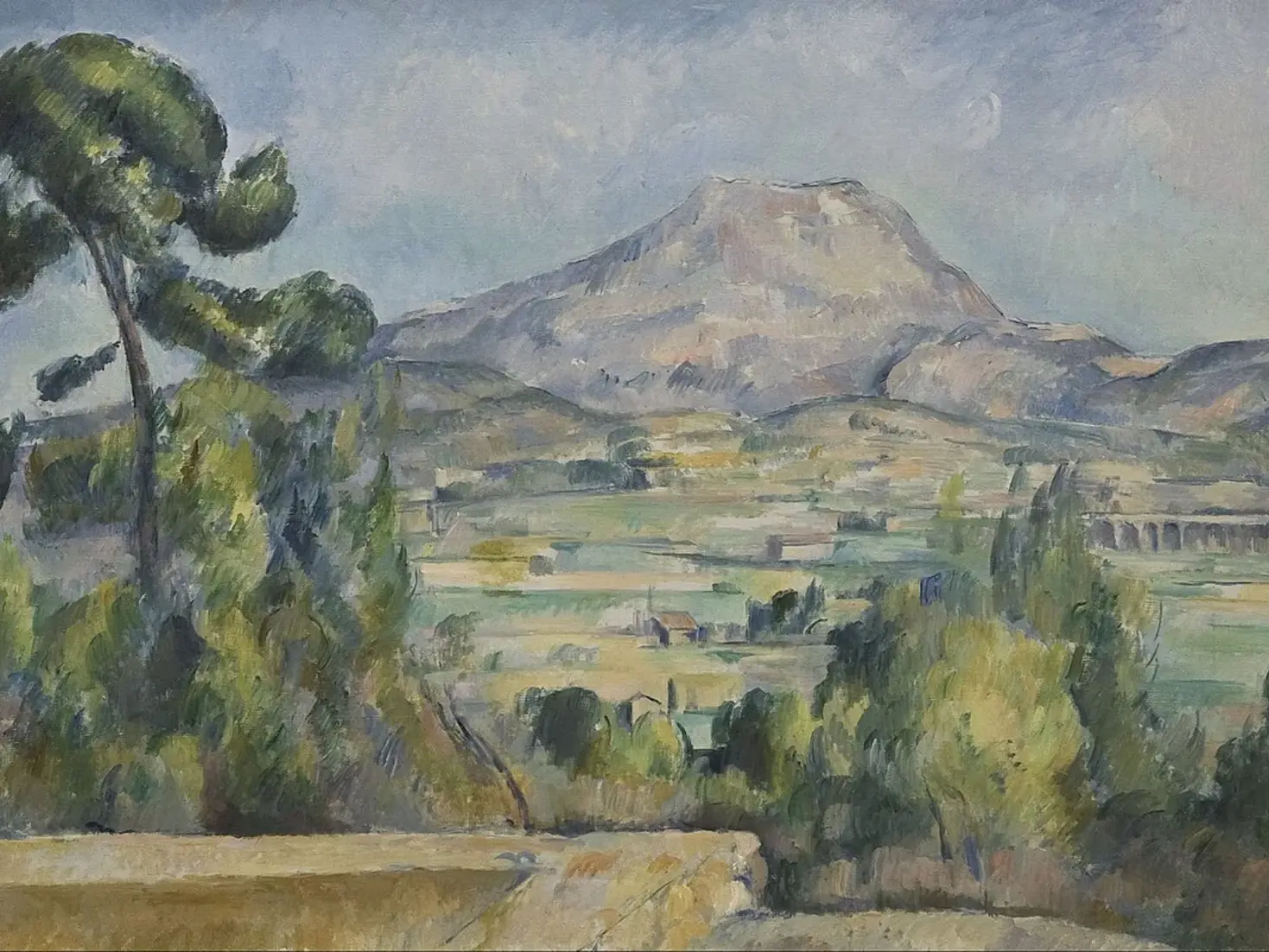
His fixation on Mont Sainte Victoire stands as one of the most revealing chapters of his career. Painted more than sixty times, the mountain served as a visual laboratory where Cézanne tested perception, perspective, and color relationships. Despite its imposing presence, he referred to it simply as “my motif,” granting it the same analytical attention he gave to everyday objects. Apples, in particular, became central to his practice.Paul Cézanne believed ordinary forms held revolutionary potential, once declaring he would “astonish Paris with an apple,” a statement that came to define his artistic philosophy.
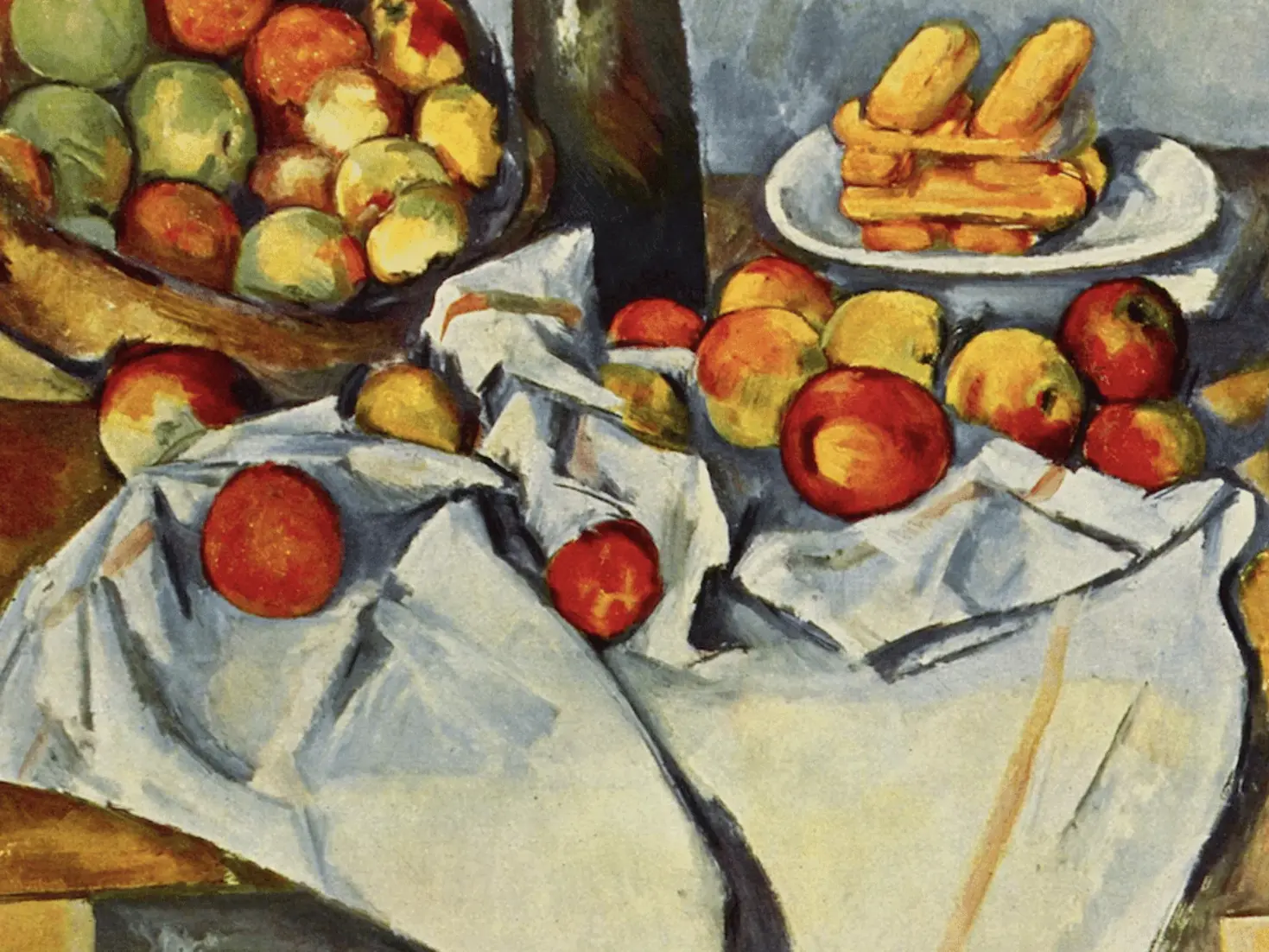
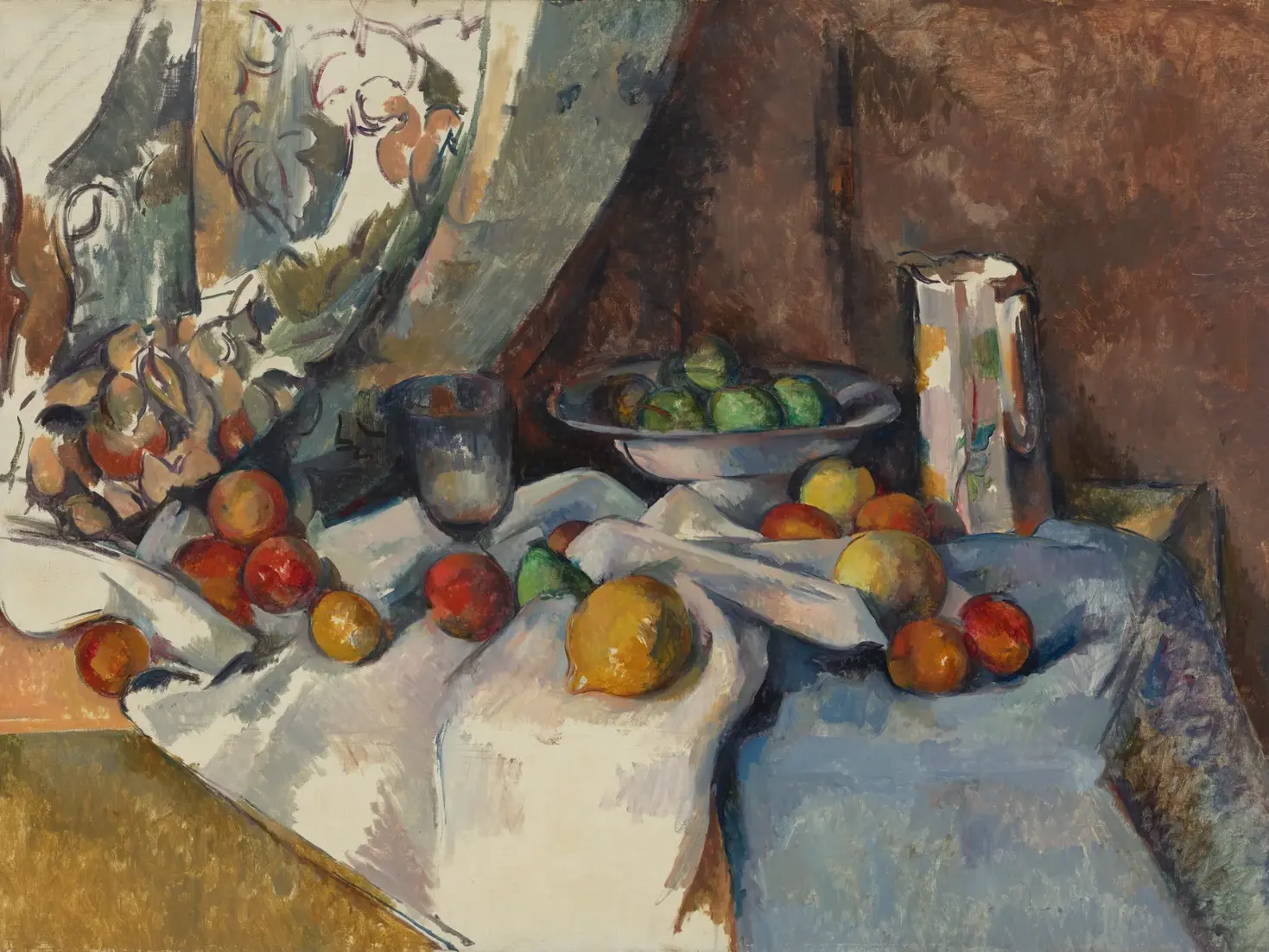
Paul Cézanne worked with extraordinary slowness and intensity. A single still life could require over one hundred sittings, and many works remained unfinished at his death in 1906. During his lifetime, he sold relatively few paintings and endured frequent ridicule from critics. Yet history reversed this judgment decisively. His still lifes, especially Still Life with Apples, now rank among his most important contributions, transforming simple fruit into monumental explorations of balance and spatial tension. Tables tilt, objects seem weighted, and space subtly bends, revealing structure beneath surface appearance.
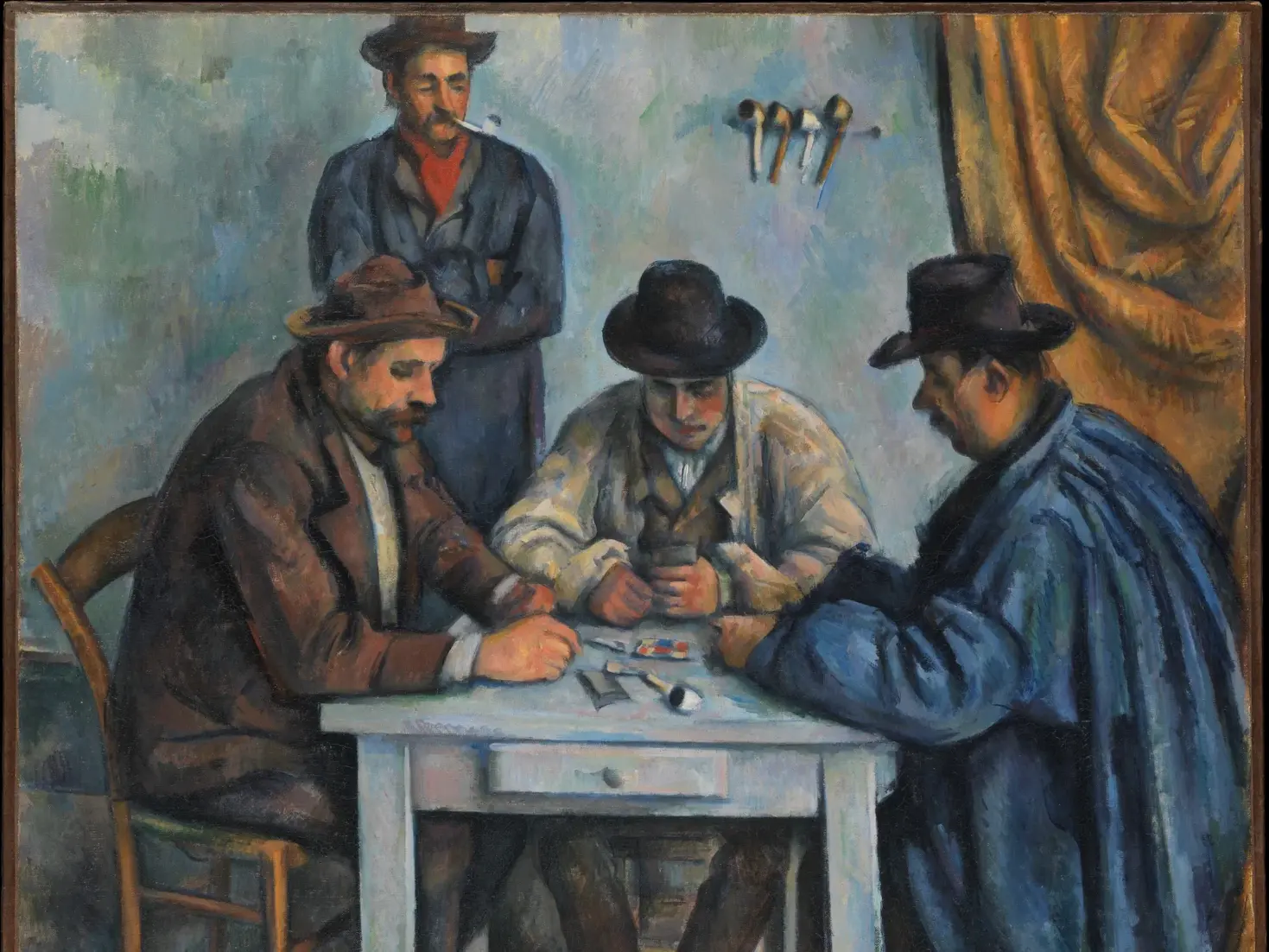
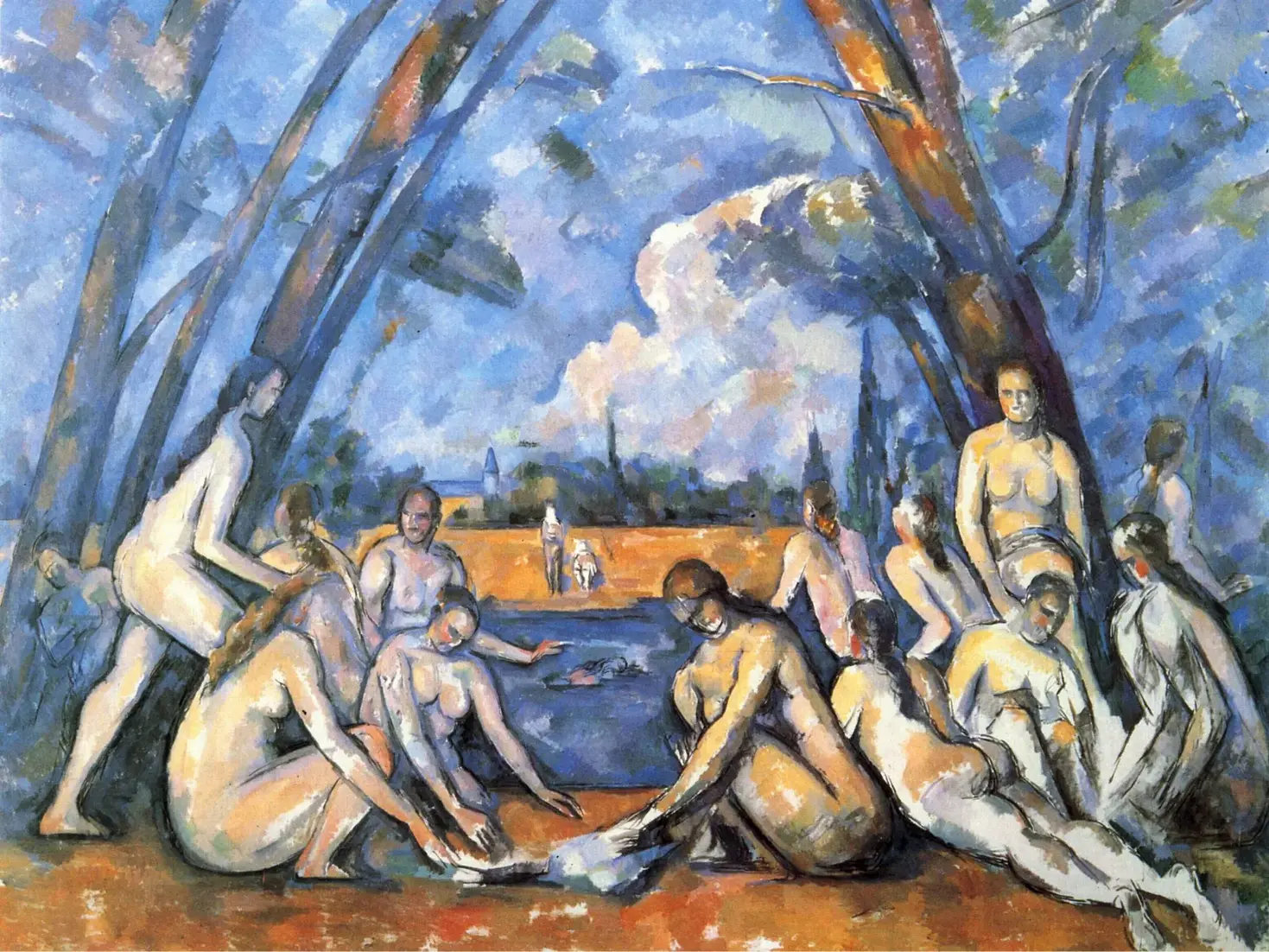
Paul Cézanne's figurative masterpiece The Card Players, produced in five known versions, captures peasant figures absorbed in quiet concentration. Its psychological stillness and compositional solidity influenced generations of artists. One version reportedly sold privately in 2011 for around 250 million USD, placing it among the most expensive artworks ever exchanged. In his later years, Cézanne pushed further with The Large Bathers, dissolving the human body into rhythmic, geometric forms that merge seamlessly with the landscape, offering a vision neither classical nor fully modern.
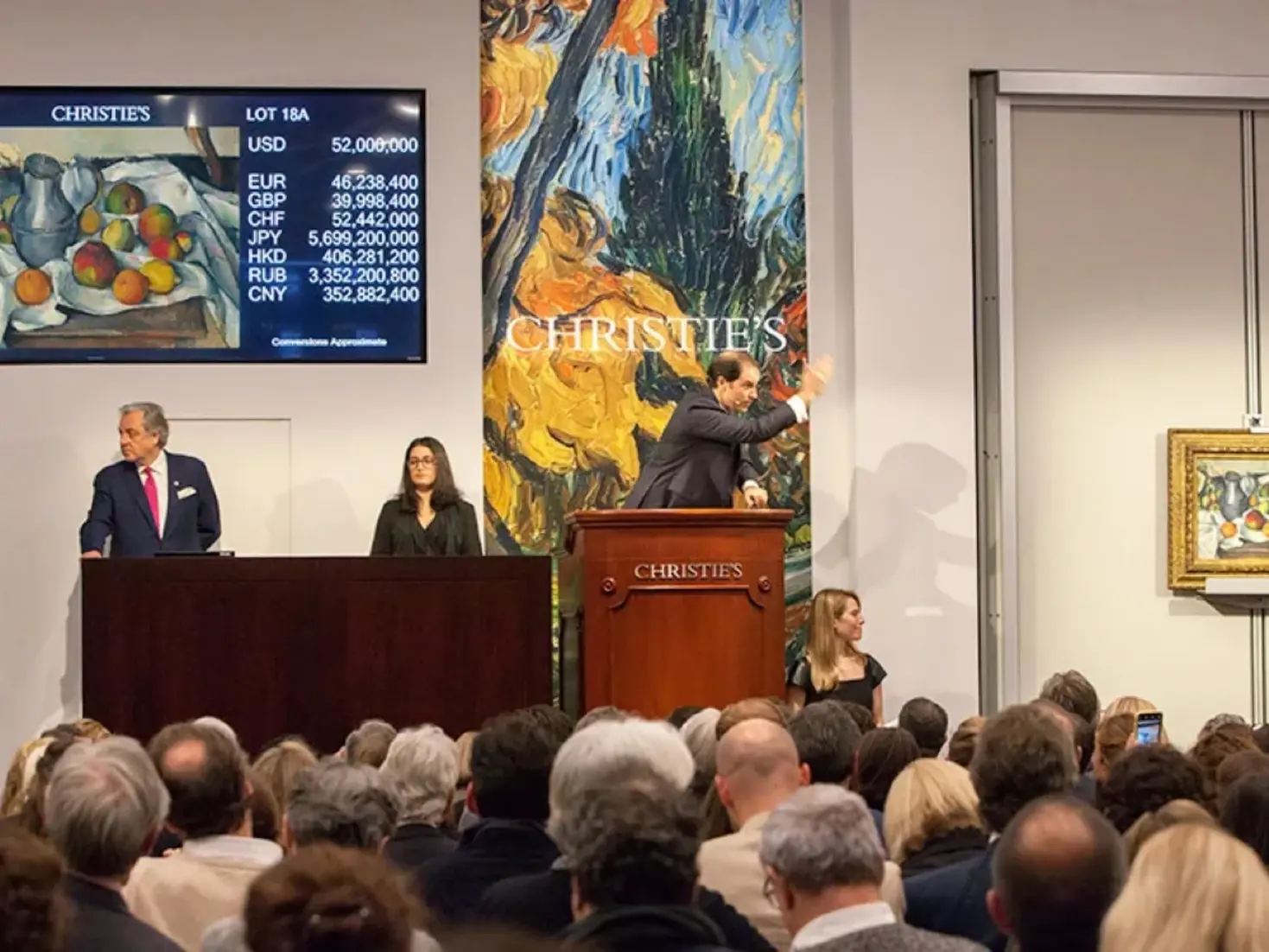
Today,Paul Cézanne’s paintings consistently achieve auction prices between 50 and 110 million USD and reside in major institutions including the Louvre, Musée d’Orsay, MoMA, and the National Gallery. Once misunderstood, Cézanne now stands as the artist who taught painting how to think.