MENU
Close





At Palazzo Margherita, the Coppola family legacy lives in every room. What began as Francis Ford Coppola’s return to his grandfather’s Bernalda became a hotel of memory, atmosphere, and cinematic elegance, where frescoed ceilings, hushed courtyards, and kitchen-table rituals turn heritage into one of the best luxury hotels in Italy. Among the wave of boutique hotels in Europe, Palazzo Margherita feels less like a property and more like a family story staged beautifully for the world.
At Palazzo Margherita, the Coppola family legacy lives in every room. What began as Francis Ford Coppola’s return to his grandfather’s Bernalda became a hotel of memory, atmosphere, and cinematic elegance, where frescoed ceilings, hushed courtyards, and kitchen-table rituals turn heritage into one of the best luxury hotels in Italy. Among the wave of boutique hotels in Europe, Palazzo Margherita feels less like a property and more like a family story staged beautifully for the world.
March 16, 2026


Some hotels offer service. Palazzo Margherita offers authorship.
Standing in Bernalda, a sun-warmed town in Basilicata, the Palazzo has the poise of an old aristocrat who has watched generations pass beneath painted ceilings. Dust, summer, opera, family legend, village gossip: the palazzo seems to have absorbed them all. Then Francis Ford Coppola arrived, and the house entered its next act, becoming part ancestral return, part design fantasy, part cinematic sanctuary. That layered identity is exactly what places Palazzo Margherita among the best luxury hotels in Italy and among the most distinctive entries in boutique hotels Europe.
Palazzo Margherita belongs to that rare class of addresses that feel authored rather than merely designed. Every corridor seems cast. Every room seems lit by intention. Every meal arrives with the atmosphere of a scene. This is hospitality shaped by storytelling, and storytelling shaped by a family home with formidable taste.
The palazzo was originally built in 1892 by the Margherita family in Bernalda, the hometown of Coppola’s grandfather, Agostino Coppola. That detail matters, because Palazzo Margherita makes the deepest impression precisely where luxury and lineage meet. Coppola did not simply acquire an elegant Italian property in 2004. He returned to a place threaded into his own family mythology.
At first, the villa was meant for private use, a retreat for the Coppola clan. That origin still lingers in the mood of the place. Many grand hotels cultivate intimacy as a marketing device; Palazzo Margherita carries it as an inheritance. The house seems to remember family voices. Its scale feels generous rather than overwhelming, glamorous rather than performative.
Over the next seven years, Coppola worked with the French designer Jacques Garcia to restore the property. Garcia, whose name carries its own sort of baroque authority thanks to projects such as Hôtel Costes in Paris, received a deliciously difficult brief: preserve the cracked grandeur of the palazzo while bringing in cinematic luxury. In other words, allow the building to keep its age, its weathering, its melancholy seduction, while teaching it how to shimmer on screen.
That balance became the soul of the project. Palazzo Margherita opened to the public in 2012 as the flagship of the Coppola Hideaways collection, though “hotel opening” feels almost too flat a phrase for what happened here. This was closer to a reveal, the sort cinema reserves for the final pull-back shot: the old family house transformed into a public marvel, still intimate, now legendary.
There are luxury hotels that impress through scale, and there are those that seduce through mood. Palazzo Margherita chooses mood every time. Architecturally and decoratively, it feels like a Bel Paese fever dream composed with discipline. Its design philosophy centers on the theatricality of the everyday, which sounds intellectual until you walk through it and realize the idea is wonderfully sensual.
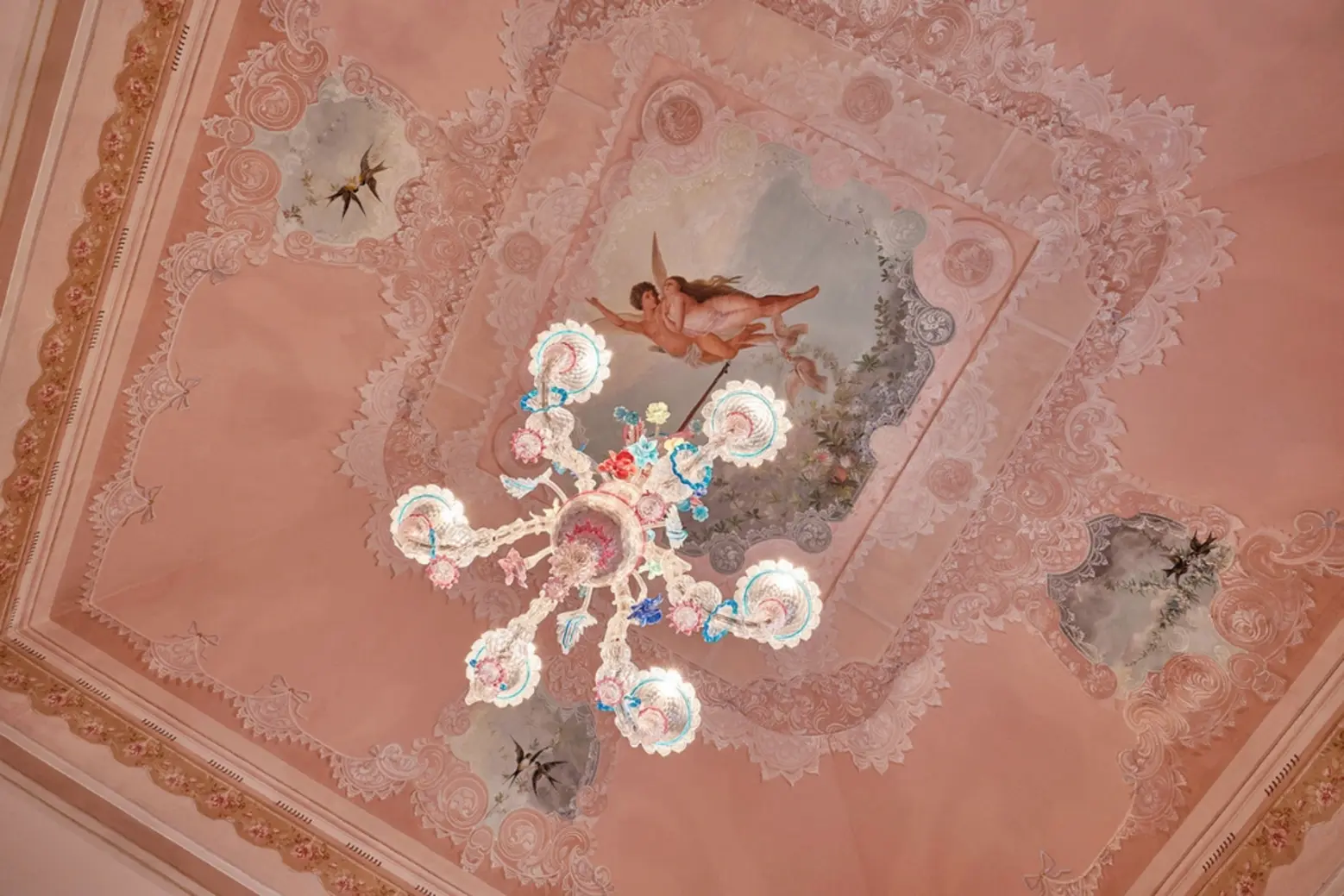
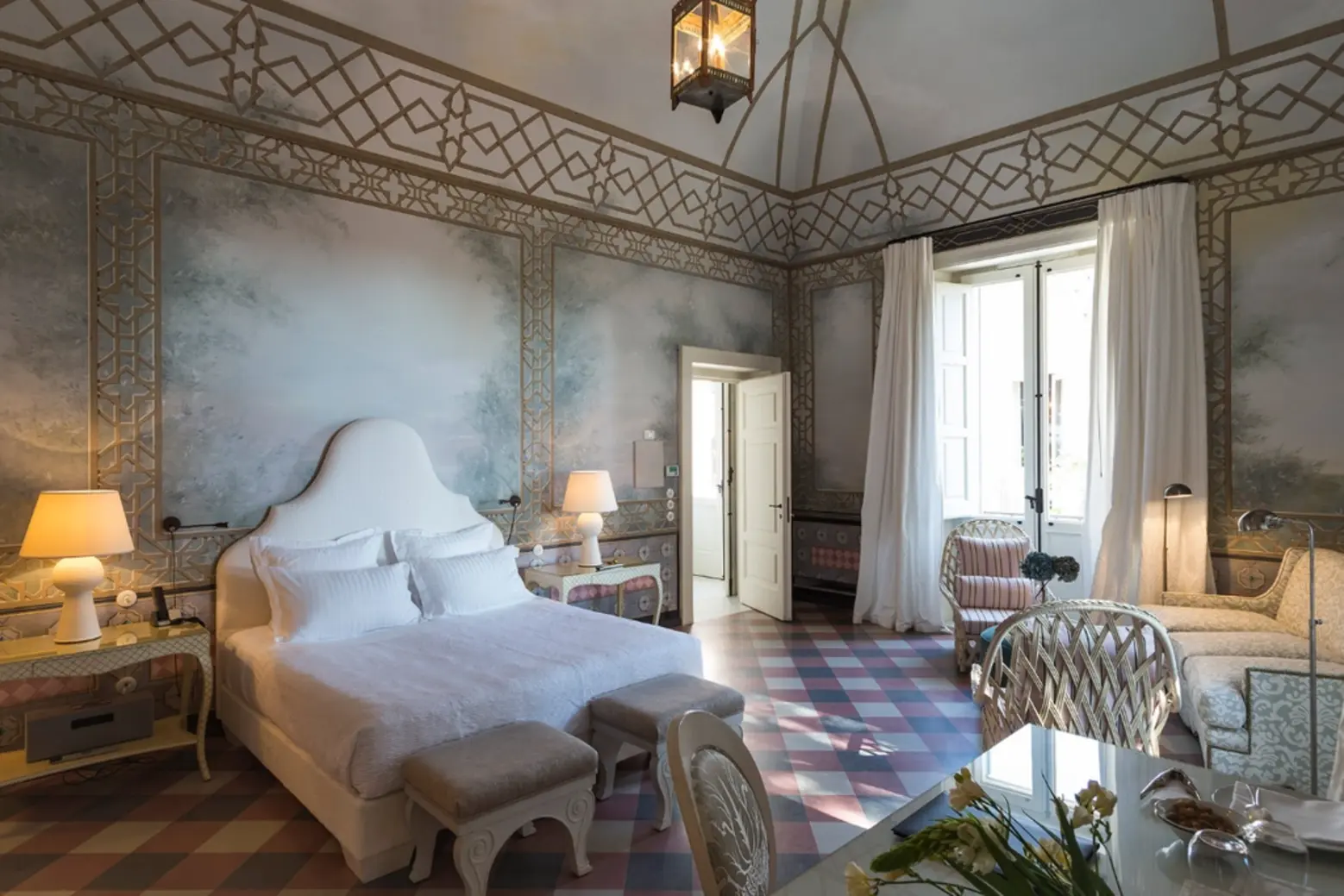
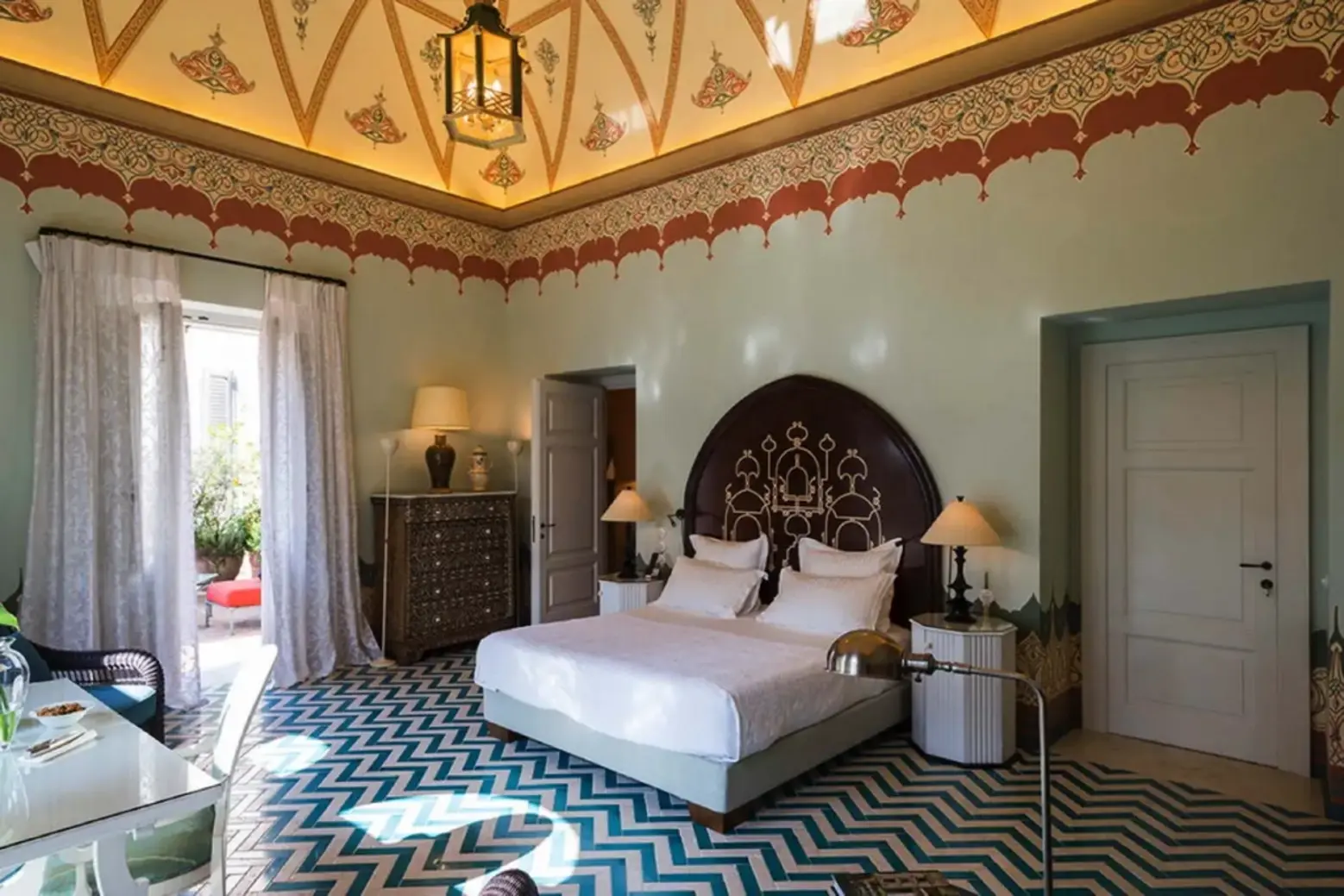
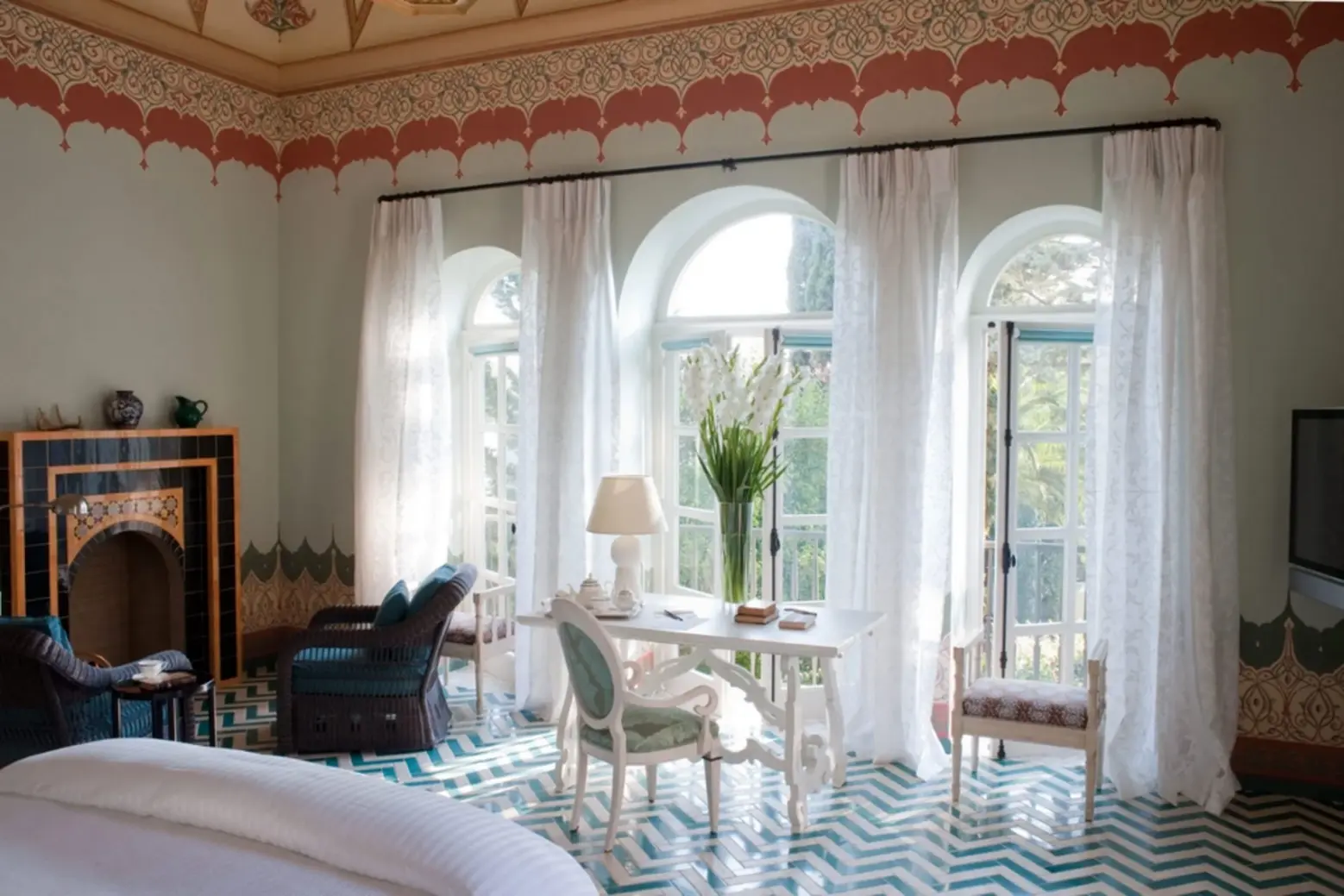
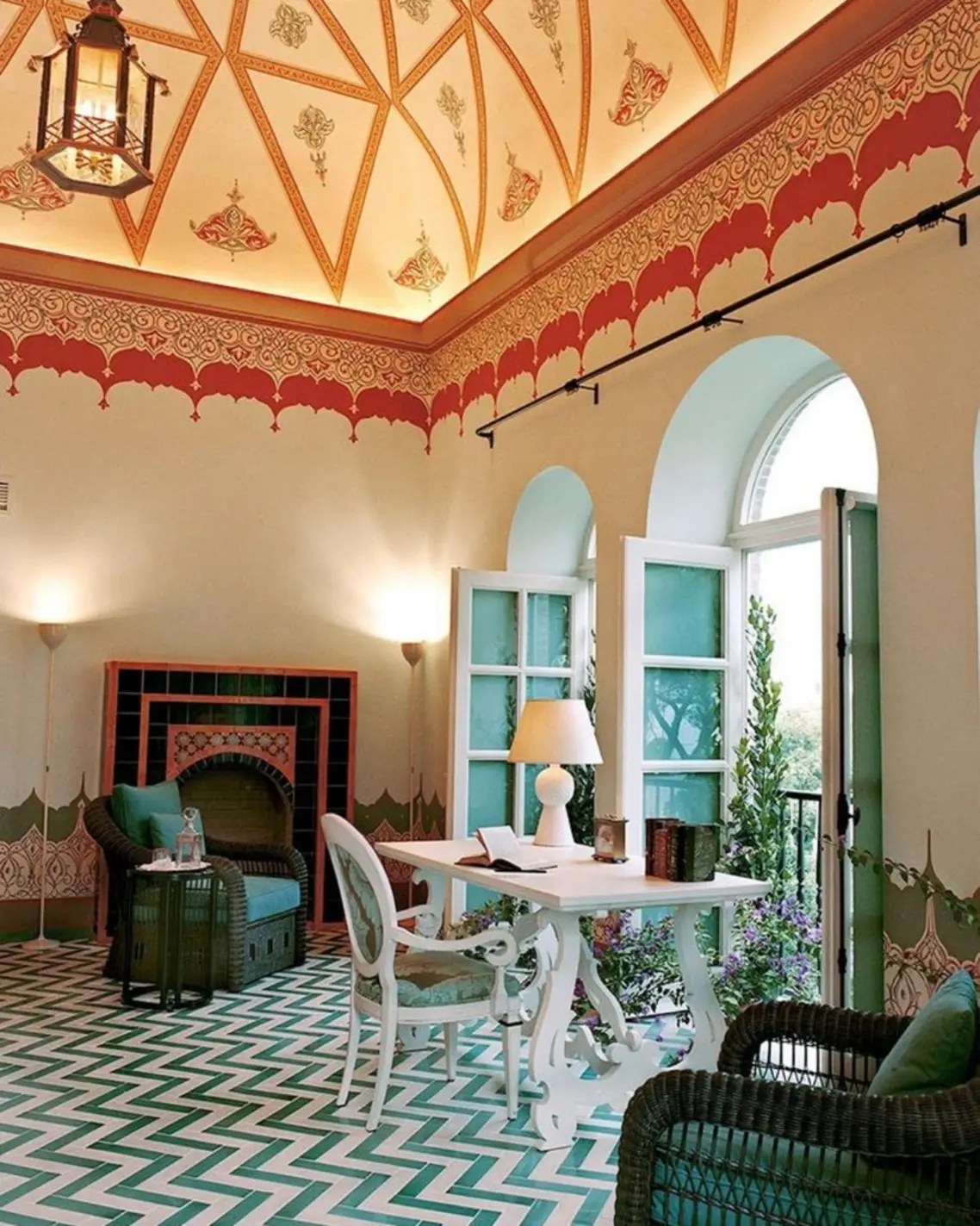
The ceilings bloom with hand-painted frescoes, some original, some meticulously restored. Garcia approached them with a layered sensibility, preserving minor imperfections so the 19th-century soul could keep breathing. That decision gives the palazzo its pulse. The surfaces feel lived-in, remembered, tenderly aged. Perfection would have flattened the romance. Patina gives the place its dramatic voltage.
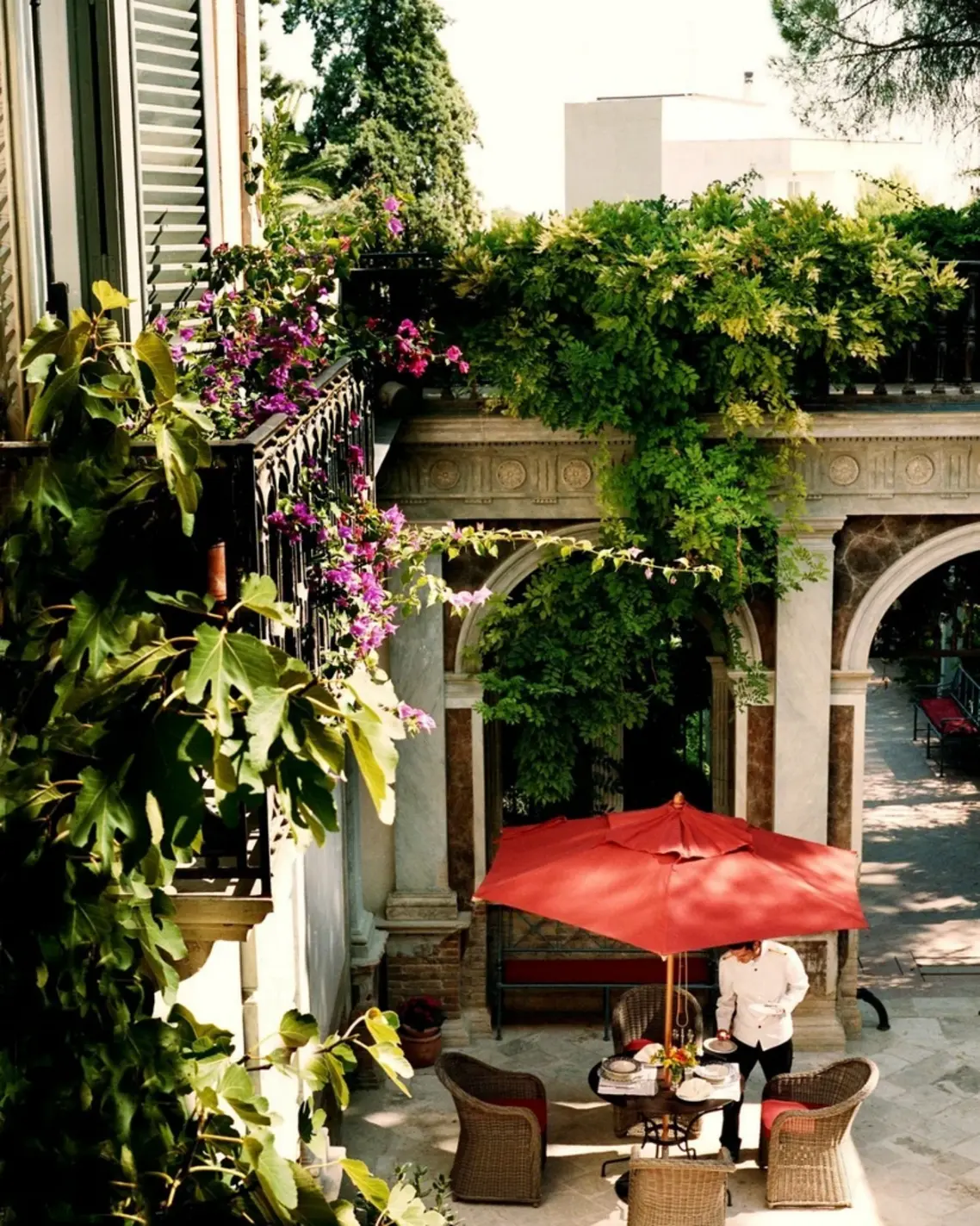
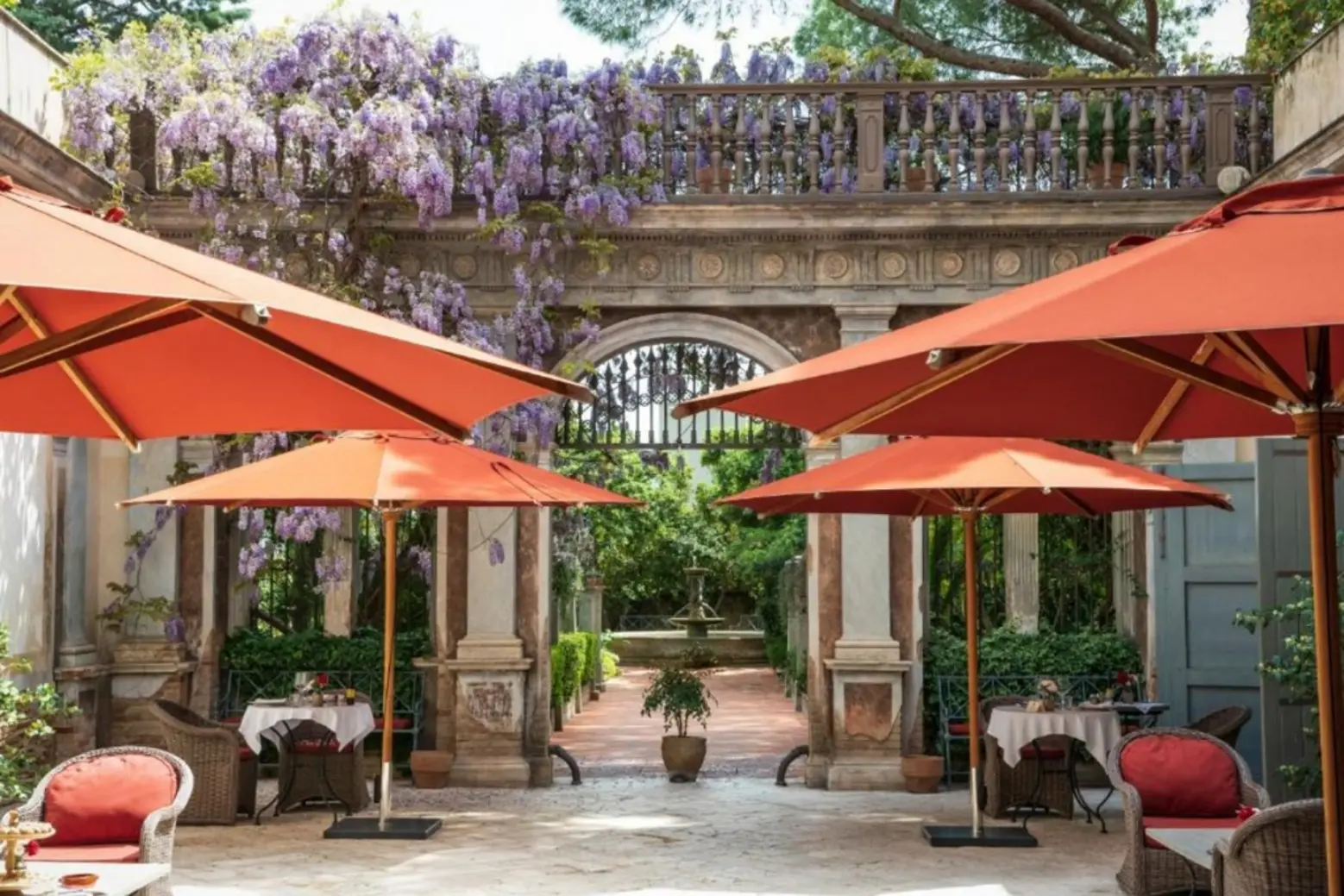
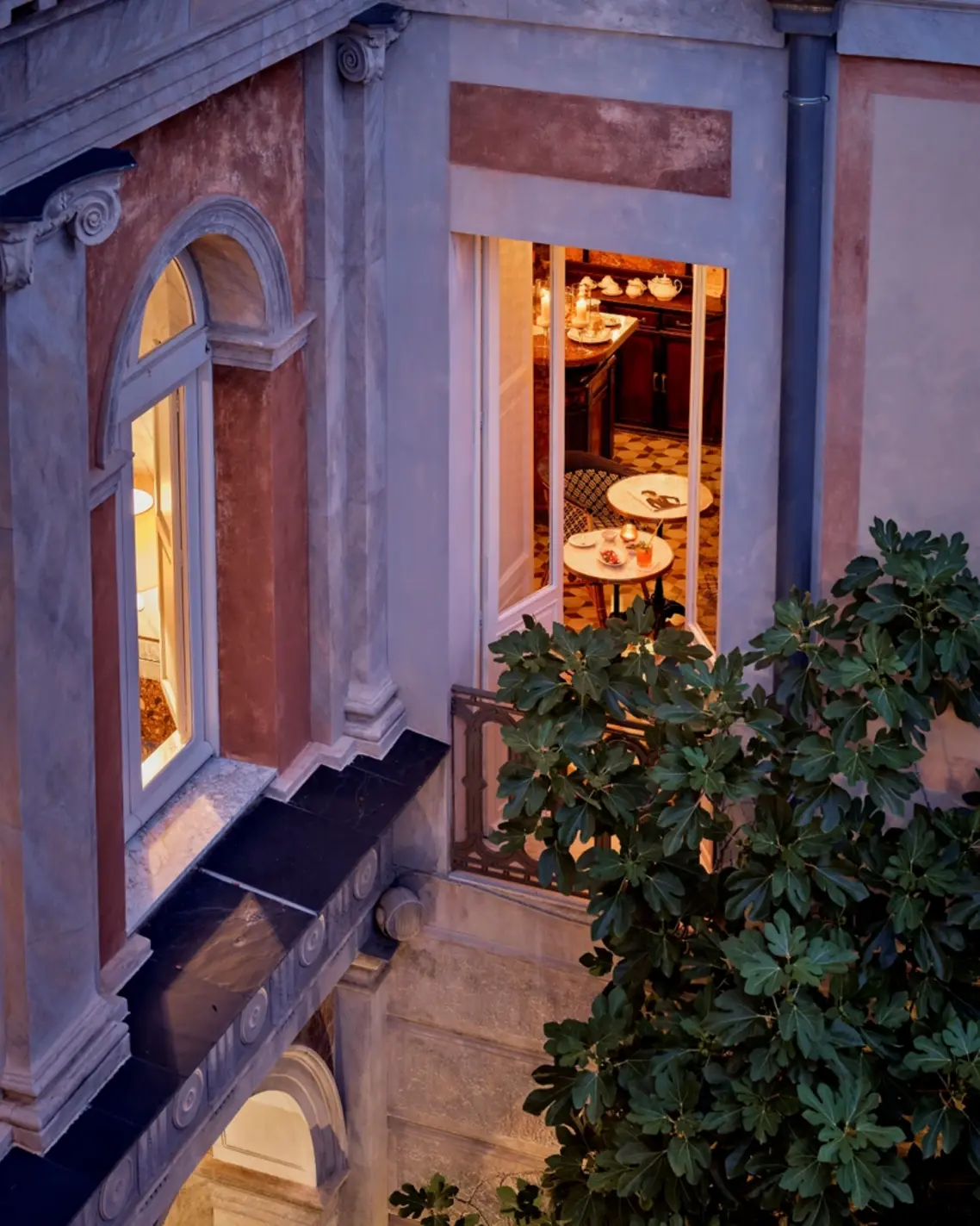
At the center of the building sits a protected courtyard, one of the palazzo’s loveliest architectural gestures. In practical terms, the courtyard organizes light, movement, and privacy. Emotionally, it acts like a private stage set within the town. The murmur of the fountain, the passing sounds of Bernalda, the softened acoustics of local life: all of it becomes a natural soundtrack. Guests enter the courtyard and suddenly the world seems edited.
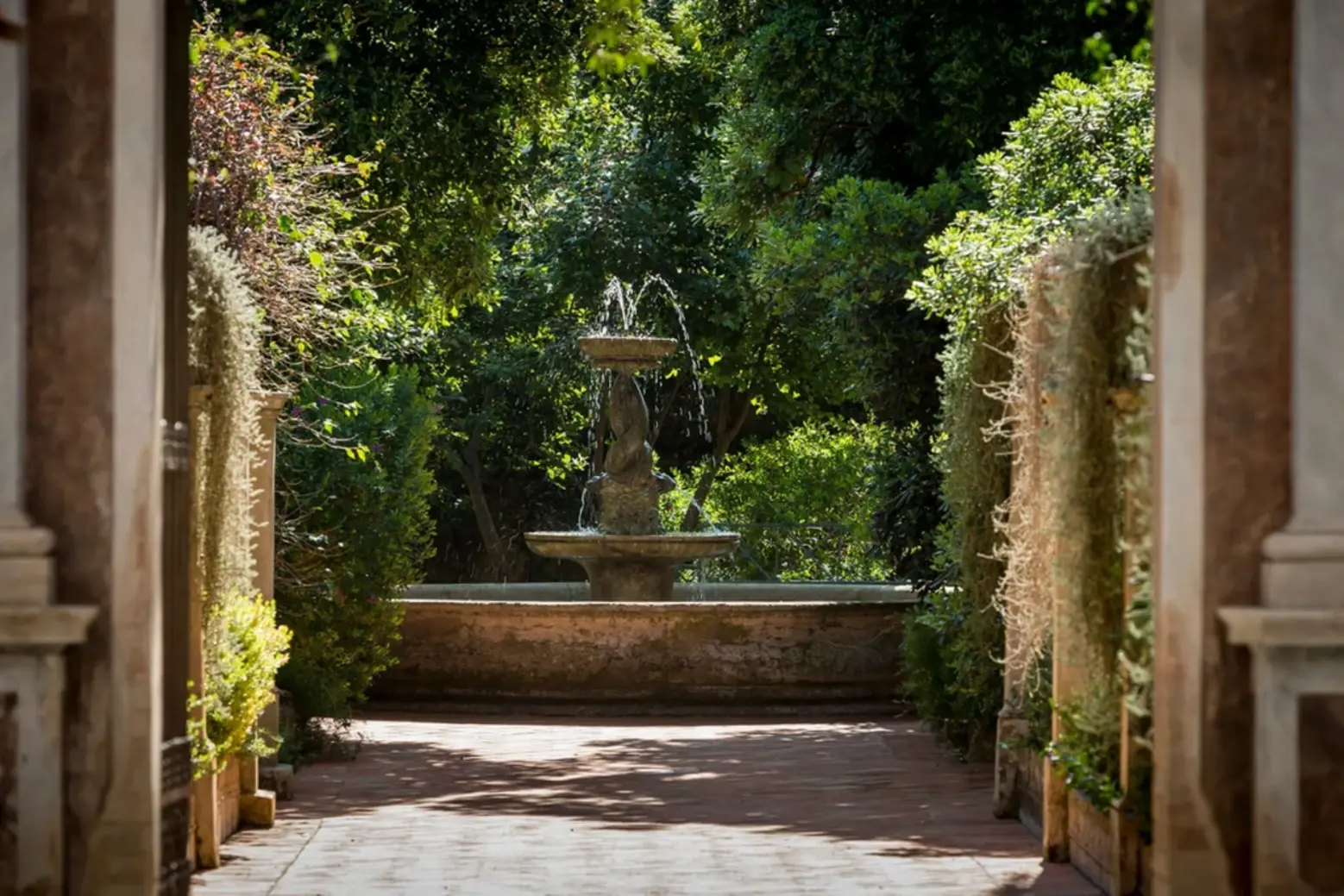
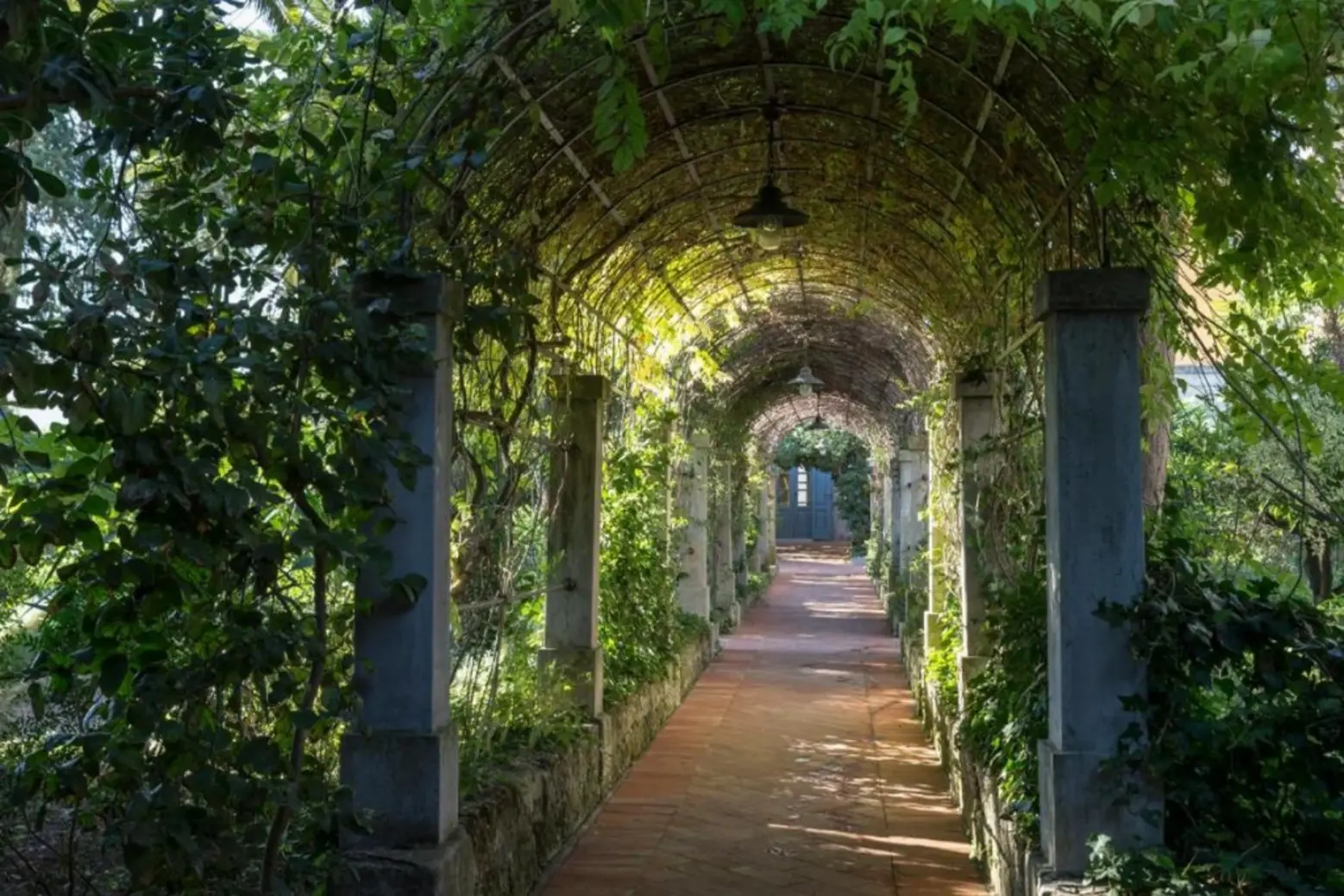
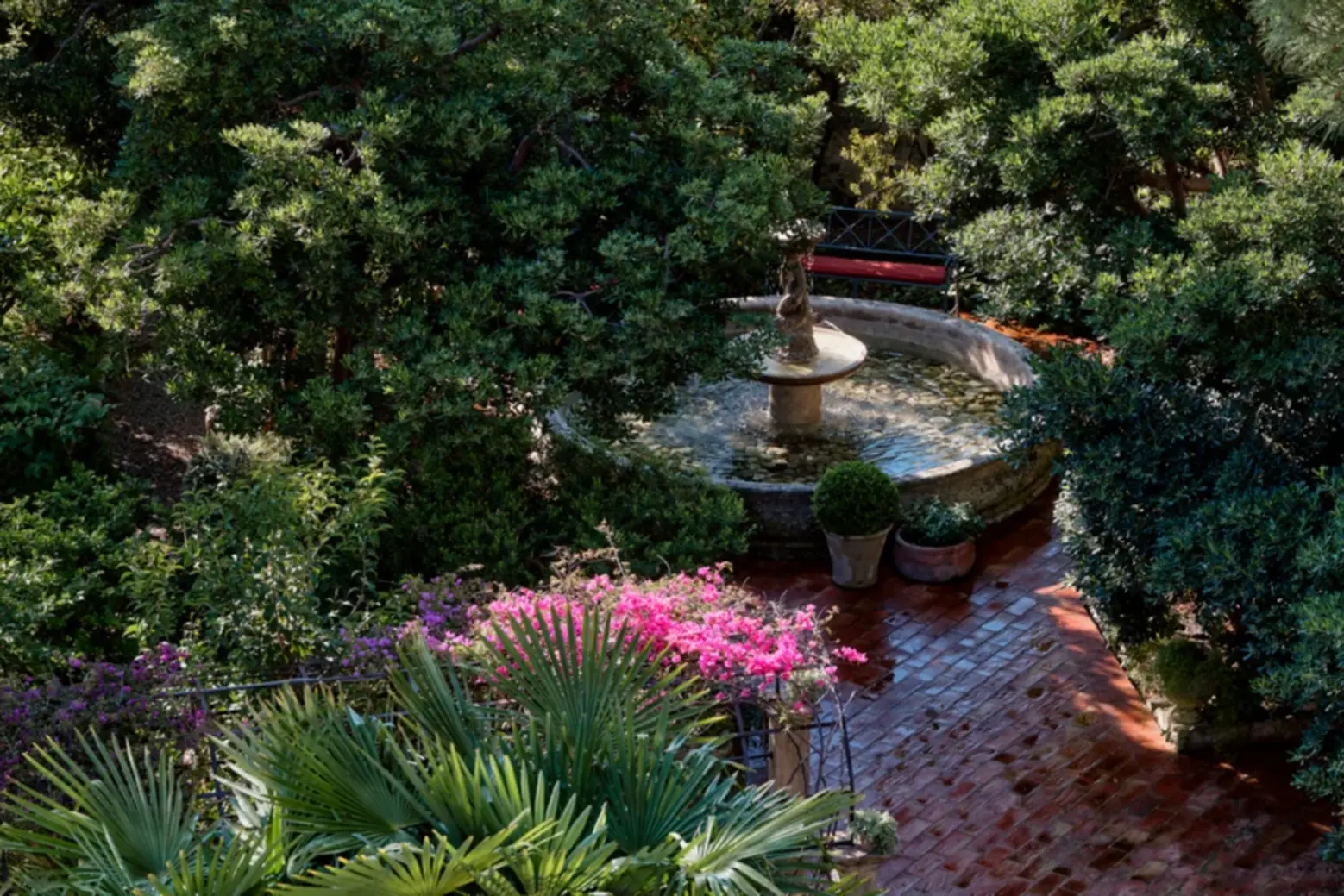
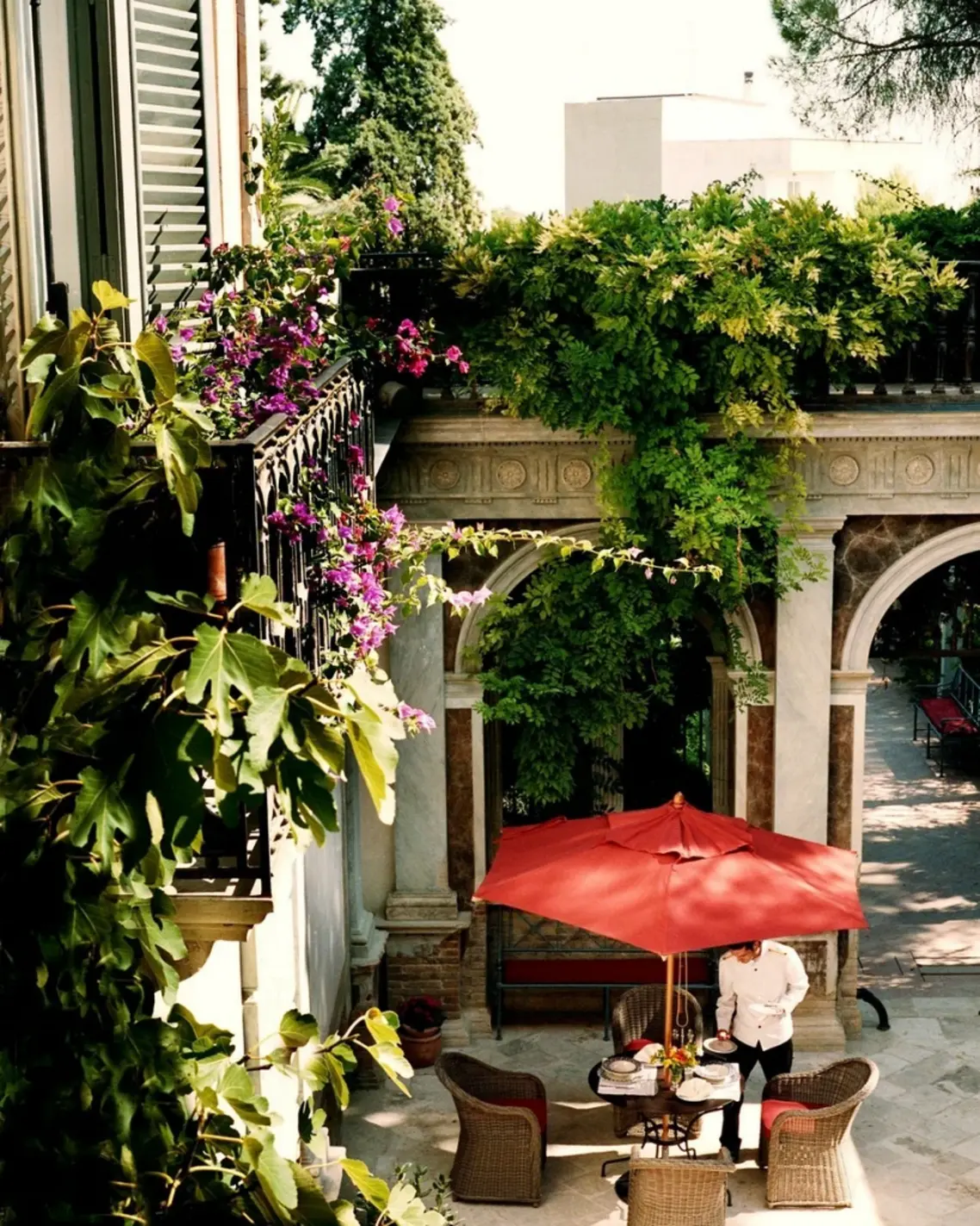
Then there is the garden, a Giardino Segreto rather than a manicured Tuscan display of horticultural discipline. Ancient citrus trees, brick pathways, filtered light, a little mystery in the air: the garden feels less like landscaping and more like scene design for a mid-century Italian romance. One half expects a silk scarf, a Vespa, a secret, and a bittersweet score.
This is the great achievement of Palazzo Margherita. It understands that luxury gains depth when it invites imagination. The building gives guests objects, textures, proportions, and scent; then it lets the mind direct the rest.
Like most boutique hotels, the Palazzo Margherita has few: Merely seven suites and two garden rooms. That modest scale shapes the experience. The house never feels diluted. Each room seems granted the space to become fully itself. In a world where excess often masquerades as luxury, this intimacy feels freshly persuasive.
Among them, Suite No. 4 carries particular intrigue. Designed by Sofia Coppola, the Sofia Suite introduces a distinct emotional register into the palazzo’s decorative language. While the rest of the hotel leans into richly cinematic Italian grandeur, her suite offers something lighter, softer, more delicately feminine. Light blue walls, hand-painted birds, and an airy Parisian-meets-Italian sensibility give it the feel of a whispered subplot. It is still fully part of the house, though it flirts with a different cadence, as though the camera suddenly changed lenses.
Elsewhere, the Coppola signature appears in ways both direct and charming. The salon doubles as a private cinema and screening room, housing a collection of more than 300 classic Italian films personally curated by Francis Ford Coppola. This detail could have tipped into gimmickry in another property. Here, it feels inevitable. Of course this house would contain a room where conversation, memory, and film gather under one ceiling. Of course a palazzo restored by a filmmaker would want to project stories after dinner.
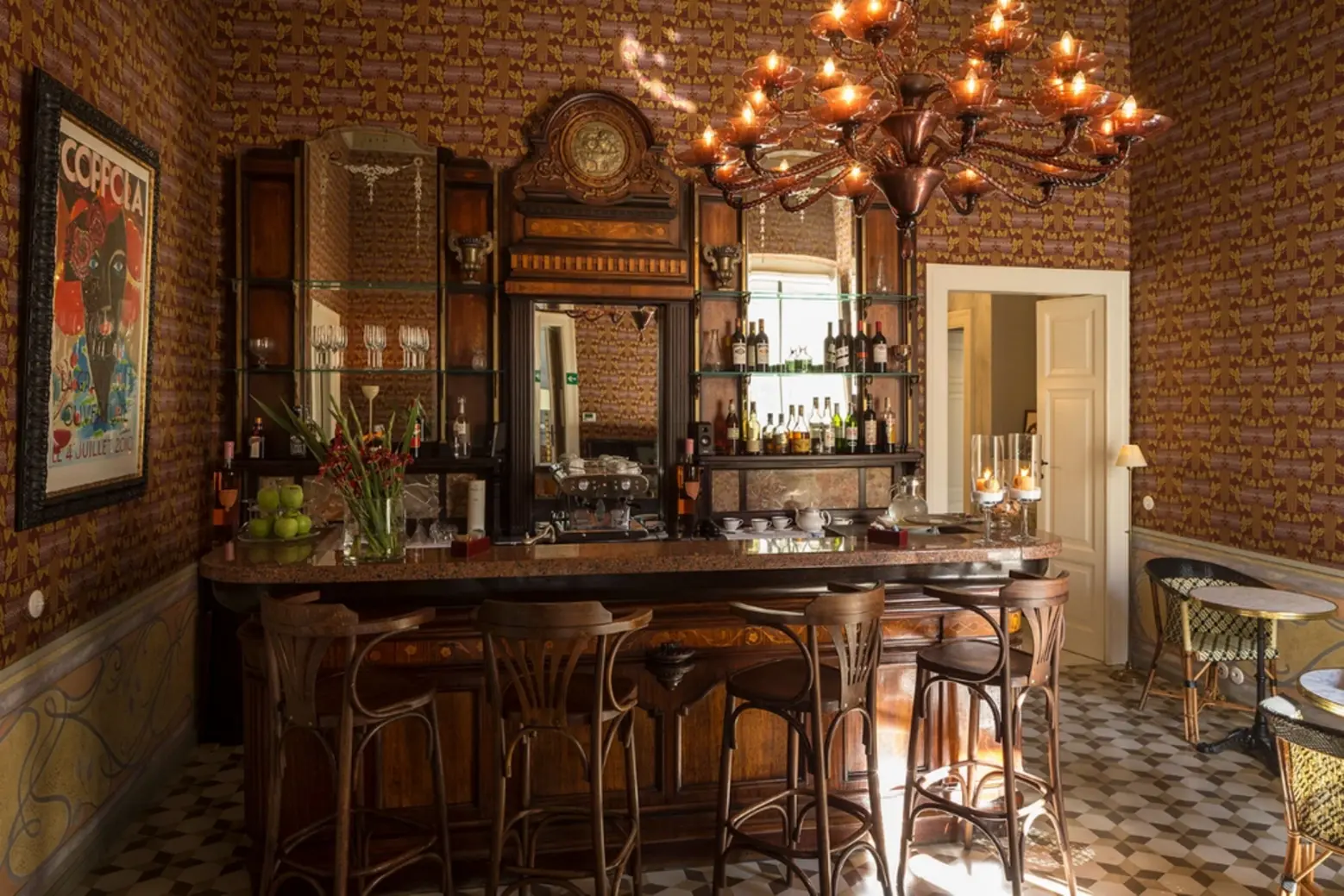
Then there is the Cinecittà Bar, a tribute to Rome’s legendary film studios and, more personally, to Agostino Coppola’s affectionate description of Bernalda as his “personal Hollywood” before he emigrated to America. The bar holds that double resonance beautifully. It is glamorous, yes, though it also carries the tenderness of an immigrant dream, the old magic of seeing possibility in a small hometown.
The property also entered public lore in 2011 when it hosted the wedding of Sofia Coppola and Thomas Mars, effectively rehearsing its future as a luxury venue before officially opening. Few hotels receive such a poetic soft launch: a family celebration staged inside a house built on family memory, just before the world arrived.
Palazzo Margherita’s most radical luxury may be its pace. In an era when hospitality often confuses abundance with excellence, this place chooses something rarer: rhythm. It invites guests into a form of slow cinema, where pleasure unfolds through light, meals, wandering, and atmosphere rather than through a checklist of amenities.
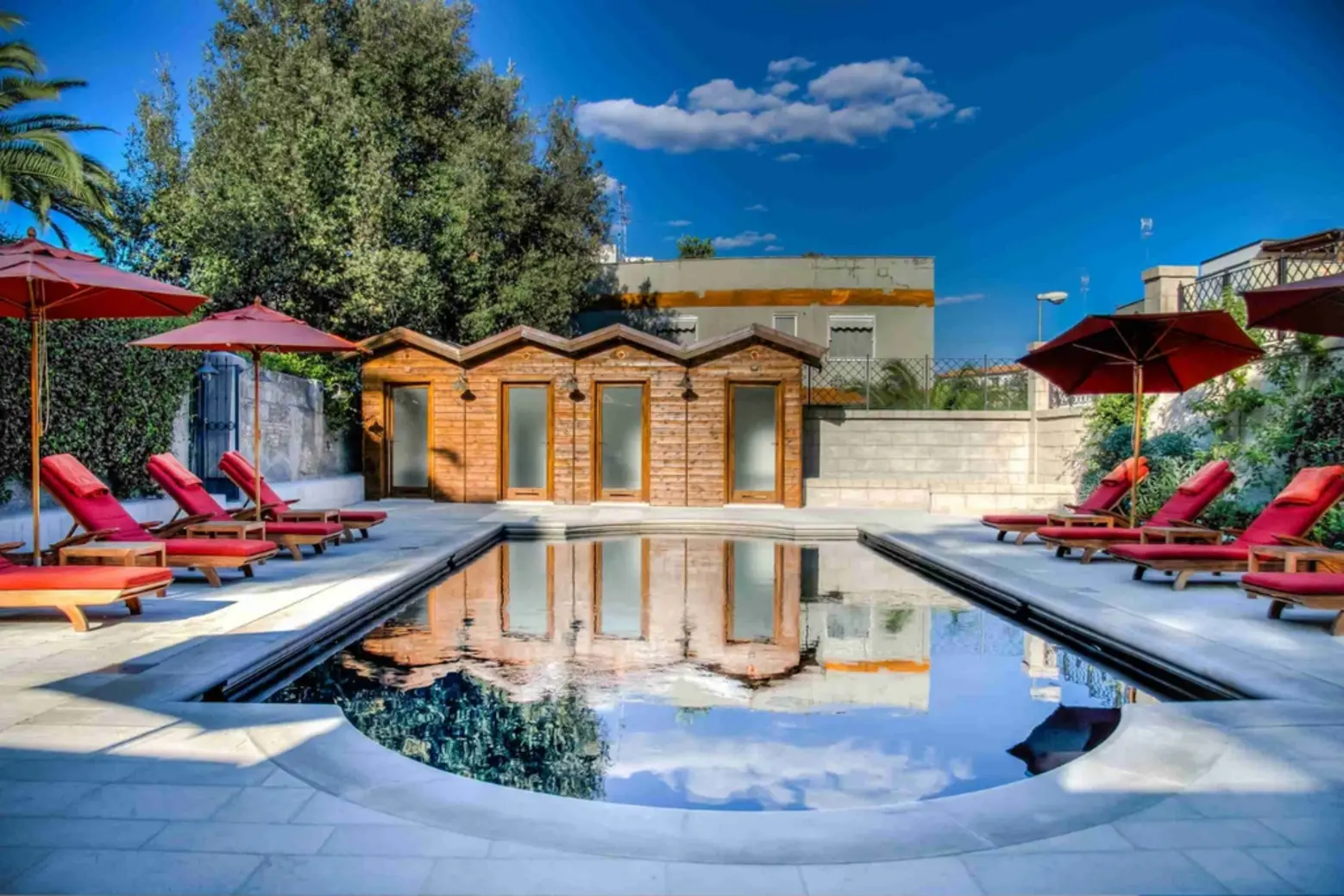
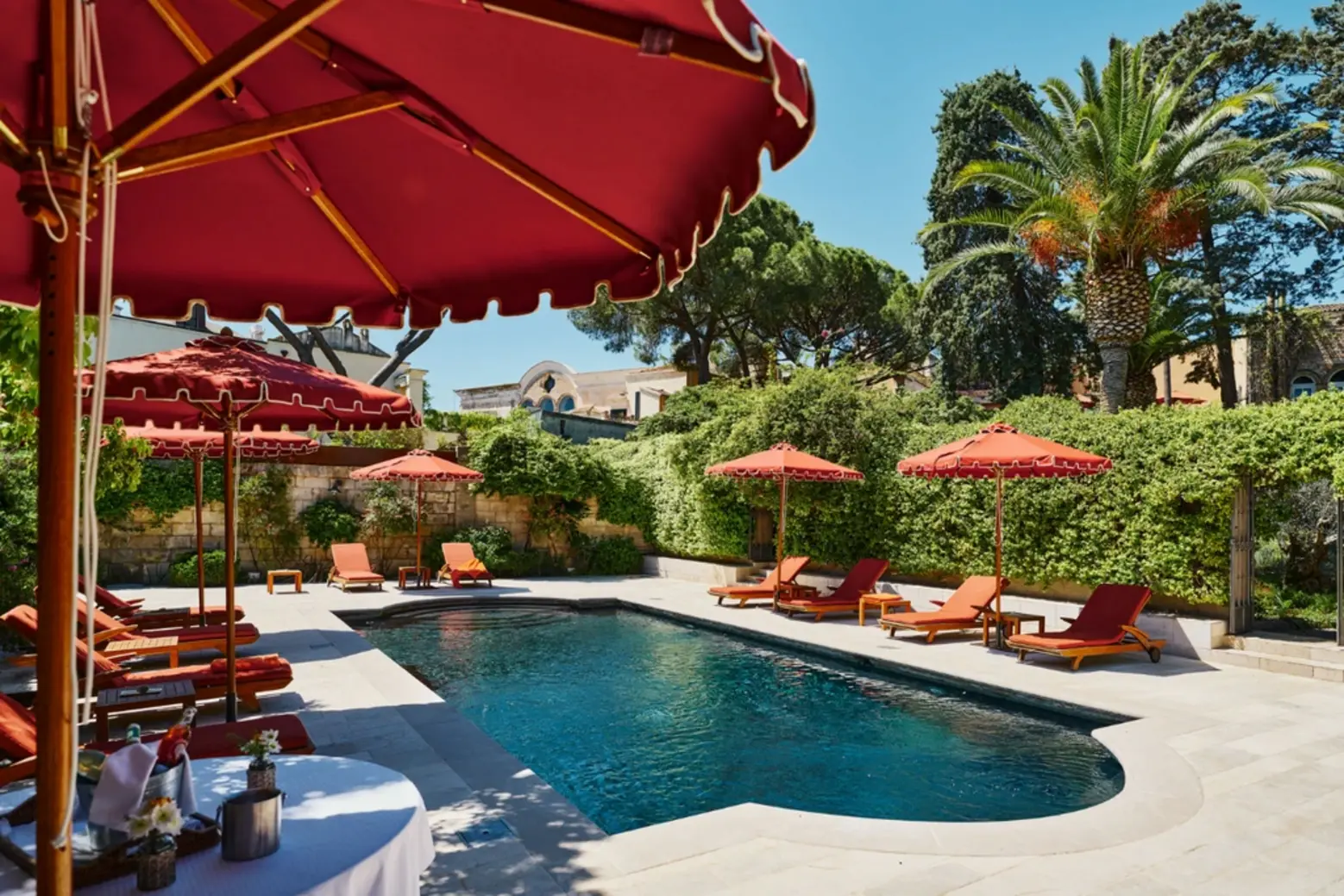
There is no gym, which feels entirely on brand for Coppola’s philosophy of travel. Exercise here comes through walking the hills of Bernalda, swimming in the Ionian Sea about 20 minutes away, or simply moving through the region at human speed. The approach reads as charmingly stubborn and surprisingly elegant. Why run on a machine when southern Italy is right there being gorgeous?
Even dining follows the logic of intimacy over ceremony. Rather than emphasizing a formal dining room with hushed choreography, Palazzo Margherita encourages guests toward the large farmhouse-style kitchen table, where chefs prepare handmade pasta in view. The atmosphere nods to communal family meals and carries a faint echo of The Godfather, minus the menace, plus more excellent olive oil.
For travelers who like numbers, the property remains impressively grounded in fact as well as fantasy. It sits in Bernalda, in the province of Matera, Basilicata. The building dates to 1892. The restoration spanned seven years, from 2004 to 2011. During peak season, the staff-to-guest ratio reaches roughly 2:1, a figure that helps explain the quietly attentive feeling of the service. The UNESCO-listed Sassi di Matera lie about a 40-minute drive away, close enough for cultural pilgrimage, far enough for the palazzo to remain in its own world.
And perhaps that is the most persuasive way to understand Palazzo Margherita. It is a luxury hotel, certainly. It is also a house of memory, an exercise in narrative architecture, and a deeply intelligent lesson in how place can carry plot. Francis Ford Coppola took an ancestral thread and turned it into an inhabitable story. Jacques Garcia gave the story texture, shadow, and light. Bernalda gave it roots.
The result feels cinematic in the richest sense: Immersive, composed, emotionally legible, and saturated with atmosphere. With the 98th Oscars set for March 15, 2026, this feels like the perfect moment to retreat to a film-inspired hotel, somewhere glamour, memory, and mise-en-scène still shape the mood of a stay. Palazzo Margherita does exactly that. Some places ask to be admired, this one invites guests to enter the frame. That invitation is what makes it one of the best luxury hotels in Italy, and that intimacy is what keeps it unforgettable among boutique hotels in Europe.