MENU
Close





Jewellery watches in 2026 blur the line between horology and high jewellery through gem-setting, métiers d’art, secret watches and miniature mechanical artistry.

Jewellery watches in 2026 blur the line between horology and high jewellery through gem-setting, métiers d’art, secret watches and miniature mechanical artistry.
April 15, 2026


There is a particular kind of luxury that has no interest in announcing itself too quickly. Jewellery watches belong to that world. They are, on one level, instruments of timekeeping. On another, they are miniature theatres of craft, where goldsmithing, gem-setting, lacquer, enamel, carving and mechanical ingenuity are asked to share the same impossibly small stage. In 2026, the category feels especially alive, less because it is louder than before and more because it has become more assured in what it is: not simply a watch with diamonds, nor merely a jewel that happens to tell the time, but an object in which horology and ornament have finally stopped pretending to be separate disciplines.
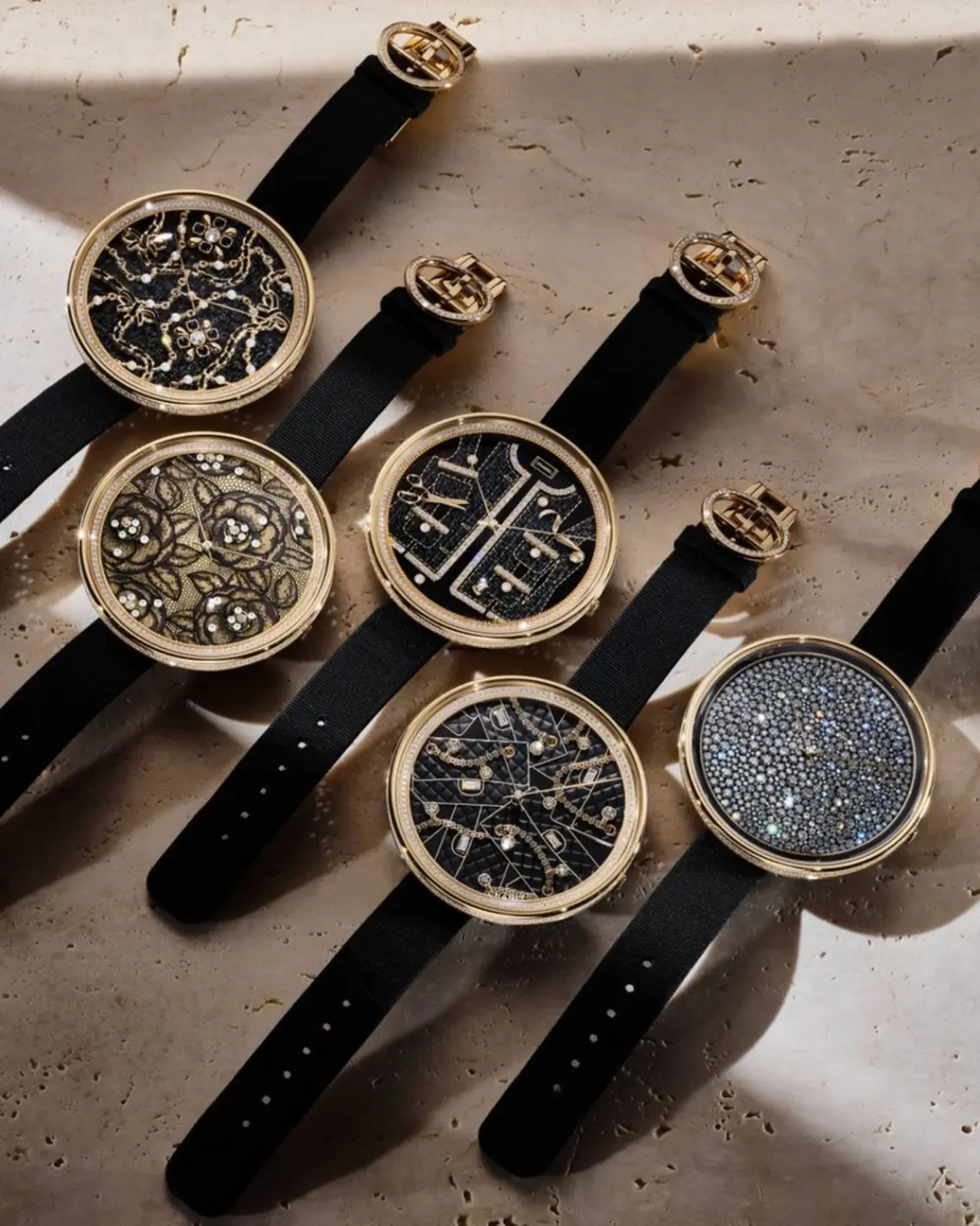
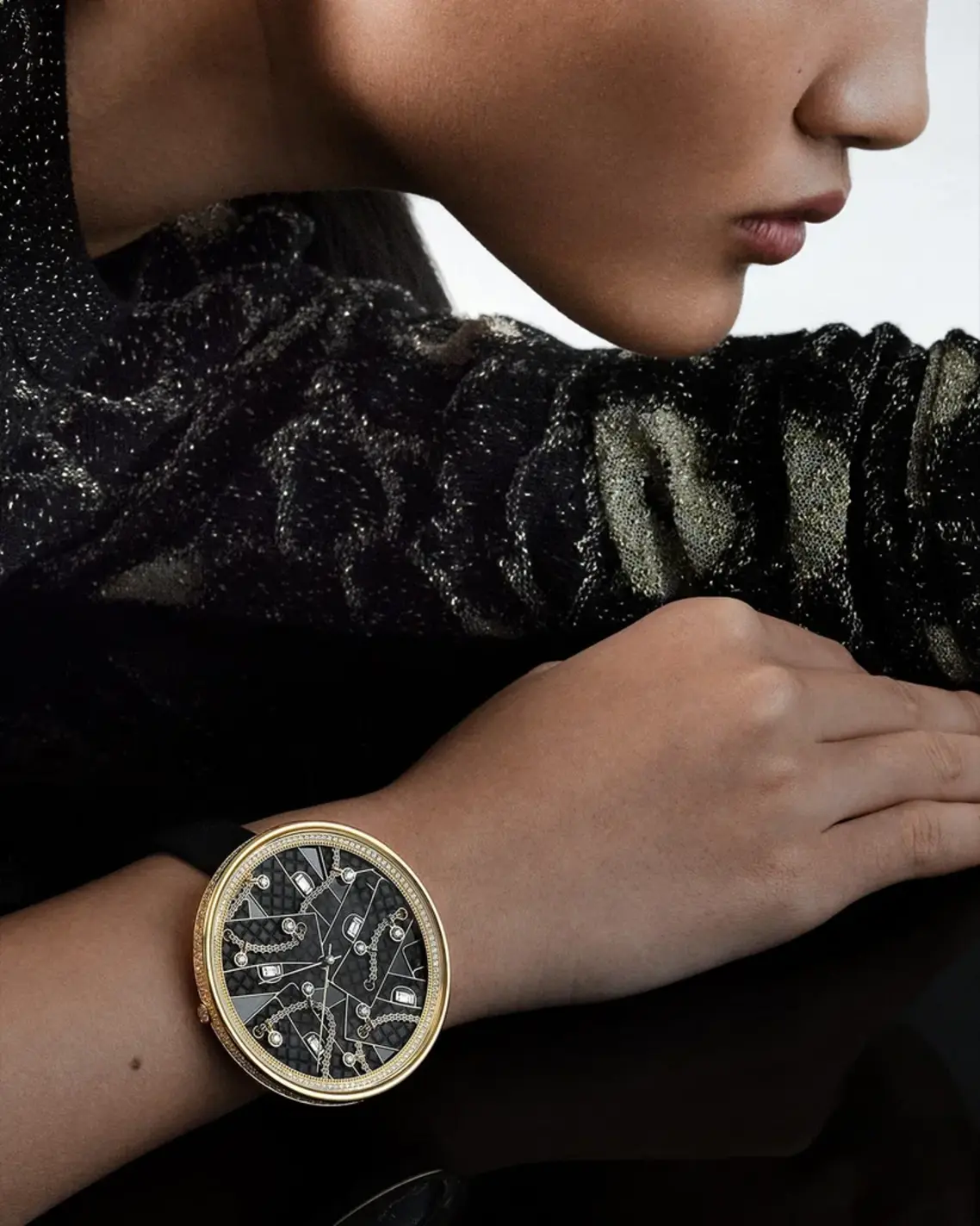
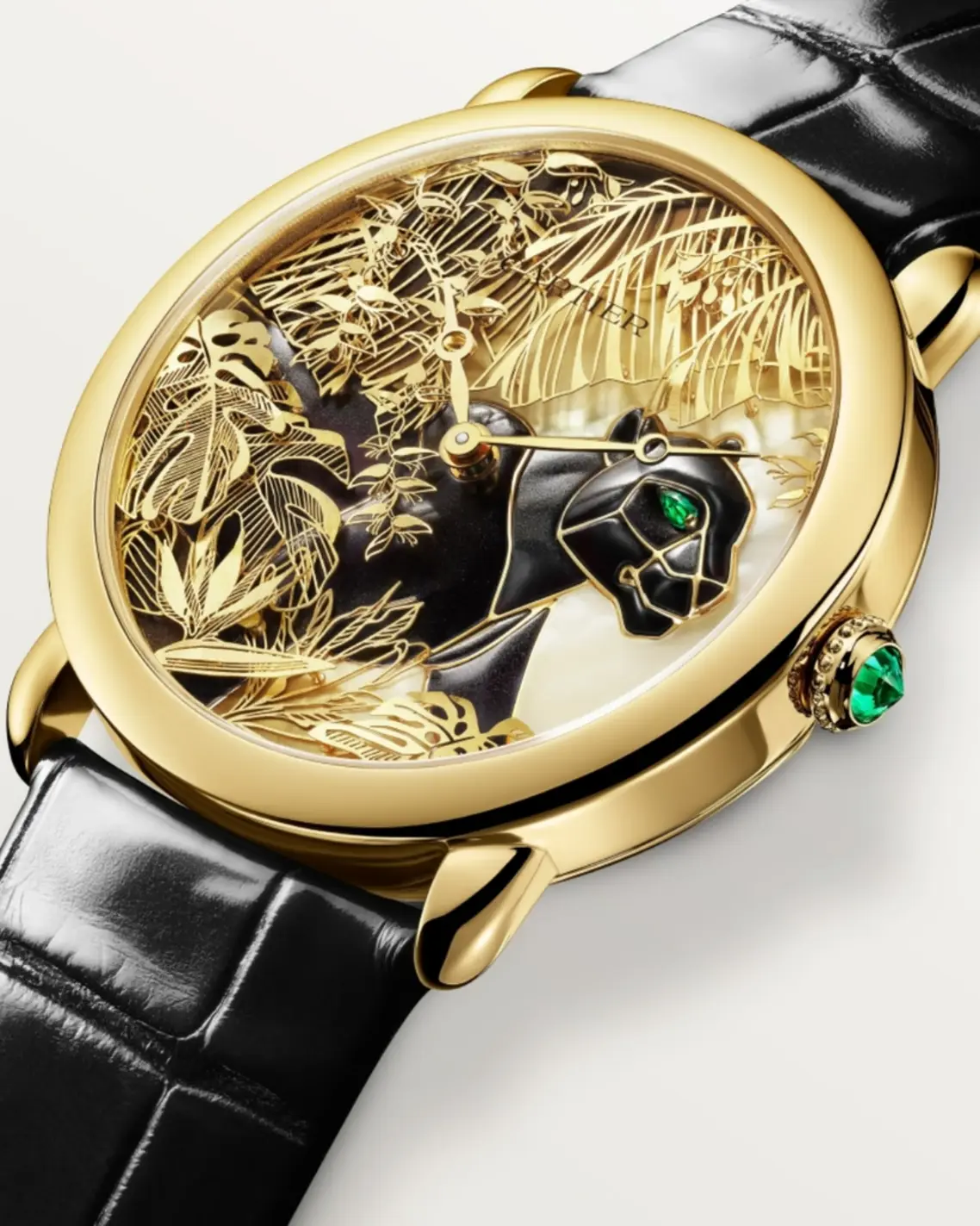
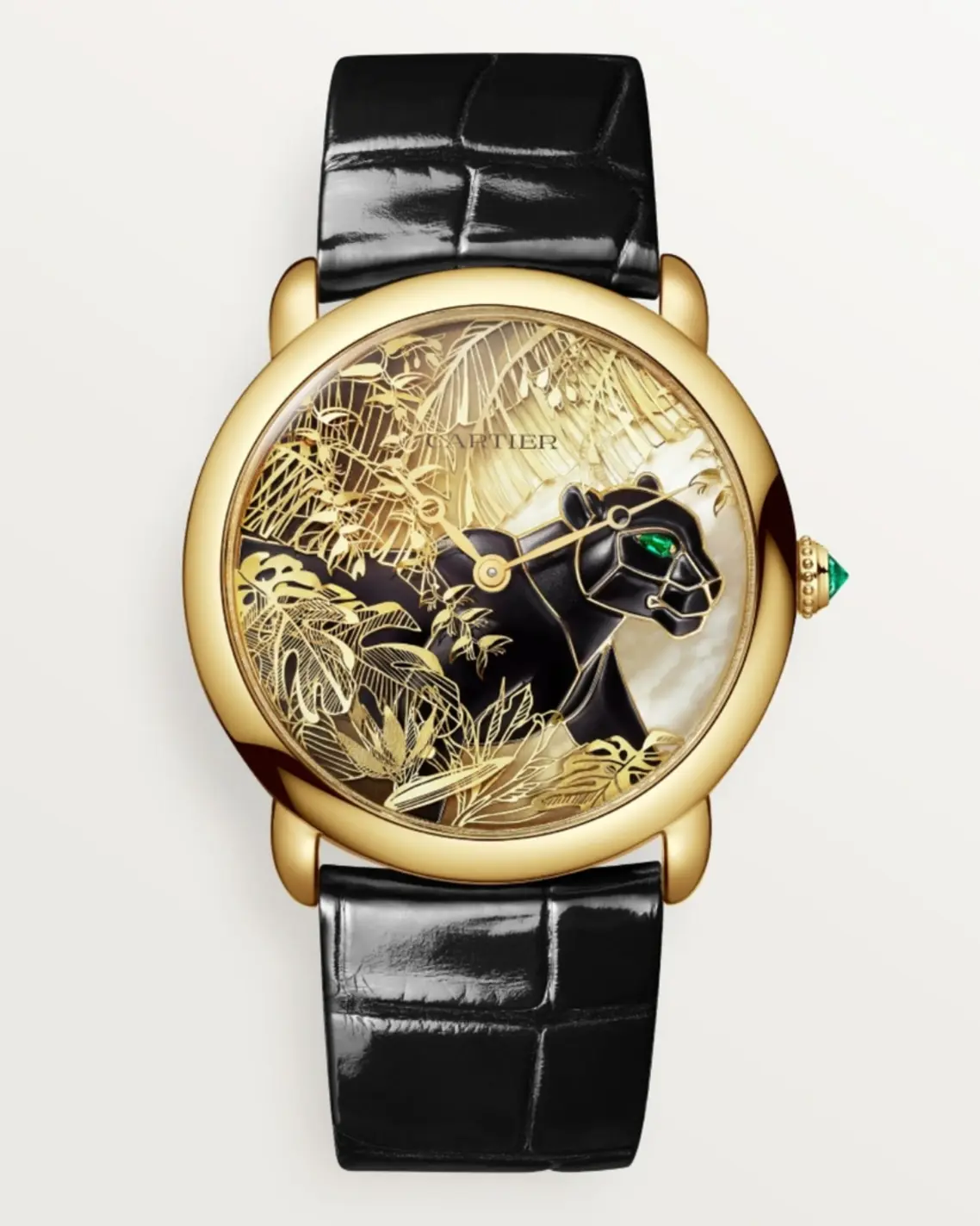
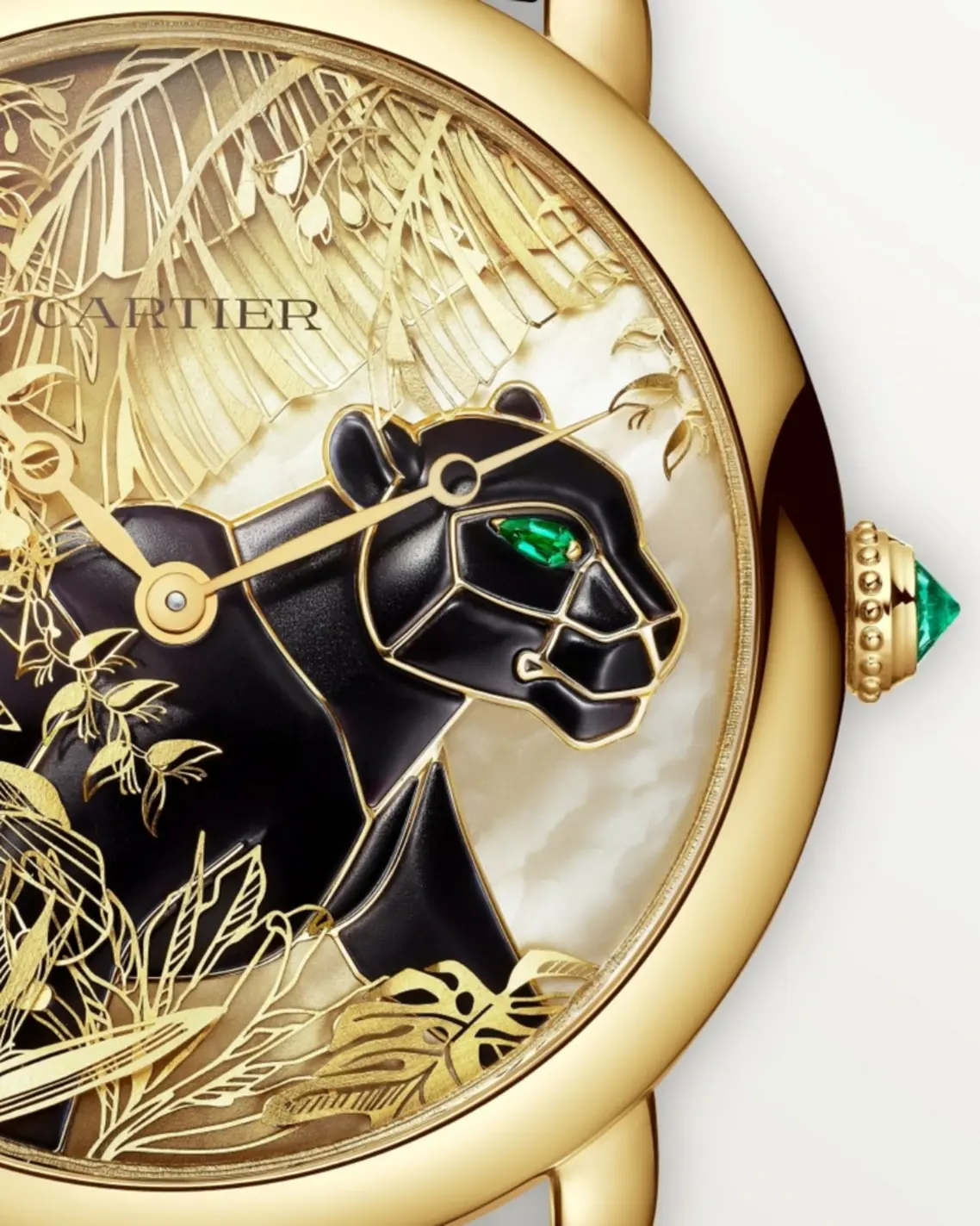
That breadth is what makes modern jewellery watches so compelling. At one end sits the overtly precious secret watch, where time is hidden under a coin, a serpent’s head or a gem-set cover, as though discretion itself were the final luxury. At the other is the métiers d’art watch, whose seduction lies not in concealment but in the dial: a surface rendered in mother-of-pearl, gold thread, lacquer or enamel with the intensity of a miniature painting. Chanel’s current Mademoiselle Privé Pincushion pieces, with their oversize curved crystals and dials decorated with haute couture and beauty motifs in gold, diamonds, mother-of-pearl or onyx, understand this perfectly. So does Cartier’s Ronde Louis Cartier Panthère Métiers d’Art, where a black lacquer mother-of-pearl panther is bordered by gold thread and set against lacquered foliage, all within a 36mm yellow-gold case. These are not pieces that wear their artistry as garnish. The decoration is the point.
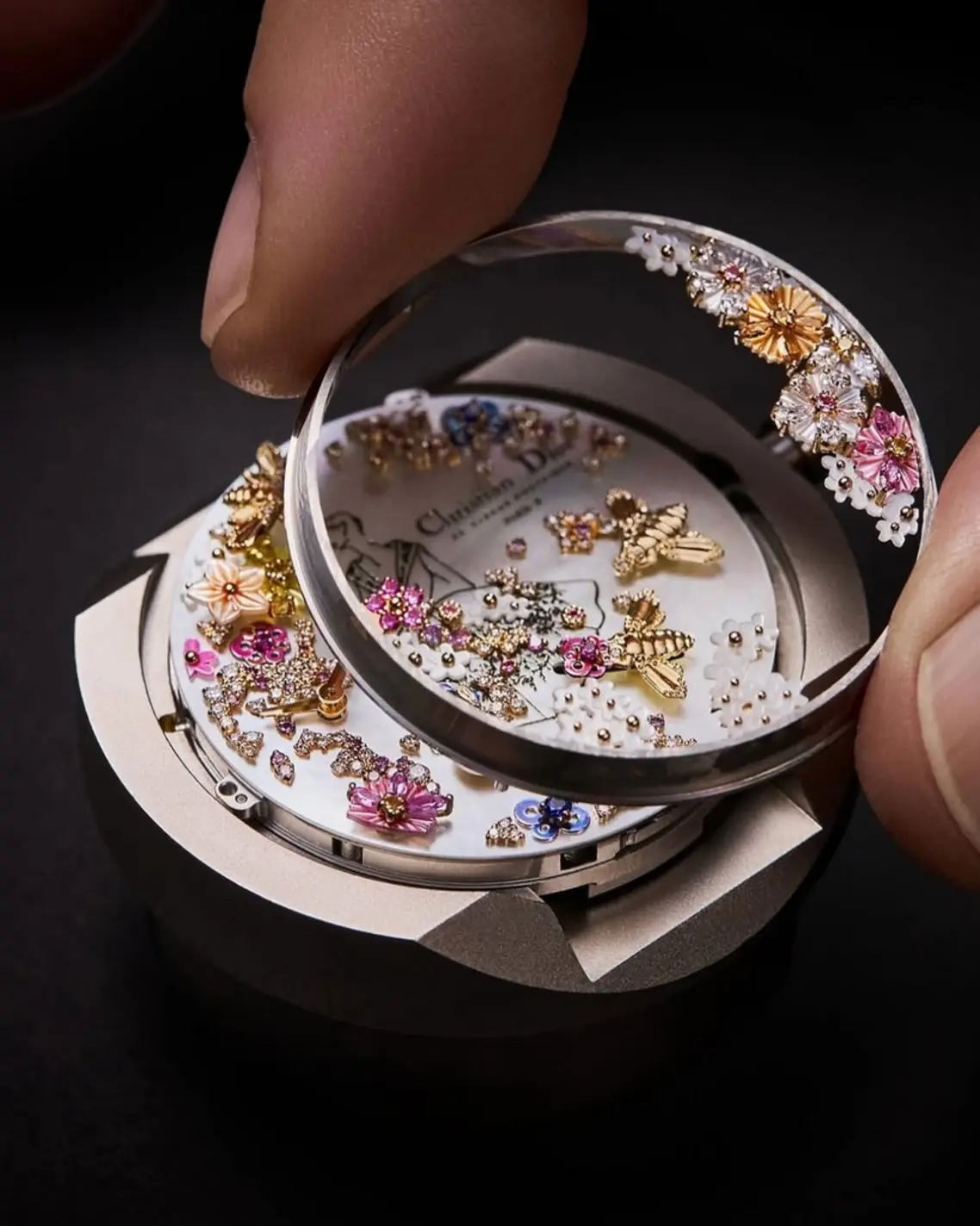
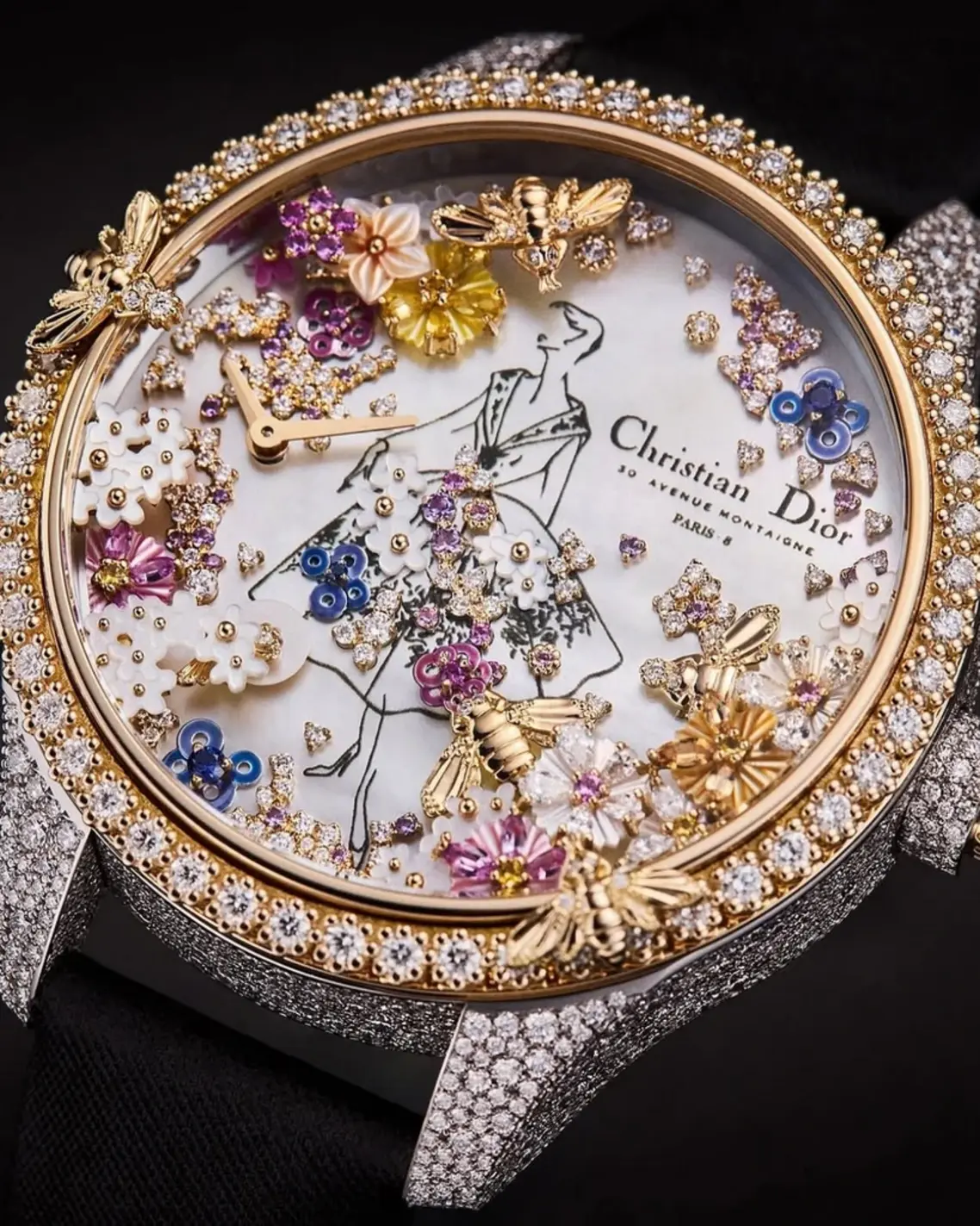
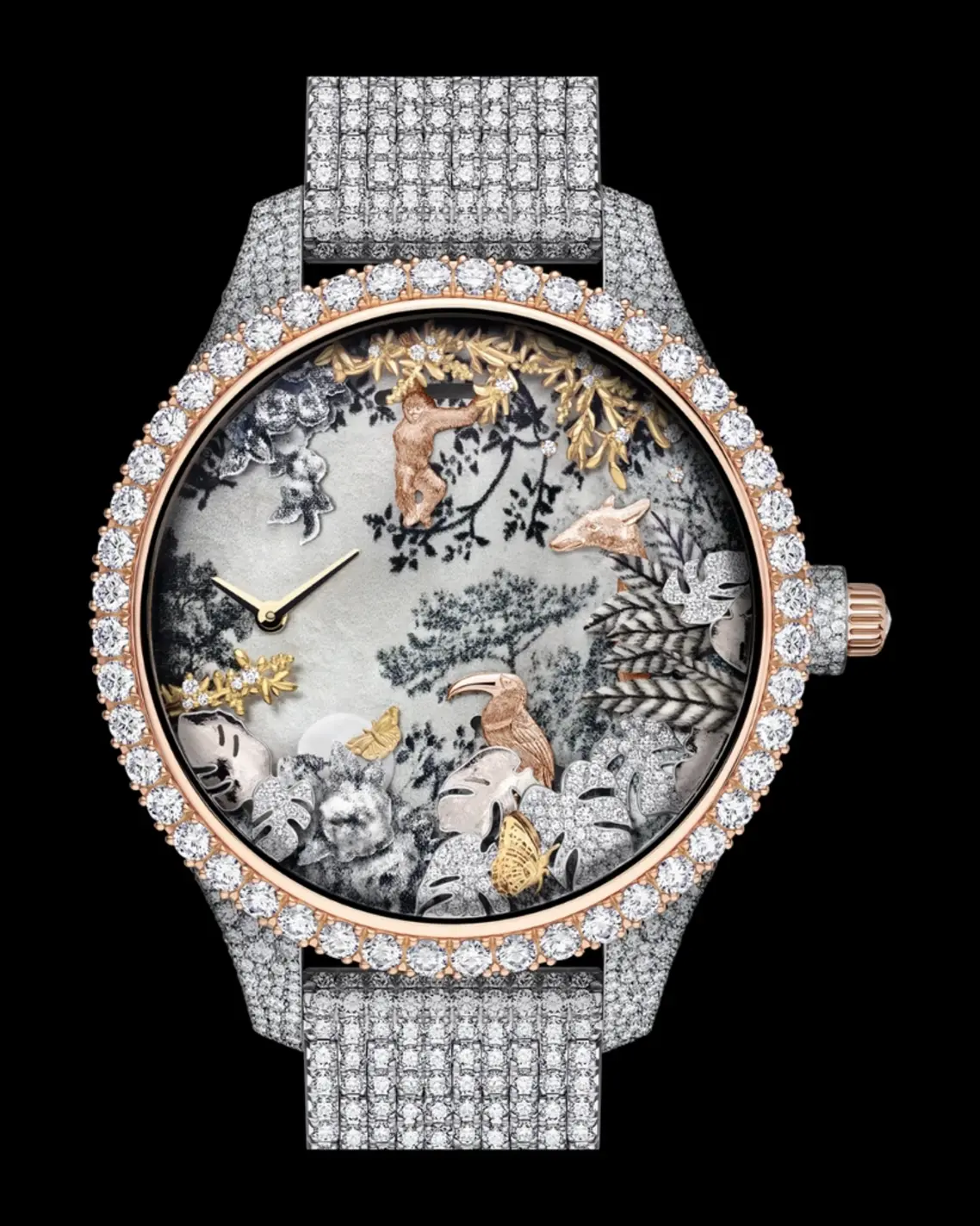
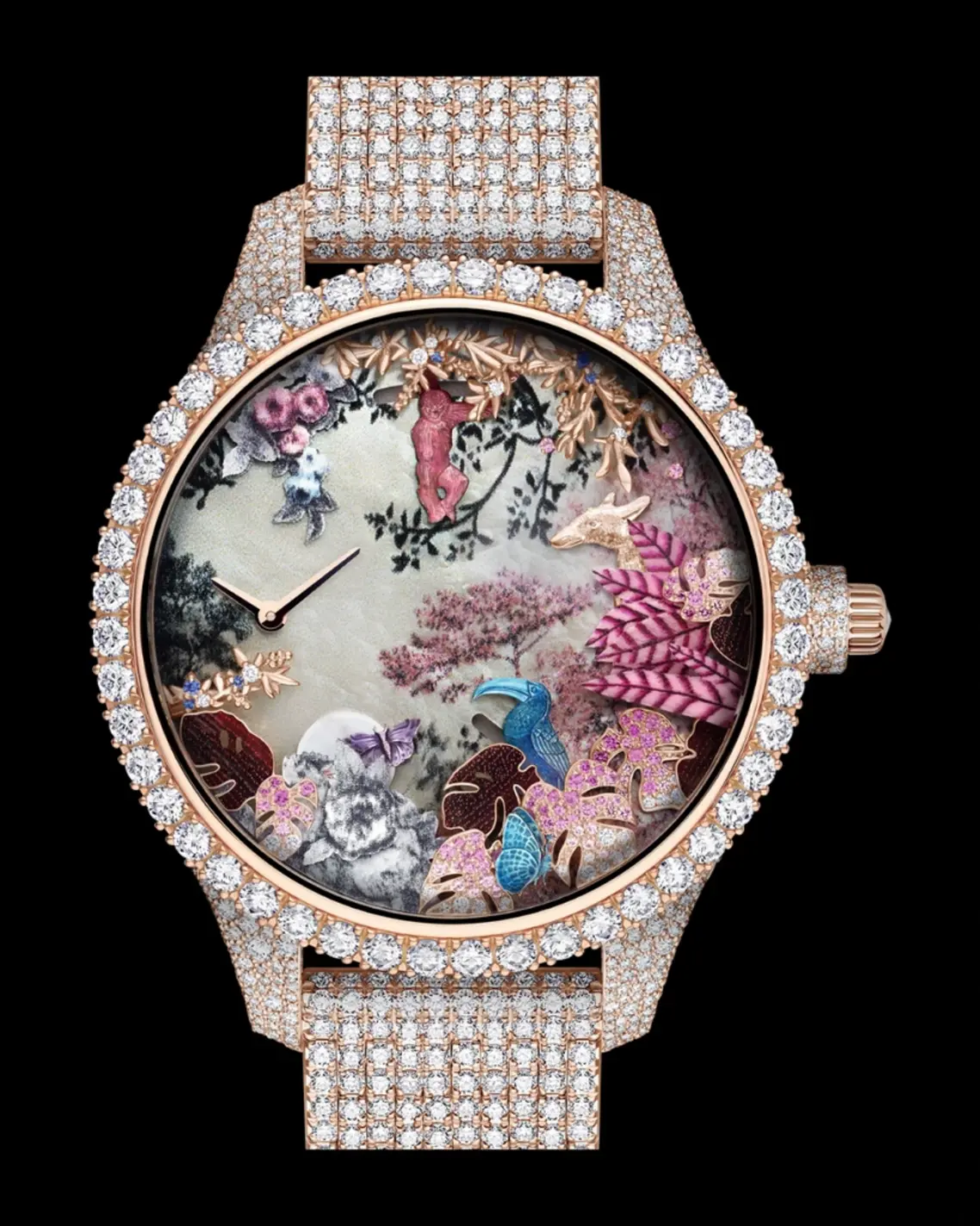
Dior, meanwhile, has embraced the idea that jewellery watches can be as atmospheric as a couture collection. The Grand Soir Automate Jardin Rêvé pieces are less watches than enchanted tableaux: printed mother-of-pearl dials, hand-engraved gold branches, diamonds, feathers and even scarab-wing details arranged into fantastical winter gardens. The companion Grand Soir Automate Étoile de Monsieur Dior moves the mood from botanical to celestial, layering stars and cloudlike motifs into a composition that feels closer to dreamwork than product design. One of the pleasures of the category in 2026 is precisely this willingness to pursue narrative. A dial no longer needs merely to be pretty. It can be literary, atmospheric, almost cinematic.
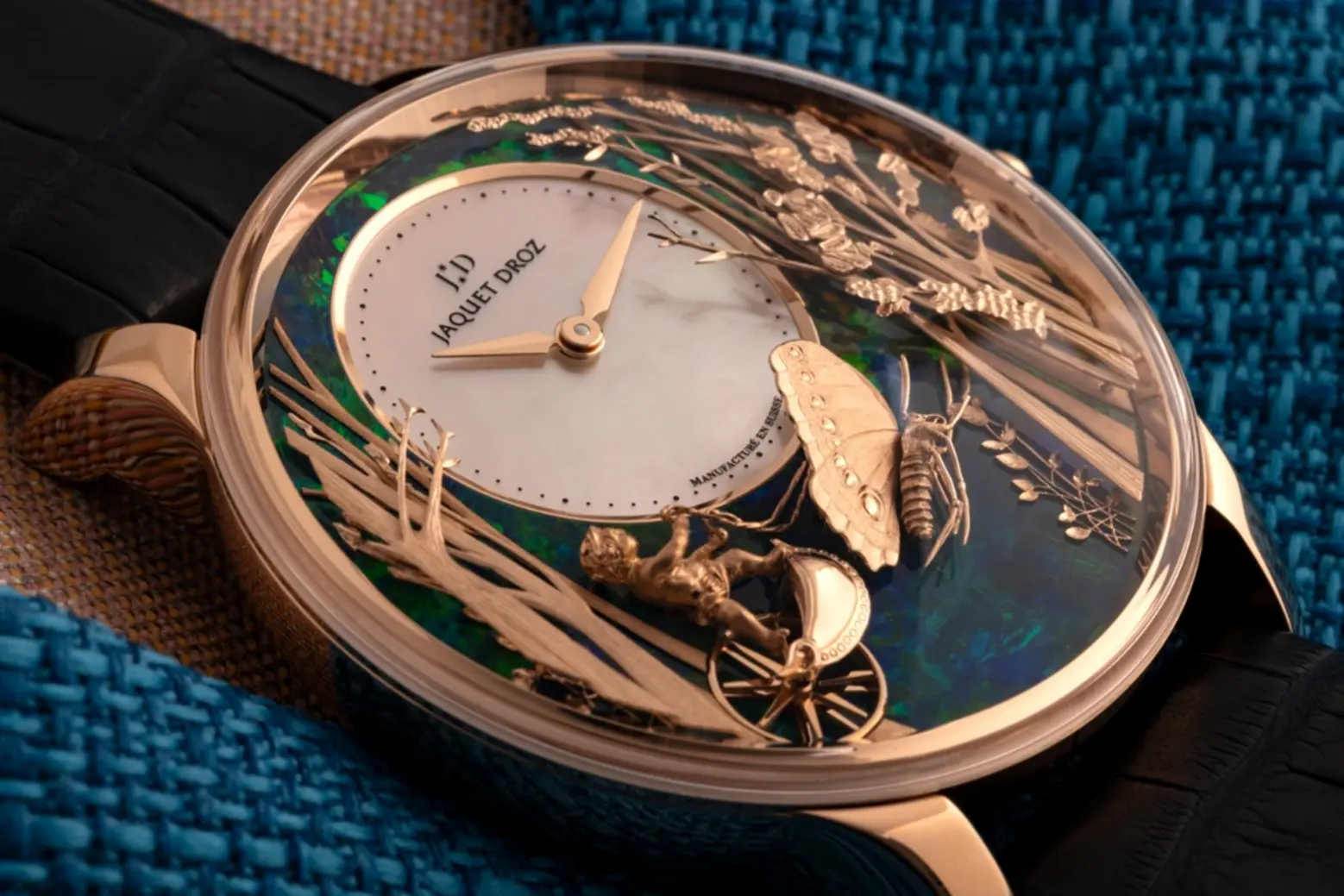
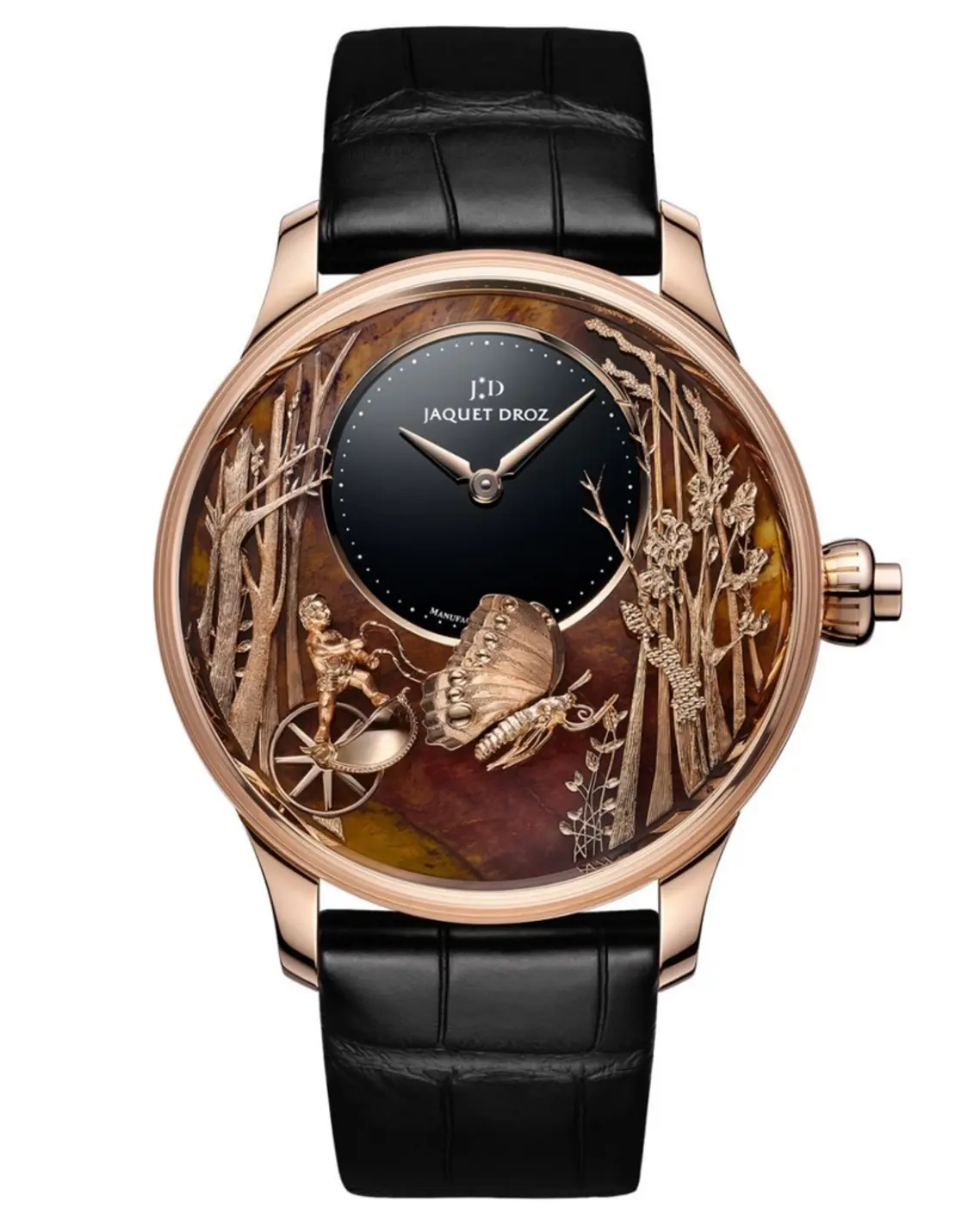
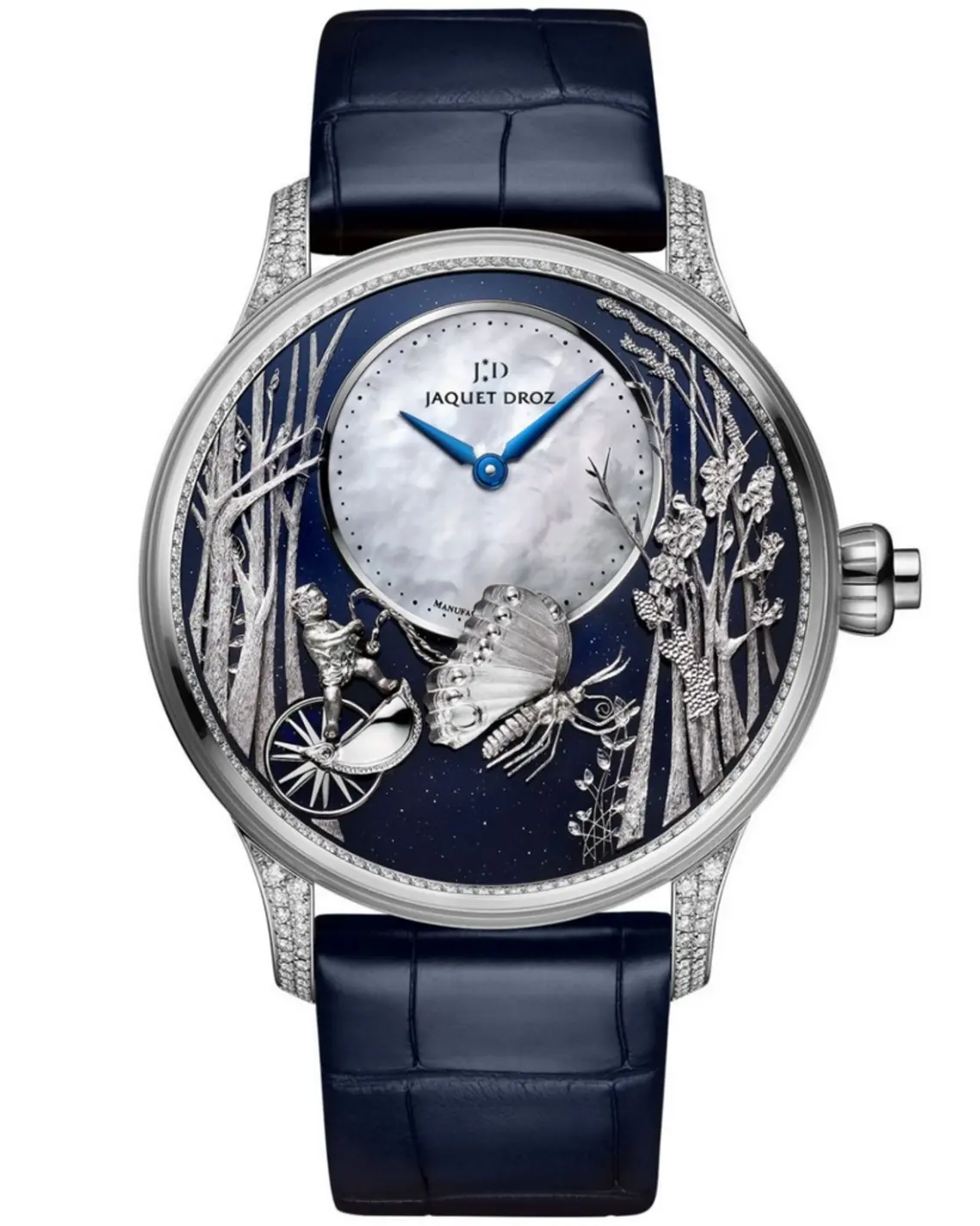
If there is one area in which jewellery watches continue to astonish, it is automata. These pieces have an old-world enchantment about them, the sort that resists the disposable speed of contemporary luxury. Jaquet Droz’s Loving Butterfly Automaton remains one of the most persuasive examples: a cherub on a chariot drawn by a butterfly, animated by a hand-wound mechanism that sets both the wings and the wheel in motion.
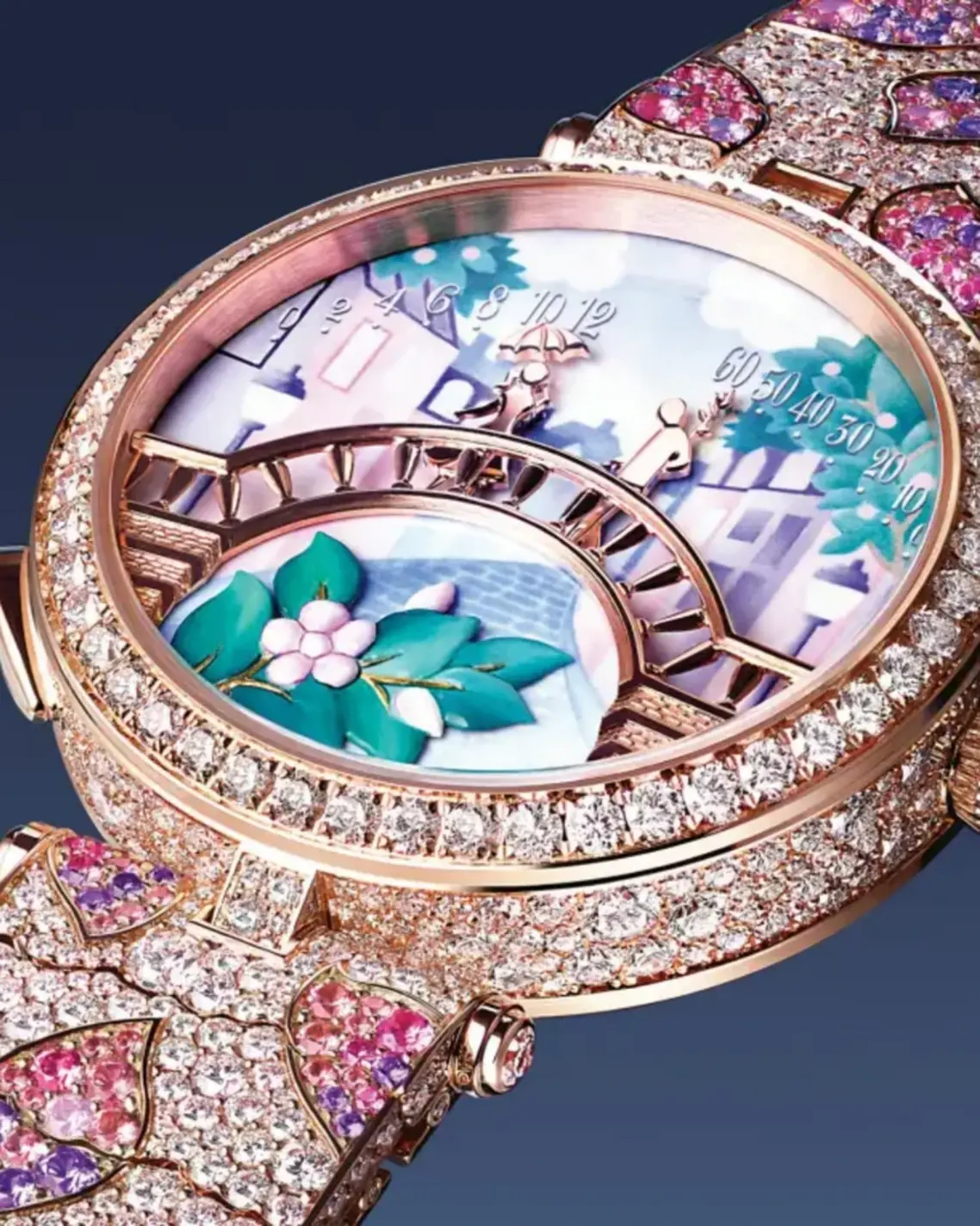
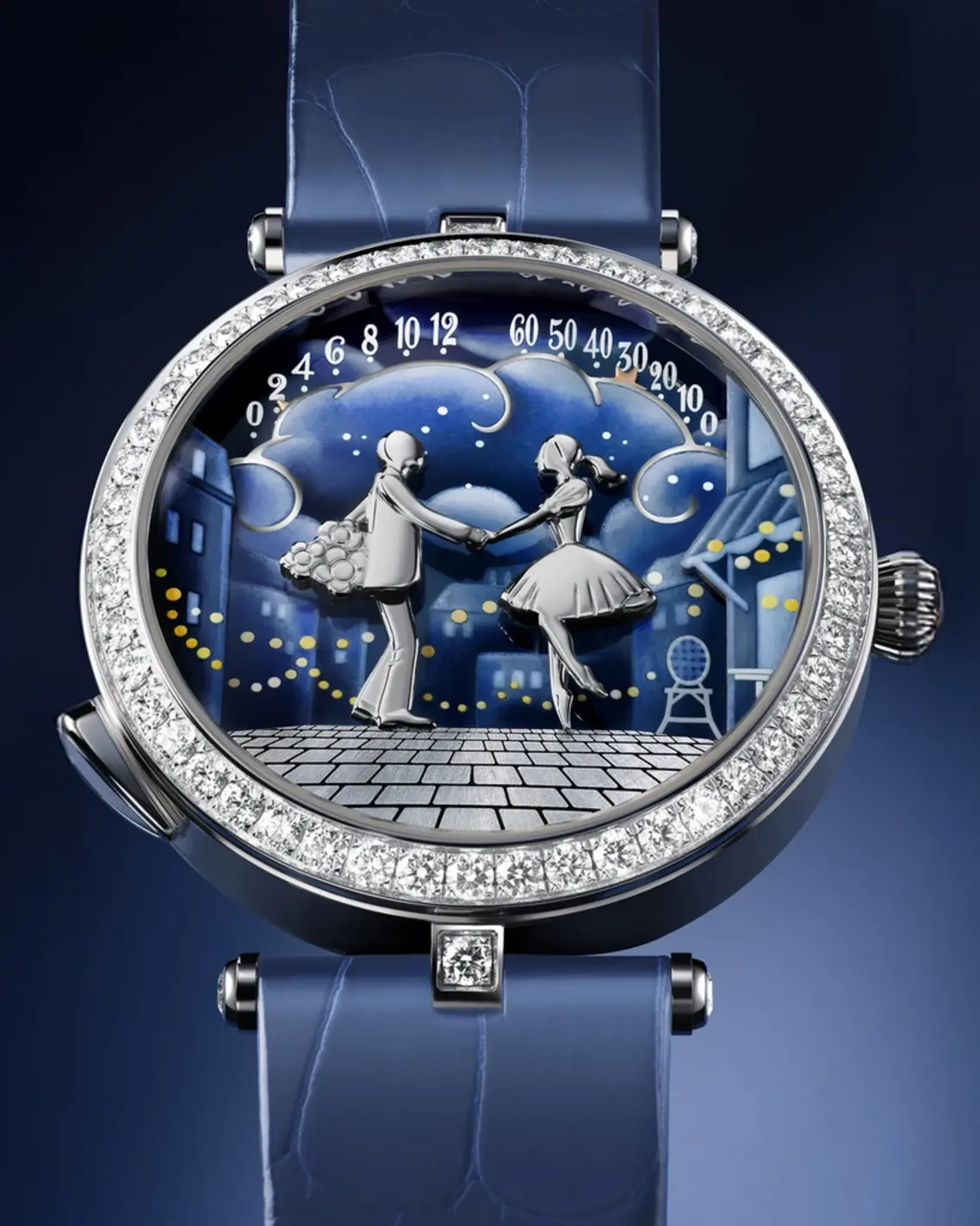
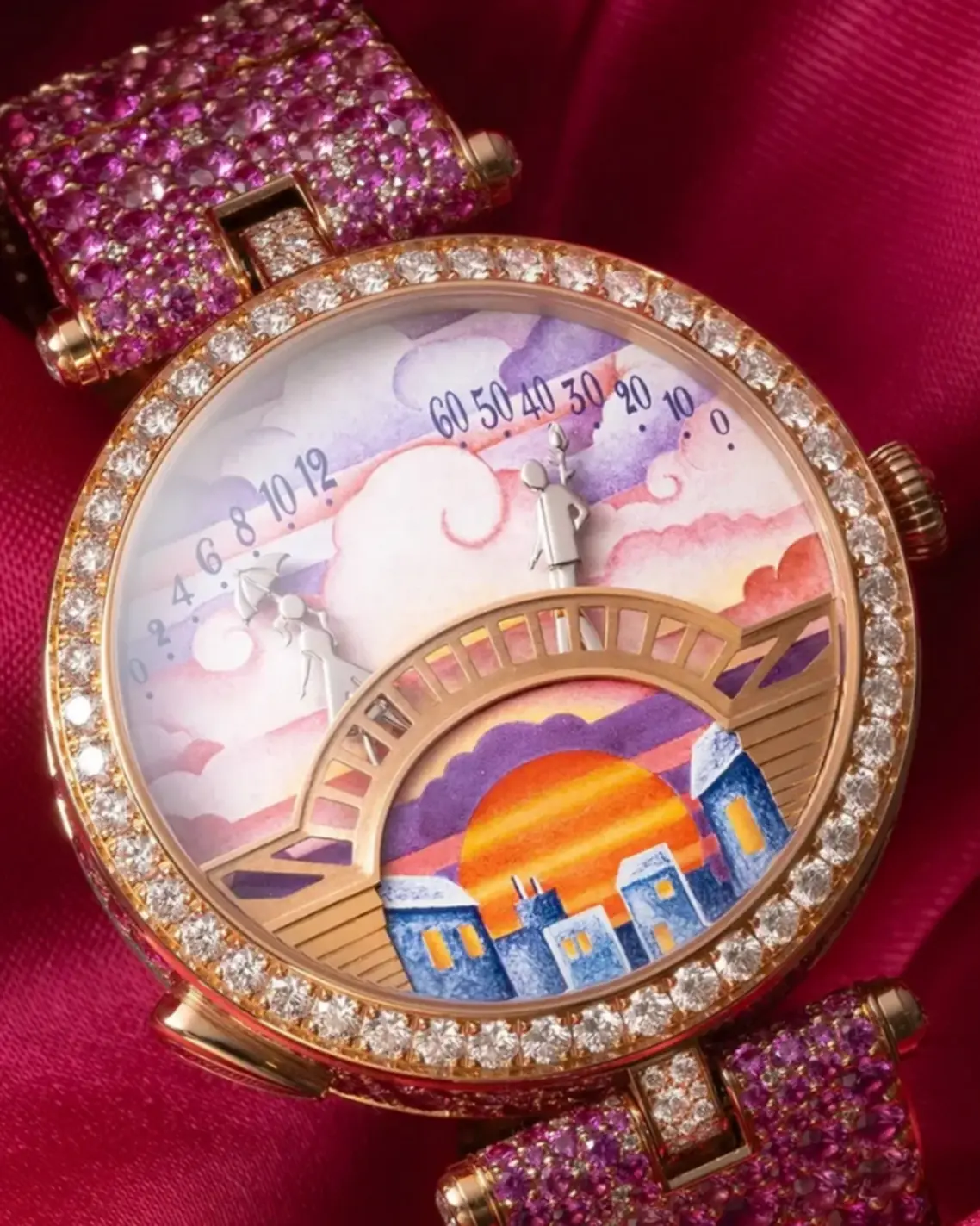
Van Cleef & Arpels has chosen a softer register with its Lady Arpels Bal des Amoureux Automate, introduced at Watches and Wonders 2025 and carried with quiet confidence into the current conversation. There, two lovers meet and kiss at noon and midnight, or on demand, in a guinguette scene rendered in enamel and diamonds. These watches do not merely measure time. They stage it.
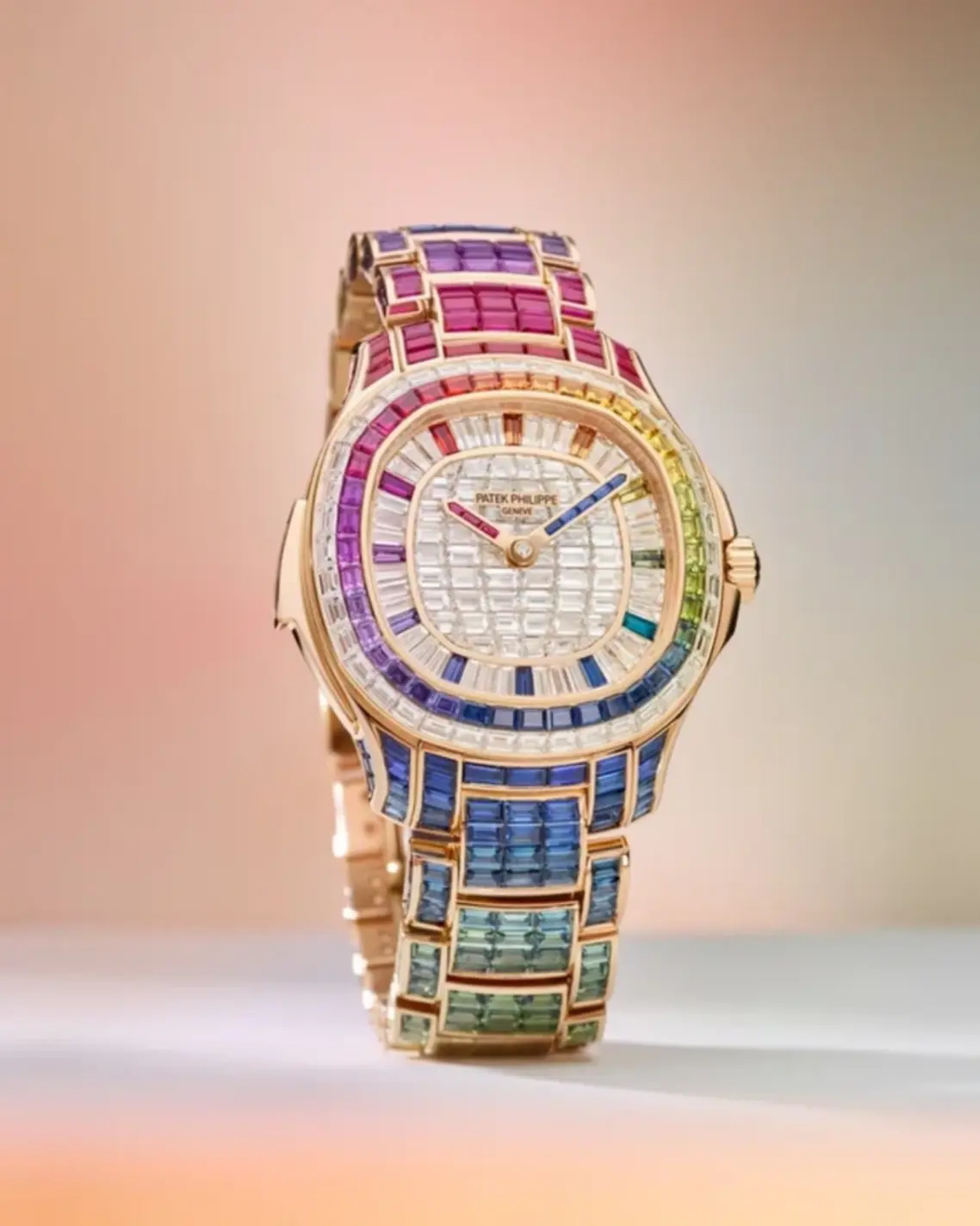
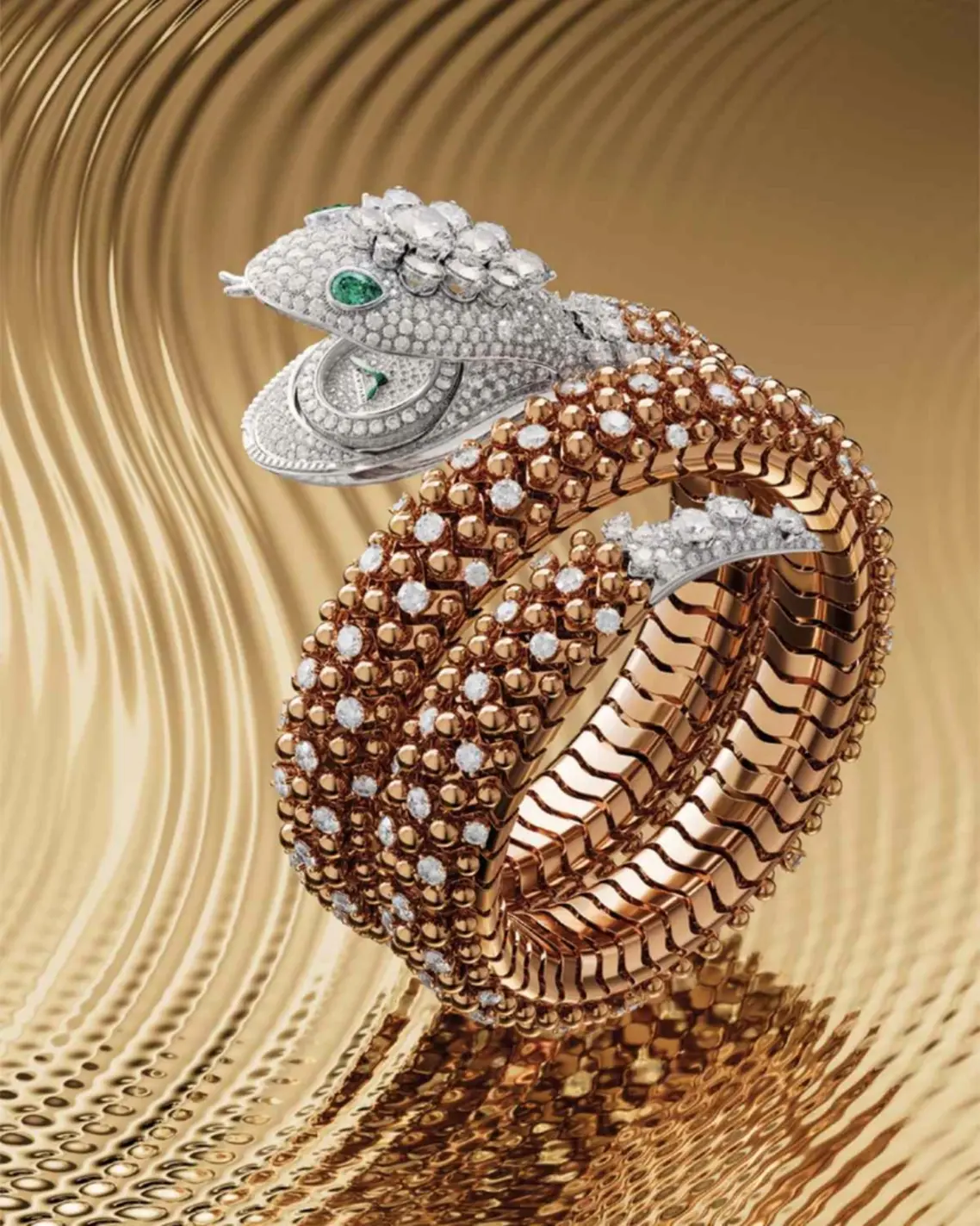
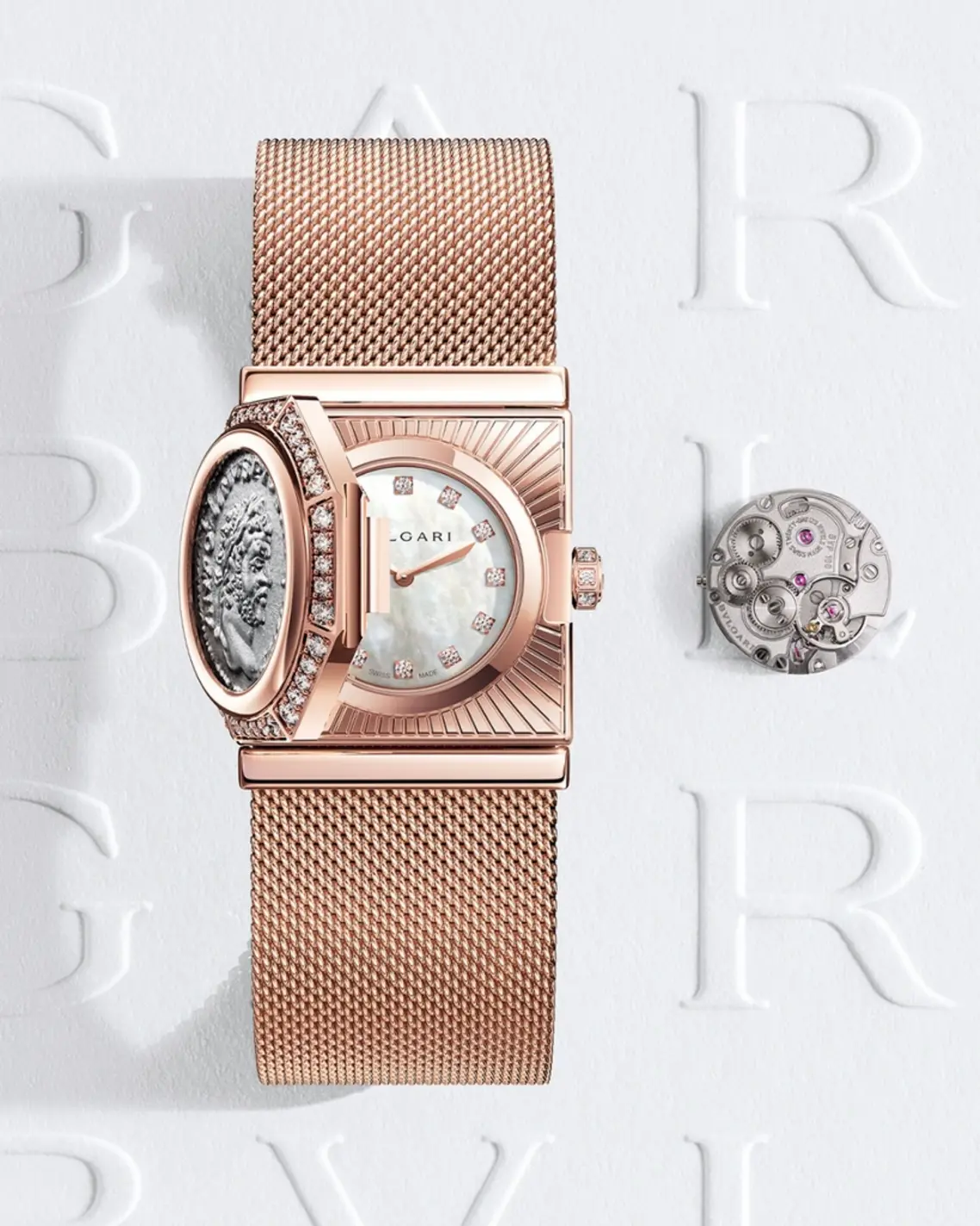
Gem-setting, of course, remains the most legible language of the form, and here the distinction between watchmaking and jewellery becomes almost academic. Patek Philippe’s Aquanaut Luce “Rainbow” Minute Repeater Haute Joaillerie is a case in point: a minute repeater covered in multicoloured baguette-cut sapphires and baguette-cut diamonds, proving that mechanical seriousness and visual exuberance are no longer treated as opposing virtues. Bulgari approaches the jewelled watch from a more Roman direction. Its Serpenti secret watches continue to treat concealment as seduction, while the Maglia Milanese Monete Secret Watch, presented during LVMH Watch Week 2026, layers rose-gold Milanese mesh with an authentic ancient coin from 198–297 AD and the Maison’s tiny Piccolissimo movement. It is difficult to think of a neater argument for the jewellery watch as a total object: archaeology, adornment and engineering all wrapped around the wrist at once.
What feels especially modern is that the finest jewellery watches are no longer interested in drawing a hierarchy between “serious” watchmaking and the decorative arts. For decades, they were too often relegated to the margins, admired for surface rather than structure. The current landscape suggests something more generous and more accurate. Enamel techniques such as champlevé, paillonné and plique-à-jour continue to be preserved and refined; gold thread, silk work and hand engraving are treated with the same reverence as calibres and complications. Van Cleef & Arpels openly foregrounds enamel’s many languages, while Chanel’s artistic craft pieces make métiers d’art central to the identity of the watch rather than incidental to it. In 2026, ornament is no longer apologising for itself.
Perhaps that is the most elegant way to understand jewellery watches now. A jewellery watch is not defined by the number of diamonds it carries, though there may be many, nor by whether its face is hidden, painted, sculpted or animated, though all of those possibilities remain open. It is defined by intent. These are pieces made by maisons willing to spend extraordinary effort on things many industries would consider excessive: the right shade of lacquer, the exact depth of an engraved leaf, the movement of a kiss, the curve of a crystal over a dial inspired by a dressmaker’s pincushion. Time, in such objects, becomes almost secondary. What one is really buying is concentration, patience, and the increasingly rare pleasure of seeing multiple crafts meet without compromise in a single, glittering form.