MENU
Close





Beneath the luxury of "nice clothes" lies a creative surrender where fashion has traded the visceral soul of punk and McQueen for the safety of a beige, sartorial tranquilizer, whether it is minimalism or just lazy fashion.
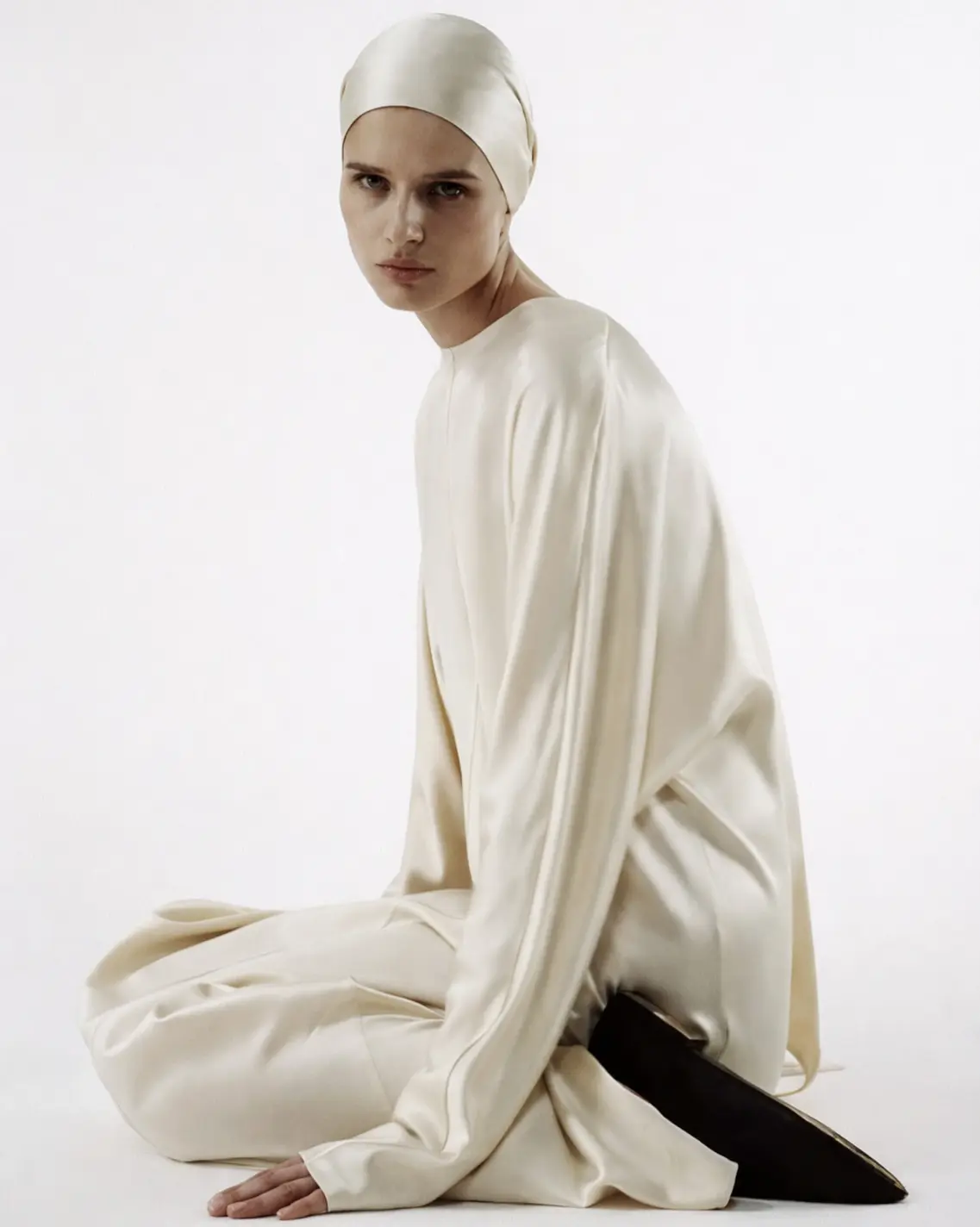
Beneath the luxury of "nice clothes" lies a creative surrender where fashion has traded the visceral soul of punk and McQueen for the safety of a beige, sartorial tranquilizer, whether it is minimalism or just lazy fashion.
January 26, 2026
Advertisement
Advertisement



The era of the radical has perished, smothered by a cashmere pillow. We exist within a vast, beige purgatory where the act of dressing has transitioned from a ritual of self-assertion into a surrender to the sartorial tranquilizer. What the industry politely labels as The Beige Purgatory is, in truth, a colossal creative pause, a period of Lazy Fashion so profound that it has turned the act of design into a mere clerical task. We are no longer witnessing the birth of ideas; we are witnessing the curation of corpses. Why has the pulse of innovation flatlined into a steady, expensive hum of nice clothes?
The current landscape is a hall of mirrors, reflecting a void. Brands like The Row, Lemaire offer garments that possess the structural integrity of a fortress but the soul of a spreadsheet. This is the triumph of the well-mannered over the meaningful. We have traded the exhilarating terror of an Alexander McQueen silhouette for the safety of a perfectly draped trouser. We have exchanged the agitation of the avant-garde for the Sunday lunch of high-end basics. Is the contemporary designer a visionary, or simply a high-functioning archivist of the mundane?
The fundamental failure of the modern era lies in its obsession with referencing references. We have reached the end of the line for imitation. When a culture ceases to look outward at the terrors and beauties of the world and instead gazes only at its own vintage catalogs, it enters a state of terminal stagnation. This is Lazy Fashion in its purest form: the belief that a slightly wider lapel or a marginally heavier wool constitutes a breakthrough. We are living in a post-creative epoch where pastiche is the primary mode of existence. Every collection is a remix of a remix, a ghost of a ghost, stripped of the original context that gave it life.
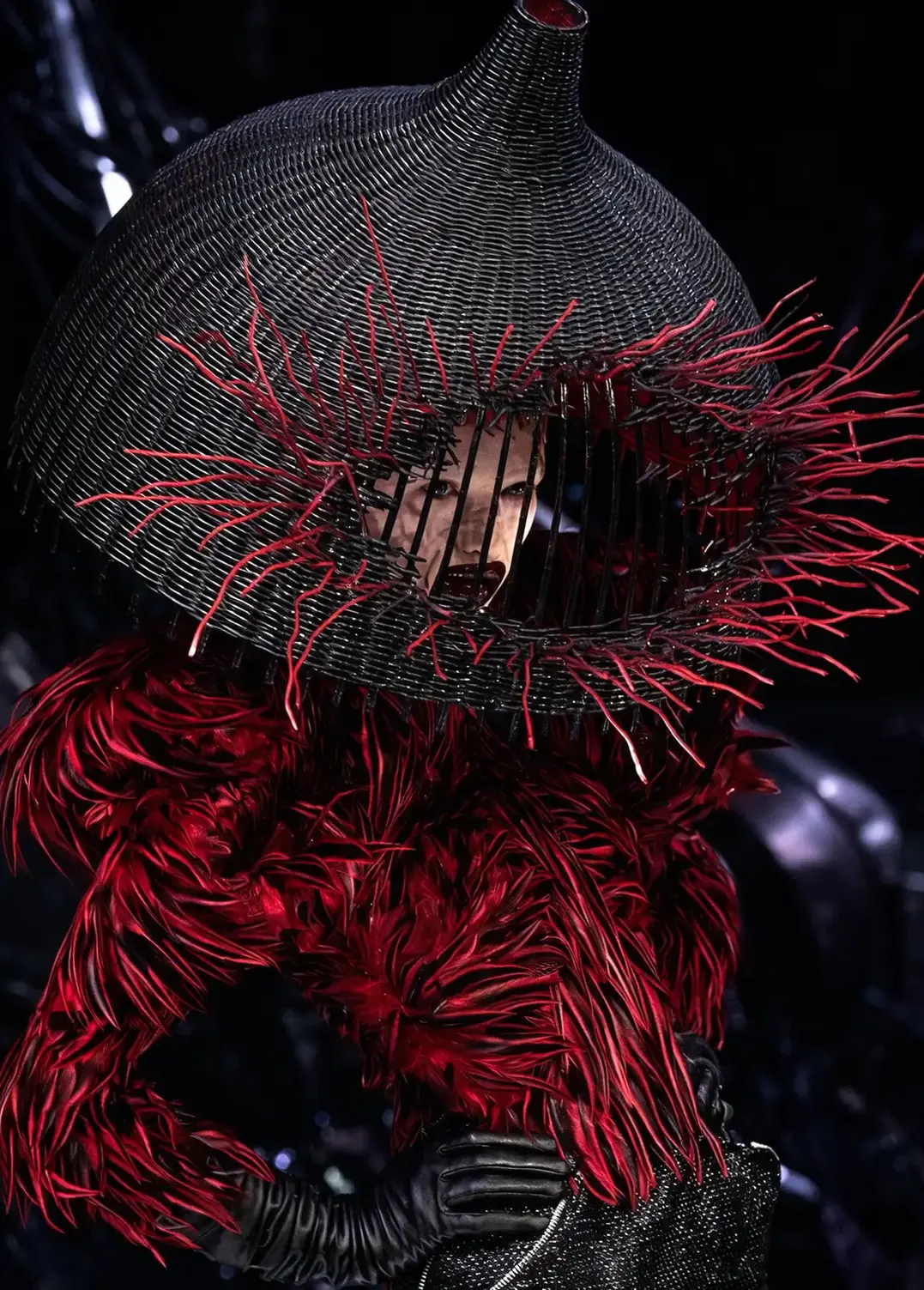
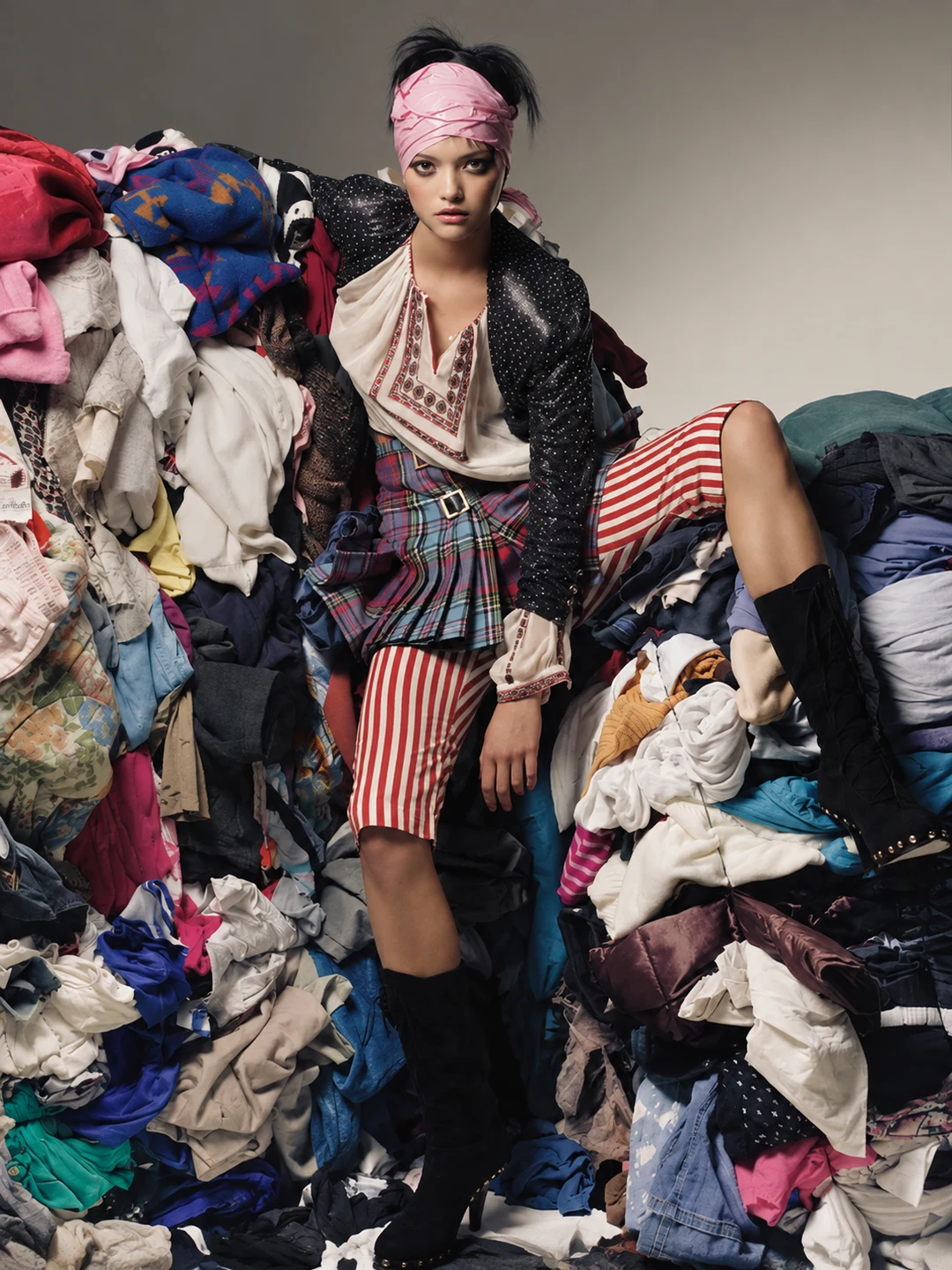
Where is the repulsion that McQueen demanded? Where is the shock that forces the viewer to re-evaluate their place in the universe? We need the extreme aesthetic back on the runway, the jagged edge of punk, the layered decay of grunge, the haunting shadows of the goth. These movements were never just about clothes; they were visual manifestos born from the chaos of politics and social unrest. Punk was a scream against a stagnant economy; grunge was a shrug toward a hollowed-out corporate dream. Today, we face a world teeming with political storms, yet our runways offer only a polite silence. Why do we seek the relax of a beige sweater when the world outside demands the armor of a combat boot?
We have elevated good taste to the status of a religion, forgetting that good taste is often the greatest enemy of art. To be tasteful is to be predictable. To be well-mannered is to be invisible. If a major house possessed the courage to bring back the dark and the twisted, it would be a delightful feast to feed the hungry soul of a fashion yearner. We are starving for the "exhilarating" because the "nice" has become a starvation diet for the imagination. The industry now lauds wearability as if it were a profound philosophical discovery, rather than the bare minimum requirement of a garment.
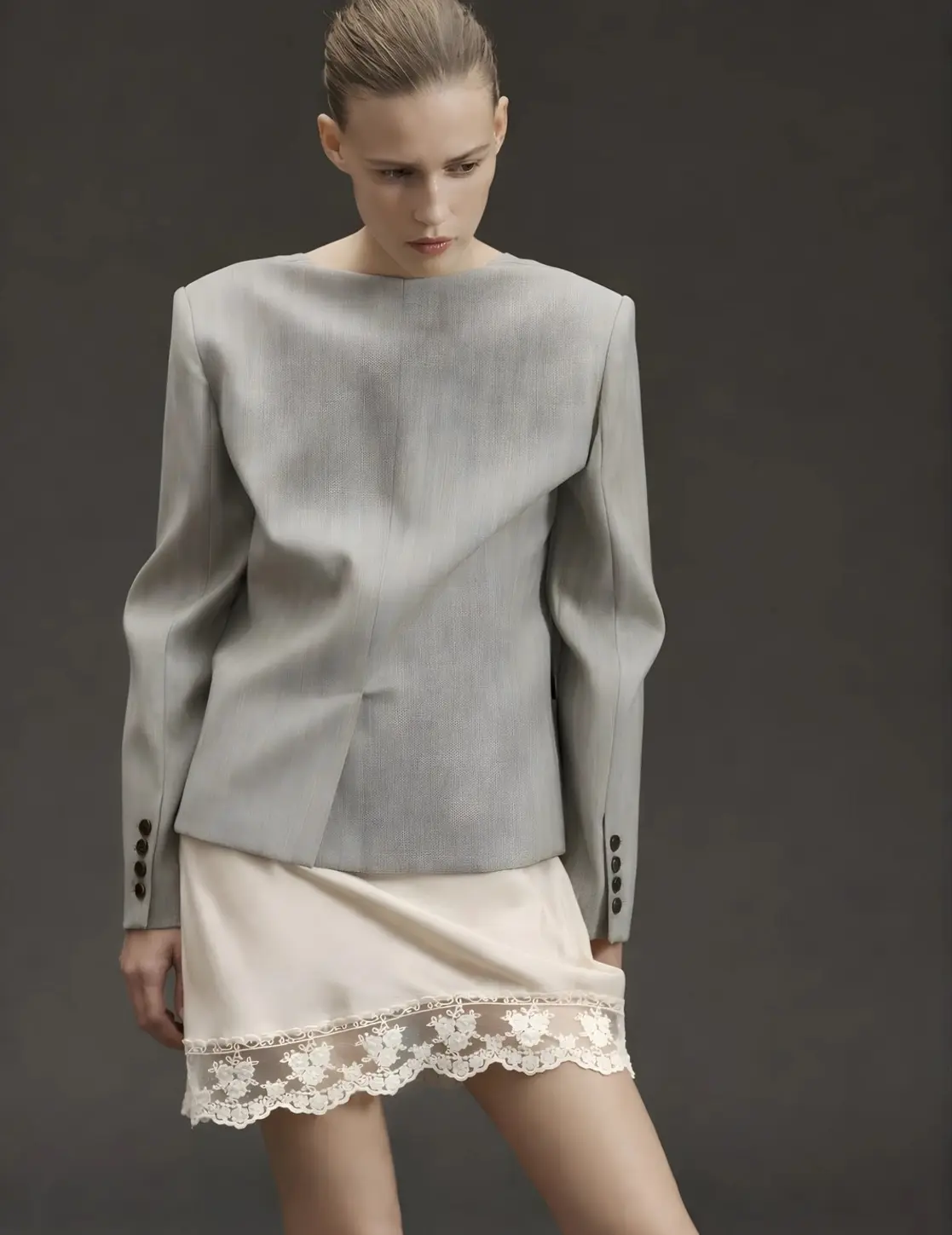
The machinery of the global fashion industry has become a thresher, grinding down the singular voice in favor of the mass-produced iconic basic. The pressure for constant growth has birthed a generation of creative directors who act more like brand managers, terrified of the exhilarating because it carries the risk of the repulsive. They have chosen the path of least resistance: the Nice Coat. This is the ultimate symptom of Lazy Fashion, the refusal to gamble on a feeling. We are sold the lie that quality is a substitute for concept, as if the fineness of the silk could compensate for the hollowness of the thought.
What happens to a civilization that stops creating new symbols? We mark our history through our aesthetics; the 1920s had the defiant fringe of the flapper, the 1970s had the jagged leather of the punk. What will the 2020s leave behind? A mountain of high-denier essentials? A legacy of muted tones? We are erasing our own cultural footprint in real-time, choosing to be a generation of shadows. We have surrendered the power of the garment to evoke emotion and replaced it with the power to evoke status. The garment has become a mere asset class, a piece of wearable real estate that retains its value because it refuses to be bold enough to go out of style.
Is it possible that we have reached the absolute limit of the human form? Or have we simply become too tired to try? The sartorial tranquilizer is a drug we take to forget that we have lost the ability to dream in color. We praise the conservatism of the modern runway because it demands nothing of us. It asks no questions; it offers no challenges. It simply exists, expensive and polite, while the world turns in turmoil. We are witnessing a crisis of courage. The nice clothes epidemic is the visual proof of a society that has given up on the future and decided to live forever in a luxurious, beige version of the past.
Can we ever wake up from this beige dream of lazy fashion? Or is the effort required to innovate simply too expensive for the modern soul? We must ask ourselves if we are truly satisfied with a wardrobe that offers only comfort. If the role of the artist is to disturb the comfortable and comfort the disturbed, then the modern fashion designer has failed half of their mandate. Minimalism have become the ultimate comforters, the providers of the softest, most expensive blankets in the world, while the fires of true creativity are left to flicker out in the cold. We are perfectly dressed for a world where nothing happens.
Advertisement