MENU
Close





Journey along the ancient Silk Road through the heart of Eurasia. From Uzbekistan's turquoise domes to Kyrgyzstan's celestial mountains, discover a luxe pilgrimage of history, breathtaking landscapes, and unparalleled cultural encounters. Your ultimate travel inspiration.
Journey along the ancient Silk Road through the heart of Eurasia. From Uzbekistan's turquoise domes to Kyrgyzstan's celestial mountains, discover a luxe pilgrimage of history, breathtaking landscapes, and unparalleled cultural encounters. Your ultimate travel inspiration.
December 8, 2025


“Asia, so good for the heart, so bad for the nerves,” Nicolas Bouvier has captured the essence of the Silk Road more perfectly than any map. To follow this ancient artery is to surrender to a journey where serenity and chaos, beauty and unpredictability, move in tandem.
From the blue-gold splendor of Samarkand to the wind-carved silence of the Tien Shan, the road winds through lands that have shaped empires and expanded imaginations. Here, where Marco Polo and Ibn Battuta once chased horizons, the Silk Road still pulses with encounters, wonder, and the timeless desire to understand a world larger than oneself.
For more than two millennia, the Silk Road stretched across the spine of continents like a luminous thread, stitching together worlds that believed themselves distant. It was never a single road, but a restless constellation of routes, some carved into the cliffs of the Pamirs, others crossing the furnace winds of the Taklamakan, others still drifting by sea from the Indian Ocean to the Levant. From Chang’an, the disciplined heart of the Han Empire, caravans set out toward the Mediterranean’s open waters, moving like slow-moving galaxies under a canopy of stars.
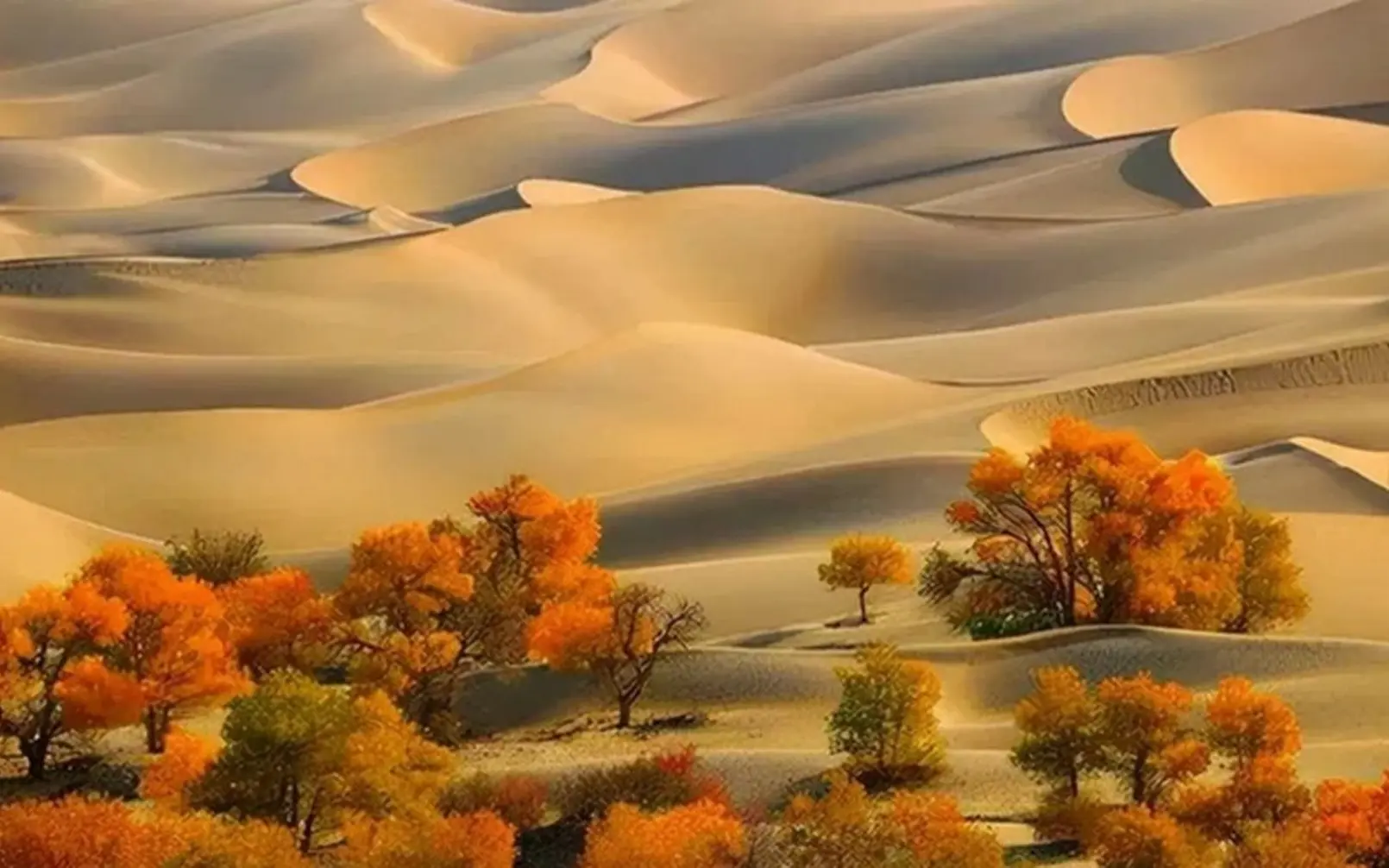
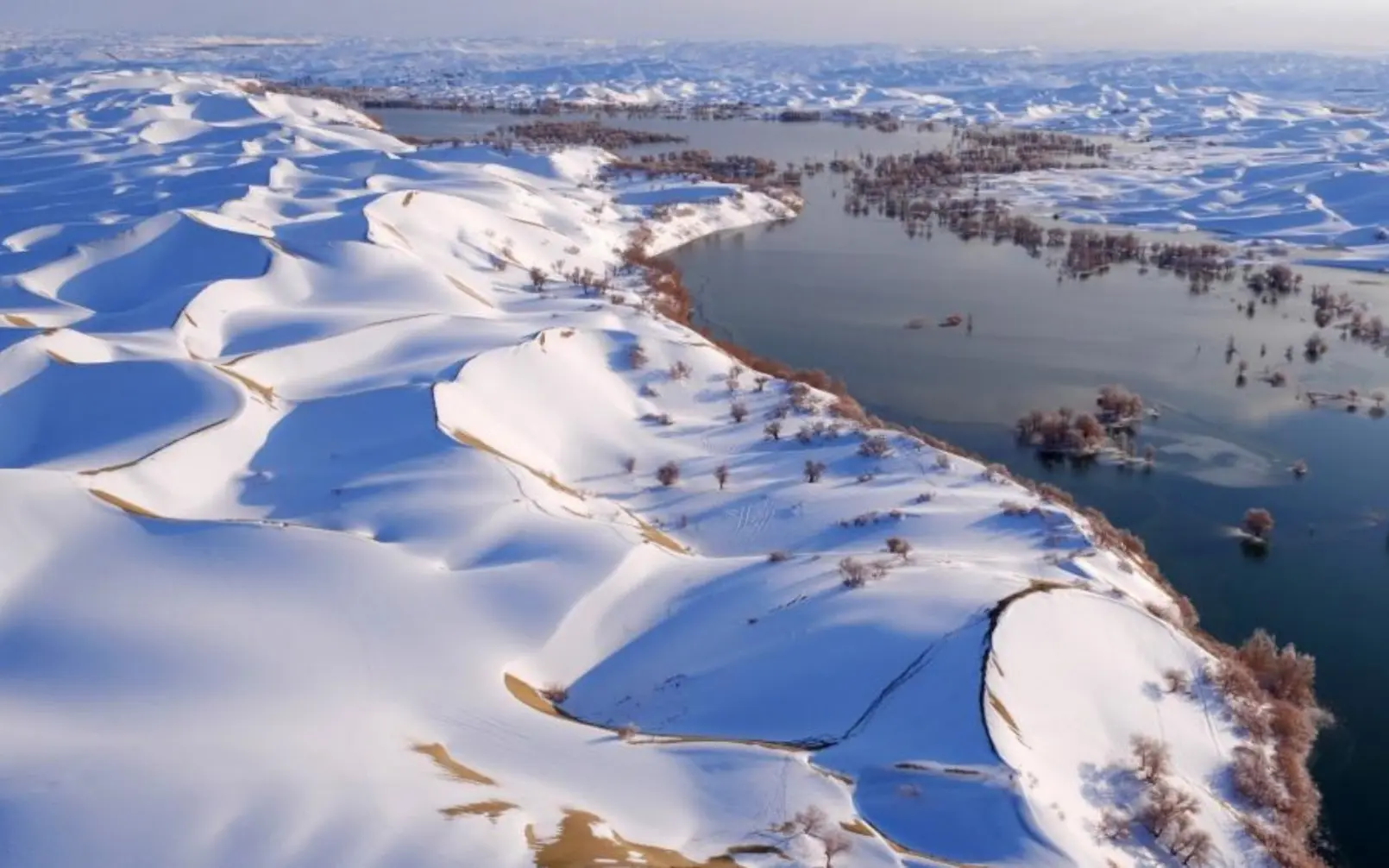
Across these corridors of dust and discovery, merchants, monks, astronomers, and wanderers carried more than silk and lapis, they carried worldviews. One such traveler was Marco Polo, the Venetian who followed the desert winds all the way to Kublai Khan’s court. When he returned to Europe, his stories did more than amaze, they widened the horizon of a continent, revealing that beyond its edge lay cities of turquoise domes, empires ruled from golden steppe tents, and landscapes that shifted from snow peaks to sand seas within a single breath.
The caravans have long disappeared, the camel bells silenced, yet the road remains. It endures not as an artifact, but as a living rhythm: the pulse of exchange, curiosity, and encounter that once bound empires, and still binds the world today.
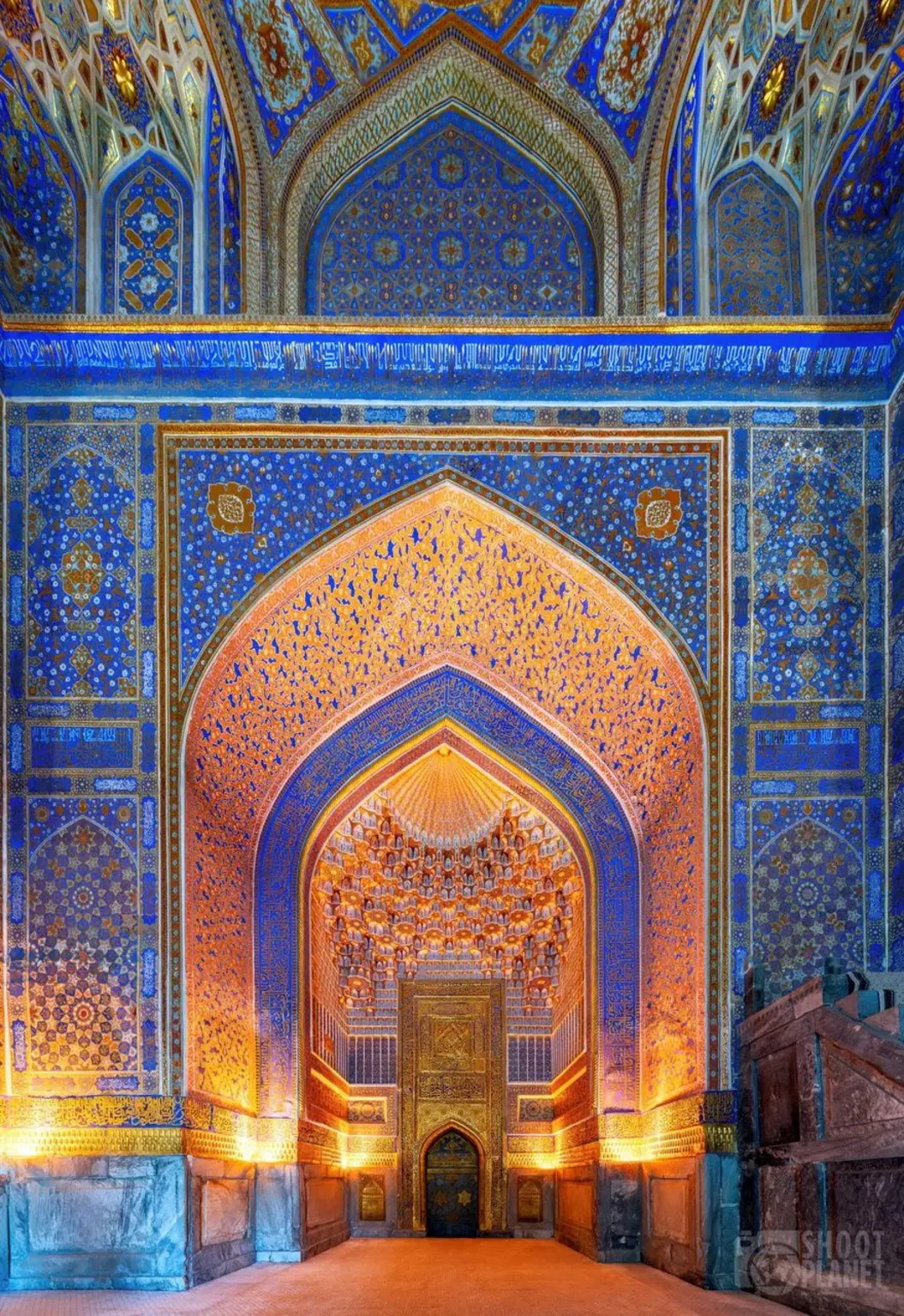
If the Silk Road had a heart, it beat most brightly in Uzbekistan, where the great oasis cities of Samarkand, Bukhara, and Khiva once shimmered like mirages along the desert’s edge. Here, the caravans found refuge and refinement, and where scholars, astronomers, and poets transformed commerce into culture.
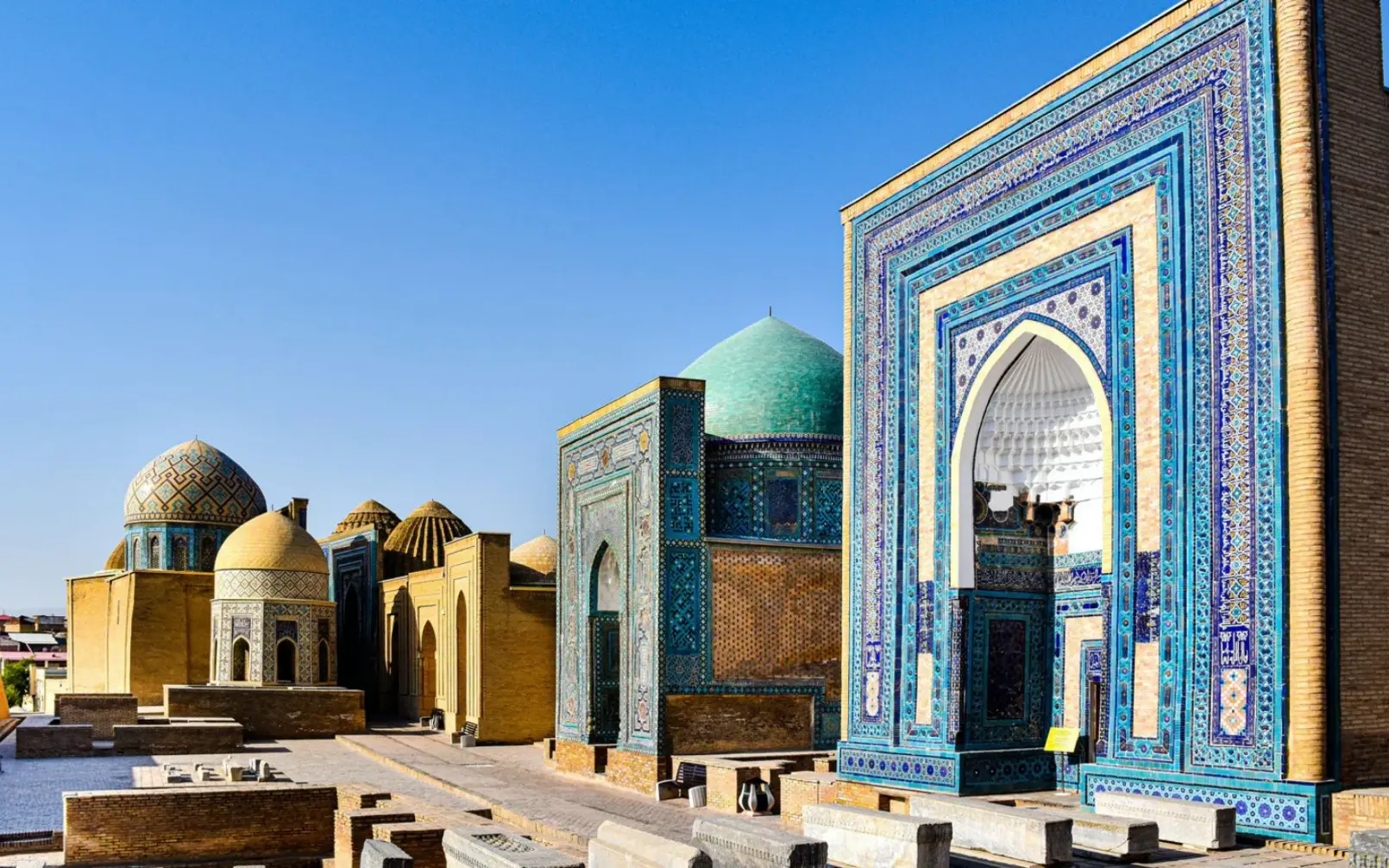
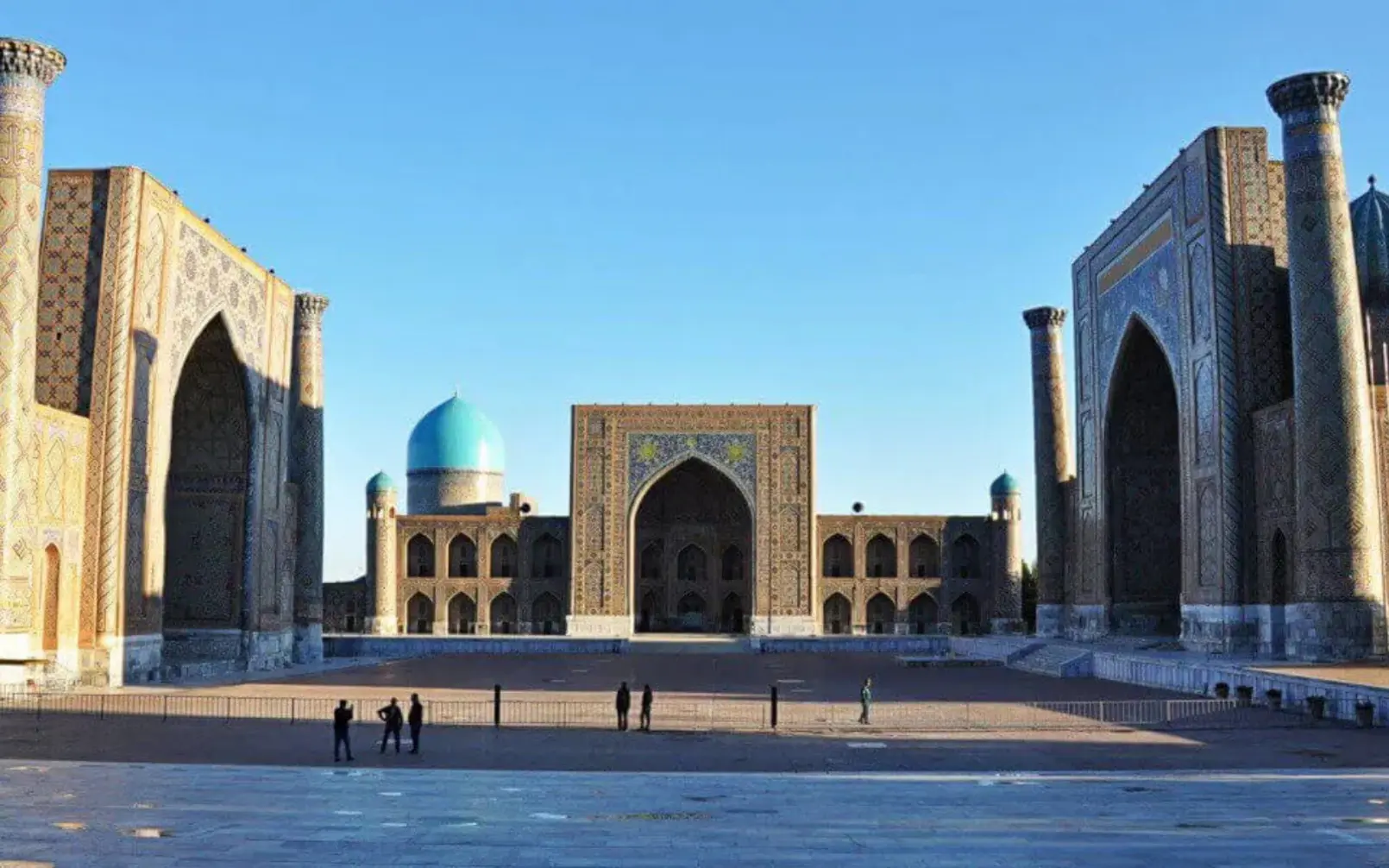
Samarkand, “the Mirror of the World,” rose to its zenith under Tamerlane (Timur), who dreamed of a city as radiant as the heavens. His legacy endures in Registan Square, a symphony in blue and gold, where three monumental madrasas stand like open books beneath the Central Asian sun. The walls are alive with tiles and calligraphy, and in their patterns the cosmos itself seems to unfold. Nearby, the Gur-e-Amir Mausoleum, where Timur lies beneath a single jade stone, glows in the lamplight like a prayer cast in turquoise.
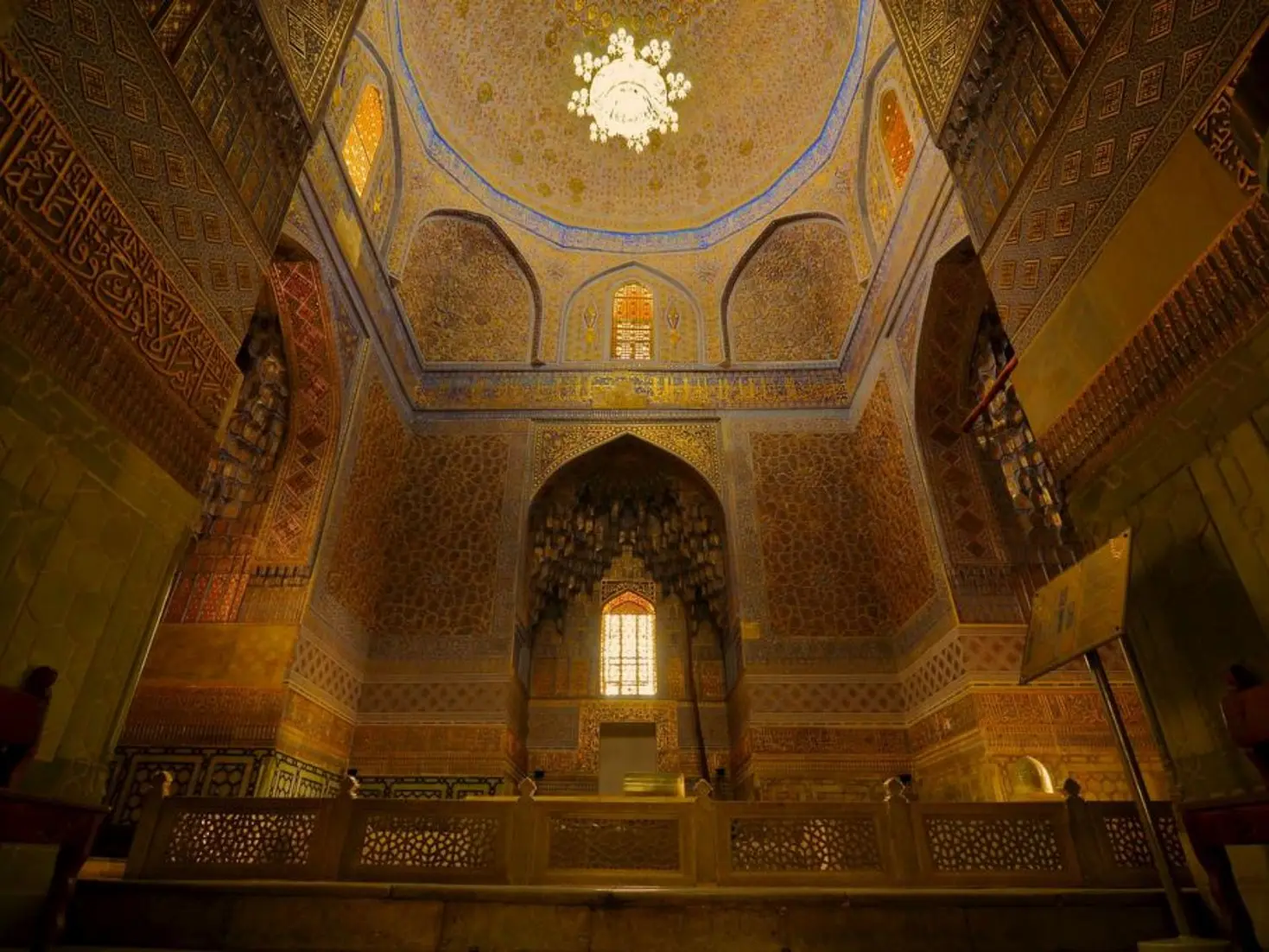
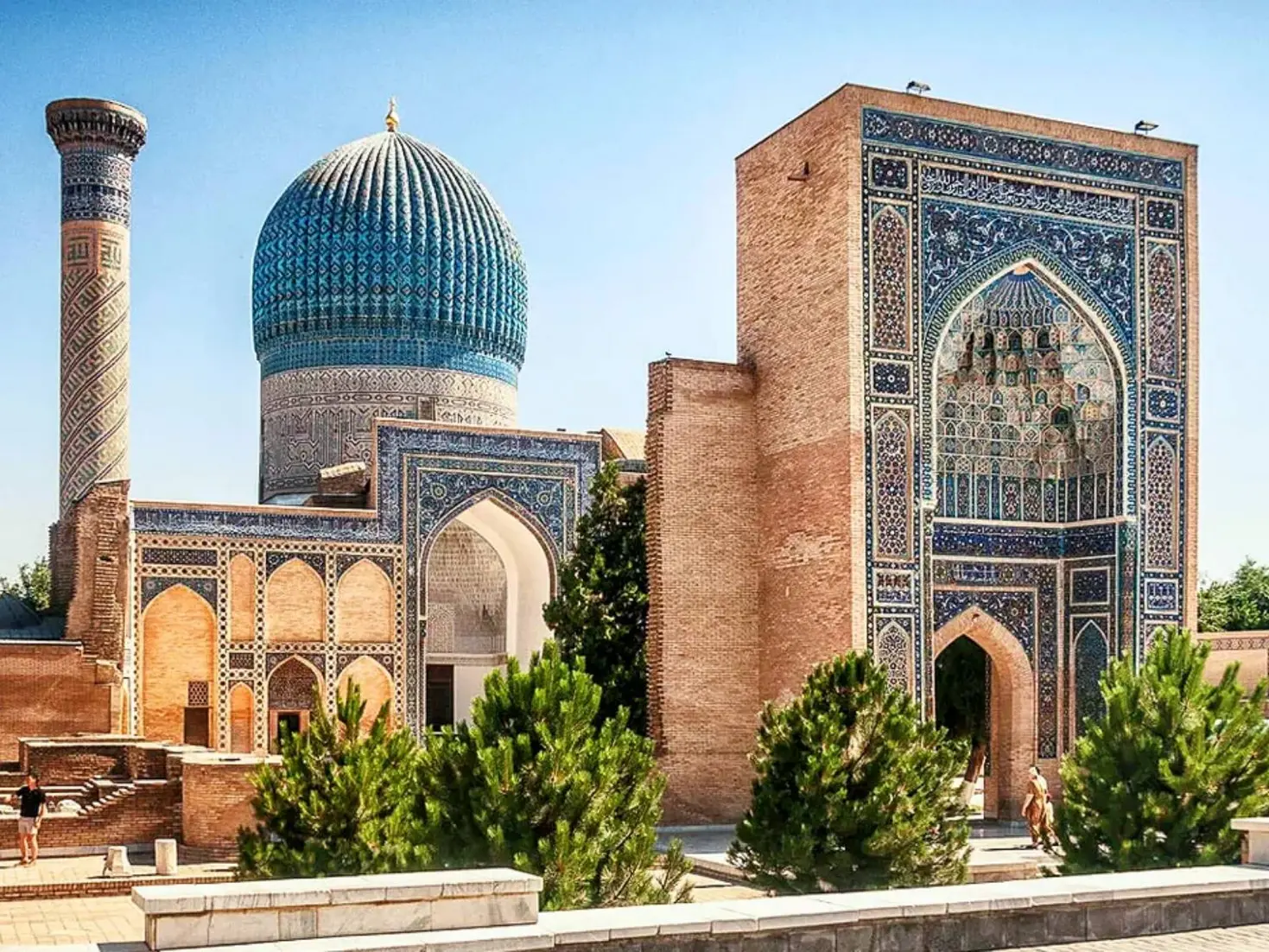
A journey westward leads to Bukhara, ancient even when Genghis Khan rode through its gates. Its labyrinthine streets whisper of scholarship and faith. The Kalan Minaret, rising like a candle from the city’s heart, once guided weary travelers through the sands — its light a promise of sanctuary. In the arched bazaars, silk still rustles and the scent of spice mingles with the echo of trade.
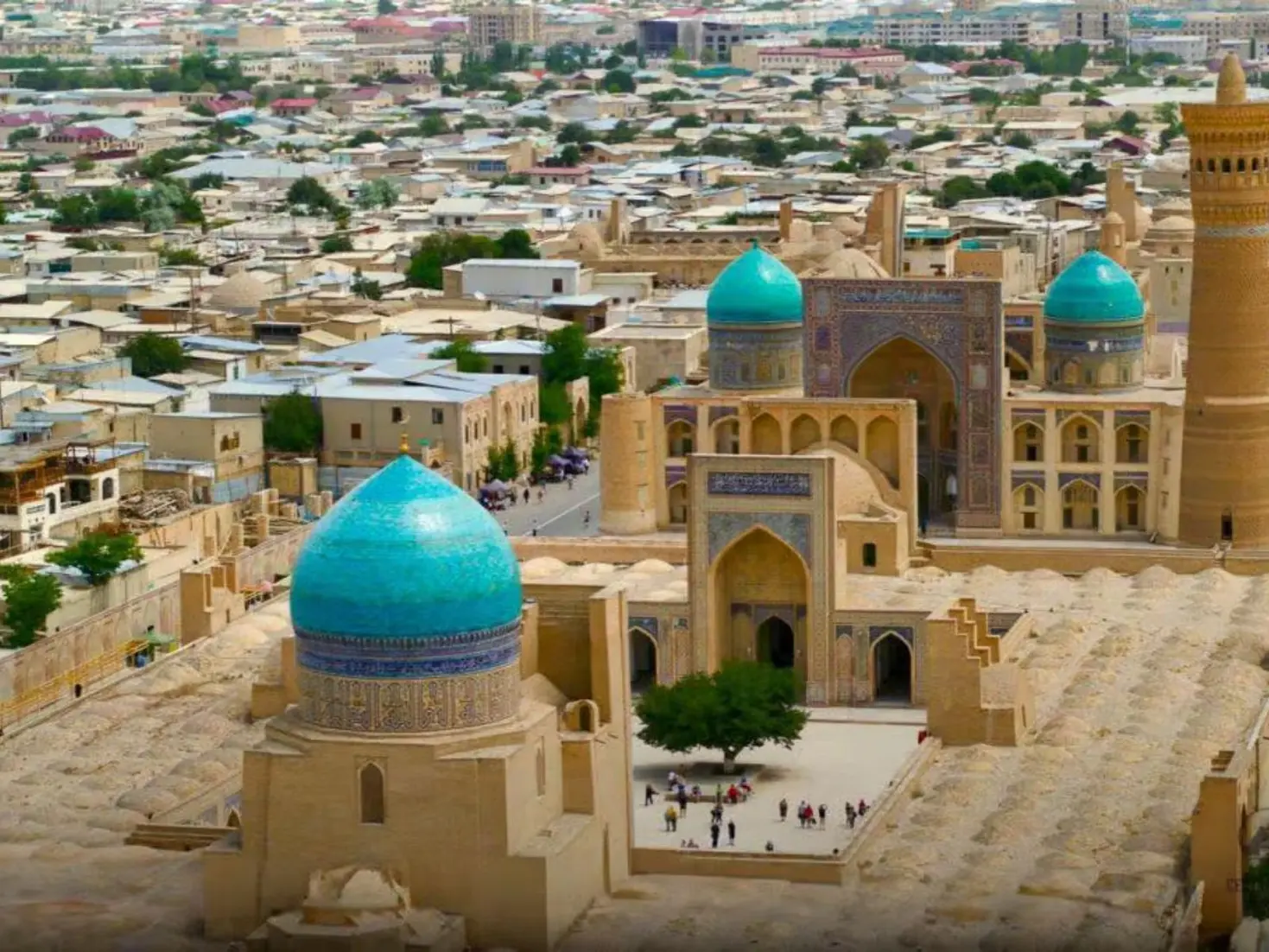
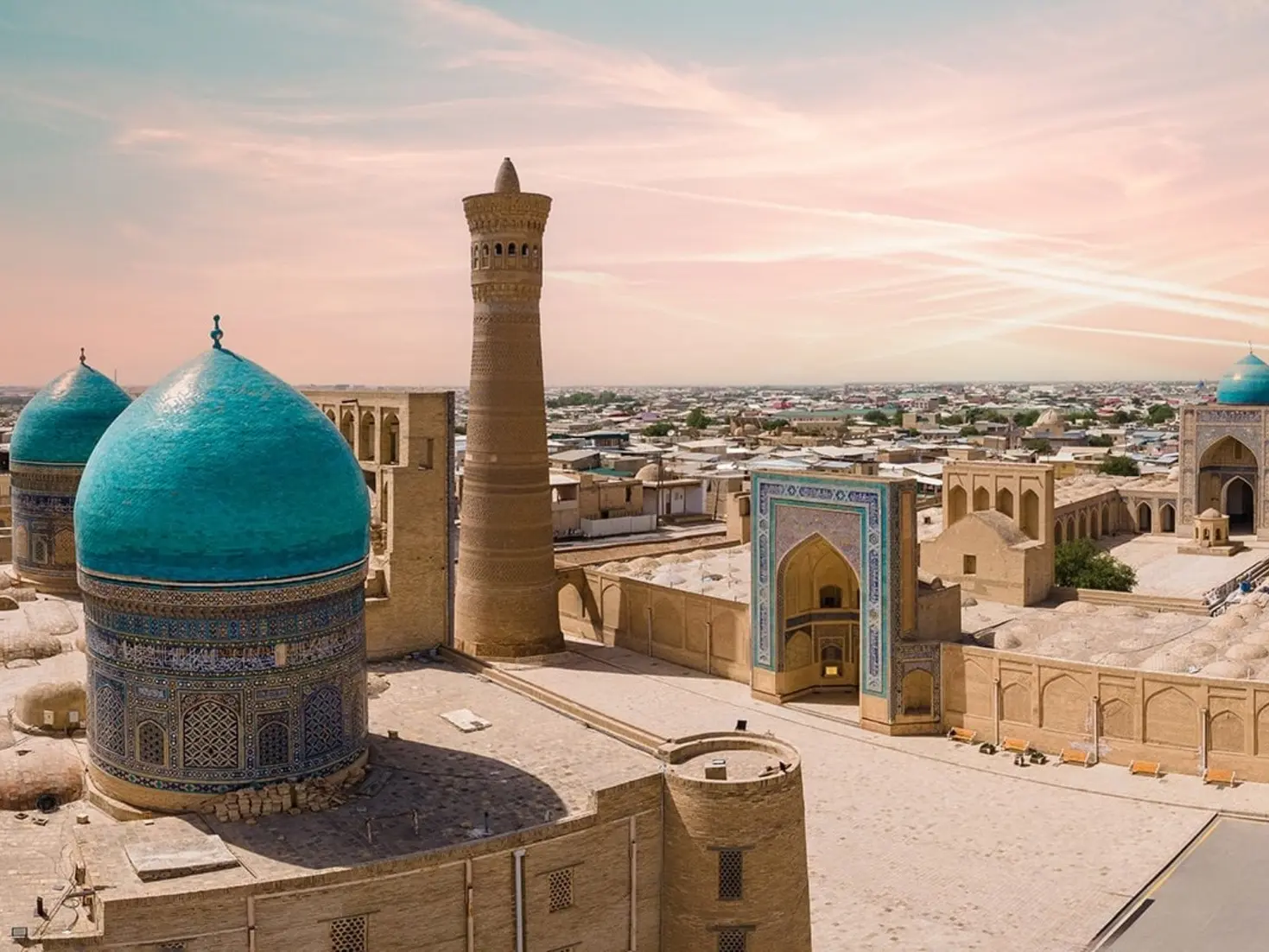
Further still lies Khiva, the most intact of all. Within its mud-brick walls, the old town of Itchan Kala feels suspended between centuries. As dusk falls, its alleys and minarets are bathed in amber light, and one might imagine the faint jingle of camel bells on the horizon.
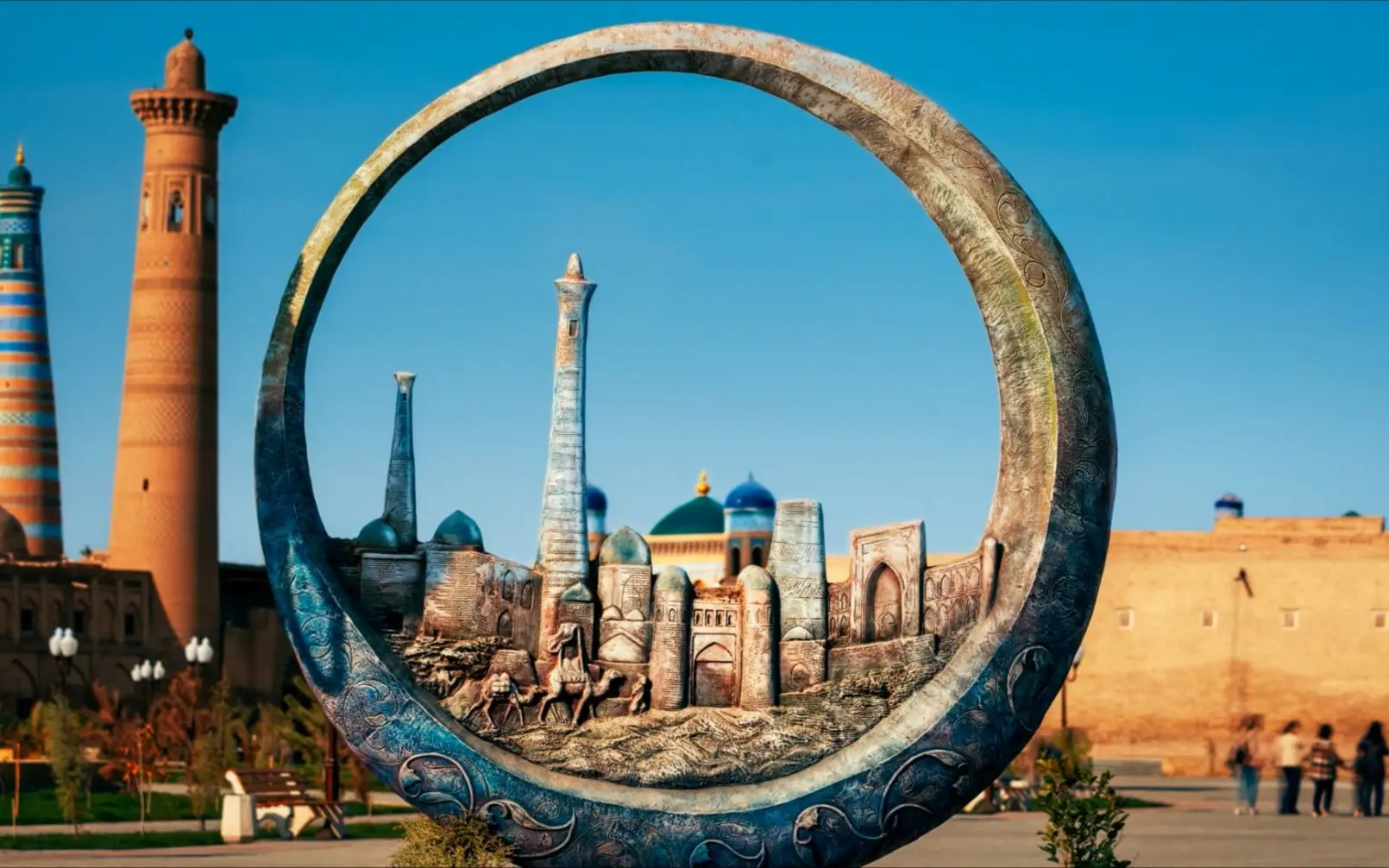
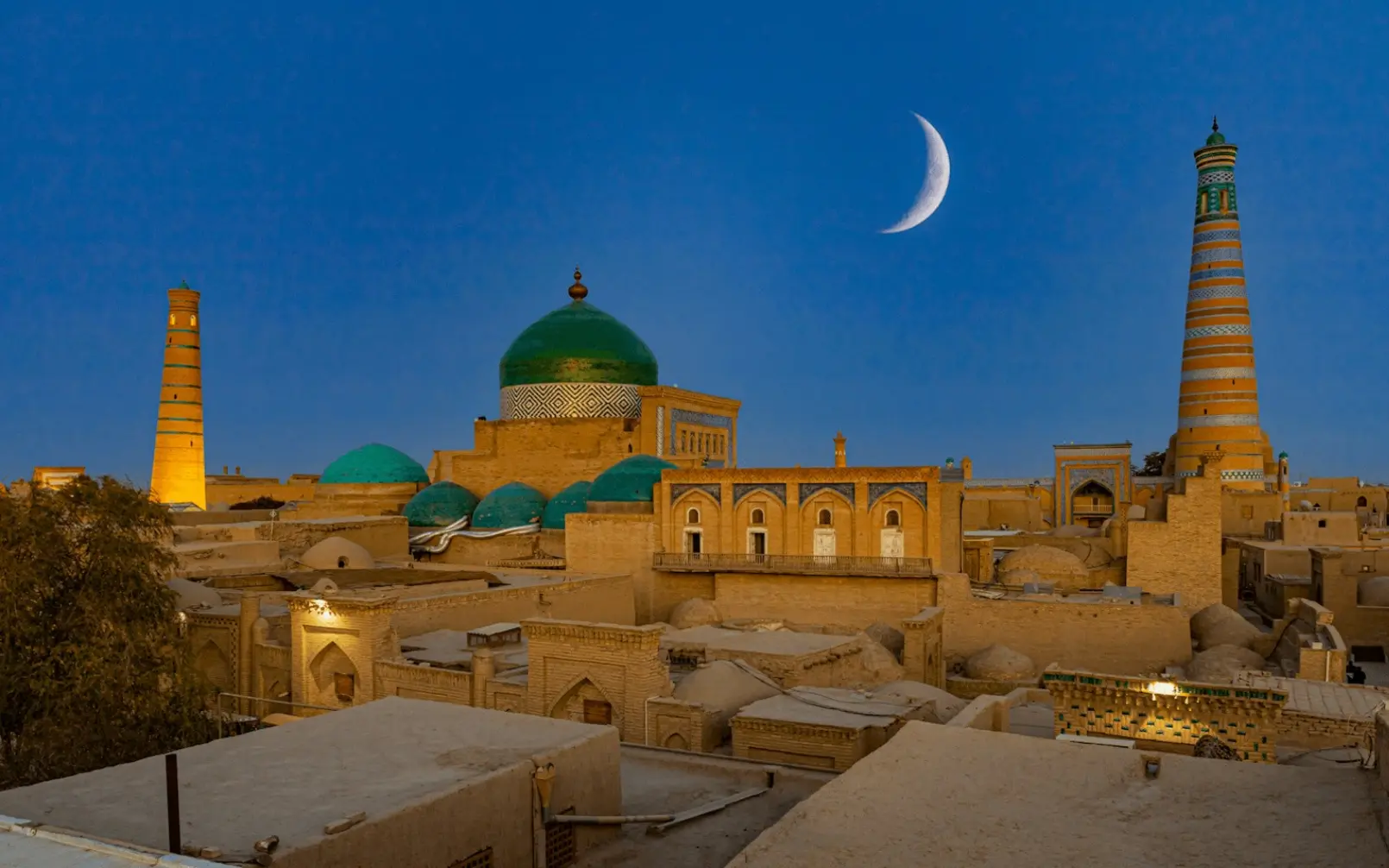
For travelers seeking to rest where history lingers in every stone, DiliMah Premium Hotel in Samarkand offers elegance worthy of an emir, while Lyabi House Hotel in Bukhara, set around an old merchant’s courtyard, captures the hush of centuries. In Khiva, the Orient Star Hotel, housed within a converted madrasa, allows guests to dream within the walls of history itself.
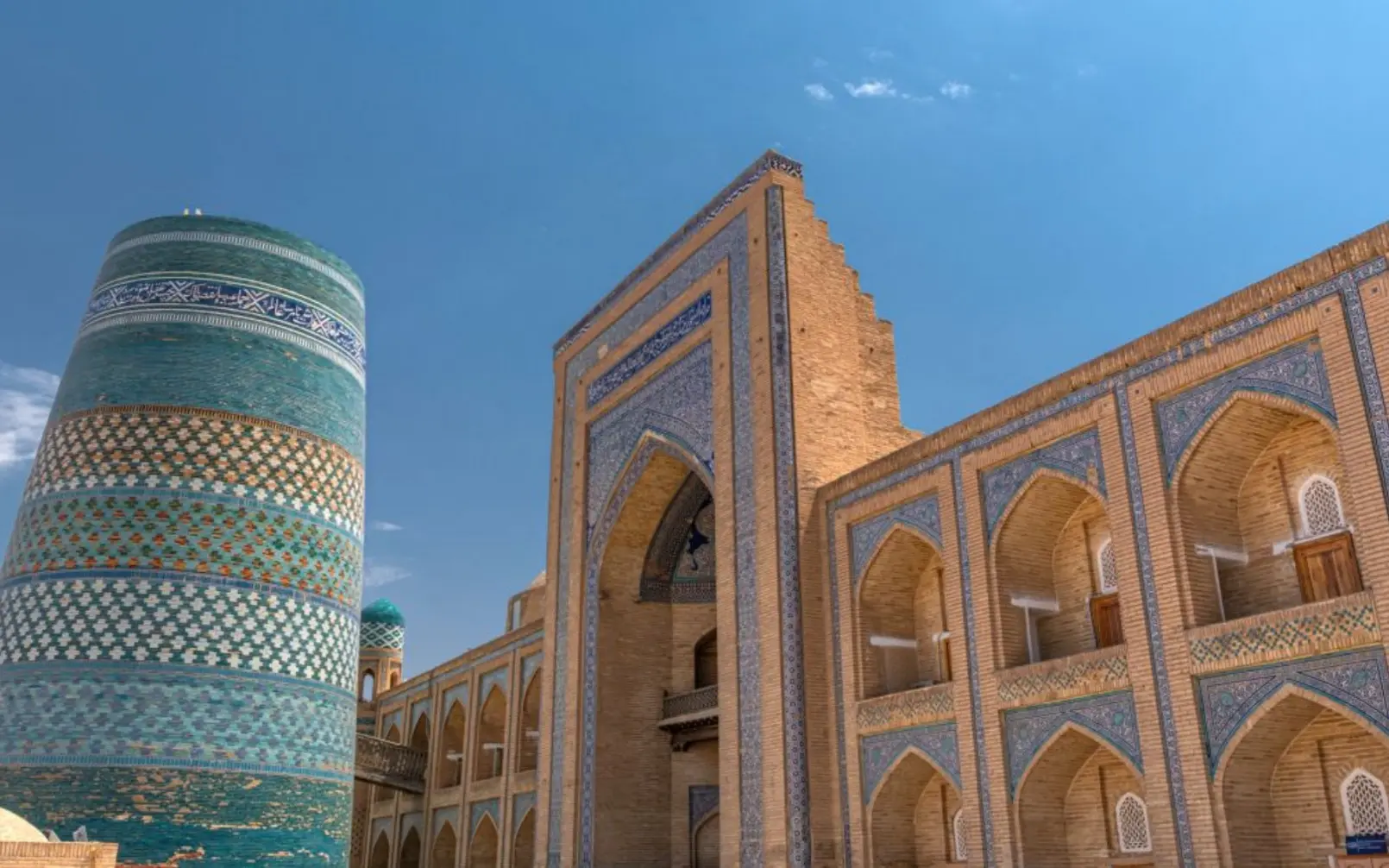
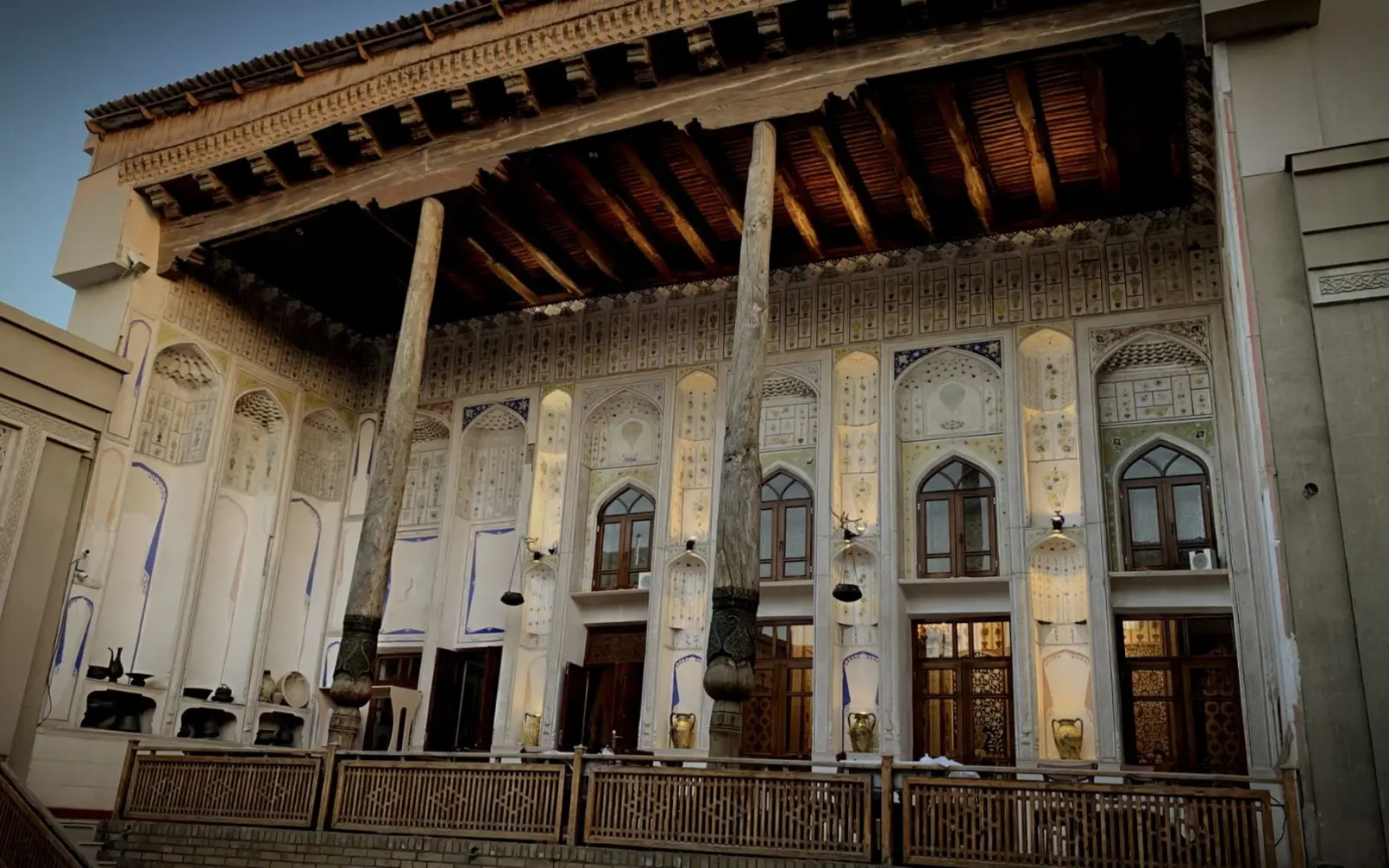
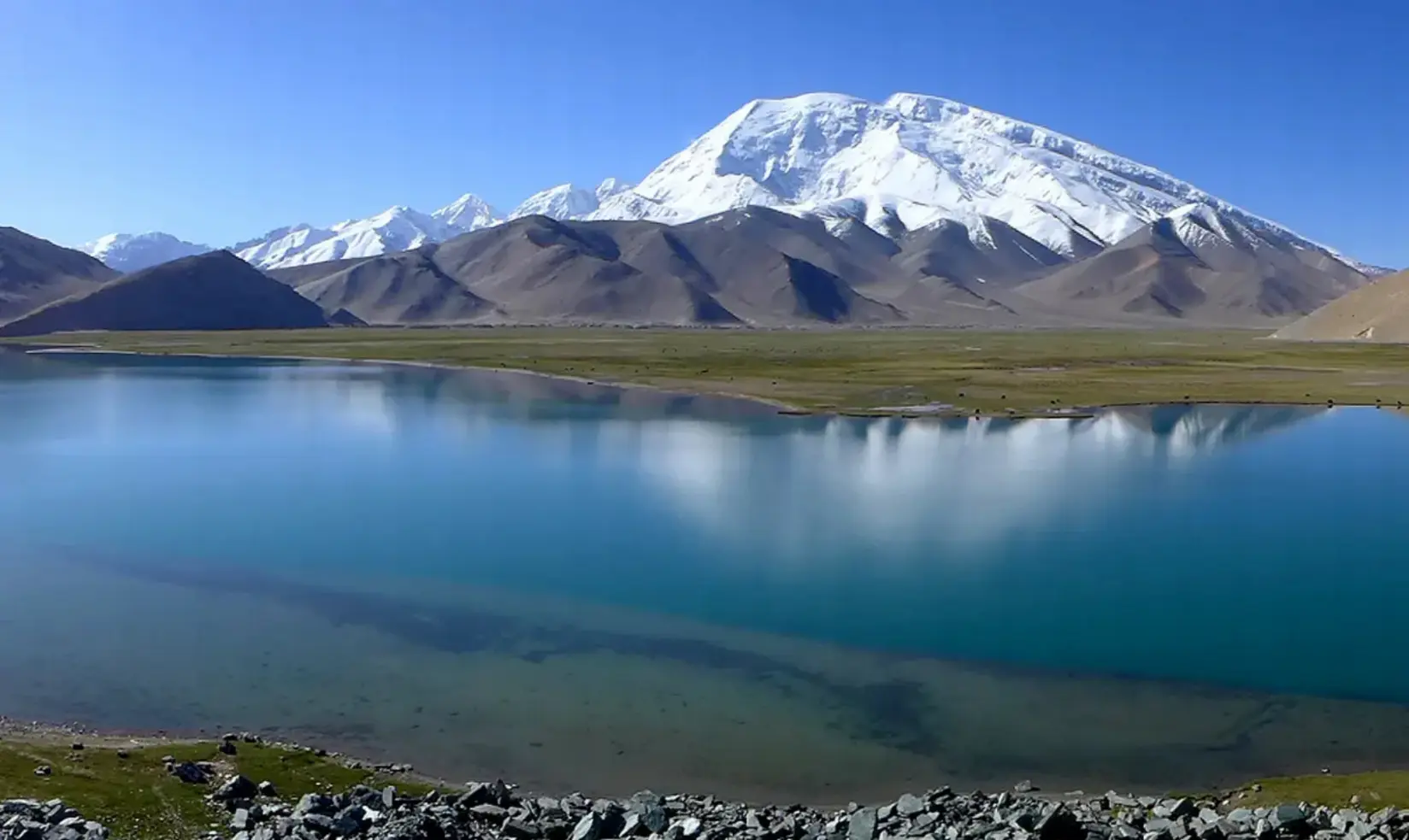
Beyond Uzbekistan’s domes of turquoise and gold, the road ascends into Kyrgyzstan, a land where mountains kiss the sky and the horizon stretches without end. Here, the Silk Road becomes a path of wind and silence, less a line on a map than a feeling of freedom etched into the landscape.
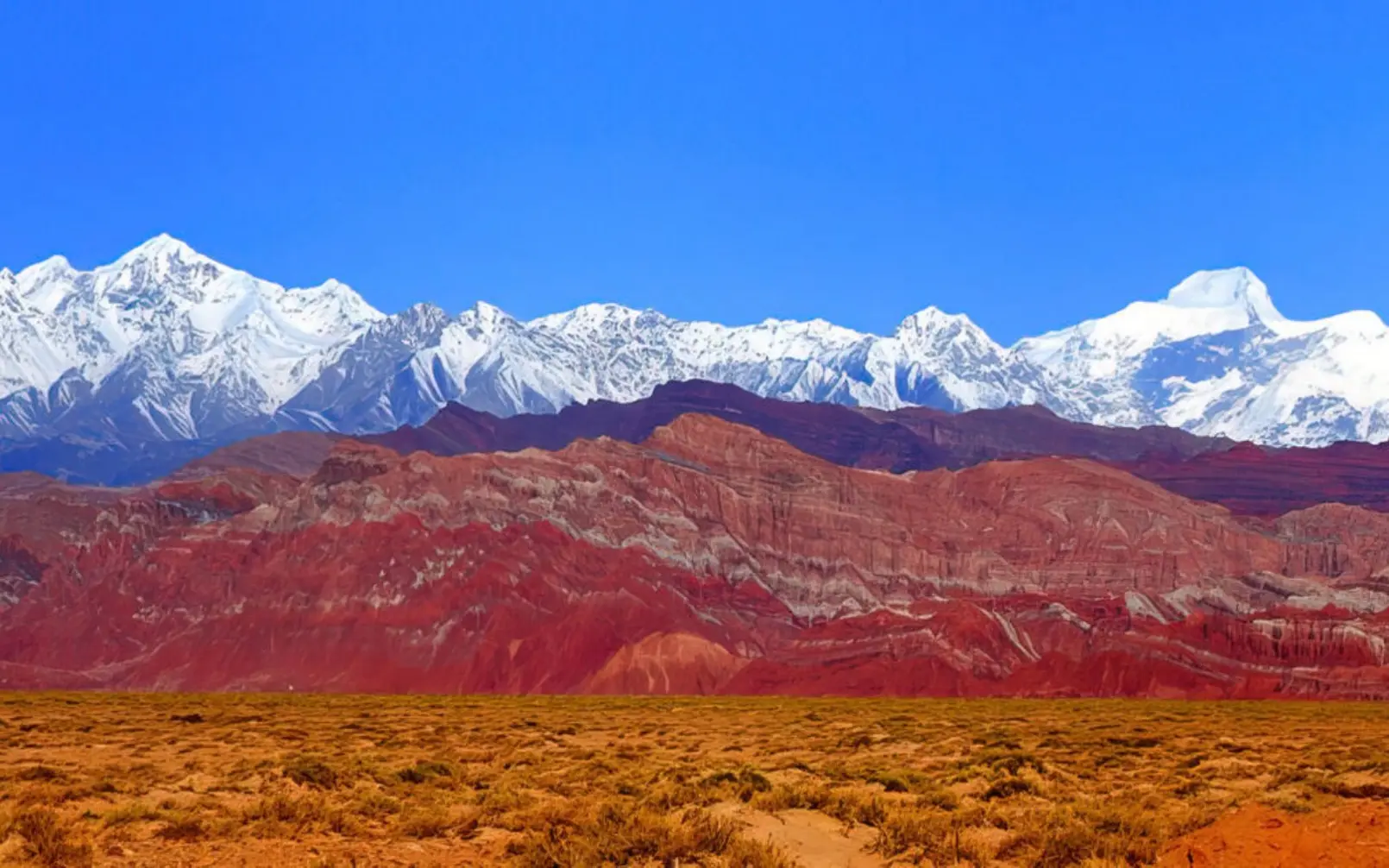
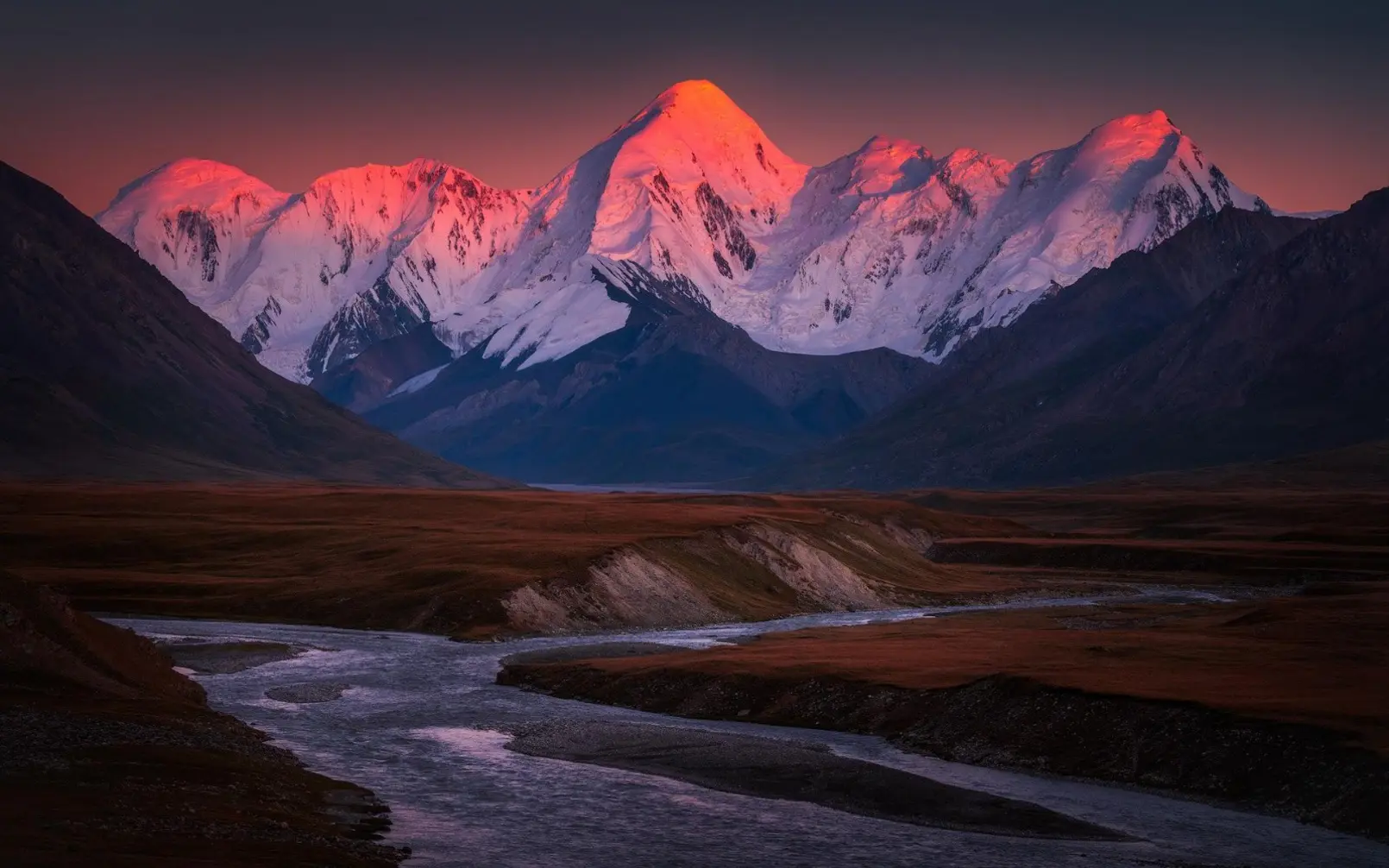
The great Tien Shan Mountains — the “Mountains of Heaven”, rise like a painted backdrop behind the lakes of Issyk-Kul and Song-Kul, whose waters mirror clouds and time alike. For centuries, nomadic herders and passing caravans paused here, finding companionship amid solitude. The rhythm of hoofbeats and the crackle of fires beneath the stars remain unchanged. In the stillness of the high valleys, one can almost hear the whispers of ancient travelers, their stories carried on the mountain wind.
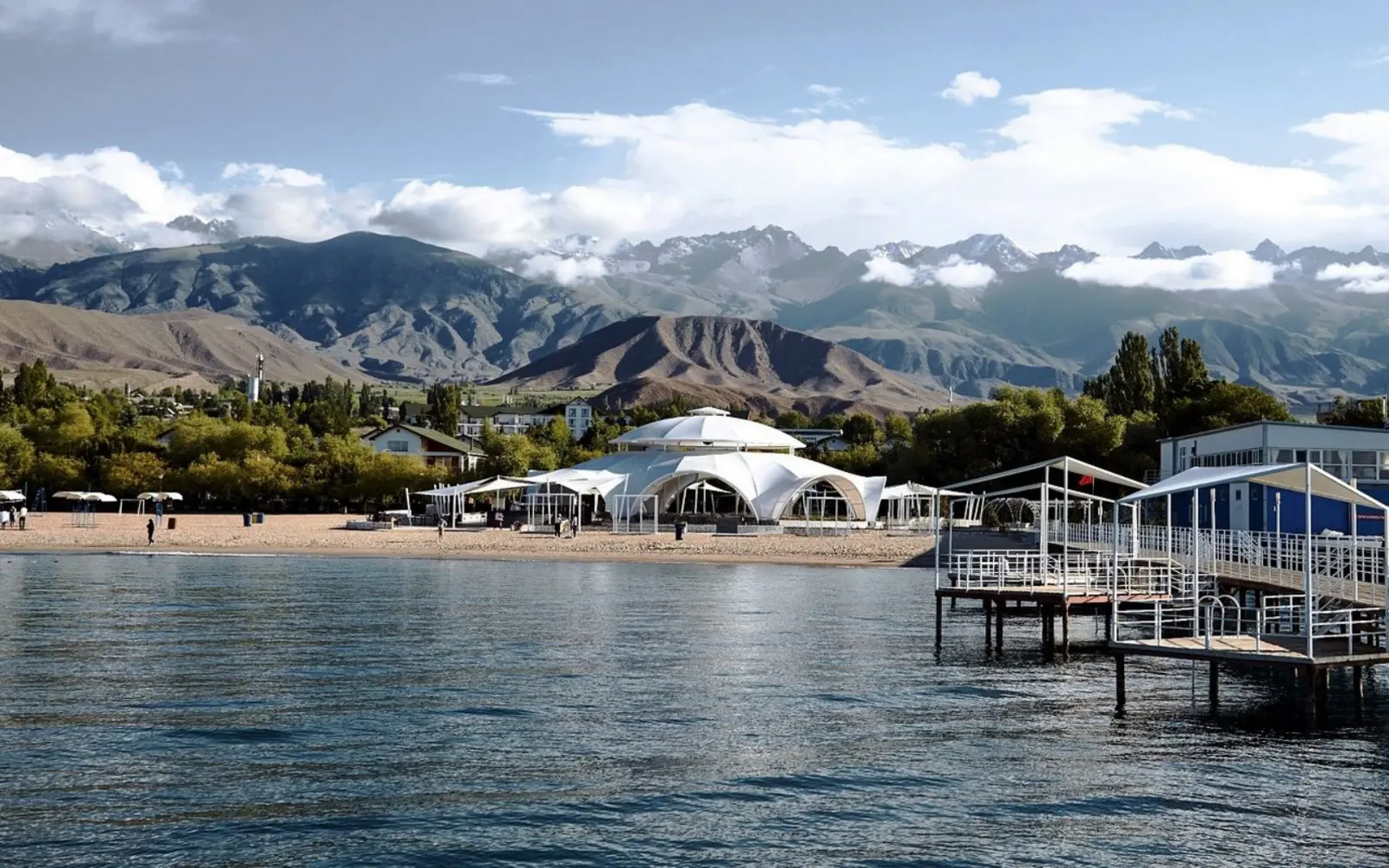
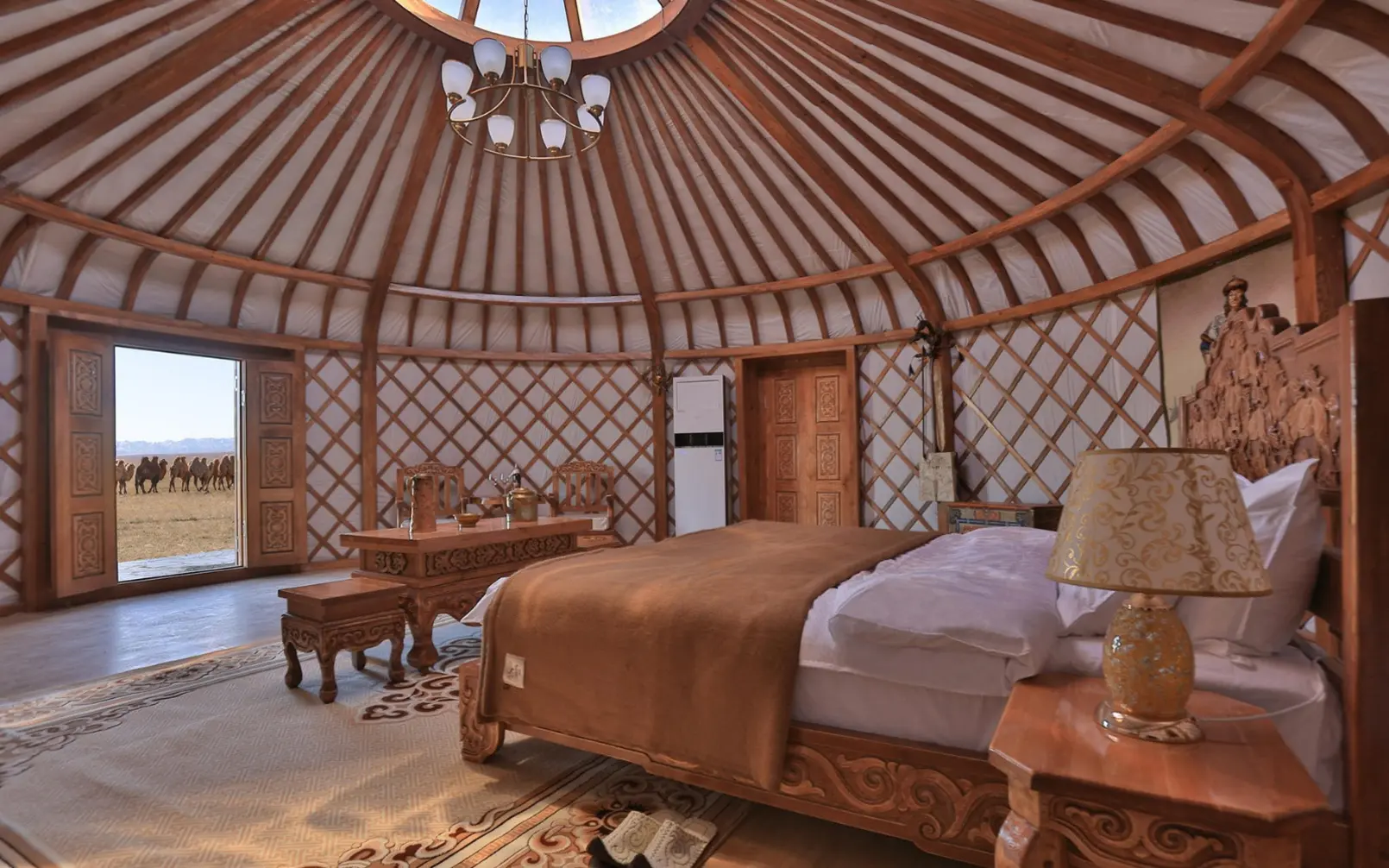
To awaken by the shores of Issyk-Kul, where snow peaks catch the dawn’s first light, is to glimpse eternity. The Kapriz Hotel Resort, with its private sands and silver dawns, offers a modern-day caravanserai of comfort. Farther inland, at Song-Kul, the Nomad Lodge offers shelter in luxurious yurts. And in the capital, Orion Hotel Bishkek stands as a sanctuary of refinement, its marble halls echoing the quiet grandeur of the steppe.
North of the Tien Shan, the vast Kazakh steppe unfolds in waves of green and gold. In Almaty, the cultural soul of Kazakhstan, boulevards shaded by poplars lead toward snowbound peaks. The Ritz-Carlton Almaty, poised high above the city, offers a view that stretches from the rooftops to the mountains — a panorama of old empire and new ambition.
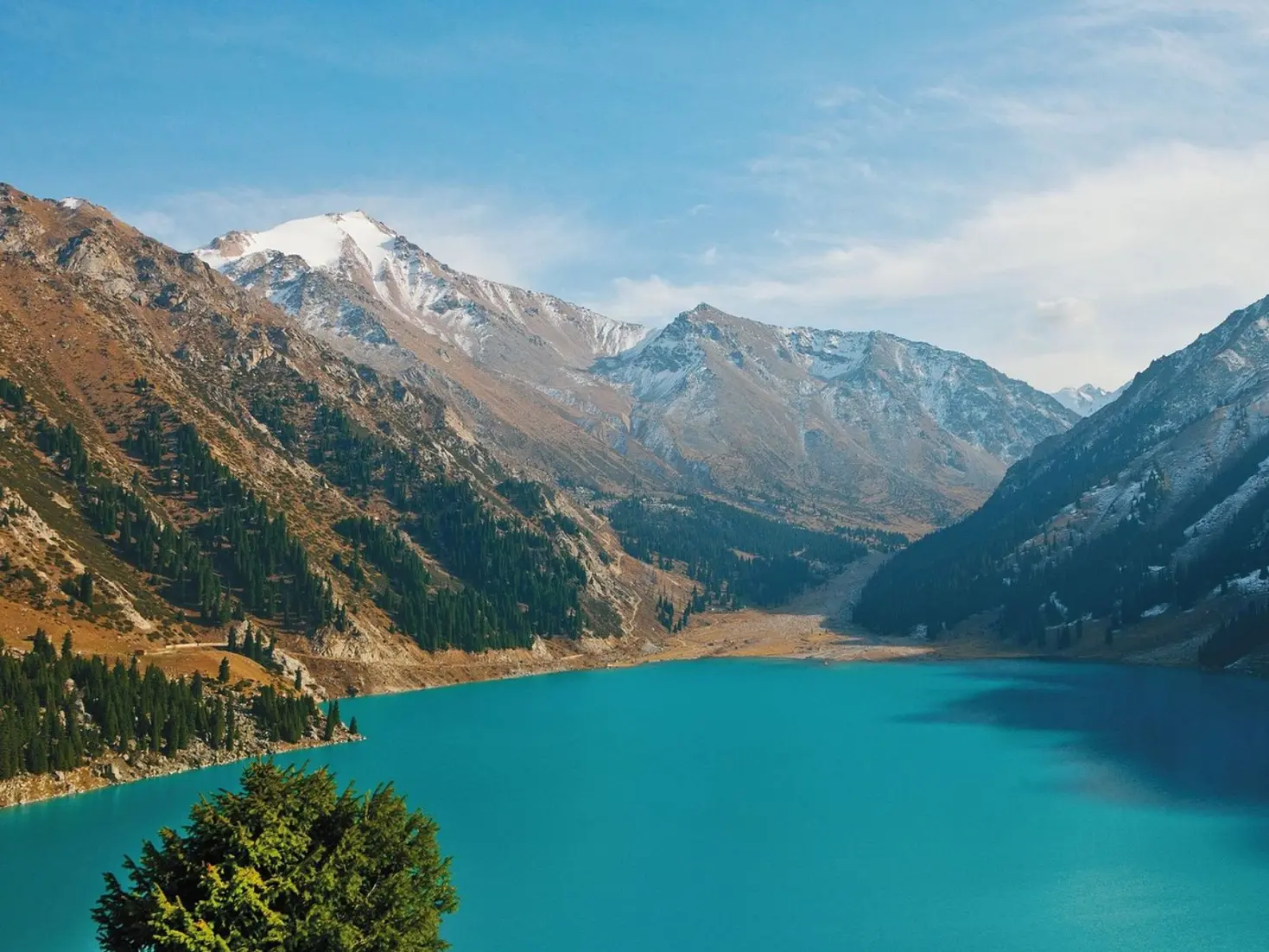
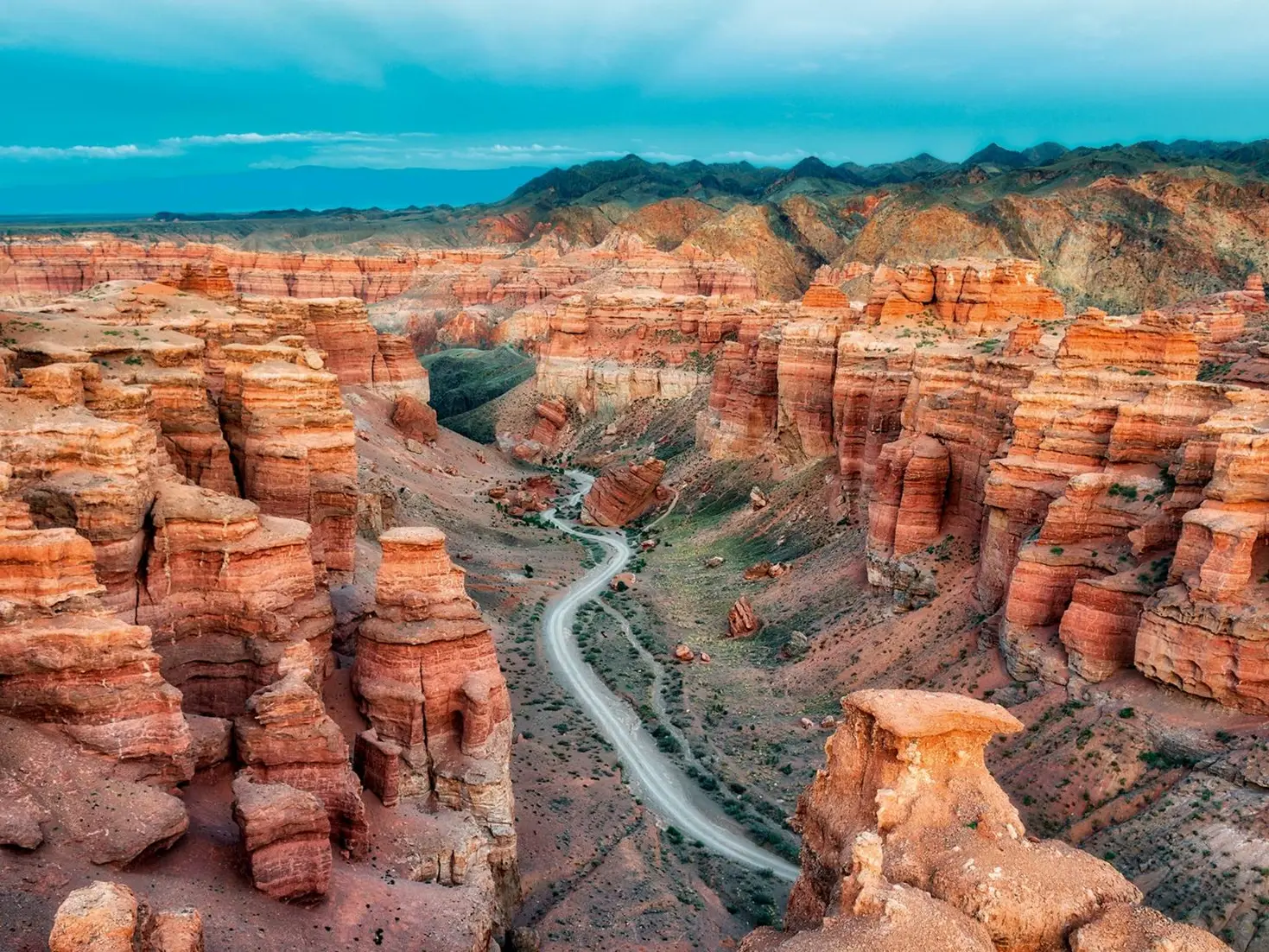
Beyond the city, the Charyn Canyon cuts deep into the earth, its cliffs glowing red at sunset, while the Kolsai Lakes lie hidden among spruce forests, their reflections pure as glass. The landscape here feels eternal, the same sky, the same silence, that watched over caravans long vanished.
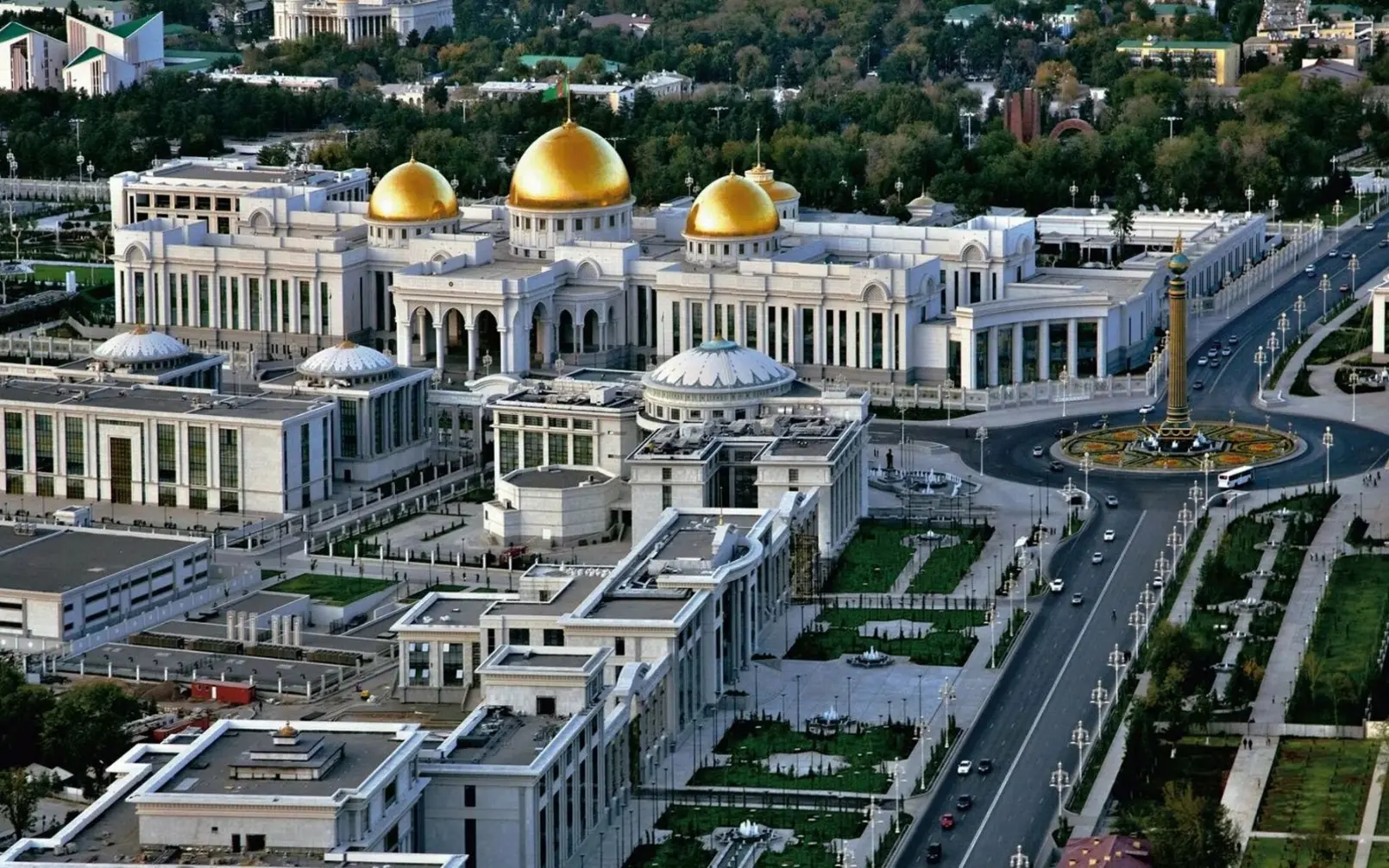
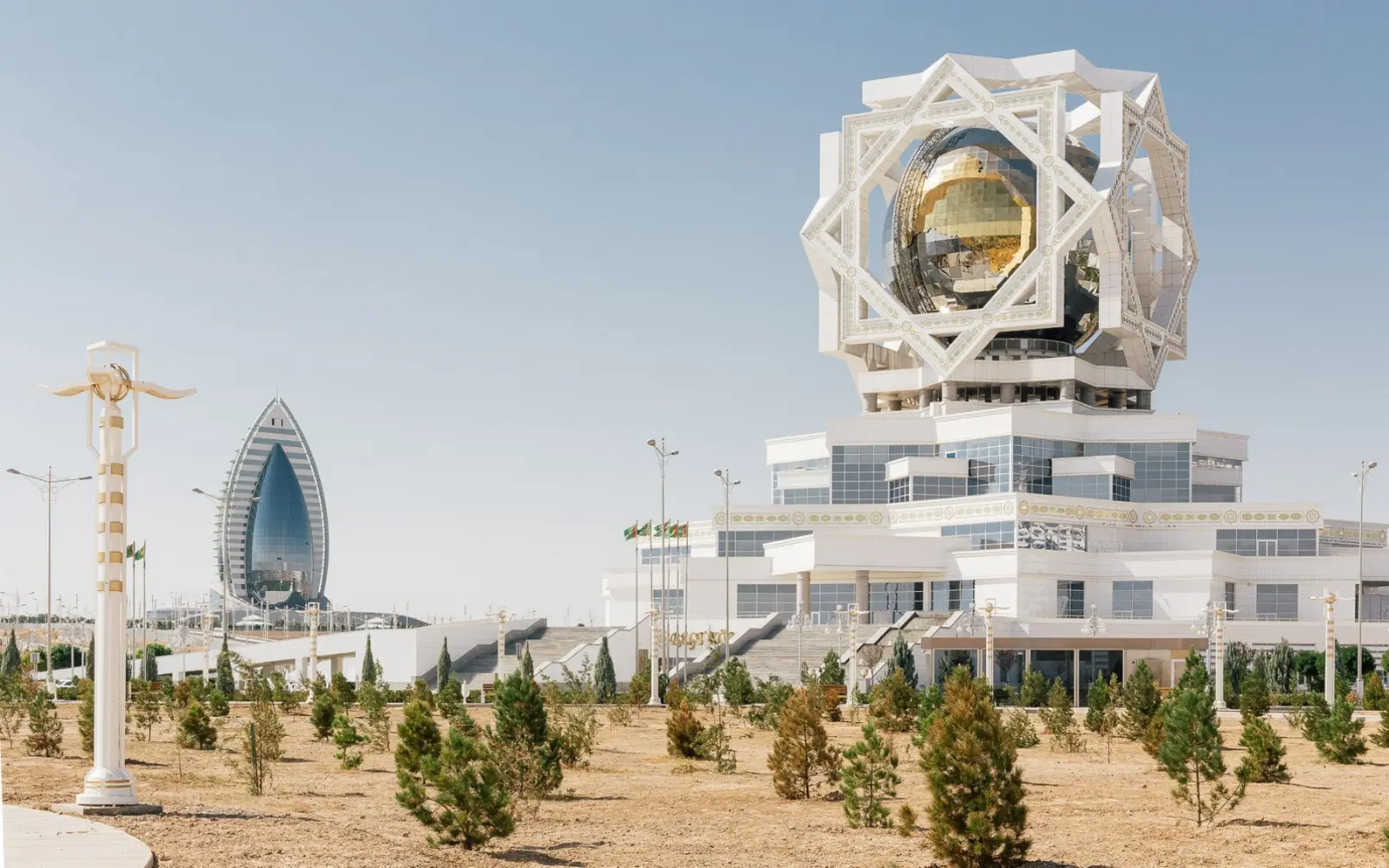
Farther west, the road enters Turkmenistan, a land of contradictions and marvels. Its marble capital, Ashgabat, rises from the desert like a mirage — a vision of white domes and gilded towers gleaming under an endless sun. Yet the desert beyond remains a place of fire and myth. There, in the Karakum, burns the Darvaza Gas Crater — a roaring inferno known to travelers as the “Door to Hell.” It has burned for half a century, an eternal flame lighting the emptiness of the steppe. The Yyldyz Hotel, with its curved glass and golden glow, offers a vantage over this surreal city, a modern oasis on the edge of legend.

Beyond the steppes and deserts, the Silk Road wound west into Persia, the Caucasus, and east into China’s ancient borderlands. Through these lands, the Silk Road carried not only goods but ideas that reshaped civilization. Buddhism journeyed eastward from India, Islam swept north from Arabia, and Christianity reached the steppes. Paper, printing, and gunpowder traveled these same routes, altering the destiny of nations. It was humanity’s first true globalization — one born not of conquest, but of curiosity.
The caravans may have long vanished, yet the spirit of the Silk Road endures in every traveler who seeks meaning beyond horizon and border. It lives in the warmth of shared tea, in the rhythm of conversation, in the beauty of a world connected by wonder.
In the fourteenth century, another great traveler, Ibn Battuta, set out from Morocco and spent nearly thirty years crossing the world, from the deserts of Africa to the steppes of Asia, from Delhi to the ports of China. He journeyed not in pursuit of conquest, but of understanding, guided by faith and awe. In his chronicles, he captured what the Silk Road has always promised: that travel, at its heart, is an act of connection.
To follow the Silk Road today is to walk in the footsteps of those who sought not just fortune, but wisdom. Across the vast heart of Eurasia, the road still winds, unseen yet unbroken, carrying not silk nor spice, but the oldest treasure of all: the desire to know, to learn, to see, to understand one another.