MENU
Close





Like Picasso and Matisse in silk and sequins, Karl and Yves starting in harmony, ending in high-drama solos, proving fashion’s sharpest cuts are not always made with scissors!
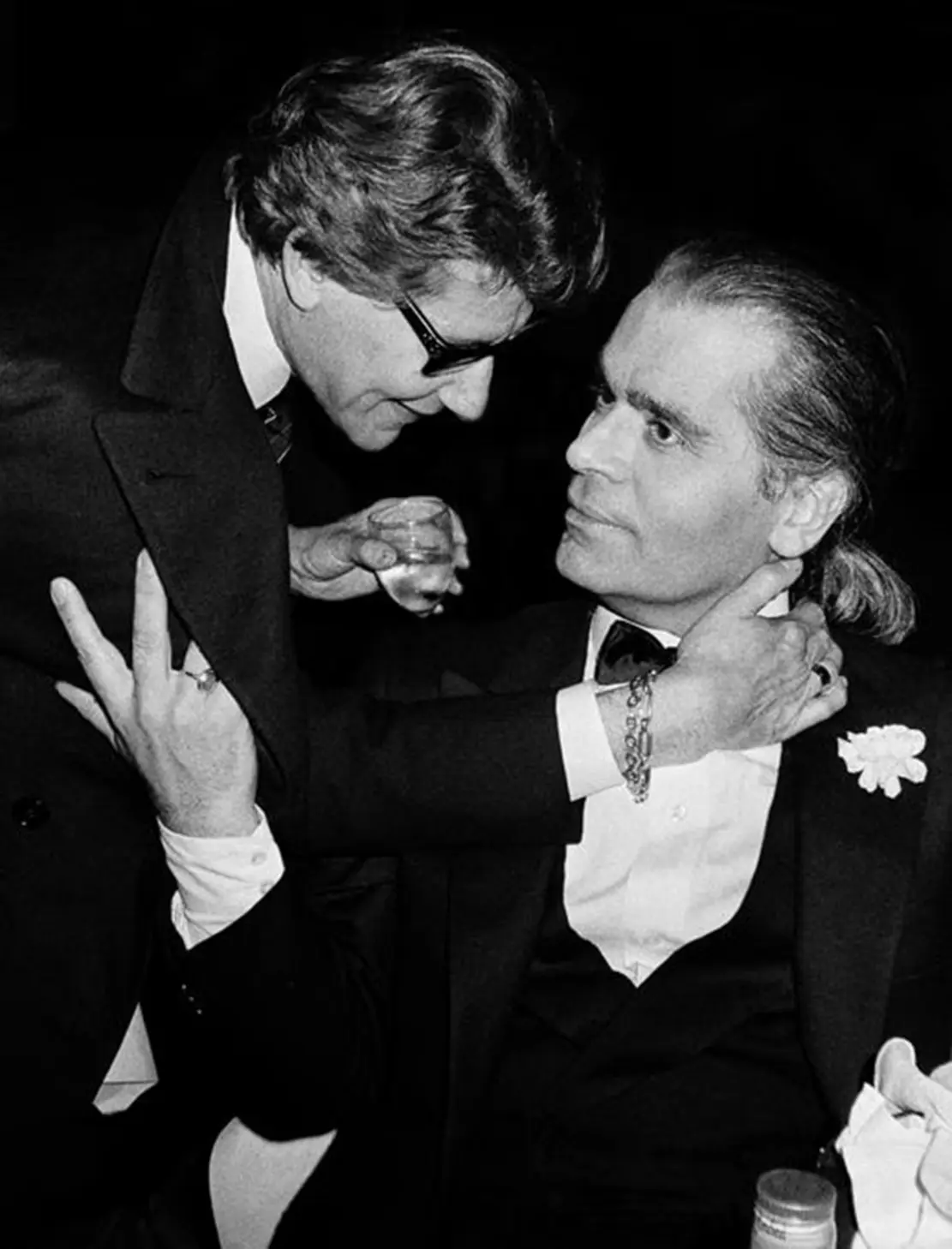
Like Picasso and Matisse in silk and sequins, Karl and Yves starting in harmony, ending in high-drama solos, proving fashion’s sharpest cuts are not always made with scissors!
November 21, 2025
Advertisement

Advertisement



In the glittering, cutthroat world of haute couture, friendships are rare, and enduring ones, rarer still. Yet in 1954, two young men in Paris seemed destined to rewrite that narrative. Karl Lagerfeld, a 21-year-old German with an encyclopedic mind for fashion history, and Yves Saint Laurent, an 18-year-old Algerian-born prodigy with a romantic soul, met as shy winners at a design competition.
What began as a shared dream would become one of the most legendary rivalries the fashion world has ever known, equal parts brilliance, betrayal, and beautifully sharp one-liners.
It all began with Le Concours de la Laine - the International Wool Secretariat competition - a surprisingly glamorous event thanks to a global campaign by wool associations from Australia to South Africa. The rules were simple: sketch designs in wool. The stakes? For these young hopefuls, everything.
Karl won the Coat category with a sketch of a sunshine-yellow coat inspired by narcisse jaune - the yellow daffodil, a flower symbolizing desire. Yves won the Evening Dresscategory with a design of quiet sophistication.

On November 25, 1954, at the Ambassadeurs Theatre opposite the Élysée Palace, they met in matching black suits, white shirts, and black ties. The photographer caught their “forced smiles forever,” capturing two prodigies barely out of their teens: Yves just 18, Karl 21. “It was the first time Karl had touched a garment of his own design,” and for Yves, it was the start of an unstoppable ascent.
Paris soon became their playground. With Dior muse Victoire Doutreleau completing their trio, the nights were filled with champagne, dancing, and long conversations sprawled across Karl’s apartment floor. Karl was always the driver, “even though he was a terrible driver.” They talked about “the moment, the present, and their respective adventures,” before falling asleep “like brothers and sisters in a family.”
They even shared whimsical detours like visiting a fortune teller with “emerald eyes” on Maubeuge Street. To Yves, she promised a brilliant career; to Karl, she said, “Everything will start for you where others end.” Karl understood instantly: time would be his only ally.
Fate struck in 1957 when Christian Dior died unexpectedly. To everyone’s astonishment, Dior’s successor was Yves, barely 21. Overnight, Yves was on fashion’s throne, surrounded by what he later described as “pain and panic” over living up to Dior’s legacy. The trio’s nights ended. Karl began arriving at parties alone. And slowly, the camaraderie gave way to competition.
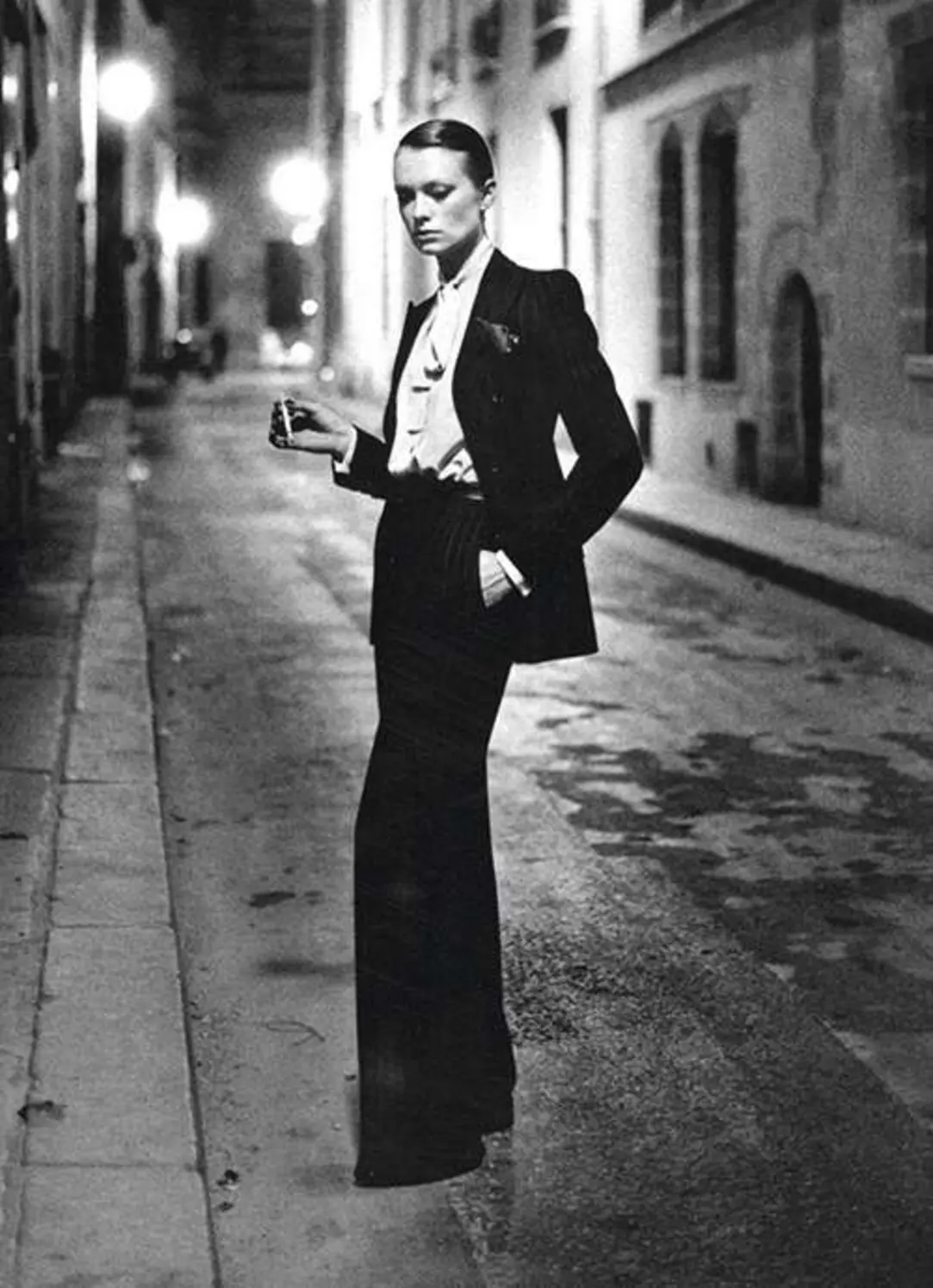
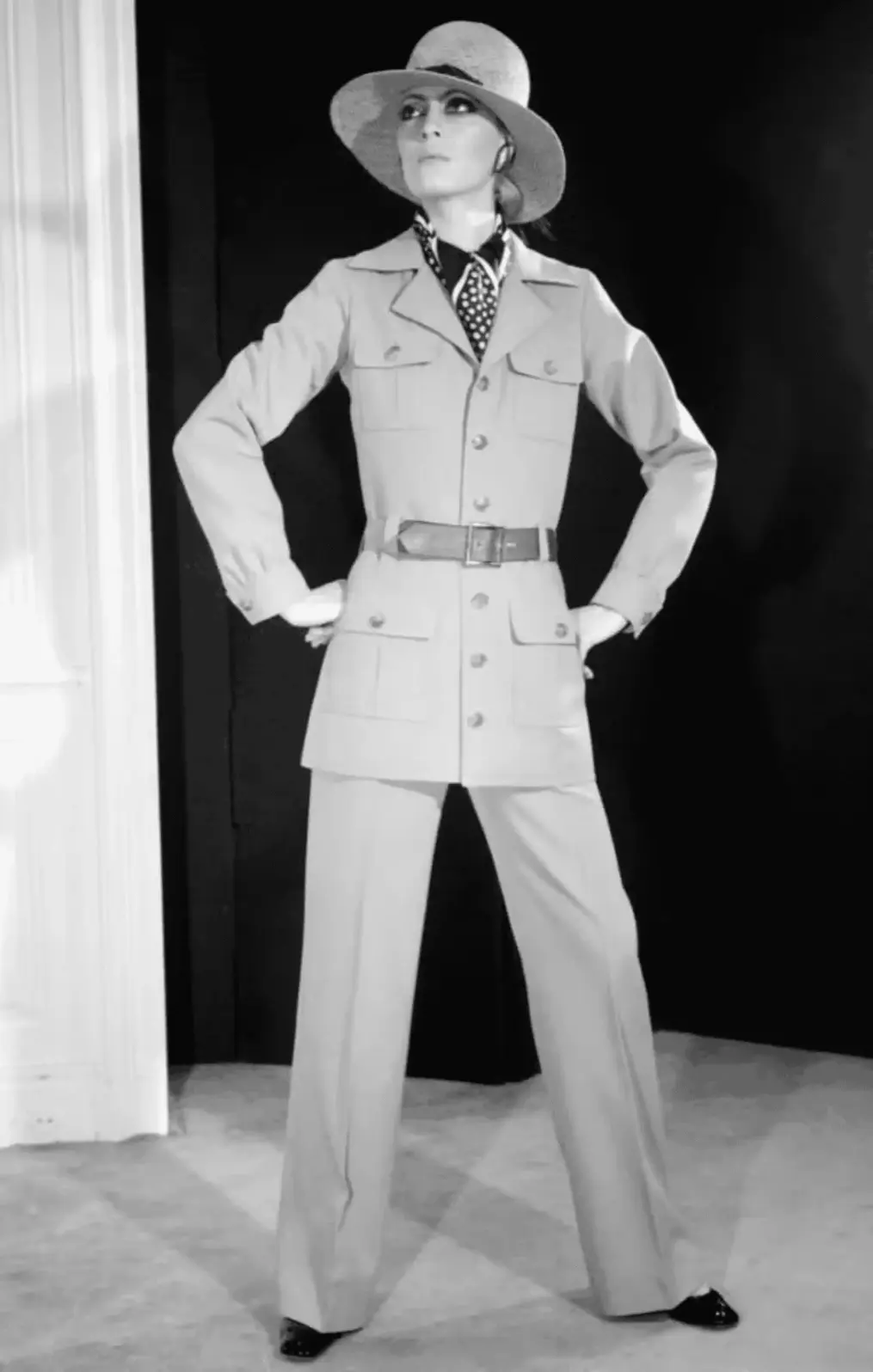
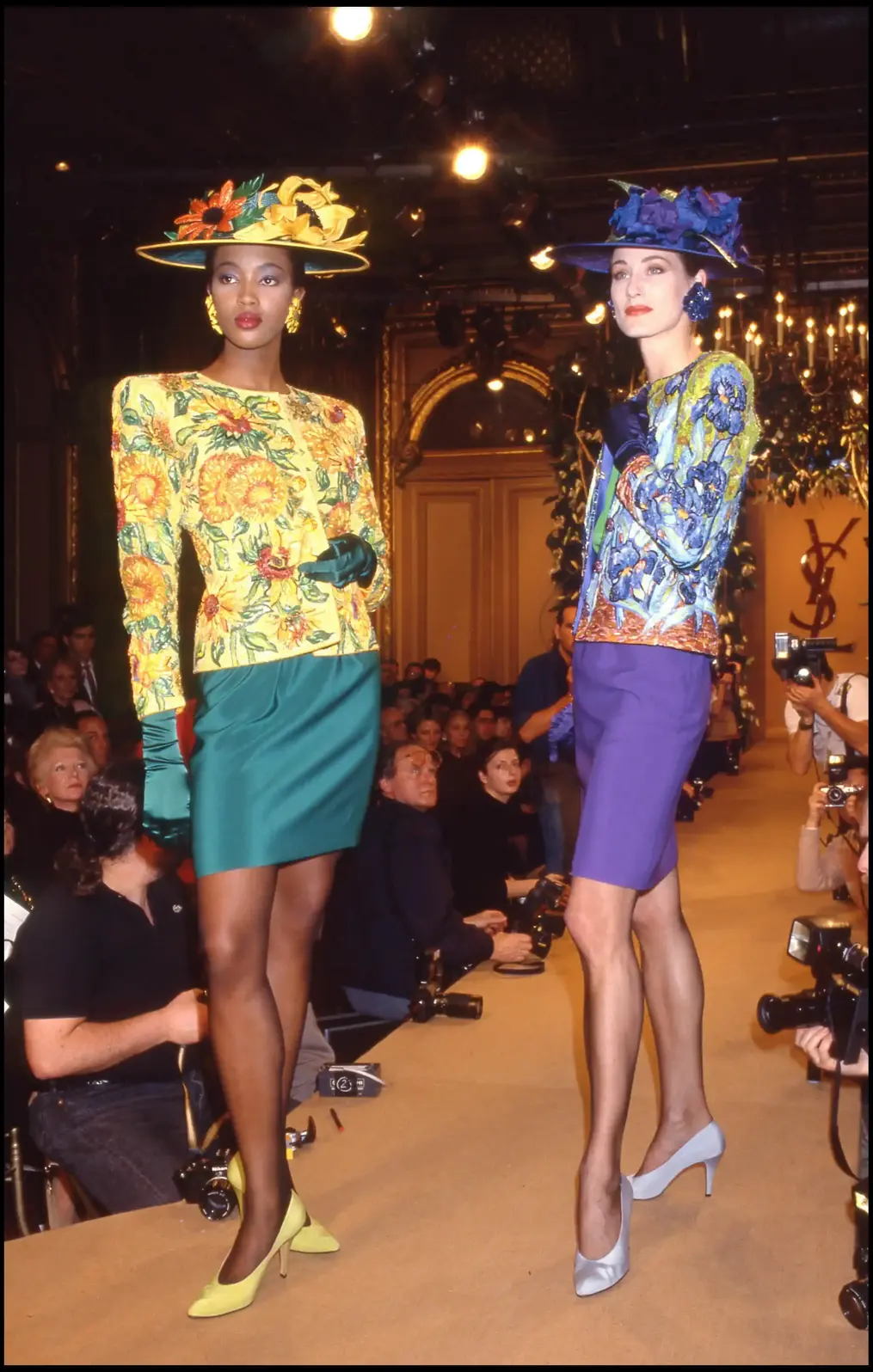
Yves's 1960 military conscription triggered a breakdown, leading to his dismissal from Dior and the eventual founding of his own house. Saint Laurent was a singular visionary, pouring his personal struggles and desires into his work. He has shaped a new era: Le Smoking, the Mondrian dress, and safari jackets. Each piece is a rebellion against convention and creates a movement for women's freedom and feminism. But his brilliance came at a cost: addiction, erratic behavior, and a reliance on Pierre Bergé, a co-founder of Yves Saint Laurent's house and Yves's soulmate, to manage both his brand and his personal life.

In contrast, Lagerfeld’s early career was defined by versatility and patience. After winning the 1954 Wool Competition, he took on roles at Balmain and later designed under a pseudonym for Jean Patou, where his collections were met with tepid reviews. Rather than chasing fame, he embraced the role of a fashion freelancer for an array of houses: Chloé (then cameback to be creative director from 1992 to 1997), Valentino, Charles Jourdan.
His 1965 move to Fendi marked a turning point. Tasked with reinventing fur, he transformed it from a symbol of old-world luxury into something modern and experimental. He created the brand’s iconic double-F logo and helped launch its ready-to-wear line, proving his ability to revitalize heritage labels - a skill that would later define his legacy.


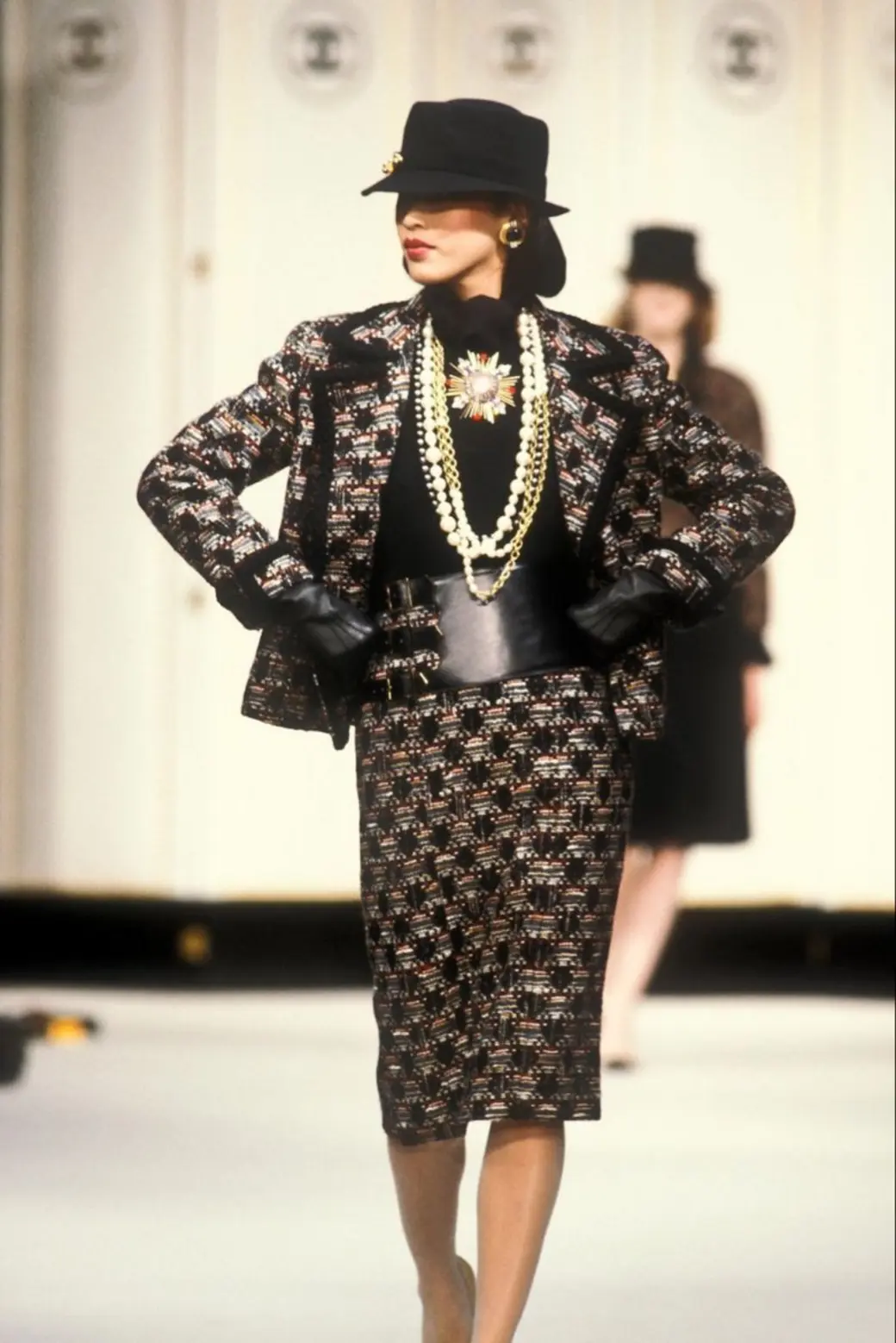
Yet even as he gained industry respect, Karl Lagerfeld remained in the shadows compared to Saint Laurent’s celebrity. His 1983 appointment as Chanel’s creative director changed everything. At the time, the house was seen as a relic. Coco Chanel herself had died over a decade earlier, and the brand had lost its edge. Lagerfeld, then in his late 40s, not only resurrected it but turned it into a global powerhouse. His genius lay in balancing reverence for Chanel’s codes (tweed, pearls, the little black dress) with irreverent twists (streetwear influences, hip-hop-inspired runway shows).
The contrast was striking. Karl Lagerfeld, disciplined and strategic, famously avoided drugs and alcohol, with Diet Coke as his lone vice. Yves Saint Laurent, by contrast, indulged freely, sometimes to the concern of friends. Karl dropped companions who crossed him; Yves kept his loyal circle of muses close. The difference was stark: Yves lived for art, guided by instinct and excess, while Karl, “apt to compare himself to a computer,” thrived on precision, control, and creative problem-solving.
The break became permanent in the 1970s. Pierre Bergé accused Karl of orchestrating moves to damage their brand. Karl’s growing reputation for “ideals and professionalism allowing him to respond to any proposal for cooperation” was met with Bergé’s suspicion.
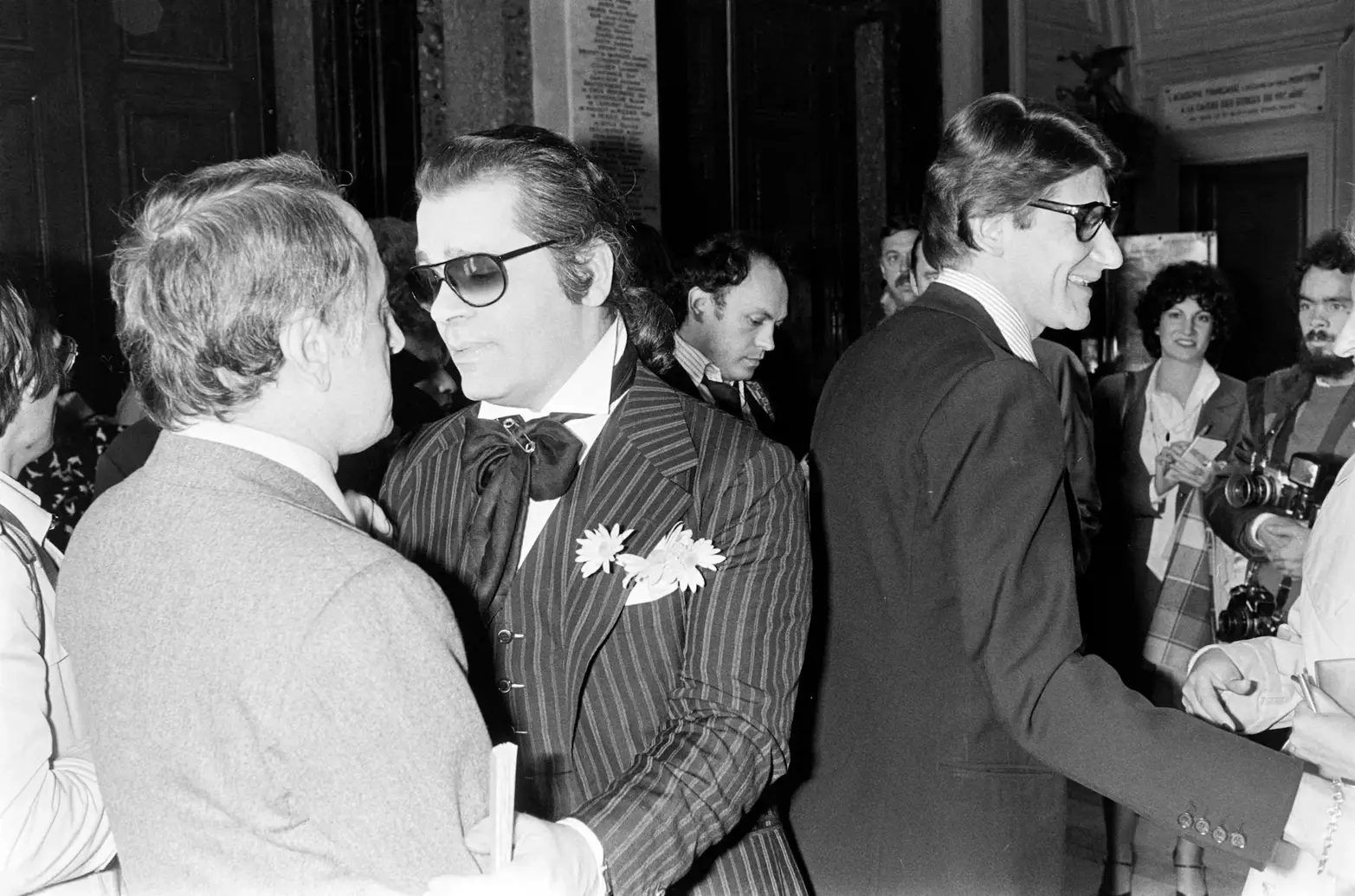
From then on, their words cut like tailor’s shears. In 2002, when asked about Yves’ retirement, Karl delivered the now-infamous verdict:
“It would not affect anyone if one person was missing.”
He added praise for Tom Ford, Yves’ successor:
“They were lucky to find Tom Ford, who is very good at what he pursues, especially with the influence of the ready-to-wear line.”
It was, as one journalist put it, Karl “burying alive” Yves’ legacy. Yves, not to be outdone, struck back with a dream-turned-insult:
“Last night, I had a strange dream, that I was walking around Paris with Coco Chanel. Suddenly, we stopped in front of the shop on Cambon Street, looked into the window and started to cry.”
The jab at Karl’s Chanel was deliberate and brutal!
Karl never received an invitation to Yves’ funeral in 2008, nor did he attend. Yet the rivalry never fully erased the memory of the young man he’d once driven through Paris nights. In an earlier interview, Karl had reflected on that other Yves:
“He is one of the funniest people alive, with an incredible sense of humor… It is an absurd idea when he says that he didn’t have a youth. I knew him myself when he had one, but he only had one desire at the time… to be rich and famous.”
Karl would later champion designers like Hedi Slimane, even losing weight to wear Slimane’s impossibly slim shirts, while Yves bristled at Slimane dropping “Yves” from the YSL brand name. To Karl, Slimane’s work was “so beautiful” he didn’t even bother making Le Smoking himself.
Every move was another play in their decades-long chess match.
Were they friends? Enemies? Frenemies? Perhaps none of those labels fit. They were two forces of nature, orbiting each other, shaping the fashion galaxy in different ways.
Yves Saint Laurent redefined women’s fashion with sensual elegance and subversive chic. Karl Lagerfeld proved the power of reinvention, resurrecting Chanel and shaping Fendi’s luxury identity. Together, they embodied the paradox of fashion: beauty born not despite rivalry, but because of it.
And perhaps that fortune teller was right after all. Yves burned bright early, while Karl’s light only grew stronger as time went on. Between them, they rewrote the DNA of 20th-century fashion, stitch by glorious stitch.
Advertisement