MENU
Close





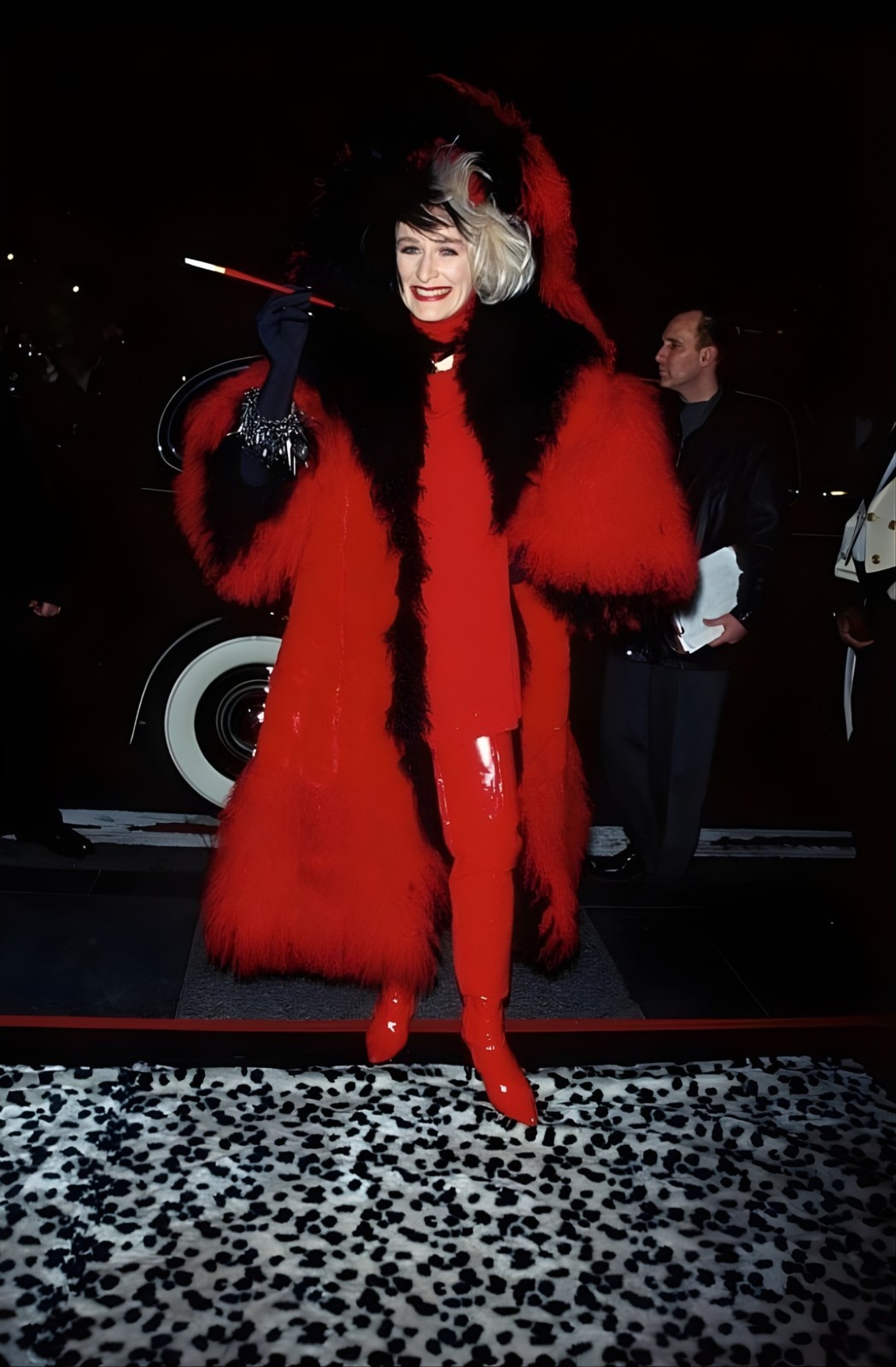
On November 18, 1996, Glenn Close stepped into the 101 Dalmatians premiere with Cruella’s particular kind of menace, the kind that treats fur as destiny and morality as background noise, already looking like she would do anything for the coat.
.jpeg)
On November 18, 1996, Glenn Close stepped into the 101 Dalmatians premiere with Cruella’s particular kind of menace, the kind that treats fur as destiny and morality as background noise, already looking like she would do anything for the coat.
November 18, 2025


Cruella de Vil was never meant to be subtle. She was meant to be seen, feared, and replayed in the mind like a hook. The film gave Hollywood a villain, yet fashion got something sharper: a portrait of obsession dressed in couture-level drama.
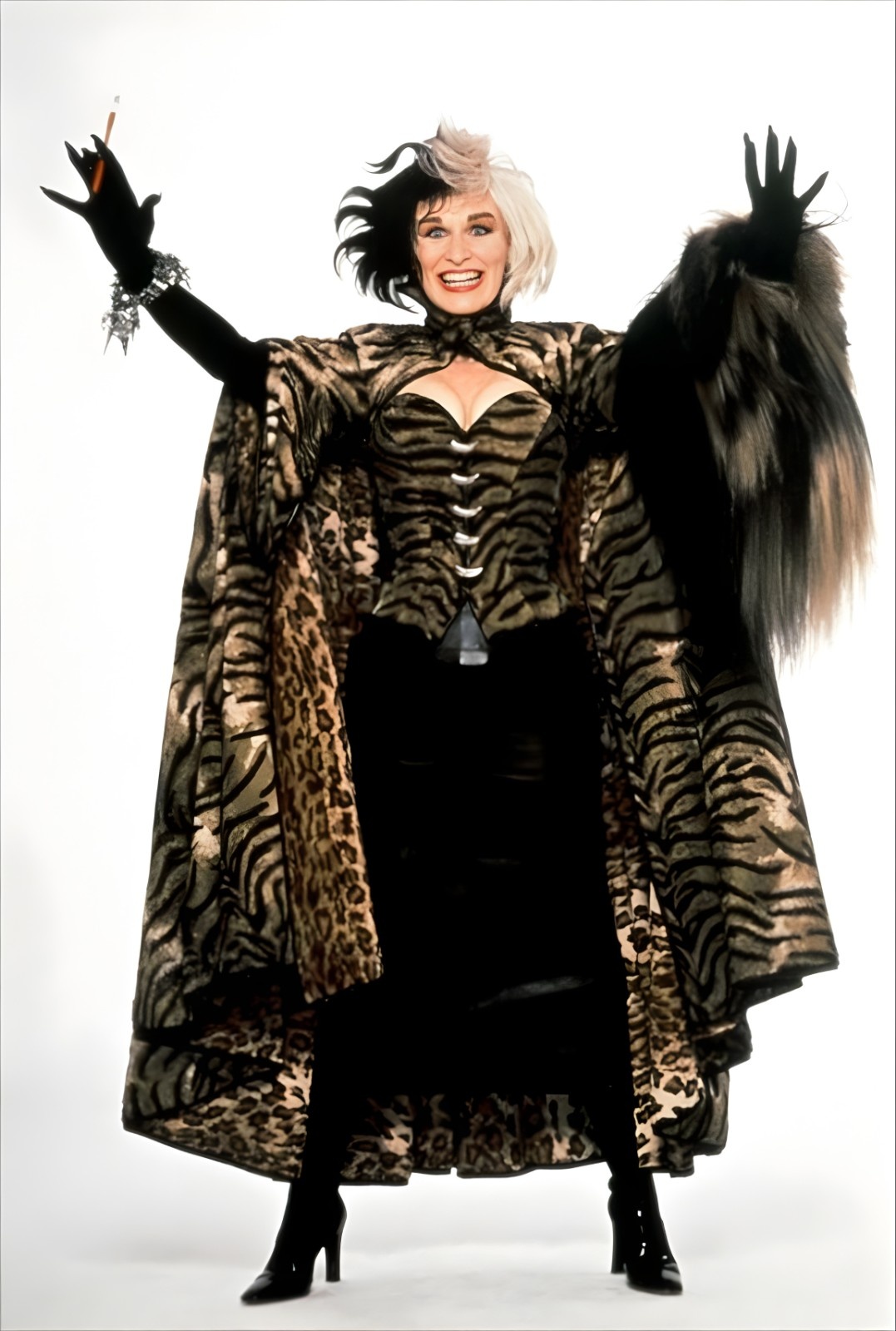
Cruella’s madness has a silhouette. It starts with that violent black and white hair, then keeps climbing. Her wardrobe behaves like a weaponized mood board, all authority and appetite. Anthony Powell designed costumes that read as sharp tailoring turned theatrical, then built to perfection by Barbara Matera’s atelier, the kind of craftsmanship that makes clothes feel alive. Each look pushes her character forward. Strong shoulders that widen her presence. Narrow waists that pull everything into tension. High collars and sweeping wraps that create the impression of speed even when she stands still.
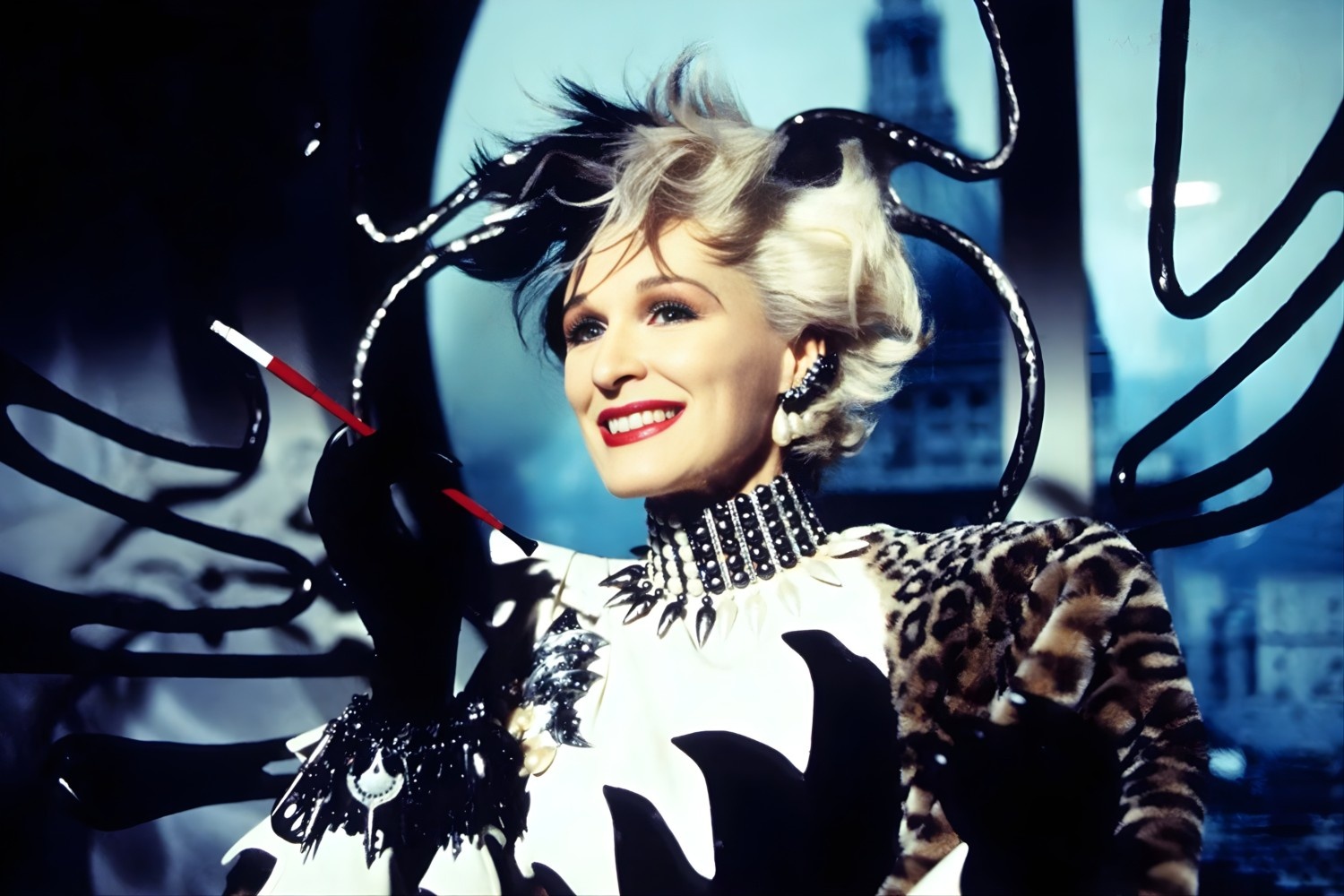
Glenn Close understood the power of that wardrobe and treated it like the spine of the performance. Cruella’s comedy, menace, and chaos all land harder because the clothes insist on control. That friction is the thrill. A woman unraveling inside a look that keeps trying to hold her together.
Then there is the detail that reveals how seriously Glenn Close took it: she fought for the clothes in a way that reveals how deliberately she treated fashion as part of the role. She negotiated a contract clause allowing her to keep every costume she wore, and later explained that producers regretted the agreement once the true expense became clear. Glenn Close refused replacement copies because she understood that originals carry the performance inside them.
Cruella also endures because she exposes something uncomfortable about fashion love when it turns feral. Her desire is pure hunger, reckless, entitled, and convinced that beauty justifies everything. It is a caricature, yet it mirrors a real tension in luxury culture: the urge to possess, to display, to cross lines for a fantasy. The fur obsession at the center of her plot lands differently now. Fashion has gained sharper awareness, stronger scrutiny, and wider refusal of real animal fur across many brands and audiences.
That is the strange genius of Glenn Close’s Cruella. She is exhilarating to watch because she is extreme, and she stays in the culture because the clothes make her unforgettable, while the choices she embodies make her unsettling.