Asia, once a marginal presence in international auctions, has, in just two decades, grown into a powerhouse that rivals — and in some areas, even outpaces the West. Back in 2000, China represented just 1% of the global art trade. By 2021, China and South Korea had pushed that share close to 40%, drawing Christie’s, Sotheby’s, and Phillips to aggressively expand in the region. The result: Asia is no longer the periphery of the art world. It is the center and the future.How Asia Became the Art Market’s New EpicenterThe 2025 Art Basel & UBS Art Market Report shows global sales fell 12% to $57.5 billion in 2024, but Asia weathered the downturn better than Europe. The region’s democratization (more sales at lower price points) kept activity buoyant. Smaller galleries proved more resilient than top-tier players. Dealers with turnover under $250,000 saw sales jump 17% — a sharp rebound for a segment that had lagged post-pandemic and rarely thrives in downturns. By contrast, sales of artworks over $10 million fell 39% at auction, shrinking their share of market value. Sales under $5,000 rose 7% in value and 13% in volume, helping sustain overall market activity despite weakness at the top.
Art fairs and digital platforms remain central to expanding the buyer base. In 2024, fairs accounted for nearly a third of dealer sales, with major international events driving momentum. Larger dealers gained the most from this channel, while online sales plateau at close to a fifth of the global market. In Asia, flagship fairs such as Art Basel Hong Kong and Frieze Seoul, together with mobile-first e-commerce, continue to energize collectors. Despite market softening, transaction volume heightens. Despite a 12% drop in global sales to $57.5 billion in 2024, transactions rose 3% to 40.5 million. This divergence points to a notable shift in market dynamics: activity is increasingly concentrated in the lower and middle price segments, while the top end of the market —traditionally the main driver of value, contracted significantly. Private sales outperformed in 2024, reflecting a familiar pattern in uncertain times as sellers favor discretion and price control — evidence of steady demand shifting to quieter channels.The result is a paradoxical landscape where more works are changing hands, but at lower price points. This trend reflects both a democratization of collecting and a broader resilience in buyer demand, with new and younger collectors fueling sales at accessible levels. If sustained, this shift could rebalance the market away from its heavy dependence on high-value transactions, laying a healthier foundation for long-term growth. Contemporary art softened while older sectors gained. Sales in contemporary art fell in 2024, reversing years of dominance, while Post-War, Modern, and Old Masters held steady or grew. Collectors gravitated toward established names and lower-priced works, reflecting both caution and limited availability of high-value contemporary pieces.
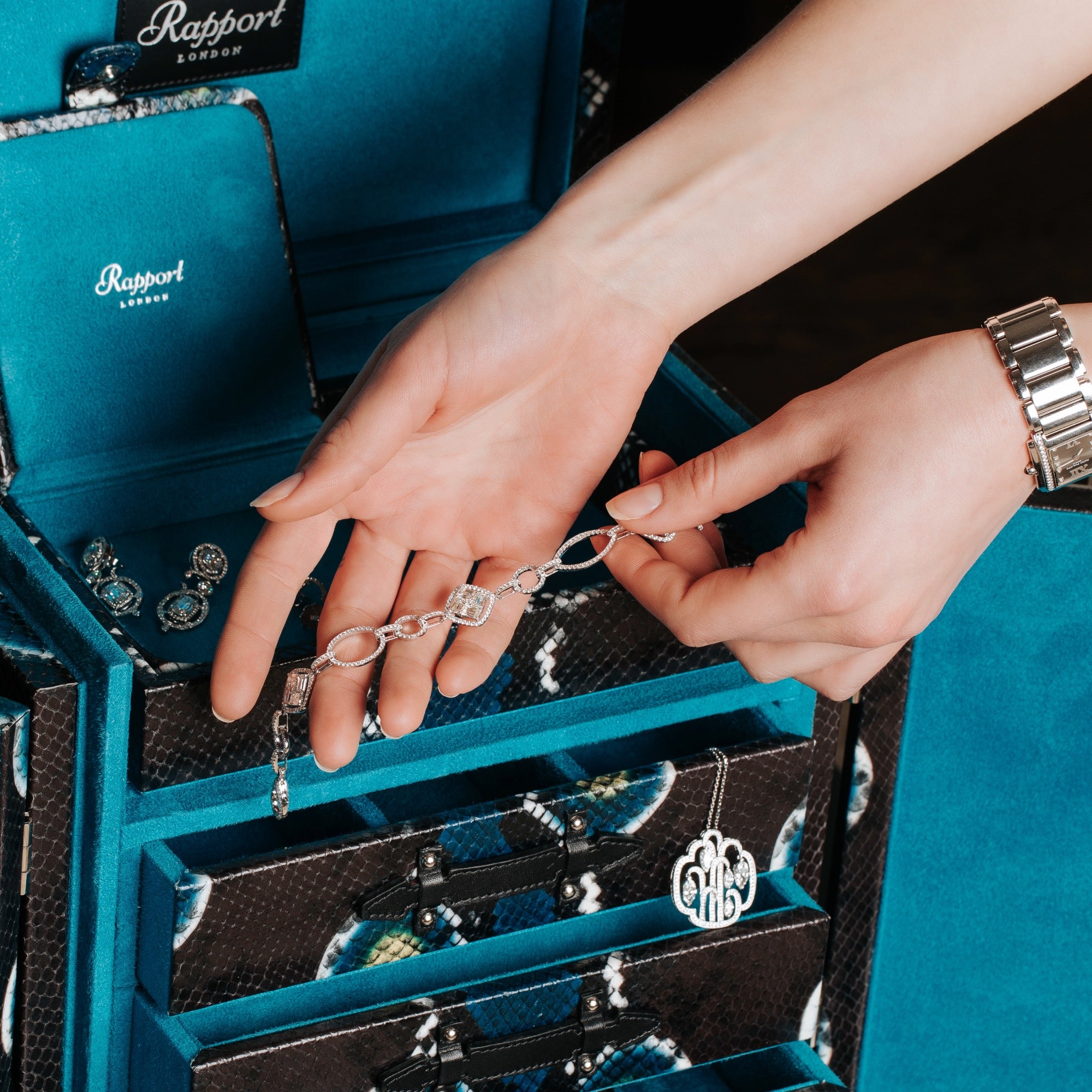
The West Turns EastAsia’s influence now stretches far beyond the region, with young audiences in Europe and the U.S. drawn to manga, K-pop, and Asian cinema. This cultural wave has boosted tourism, raised the global profile of Asian artists, and shifted the focus of major auction houses. BTS leader RM exemplifies this crossover: as an avid collector of artists like KAWS and Takashi Murakami, he uses his platform to bridge contemporary music and art on the global stage.transformation. Founded in 2009, the brand melts down steel from decommissioned AK-47 rifles — weapons that have fueled violenceacross Africa — and forges them into luxury jewelry and timepieces.Each purchase contributes to funding the destruction of additional weapons. To date, Fonderie 47 has helped eliminate tens of thousands of rifles. In a market often criticized for indulgence, the brand offers an alternative story: adornment that actively makes the world safer. It is radical, poetic, and emblematic of a broader truth: jewelry is no longer only about the wearer. It is about the world we share. At the same time, Asian collectors themselves are broadening their tastes. While earlier generations focused on traditional ink paintings or ceramics, today’s buyers are just as likely to pay record prices for Western artists. In 2021, for instance, Jean-Michel Basquiat’s Warrior sold for $41 million at Christie’s Hong Kong — the most expensive Western artwork ever auctioned in Asia. Artists remain the true drivers of the market. Zhang Daqian and Qi Baishi continue to dominate historical sales, while Yayoi Kusama and Yoshitomo Nara headline among living artists. Kusama alone reached nearly $166 million across 670 lots, making her the highest-grossing living Asian artist. Liu Ye, Zhou Chunya, and Zhang Enli reflect the growing breadth of Chinese contemporary art, even as younger names gain traction.